Is Gothenburg Worth Visiting at Christmas? What to Expect in December
Gothenburg in December means Jul på Liseberg, six hours of daylight, trams with warm carriages and a car-free archipelago that keeps running. Here is what a Christmas trip really gets you.
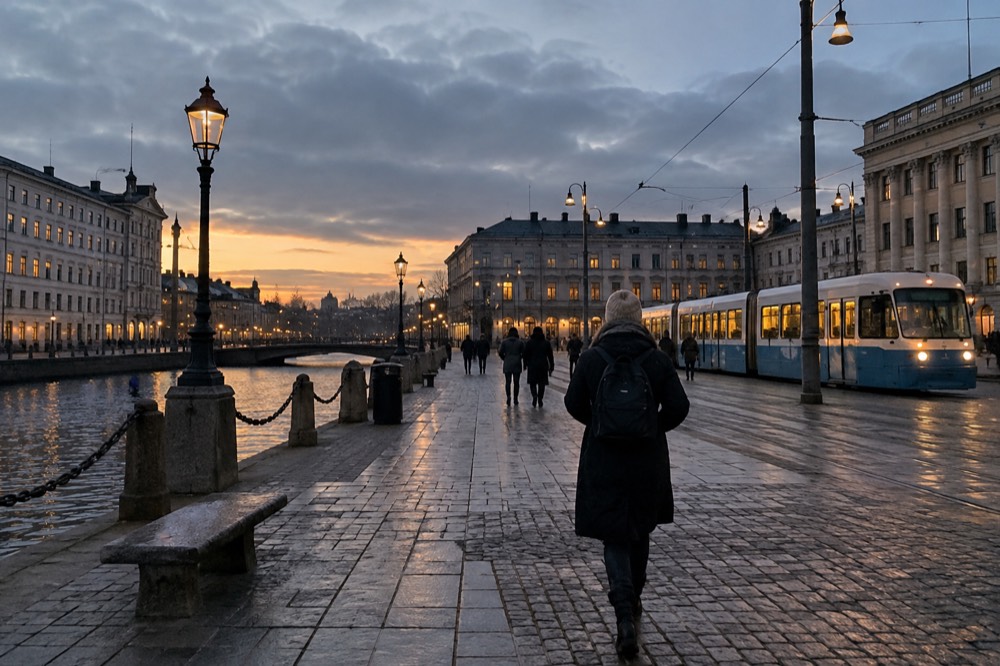
Is Gothenburg Worth Visiting at Christmas?
Gothenburg's Christmas season is real, concentrated and easy to reach: the city's biggest attraction turns itself into a market for six weeks, the trams keep running through the dark, and the ferries to the car-free islands sail on an ordinary ticket. The trade is daylight. On 21 December the sun rises at 08:54 and sets at 15:26, six hours and thirty-two minutes apart, and the US Naval Observatory's tables put civil twilight at 08:03 to 16:17. That is the whole deal. You get lanterns, glögg and a city that knows how to be cosy, and you give up long afternoons.
This page walks through what is actually open, what the weather does, what a December trip costs and whether the islands are worth the ferry in winter. The short version: yes, with one date circled in red. Jul på Liseberg runs 14 to 23 December in 2026, and the park is shut from 24 December until mid-April. Miss the window and the headline attraction is a locked gate.
Is Gothenburg Worth Visiting at Christmas?
Yes, if you accept the trade the city offers: a genuinely good Christmas market inside an amusement park, a walkable old core strung with lights, and sea air on islands that cost nothing extra to reach, in exchange for six and a half hours of daylight and temperatures a few degrees above freezing. Gothenburg is compact, the tram network covers it, and the Christmas offer is concentrated enough that three days feel full rather than thin.
The honest case against is the dark. The sun is below the horizon for more than seventeen hours on the solstice, and the grey band around that is wide. If your idea of a city break is long outdoor wandering, December Gothenburg will fight you. The honest case for is that Gothenburg is built for this: Haga's wooden houses and candle-lit windows, steam off a fika cup, and Liseberg doing the single biggest Christmas event in western Sweden. The city also handles rain without collapsing, which matters, because October is the wettest month and December is not far behind at 93 mm in the SMHI 1991-2020 normals for station Göteborg A.
What tips it from "fine" to "worth it" is density. The Christmas attractions sit inside a triangle you can walk or tram across in twenty minutes, and the one big excursion, the archipelago, is a scheduled public ferry, not a tour booking. Few northern cities give you this much per hour of daylight.
What Is Actually on in Gothenburg at Christmas?
The headline is Jul på Liseberg, the Christmas market inside the Liseberg amusement park, running 14 November to 23 December 2026, with entry from 95 kr online and millions of lights. Beyond it you get Haga's small-scale market streets, the avenue's shop windows, skating, and a food scene that leans hard into the Christmas table. Liseberg is closed from 24 December, so the market has a hard stop.
Liseberg is the reason to come, and the reason to come before 23 December. The park's own pages give the Christmas dates and the price structure, and the price structure is the thing to understand before you buy. An Entré ticket from 95 kr gets you through the gate and onto nothing: rides are sold separately. The combined Entré + Åkpass, entry plus unlimited rides, starts at 365 kr online, and evening tickets valid from 18:00 start at 275 kr. Children under 110 cm enter free. Liseberg states that on-site prices are higher than online, so buy ahead.
| Liseberg ticket | What it includes | Online price from |
|---|---|---|
| Entré | Park entry only, no rides | 95 kr |
| Entré + Åkpass | Entry plus unlimited rides | 365 kr |
| Åkpass alone | Rides only, entry not included | 310 kr |
| Entré + Åkpass Kväll | Entry and rides, valid from 18:00 | 275 kr |
The market inside is the draw for most visitors rather than the rides, and in December the rides matter less than you would think. New for 2026, Liseberg's own news pages say Kaninlandet, the family land, also opens on winter weekends and school holidays, which extends the offer beyond the Christmas dates. The park's own annual reporting counted roughly 2.5 million guests to the park itself in 2025, and the Christmas season is one of its three peaks alongside summer and Halloween.
Outside Liseberg, the Christmas offer is smaller and free to wander. Haga, the old wooden-quarter neighbourhood, does its Christmas with shop windows and cafés rather than a formal market, and the combination of cobbled lanes and painted landshövdingehus at dusk is the closest thing Gothenburg has to a Christmas card. The main avenue, Avenyn, runs down to Götaplatsen and the art museum, and the shop lights along it are the city's most conventional festive stretch. If you want the fuller argument for the city in general, read what Gothenburg is known for.
Between the market days, the standard sightseeing runs all winter. The amphibious bus, the one that drives into the river, is a one-hour tour rated 4.7 from 4,326 reviews, from $36 per person, and it works as a December introduction because half of it is indoors. The guided archipelago cruise, 2.5 hours from $44, rated 4.4 from 1,488 reviews, gives you the islands and the winter sea without depending on a ferry timetable. Both run through the cold months; check the operator's live listing for December departure times, since winter schedules are trimmed.
How Cold and Dark Is Gothenburg in December?
December in Gothenburg means daytime highs around 2 degrees Celsius, about six and a half hours of daylight at the solstice, and rain on roughly thirteen days of the month, totalling about 93 mm. The sea off the islands sits near 5.5 degrees. It is a damp, grey, short-day cold rather than a deep freeze, and the city is built to absorb it: trams, arcades, museums and cafés.
The numbers come from primary sources. SMHI's 1991-2020 normals for station Göteborg A give December a mean air temperature of 2.1 degrees and 93.0 mm of precipitation across 13.3 days with at least 1 mm of rain, the wettest month after October's 102.9 mm. The US Naval Observatory's sun tables for Gothenburg's latitude give 08:54 sunrise and 15:26 sunset on 21 December. The sea temperature figures come from SMHI's oceanographic archive at the Vinga lighthouse station, where December's mean is 5.5 degrees against August's peak of 18.6. The SMHI normals pages publish the full monthly breakdown behind these figures.
| December in Gothenburg | Figure | Source |
|---|---|---|
| Daylight, 21 Dec | 6 h 32 m (08:54 to 15:26) | US Naval Observatory |
| Mean air temperature | 2.1 °C | SMHI 1991-2020 normals, station Göteborg A |
| Precipitation | 93.0 mm over 13.3 days | SMHI 1991-2020 normals, station Göteborg A |
| Mean sea temperature | 5.5 °C | SMHI oceanographic archive, station Vinga |
| Civil twilight | 08:03 to 16:17 | US Naval Observatory |
What that means in practice: plan around light, not around warmth. Do outdoor things between 10:00 and 14:30 and let museums, fika and the Christmas market own the late afternoon. Gothenburg's tram network, twelve lines across 134 stops as of the 2022 network report, means you are rarely more than a few minutes from a heated carriage, and a 24-hour Zone A ticket at 125 kr covers trams, buses and the archipelago ferries on the same ticket. That single ticket is the best-value fact in the city at any time of year.
One December-specific note on money: the temporary state subsidy that halves Västtrafik's 30-day tickets does not touch the 24-hour and 72-hour tickets visitors actually buy. The 24-hour Zone A ticket is still 125 kr. If you read that transport in Gothenburg is half price, that claim is about monthly tickets, not yours.
Is the Gothenburg Archipelago Worth It in Winter?
Yes, with adjusted expectations: the southern islands, Styrsö, Brännö, Vrångö, Donsö and the rest, are reachable year-round on an ordinary Västtrafik ticket, tram to Saltholmen then ferry, and in December you get empty paths, low winter light on the water and a still-working island community. What you do not get is swimming, long days or every café open.
The islands are areas of Gothenburg, not excursions, and the ferry is a scheduled Västtrafik service. Västtrafik's own zone map shows the boats in Zone A, so the 125 kr day ticket covers the whole chain from the city centre out onto the sea. A Göteborgs Stad study confirms the islands are protected from private car traffic, so what you meet on them is footpaths, bicycles and wheelbarrows. The full index of guides sits on Gothenburg Travel Guide.
Winter changes the calculus. The December sea averages 5.5 degrees at the Vinga station, and February is the coldest month at 2.7, so nobody is swimming without a wetsuit and a reason. Daylight is the tighter limit: with sunset before 15:30, a winter island day is a morning-to-early-afternoon proposition, and you should check the last ferry back rather than trusting summer frequencies. Some island cafés close or run weekend-only hours off-season.
The payoff is atmosphere that the summer crowds exclude. The islands in winter are quiet in a way the mainland never manages, and the low-angle light on granite and grey water is what the west coast actually looks like most of the year. If your question is whether it is worth it at all, the fuller answer is in is it worth visiting the Gothenburg archipelago, and the mechanics of getting there are simple enough that a half-day works.
Can You Day Trip from Gothenburg at Christmas?
Yes, and the standout Christmas-specific one is Marstrand, the island fortress town an hour up the coast, which holds its Christmas market inside the old wooden town below Carlsten Fortress. A five-hour sailing trip from Gothenburg runs there over the market period, from $206 per person with no reviews published yet, and Marstrand also works as an independent trip by public transport if you would rather go on your own schedule.
Marstrand in December is a different proposition from Marstrand in July, which is precisely the point. The summer sailing crowds are gone, the fortress town keeps its lights on, and the market gives the island a reason to be busy. The sailing trip is the easiest version: it departs from Gothenburg, handles the logistics, and the listing shows a five-hour duration at $206 per person. It is a new listing with no reviews yet, which is real information rather than a warning.
If you would rather not commit a half-day to a boat, the ordinary alternatives hold up in winter. Marstrand is reachable by public transport with a regional leg, and the other standard day trips from the city, Alingsås, Trollhättan, the Bohuslän coast, all keep running through December with reduced frequencies. The trade to know about is daylight again: a day trip in December means leaving early, because the useful window is roughly 09:30 to 15:00.
What Does a Christmas Trip to Gothenburg Cost?
A December city break in Gothenburg costs less than a summer one on hotels but the attraction spend is front-loaded: Liseberg's combined entry and ride pass starts at 365 kr online, a 24-hour transport ticket covering trams and ferries is 125 kr, and a mid-range dinner runs the same as any Swedish city. Alcohol is the budget wildcard, because anything above 3.5% ABV is sold only by Systembolaget, the state monopoly.
The price structure that matters most is Liseberg's, because it is the attraction most visitors book without reading the fine print. Entry alone from 95 kr includes no rides. The full pass from 365 kr is what most first-time visitors actually want, and evening tickets from 275 kr suit a market-and-lights visit rather than a riding day. Buy online, because Liseberg states on-site prices are higher.
Transport is cheap and simple. The single adult fare in Zone A is 38 kr, and the 24-hour ticket at 125 kr covers trams, buses and the archipelago ferries. There is no city pass that includes transport any more: the old Göteborg City Card is gone, and the Go City product that replaced it is an attractions pass on different terms. The full cost picture, including what a meal and a beer run, is in is Gothenburg cheap or expensive.
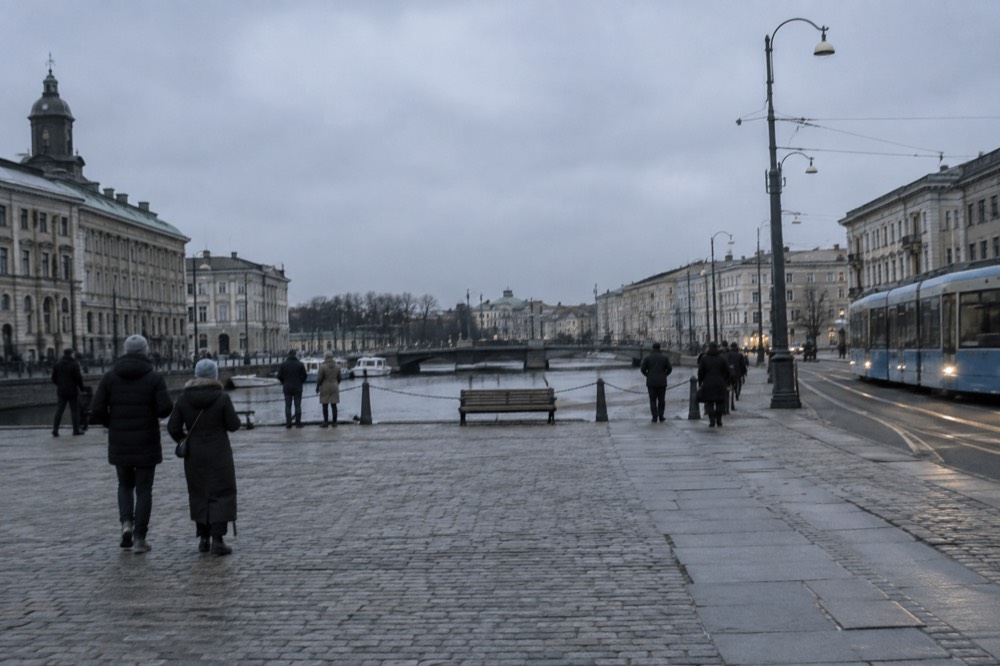
The alcohol rule is worth knowing before your first supermarket visit. Under Alkohollag (2010:1622), beer above 2.25% but not above 3.5% ABV is folköl and sold in ordinary shops; anything stronger, plus all wine and spirits, is sold only through Systembolaget. The practical consequence is that glögg and Christmas beer in supermarkets are the weaker shelf versions, and the monopoly stores keep their own hours, which are shorter than you expect and closed on Sundays.
How Many Days Should You Spend in Gothenburg at Christmas?
Three days is the sweet spot for a Christmas visit: one for Liseberg and the market core, one for the city itself, Haga, the avenue, fika and a museum, and one for the archipelago or Marstrand. Two days works if you drop the island day, and four starts to need day trips to fill, because the Christmas programme itself is concentrated into a small central area.
The concentration cuts both ways. Because Liseberg, Haga and the avenue sit within a short tram ride of each other, you can compress the Christmas essentials into a weekend, and the how many days in Gothenburg is enough question has a shorter answer in December than in summer. On the other hand, short daylight hours mean each day delivers less than a June day would, so a packed two-day plan needs early starts.
A sample three-day shape: day one, Liseberg from the afternoon into the evening, when the lights do the most work; day two, Haga in the morning light, fika, then a museum such as Göteborgs konstmuseum, open Tuesday to Sunday with a 75 kr day ticket and free entry for anyone under 20; day three, the archipelago or the Marstrand market sail. Note the museum's own rebuild pages: it closes in 2028 and reopens in 2032, so visit while it is open.
For anyone weighing Gothenburg against the obvious alternative, is Liseberg or Tivoli better answers the Christmas-market comparison directly, since Copenhagen's Tivoli is the other Nordic park that goes big in December. The short version of that comparison: Tivoli is the more famous Christmas brand, Liseberg is the bigger park with the cheaper entry, and Gothenburg as a whole is calmer and cheaper around it.
Common Questions About Gothenburg at Christmas
Is Gothenburg worth visiting at Christmas?
Yes. Jul på Liseberg is one of Sweden's biggest Christmas events, the city centre is walkable and lit, and the archipelago ferries run all winter on an ordinary ticket. The trade is six and a half hours of daylight at the solstice and temperatures around freezing.
When does the Liseberg Christmas market run?
Liseberg's own pages give Jul på Liseberg 2026 dates as 14 to 23 December. The park closes from 24 December until the summer season opens in mid-April, so a Christmas visit needs to land before 23 December.
Is Gothenburg too dark in December?
Daylight on 21 December runs 08:54 to 15:26, six hours and thirty-two minutes, with usable grey light from about 08:03 to 16:17. It is short but workable if you front-load outdoor sightseeing and give the late afternoons to museums, fika and the market lights.
Does it snow in Gothenburg at Christmas?
Not reliably. December's mean air temperature is 2.1 degrees with 93 mm of precipitation, mostly rain, per SMHI's 1991-2020 normals. White Christmases happen but the default is grey and damp, and the city's Christmas atmosphere does not depend on snow.
Can you visit the Gothenburg archipelago in winter?
Yes. The southern islands are in Västtrafik Zone A, so a 125 kr 24-hour ticket covers the tram to Saltholmen and the ferry out. Check winter ferry frequencies and the last boat back, and expect some island cafés to be closed or weekend-only.
Is the Marstrand Christmas market worth it?
Marstrand's market inside the old fortress town is atmospheric in December precisely because the summer crowds are gone. A five-hour sailing trip from Gothenburg runs there over the market period from $206 per person, and the island is also reachable independently if you prefer your own schedule.
The verdict, plainly: Gothenburg at Christmas is worth the flights if you time it inside the Liseberg window and plan your days around the light rather than against it. The city does dark well, it does markets well, and the islands in winter are the version of the archipelago almost nobody blogs about. Bring layers, book the market days early, and let the short days end in a warm room rather than on a cold quay.