Is Sweden Disability-Friendly? What Gothenburg Actually Offers
Sweden, and Gothenburg in particular, is one of Europe's more accessible destinations, but the honest answer depends on which parts of the trip you mean. Here is what the trams, museums and ferries really offer.
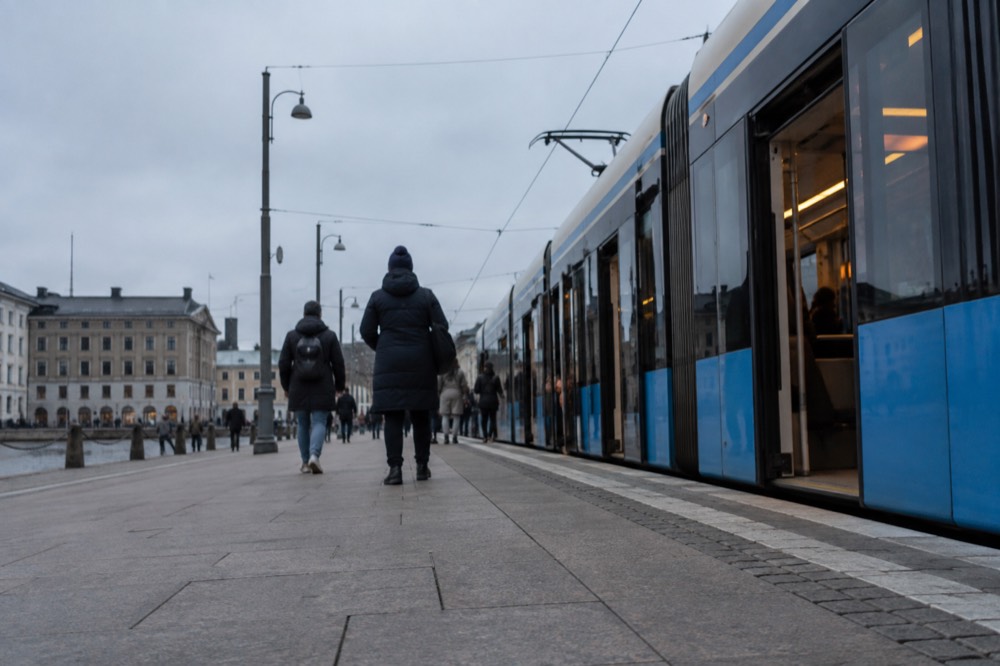
Sweden has a national disability policy that states its goal plainly: a society accessible to everyone. That is the promise. The delivery, as always, is uneven, and the country's second city is a good place to examine it, because Gothenburg is built on granite hills, a moated core laid out by Dutch engineers in the seventeenth century, and a waterfront of piers and gangways. The trams are the strongest card. The cobbles are the weakest.
This article is written by an editorial desk that has not travelled with a disability and does not claim to speak for anyone who has. What it can do is report what the operators, the city and the transport authority publish, and flag the places where a visitor needs to check details directly rather than trust a guide's reassurance. Sweden's public bodies are required by law to provide equal access to their services, and that legal obligation is why so much of the modern layer of the country is genuinely usable.
Is Sweden Disability-Friendly Overall?
Sweden is one of the more disability-friendly countries in Europe, with a legal framework that obliges public bodies to provide equal access, a public transport network built around low-floor vehicles, and a design culture that treats ramps, tactile surfaces and adapted toilets as standard rather than optional, though older buildings, cobblestones and winter ice still trip up the promise in practice.
The legal backbone matters. Swedish disability policy obliges public bodies, and that includes museums, transport authorities and municipal venues, to provide equal access. In practice this means Gothenburg's major institutions, Universeum, World of Volvo, Göteborgs konstmuseum and the city's own attractions, all publish accessibility information on their own sites, and the tram network is designed for level boarding. A visitor arriving with a mobility aid is not asking for a favour anywhere in this system; they are using infrastructure that was specified with them in it.
The honest caveats are three. First, the old town inside the moat, Inom Vallgraven, and the wooden quarter of Haga predate every accessibility law by centuries, and their cobbles and steep lanes are what they are. Haga's most famous street climbs a hillside, and the picturesque cobbles that make it photogenic make it slow going for wheels. Second, winter runs from November to March, and ice on pavements is a real hazard; the city grits and clears, but a January visit needs the right footwear and realistic expectations. Third, accessibility information in English is often thinner than the Swedish version, so a browser's translate function earns its keep.
The city's own tourism body, Göteborg & Co, publishes an accessibility guide, and each venue's own website carries the current, specific detail: lift dimensions, hearing loops, adapted toilets, wheelchair loans. That is where to verify, not in any general guide, including this one. The pattern across the city is consistent enough to summarise in a table.
| Part of the city | Accessibility in practice | What to check before you go |
|---|---|---|
| Trams and buses | Low-floor vehicles, ramps, level boarding at rebuilt stops | Västtrafik's disruption notices, especially around central construction |
| Modern museums (Universeum, World of Volvo) | Purpose-built step-free buildings, lifts, adapted toilets | Time-slot booking; Universeum is card only, no cash |
| Liseberg | Accessible entrances and restrooms, assistance system for queuing | Ride-by-ride boarding rules and the season calendar on liseberg.se |
| Old town and Haga | Cobbles, slopes, historic lanes, limited adaptation | Footwear, route choice, and how much of it you do on foot |
| Southern archipelago | Ferries on ordinary tickets, newer vessels accessible | Pier and vessel type on your specific route, island terrain |
| Winter streets (Nov-Mar) | Cleared and gritted on a priority system | Daylight hours, ice underfoot, shorter outdoor legs |
How Accessible Is Gothenburg's Tram Network?
Gothenburg's trams are highly accessible for a network this old: the fleet is low-floor with level boarding at stops, ramps and designated wheelchair spaces are standard on the vehicles, drivers assist on request, and the network's 12 lines and 188 km of track, as of the 2022 annual report, cover the city from Mölndal to Angered and out to the Saltholmen ferry terminal.
The numbers behind the network come from Göteborgs Spårvägar's own annual report, which describes 12 lines serving 134 stops over 188 km of single track, and the operator's site records 126 million journeys in 2025. This is a working commuter system, not a heritage line, and it was rebuilt around low-floor vehicles as they were delivered. Every tram carries a boarding ramp, and the stop infrastructure has been progressively rebuilt to match. The network's reach is the quiet advantage for accessible travel: the western terminus at Saltholmen connects directly to the archipelago ferries, and the network runs from Mölndal in the south to Angered in the north and across the bridge to Hisingen.
Fares are simple and there is no tap-out. Västtrafik's fare table shows a single Zone A adult ticket at 38 kr and a 24-hour Zone A ticket at 125 kr, bought in the app or at a shop at the same price. Youth singles are 29 kr. Companion travelers should know the Swedish convention: a personal assistant travelling with a person with a disability generally rides on the same ticket, but confirm current rules on Västtrafik's own pages before relying on it.
One planning note that affects everyone: the Västlänken rail tunnel project has construction running through the central city, with stations planned at Centralen, Haga and Korsvägen and the first section opening at Centralen in December 2026. Construction sites move, so a route that was step-free on a previous visit may have a temporary detour. Västtrafik publishes current disruption notices, and they are worth a look the week you travel. The project's full completion is projected around 2030, so central Gothenburg will carry construction works for several years yet.
Which Gothenburg Attractions Are Genuinely Accessible?
The headline attractions in Gothenburg are largely step-free and publish their own accessibility details: Universeum is open every day of the year 10:00-18:00 with all exhibitions included in admission, World of Volvo is a 2024 building designed to modern standards, and Liseberg, Scandinavia's biggest amusement park, has adapted entrances, restrooms and a ride access policy, though individual rides have their own physical requirements.
Universeum, the science centre, is the easiest yes in the city. Its own ticketing page states it is open every day of the year, 10:00-18:00, admission is dynamically priced with a booked entry time, and all exhibitions, activities, shows and guided tours are included. It is a purpose-built modern building with lifts between its rainforest, aquarium and space halls. Note the cashless policy: card only. Children under 3 enter free but need their own free ticket, and free cancellation runs up to 60 minutes before the booked slot, which is generous for plans that change at short notice.
World of Volvo, which replaced the old Volvo Museum after that museum closed permanently in December 2023, opened in 2024, so it was designed under current accessibility rules from day one. Its published hours are Mon-Wed 10:00-17:00, Thu 10:00-19:00, Fri-Sat 10:00-17:00, Sun 10:00-16:00, with exhibition tickets from 120 SEK online. The old museum at Arendal is closed; do not let any older guide send you there. The new building also runs a Volvo Cars Torslanda factory tour from 175 SEK on weekdays, with the bus departing from World of Volvo itself.
Liseberg deserves its own careful paragraph. The park's 2026 summer season runs 18 April to 20 September, with Halloween 2 October to 1 November and the Christmas market 14 November to 23 December, and the park is closed for the rest of the year apart from Kaninlandet's winter openings. Entry from 95 kr buys no rides; rides are a separate pass, from 310 kr alone or from 365 kr combined with entry. For accessibility, Liseberg operates an assistance pass system for guests who cannot queue conventionally, and each ride has its own boarding requirements; the park's own site is the only reliable source for the current rules. The terrain is a hillside, so expect slopes between the lower and upper sections of the park.
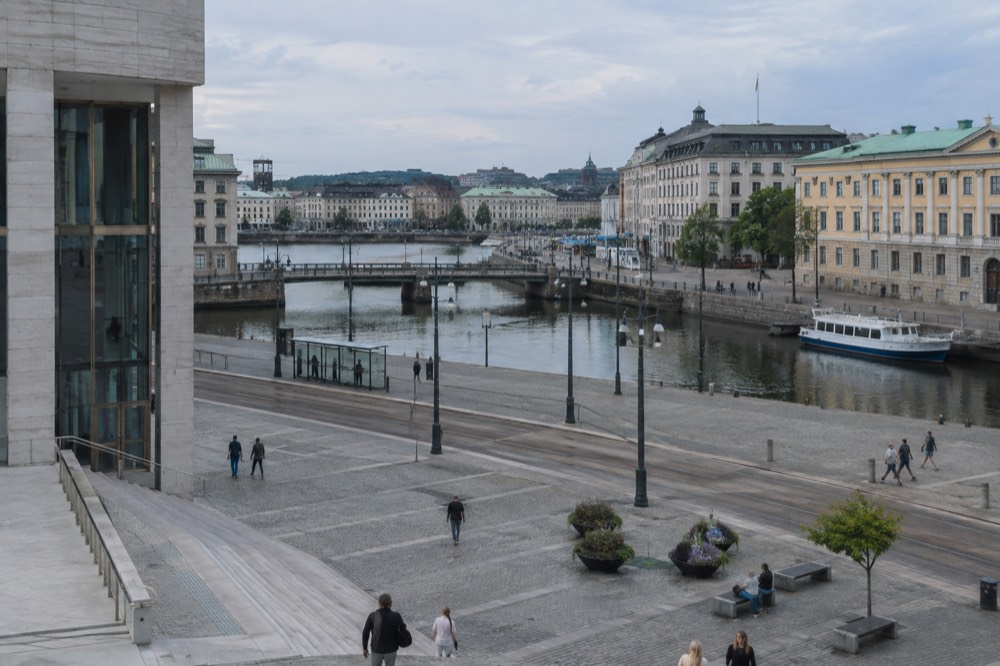
Göteborgs konstmuseum at Götaplatsen charges 75 kr for a day ticket, is free for visitors under 20 and for students, and includes the Hasselblad Center in the admission. One thing to plan around: the museum closes in 2028 for a rebuild and reopens in 2032, and it currently warns of intermittent blasting near the building, which it flags for sensitive visitors. If your trip falls after 2028, the art museum will not be there. The museum is closed on Mondays, which is worth knowing when you sequence a week.
Can You Reach the Gothenburg Archipelago with a Disability?
Partly, yes: the southern archipelago islands, including Styrsö, Brännö and Donsö, are served by Västtrafik ferries from Saltholmen on an ordinary ticket, and the newer vessels on the main routes have lifts and accessible saloons, but the islands themselves are car-free with unpaved paths, grazing sheep and terrain that varies sharply from island to island, so the boat is the easy part and the shore is the question.
The fare side is genuinely simple. Västtrafik's own zone material shows the islands inside Zone A, and the operator's line map includes the archipelago boats, so a 125 kr 24-hour ticket covers the tram to Saltholmen and the ferry out. The islands are formally protected from car traffic, as a Göteborgs Stad study states, which is part of why they feel wild. That car ban also means no island taxis in the ordinary sense, though the city study notes limited taxi and service-traffic exceptions.
The vessel side needs checking per route. Västtrafik's fleet on the archipelago lines includes both older boats and newer, more accessible ones, and the boarding piers at Saltholmen and the islands differ in height and gangway design. Västtrafik publishes accessibility information per line and per vessel type, and for a wheelchair user this is a call or an app check before committing, not an assumption. The islands served from Saltholmen are Asperö, Brännö, Styrsö, Donsö, Vrångö and Köpstadsö, and the ferry ride itself, across the protected waters inside the outer archipelago, is calm by open-sea standards.
Island terrain, reported by the islands' own visitor material: Styrsö has a small vehicle service and relatively gentle lanes; Brännö is flat-ish walking country with gravel paths; Vrångö is the wildest, with sandy tracks to the bathing spots. None of it is pavement. A powered wheelchair handles some of it and none of it comfortably, and the honest framing is that the archipelago is a half-accessible destination: a superb boat trip, a good fika at the island cafés, and shore exploration that depends entirely on your own equipment and the specific island. For a swimmer, SMHI's sea temperature data at Vinga shows the water peaks in August at 18.6 C, and September water at 16.7 C is actually warmer than June water at 16.2 C, so the archipelago's late-season trips are not a consolation prize.
What Does Winter Do to Accessibility in Gothenburg?
Winter is the hardest season for accessible travel in Gothenburg: daylight shrinks to 6 hours 32 minutes on 21 December against 18 hours 06 minutes on 21 June, ice and snow complicate pavements and tram stops for roughly November to March, and February, the coldest month, brings the added complication that sea and harbour edges freeze, though the city clears priority routes and the trams keep running.
The daylight numbers come from the US Naval Observatory's own tables for Gothenburg's latitude, and they matter more than visitors expect. A wheelchair or mobility-limited itinerary that needs daylight, ferries, photographs and open toilets fits fewer hours in December than in any other month. June, by contrast, has civil twilight from 02:58 to 23:30, which effectively doubles the usable day. The swing between the two solstices is 11 hours 34 minutes, one of the widest in Europe for a major city.
Ice is the specific winter hazard. Göteborgs Stad clears and grits on a priority system, main streets and transit stops before side streets, which is standard Swedish municipal practice, but a Haga hill lane in January will not be clear at 08:00. The trams themselves are winter-proof; the network ran 126 million journeys in 2025 through a full Swedish winter. It is the walking between stops that needs planning, and central accommodation shortens every outdoor leg.
The sea temperature data explains one more winter quirk: SMHI's Vinga station records February, not January, as the coldest month at 2.7 C mean, with a record low of -1.2 C, because brackish Kattegat water freezes below zero. Harbour walkways ice up later in winter than visitors assume, and railings exist for a reason. Rain, for the record, is not the winter problem people expect: SMHI's 1991-2020 normals for the Göteborg A station put the wettest month in October at 102.9 mm and the driest in April at 51.3 mm, with rain on about 127 days a year, roughly one day in three rather than the permanent drizzle of the city's reputation.
What Should You Check Before Booking a Gothenburg Trip?
Before booking, check four things directly with the operator: the specific accessibility page of each venue you care about, the Västtrafik app for live service disruption and vessel accessibility on archipelago routes, the seasonal calendar of any attraction that closes, especially Liseberg, and the current status of construction around the central station, because Västlänken work is reshaping central streets through 2026.
The venue pages are the primary sources, and Sweden's institutions are good at keeping them current. Universeum's ticketing page carries its dynamic pricing, time-slot and cashless rules. World of Volvo's visit pages carry its hours and ticket tiers. Liseberg's own pages carry the season calendar and the ride access policy. The museum of art's rebuild page carries the 2028 closure. These are the documents to trust, and the official tourism body's accessibility guide, published by Göteborg & Co, is the umbrella source that ties them together.
For transport, Västtrafik's customer pages hold the fare tables: single Zone A at 38 kr, 24-hour Zone A at 125 kr. One trap to avoid: a temporary state subsidy currently halves 30-day period tickets, Zone A adult 890 kr down to 445 kr, but it does not apply to the 24-hour and 72-hour tickets a visitor buys, so do not budget for a discount you will not get. The subsidy runs for travel through the end of the year, with a final purchase date announced in early autumn, so its future beyond that is not guaranteed either.
For tours, the listing is the source. The amphibious bus tour, the guided archipelago cruise and the canal sightseeing cruise each carry their own accessibility statement on the operator's live listing, and boarding arrangements, steps, ramps and companion policies differ between a road vehicle, a canal boat and an archipelago ferry. Ask the operator directly if the listing does not answer your question; Swedish operators answer email, usually in English and usually fast.
A note on the wider region: if your trip extends beyond the city, the same rules apply with more friction. Day-trip destinations such as Marstrand, the Bohuslän coast villages and Läckö Castle involve historic buildings, boats and natural terrain, and each has its own accessibility page. Sweden's accessibility promise is strongest exactly where Gothenburg is strongest: in the modern, publicly owned, professionally run layer of the country. The older and wilder the destination, the more you check in advance.
Common Questions About Disability Access in Sweden
Is Sweden disability-friendly?
By European standards, yes. Swedish law requires public bodies to provide equal access to their services, and the country's transport, museums and public buildings are designed accordingly. The gaps are physical and seasonal: medieval streets, cobblestones, winter ice, and older islands and historic buildings.
Are Gothenburg trams wheelchair accessible?
Yes. The fleet is low-floor with ramps and designated wheelchair spaces, and stops have been rebuilt for level boarding. Drivers assist on request. Västtrafik publishes per-line accessibility information, and construction around the central city can create temporary changes.
Can a wheelchair user visit the Gothenburg archipelago?
Partly. The ferries from Saltholmen run on an ordinary Västtrafik ticket and newer vessels are accessible, but boarding piers vary and the islands are car-free with gravel and sand paths. Check the specific route and vessel with Västtrafik, and pick the island to match your equipment.
Is Liseberg accessible for disabled visitors?
The park has accessible entrances and restrooms and an assistance system for guests who cannot queue, but it is built on a hillside and each ride has its own boarding requirements. The park's own site carries the current policy. Remember the park closes between seasons: in 2026 it runs 18 April to 20 September, with Halloween and Christmas periods after that.
Does a companion or assistant travel free on Gothenburg transport?
Swedish convention is that a personal assistant travels with the ticket holder rather than buying a separate one, but rules and documentation requirements change. Confirm on Västtrafik's own pages before your trip.
Is Gothenburg accessible in winter?
With planning. Trams run all winter, the city clears priority routes, and museums are fully open. But daylight drops to 6 hours 32 minutes on 21 December, ice affects pavements from November to March, and February is the coldest month. Book central accommodation to shorten outdoor legs.
For more on the city itself, read what Gothenburg is known for and, if the trip is still taking shape, how many days in Gothenburg is enough. This desk's coverage of the city's famous food and its worth-visiting question covers the rest of the planning picture, and the Gothenburg Travel Guide homepage collects it all.
The fair verdict on Sweden, seen from Gothenburg: the framework is real, the modern layer of the country delivers on it, and the honest preparation is not "will it work" but "which specific venue, vessel and season am I actually booking." Check the primary sources named above, and the city will meet you more than halfway.