English, Swedish and Getting by in Gothenburg: What You Actually Need
Sweden's second city runs on Swedish signage and English conversation. Knowing which is which, and where the seams are, makes every transaction smoother.
Short answer
English is enough for almost everything in Gothenburg. Menus, museums and most locals switch without being asked. Swedish matters mainly on ticket machines, ferry announcements, Systembolaget and small island shops in the archipelago.
Gothenburg's tram stops announce themselves in Swedish, the ticket machines default to Swedish, and the woman behind the fish counter at Feskekôrka will greet you with a hearty "hej". Then, the moment you hesitate, the entire conversation flips to fluent English without anyone commenting on it. That flip is the single most useful thing to understand about language in this city, and this guide covers when it happens, when it does not, and the handful of Swedish words that earn their keep.
What Language Is Spoken in Gothenburg, Sweden?
The official and everyday language of Gothenburg is Swedish, and the city's own name in Swedish is Göteborg. Everyone from the tram driver to the museum desk speaks it, all signage is in it first, and English appears as a second layer rather than a replacement. Göteborgs Stad, the municipality, publishes its own population reporting in Swedish, and Swedish is the language of school, government, and the street. English is a near-universal second language rather than a rival first one.
The naming trips people up before they arrive. "Gothenburg" is the established English name and the one this site uses in headings; "Göteborg" is what the city calls itself and what you will see on every sign, ticket and timetable. Both refer to exactly the same place on the Göta älv. There is also a Gothenburg in Nebraska, a much smaller American town, which is why careful searches and bookings should always carry "Sweden" somewhere in the query. The Gothenburg Travel Guide site exists precisely because that name collision pollutes search results.
Swedish is a North Germanic language, closer to Danish and Norwegian than to German, and it uses the three extra letters å, ä and ö that English keyboards lack. You will see them everywhere: Feskekôrka, Brännö, Vrångö, Öckerö, Långedrag. They are not decorative. Each is a distinct letter with its own sound, and a street name spelled without them is a street name spelled wrong.
How Good Is English in Gothenburg Really?
English in Gothenburg is very good across tourism, transport, museums, restaurants and shops, and most staff under about 60 switch to it automatically the moment they hear an accent. Museum exhibitions, Liseberg's website, airport signage and the main attractions all publish English versions. The gaps are at the edges: small island shops in the archipelago, some ferry announcements, older ticket machines and Systembolaget, where Swedish is the only language on the shelf labels.
The honest framing is that English removes the need to plan around language, but not the benefit of a few Swedish words. Hotel desks, restaurant servers and museum staff in Gothenburg handle English as a working language, not a courtesy. Göteborgs konstmuseum, Universeum and World of Volvo all run English-language visits as standard. The official tourism materials are published bilingually, and the airport route into the city is signed for English speakers end to end.
Where the English layer thins out is exactly where a visitor spends the least effort, which is why it catches people. The southern archipelago ferries from Saltholmen announce stops in Swedish over the speaker. A village shop on Vrångö or a summer kiosk on Brännö may have a single person working who speaks English happily but slowly. And the state alcohol monopoly's shelves are labelled in Swedish only, which matters more than you would think when every label is a decision.
A guided walk is one of the better ways to hear the city explained in English by someone who lives inside the Swedish layer, and the fika stop that comes with this one doubles as a vocabulary lesson:
The three tours above all run with English-speaking guides, and all three build the language question into the itinerary in some form, whether that is a guide translating a bakery counter or a skipper naming islands as you pass them.
Do You Need Any Swedish as a Tourist in Gothenburg?
No, you do not need Swedish to visit Gothenburg, and the overwhelming majority of visitors use none beyond hello and thanks. But about ten words change the tone of every interaction, and three situations, buying tram tickets at a machine, understanding ferry announcements, and shopping at Systembolaget, run noticeably smoother with a little Swedish or a translation app open. Treat Swedish as a courtesy, never a requirement.
The practical case for a few phrases is tone rather than function. A "tack" at the till and a "hej" on entry are noticed and appreciated in a way that English-only interactions are not. Swedes do not expect visitors to speak Swedish, and attempting a full sentence in Swedish often produces an English reply before you finish, which is not rudeness, just efficiency.
The three friction points deserve their own table:
| Situation | What is Swedish-only | How to handle it in English |
|---|---|---|
| Tram and ferry ticket machines | Default language screen | Language button is on the first screen; English is offered |
| Archipelago ferry announcements | Onboard speakers, stop names | Follow the route map; stops are also on the display |
| Systembolaget shelves | Product labels, category signs | Staff speak English; the app has an English setting |
| Liseberg ticket pages | Some seasonal sub-pages | Main ticket page has an English toggle |
| Small archipelago shops | Handwritten signs, opening notes | Ask; islanders are used to summer visitors |
If you want the city decoded rather than just navigated, a walking tour with a local guide covers the ground efficiently, and the operator's cancellation terms allow changes if your plans shift.
Which Swedish Words and Phrases Are Worth Knowing in Gothenburg?
The working minimum is about a dozen words: hej for hello, tack for thanks, ursäkta for excuse me, ja and nej for yes and no, and the numbers one to ten for counters and queues. Add fika for the coffee break, lagom for the Swedish "just right", and the shopping phrases "vad kostar det" for how much and "har ni" for do you have. That dozen covers greetings, gratitude and every shop counter in the city.
Swedish pronunciation is more forgiving than it looks. It is largely phonetic, the stress almost always falls on the first syllable, and the three extra letters have consistent sounds. Here is the phrase set that earns its keep:
| Swedish | Sounds like | Meaning | Where you will use it |
|---|---|---|---|
| Hej | hay | Hello | Everywhere, universally |
| Hej då | hay doh | Goodbye | Shops, hotels |
| Tack | tahck | Thank you | Every transaction |
| Ursäkta | oor-SHEK-tah | Excuse me | Crowds, counters |
| Ja / Nej | yah / nay | Yes / no | Quick answers |
| Var är... | vahr air | Where is... | Navigation |
| Vad kostar den? | vahd KOOS-tar den | How much is it? | Markets, kiosks |
| Fika | FEE-kah | Coffee and cake break | Cafes, everywhere |
| Lagom | LAH-gom | Just right, in moderation | Menus, sizes |
| Talas engelska? | TAH-las ENG-elska | Do you speak English? | The polite opener |
| Ingen problem | EE-gen pro-BLEM | No problem | Reassurance |
| Välkommen | VEL-kom-men | Welcome | Signs, doors |
One local note: Gothenburg's own greeting is "hej" doubled. "Hej hej" is both hello and goodbye, casual and warm, and it is the most Gothenburg thing you can say in two syllables.
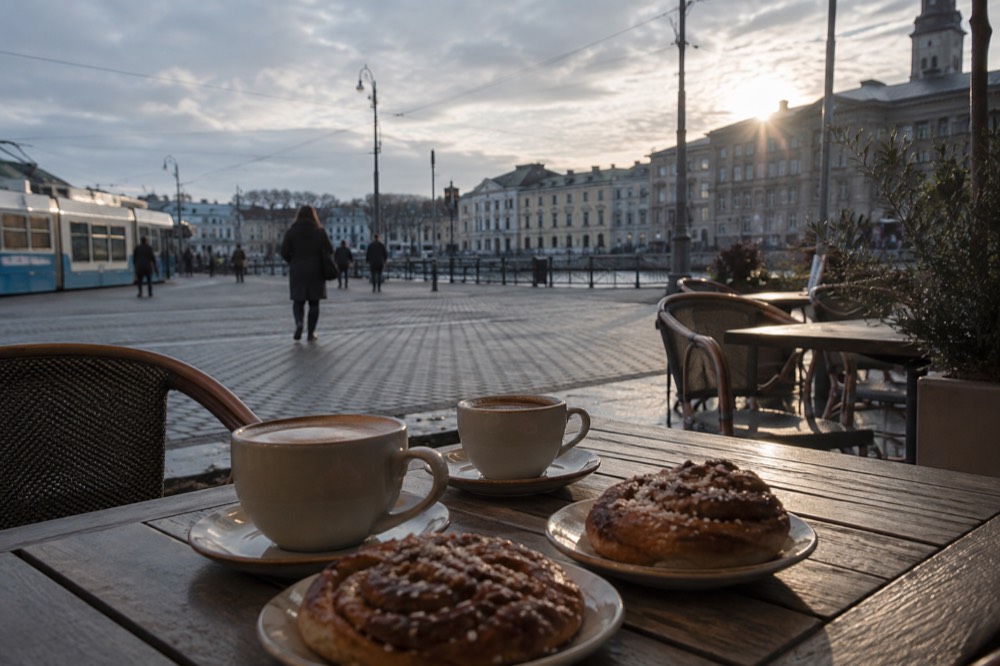
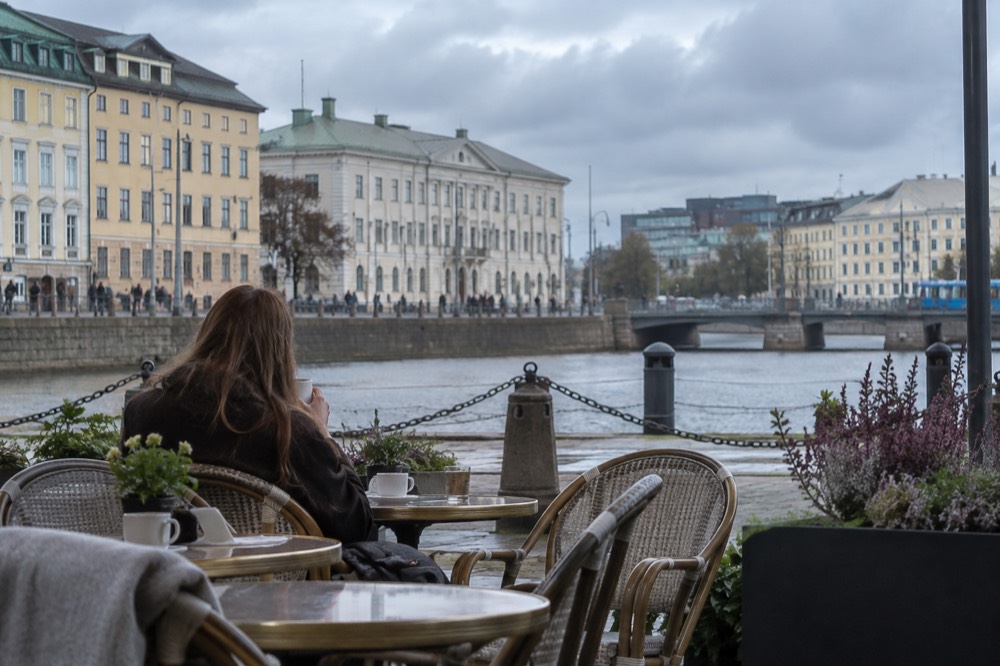
Fika deserves its own sentence because it is both a word and an institution. It means the coffee-and-pastry break, it happens mid-morning and mid-afternoon, and the city treats it as infrastructure rather than indulgence. The fika guide covers where to do it properly, and a cinnamon bun, kanelbulle, ordered with a single confidently pronounced word is the cheapest language lesson in Sweden.
What Is the Gothenburg Dialect Like?
Gothenburg speaks a distinctive western Swedish dialect, göteborgska, best known for its melodic, sing-song delivery and a famous rolling of the r sound that locals describe with pride. Its signature word is "bara", used constantly as an all-purpose filler, and the dialect's humour tradition is a point of local identity. You will hear it on trams and in markets, though everyone speaking it can switch to standard Swedish or English instantly.
The dialect's reputation in Sweden is less about vocabulary than delivery. Göteborgska is often called musical, and the city's comedy tradition leans on it heavily. A few words mark a native speaker immediately: "bara" as an all-purpose particle, "gött" meaning nice or pleasant, and a habit of softening sentences that Stockholmers find charming and slightly baffling.
For a visitor, the dialect is a listening pleasure rather than a comprehension problem. Any local who notices you are not following will slide into clearer Swedish or English without ceremony. The places you hear göteborgska at full strength are the fish counters at Feskekôrka, the tram, and the stands at a football match or the Way Out West festival crowds, where the festival guide explains the city's biggest English-language music week, an event where the language question inverts and the Swedes outnumber the native speakers.
Which Signs and Menus Will Be in Swedish Only?
Most public signage in Gothenburg is Swedish-first with an English layer beneath, but the Swedish-only surfaces are the ones you transact on: tram and ferry ticket machines default to Swedish, Systembolaget's product labels are entirely Swedish, supermarket shelves follow a legal rule that keeps beer weak, and seasonal handwritten signs in the archipelago are often Swedish only. Museums and attractions, by contrast, are reliably bilingual.
The supermarket beer shelf is the best example of a language fact that is actually a law fact. Under Alkohollag (2010:1622), chapter 1, section 8, beer over 2.25% but not over 3.5% ABV is "folköl" and may be sold in ordinary supermarkets; anything stronger, plus all wine and spirits, is sold only by Systembolaget, the state monopoly. That is why the supermarket version of a familiar brand tastes weaker than the label suggests: it is often a 3.5% reformulation made for that shelf. Reading the label in Swedish matters, because the number is the whole story.
| Swedish on the sign | What it means | Where you will see it |
|---|---|---|
| Entré | Entrance / admission | Museums, parks |
| Utgång | Exit | Everywhere |
| Biljetter | Tickets | Tram stops, attractions |
| Öppet / Stängt | Open / Closed | Shop doors |
| Fika | Coffee break | Cafe windows |
| Folköl | Supermarket-strength beer | Grocery shelves |
| Systembolaget | State alcohol shop | High street |
| Spårvagn | Tram | Stops and signs |
| Båt | Boat | Saltholmen ferry terminal |
| Till salu | For sale | Markets |
| Vänster / Höger | Left / Right | Directions |
| Ingen gång | No entry | Construction, stations |
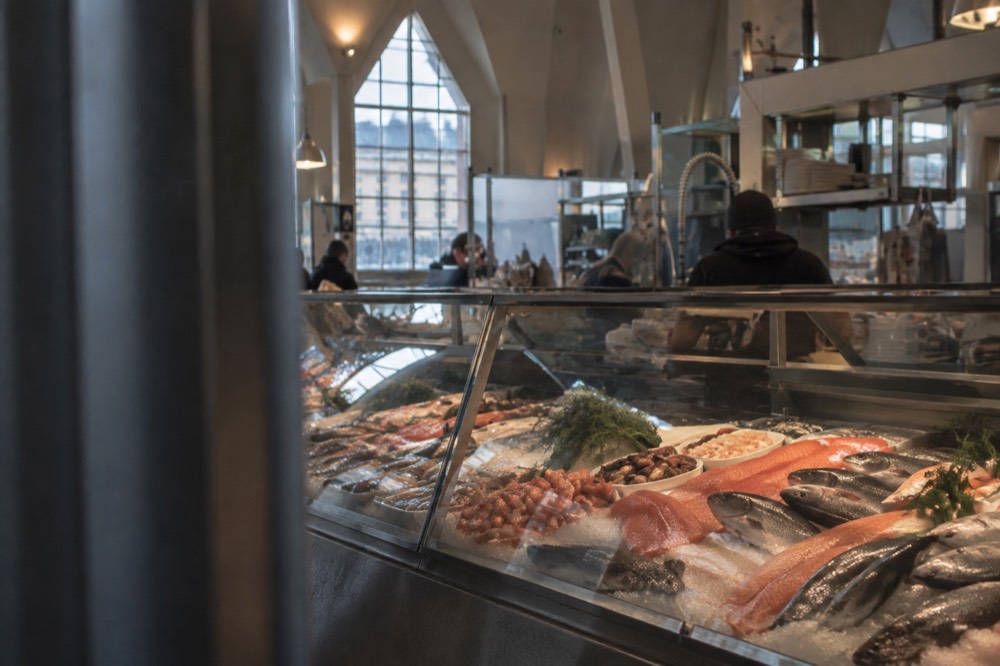
Two current examples show how fast the Swedish-only layer changes. Feskekôrka, the fish church, reopened in 2024 as a food hall with two fish counters and five restaurants, and its counter menus are Swedish-first with staff who translate happily. And Liseberg's own ticket page makes a distinction that costs visitors money if they misread it: an Entré ticket from 95 kr gets you through the gate and onto no rides at all, since rides are a separate Åkpass. The word "Entré" is doing legal work there, not decorative work. The Liseberg tickets guide unpacks the whole pricing structure.
How Do You Get by on Transport Without Swedish?
You get by easily, because the Västtrafik app, the ticket machines and the airport coach all offer English, and the network itself is visual: twelve tram lines colour-coded, ferries numbered like buses, and a 24-hour Zone A ticket at 125 kr that covers tram, bus and the southern archipelago boats alike. The only Swedish you truly need is the stop names, and those are on every display and map.
The transport system is where the language question has the most concrete answer. Västtrafik, the regional transport authority, runs trams, buses and the archipelago ferries on one ticketing system, and its app works fully in English. The ticket machines at stops have an English option on the opening screen. Stop announcements on trams are increasingly bilingual, and the displays show the stop name in text regardless.
The single best-value fact in the city is linguistic and financial at once: an ordinary Västtrafik ticket covers the southern archipelago ferries, and the islands sit inside Zone A. Västtrafik's own network map shows the boat lines alongside the trams, so the same 125 kr 24-hour Zone A ticket that carries you across town carries you out onto the sea to Styrsö, Brännö, Vrångö or Donsö. The getting around guide has the full fare detail, and the archipelago guide covers the islands themselves.
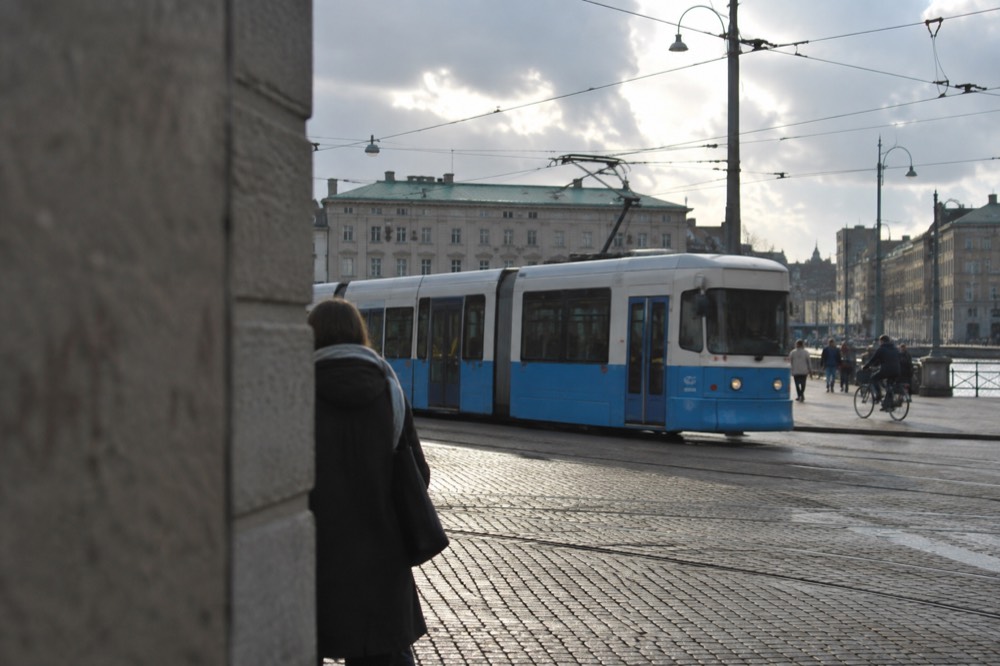
From the airport, the coach is branded Vy flygbussarna and runs Landvetter to Korsvägen to Göteborg Centralstation in about 20 minutes, with English signage throughout. There is no rail link to Landvetter at all, which is worth knowing because older guides imply one is coming; the Västlänken tunnel project is a city-centre rail scheme, not an airport line. The airport transfer guide compares every option.
One caution on fares: a temporary state subsidy currently halves the price of Västtrafik's 30-day period tickets, but it does not apply to the 24-hour and 72-hour tickets visitors actually buy. A 24-hour Zone A ticket is still 125 kr. Headlines about half-price transport are about monthly commuters, not you.
Where Does English Fall Short in Gothenburg?
English falls short in four specific places: Systembolaget's Swedish-only shelf labels, small archipelago shops and kiosks, some ferry and construction announcements, and anywhere a legal distinction hides inside a Swedish word, such as Liseberg's Entré versus Åkpass split or the folköl strength rule. None of these will strand you, but each one rewards a second look at the label.
The Systembolaget case is the clearest. The monopoly's stores are staffed by people who speak English well, but the products, categories and shelf logic are Swedish. Asking staff is the standard solution, and it works. What does not work is assuming the supermarket beer you liked in a bar is the same beer: bar strength beer is Systembolaget-only stock.
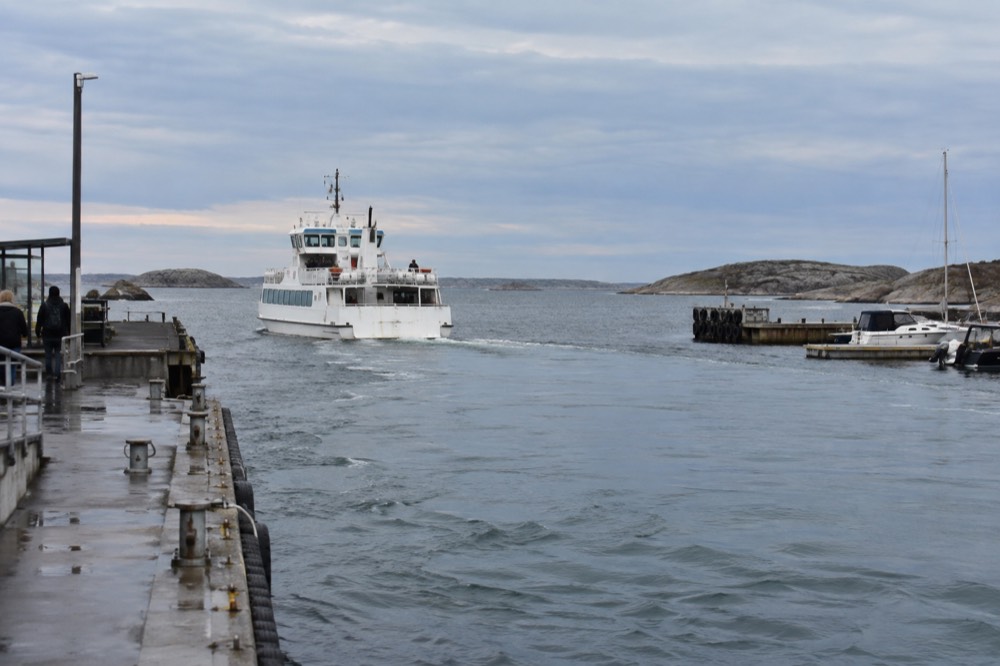
The archipelago is the other edge. The islands are areas of Gothenburg, not day trips, and in summer the villages fill with visitors, so English works in cafes and guesthouses. But a handwritten "stängt" sign on a harbour kiosk, a ferry announcement over a windy speaker, or a note about a changed sailing will be Swedish. The island guide notes which islands have the most services, and the car-free rule means taxi and emergency vehicles are the only exceptions to the no-cars policy on the southern islands.
Museums deserve a positive note here. Göteborgs konstmuseum, Universeum and the city's other major institutions publish English material as standard, and guided tours in English run regularly. World of Volvo, which replaced the old Volvo Museum after that museum closed permanently in December 2023, runs English guided tours on Thursdays. The museums guide lists what is bilingual and what is not.
Should You Learn Swedish Before Your Trip to Gothenburg?
No formal study is needed, and a phrasebook's worth of effort is genuinely enough. What pays off is learning to read the ten or so words that appear on every sign, menu and ticket, plus the fika vocabulary, rather than trying to build sentences. Swedes will answer your Swedish in English anyway, so comprehension beats speaking. A weekend visitor needs the phrase table above; a longer stay might add numbers and food words.
The asymmetry surprises people. Swedes learn English from early school years and use it daily, so a visitor's halting Swedish is often met with a helpful English switch before the second sentence. This is not dismissal. It is a country that has decided efficiency is the politeness. The winning move is to greet in Swedish, transact in English, and thank in Swedish, which reads as respectful rather than clumsy.
If your trip extends beyond the city, the same rules hold across the region. Day trips to Marstrand, the Bohuslän coast or Alingsås work fine in English, and the day trips guide covers the destinations where services thin out. For timing, the best time to visit guide is the companion piece, and it is worth knowing that October is statistically the wettest month while April is the driest, which affects how much of your language practice happens indoors at a fika table.
Common Questions About Language in Gothenburg, Sweden
What language is spoken in Gothenburg?
Swedish. The city's own name for itself is Göteborg, and Swedish is the language of signage, schools and daily life. English is a near-universal second language spoken fluently by most people you will interact with as a visitor.
Can you get by with only English in Gothenburg?
Yes, comfortably. Museums, hotels, restaurants, transport ticketing and the airport are all equipped for English speakers. The only friction points are Systembolaget's Swedish-only labels, some ferry announcements and small archipelago kiosks, all easily handled with staff help or a translation app.
Is English widely spoken in Gothenburg?
Yes. Staff at attractions, restaurants and hotels switch to English automatically, and museum exhibitions are published bilingually. Göteborgs konstmuseum, Universeum and World of Volvo all operate English-language visits as standard.
Do people in Gothenburg speak Swedish or English first?
Swedish first, always. Greetings, signs and everyday transactions begin in Swedish, and the switch to English happens the moment it is useful. Greeting with "hej" and thanking with "tack" is noticed and appreciated.
What does fika mean in Gothenburg?
Fika is the Swedish coffee-and-pastry break, treated as a daily institution rather than a treat. A kanelbulle, cinnamon bun, ordered with a coffee is the standard fika order, and the word works in every cafe in the city.
Why does supermarket beer in Gothenburg taste weak?
Because of a legal threshold, not a recipe choice. Under Swedish alcohol law, supermarkets may only sell beer at or below 3.5% ABV, and anything stronger is sold only at Systembolaget, the state monopoly. The supermarket version of a brand is often a 3.5% reformulation.
The short version: arrive with "hej", "tack" and "fika" in your pocket and English does the rest. Gothenburg is one of the easiest cities in Europe to visit without a word of the local language, and one of the more rewarding ones for trying a dozen words anyway. For everything beyond language, the two-day itinerary puts this guide to work on an actual schedule.