Feskekôrka, Gothenburg's Fish Church: What It Is, What to Eat, and How to Visit
The building that looks like a church on Rosenlundsgatan has been Gothenburg's fish market since 1874. Since 2024 it has been a food hall with five restaurants, and most guides online still describe it wrong.
Short answer
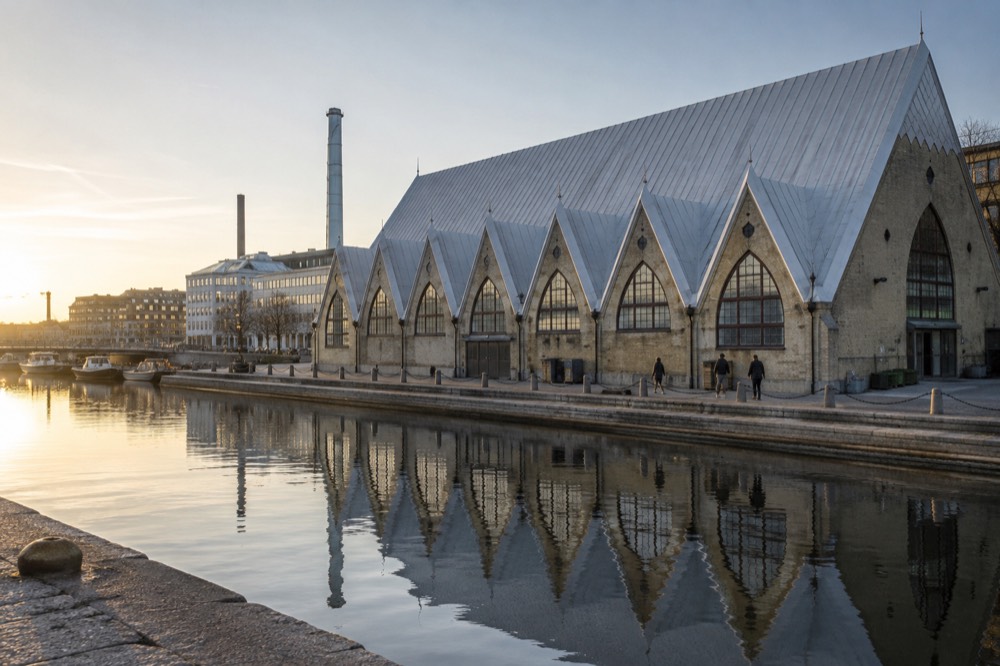
Feskekôrka is a fish-and-seafood market hall in central Gothenburg, Sweden, built in 1874 to resemble a Norwegian stave church. It closed for renovation and reopened in 2024 as a food hall with two fish counters and five restaurants, serving west-coast shrimp, langoustine, salmon and mussels.
Gothenburg has a building that looks like a church but smells like the sea. Feskekôrka, the fish church, has stood on Rosenlundsgatan since 1874, the year the building turned 150 in 2024, the same year it reopened after a renovation as a food hall with five restaurants. Most English-language guides still describe it either as a renovation project or as a row of fish counters. It is neither now. Higab, the municipal property owner, confirms the 2024 reopening, and the hall's own site lists the current tenants: two fish counters and five restaurants, all serving the west-coast Kattegat seafood the city is known for.
This guide covers what Feskekôrka actually is today, what you can eat inside, what a visit costs, when to go, and how to reach it by tram. The practical short version: it is in the city centre, it is free to walk into, and it is one of the few places in Sweden where you can buy langoustines at a counter and eat them at a table ten metres away. It is also, quietly, one of the oldest food buildings in the country still doing its original job on its original site, which is rarer than it sounds.
What Is Feskekôrka, the Fish Church in Gothenburg?
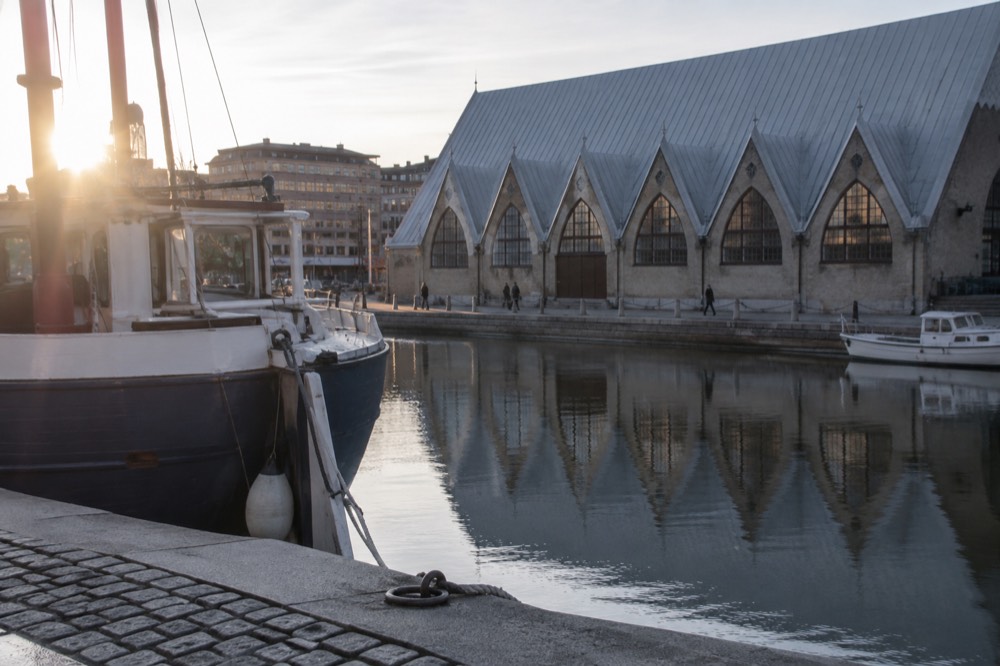
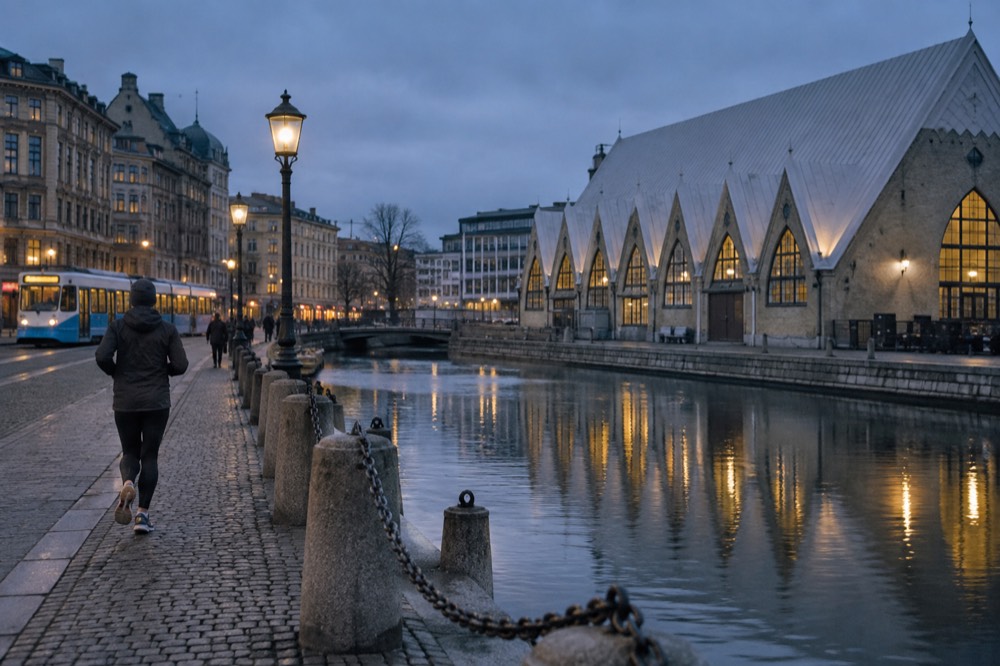
Feskekôrka is a fish and seafood market hall on Rosenlundsgatan in central Gothenburg, Sweden, built in 1874 to resemble a Norwegian stave church, which is where the nickname comes from. It functioned for most of its life as a fish market, closed for renovation, and reopened in 2024 as a food hall with two fish counters and five restaurants rather than only fish sellers.
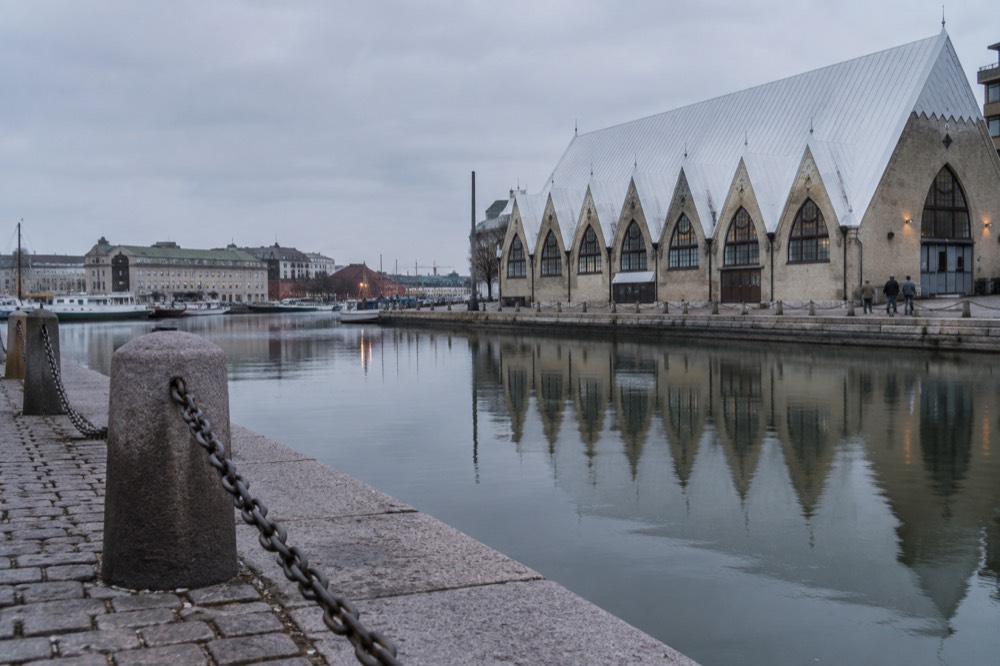
The name is not a metaphor locals invented last week. The building's steep gable and tall arched windows were designed to echo a Norwegian stave church, and the fish sellers moved in when the hall opened. Göteborgs Stad's property arm Higab, which owns the building, records that it reopened in 2024, the year it turned 150. So the building is old, the food hall inside is new, and any guide that describes it as "closed for renovation" is several years out of date.
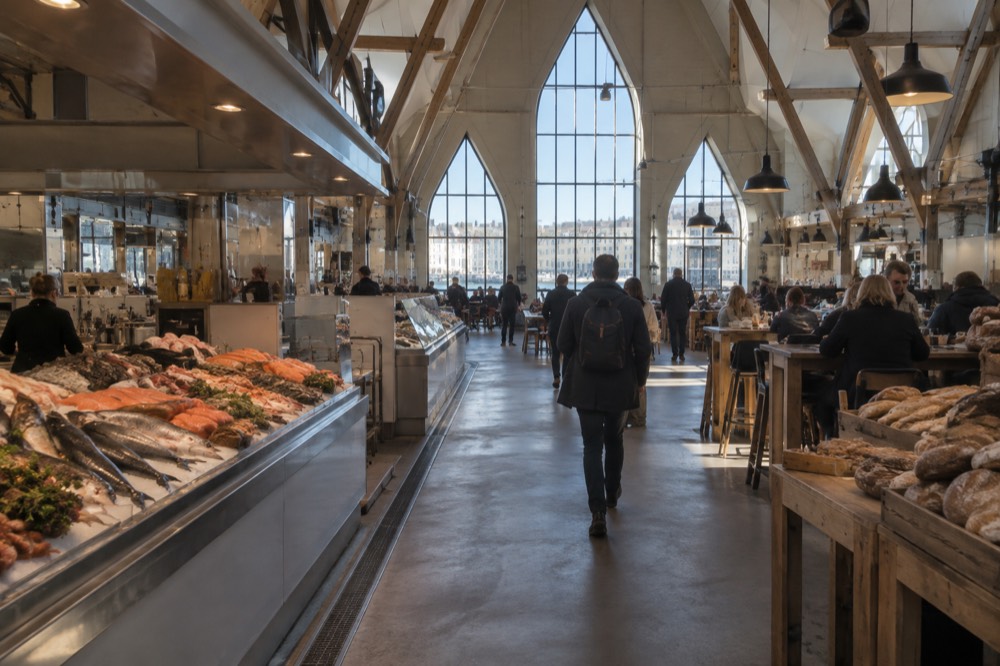
What changed in the renovation is the shape of the visit. Before, you came to buy fish from a counter and take it home. Now, according to the hall's own tenant list, you can eat on site at five restaurants: Haldis Kök, Pråmenaden, Victor von G, Lilla Åstol and Ekmans. Two fish counters, Ebbes Fångst and Flåtens Fiskhandel, still sell raw seafood over the slab, which is the part of the old market that survives. The renovation kept the building's shell and changed what happens inside it, which is the pattern Gothenburg has followed with several of its historic market and harbour buildings.
The seafood itself is the reason the hall exists at all. Gothenburg sits at the mouth of the Göta älv where the river meets the Kattegat, and the west coast fishery lands shrimp, langoustine, salmon and mussels within a short boat ride of the city. Feskekôrka has always been the retail end of that fishery, and it still is. If you want a fuller picture of how the city eats, our where to eat in Gothenburg guide covers the restaurant scene beyond the hall.
What Can You Eat Inside Feskekôrka Today?
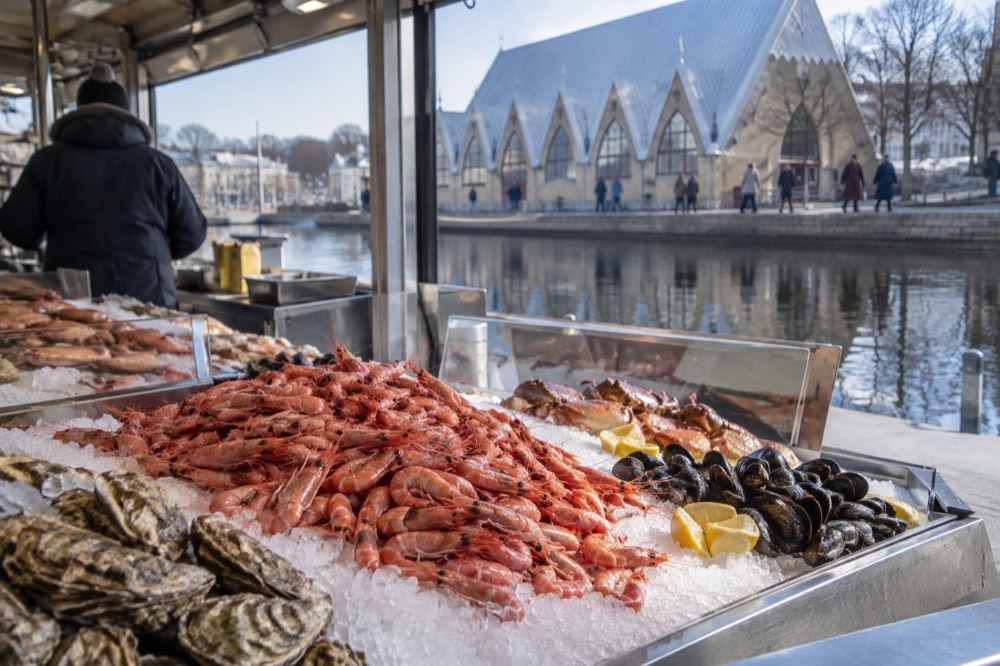
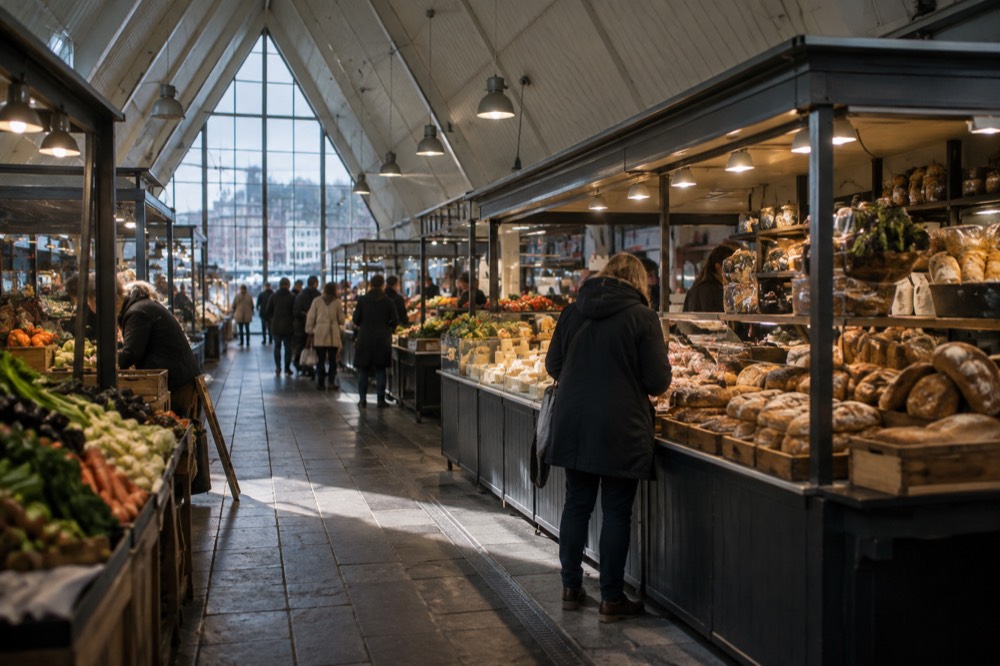
Inside Feskekôrka you can eat at five restaurants, Haldis Kök, Pråmenaden, Victor von G, Lilla Åstol and Ekmans, or buy raw seafood from two fish counters, Ebbes Fångst and Flåtens Fiskhandel. The menu across the hall is west-coast Kattegat seafood: shrimp, langoustine, salmon and mussels, plus the shellfish sandwiches Gothenburg is known for.
The hall's own site publishes the tenant list, and it is worth reading carefully before a visit because each restaurant has its own character. Haldis Kök runs a kitchen counter. Pråmenaden serves plates with a view of the Rosenlund canal. Victor von G and Ekmans round out the restaurant row. Lilla Åstol is the one to watch: its own copy says it reopens in spring, so it is seasonal and a winter visit may find that counter dark.
The two fish counters are the direct descendants of the old market. Ebbes Fångst and Flåtens Fiskhandel sell raw fish and shellfish over the counter, the way the hall worked for its first 150 years. If you are staying somewhere with a kitchen, this is where a [self-catering](https://booking.tpk.ro/bOrKnnc1) seafood dinner starts. If you are not, the restaurants will cook the same catch for you at a table instead.
| Where inside | What it is | Good for |
|---|---|---|
| Ebbes Fångst | Fish counter | Raw seafood to take away |
| Flåtens Fiskhandel | Fish counter | Raw seafood to take away |
| Haldis Kök | Restaurant | Cooked plates, kitchen counter |
| Pråmenaden | Restaurant | Canal-side tables |
| Victor von G | Restaurant | Seafood plates |
| Ekmans | Restaurant | Everyday eating |
| Lilla Åstol | Restaurant, seasonal | Reopens in spring per its own site |
The classic order here is the shrimp sandwich, the dish Gothenburg argues about more than any other. West-coast shrimp, mayonnaise, lemon, bread, and nothing else that gets in the way. The salmon and langoustine come from the same Kattegat fishery. For how the shrimp-sandwich tradition works across the city, see our Gothenburg seafood guide, and for the coffee-and-cake habit that follows any Swedish meal, our fika in Gothenburg explainer covers it.
How Much Does Eating at Feskekôrka Cost?
There is no entry fee to walk into Feskekôrka, it is a public market hall. Eating costs depend on where you sit: the fish counters sell raw seafood by weight at market prices, while the five restaurants each set their own menu prices, and no reliable published price list exists for either, so treat any figure a blog quotes as out of date.
The honest answer about money is that nobody outside the hall can quote you a current price, and this site does not print figures it cannot source. The restaurants change menus with the season and the catch. What can be said with confidence is the structure: entry is free, counter seafood is sold by weight, restaurant plates are mid-range for central Gothenburg, and a shrimp sandwich here will cost less than a full restaurant meal.
For budget context, Gothenburg is not a cheap city, and our is Gothenburg expensive guide breaks down what a trip actually costs across food, transport and accommodation. A market hall like this one is one of the better-value ways to eat well in the centre, because you are paying for the fish rather than for a dining room.
One planning note that catches visitors: alcohol. Beer above 3.5% ABV, all wine and all spirits are sold only by Systembolaget, the state monopoly, under the Swedish alcohol statute, Alkohollag (2010:1622). A restaurant inside the hall can serve alcohol with a meal, but you cannot buy a bottle of wine at the fish counter to take to a bench the way you might in a southern European market. The Gothenburg on a budget guide covers the cheap-eats angle if the budget is tight.
When Is Feskekôrka Open, and When Is the Best Time to Visit?
Feskekôrka's restaurants and fish counters each set their own opening hours, and no single verified schedule covers the whole hall, so check each tenant's own page before going. The reliable seasonal fact is that Lilla Åstol closes for winter and reopens in spring, and the hall is at its liveliest around Swedish lunch hours on weekdays.
This site does not publish opening hours it cannot verify, and market-hall tenants in Sweden change hours by season and by restaurant. What is verifiable: Lilla Åstol's own site states it reopens in spring, so winter visitors should expect that one restaurant to be closed. The rest of the hall operates year-round, which makes it a solid rainy-day option in a city where it rains on about 127 days a year, per SMHI's 1991-2020 normals for station Göteborg A.
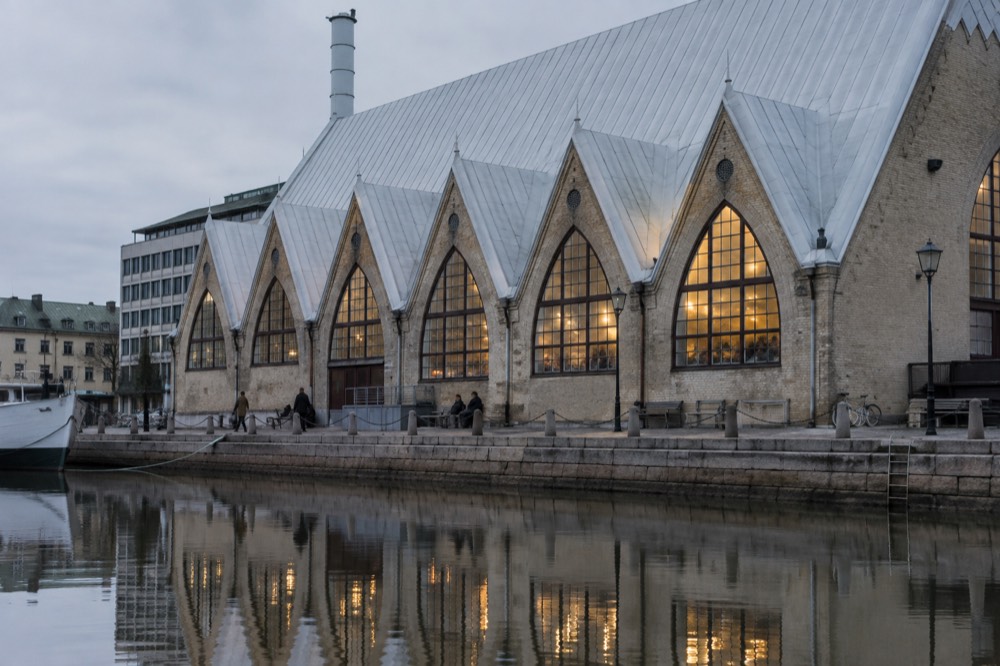
Timing within the week matters more than timing within the day. Swedish lunch runs roughly 11:30 to 13:00, and market halls fill with office workers then. Mid-afternoon is quieter and better for photographs of the building itself, which is the real architectural attraction: the stave-church silhouette is best seen from Rosenlundsgatan in daylight. More of these guides are collected on Gothenburg Travel Guide.
For the wider question of when to come to the city at all, our best time to visit Gothenburg guide has the full seasonal breakdown, and one climate fact worth knowing: SMHI's normals show April as the driest month of the year in Gothenburg, at 51.3 mm against October's 102.9 mm, so spring is the dry window, not summer.
How Do You Get to Feskekôrka in Gothenburg?
Feskekôrka sits on Rosenlundsgatan in central Gothenburg, Sweden, a short walk from the canal and the Rosenlund area, and it is reached on the city's tram network: a single adult one-zone ticket costs 38 kr, and a 24-hour Zone A ticket costs 125 kr, both per Västtrafik's published fare pages.
The tram is the way to arrive. Gothenburg's network runs 12 lines across 188 km of single track as of Göteborgs Spårvägar's 2022 annual report, and the hall is within walking distance of several central stops. Västtrafik's fare table shows a single one-zone adult ticket at 38 kr and a 24-hour Zone A ticket at 125 kr. If you are doing a full day of sightseeing, the 24-hour ticket covers trams, buses and even the archipelago ferries, since the southern islands sit inside Zone A, per Västtrafik's own zone map.
| Transport option | Cost | Notes |
|---|---|---|
| Single tram ticket, 1 zone | 38 kr adult | Västtrafik fare page |
| 24-hour Zone A ticket | 125 kr | Covers trams, buses and Zone A ferries |
| On foot from Göteborg Centralstation | Free | Roughly 10-15 minutes along the canal |
| From Landvetter Airport | Coach, 20 minutes to the centre | Vy flygbussarna, no rail link exists |
Walking from the central station is realistic and pleasant, along the canal on the way. If you are flying in, the airport coach is Vy flygbussarna from Landvetter, a 20-minute run to the Nils Ericson Terminalen per Swedavia, and there is no train to Landvetter at all. Our Landvetter airport to the city centre guide covers that transfer in full, and getting around Gothenburg explains the ticket system.
Feskekôrka or Stora Saluhallen: Which Gothenburg Market Hall?
Gothenburg has two market halls: Feskekôrka, the 1874 fish church on Rosenlundsgatan, and Stora Saluhallen on Kungstorget, a larger general food hall. Feskekôrka is the one for seafood and the building itself, while Stora Saluhallen is the broader market covering cheese, bread, meat and deli goods as well as fish.
The comparison is not really a contest, because they do different jobs. Feskekôrka is a specialist hall: its whole identity is the Kattegat fishery, and its 2024 rebuild doubled down on that with five seafood-leaning restaurants. Stora Saluhallen is the generalist, the older-style covered market with a wider range of stalls. A visitor with time for one and an interest in seafood goes to Feskekôrka. A visitor self-catering for a week goes to Stora Saluhallen.
| Feskekôrka | Stora Saluhallen | |
|---|---|---|
| Location | Rosenlundsgatan | Kungstorget |
| Speciality | Seafood | General food market |
| Built | 1874 | Central market hall, Kungstorget |
| Eat in | Five restaurants | Stalls and eateries |
| Best for | Fish, shellfish, the building | Full shop, deli goods |
Both sit in the centre and can be walked between in a few minutes, so a combined market morning is the efficient plan: Stora Saluhallen first for the general browse, Feskekôrka second for lunch. For the wider food-hall picture across the city, our saluhallen and Gothenburg's food halls guide covers the rest.
What Is Near Feskekôrka for the Rest of the Day?
Feskekôrka sits in Rosenlund, a canal-side central district within walking distance of the Paddan boat tours on the Kungspark canal, the Haga old quarter across the water, and the Avenyn and Götaplatsen axis to the south, so a meal here slots easily into a day of central Gothenburg sightseeing without any transport at all.
The immediate area is one of the most walkable in the city. The Rosenlund canal runs beside the hall, and the Kungspark wraps around it. The Paddan sightseeing boats, which run the old moat route around the city centre, depart close by, and our Paddan boats and the canal sightseeing route guide covers that trip in detail. Cross the water and you are in Haga, the wooden-house quarter, covered in our Haga guide.
South lies Avenyn, the city's main boulevard, running up to Götaplatsen and Göteborgs konstmuseum, which our Gothenburg Museum of Art guide covers along with one dated fact worth planning around: the museum's own rebuild page states it closes in 2028 and reopens in 2032, so a visit in the next two years is on the clock. For a full one-day route that strings these together, see one day in Gothenburg.
If the fish church has given you a taste for the sea the fish came from, the archipelago is the logical afternoon. The southern islands are areas of the city, not day trips: a tram to Saltholmen and a Västtrafik ferry gets you to car-free islands like Styrsö and Brännö on an ordinary ticket, covered fully in our Gothenburg archipelago guide. The Kattegat you just ate from is 40 minutes from the fish counter.
Common Questions About Feskekôrka in Gothenburg
Is Feskekôrka open?
Yes. The hall reopened in 2024 after renovation, per Higab, the municipal property owner, in the year the 1874 building turned 150. It now operates as a food hall with two fish counters and five restaurants. One restaurant, Lilla Åstol, is seasonal and its own site says it reopens in spring.
Why is it called the fish church?
The building was designed to resemble a Norwegian stave church, with a steep gable and arched windows, and it has housed the fish market since it opened in 1874. The Swedish name, Feskekôrka, means exactly that: fish church.
Is there an entry fee for Feskekôrka?
No. It is a public market hall and entry is free. You pay only for what you buy at the counters or eat at the restaurants.
Can you eat inside Feskekôrka or only buy fish?
You can eat in. Since the 2024 reopening the hall has five restaurants, Haldis Kök, Pråmenaden, Victor von G, Lilla Åstol and Ekmans, alongside the two traditional fish counters, Ebbes Fångst and Flåtens Fiskhandel, which sell raw seafood to take away.
What should you eat at Feskekôrka?
West-coast Kattegat seafood: shrimp, langoustine, salmon and mussels. The classic order is a shrimp sandwich, the dish Gothenburg is most associated with, and the restaurants cook the same catch the counters sell raw.
How do you get to Feskekôrka?
It is on Rosenlundsgatan in central Gothenburg, Sweden, walkable from the central station in roughly 10-15 minutes. By tram, a single one-zone adult ticket costs 38 kr and a 24-hour Zone A ticket 125 kr, per Västtrafik's published fares.
Feskekôrka is a building that has quietly become one of the better food stops in Scandinavia while most of the internet still describes the old version. Walk in, look up at the stave-church roof, order the shrimp, and take the tram to the islands the catch came from.