Saluhallen and Gothenburg's Food Halls: Where the City Eats
Gothenburg has two great food halls a short walk apart: Stora Saluhallen, the 19th-century market on Kungstorget, and Feskekôrka, the fish church that reopened in 2024 as a food hall with five restaurants. This guide covers what is inside each, what to eat, and what a visit really costs.
Short answer
Gothenburg's two main food halls are Stora Saluhallen on Kungstorget and Feskekôrka on Rosenlundsgatan. Feskekôrka reopened in 2024 as a food hall with two fish counters and five restaurants, not just fish stalls. Expect west-coast seafood, cheese, charcuterie and Swedish fika, with lunch dishes typically in the 100-200 kr range. Check current prices at the counter before you order.
Gothenburg eats indoors. That is not a criticism, it is a design feature. The city was laid out by Dutch engineers inside a moat, and its food culture grew up inside two great halls rather than along open streets: Stora Saluhallen on Kungstorget, the grand 19th-century market in the middle of the city, and Feskekôrka on Rosenlundsgatan, the fish-shaped building locals call the fish church, which reopened in 2024 after renovation as a full food hall with five restaurants rather than only fish counters. Between them they cover almost everything worth eating in the city, from Kattegat shrimp scooped straight from the counter to proper Swedish fika.
This guide walks through both halls, what to order, what a visit costs, and how to slot them into a day that also takes in the canal, the archipelago boats and the wooden quarter of Haga. If you are planning a wider eating trip through the city, start with our guide to where to eat in Gothenburg and the Feskekôrka deep dive, then come back here for the practical detail.
What Is Stora Saluhallen, Gothenburg's Grand Old Market Hall?
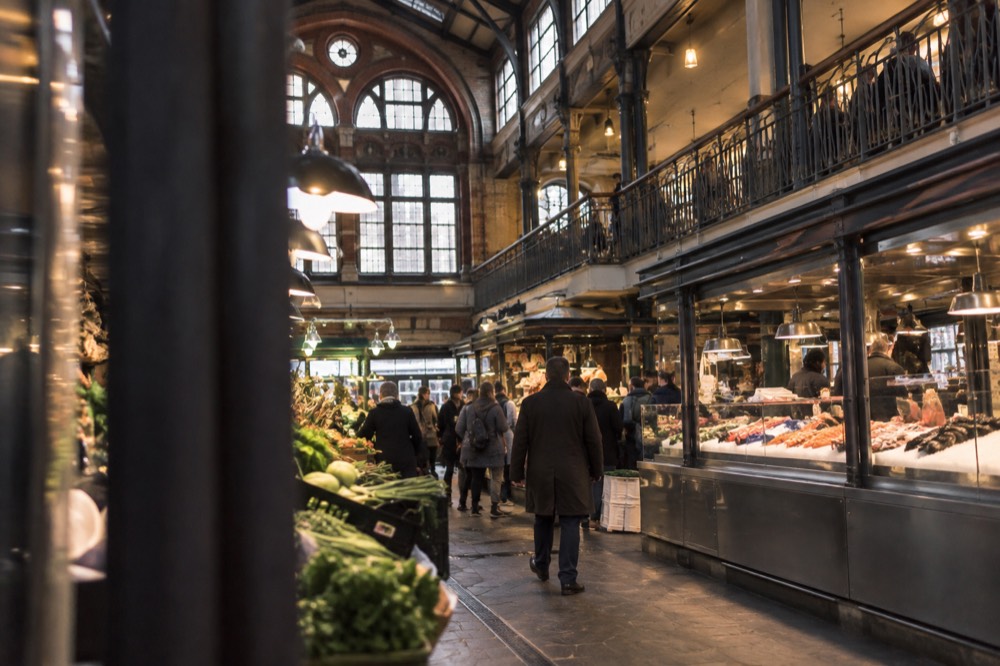
Stora Saluhallen is Gothenburg's main indoor market hall, a purpose-built 19th-century trading hall standing on Kungstorget, a square right on the edge of the old town, a few minutes' walk from Brunnsparken and the canal. Inside, stallholders sell seafood, cheese, charcuterie, bread, produce and ready food, and the hall functions as both a shopping stop and a lunch venue for people who work in the city centre.
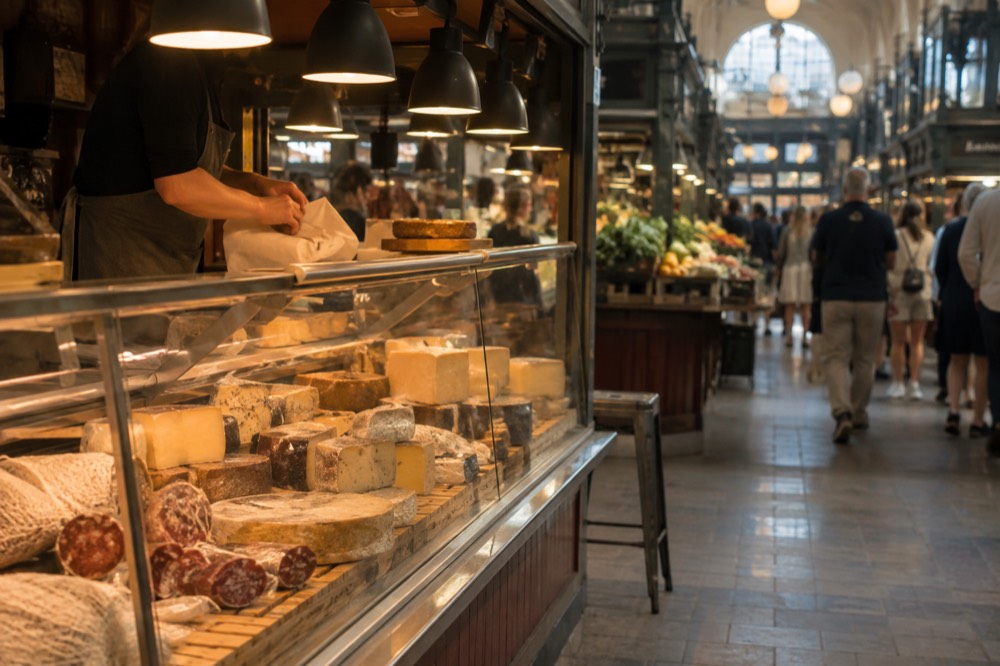
The hall sits where the city's commercial life has always been, between the canal at Grönsakstorget and the Avenyn boulevard a tram ride south. You do not need a plan to find it: Kungstorget is a named stop on several tram lines, and the building announces itself. The mix inside leans Swedish, with the west-coast seafood the region is known for, plus the cheese and charcuterie counters every good market hall needs. Come hungry rather than on a schedule, and treat the hall the way locals do, as a place to buy one thing and eat another.
A word on what a market hall visit is actually for. In Gothenburg it is partly shopping, partly lunch, and partly a weather shelter, and all three matter. The city sees 912 mm of rain across about 127 wet days a year according to SMHI's 1991-2020 normals for station Göteborg A, roughly one day in three, so an indoor food culture is not a luxury here, it is infrastructure. Our page on Gothenburg on a rainy day is the companion piece if the forecast turns.
There is a habit worth copying while you are inside. Regulars do not buy everything at one stall. They buy bread at the baker, cheese at the cheese counter, shrimp at the fish stall, and eat whatever the hot-food stands are serving that day. It takes an extra ten minutes and it is the difference between a transaction and the actual point of a market hall. Ask the counter staff what came in that morning; the answer changes with the boats, and it is the most reliable menu in the building.
If you want a guided introduction to the city's food before you shop on your own, these are the tours that pair well with a market day:
Where Is Stora Saluhallen and When Should You Visit?
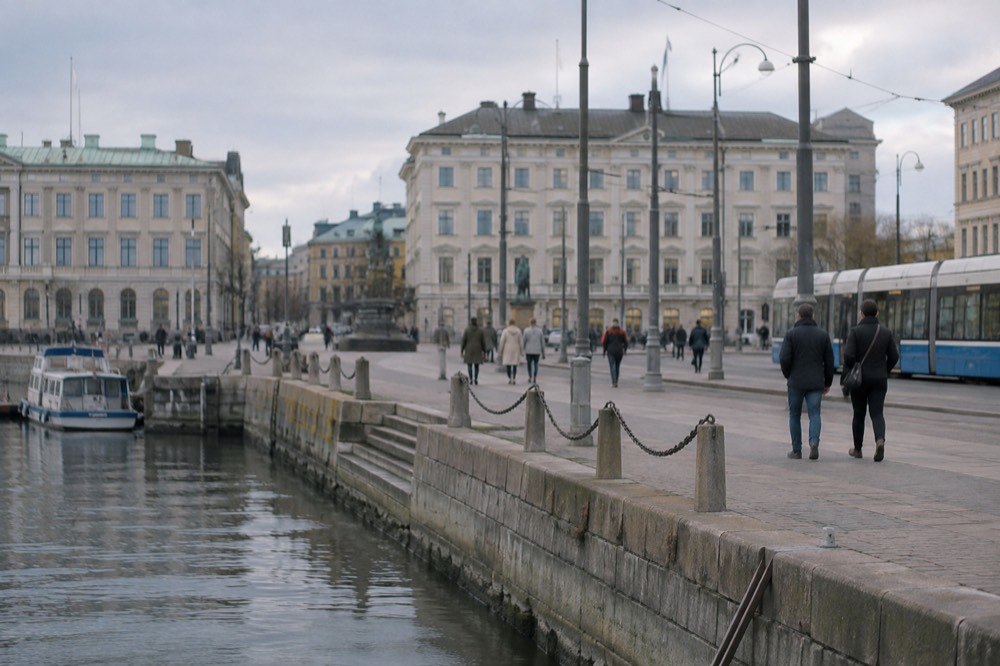
Stora Saluhallen stands on Kungstorget in central Gothenburg, on the northern edge of the old town inside the moat, about five minutes' walk from Brunnsparken and the Paddan boat jetty. Weekday late morning through early afternoon is the busiest and most atmospheric window, when the lunch trade fills the hall; arrive after about 14:00 on a weekday for a calmer, more shopping-focused visit.
The location is the hall's best asset. Kungstorget sits within walking distance of Nordstan's shopping streets, the canal and the Läppstiftet area near the opera house, so the hall slots neatly into a centre-of-town day. There is no need for a car, and no reason for one: the tram network is the backbone of the city, and our guide to getting around Gothenburg covers tickets, zones and the app. A single Zone A ticket costs 38 kr for an adult, and a 24-hour Zone A ticket at 125 kr also covers the archipelago ferries, per Västtrafik's own Zone A ticket page, which is worth knowing if a market lunch is the start of a bigger day out.
Timing around the seasons matters less here than at the city's outdoor attractions. Liseberg, for instance, runs only 18 April to 20 September in summer 2026, with Halloween and Christmas seasons either side, per its own published calendar. A food hall does not close for winter. What does change is the produce: the west-coast shrimp and langoustine trade is at its most abundant in the warmer half of the year, while the run-up to Christmas brings the cured, pickled and baked goods that fill our [Gothenburg Christmas market guide](/guides/gothenburg-christmas-market/). If you are choosing when to come at all, the best time to visit Gothenburg page has the month-by-month case.
One more timing note: Saturdays are the busiest day of the week in both halls, because that is when the whole city does its weekend shopping. If you want the hall at its most alive, Saturday mid-morning is it. If you want space at the counter and a seat without waiting, a weekday afternoon wins every time.
What Is Feskekôrka, the Fish Church, Like Now?
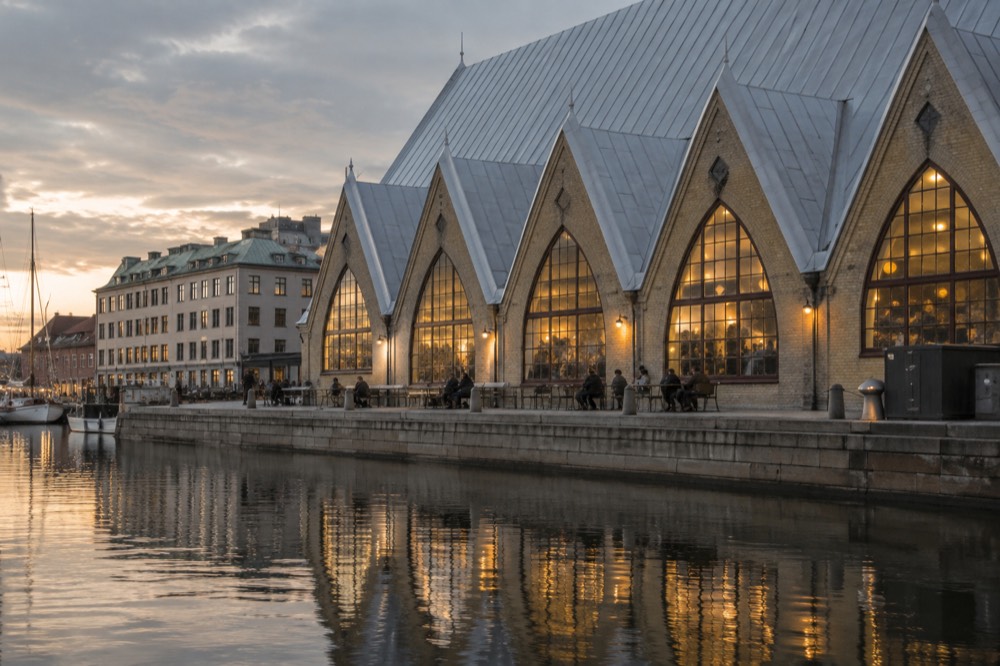
Feskekôrka reopened in 2024 as a food hall, not just a fish market, in the same year the 1874 building turned 150. Inside there are now two fish counters, Ebbes Fångst and Flåtens Fiskhandel, and five restaurants: Haldis Kök, Pråmenaden, Victor von G, Ekmans and the seasonal Lilla Åstol. It stands on Rosenlundsgatan, a short walk west of Stora Saluhallen.
The renovation changed what the building is for. Older guides describe a hall of fish counters and little else, and that version is gone. The municipal property owner Higab confirms the 2024 reopening on its own Feskekôrka property page, and the hall's own site, feskekorka.se, lists the current tenants. One nuance worth knowing before you plan a meal: Lilla Åstol is seasonal, its own copy says it reopens in spring, so do not build a December visit around that one restaurant. The others run through the year.
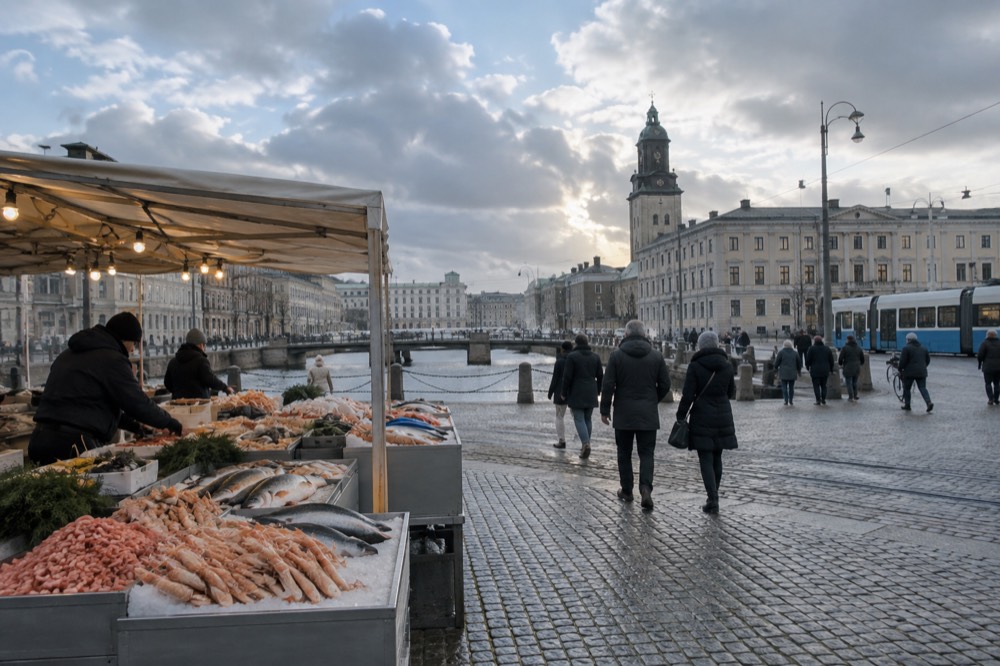
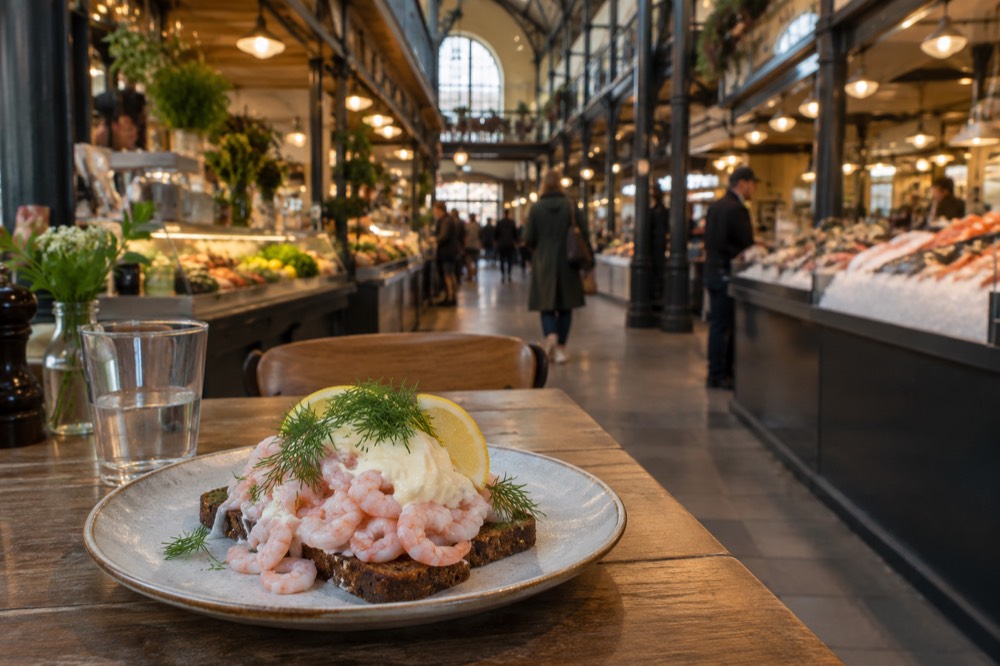
The seafood sold here is west-coast Kattegat produce: shrimp, langoustine, salmon and mussels, the same catch that defines the region's restaurants all the way up the Bohuslän coast. The classic order, and the one every first-time visitor should make at least once, is a shrimp sandwich or a plate of peeled shrimp with bread, butter and ale. If you want the full background on the building, its fish-church nickname and what each counter sells, our dedicated Feskekôrka guide covers it in detail.
What Should You Eat at Gothenburg's Food Halls?
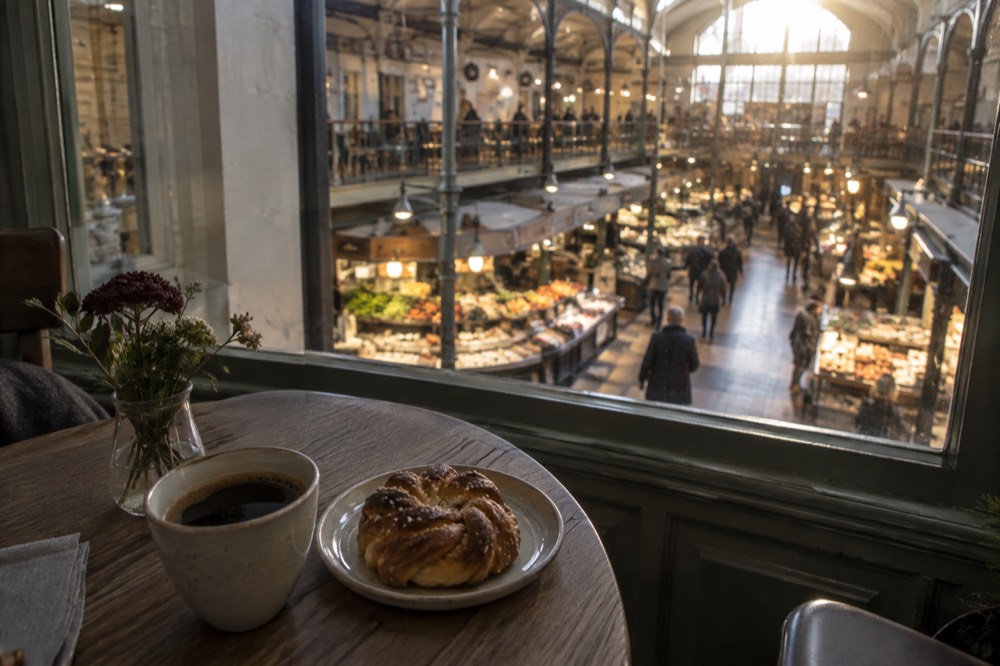
Order the Kattegat seafood first: shrimp by the plate or on bread, langoustine when it is on the ice, and smoked or cured salmon. Then fill in with a proper fika, coffee plus a cinnamon bun or cardamom roll, and buy cheese, charcuterie and bread at the counters rather than in a supermarket, because the market-hall versions are the point. Lunch dishes across both halls typically run in the 100-200 kr range, but check the board before you order.
The shrimp sandwich is the city's signature dish and the food halls are its natural home. Beyond it, the sensible strategy is to eat a hot lunch at one of the restaurants, shop the counters for anything you want to carry home or to a picnic, and finish with fika, the coffee-and-pastry ritual that Swedes treat as a scheduled break rather than a snack. Our fika guide explains the custom, and the Swedish dishes to try page covers the wider plate.
Here is how the two halls divide the work between them:
| Stora Saluhallen | Feskekôrka | |
|---|---|---|
| Location | Kungstorget, edge of the old town | Rosenlundsgatan, west of the centre |
| Character | General market hall, all categories | Seafood-led food hall |
| Fish counters | Among its stalls | Ebbes Fångst, Flåtens Fiskhandel |
| Restaurants | Counter food and ready meals | Haldis Kök, Pråmenaden, Victor von G, Ekmans, Lilla Åstol (seasonal) |
| Best for | One-stop shopping, cheese and charcuterie | Shrimp, langoustine, a seafood lunch |
| Walk between | Roughly 10 minutes on foot | Roughly 10 minutes on foot |
And the seafood vocabulary that matters at the ice counter:
| Swedish | English | How it is usually served here |
|---|---|---|
| Räkor | Shrimp | Peeled by hand, on bread or by the plate |
| Havskräfta | Langoustine | Grilled or boiled, a splurge order |
| Lax | Salmon | Smoked, cured (gravlax) or hot |
| Musslor | Mussels | In broth, often with bread |
| Sill | Herring | Pickled, mustard or dill cured |
One rule that surprises visitors concerns the beer. Anything above 3.5% ABV is sold only by Systembolaget, the state monopoly, under Alkohollag (2010:1622), so the beer sold at or near the food halls is either folköl at 3.5% or below, or you buy the stronger version at a Systembolaget store separately. The shelf version of a familiar brand is often a 3.5% reformulation. That is the law, not the restaurant being stingy. The rest of the planning pages sit on Gothenburg Travel Guide.
How Do the Food Halls Fit Into a Day in Gothenburg?
Both halls sit inside or beside the old moat, roughly ten minutes' walk from each other, which makes them the natural lunch anchor of a central Gothenburg day. A workable order is Stora Saluhallen late morning for shopping, Feskekôrka for a seafood lunch, then the canal or an archipelago ferry in the afternoon, since a 125 kr 24-hour Zone A ticket covers the tram to Saltholmen and the boat to the car-free islands on the same ticket.
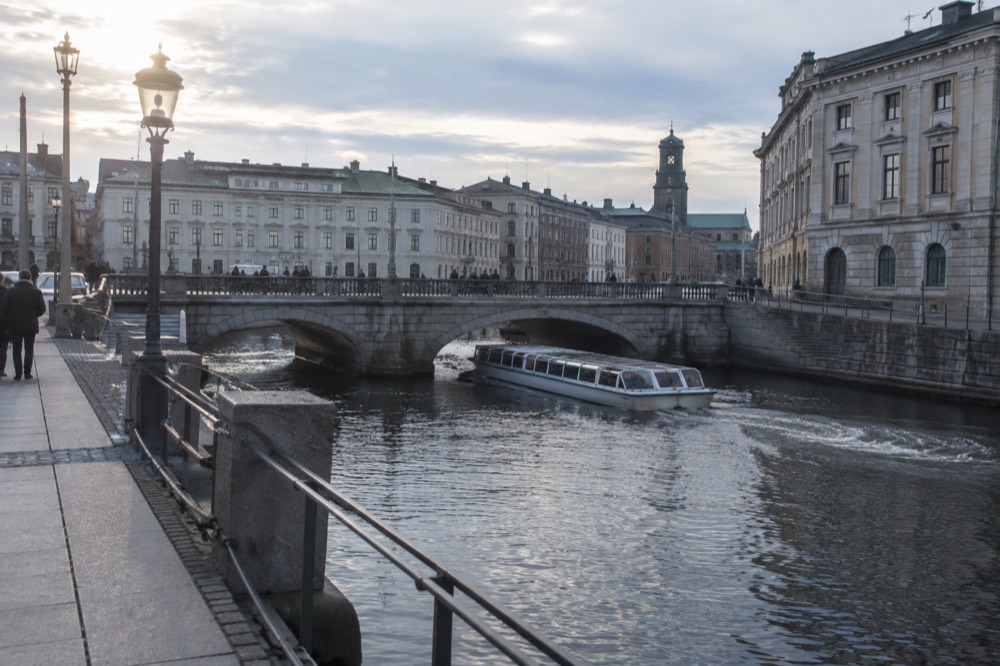
The geography rewards a walking loop. From Feskekôrka you can walk south through the Masthuggskyrkan viewpoint streets or east to the Haga quarter, the wooden old town covered in our Haga guide. The Paddan canal cruise, the city's classic sightseeing boat, departs from Kungsportsplatsen practically between the two halls, and the amphibious bus tours start nearby too, which is why we recommend them alongside a market day.
The Paddan is the natural pairing because it shows you the moat the halls sit inside. The operator's listing shows a two-hour cruise on the River Säveån rated 4.6 from 105 reviews, from $40 per person. If you would rather have a guide explain the food culture itself, the fika walking tour below does that on foot, and the amphibious bus covers the same central ground without walking.
For the afternoon, the archipelago is the strong move, and it is not a day trip in the excursion sense: the southern islands are areas of Gothenburg, reached by tram to Saltholmen and then ferry, on the ordinary Västtrafik ticket. Our southern archipelago guide covers the islands, and the practicalities are in how to get to the Gothenburg archipelago. Eating shrimp on a car-free island after buying them in a market hall is about as Gothenburg as a day gets.
If you are travelling with children, the halls are an easy sell: kids who will not sit through a restaurant meal will eat a shrimp sandwich standing up, and the Gothenburg with kids guide has the rest of the family itinerary. If you are on a tighter budget, the halls also anchor the eating-out section of our free things to do in Gothenburg page, because browsing costs nothing and a counter lunch costs less than a restaurant table.
Is Eating at Gothenburg's Food Halls Expensive?
A market-hall lunch in Gothenburg typically costs in the 100-200 kr range for a hot dish, a shrimp sandwich runs below that, and a fika with coffee and a bun adds a modest amount on top, but prices move with the catch and the season, so treat these as planning ranges and check the board. Counter seafood sold by weight is the item that can climb quickly, especially langoustine. Compared with a sit-down restaurant, the halls are the cheaper way to eat the same produce.
Gothenburg is not a cheap city, and our full cost breakdown lives in is Gothenburg expensive, what a trip really costs. The food halls, though, are where the city's own residents manage the cost of good produce, which tells you the pricing is local rather than tourist-tier. The ranges below are planning figures, not promises.
| Item | Typical planning range | Notes |
|---|---|---|
| Shrimp sandwich | 90-150 kr | The signature order, price moves with the catch |
| Hot lunch dish | 100-200 kr | Varies by restaurant and season |
| Plate of peeled shrimp | 150-250 kr | Sold by weight at the counter |
| Langoustine | Market price | The splurge item, ask at the counter |
| Fika: coffee plus bun | 60-100 kr | Standard citywide range |
| Cheese or charcuterie to take away | Priced by weight | Buy what you will eat that day |
Two cost notes worth carrying. First, the Göteborg City Card no longer exists in its old municipal form, so do not budget around a pass that supposedly bundles transport and attractions; the current [Go City](https://gocity.tpk.ro/HQKyKKW4) product is a different thing under different terms. Second, if you are staying longer and cooking, the halls are also where you buy ingredients, and self-catering from a market hall is the single best value-per-krona food move in the city. For where to base yourself, see where to stay in Gothenburg.
If a full day of sightseeing plus the halls sounds right, these three pair a market lunch with the classic ways to see the city:
And for the land-and-water option specifically:
The amphibious bus listing shows a one-hour tour rated 4.7 from 4,326 reviews, from $36 per person, which makes it the most-reviewed sightseeing product in the city. It does not replace a food hall visit, it just frames one: you drive past the halls, splash into the harbour, and come back hungry.
Common Questions About Gothenburg's Food Halls
What is the famous fish market hall in Gothenburg?
Feskekôrka, the fish church, on Rosenlundsgatan. It reopened in 2024 as a food hall with two fish counters and five restaurants. Stora Saluhallen on Kungstorget is the city's other, general market hall, about ten minutes' walk away.
Is Feskekôrka open, or is it closed for renovation?
It is open. The renovation is finished and the hall reopened in 2024, the same year the 1874 building turned 150. It now operates as a food hall rather than a fish-counter-only market. One restaurant inside, Lilla Åstol, is seasonal and reopens each spring.
How far apart are Stora Saluhallen and Feskekôrka?
Roughly a ten-minute walk. Stora Saluhallen stands on Kungstorget at the edge of the old town; Feskekôrka is on Rosenlundsgatan just west of the centre. Both sit within the old moat, so the Paddan canal cruise passes close to both.
What should I eat at a Gothenburg food hall?
Shrimp, first: a shrimp sandwich or a hand-peeled plate of them. Then langoustine if it is on the ice, smoked or cured salmon, and a proper fika with coffee and a cardamom roll. Treat the halls as planning ranges, hot lunch dishes typically run 100-200 kr, and confirm prices at the counter.
Can I buy beer at the food halls?
Only beer at or below 3.5% ABV. Anything stronger is sold only by Systembolaget, the state monopoly, under Swedish alcohol law. The beer available near the halls is often a 3.5% reformulation of a stronger brand.
Are Gothenburg's food halls good in winter?
Yes, and they are arguably better, because they are indoors. The city sees about 127 wet days a year, so the halls double as the local answer to bad weather. The Christmas run-up also brings cured, pickled and baked goods that are not on the counters in summer.
Gothenburg Travel Guide is an editorial desk covering the city, its transport, its islands and its food halls, and this page is part of our full library of Gothenburg guides.