Swedish Dishes to Try in Gothenburg: What to Eat on the West Coast
Gothenburg eats from the Kattegat. This is the city for shrimp sandwiches, langoustine, smoked salmon and a proper fika, and the 2024-reopened Feskekôrka food hall is the place to start.
Short answer
The dishes to try in Gothenburg are the shrimp sandwich (räkmacka), fresh langoustine, smoked and cured salmon, west-coast mussels, meatballs with cream sauce, husmanskost classics like kåldolmar, and a cinnamon bun with coffee for fika. Feskekôrka, reopened in 2024 as a food hall, and Stora Saluhallen are the two market halls to build a food day around.
Gothenburg sits at the mouth of the Göta älv, where the river meets the Kattegat, and the city has always eaten what the water gives. The shrimp sandwich is not a tourist invention here, it is a civic institution. The fish church, Feskekôrka, reopened in 2024 as a food hall with five restaurants and two fish counters, in the same year the 1874 building turned 150. The beer shelf in the supermarket stops at 3.5% ABV by statute, and anything stronger lives in Systembolaget. All of this shapes what a food trip to Gothenburg actually tastes like, and this guide walks through the dishes, the halls and the neighbourhoods that serve them.
What Swedish Dishes Should You Try in Gothenburg?
The short list is the räkmacka (shrimp sandwich), fresh langoustine, smoked and gravad salmon, west-coast mussels, kåldolmar, meatballs with cream sauce, pytt i panna, and a cinnamon bun or semla for fika. Gothenburg's version of each leans on the Kattegat and on old husmanskost, the Swedish home-cooking tradition, and the city's market halls, Feskekôrka and Stora Saluhallen, are where the freshest versions are found.
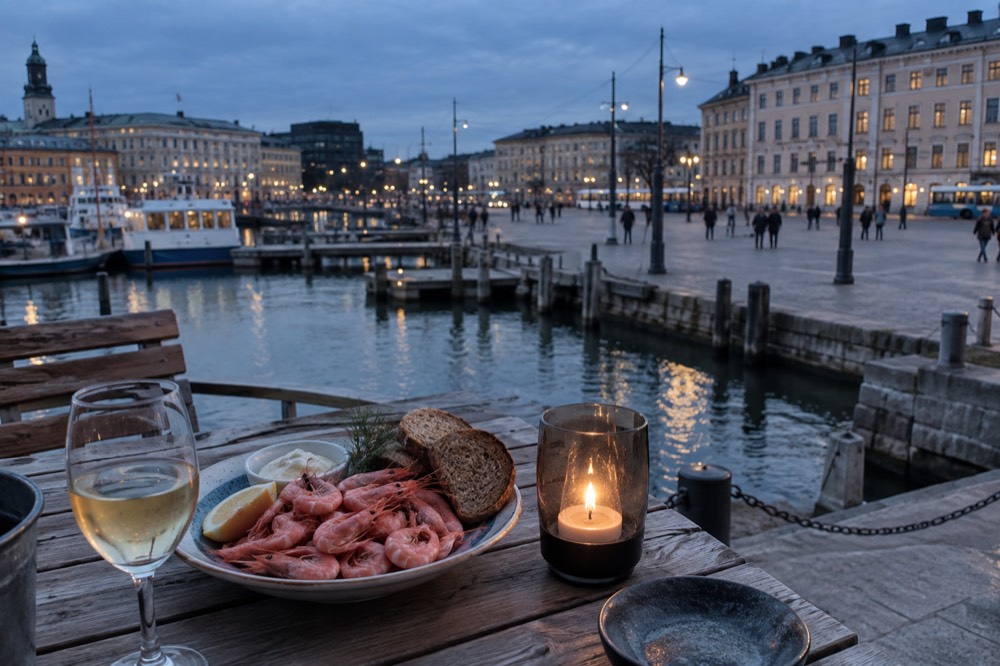
Start with the shrimp sandwich, because Gothenburg argues it makes the best one in Sweden. The west coast shrimp are small, sweet, cold-water shrimp, peeled by hand, piled on buttered bread or a fried slice, usually with mayonnaise, dill, lemon and sometimes a boiled egg. Every harbour-side kiosk and half the restaurants in the city sell one, and the quality difference between a good one and a lazy one is enormous. The same shrimp, bought by the kilo and peeled yourself with a beer beside the water, is the cheaper and arguably better ritual.
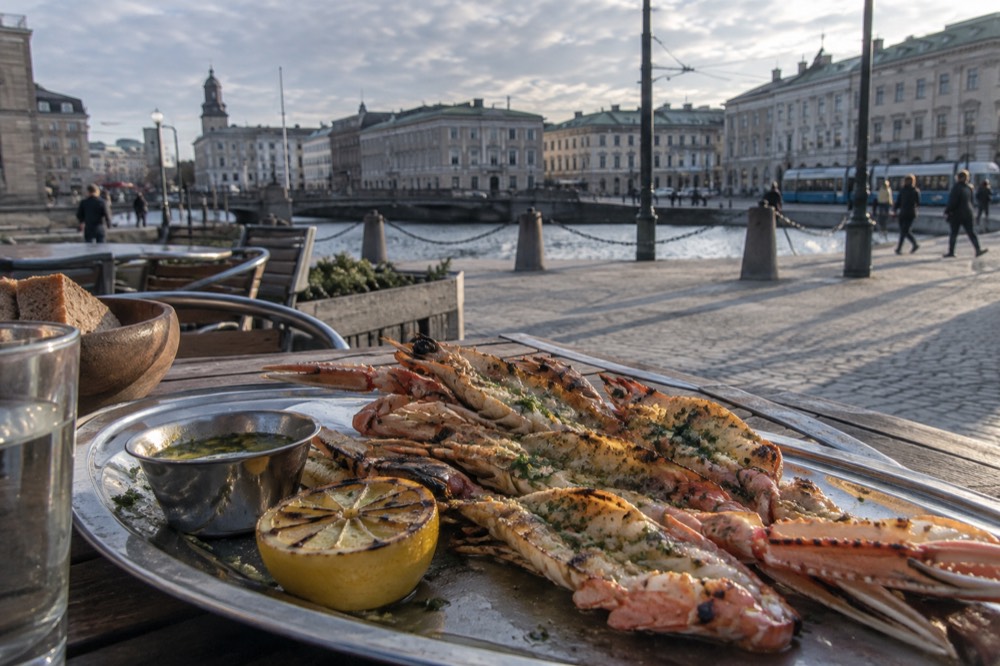
Langoustine is the luxury item of the west coast, and Gothenburg is the natural place to eat it. Grilled with garlic butter, or simply boiled and served with aioli and bread, it appears on menus all over the city from late summer onwards. Smoked salmon, gravad lax (cured with salt, sugar and dill) and the warm variant löjrom on toast are all standard. Mussels farmed in the clean Kattegat water show up in white wine and cream stews all year.
On the non-fish side, Swedish husmanskost is the home-cooking canon: meatballs with cream sauce, lingonberry and potatoes, kåldolmar (cabbage rolls), pytt i panna (a fried hash of potato and meat topped with a fried egg), and palt or kroppkakor dumplings in the winter months. Gothenburg's old workers' quarter Haga, covered in our Haga guide to the wooden old quarter, is a good hunting ground for the classic versions of all of these.
Which Seafood Is Gothenburg Famous For?
Gothenburg is famous for west-coast shrimp, langoustine, mussels, oysters and the salmon family, all pulled from the Kattegat and Skagerrak. The signature dish is the räkmacka shrimp sandwich, and the signature event is the autumn shellfish season, when langoustine and lobster boats land at harbours up and down the coast from Gothenburg. The Bohuslän coast north of the city is the oyster and lobster heartland, and Gothenburg is its market town.
The west coast of Sweden is one of Europe's cleanest shellfish waters, and the cold, brackish Kattegat grows slow, firm, sweet shrimp and langoustine that warm-water fisheries cannot match. Gothenburg, as the region's only big city, has always been the place where that catch gets sold and eaten. The fish counters at Feskekôrka, Ebbes Fångst and Flåtens Fiskhandel, sell the day's landings, and the five restaurants inside, Haldis Kök, Pråmenaden, Victor von G, Lilla Åstol and Ekmans, cook it a few steps away.
The season matters more here than in most cities. Sea temperature at the Vinga lighthouse station peaks in August at 18.6 C and stays warm into September, 16.7 C, which is actually warmer than June at 16.2 C. Shellfish condition follows the water, and the late-summer and autumn menus are the ones locals wait for. The rainfall pattern matters too: SMHI's 1991-2020 normals for the Göteborg A station put October as the wettest month of the year at 102.9 mm, while April is the driest at 51.3 mm, per SMHI's published normals for the 1991-2020 period. If you are timing a trip around food rather than weather, our best time to visit Gothenburg guide breaks the year down month by month.
| Dish | What it is | When it is best | Where to try it in Gothenburg |
|---|---|---|---|
| Räkmacka | Hand-peeled west-coast shrimp on buttered bread, with mayo, dill and lemon | All year, best late summer | Harbour kiosks, Feskekôrka, any seafood restaurant |
| Langoustine (havskräfta) | Grilled or boiled shellfish, often with garlic butter | Late summer and autumn | Feskekôrka restaurants, seafood menus citywide |
| Gravad lax | Salmon cured with salt, sugar and dill, served with hovmästarsås | All year | Market halls, hotel breakfasts, smörgåsbord |
| Musslor | Mussels in white wine or cream stew | Autumn, when the water cools | West-coast restaurants, archipelago taverns |
| Oysters (from Bohuslän) | Native and Pacific oysters from the coast north of the city | Autumn through spring, months with an R | Feskekôrka counters, oyster safaris on the coast |
The oyster safari deserves a mention even though it happens outside the city: Bohuslän, the granite-island coast north of Gothenburg, runs wading and tasting trips through the colder months, and the oysters there are wild-grown natives. The Bohuslän coast day trips guide covers how to get there by public transport.
Where Does Fika Fit Into a Gothenburg Food Trip?
Fika is the Swedish coffee-and-bun break, and in Gothenburg it is a daily institution rather than a tourist activity: a cinnamon bun (kanelbulle), a cardamom bun, or in season a semla, taken with filter coffee, usually mid-morning and again mid-afternoon. The city's café culture is dense, Haga's Café Husaren serves the oversized Hagabullen bun, and fika is the single easiest Swedish food custom for a visitor to adopt.
You will not eat well in Gothenburg without understanding fika, because it structures the entire day. The word is both noun and verb, the practice is a protected part of workplace culture, and the standard order is coffee plus something baked. Our full fika in Gothenburg guide covers the vocabulary, the tipping question and the best cafés, but the food version is simple: kanelbulle (cinnamon), kardemummabulle (cardamom), and from Christmas to Easter the semla, a cardamom bun filled with almond paste and whipped cream.
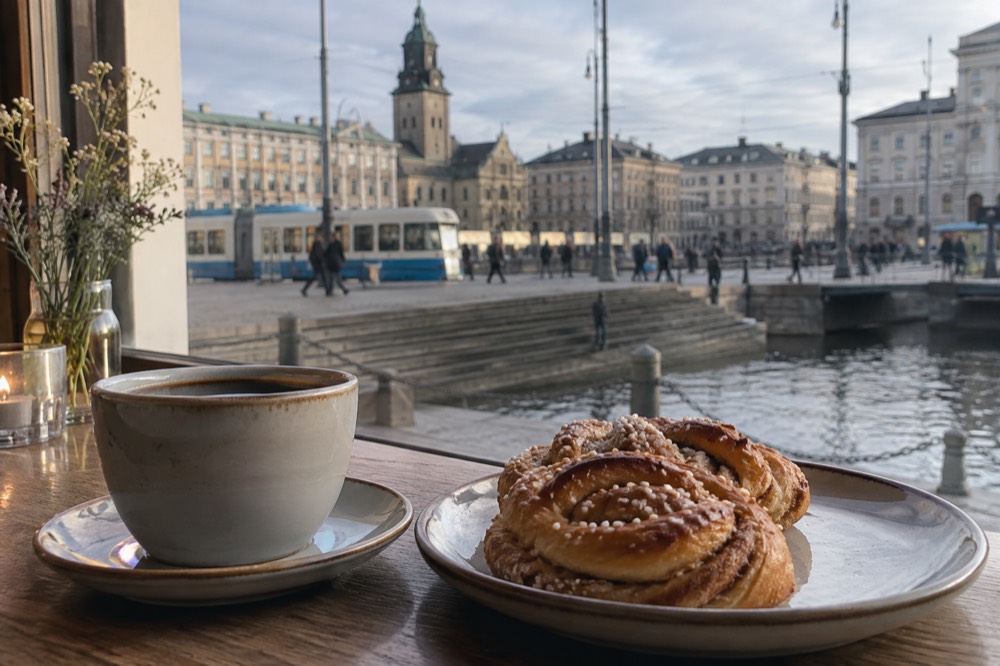
The Hagabullen, a plate-sized cinnamon bun served in Haga, is the famous local variant. Haga itself, the preserved wooden-house quarter, is where most visitors have their first fika, and the cafés there open early. In Vasastan and around Linnégatan the café scene skews more student and more modern, with sourdough and cardamom knots alongside the classics.
| Fika item | What it is | When Swedes eat it |
|---|---|---|
| Kanelbulle | Yeasted cinnamon bun, often with pearl sugar | Daily, year round |
| Kardemummabulle | Cardamom version, the other national default | Daily, year round |
| Semla | Bun sliced and filled with almond paste and cream | Shrove Tuesday traditionally, but now Christmas to Easter |
| Dammsugare | Green marzipan cylinder, "the vacuum cleaner" | Any time, with coffee |
| Prinsesstårta | Layer cake with marzipan dome | Birthdays and Saturdays |
A guided walk that builds the fika stop in is one of the easiest ways to get both the old town and the coffee break in one go.
Where Should You Eat: The Market Halls and the Neighbourhoods?
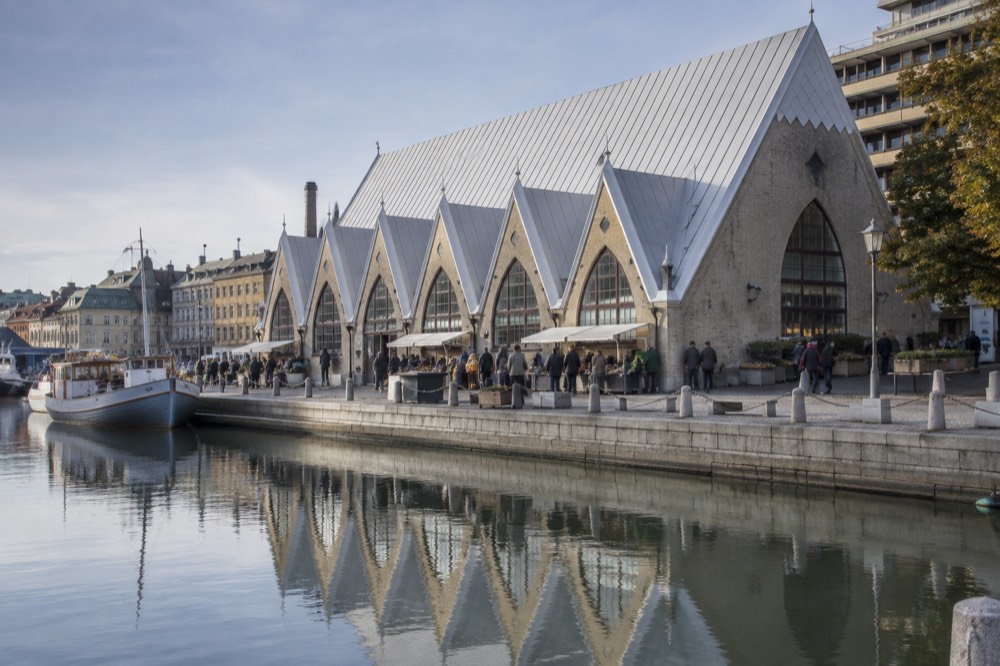
The two market halls to build a Gothenburg food day around are Feskekôrka, the 1874 fish-church building reopened in 2024 as a food hall with five restaurants and two fish counters, and Stora Saluhallen on Kungstorget, the older general market hall. Beyond them, Haga is the classic café quarter, Linnégatan and Vasastan the modern restaurant strip, and the archipelago islands serve simple shrimp and fish at harbourside kiosks.
Feskekôrka, the fish church, is the one building every food visitor ends up at. It looks like a church because it was designed to look like one, with a ridge roof like an upturned boat hull, and it reopened in 2024 after renovation as a food hall rather than the fish-only market of old. Inside now: the counters Ebbes Fångst and Flåtens Fiskhandel, and the restaurants Haldis Kök, Pråmenaden, Victor von G, Lilla Åstol and Ekmans. Lilla Åstol is seasonal and closes for winter, reopening in spring. Our dedicated Feskekôrka guide covers what to order at each counter and restaurant.
Stora Saluhallen on Kungstorget is the other hall, a general food market of cheese, charcuterie, bread and small lunch counters, and it makes a good pairing with Feskekôrka on the same walk. The full restaurant and neighbourhood picture, from the Michelin-starred rooms to the harbour kiosks, is in our where to eat in Gothenburg guide.
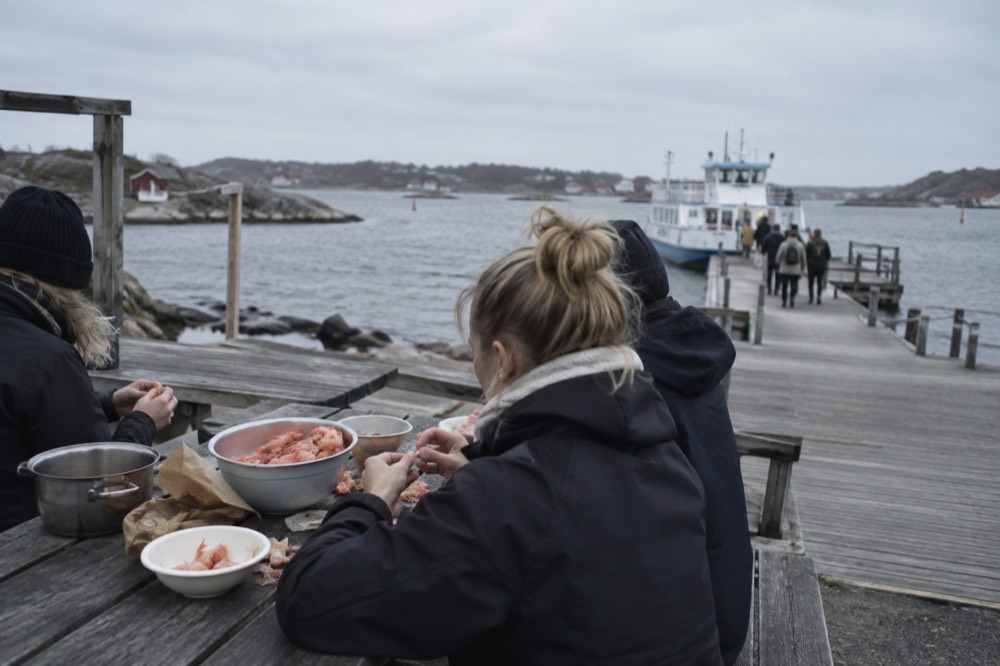
The archipelago is the third food district, and it is legally part of the city: the islands of the southern archipelago are car-free areas of Gothenburg reached by tram and ferry on an ordinary Västtrafik ticket, and the harbour kiosks on Styrsö, Brännö and Vrångö sell shrimp sandwiches and boiled shrimp by the bag. Eating shrimp on a ferry pier with your feet over the water is the most Gothenburg meal there is. The southern archipelago guide covers the islands, and the getting around Gothenburg guide covers the ticket that gets you there.
| Where | What it does best | Best for |
|---|---|---|
| Feskekôrka | Fish counters, shellfish, cooked seafood plates | First stop, lunch, buying to take away |
| Stora Saluhallen | Cheese, charcuterie, bread, lunch counters | A second hall, picnic supplies |
| Haga | Café culture, Hagabullen, husmanskost | Fika, breakfast, cheap classic lunches |
| Linnégatan and Vasastan | Modern bistro and café scene | Dinner, wine, contemporary Swedish |
| Archipelago islands | Shrimp and fish at harbour kiosks | The full-day food-and-ferry trip |
What Does Eating Out in Gothenburg Cost?
Eating out in Gothenburg is expensive by European standards, as Sweden generally is: a shrimp sandwich at a harbour kiosk is the cheap classic, a mid-range dinner main runs noticeably more, and alcohol pushes any bill up fast. The reliable savings are the market halls for lunch, the café fika instead of a pastry-shop dessert, and the fact that tap water is free and served on request everywhere. Supermarket beer stops at 3.5% ABV, which is why it is cheap, and anything stronger is a Systembolaget purchase.
Swedish restaurant prices shock first-time visitors, and no honest guide pretends otherwise. The structure of the bill is what you can control: lunch specials (dagens lunch) are the great Swedish equaliser, a main, bread, salad and coffee at a fixed midday price that undercuts the evening menu in most kitchens. Fika is cheap by design. Tap water is free and normal to ask for. Tipping is optional and modest, and our is Gothenburg expensive guide puts the whole daily budget, transport included, in one table.
The alcohol rules are worth knowing before your first supermarket visit, because they explain the shelf. Under Alkohollag (2010:1622) 1 kap. 8 §, beer over 2.25% but not over 3.5% ABV is folköl and is sold in supermarkets; anything over 3.5%, plus all wine and spirits, is sold only by Systembolaget, the state monopoly. The statute is published in full at the Swedish Riksdag's text of the alcohol act. The practical consequence is that the supermarket version of a Swedish brand is often a 3.5% reformulation of the same beer, and it tastes lighter than the label suggests. If a restaurant bill is the worry, the fixed-price dagens lunch and a fika instead of a full dinner is the standard local economy move.
Can You Build a Whole Trip Around Food in Gothenburg?
Yes, and the city rewards it: a food-focused trip can pair the two market halls, a Haga fika, a shrimp-sandwich harbour stop, an archipelago ferry day with kiosk shrimp, a husmanskost dinner, and a guided food or fika walk, all inside two or three days. The seafood seasons run later than visitors expect, with the warmest sea water in August and September, so a late-summer or autumn trip eats better than a June one.
Two days is enough for the core food city, and three lets you add the archipelago or a Bohuslän coast day. The pattern that works: Feskekôrka and Stora Saluhallen on day one, Haga fika and a husmanskost dinner on day two, and the ferry to Styrsö or Brännö for shrimp by the water on day three. Our how many days do you need in Gothenburg guide frames the trade-offs, and the Gothenburg Travel Guide homepage collects the rest of the city's food and neighbourhood coverage.
The guided options are strong here, and they are worth comparing before you book anything. A west-coast food walk covers the halls and the neighbourhoods with tastings built in.
If you would rather eat on the water, the shrimp and salmon cruise with live music runs the harbour and the river mouth with a shellfish buffet as the centrepiece.
Which Food Tours in Gothenburg Are Worth Booking?
The food and fika tours worth booking in Gothenburg are the guided walking and Swedish fika tour, the west-coast food walking tour with tastings, the shrimp and salmon cruise with live music, and the archipelago cruises with Swedish fika or lunch included. All of them are short, half a day or less, and the fika-based ones are the best fit for visitors who want the coffee-break custom explained rather than just eaten.
The trio below is the shortlist for a food-focused trip: a walking fika tour of the city centre, an archipelago cruise with fika served on board, and an evening sailing trip with the same coffee-and-bun ritual at sunset. Each is a different way to eat the same city.
The archipelago cruises deserve a special note because of how the geography works: the islands are part of the city, the ferry is an ordinary Västtrafik ticket, and a guided cruise covers the same water with commentary and fika instead of a timetable. If you want to swim off the islands after eating, remember the sea is warmer in September than in June, and warmest of all in August.
Common Questions About Swedish Dishes in Gothenburg
The most-asked questions about eating in Gothenburg are what the city's signature dish is (the shrimp sandwich), what fika means (the coffee-and-bun break), whether the fish church is open (yes, since 2024 as a food hall), whether restaurant prices are high (yes, with fixed-price lunches as the workaround), and where the seafood comes from (the Kattegat and the Bohuslän coast). Each is answered in full below.
What is the most famous dish in Gothenburg?
The räkmacka, the shrimp sandwich, is the dish Gothenburg claims as its own: hand-peeled west-coast shrimp on buttered bread with mayonnaise, dill and lemon. Langoustine and the autumn shellfish season run it a close second.
What is fika?
Fika is the Swedish coffee break, taken with something baked, usually a cinnamon or cardamom bun. It happens mid-morning and mid-afternoon, and in Gothenburg it is a daily habit rather than a special occasion.
Is Feskekôrka open?
Yes. The fish church reopened in 2024 after renovation and is now a food hall with five restaurants and two fish counters, not the fish-only market of older guidebooks.
What is husmanskost?
Huskanskost is the Swedish home-cooking canon: meatballs with cream sauce, kåldolmar cabbage rolls, pytt i panna hash, and potato dumplings. It is the standard menu of Gothenburg's classic restaurants.
Why is supermarket beer in Sweden so weak?
Swedish law caps supermarket beer at 3.5% ABV. Anything stronger, along with all wine and spirits, is sold only through the state monopoly Systembolaget, under Alkohollag (2010:1622).
When is the best season for seafood in Gothenburg?
Late summer and autumn. Sea temperature peaks in August at 18.6 C and September water is warmer than June water, so the shellfish season runs later than most visitors book their trips for.