What Is the Name of the Famous Fish Market Hall in Gothenburg, Sweden?
The famous fish market hall in Gothenburg, Sweden is Feskekôrka, the 1874 fish church on Rosenlundsgatan, reopened in 2024 as a food hall with five restaurants and two fish counters.
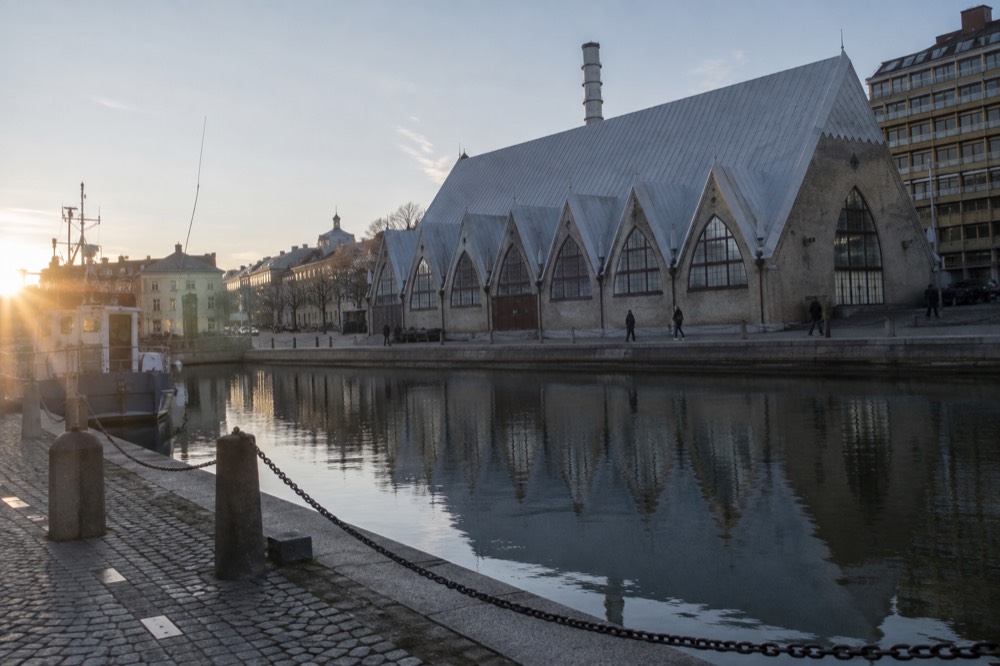
The famous fish market hall in Gothenburg, Sweden is called Feskekôrka, spelled with an o-circumflex, and it stands on Rosenlundsgatan at the edge of the Rosenlund canal in the city centre. The name is Swedish for "fish church", a joke about the shape of the building, which was designed with a roof and gables that look like a church nave turned on its side. It opened in 1874, and in 2024, the year the building turned 150, it reopened after renovation as a food hall with five restaurants rather than only fish counters. That last fact is the one most guides still get wrong: the Feskekôrka that exists today is not the Feskekôrka described in guidebooks from a decade ago.
What Is the Famous Fish Market Hall in Gothenburg, Sweden, Actually Called?
The building is Feskekôrka, on Rosenlundsgatan in central Gothenburg, Sweden, and the name literally means "fish church" in Swedish. It was built in 1874 to a design that gave it a church-like silhouette, and it has served as the city's fish market for a century and a half. The municipal property owner Higab confirms it reopened in 2024, its 150th year, after renovation, and it now operates as a food hall with restaurants as well as fish counters.
The spelling matters more than it looks. The final character is not an ordinary "o" but an ô, and the name is sometimes written Feskekôrka or, in older texts, Feske-kôrka. Search engines and travel articles routinely mangle it into "Feskekorka" or "Fiskekorka", which is close enough that a reader recognises the building but wrong enough that a Swedish local will notice. The pronunciation, roughly "FES-keh-hwor-ka", treats the ô as its own letter. Anyone typing the name into a map app should try the full spelling first, then fall back to "fish church Gothenburg" if autocomplete fights back.
Why a fish market got a church roof is the story every visitor asks about on the way in. Gothenburg was laid out in the seventeenth century by Dutch engineers inside a moat, and the city's relationship with water has always been commercial as much as scenic: fish was the trade, the Göta älv was the road, and the archipelago boats were the delivery vans. When the city built a dedicated fish hall in the 1870s, the architect gave it the most dignified silhouette available, that of a Gothic church. The name stuck because the joke was obvious to everyone who walked past: a church where you worship fish.
The building has not had an unbroken run. It has been renovated more than once across its 150 years, and the most recent closure was the one that confused the internet: for a period in the early 2020s the hall was shut for work, and articles published during those years still describe it as closed. Higab, the municipal property company that owns it, states plainly on its own property page that it reopened in 2024, on the Higab Feskekôrka listing. Anyone reading an older guide should treat "closed for renovation" as outdated information.
Why Is Feskekôrka Shaped Like a Church?
Feskekôrka's church shape comes from its 1874 design, which gave the fish hall a Gothic nave-like silhouette with steep gables and tall windows, so that the city's fish trade was housed in something resembling a place of worship. The resemblance is the entire point of the name: "kôrka" is the Gothenburg dialect word for church, and locals have called the building the fish church ever since it opened. The architecture is the reason it is the most photographed market building in Gothenburg, Sweden.
The dialect detail is worth pausing on. Standard Swedish for church is "kyrka", but the Gothenburg dialect says "kôrka", and the fish hall's name uses the local form. That makes Feskekôrka one of the few landmark names in Sweden that is untranslatable without losing the accent: the fish church, in the voice of the city that built it. It is a small thing, but it tells you the name was given by the people who shopped there, not by a marketing department. The same dialect runs through the city's identity, and our page on why Gothenburg is called Little London traces another of its nicknames back to the trading history that also explains why a fish hall was worth a church roof in the first place.
The building sits a short walk from Rosenlund canal, which was not an accident of town planning. In the building's early years fish arrived by boat, and a hall beside the water meant the catch could move from vessel to counter without a cart journey through the streets. The canal-side position is also what makes the building so easy to photograph today: the church gables reflect in the water, and the site is on the natural walking route between the old town moat streets and the leafier areas around Vasastan. Our page on what Gothenburg is known for covers how this maritime identity shapes the whole city, from the fish hall to the shipyard cranes on the riverbank.
A practical note for anyone planning photographs: the building is wooden, dark, and relatively small, and it sits among taller stone buildings, so the classic shot is from the canal side in morning light. There is no observation deck, no ticket and no queue. It is a working market hall, and the best time to see it functioning as one is mid-morning on a weekday, when the counters are stocked and the restaurants are serving lunch.
What Is Inside Feskekôrka Now, After the 2024 Reopening?
Since reopening in 2024, Feskekôrka in Gothenburg, Sweden is a food hall with five restaurants and two fish counters, not the single-purpose fish market it was for most of its history. The fish counters are Ebbes Fångst and Flåtens Fiskhandel, and the restaurants are Haldis Kök, Pråmenaden, Victor von G, Lilla Åstol and Ekmans, all listed on the hall's own site. One of them, Lilla Åstol, is seasonal and closes for winter, reopening in spring.
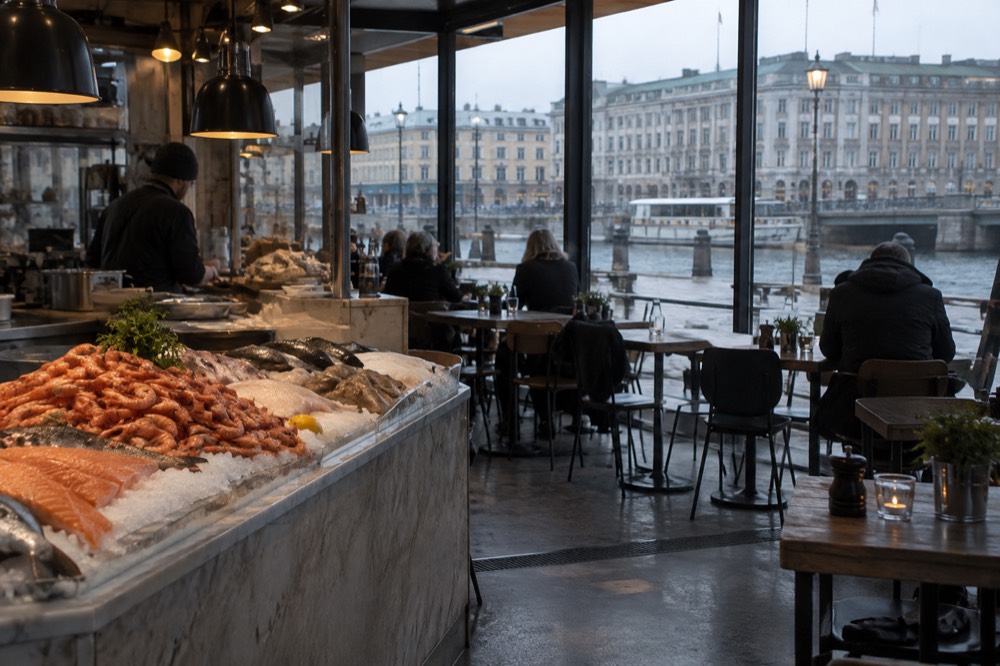
This is the change that matters most to a visitor, and it is the fact most likely to be wrong in anything published before the reopening. For most of its life Feskekôrka was a place you went to buy raw fish: whole salmon, langoustines, mussels, shrimp by the kilo, taken home to cook yourself. That is still part of the building, through the two counters, but the renovation added a layer of eating that did not exist before. You can now sit down inside the fish church and have the west-coast catch cooked for you. The current tenant list, including the seasonal note on Lilla Åstol, comes from the hall's own site, feskekorka.se, which is the page to check before a visit if a particular restaurant matters to your plans.
The seafood on offer is the west-coast Kattegat repertoire the region is known for: shrimp, langoustine, salmon and mussels, plus whatever the boats bring in. Gothenburg's position at the mouth of the Göta älv, where the river meets the Kattegat, puts it at the centre of the Swedish west-coast fishery, and the hall is the most central place in the city to taste it. Our guide to what food Gothenburg is famous for goes deeper on the shrimp sandwich, the langoustine and the oyster tradition that makes the Bohuslän coast a food destination in its own right.
The seasonal wrinkle is Lilla Åstol, one of the five restaurants, whose own copy on the hall's site says it reopens in spring. A visitor in deep winter may therefore find four restaurants rather than five, which is not a closure of the hall itself, just one tenant's season. The hall as a whole operates year-round.
If sitting in a renovated fish church is not enough seafood for your itinerary, the next step up is going to where the boats land. The Marstrand seafood market sailing trip is a five-hour outing from Gothenburg to the island town of Marstrand, and it pairs the same west-coast catch with an actual sea journey. Check availability if that combination fits your dates.
Is Feskekôrka the Only Market Hall in Gothenburg?
No. Feskekôrka is the famous fish hall, but Gothenburg, Sweden has a second, larger market hall: Stora Saluhallen on Kungstorget, a nineteenth-century food hall selling cheese, bread, meat, delicacies and some seafood. Feskekôrka is the specialist fish building and the tourist landmark; Stora Saluhallen is the general food market. A visitor with time for one should choose Feskekôrka for the building and the fish, or Stora Saluhallen for breadth of produce.
The two halls make a natural comparison, and the differences are more interesting than "old versus old". Both are nineteenth-century buildings, both sit within a few minutes' walk of each other in the city centre, and both have been renovated, but they answer different questions. Feskekôrka answers "where does the city's fish come from"; Stora Saluhallen answers "where does the city shop for dinner". Other pages covering the same trip are gathered on Gothenburg Travel Guide.
| Feskekôrka | Stora Saluhallen | |
|---|---|---|
| Location | Rosenlundsgatan, by the Rosenlund canal | Kungstorget, beside Kungportsplatsen |
| Built | 1874 | Nineteenth century |
| Famous for | The fish church shape, fish and seafood | Breadth of produce, cheese, meat, delicatessen |
| Fish counters | Ebbes Fångst, Flåtens Fiskhandel | Some seafood among other stalls |
| Restaurants | Five, including seasonal Lilla Åstol | Eateries among the stalls |
| Best for | The landmark building, west-coast seafood | A general food shop, lunch, picnic supplies |
A reasonable plan is to do both on the same walk, since Kungstorget and Rosenlundsgatan are close. Start at Feskekôrka for the building and perhaps a shrimp lunch, then cross to Stora Saluhallen for cheese, bread and whatever else a picnic or a hotel-room dinner requires. Visitors weighing whether the city justifies the trip at all can read our assessment of whether Gothenburg in Sweden is worth visiting, where the food scene does most of the arguing.
What Should You Eat at Feskekôrka?
The order to make at Feskekôrka is west-coast seafood: shrimp, langoustine, salmon and mussels are the hall's core produce, sold at the two fish counters and served cooked by the restaurants inside. A shrimp sandwich, the classic Gothenburg dish, is the single most representative thing to eat, and the restaurants let you taste the catch without cooking it yourself. The hall's five restaurants, Haldis Kök, Pråmenaden, Victor von G, Lilla Åstol and Ekmans, each serve the same raw material in different styles.
The shrimp sandwich deserves its own sentence because it is the region on a plate. West-coast shrimp are small, sweet, cold-water shrimp, boiled at sea or immediately after landing, peeled by hand and piled on buttered bread. In Gothenburg it is lunch, it is a pub dish and it is a benchmark: locals judge a kitchen by its räkmacka. The fish hall is the most direct place in the city to trace the dish back to its raw ingredient, since the shrimp behind the counter are the same shrimp on the plate.
Langoustine is the second signature. The Swedish west coast is one of Europe's langoustine fisheries, and the shellfish appears on Gothenburg menus grilled, in soups and simply boiled. Salmon and mussels round out the standard repertoire, and the counters stock whatever else the boats have brought, which changes with the season. If you want the full picture of how the city eats, from the fish church to the Michelin-starred dining rooms, our food guide for Gothenburg covers the whole ladder.
One honest caveat about expectations: Feskekôrka is a small building. Visitors sometimes arrive picturing a vast hall on the scale of Stockholm's Östermalms saluhall and find something more like a large chapel, which is, after all, the entire conceit of the architecture. Twenty minutes covers a slow lap of the counters; an hour covers lunch. It is a landmark that earns its fame through its shape and its fish rather than its floor area, and it sits conveniently on the route between the old town and the park at Slottsskogen.
How Does Feskekôrka Fit Into a Seafood Day in Gothenburg?
Feskekôrka works best as the anchor of a seafood day in Gothenburg, Sweden: buy or lunch at the fish church in the late morning, then spend the afternoon on the water, since the southern archipelago islands of Styrsö, Brännö, Vrångö and Donsö are areas of the city reached by tram and ferry on an ordinary Västtrafik ticket. Västtrafik's own materials state that one ticket carries you from the centre out onto the sea, and the islands sit in Zone A.
The geography is what makes this combination work. Feskekôrka is in the city centre; Saltholmen, the archipelago ferry terminal, is the western terminus of the tram network, so the journey from fish lunch to island harbour is a single tram ride followed by a boat. The islands are car-free, which is why the seafood there tastes like it does: small harbours, working boats and no traffic between you and the water. Our page on whether the Gothenburg archipelago is worth visiting covers what each island offers and how the ferry system handles visitors.
For a day with less self-navigation, three kinds of tour slot neatly around the fish hall. The Marstrand seafood market sailing trip takes the seafood theme out to the fortress island of Marstrand for five hours. The amphibious bus sightseeing tour drives past the city centre and then floats, which covers the canal-side geography that explains why a fish hall stands where it does. And the guided archipelago cruise puts a guide on the boat for the islands' history and wildlife. All three can be booked through the operator's live listing.
The Marstrand trip is the one that belongs on a Feskekôrka itinerary most naturally, because it is the same food culture with the volume turned up: Marstrand has been a seafood and sailing town for centuries, and the market there is the island version of what the fish church sells in the city. The listing shows no reviews yet, so there is no rating to report, only the itinerary and the operator's description.
Common Questions About the Famous Fish Market Hall in Gothenburg
What is the name of the famous fish market hall in Gothenburg?
Feskekôrka, on Rosenlundsgatan in central Gothenburg, Sweden. The name means "fish church" in the local dialect and refers to the 1874 building's church-like shape. It reopened in 2024 as a food hall with five restaurants and two fish counters.
Is Feskekôrka open?
Yes. Higab, the municipal property owner, confirms the hall reopened in 2024 after renovation, in the year the building turned 150. Older guides describing it as closed for renovation are out of date. One restaurant inside, Lilla Åstol, is seasonal and reopens in spring.
Why is it called the fish church?
The building was designed in 1874 with a roof and gables resembling a Gothic church nave, and "kôrka" is the Gothenburg dialect word for church. Locals named it the fish church as a joke about worshipping fish, and the name stuck.
Can you eat inside Feskekôrka or only buy fish?
Both. Since the 2024 reopening the hall contains five restaurants, Haldis Kök, Pråmenaden, Victor von G, Lilla Åstol and Ekmans, alongside the two fish counters, Ebbes Fångst and Flåtens Fiskhandel. You can buy raw fish to cook or sit down and eat.
Is Feskekôrka the same as Stora Saluhallen?
No. Feskekôrka is the fish specialist on Rosenlundsgatan; Stora Saluhallen is the larger general food market on Kungstorget, selling cheese, bread, meat and delicacies as well as some seafood. Both are nineteenth-century halls in the city centre.
What should you eat at Feskekôrka?
West-coast seafood: a shrimp sandwich is the classic Gothenburg order, and langoustine, salmon and mussels are the region's other signatures. The restaurants inside serve the same catch cooked, so you do not need a kitchen to taste it.
The short answer, one more time for anyone who arrived here from a search box: the famous fish market hall in Gothenburg, Sweden is Feskekôrka, the fish church, built in 1874, reopened in 2024, and now a food hall as much as a market. Spell it with the ô, walk in without a ticket, and order the shrimp.