How Do I Pay for Public Transportation in Gothenburg? Tickets, Apps and Cards
How to pay for trams, buses and ferries in Gothenburg, Sweden: single tickets, 24-hour tickets, the Västtrafik To Go app, and what a Zone A ticket really covers.
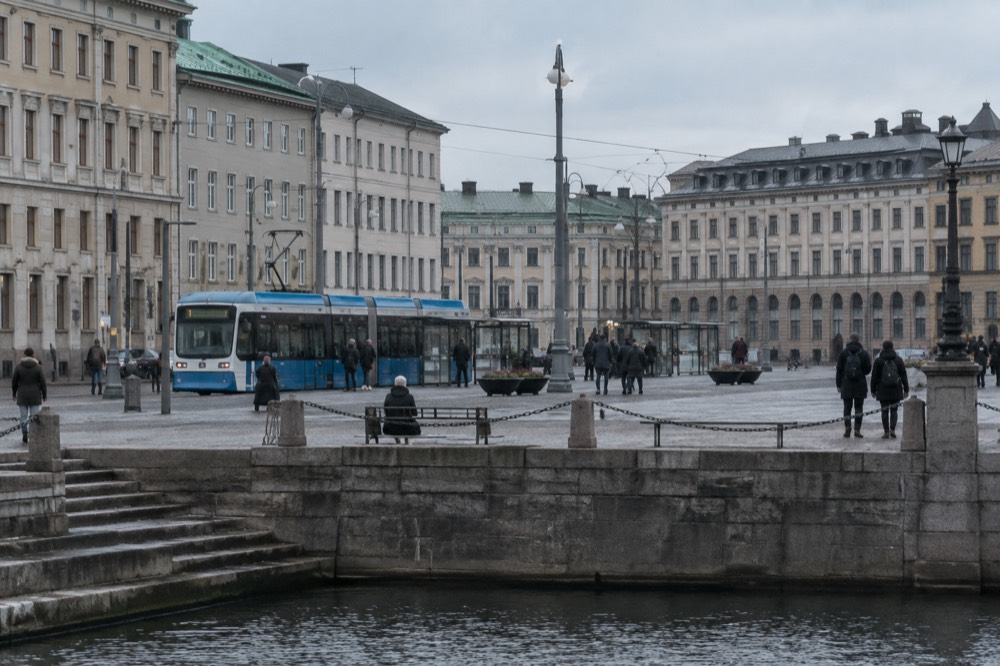
Gothenburg's tram network carried 126 million journeys in 2025, according to Göteborgs Spårvägar, the municipal company that runs it. That is the scale of the thing you are about to pay for: twelve lines, 134 stops and 188 kilometres of single track threading from Mölndal in the south to Angered in the north, out to the Saltholmen ferry terminal in the west, and across the bridge to Hisingen. Every tram, every city bus and every archipelago ferry is run under one ticketing system, Västtrafik, the regional transport authority for Västra Götaland. There is one fare structure, one app and one card. The mechanics of paying are simple once you know them, but the details, the zone system, the app-versus-card question and what a ticket covers out at sea, are where visitors lose money.
The city's growth explains why the system is built the way it is. Göteborg's population passed 613,000 at the end of 2025, up from just under 609,000 a year earlier, and the wider region holds around 1.1 million people. Commercial guest nights topped six million in 2025, a record year with the strongest growth in Sweden, driven largely by international visitors. A city that size, on a coast, with an archipelago inside its own municipal boundary, needs a ticket that works on a boat as well as on a tram. Västtrafik's fare structure is built around exactly that.
How Do I Pay for Public Transportation in Gothenburg?
You pay per journey or per day, in advance, either in the Västtrafik To Go app on your phone or with a reusable Västtrafikkort bought at a ticket machine or service point. There is no cash on board, you never pay the driver on a tram, and a single adult ticket for one zone costs 38 kr while a 24-hour Zone A ticket costs 125 kr. You must have a valid ticket before you board.
Västtrafik's own fare pages, published at vasttrafik.se/biljetter/enkelbiljetter, set out the two payment routes. The first is the app: download Västtrafik To Go, register a payment card, buy a ticket, and the ticket lives on your phone with a display the inspector scans. The second is physical: a Västtrafikkart, a plastic card you buy once and load with tickets at machines at major stops and at Pressbyrån and 7-Eleven shops around the city. Both routes cost the same for the tickets a visitor buys. Västtrafik states on its Zone A day-ticket page that the 24-hour ticket is the same price in the app and in the shop.
What does not exist matters too. There is no cash payment anywhere in the system, no buying a ticket from the driver on a tram, and no tapping a contactless bank card on a reader as you board, the way you might in London or Berlin. If you board a tram with nothing, you are travelling without a valid ticket, and the penalty fare is charged by the inspectors who do board, in plain clothes or uniform, and check phones and cards.
The app is the better choice for almost everyone. It works offline once the ticket is bought, it shows you live departures, and it removes the hunt for a machine at an unfamiliar stop. It also handles the one edge case that catches groups: an adult holding a 30-day period ticket bought in the app may bring up to three under-20s along free, a rule Västtrafik publishes alongside the subsidy details. The card makes sense mainly if you are travelling with a phone that struggles with Swedish app store regions, or if you are buying for a group and want one physical object to pass around rather than four phones.
A word on where the money goes. Västtrafik is the regional authority, but the trams themselves are operated by Göteborgs Spårvägar, which employs around 1,400 people in over a hundred job roles, according to its own site. The company's record year was 2019, with 141 million journeys, and the pandemic low was 93 million. The 2025 figure of 126 million shows the recovery is real but not complete, which is one reason capacity on popular lines, the 11 towards Saltholmen among them, can feel tight on summer weekends.
What Tickets Can You Buy and What Do They Cost in Gothenburg?
Västtrafik sells single tickets and day tickets by zone. A single adult ticket for one zone is 38 kr, two zones 76 kr, three zones 114 kr, with youth tickets at 29, 58 and 87 kr. A 24-hour Zone A ticket is 125 kr and covers unlimited travel for a day across Gothenburg, Mölndal, Partille and Öckerö, including the archipelago ferries.
The zone system is the part worth slowing down on. Västtrafik divides its region into zones A, B and C, and the price of your ticket depends on how many zone boundaries you cross. Zone A is the whole city of Gothenburg plus the neighbouring municipalities of Mölndal, Partille and Öckerö, and the Öckerö municipality is the northern archipelago. For a visitor staying anywhere central and doing anything within the city, one zone is all you will ever buy. Zone B and C matter only if you are heading out to places like Alingsås or Trollhättan, and for those journeys the same app sells the two- and three-zone singles at the prices in the table below.
| Ticket | Adult | Youth (7-19) | What it covers |
|---|---|---|---|
| Single, 1 zone | 38 kr | 29 kr | One journey, 90 minutes of travel within one zone |
| Single, 2 zones | 76 kr | 58 kr | One journey crossing into a second zone |
| Single, 3 zones | 114 kr | 87 kr | One journey crossing three zones |
| 24-hour, Zone A | 125 kr | - | Unlimited travel for 24 hours in Zone A |
The single ticket has a time allowance rather than a strict hop count: Västtrafik's ticket conditions let you change vehicles and complete your journey within the ticket's validity, which is why a single ticket can cover a tram plus a connecting bus. The 24-hour ticket is the one most visitors should buy on any day involving more than two or three rides, and its value is best understood through the ferries, which we come to below.
One warning about a price cut you may have read about. Västtrafik's 30-day period tickets are currently halved by a temporary state subsidy, a Zone A adult monthly has dropped from 890 kr to 445 kr, but that subsidy applies only to monthly tickets. The 24-hour and 72-hour day tickets a visitor actually buys are not discounted, and the 24-hour price remains 125 kr. If a headline somewhere told you transport in Gothenburg is half price, it meant the monthly ticket, not yours. Västtrafik's own wording on the subsidy is that it is a temporary state support valid for travel through the end of the year, with a final purchase date to be announced in early autumn, so treat the halved monthly price as a limited-time fact rather than the new normal.
Do You Tap on and Tap Off Gothenburg Trams?
No. Gothenburg has no tap-on, tap-off system and no bank-card readers on trams or buses. You buy or activate a ticket before boarding, in the Västtrafik To Go app or on a Västtrafikkort, and an inspector may scan it during the journey. There is nothing to tap at the door, and nothing to tap when you leave.
This is the single most common confusion for visitors arriving from cities with contactless fare capping. In Gothenburg the responsibility runs the other way: the passenger holds a valid ticket before boarding, and enforcement happens by inspection, not by gates or readers. Göteborg Centralstation has no fare gates. Tram stops have no validators. The only machines at stops are the ticket machines selling Västtrafikkart loads, and on the newer trams there is a small onboard machine, but the rule stands: sort the ticket out before you board or the moment you step on, never assume the driver will sell you one.
In the app, a single ticket activates the moment you buy it, so the practical habit is to buy it just before boarding, not ten minutes early on a platform. On a card, the ticket is loaded at a machine or shop in advance. Inspectors scan the phone screen or the card, and a penalty fare applies if neither holds a valid ticket. Västtrafik publishes the penalty amount on its fare pages, and it is many times the price of the single you were trying to avoid.
The archipelago ferries work the same way. The boats from Saltholmen are ordinary Västtrafik vehicles with line numbers, and you board with the same app ticket or card, shown to the crew or scanned at the terminal. There is no separate ferry fare and no separate payment method, which is the fact that turns a boat trip into a bargain.
Does a Gothenburg Tram Ticket Cover the Archipelago Ferries?
Yes. The southern archipelago ferries from Saltholmen, serving Asperö, Brännö, Styrsö, Donsö, Vrångö and Köpstadsö, are part of the Västtrafik network and the islands sit inside Zone A. One ordinary ticket covers the tram to Saltholmen and the ferry out to sea, so a 125 kr 24-hour Zone A ticket buys a full day of island-hopping.
Västtrafik's own zone material puts the boats on the map: the authority's combined tram, bus and boat network map shows the archipelago lines with Västtrafik line numbers, and its Zone A page lists Öckerö alongside Göteborg, Mölndal and Partille. Västtrafik's phrasing on the boats is that you can ride on the same ticket all the way from the centre out onto the sea. That is not a marketing line, it is the fare structure: the ferry is a scheduled part of the network, not a tourist service.
This makes the 24-hour ticket the best-value day out in the city, and it is the reason the question of how you pay matters more here than in most cities. You ride the tram to the Saltholmen terminus, which Göteborgs Spårvägar describes as the western end of the network, and step onto a ferry with the same ticket you used to get there. The islands are car-free: Göteborgs Stad's own study of the southern archipelago states the islands are protected from car traffic, with only taxi, färdtjänst and emergency services on the roads. You cannot drive there even if you wanted to, which is why the ferry ticket is the whole story. The rest of the planning pages sit on Gothenburg Travel Guide.
A practical note on timing: the ferries run year-round but on reduced winter schedules, and the last boats back are earlier than the last trams. Check the departure board at Saltholmen or the app before you commit to a far island like Vrångö late in the day. For more on the islands themselves, see is it worth visiting the Gothenburg archipelago, and for the free-versus-paid confusion around the boats, read is the ferry in Gothenburg free.

How Do You Pay to Get in from Landvetter Airport?
There is no train to Landvetter Airport, so the choice is the Vy flygbussarna airport coach, which runs to Korsvägen and Göteborg C in about 20 minutes, or Västtrafik bus 612, which needs an ordinary Västtrafik ticket. You pay the coach separately, online or by card on board, and a regular single or 24-hour ticket covers the bus.
Swedavia, the airport operator, lists the coach and bus options and no rail option on its airport transport page, because there is no rail link. The airport coach was rebranded: it is now Vy flygbussarna, not the plain Flygbussarna name older guides use, and it runs Landvetter Airport to Korsvägen and the Nils Ericson Terminal at Göteborg Centralstation. Swedavia states the journey time as 20 minutes between the airport and central Gothenburg. You buy coach tickets on the operator's site or app, and the fare is on the operator's live pages, which is where to check it before you travel.
Bus 612 is the local alternative, and it takes an ordinary Västtrafik ticket, app or card, the same as any city bus. Note that it serves Landvetter resecentrum, the town, rather than being a direct airport-to-centre express in the way the coach is, so read the stop carefully. FlixBus also runs a line between the airport and the city centre, paid through that operator's own channels.
If you are heading straight into a day of sightseeing, the sequence is simple: pay the coach separately, then buy your 24-hour Zone A ticket in the app once you are at the terminal. The two systems are not interchangeable, and the coach does not accept Västtrafik tickets. Landvetter handled 5.4 million passengers in 2025, Sweden's second-largest airport, so the coach and bus routes are busy things with frequent departures rather than the thin once-a-day services a small airport would have.
For the wider picture of what the city offers once you have paid your fare, what Gothenburg is known for is the place to start, and is Gothenburg worth visiting for tourists answers the question that usually comes before the ticketing one.
What Else Should You Know About Gothenburg Tickets Before You Travel?
Buy in the app, buy by the day, and check the zone map before any journey that leaves the city. The 24-hour Zone A ticket at 125 kr is the default visitor ticket, it covers the ferries, and the monthly-ticket subsidy you may have read about does not apply to it. Inspectors check tickets, drivers do not sell them, and there is no train from the airport.
A few final details round out the picture. Children under seven travel free with an adult across the Västtrafik network, which is why the fare table above starts at youth pricing for ages seven to nineteen. Tickets bought in the app can be bought for other people on the same account, useful for a family sharing one phone. And the Västlänken rail tunnel, under construction beneath the city centre with stations planned at Centralen, Haga and Korsvägen, will eventually change how regional trains arrive, but the first section at Centralen opens in December 2026 and the full project lands around 2030, so it does not affect how you pay for a tram this year.
Common Questions About Paying for Public Transport in Gothenburg
How do I pay for public transportation in Gothenburg?
Buy a ticket before boarding, either in the Västtrafik To Go app or on a Västtrafikkart from a machine or shop. A single adult one-zone ticket is 38 kr and a 24-hour Zone A ticket is 125 kr. There is no cash and no driver payment on trams.
Do you tap off Gothenburg trams?
No. There is no tap-on or tap-off system, no readers at tram doors and no fare gates. You hold a valid ticket bought in advance, and inspectors scan it during the journey.
How much is a day pass in Gothenburg?
A 24-hour Zone A ticket costs 125 kr for an adult, the same price in the app and in shops, according to Västtrafik's fare page. It covers trams, buses and the archipelago ferries within Zone A.
Does the tram ticket include the archipelago ferry?
Yes. The southern archipelago ferries from Saltholmen are part of the Västtrafik network and the islands are in Zone A, so an ordinary ticket covers the tram to the terminal and the boat out to the islands.
Is transport in Gothenburg half price right now?
Only monthly tickets are. A temporary state subsidy halves 30-day period tickets, Zone A adult from 890 kr to 445 kr, but the 24-hour and 72-hour day tickets visitors buy are not discounted.
Can I get from Landvetter Airport by train?
No. There is no rail link to Landvetter. The Vy flygbussarna airport coach runs to central Gothenburg in about 20 minutes, and Västtrafik bus 612 also serves the airport with an ordinary ticket.
The system rewards a little preparation: one app, one 24-hour ticket, and a tram out to Saltholmen. After that, the sea is included in the fare.