Is Gothenburg Worth Visiting for Tourists? What Sweden's Second City Actually Delivers
Is Gothenburg worth visiting for tourists? An honest, fact-checked look at Sweden's second city: the archipelago, Liseberg, trams, costs, weather and how many days you need.
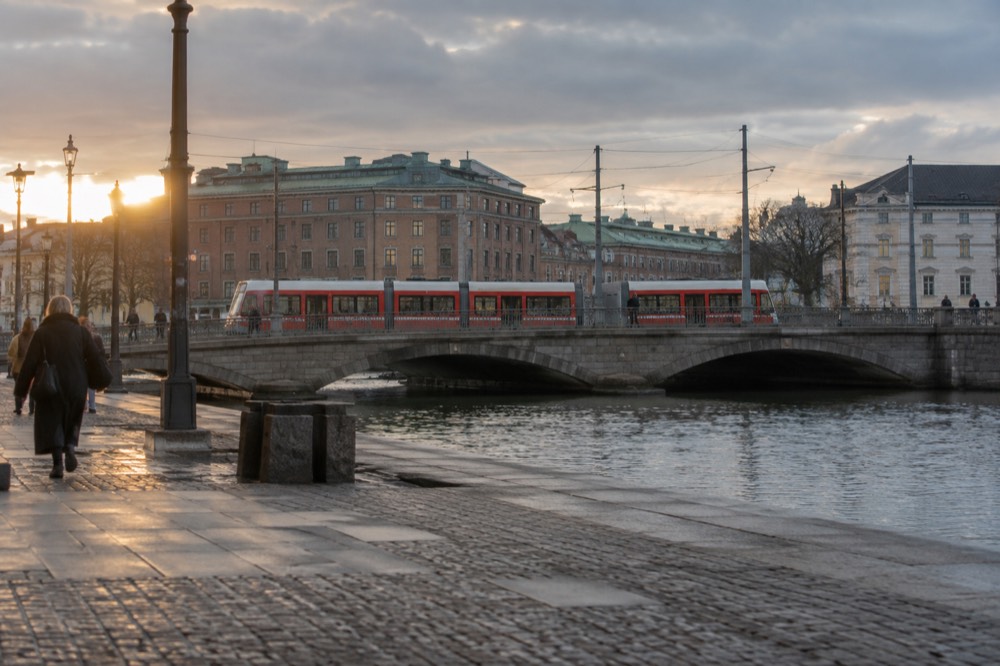
Gothenburg recorded over six million commercial guest nights in 2025, its best year ever, and Göteborg & Co's own press release credits international visitors with roughly fifteen percent growth in the first ten months alone. That is a lot of people choosing Sweden's second city on purpose, and it is worth asking what they are actually buying. The honest answer is a compact, walkable port town at the mouth of the Göta älv, with a tram network that carried 126 million journeys in 2025, a car-free island archipelago that sits inside the ordinary city ticket zone, and a food scene that punches well above the city's size. It is not Stockholm, and it does not try to be. Whether it is worth your trip depends on what you want from a Nordic city, and this page lays out the verified facts so you can decide.
Is Gothenburg Worth Visiting for Tourists?
Yes, for most travellers Gothenburg is worth visiting, and the reasons are concrete rather than sentimental: a car-free archipelago reachable on an ordinary 125 kr city ticket, Liseberg drawing about 2.5 million park guests a year, a museum and food scene concentrated in a walkable core, and 2025's record of over six million guest nights as evidence that international visitors are choosing it in rising numbers. It is smaller and less grand than Stockholm, cheaper than Copenhagen, and easier to organise than Oslo, which makes it a strong pick for a two-to-four-day city break. The city of 613,274 people (end of 2025, per Göteborgs Stad) is compact enough that you never need a car, and the things that make it special, the sea, the islands, the trams, are all built into the everyday infrastructure rather than sold as attractions.
The case for Gothenburg rests on three things that are genuinely unusual among European cities. First, the southern archipelago, islands like Styrsö, Brännö, Vrångö and Donsö, is part of the city itself, not an excursion requiring a booked tour. Västtrafik's own zone map shows the ferries from Saltholmen as ordinary lines in Zone A, so a 24-hour ticket covers the tram to the pier and the boat out to sea. Private cars are banned on the islands, per a Göteborgs Stad study that describes them as "fredade från biltrafik". Second, the city is legible. Dutch engineers laid out the old town inside a moat in the seventeenth century, and the core around Inom Vallgraven, Haga and Majorna still reads on foot in a way larger capitals do not. Third, the food reputation is real and specific: shrimp sandwiches, oyster safaris up the Bohuslän coast, and a fish market hall, Feskekôrka, that reopened in 2024 as a food hall with five restaurants after a full renovation.
The case against is equally honest. If you want world-famous landmarks, Gothenburg has none on the Stockholm or Copenhagen scale. The art museum, Göteborgs konstmuseum, holds around 70,000 works and draws about a quarter of a million visitors a year, respectable but not a destination in itself, and it is scheduled to close in 2028 and reopen in 2032 for a rebuild. The city's most famous attraction, Liseberg, shuts completely for large parts of the year, including late September, early November and everything from 24 December to mid-April. And the weather reputation, while exaggerated, is not invented: SMHI's 1991-2020 normals for station Göteborg A record 912 mm of precipitation across 127 wet days a year. Anyone weighing the trip should read what Gothenburg is known for alongside this page before deciding.
What Does Gothenburg Offer Compared with Other Nordic Cities?
Gothenburg offers a different proposition from Stockholm or Copenhagen: fewer single marquee sights, but a higher density of everyday experiences, meaning a car-free island archipelago inside the city's own transit zone, the Nordic region's most-visited amusement park, a working harbour and shipyard waterfront you can walk through, and food halls and shrimp-sandwich culture rooted in the actual fishing coast. Where Stockholm sells grandeur and Copenhagen sells design, Gothenburg sells the sea at tram fare. That is a real difference in kind, not just a smaller version of the same product.
Start with the archipelago, because it is the single best-value fact in the city. Västtrafik's zone map shows the Saltholmen ferries as ordinary Zone A lines, and the islands they serve, Asperö, Brännö, Styrsö, Donsö, Vrångö and Köpstadsö, are areas of Gothenburg, not day trips. A 24-hour Zone A ticket at 125 kr covers the tram to Saltholmen and the ferry out, and the islands ban private cars. No other Scandinavian capital or second city puts car-free islands inside its ordinary transit fare in this way. If you want the experience with a guide rather than self-directed, a guided archipelago cruise runs 2.5 hours from $44 per person, rated 4.4 from 1,488 reviews on the operator's live listing.
Then there is the city itself. The old core, Inom Vallgraven, sits inside the line of the old moat, with the canal still cutting through it. A canal sightseeing cruise runs 50 minutes from $28 per person, rated 4.7 from 783 reviews, and the Paddan boats run a longer route on the River Säveån. Haga, the wooden-house quarter, and Majorna, the second-hand district, give the city its texture, and both are covered in the things not to miss in Gothenburg guide. Liseberg is the biggest single draw: about 2.5 million park guests in 2025, a summer season running 18 April to 20 September 2026, plus Halloween and Christmas seasons, with entry from 95 kr and ride passes sold separately. The Liseberg versus Tivoli comparison covers that head to head if Denmark is also on your list.
The Volvo story is a good example of why the city rewards updated information. The old Volvo Museum at Arendal closed permanently in December 2023, a fact many competing guides still get wrong. Its successor, World of Volvo, opened in 2024 with exhibition tickets from 120 SEK online, and it is a brand experience centre rather than a classic museum. Göteborgs konstmuseum remains open and worth an hour or two at 75 kr a day ticket, free for under-20s and students, but plan around the 2028 closure if the collection matters to you. Feskekôrka, the fish church turned food hall, reopened in 2024 with two fish counters and five restaurants, which makes it a lunch stop now rather than just a photo stop.
Is Gothenburg Too Expensive to Be Worth It?
Gothenburg is expensive by European standards but affordable by Nordic ones: a single tram ticket is 38 kr, a 24-hour all-zone-A pass covering trams and archipelago ferries is 125 kr, Liseberg entry starts at 95 kr, Göteborgs konstmuseum charges 75 kr, and World of Volvo from 120 SEK, so a visitor who leans on the transit-covered islands and free public spaces can keep a day's sightseeing cost low even with Sweden's restaurant prices. Sweden is not a budget destination, but Gothenburg's structure, with free islands, free parks and a cheap transit backbone, softens the blow considerably.
The single biggest saving is structural. Because the southern archipelago ferries are ordinary Västtrafik Zone A lines, a 125 kr day ticket buys a boat trip most cities would sell as a premium excursion. Slottsskogen, the big park in the south of the city, has a free zoo. The tram network itself, 12 lines and 188 km of single track as of Göteborgs Spårvägar's 2022 annual report, makes taxis unnecessary for almost every visitor. One warning on fares: a temporary state subsidy currently halves 30-day period tickets, but Västtrafik states plainly that it does not cover the 24-hour and 72-hour day tickets visitors actually buy. Do not read "transport is half price in Gothenburg" anywhere, including here, because it is not true for you. Everything else covered here is indexed on Gothenburg Travel Guide.
The core sightseeing costs stack up like this, all figures from the operators' own price pages:
| Sightseeing item | Price | Notes |
|---|---|---|
| Single tram ticket, 1 zone | 38 kr | Youth 29 kr, per Västtrafik's fare page |
| 24-hour ticket, Zone A | 125 kr | Covers trams, buses and the archipelago ferries |
| Göteborgs konstmuseum day ticket | 75 kr | Free under 20 and for students |
| World of Volvo exhibition ticket | from 120 SEK online | 10% online discount applies |
| Liseberg entry (Entré) | from 95 kr | Rides sold separately; under 110 cm free |
| Canal sightseeing cruise | from $28 per person | 50 minutes, rated 4.7 from 783 reviews |
On the spending side, the honest picture is that Swedish restaurant and bar prices are high, and alcohol has its own rule: anything above 3.5% ABV is sold only through Systembolaget, the state monopoly, under Alkohollag (2010:1622). Supermarket beer is therefore the 3.5% "folköl" version. The old Göteborg City Card no longer exists; the replacement is a Go City pass, and unlike the old municipal card there is no confirmed public-transport inclusion, so do not buy it expecting to cover trams. The detailed cost picture, including what a meal or a pint runs, is in the is Gothenburg cheap or expensive breakdown.
For sightseeing specifically, the paid layer is thin and reasonable. A 50-minute canal cruise from $28, an amphibious bus tour from $36 rated 4.7 from 4,326 reviews, Liseberg entry from 95 kr, and the museums above. A visitor doing one paid activity a day plus the free islands and parks spends less in Gothenburg than in almost any comparable Nordic city.
Does the Weather Ruin a Gothenburg Trip?
No, but it shapes one: SMHI's 1991-2020 normals for station Göteborg A record 912 mm of rain across 127 wet days a year, with October the wettest month at 102.9 mm and April the driest at 51.3 mm, so spring is the dry window, autumn is the wet one, and the sea itself peaks in August at 18.6 C, warmer than July's water and with September water warmer than June's. The city is wetter than most of eastern Sweden, but the famous claim that it is Sweden's rainiest city is not supported by SMHI's own account of the 1991-2020 normals, whose national maxima sit in the western highlands and the mountains, not in the city. It rains about one day in three, not permanently.
The numbers that actually matter for planning are these. Mean air temperature peaks at 18.3 C in July, and the annual mean is 8.9 C. April gets 51.3 mm of rain on just 8.2 wet days, the driest combination of the year, which makes spring the season for anyone who hates rain. October, at 102.9 mm, is the month to avoid if you are weather-sensitive. Daylight swings enormously: 18 hours 06 minutes on 21 June against 6 hours 32 minutes on 21 December, per US Naval Observatory data for the city's latitude of 57.7 N. In June, civil twilight runs from 02:58 to 23:30 local time, leaving only about three and a half hours of true night.
The sea temperature facts surprise most visitors and are worth planning around. SMHI's quality-controlled archive from the Vinga lighthouse station, 61,749 quality-controlled hourly observations, shows the water peaking in August at 18.6 C, not July, and September water at 16.7 C is warmer than June water at 16.2 C. A September swim off Vrångö or Brännö is genuinely warmer than a June one. February, at 2.7 C, is the coldest sea month, with a record low of -1.2 C, possible because brackish Kattegat water freezes below zero. If swimming is part of your reason for going, aim for August or September, and read the best time to visit Gothenburg page for the full month-by-month picture.
How Many Days Should a Tourist Spend in Gothenburg?
Two days covers the compact core, Haga, Inom Vallgraven, a canal cruise and one museum, but three days is the sweet spot because it adds the southern archipelago on an ordinary transit ticket plus Liseberg in season, and four to five lets you add a day trip to Marstrand or the Bohuslän coast without rushing. The city's own scale makes short visits efficient: the core is walkable, the trams cover everything else, and the islands require no booking, only a ferry timetable. Anyone whose trip collides with Liseberg's closed periods, roughly late September to mid-April outside seasonal openings, should swap that day for the archipelago or a day trip.
A first day belongs to the old core and the water. The canal cruise or the amphibious bus gives you the layout, then Haga for the wooden houses and a fika stop, then the Götaplatsen end of Avenyn. A second day goes to the islands: the tram out to Saltholmen, then the ferry to Styrsö or Brännö, walking the paths and eating whatever the island kiosk is serving. A third day splits between Liseberg in season, Universeum next door, which is open every day of the year and dynamically priced with a booked time slot, and Slottsskogen's free zoo. The fuller itinerary logic, including what to cut, is in how many days in Gothenburg is enough.
One structural point that decides the length of stay: the archipelago islands are part of the city, but Marstrand, the Bohuslän coast, Tjolöholm, Gunnebo, Trollhättan and Läckö are day trips. If your list mixes both, you need four days minimum. If it is city plus islands only, three is plenty. The is it worth visiting the Gothenburg archipelago page covers the island choice in detail, and the question of whether the city overall deserves the trip, including for a first-time Scandinavian visitor, is argued further in is Gothenburg in Sweden worth visiting.
For orientation on a first day, the amphibious bus tour is the most-reviewed sightseeing product in the city, and it works as a rolling introduction before you set off on foot.
Common Questions About Visiting Gothenburg for Tourists
Is Gothenburg worth visiting for tourists?
Yes, for most travellers. The city combines a walkable historic core, a car-free archipelago inside the ordinary 125 kr transit day ticket, Liseberg with about 2.5 million park guests a year, and a food scene rooted in the west-coast fishing trade. It recorded over six million guest nights in 2025 with strong international growth, per Göteborg & Co.
Is Gothenburg cheaper than Stockholm or Copenhagen?
Generally yes, modestly. Core sightseeing costs are low: 38 kr single tram fares, a 125 kr day ticket that includes the archipelago ferries, museum entries from 75 kr, Liseberg entry from 95 kr. Restaurants and bars remain Swedish-priced, and alcohol above 3.5% ABV is sold only at Systembolaget.
What is the single best thing about Gothenburg for a tourist?
The southern archipelago. Islands like Styrsö, Brännö and Vrångö are areas of the city, reached by tram to Saltholmen and then an ordinary Västtrafik ferry on the same Zone A ticket, with private cars banned on the islands.
Does it rain all the time in Gothenburg?
No. SMHI's 1991-2020 normals record 912 mm a year across 127 wet days, about one day in three. October is the wettest month at 102.9 mm and April the driest at 51.3 mm. SMHI does not support the common claim that Gothenburg is Sweden's rainiest city.
Is Gothenburg walkable without a car?
Yes. The old core inside the former moat, Haga, Majorna and the Avenyn district are all walkable or tram-connected, and the 12-line tram network carried 126 million journeys in 2025. No visitor needs a car in the city, and cars are banned on the archipelago islands anyway.
When should a tourist not visit Gothenburg?
Avoid late January to mid-April if Liseberg is on your list, since the park is closed then outside limited Kaninlandet openings, and avoid October if you are rain-averse, since it is the wettest month at 102.9 mm. The 21 December solstice gives only 6 hours 32 minutes of daylight.
The verdict, stated plainly: Gothenburg is worth visiting for tourists who want a Nordic city that is liveable rather than monumental, and the numbers back it up. The archipelago inside the tram fare is genuinely unique, the food is specific to this coast rather than generic Scandinavian, and the city is small enough that three days feels complete instead of rushed. It will not replace Stockholm on a first-timer's list, but for a second Scandinavian trip, a stop between Copenhagen and Oslo, or a trip built around the sea, it is the right choice, and the record 2025 visitor numbers suggest a growing share of the market has figured that out.