What Not to Miss in Gothenburg, Sweden: The Sights and Experiences That Define the City
The unmissable things in Gothenburg, Sweden: the car-free archipelago, Liseberg, Feskekôrka, Haga, the trams and the canal, with verified prices, dates and local facts.
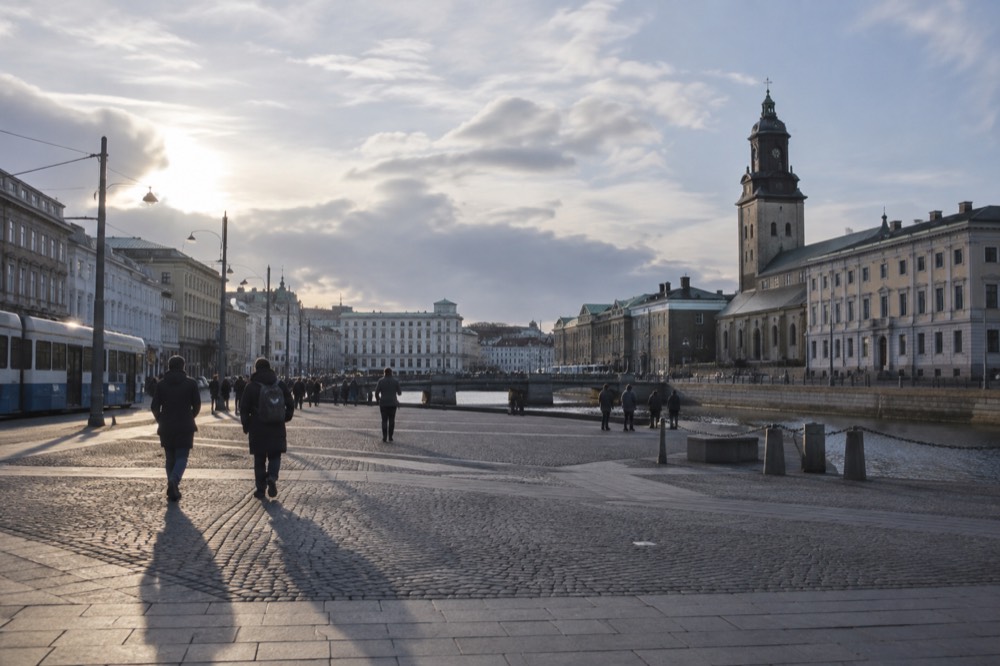
Gothenburg, Sweden's second city, sits at the mouth of the Göta älv where the river meets the Kattegat, and almost everything worth seeing here is shaped by that fact. Dutch engineers laid out the old town inside a moat in the 17th century, the shipyards built the 20th-century city, and the southern archipelago, a string of car-free islands, is still inside the city's own Västtrafik transport zone. Göteborgs Stad counted 613,274 residents at the end of 2025, and the city logged over 6 million commercial guest nights that year, a record, which means a lot of people are now asking the same question: what, exactly, should you not miss?
The honest answer is that the unmissable Gothenburg is mostly free or nearly free, and mostly about water. The one thing every first-time visitor gets wrong is treating the archipelago as a day trip, when it is technically a district of the city you reach on an ordinary tram ticket. This page from Gothenburg Travel Guide walks through what genuinely defines the place, with verified fares, dates and opening facts, and flags the closed attractions older guides still recommend.
What Is the One Thing You Should Not Miss in Gothenburg?
The southern archipelago, reached by tram and ferry from Saltholmen on an ordinary Västtrafik ticket, is the single thing Gothenburg has that no other Scandinavian city does. Asperö, Brännö, Styrsö, Donsö, Vrångö and Köpstadsö are car-free islands inside the city's own Zone A, so a 125 kr 24-hour ticket covers the tram to the boat terminal, the ferry, and every island in between.
Västtrafik's own zone material confirms the islands sit in Zone A and that the same ticket carries you, in the operator's words, all the way from the centre out to sea. Göteborgs Stad's own planning documents state the islands are protected from private car traffic, with exceptions only for taxi, färdtjänst and emergency services. That combination, car-free islands inside a big city's ordinary [bus ticket](https://busbud.tpk.ro/pZ1aQZGA), is the fact that defines Gothenburg, and it is the thing most visitors never find out about until they arrive.
Practically, you ride the tram to Saltholmen, the western terminus of the network, and board a Västtrafik ferry. The boats run year-round, though frequencies drop hard in winter. Allow half a day at minimum. Brännö and Vrångö are the classic picks, flat walking, swimming spots, and small village cores with cafés that open in the season. Styrsö is the largest island and the one with the most services, Donsö has the fishing-village atmosphere, and Köpstadsö is the tiny one people photograph. There is a guided option if you would rather not plan the logistics yourself: a Brännö and Galterö hiking tour with fika included runs 8 hours from $103 per person, with no reviews published yet.
The islands reward slow plans. Vrångö in particular has a famous sandy stretch at Ryttarmarken, and Brännö's summer café culture is the reason many locals ride out on a Saturday without any plan at all. Bring cash-free payment methods, since card terminals rule everywhere in Sweden, and check the ferry timetable before you commit to a late return, because the last boat leaves earlier than people expect, especially outside high summer.
If a full day on the islands feels like too much, a shorter archipelago experience still delivers the granite-and-sea character. A guided 2.5-hour archipelago cruise runs from $44 per person, rated 4.4 from 1,488 reviews, and versions with lunch or Swedish fika included are also listed. These are harbour-and-island loops rather than island stops, so they suit a schedule that has the city centre in the afternoon.
Is Liseberg Something You Should Not Miss in Gothenburg?
Yes, if your dates line up. Liseberg is Scandinavia's largest amusement park, it drew roughly 2.5 million guests in 2025, and it is only open in seasons: summer 2026 runs 18 April to 20 September, Halloween 2 October to 1 November, and the Christmas market 14 November to 23 December, with the park shut the rest of the year.
The season calendar is the trap. Arrive in late January or early March and the biggest attraction in the city is closed, gates locked. Liseberg's own ticket page confirms the pricing structure that catches visitors out: entry from 95 kr buys no rides at all, a ride pass (Åkpass) alone starts at 310 kr and does not include entry, and the combined entry-plus-rides ticket starts at 365 kr online. Children under 110 cm enter free. Liseberg is not sold on any booking platform, so you buy from the park directly.
New for summer 2026 is Stormvåg, a family attraction, and Kaninlandet, the children's area, now opens on winter weekends and school holidays too. The Oceana water park is not yet open: it was destroyed by fire in February 2024 before it ever welcomed a guest, the rebuild was decided in July 2024, and Liseberg's own site gives a planned opening at the beginning of 2027. If you are weighing Liseberg against Copenhagen's Tivoli, we break that comparison down in is Liseberg or Tivoli better.
Even outside the season, the Liseberg area is worth knowing. The Grand Curiosa Hotel, opened in 2023, sits at the park's edge and operates year-round, and the Korsvägen transport hub next door is one of the city's main interchange points. But the park itself, the rides, the gardens and the atmosphere that make it unmissable, exist only inside those season windows, so plan around them rather than hoping.
The amphibious bus is the one sightseeing product that covers both halves of the city in a single hour, and its review count, 4,326 at the time of writing, makes it the most-reviewed tour in the city's roster. It boards as a normal bus near Gustav Adolfs torg, drives the central sights, then drives down the slip and floats. For anyone with limited time, it is the efficient answer to the "what not to miss" question.
What Should You Not Miss in Central Gothenburg?
Do not miss Haga, the wooden old quarter, Feskekôrka, the 1874 fish-church-turned-food-hall, and the canal itself. Haga's painted wooden landshövdingehus and cobblestone lanes are the city's most photographed streets, Feskekôrka reopened in 2024 with two fish counters and five restaurants inside, and the Paddan canal boats have run the moat route since the 19th century.
Haga is the neighbourhood that survived. While most of the city centre was rebuilt in stone, Haga kept its low wooden houses, and today it holds the fika culture the city is known for, centred on Nygatan and its cinnamon-bun bakeries. The district was working-class housing in the 19th century, slid toward demolition in the mid-20th, and was saved by a preservation decision that makes it the reference point for what Gothenburg looked like before the stone city. A dedicated Haga old town walking tour runs 1.5 hours from $52 per person, rated 4.6 from 248 reviews, if you want the history rather than just the buns. For what fika actually is and how it works, see what does fika mean in Sweden.
Feskekôrka, the fish hall on Rosenlundsgatan whose building resembles a church, is the second stop. It reopened in 2024 after renovation, the same year the building turned 150, and it is now a food hall rather than a pure fish market: feskekorka.se lists two fish counters, Ebbes Fångst and Flåtens Fiskhandel, and five restaurants, Haldis Kök, Pråmenaden, Victor von G, Lilla Åstol and Ekmans. Note that Lilla Åstol is seasonal and reopens in spring. The building itself, with its timber frame and shingled roof, is the reason people photograph it from the canal path outside even when they do not eat inside.
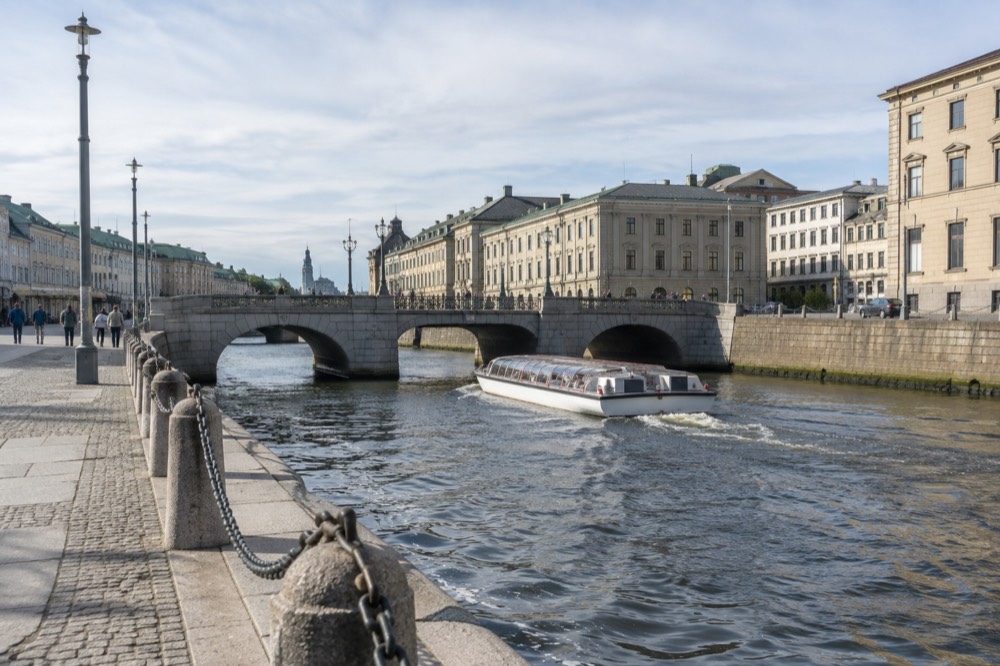
The canal is the third unmissable. Gothenburg was built inside a moat, and the Paddan boats still run sightseeing trips through it and out onto the river, a 2-hour trip from $40 per person rated 4.6 from 105 reviews. A shorter 50-minute canal cruise runs from $28 per person, rated 4.7 from 783 reviews, and it passes under low bridges that force the whole boat to duck, a small ritual that has become the trip's signature moment. If you want the whole city in one hour, the amphibious bus covers the streets and the harbour in a single vehicle.
Beyond those three, the central unmissables are walkable in a day: Avenyn and Götaplatsen with the art museum steps and Poseidon statue, the Saluhallen food hall on Kungstorget, and the Rosenlund canal path that links Feskekôrka to the harbour. None of these needs a ticket except the art museum, and the walking distances between them are short, which is why the question of how walkable Gothenburg is has a simple answer: the centre is compact, and the trams handle everything else.
What Museums and Attractions Should You Not Miss in Gothenburg?
Do not miss Universeum, the science centre open every day of the year from 10:00 to 18:00 with dynamically priced entry, and World of Volvo, the 2024 exhibition centre that replaced the old Volvo Museum, which closed permanently in December 2023. Göteborgs konstmuseum, with 70,000 works and free entry for under-20s, is also essential, but note it closes in 2028 for a rebuild and reopens in 2032.
The Volvo fact is the single biggest stale item in circulation about Gothenburg. The old Volvo Museum at Arendal shut its doors in December 2023, and its successor says so plainly on its own site. Anyone directing you to Gustaf Larsons Väg is directing you to a closed building. The replacement, World of Volvo at Lyckholms Torg 1, sells exhibition tickets from 120 SEK online and runs a Torslanda factory tour from 175 SEK on weekdays. The factory tour is the deeper experience for car enthusiasts, since it shows the actual production line rather than exhibits alone.
Göteborgs konstmuseum's own rebuild page states the museum closes in 2028 and reopens in 2032, and warns of intermittent blasting near the building right now, worth knowing if you are sensitive to sudden noise. A day ticket is 75 kr, students enter free, children and young people under 20 enter free, and the Hasselblad Center is included in the admission. The collection holds Nordic masters, and the museum sits at the top of Avenyn at Götaplatsen, so it pairs naturally with the avenue walk.
Universeum is the family pick, with a rainforest hall, aquarium and reptile house all included in admission. Its ticketing is unusual and worth planning around: there is no fixed published adult price, entry is dynamically priced with a booked time slot, on-site costs online price plus 30 kr, and busy days sell out. Wisdome dome shows are a separate ticket. The venue is cashless, card only, and children under 3 enter free but still need their own ticket.
For a broader sweep of the city's museum landscape, from the Museum of World Culture to Maritiman's floating ships, the pattern holds: Gothenburg's museums are strong on maritime and design, and several are free or nearly free, which matters if you are building a rainy-day plan.
What Food and Drink Should You Not Miss in Gothenburg?
Do not miss the seafood, the west coast shrimp sandwich, and the fika culture, and understand one legal fact before you shop for beer: anything above 3.5% ABV is sold only by Systembolaget, the state monopoly, under Alkohollag (2010:1622). Supermarket beer is capped at 3.5%, which is why familiar brands taste weaker on a Swedish shelf.
The statute is explicit: beer over 2.25% but not over 3.5% is folköl and sold in supermarkets, while anything stronger, plus all wine and spirits, is retail monopoly territory only. That single rule explains the character of every bar and shop in the city. The alcohol act itself is public on the Swedish statute book, so this is not folklore but law.
The food itself is west-coast driven. Gothenburg's reputation rests on shrimp, oysters and the shellfish of Bohuslän, and the food halls, Saluhallen and Feskekôrka, are the two places to taste it. The shrimp sandwich, räkmacka, is the city's signature dish, a thick slice of bread under a mound of mayonnaise-dressed shellfish, and every harbour café has its own version. For depth, see what food is Gothenburg famous for. If you would rather be walked through it, a Swedish Westcoast food walking tour runs 3 hours from $144 per person, rated 4.8 from 17 reviews, and a guided walking and fika tour runs 2 hours from $93 per person, rated 4.4 from 71 reviews.
When Is the Best Time to See the Unmissable Gothenburg?
April is the driest month of the year, at 51.3 mm of rain over 8.2 wet days, and the sea is warmer in September (16.7°C) than in June (16.2°C), with the water peaking at 18.6°C in August rather than July. October, not a summer month, is the wettest month at 102.9 mm, and the park and archipelago seasons run April through September.
Those numbers come from SMHI's 1991-2020 normals for station Göteborg A and from SMHI's oceanographic archive at Vinga, and they overturn the usual planning instinct. Visitors book June for the midnight-light and get the coldest swimmable sea of the summer season, while September swimmers get warmer water and thinner crowds. Daylight is the other swing factor: 18 hours 6 minutes on 21 June against 6 hours 32 minutes on 21 December, an 11-hour-34-minute difference between solstices.
One myth to kill while we are here: Gothenburg is not Sweden's rainiest city, and SMHI's own text never says so. The national precipitation maxima are in the western highlands and the mountains, well above 1000 mm a year. Gothenburg's 912 mm over about 127 wet days, roughly one day in three, is wet but ordinary for western Götaland. For a fuller breakdown, see what is the best time to visit Gothenburg.
What Should You Not Bother with in Gothenburg?
Skip the old Volvo Museum at Arendal, closed permanently since December 2023, any search for the Göteborg City Card, which no longer exists and was replaced by a Go City pass that does not include public transport, and any guide that calls Gothenburg Sweden's rainiest city, which SMHI's own data does not support. Also skip nothing on the archipelago: it is part of the city, not a day trip.
The city card point matters for budgeting. The old municipal card bundled transport, the [Go City](https://gocity.tpk.ro/HQKyKKW4) product does not, so your 125 kr 24-hour Västtrafik ticket is a separate purchase regardless of which pass you buy. On transport generally, note that the 30-day period tickets are halved by a temporary state subsidy through year end, but that discount does not apply to the 24-hour and 72-hour tickets visitors actually buy. A single adult one-zone ticket is 38 kr, which is worth knowing for one-off journeys.
A quick planning table for the unmissables:
| Unmissable | Cost to enter | Key fact to know |
|---|---|---|
| Southern archipelago | Ordinary Västtrafik ticket, 24-hour Zone A is 125 kr | Car-free islands, Zone A, tram to Saltholmen then ferry |
| Liseberg | Entry from 95 kr, entry plus rides from 365 kr | Closed roughly 24 Dec to mid-April, plus gaps between seasons |
| Haga | Free to walk | Wooden landshövdingehus, fika culture, best on Nygatan |
| Feskekôrka | Free to enter | Reopened 2024 as a food hall, Lilla Åstol seasonal |
| Universeum | Dynamic pricing, book a time slot | Open every day 10:00-18:00, on-site costs online plus 30 kr |
| World of Volvo | From 120 SEK online | Replaced the closed Volvo Museum, hours vary by day |
For the things people worry about rather than the things they miss, our where to avoid in Gothenburg page covers the safety question directly, and how many days in Gothenburg is enough answers the pacing question, with two days as the realistic floor for archipelago plus city.
Whichever of these you book, the pattern that holds across the whole city is that water is the through-line: the canal, the harbour, the river and the islands are one continuous system, and the tours that last in the memory are the ones that get you onto it.
Common Questions About What Not to Miss in Gothenburg
What is the number one thing not to miss in Gothenburg?
The southern archipelago. It is a group of car-free islands inside the city's own transport zone, reached by tram to Saltholmen and then ferry on an ordinary Västtrafik ticket. A 24-hour Zone A ticket at 125 kr covers the whole journey.
Is the Gothenburg archipelago worth visiting?
Yes, and it is not even a day trip in the administrative sense, it is part of the city. Vrångö, Brännö and Styrsö are Gothenburg districts with year-round residents, car-free roads and swimming spots. The sea is warmer in September than in June.
Is Liseberg worth seeing if I am only in Gothenburg briefly?
Only if your dates fall inside a season. In 2026 the park runs 18 April to 20 September, then Halloween 2 October to 1 November, then the Christmas market 14 November to 23 December. Outside those windows it is closed.
Is the Volvo Museum still open in Gothenburg?
No. The Volvo Museum at Arendal closed permanently in December 2023. World of Volvo, at Lyckholms Torg 1, is the replacement, with exhibition tickets from 120 SEK online.
What is free in Gothenburg that I should not miss?
Haga, the archipelago islands themselves once you hold a transport ticket, Slottsskogen park with its free zoo, and the viewpoints at Skansen Kronan and Masthuggskyrkan. Feskekôrka is free to walk through as well.
How many days do I need for the unmissable Gothenburg?
Two days as a floor: one for the city centre, Haga, Feskekôrka and a canal or amphibious boat trip, one for the archipelago. Three days lets you add Liseberg in season or a museum day without rushing.