What Does Fika Mean in Sweden? Gothenburg's Coffee Ritual Explained
Fika is the Swedish coffee break with its own social rules, and Gothenburg does it in Haga's wooden quarter, on archipelago boats and in food halls. Here is what the word really means.
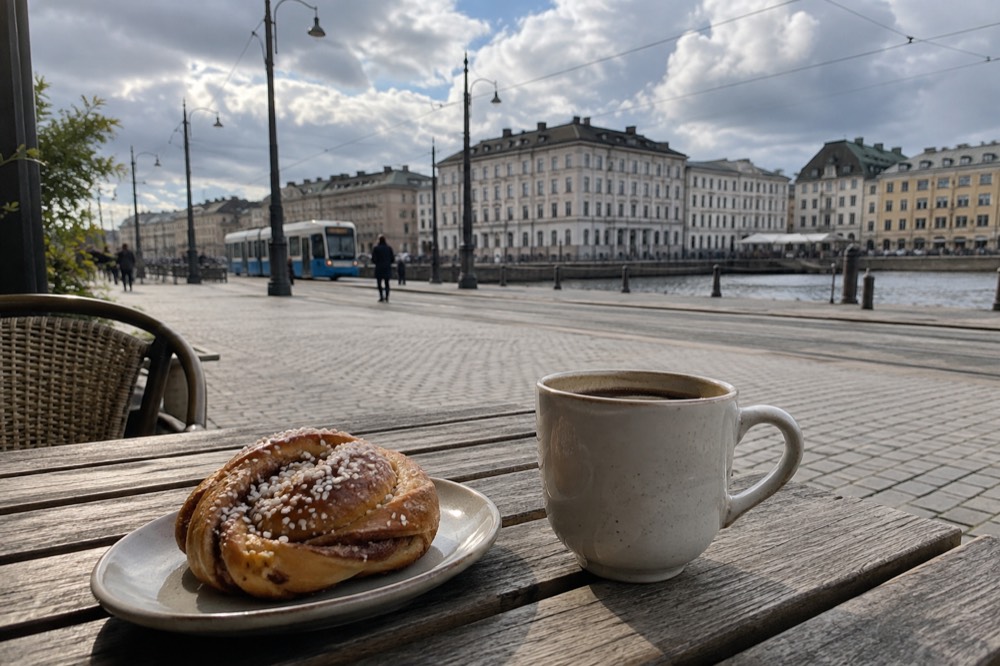
Sweden drinks more coffee per person than almost any country on earth, and the word that governs when and how it gets drunk is fika. The verb and the noun are the same: you can fika, and you can go for a fika. In Gothenburg the habit is everywhere, from the wooden cafes of Haga to the ferries that run out to the car-free southern archipelago, and the city's own food culture has grown up around it. This page explains what the word actually means, what the unwritten rules are, and where the habit fits into a visit to Sweden's west-coast second city.
What Does Fika Actually Mean in Sweden?
Fika is a Swedish noun and verb for a scheduled social coffee stop: a pause in the day, usually mid-morning or mid-afternoon, in which people sit down together over a cup of coffee or tea and almost always something baked or sweet alongside it. It is not a grab-and-go caffeine run, it is a deliberate break taken with other people, and workplaces in Sweden commonly build it into the working day.
The word itself is a piece of Swedish wordplay. Fika is believed to be a syllable-swap of kaffi, an older Swedish spelling of coffee, the same trick of inverted letters that produced other Swedish slang words in the nineteenth century. So the term and the drink are historically the same thing, but the meaning has widened far beyond the liquid. A fika without company is still a fika, technically, but the social dimension is the point: the coffee is the excuse, the conversation is the content.
That is why the habit survives so stubbornly. Unionised Swedish workplaces treat the afternoon fika as near-sacred; many offices have a dedicated fika room, and the break is paid time because it is understood as part of how work actually gets done, through relationships rather than despite them. Daycare staff fika with each other while the children nap. Hospital shifts pause for it. Even the language reflects the ritual: fikarum is a break room, fikabröd is the bread or pastry that goes with the coffee, and fikapaus is the pause itself. Swedish has an entire vocabulary for a habit that English needs a paragraph to describe.
For a visitor, the practical takeaway is simple. If a Swede in Gothenburg asks if you want to fika, they are inviting you to sit down for twenty to forty minutes, drink something hot, eat something sweet and talk. Saying yes is one of the easiest ways into local life in the city, and refusing in order to keep walking marks you out faster than any accent. The pronunciation question has its own answer, and it is shorter than you might expect: see how to pronounce fika in Swedish for the two-syllable breakdown.
Is Fika Really Not Just a Coffee Break?
The most common mistake English-language guides make is calling fika the Swedish word for coffee. It is not. Coffee is kaffe. Fika is the social institution built around coffee: the sitting, the company, the pastry and the pause, taken as a unit. Treating it as a translation of "coffee break" loses the part Swedes actually care about, which is that the break is scheduled, shared and defended rather than squeezed in.
The difference shows up in behaviour. A person who drinks a takeaway espresso alone at a bus stop is drinking coffee. A person who sits down in a cafe at three in the afternoon with a colleague, a cinnamon bun and no intention of leaving quickly is having a fika. The first is fuel. The second is a small, repeatable social event, and Sweden repeats it daily. The habit is close enough to a national custom that the word appears in job adverts, apartment-share listings and university schedules as a normal expectation of daily life.
The pastry matters more than outsiders expect. Fikabröd, the "fika bread", is the edible half of the ritual, and the most famous example is the kanelbulle, the cinnamon bun. Swedish cinnamon buns are less sweet and less sticky than American cinnamon rolls, spiced with cardamom as much as cinnamon, and they are topped with pearl sugar rather than icing. Gothenburg's Haga district has turned the bun into a local landmark: the cafes there sell giant kanelbullar, palm-sized or larger, and the queue outside the best-known bakeries on a Saturday is part of the neighbourhood's identity. Haga is also the city's wooden old quarter, and the two experiences, the cobbled streets and the oversized bun, are usually done together. The district has its own guide coverage, and what Gothenburg is known for starts with exactly this combination.
There is also a seasonality to fikabröd that a visitor notices within a week. The bun is the year-round default, but the calendar has its own specialties: semlor, the almond-paste and whipped-cream buns, own the stretch from January through Shrove Tuesday; prinsesstårta slices and berry tarts own the summer; and the autumn brings spiced and dark bakes as the daylight collapses. Ordering the seasonal item instead of the default is a small signal that you have done this before.
If you want the ritual done for you rather than assembled by hand, Gothenburg has tours that build fika into the itinerary, from walking tours with a fika stop to archipelago cruises where the coffee is served on the water.
Where Do You Do Fika in Gothenburg?
The classic Gothenburg fika happens in Haga, the preserved wooden quarter north of the city centre, where cafes serve the giant cinnamon buns the district is famous for. Beyond Haga, the habit runs through the whole city: bakery cafes in Vasastan, second-hand-district coffee spots in Majorna, museum cafes, food halls and even the archipelago ferries, where the onboard cafe makes the crossing itself a fika.
Haga first, because it is the one visitors come for. The neighbourhood is Gothenburg's oldest surviving suburb, built up with wooden landshövdingehus, the distinctive Gothenburg house type with a stone ground floor and timber storeys above. The main drag, Linnégatan's extension into Haga's cobbled lanes, is lined with cafes that have spent decades competing on buns. The portion sizes are the joke and the draw: a kanelbulle the size of a small plate is a real local fixture rather than a tourist trap, and locals buy them too. Go in mid-morning on a weekend and you will share the room with families, students and pensioners, which is the demographic spread the ritual is supposed to have.
The rest of the city offers different registers. Vasastan, the stone district near Vasaplatsen, has the student-and-cafe density you would expect next to the university, and its bakeries fill and empty with the academic day. Majorna, the old workers' quarter to the west, pairs its second-hand shops with a slower, less polished cafe scene. In the centre, the reopened Feskekôrka, the fish-market hall shaped like a church on Rosenlundsgatan, has been a food hall since it reopened in 2024 with five restaurants alongside its two fish counters, and coffee there comes with the harbour a street away. Museum cafes do quiet duty too: the Museum of Art's cafe sits inside one of the city's best buildings, and the botanical garden's cafe is a destination in its own right in summer.
The most Gothenburg-specific fika, though, is the one on the water. The southern archipelago ferries that leave from Saltholmen are ordinary Västtrafik boats, covered by the same ticket as the trams, and they carry a small onboard cafe. A coffee and a bun on the deck, with the car-free islands of Styrsö, Brännö and Vrångö closing in, is the version of the habit you cannot get in Stockholm. Several archipelago tours now make this explicit: there are guided cruises with a Swedish fika included, and island hiking tours with a fika stop built in.
Here is how the main fika settings in Gothenburg compare:
| Setting | Where | What it is like | Best time |
|---|---|---|---|
| Haga's wooden quarter | North of the city centre | Giant cinnamon buns, cobbled lanes, weekend queues out the door | Mid-morning, Saturday |
| Vasastan | Around Vasaplatsen | Student bakeries, fast turnover, espresso alongside filter | Weekday mornings |
| Majorna | West of the centre | Slower, second-hand-shop cafe scene, less polished | Weekend afternoons |
| Feskekôrka food hall | Rosenlundsgatan | Five restaurants and two fish counters in the reopened fish church | Lunch hours |
| Archipelago ferries | From Saltholmen | Coffee and buns on deck, car-free islands closing in | Summer evenings |
What Are the Unwritten Rules of Fika?
The rules are few but real: you sit down rather than take away, you order something to eat as well as drink, you do not rush, and you accept the invitation when it is offered. Nobody will police you, but skipping the eating half or drinking standing up marks you as someone who has missed the point. Paying separately is normal, and nobody tips for a fika because Sweden barely tips at all.
The sitting-down rule is the strongest. Swedish cafes have generous seating and long dwell times because the break is meant to be taken at a table. Takeaway coffee exists, of course, but a takeaway cup is coffee, not fika, in the same way that a sandwich eaten walking is not lunch. The eating half matters almost as much: fika without fikabröd is like a pub visit without a drink, technically possible but missing the shape. You do not need a bun every time; a biscuit, a slice of cake or an open sandwich counts. But an empty plate beside the cup is the exception, not the custom.
Time is the third rule. A fika is twenty to forty minutes, long enough for a real conversation, short enough to repeat daily. It is not a brunch and not a business meeting, though both can wear its clothes. Workplaces schedule it; friends treat it as the default way to see each other, since "let's fika" is a lower-commitment invitation than dinner and happens far more often. If you are invited, the correct answer is yes, and the correct behaviour once there is to stay past the last sip.
Money etiquette is straightforward. Each person pays for their own, cards are accepted essentially everywhere in Sweden, and tipping is not expected anywhere in the country, cafe counters included. Prices in Gothenburg's cafes run higher than continental Europe expects: Sweden is not a cheap country, and the bun-and-coffee combination is priced accordingly. The honest cost picture for the whole city is covered in is Gothenburg expensive, but budget for the fika habit specifically, because if you do it the Swedish way you will do it once or twice a day.
One legal footnote that surprises visitors: the beer culture around fika's cousin, the evening drink, is shaped by Sweden's alcohol law. Under Alkohollag (2010:1622), beer above 3.5% ABV may only be sold by the state retail monopoly, Systembolaget, so anything a cafe or bar pours above that threshold came through that channel. It has nothing to do with coffee, but it explains why the fika table, not the bar, is the default Swedish social venue.
Do You Have to Drink Coffee to Fika?
No. Coffee is the traditional vehicle, but the ritual is the pause and the company, and Swedes who do not drink coffee fika on tea, hot chocolate, juice or squash without anyone treating it as unusual. Ordering tea in a Gothenburg cafe is completely normal. The only thing you cannot substitute is the sitting down: the break itself, not the caffeine, is what the word means.
Sweden's coffee consumption is among the highest in the world per capita, so the default assumption will be coffee, and filter coffee rather than espresso is still the cultural baseline. A visitor ordering "en kaffe" gets brewed coffee, often with a free refill in the old-style places. But the cafes of Gothenburg are fully modern in every other respect: the espresso machines, the oat-milk default and the specialty roasters arrived years ago, and the city's coffee scene has both ends of the spectrum sitting side by side. The traditional fika room and the third-wave flat white coexist without tension. Everything else covered here is indexed on Gothenburg Travel Guide.
For children, fika is a hot chocolate or a saft, a fruit squash, with the same bun. For tea drinkers, the tea is ordinary and the habit is unchanged. This flexibility is the clearest evidence that the institution is social rather than pharmacological: if the coffee were the point, the non-coffee versions would not carry the same name, and they do. A family on a boat, each with a different drink, is having a fika together.
When Is the Best Time of Day for Fika in Gothenburg?
Swedes fika twice a day as a norm: mid-morning, roughly 9 to 10, and mid-afternoon, roughly 3, with the afternoon stop the more institutionalised one because workplaces protect it. Weekend fikas drift later and longer, and in Gothenburg the habit stretches onto ferries, boat decks and garden cafes in summer, when the 18-hour daylight makes the evening version feel reasonable too.
The two daily slots are worth planning around. The morning fika is lighter and often home-based or grabbed near work; the afternoon one is the real institution, the one with the reserved room, the rota of who brings the buns and the protected thirty minutes. A visitor arriving in a cafe at three on a weekday will find it fuller than at one, which surprises people who assume lunch is the peak. Saturday mid-morning is the other busy window, when Haga's bakeries queue out the door.
Season changes the setting more than the schedule. In the months either side of midsummer, when Gothenburg gets over 18 hours of daylight on 21 June against 6 and a half hours on 21 December, the evening fika on a terrace or a ferry deck is a west-coast speciality, and the archipelago boats are the best venue for it. In deep winter the ritual retreats indoors and gets heavier: more cardamom, more cream, more candles, since the break is one of the main ways Swedes get through the dark months. The darkness question has its own page, and visitors often ask whether the winter is as bleak as rumoured; the honest answer, including the real daylight numbers, is in is Gothenburg worth visiting for tourists.
Can You Fika Your Way Around a Whole Gothenburg Day?
Yes, and it is a legitimate way to structure a visit: morning buns in Haga, a museum cafe at midday, an afternoon fika built into a walking or boat tour, and an evening version on an archipelago deck in summer. Several Gothenburg tours now include a fika stop as a formal part of the itinerary, including guided walks with a Swedish fika and evening sailing trips with coffee and pastries served onboard.
The morning belongs to Haga, before the queues build. The midday slot can be a museum, since the Museum of Art's cafe sits under the Poseidon statue at Götaplatsen and the city's cafe culture extends through its cultural buildings. The afternoon is where the tours slot in: a guided walking tour with a Swedish fika stop runs about two hours and turns the ritual into the itinerary itself, and a food walking tour along the west-coast theme will pass through several of the same rooms with more on the plate.
The water versions are the ones unique to this city. An archipelago cruise with a Swedish fika included runs about two and a half hours and puts the coffee on the deck rather than the cafe. Evening sailing tours with fika run three and a half hours into the long summer light. For a full-day version, a guided hiking tour of the islands of Brännö and Galterö builds the fika into an eight-hour walk across the car-free southern archipelago, reached on an ordinary Västtrafik ticket. The archipelago is part of the city, not a day trip, which is why the ferry-and-fika combination is so easy: the tram to Saltholmen and the boat beyond it cost the same as any other tram ride in Zone A. Whether that island chain justifies the crossing is its own question, answered in is it worth visiting the Gothenburg archipelago.
If you are assembling the day yourself, the sequence that works is Haga in the morning, the canal or amphibious sightseeing loop at midday, and the archipelago boat for the afternoon fika on deck. The amphibious bus covers the city streets and then drives straight into the harbour, which pairs well with a day whose other halves are spent sitting down with coffee.
What Should You Read Next About Gothenburg?
The two follow-up pages that pair best with this one are the city's food guide and its sightseeing roundup: the first covers the seafood, food halls and west-coast cooking that sit alongside the cafe culture, and the second lays out the neighbourhoods and attractions a fika-based day can be built around. Together they turn the coffee ritual into a full itinerary rather than a single cafe stop.
The habit sits inside a wider food culture, and the city's seafood, its food halls and its west-coast cooking are covered in what food is Gothenburg famous for. If you are building an itinerary around the cafe-and-canoe rhythm of the city, the sightseeing and neighbourhood highlights are laid out in what not to miss in Gothenburg. Gothenburg Travel Guide keeps the whole picture, from the trams to the archipelago, in one place.
Common Questions About Fika in Gothenburg
What does fika mean in Sweden?
Fika is a Swedish noun and verb for a scheduled social coffee stop: sitting down with other people over coffee or tea and something sweet, usually mid-morning or mid-afternoon. It is not the word for coffee itself, which is kaffe, and it is not a takeaway run. The pause and the company are the meaning.
Is fika just a coffee break?
No. A coffee break is fuel; fika is an institution. Swedes schedule it into the working day, defend it socially, and expect a pastry or biscuit alongside the drink. Treating fika as a translation of "coffee" is the single most common mistake English-language guides make.
Do you have to drink coffee to fika?
No. Tea, hot chocolate, juice and squash all count, and nobody treats the substitution as unusual. The one non-negotiable is sitting down: the break itself, not the caffeine, is what the word means.
What do you eat at fika?
The classic is the kanelbulle, the Swedish cinnamon bun, spiced with cardamom and topped with pearl sugar rather than icing. Seasonal bakes rotate through the year, including semlor in late winter. In Haga, Gothenburg's wooden old quarter, the cafes are known for giant palm-sized buns.
Where is the best place to fika in Gothenburg?
Haga is the classic answer, with its wooden houses and famous oversized cinnamon buns. Vasastan has the student cafe scene, Majorna the slower second-hand-quarter version, and the southern archipelago ferries serve coffee on deck, which is the version you cannot get anywhere else.
Is fika mandatory in Sweden?
Legally, no. Socially, refusing an invitation to fika is a small refusal, and the habit is built into workplaces, universities and daily friendship in a way that makes it close to compulsory in practice. Saying yes is the easiest way into local life in Gothenburg.