How Do You Pronounce Fika in Swedish? What the Word Really Means in Gothenburg
Fika is pronounced FEE-kah, with the stress on the first syllable. Here is how to say it, what the word actually means in Sweden, and where to do it properly in Gothenburg.
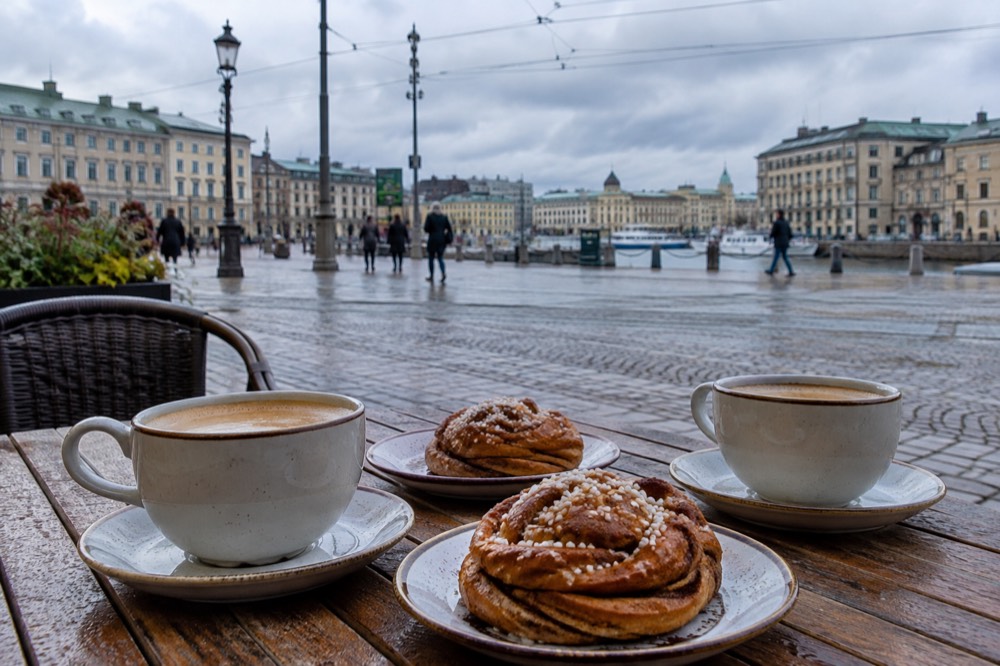
Fika is pronounced FEE-kah. The word has two syllables, the stress lands on the first one, and the vowel in that first syllable is long and pure, closer to the sound in "fee" than anything in "fish" or "fig". The second syllable is a light, unstressed "kah", never "kuh" and never "kah" drawn out. Say FEE-kah and you have it. Miss the stress and say fee-KAH, and a Swedish listener will usually still understand you, because context does the work, but you will sound like every tourist video on the internet.
The interesting part of the question is not the sound. It is what the word carries. Fika is one of the most searched Swedish words on this site after the city name itself, and almost every English explanation of it online gets the same thing wrong: they translate it as a coffee break. It is not a coffee break. It is a fixed social habit with its own grammar, and this page explains both halves, the sound and the custom, for anyone heading to Gothenburg, where fika is treated as seriously as anywhere in the country.
How Do You Pronounce Fika in Swedish?
Fika is pronounced FEE-kah, with the stress on the first syllable and a long e sound, roughly FEE-kah in English letters. The i in Swedish is pronounced like a long English ee, the a is a clean ah, and the second syllable is unstressed and short. The whole word takes under a second to say and rhymes loosely with "sea car" said quickly.
Breaking it down for an English speaker:
| Written | Sound | Notes |
|---|---|---|
| fi | FEE | Long Swedish i, identical to the vowel in English "see". Never the short i of "fit". |
| ka | kah | Unstressed, short. The a is the same sound as in English "car" said quickly. |
| Stress | FEE-kah | Always on the first syllable. Fee-KAH is the classic learner mistake. |
Two details help. First, Swedish long vowels are genuinely long, so the FEE portion gets more time than an English speaker expects. Second, the k in fika is a plain k, not the soft English ch sound. If you can say "fee" and "car" and then glue them together at speed, you can say fika, and a Gothenburger will not blink.
The word also works as both a noun and a verb in Swedish, which is worth knowing before you arrive. Swedes say "vi tar en fika", we take a fika, and "vi fikar", we are fika-ing, in the present tense. There is no English verb equivalent, because English has no equivalent custom. That grammatical gap is the first clue that fika is not a translation job.
A common mispronunciation to watch for is "fig-ah" or "fy-kah", both of which come from reading the word as if it were English. Swedish spelling is far more predictable than English spelling, and the letter i in a stressed Swedish syllable is essentially always the long ee sound. The same rule explains why Göteborg, the Swedish name for Gothenburg, is pronounced roughly YUR-tuh-bor-yee to a local ear, with a soft g that most visitors never expect. If you want the full story on the city's two names, are Gothenburg and Göteborg the same covers it, and how do you pronounce Gothenburg handles the city name's own pronunciation traps.
What Does Fika Actually Mean in Sweden?
Fika means a scheduled social pause with coffee or tea and something sweet, taken sitting down, with other people, usually mid-morning or mid-afternoon. It is not Swedish for coffee, and it is not a takeaway cup drunk while walking. The word names the whole ritual: the stop, the company, the baked good, and the time set aside for all three. Coffee is an ingredient of fika, not its definition.
The custom has rules that nobody posts on a wall but everybody follows. You sit. You do not fika standing up, and you certainly do not fika while commuting. You have something sweet with the drink, classically a kanelbulle, the Swedish cinnamon bun, though a biscuit or a sandwich counts on a weekday. You do it with colleagues, friends or family, and in most Swedish workplaces it happens at a set time, not on demand.
The distinction matters for a visitor in Gothenburg because the city runs on it. Offices pause. University corridors empty. Cafes fill at predictable hours, mid-morning and again in the middle of the afternoon, and then empty again. A traveller who understands the rhythm can find a seat at half past two and wonder why the same cafe was full at two. A traveller who treats fika as a coffee-to-go transaction will queue behind people who are buying something to sit down with, and will wonder why nobody is hurrying.
There is also a verb form trap that catches English writers. Because fika looks like it must relate to coffee, guides translate it as "a coffee break" and move on. Swedes do not move on. Ask a Gothenburger what fika means and the answer usually starts with the people, not the drink. The coffee can be swapped for tea, and it is still fika. Swap the people out, and it stops being fika and becomes just drinking coffee.
The word's own history supports the social reading. Swedish linguists generally trace fika to a mid-twentieth-century reversal of kaffi, an older form of kaffe, coffee, with the syllables flipped the way Swedish slang often flips words. So the word did start life as slang for coffee. But it survived and spread precisely because it came to mean something kaffe alone does not: the pause, the company and the pause's fixed place in the day. A word for coffee would not have needed a verb form. A word for a social institution did.
For the deeper cultural picture of the custom, what does fika mean in Sweden is this site's dedicated answer, and is fika mandatory in Sweden tackles the workplace question directly.
Where Should You Have Fika in Gothenburg?
Haga, the old wooden quarter west of the city centre, is where visitors do fika in Gothenburg, and its giant cinnamon buns, the oversized Haga kanelbulle, are a real local fixture rather than a tourist invention. The neighbourhood's cobbled streets and painted wooden landshövdingehus buildings hold a dense strip of cafes, and the bun served there is famously the size of a small plate.
Haga is the answer most Gothenburgers will give you, and they give it without hesitation. The district is one of the few that kept its low wooden architecture when the rest of the city was rebuilt in stone and brick, and its cafe culture grew up around that. The signature item is the oversized kanelbulle, a cinnamon bun baked deliberately large, dusted with pearl sugar, and served warm where the bakery can manage it. The listing menus in the neighbourhood price it as a normal pastry, which is part of the joke and part of the reason people travel across the city for one.
But Haga is the visitor answer, not the whole answer. Gothenburg fika happens everywhere: in the Vasastan student cafes, along the Linné strip, in the second-hand quarter of Majorna, and in institution cafeterias that look like nothing from the street. For the neighbourhood itself, what is Haga known for and what to do in Haga cover the district in detail, and where can you find the best fika in Gothenburg goes deeper into the city's cafe map than this page does.
For a first visit, the practical version is simple. Walk to Haga in the mid-morning, pick the cafe with the queue of locals rather than the one with the queue of cameras, order a kanelbulle and whatever coffee you actually drink, and then sit down for long enough to finish both. That last part is the whole point. The sitting is the custom.
If you would rather have the custom explained while you practise it, a guided fika walk does exactly that. The Guided Walking and Swedish Fika Tour pairs a two-hour walk through the city with a proper sit-down fika stop, and the operator's listing carries the current price, duration and availability. A related option, and one that suits the city's maritime character, is the archipelago cruise with Swedish fika, which takes the custom out onto the water.
When Do Swedes Actually Fika?
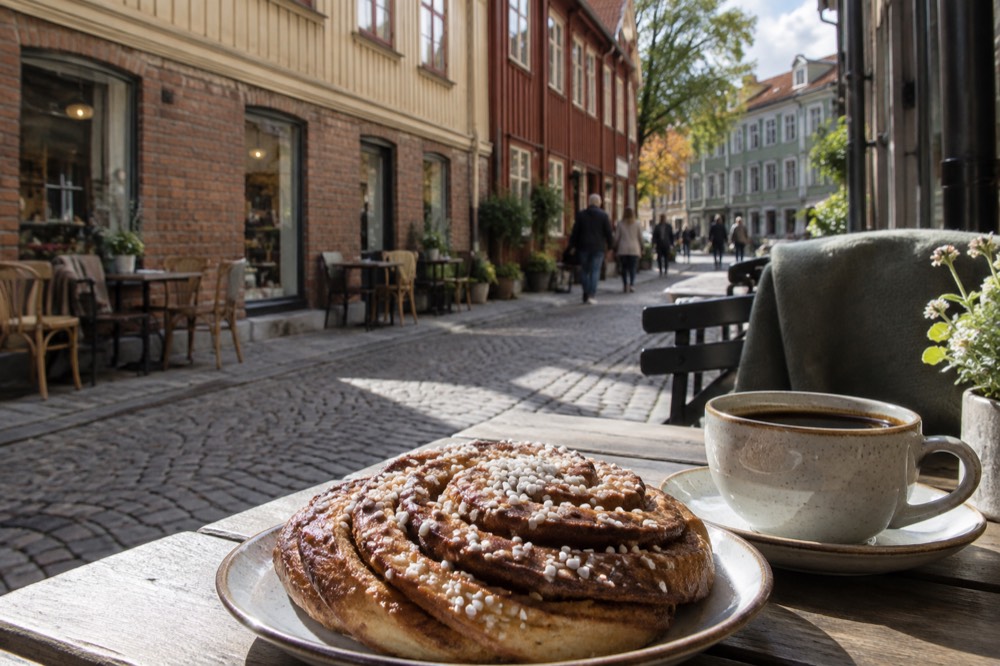
Swedes fika twice a day on a working schedule, once mid-morning, typically between nine and ten, and once mid-afternoon, typically around three. Weekend fika moves later and longer, and Sunday fika is the most elaborate version, with a table of baked goods and family or friends. In Gothenburg the rhythm is visible in real time: cafes fill at these hours and empty between them.
The clock-driven version is the one a visitor can plan around. A weekday morning fika is short, fifteen minutes to half an hour, often standing at a counter in a workplace but sitting in a cafe. The afternoon fika is the one with more social weight, and in offices it is frequently the fixed, non-negotiable pause. Nobody schedules a meeting for three in the afternoon in a Swedish workplace without expecting to fight the fika.
The weekend version is different in kind. Sunday fika is closer to a light meal, with a spread of buns, biscuits, sometimes an open sandwich, and a table that stays occupied for an hour or more. Cafes in Haga and Vasastan are at their fullest then, and the queue for the counter can stretch out the door in good weather. Arriving either well before three or after four is the standard local workaround.
The seasonal layer matters in Gothenburg too. The city's rainfall data, from SMHI's 1991-2020 normals for the Göteborg A station, shows October as the wettest month at 102.9 mm and April as the driest at 51.3 mm, and fika is the default wet-weather activity in a city where it rains on roughly 127 days a year. An indoor custom this reliable is partly a climate adaptation. When the rain arrives after the summer tourists leave, the cafes are where the city goes.
What Do You Eat at Fika in Gothenburg?
The kanelbulle, the Swedish cinnamon bun with cardamom in the dough and pearl sugar on top, is the default fika food in Gothenburg, and October 4 is Kanelbullens dag, national cinnamon bun day. Beyond the bun, the standard spread includes chokladbollar, dammsugare, princess cake, and open prawn or cheese sandwiches for the savoury option. The drink can be coffee, tea or anything hot.
The bun is the headline, and Gothenburg has a claim on its best-known oversized version in Haga. But a bakery counter in this city offers more than one answer:
| Fika food | What it is | When you will see it |
|---|---|---|
| Kanelbulle | Cinnamon bun, cardamom-spiced, pearl sugar topping | Every day, everywhere; giant version in Haga |
| Chokladboll | No-bake chocolate and oats ball, rolled in coconut | Every day; a weekday staple |
| Dammsugare | Green marzipan "vacuum cleaner" with chocolate ends | Every day; a classic |
| Prinsesstårta | Princess cake, sponge and marzipan | Celebrations and weekends |
| Räksmörgås | Open prawn sandwich on buttered bread | The savoury fika choice, a west coast speciality |
The räksmörgås deserves its own note because it is the point where fika overlaps with the west coast's seafood identity. Gothenburg's position at the mouth of the Göta älv, where the river meets the Kattegat, makes the open prawn sandwich a local signature rather than an import, and plenty of cafes serve it as the savoury half of an afternoon fika. For the wider food picture, what food is Gothenburg famous for covers the city's table end to end, and does Sweden have good seafood answers the national version of the same question.
One rule travels with all of it: the food is an accompaniment, not the purpose. A fika with a plain biscuit and good company is a complete fika. A fika with a spectacular bun eaten alone at a laptop is, by most Swedish definitions, just eating a bun.
Is Fika Mandatory in Sweden?
Fika is not legally mandatory, but it is socially close to it in most Swedish workplaces, where the mid-morning and mid-afternoon pauses are treated as part of the working day rather than a break from it. Declining repeatedly is noticed. Visitors are never expected to participate, but accepting an offered fika is one of the fastest ways to be treated as a colleague rather than a guest.
The workplace version is the strongest. Workplace culture commentary in Sweden regularly describes fika as the backbone of office social life, and the fixed afternoon pause survives in organisations that have cut almost everything else. It is where information moves, where new staff are absorbed, and where the flat hierarchy the country is known for is visibly practised: everyone from the intern to the manager stands in the same queue for the same bun.
For a visitor, the stakes are lower but the logic is the same. Nobody will correct your pronunciation. Nobody will check whether you are doing it properly. But sitting down for a fika in Haga, ordering the bun, and taking twenty minutes over it will teach you more about how the city works than a day of museum-hopping, because you will be doing what the city is doing at the same time it is doing it.
The custom also explains a puzzle visitors report about Swedish cafes: they are slow, on purpose. Table turnover is not the goal. A cafe that rushes you is failing at its function. If the counter staff seem unbothered that you have been at the same table for an hour with an empty cup, that is not bad service, it is the service.
Common Questions About Fika in Gothenburg
How do you pronounce fika in Swedish?
Fika is pronounced FEE-kah, with the stress on the first syllable. The first vowel is a long Swedish i, like the ee in "see", and the second syllable is a short, unstressed kah. The word rhymes loosely with "sea car" said quickly, and the whole thing takes under a second.
What does fika mean in Sweden?
Fika means a scheduled social pause with a hot drink and something sweet, taken sitting down with other people, usually mid-morning or mid-afternoon. It is not simply Swedish for coffee. Coffee is one ingredient of the custom; the sitting, the company and the time set aside are the rest of it.
Is fika mandatory in Sweden?
No law requires it, but in most Swedish workplaces the mid-morning and mid-afternoon fika pauses are treated as part of the working day. Declining repeatedly is noticed. Visitors are not expected to join, but accepting an offered fika is one of the fastest ways to be included.
Where is the best fika in Gothenburg?
Haga, the old wooden quarter west of the centre, is the standard answer and the home of the oversized Haga kanelbulle, a cinnamon bun the size of a small plate. Vasastan's student cafes, the Linné strip and Majorna's second-hand quarter all have strong alternatives, and the local method is to pick the cafe where residents queue rather than cameras.
Can you fika on a boat in the Gothenburg archipelago?
Yes. Operators run archipelago cruises and evening sails with a Swedish fika included, taking the custom out onto the water. The southern archipelago islands are reached by tram and ferry from Saltholmen on an ordinary Västtrafik ticket, as Västtrafik's Zone A ticket page confirms, so a self-service version, with a bought bun and a ferry ride, costs no more than the transit fare.
What do you eat at fika?
The kanelbulle, a cardamom-spiced cinnamon bun with pearl sugar, is the default. Chokladbollar, dammsugare and princess cake are regulars, and the savoury option in Gothenburg is often an open prawn sandwich, the west coast speciality. The food is an accompaniment to the pause, not the point of it.
The pronunciation, then, is the smallest part of fika. FEE-kah takes a second to learn. The custom takes a visit to understand, and Gothenburg, with its oversized buns in Haga and its prawn sandwiches by the harbour, is one of the better places in the country to learn it. For more on the city's food culture, see what food is Gothenburg famous for, and for the wider picture of the city itself, the Gothenburg Travel Guide homepage is where this site keeps its full coverage, including what Gothenburg is known for beyond the cafe table.