Where to Avoid in Gothenburg, Sweden: The Places and Mistakes That Ruin Trips
The honest answer to where to avoid in Gothenburg, Sweden: closed attractions, wrong-season mistakes, tourist traps and the areas that deserve your time instead.
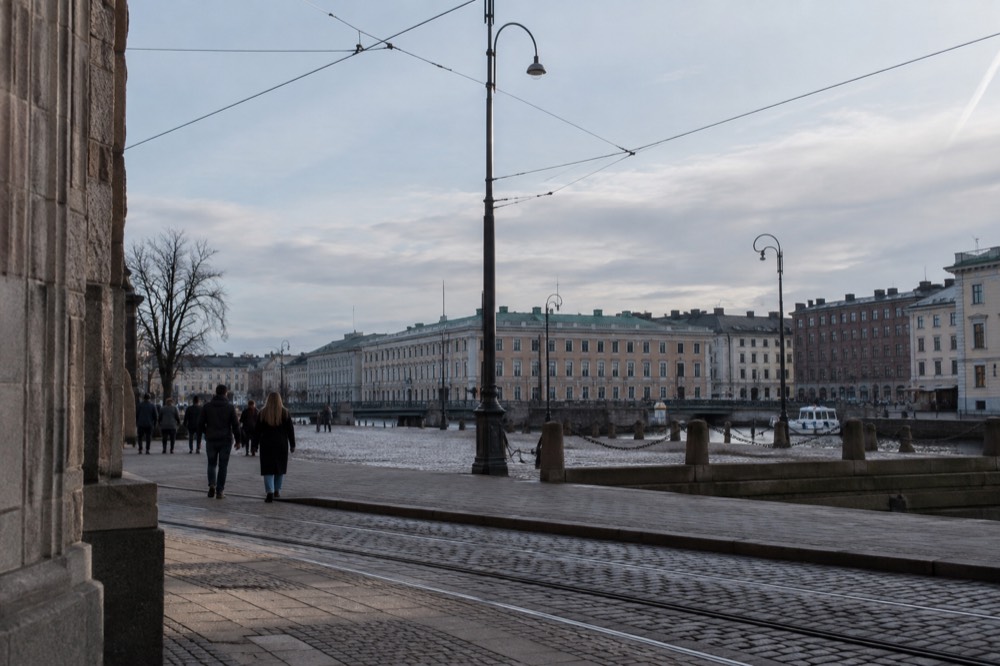
Gothenburg, Sweden, has a problem most cities would envy: there is very little of it to avoid. Sweden's second city recorded over six million commercial guest nights in 2025, a record year, and the overwhelming majority of those visitors left with their wallets, their phones and their good mood intact. The honest answer to "where to avoid in Gothenburg" is therefore not a list of dangerous streets. It is a list of mistakes: buildings that closed years ago, seasons that punish the unprepared, tickets that buy less than they appear to, and a handful of crowded corners that are easy to route around. This page is that list, built from what the city, the transport authority and the venues themselves publish.
Are There Dangerous Areas to Avoid in Gothenburg?
No district of Gothenburg is a no-go area, and no part of the city is best described as dangerous for a visitor using ordinary common sense. The city of 613,274 people is a normal, well-policed Nordic city where the risks that matter are pickpocketing in crowded spots, bicycle traffic and your own cold-weather planning, not violent crime or no-go zones. Treat the question as a planning question, not a safety question.
That answer surprises people who have read scare coverage about Sweden, but it matches what the city itself reports. Göteborgs Stad's own figures show a city that grew to 613,274 residents at the end of 2025 and welcomed record visitor numbers the same year, with international guest nights up roughly 15% across the first ten months. Cities that are genuinely risky do not post those numbers.
The practical safety advice is short. Keep valuables out of back pockets in the busiest spots, above all Nordstan, the shopping centre by Göteborg Centralstation, and the Avenyn boulevard on weekend nights. Watch for trams and bicycles: Göteborgs Spårvägar's own annual reporting counts 126 million tram journeys in 2025 across a network of 12 lines, 134 stops and 188 km of single track, which means silent electric vehicles share your streets everywhere. And if a late night goes long, the tram is the way home, not a long walk through unfamiliar districts.
For a fuller picture of what the city is actually like, read what Gothenburg is known for and the honest verdict in is Gothenburg worth visiting for tourists. Neither page will tell you to avoid a district either, because there is not one worth the word.
Which Gothenburg Attractions Should You Avoid Because They Are Closed?
The single biggest trap in Gothenburg is the old Volvo Museum at Arendal, which closed permanently in December 2023, and its successor World of Volvo is the only Volvo attraction that exists today. The other big ones: Liseberg shuts completely between late December and mid-April, the Göteborg City Card no longer exists under that name, and Göteborgs konstmuseum warns of intermittent blasting around its building ahead of a 2028 closure. Check each before you plan a day around it.
The Volvo Museum is the stale fact that catches the most people. Guides written before 2024 still send visitors to Gustaf Larsons Väg in Arendal, and anyone who follows them arrives at a closed building. The replacement, World of Volvo at Lyckholms Torg on Hisingen, is the place where Volvo's history now lives; its own site states the succession plainly. Its published hours run Monday to Wednesday 10:00 to 17:00, Thursday 10:00 to 19:00, Friday and Saturday 10:00 to 17:00 and Sunday 10:00 to 16:00, with exhibition tickets from 120 SEK online.
Liseberg is the second trap, but a seasonal one. The park's own calendar for 2026 runs summer 18 April to 20 September, Halloween 2 October to 1 November, and the Christmas market 14 November to 23 December. That means the biggest attraction in the city is fully closed from 24 December until mid-April, with further gaps in early October and early November. A visitor arriving in late January finds the gates shut. There is one softener: Kaninlandet, the rabbit-themed family land, now opens on winter weekends and school holidays, but that is a small corner of the park, not the park.
The third trap is a ghost product. The old Göteborg City Card, the municipal pass that included public transport, is gone; the official tourism site sells no city card at all, and the old pass URL now redirects to [Go City](https://gocity.tpk.ro/HQKyKKW4). The Go City product is a different thing under different terms, and whether it includes transport is not something any primary source confirms, so do not buy it on that assumption. Our full breakdown of the maths lives in the sibling piece on the pass question, and the short version is: for many visitors a 125 kr 24-hour Zone A Västtrafik ticket plus single attraction tickets beats any pass.
Göteborgs konstmuseum deserves a caveat rather than an avoid. The museum is open, a day ticket is 75 kr and under-20s enter free, but its own rebuild page states that it closes in 2028 and reopens in 2032, and it currently warns of intermittent blasting near the building, flagging it for sensitive visitors. Go, but know what you are walking into.
Which Tourist Spots in Gothenburg Are Overcrowded or Overrated?
The spots most worth routing around are the Avenyn strip at its weekend peak, Nordstan at rush hour, and the Paddan canal boats on the first sunny Saturday, all of which are pleasant at other times. Overrated is harsher, but the hop-on hop-off bus deserves the word: Gothenburg's tram network reaches everything the bus reaches, runs far more often, and a 24-hour Zone A ticket costs 125 kr. The city rewards walking and tramming, not circling.
Avenyn, the broad boulevard between Götaplatsen and the bridge, is the street every visitor ends up on, and on Friday and Saturday nights it is where the city's loudest bar traffic concentrates. It is not dangerous, but it is not where Gothenburg keeps its character either. The Linné and Långgatorna strip a couple of tram stops west holds the bars locals actually queue for, and Haga's wooden quarter is the postcard everyone came for. If your evening plan is "Avenyn, because it's the main street", reroute one stop west.
Nordstan is Sweden-sized shopping-mall ordinary: useful for its location directly on the tram and rail interchange at Göteborg Centralstation, but a poor use of a travel afternoon. Its one genuine claim on your attention is practical, it is the densest crowded space in the city centre, which is exactly where pickpocket-type risk concentrates.
The Paddan canal boats are a Gothenburg institution and not a scam, but they are victims of their own success: the 50-minute sightseeing cruise carries the crowds, and a first sunny Saturday after a grey week fills every seat. The same water looks better from a kayak, and the roster of guided options runs from a two-hour guided kayak tour to self-guided hire in the centre. For the full picture of what the city's waterways offer, see what not to miss in Gothenburg.
The hop-on hop-off bus is the one product this site will actively argue against, with numbers. A one-day hop-on hop-off ticket lists from $37 per person. A Västtrafik 24-hour Zone A ticket costs 125 kr, covers every tram in the city, and, as we cover below, also covers the archipelago ferries. Unless the bus format itself is the appeal, the tram wins on price, frequency and coverage.
When Is the Worst Time to Visit Gothenburg?
The worst times to visit are late December to mid-April, when Liseberg is shut and daylight bottoms out at 6 hours 32 minutes, and October, which SMHI's own normals show is the wettest month of the year at 102.9 mm of rain. The best-kept counter-facts: April is the driest month at 51.3 mm, and the sea is warmer in September (16.7 C) than in June (16.2 C), so the shoulder seasons beat both extremes.
The daylight number deserves emphasis because it reshapes every plan. At 57.7 degrees north, Gothenburg gets 18 hours 6 minutes of daylight on 21 June, with civil twilight from 02:58 to 23:30 leaving only about three and a half hours of true night. On 21 December the same city gets 6 hours 32 minutes, sunrise 08:54, sunset 15:26. A December visitor is not avoiding the city, they are avoiding the outdoors after lunch. Everything else covered here is indexed on Gothenburg Travel Guide.
The rain data contradicts the city's reputation in both directions. SMHI's 1991-2020 normals for station Göteborg A put annual precipitation at 912 mm across 127 days with at least 1 mm, roughly one day in three. Wet, but not the permanent drizzle of legend, and, importantly, SMHI does not call Gothenburg Sweden's rainiest city; the national maxima sit in the western highlands and the mountains. The month pattern is the planning gold: October is the wettest month at 102.9 mm, and April is the driest at 51.3 mm on just 8.2 wet days. Spring, not summer, is the dry window.
The sea tells the same counterintuitive story. SMHI's quality-controlled hourly observations at Vinga, the archipelago lighthouse station, show sea temperature peaking in August at 18.6 C, not July, and September water (16.7 C) running warmer than June water (16.2 C). Anyone booking a June swimming trip to the islands is, thermally speaking, booking the wrong month. February, at 2.7 C, is the coldest month in the water, with a record low of -1.2 C, which is possible because brackish Kattegat water freezes below zero.
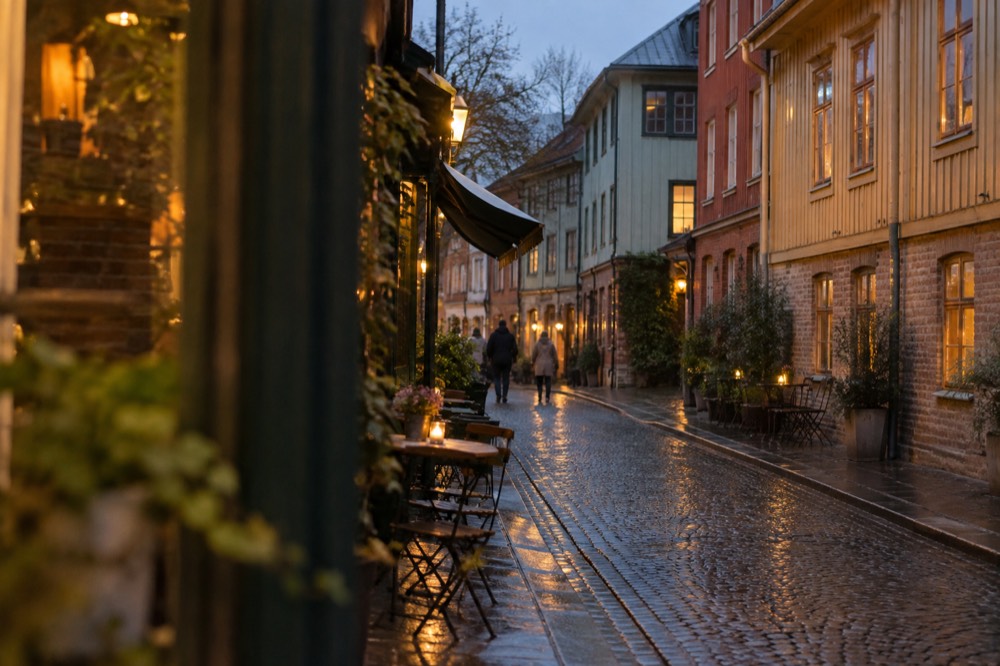
Put the timing traps together and the avoid-list writes itself:
| Timing mistake | What the sources actually say | Better plan |
|---|---|---|
| Visiting in late January or early March for Liseberg | Park closed 24 Dec to mid-April; only Kaninlandet opens winter weekends | Visit 18 Apr to 20 Sep, or the Christmas market 14-23 Dec |
| Booking a June beach trip to the islands | June sea 16.2 C, SMHI Vinga data | August (18.6 C) or September (16.7 C) |
| Assuming July is the wettest month | October is wettest at 102.9 mm; April driest at 51.3 mm | April-May for the driest streets |
| Counting on long summer evenings year-round | 21 Dec has 6 h 32 m daylight vs 18 h 06 m on 21 Jun | Plan indoor afternoons in deep winter |
Where Not to Stay, Park or Shop in Gothenburg?
Avoid staying anywhere that forces a car into your trip: parking at Saltholmen is the archipelago's known pain point, the southern islands ban private cars outright, and the airport has no rail link, so the city-side end of your journey matters. Also avoid buying beer above 3.5% ABV anywhere but Systembolaget, because Swedish law makes the state monopoly the only legal seller, and avoid assuming any pass covers transport, because the current Go City product's transport inclusion is unconfirmed.
The car advice is the most concrete. Göteborgs Stad's own archipelago study states that the islands of the southern archipelago are protected from car traffic, with exceptions only for taxi, accessible transport and emergency services. The islands are areas of Gothenburg, reached by ordinary Västtrafik ticket, and Saltholmen, the ferry terminal, is the western terminus of the tram network, so the entire journey is tram then boat. Arriving by car instead means competing for the Saltholmen car park that every guide flags as the district's bottleneck. Do not do it.
The airport fact is the second planning trap. Göteborg Landvetter Airport, Sweden's second-largest with 5,435,850 passengers in 2025, has no rail link; Swedavia's own transport pages list only coach and bus. The airport coach is now branded Vy flygbussarna, running Landvetter to Korsvägen to Göteborg C in a stated 20 minutes, and FlixBus line 691 runs a parallel route. Anyone planning around a train that does not exist needs the coach instead, which our is there more than one Gothenburg airport piece covers in detail.
The alcohol rule is the one that surprises every first-time visitor. Under Alkohollag (2010:1622), beer above 2.25% but not above 3.5% ABV is folköl, sold in supermarkets; anything stronger, plus all wine and spirits, is starköl, retailed only by the state-owned Systembolaget. The supermarket shelf version of a familiar beer is therefore often a 3.5% reformulation of the same brand, which is why it tastes weaker than the label you remember. Plan any proper drinks shopping around the monopoly, and do not leave it to Sunday.
The pass caveat repeats because it matters. The old city card bundled transport; the current Go City product is a different commercial arrangement, and no primary source this site could verify confirms transport inclusion for it. What is verified is the Västtrafik arithmetic: a single Zone A ticket is 38 kr, a 24-hour Zone A ticket is 125 kr, and that same Zone A ticket covers the archipelago ferries, tram and boat, centre to open sea. Västtrafik's own zone material puts the boats on the Zone A map. There is also a temporary state subsidy halving every 30-day period ticket through the end of the year, Zone A adult from 890 kr to 445 kr, but it explicitly does not apply to the 24-hour and 72-hour tickets visitors actually buy, so ignore any headline claiming Gothenburg transport is half price.
If seeing the city first would settle your routing decisions, the amphibious bus is the efficient orientation: one hour, streets and harbour, from the operator's live listing. The same logic applies to the water more broadly, and the trio below covers the harbour, the canal and the archipelago in one sweep.
What Should You Do Instead of the Things You Are Avoiding?
Swap the closed and the crowded for the verified alternatives: World of Volvo instead of Arendal, the tram-and-ferry combination instead of any driving day, the Linné and Haga quarters instead of Avenyn's busiest blocks, and September or April instead of October and the deep winter. Gothenburg's best material, its car-free islands, its food halls and its water, is all reachable on a 125 kr day ticket, which is the real reason the avoid-list is so short.
Start with the islands, because they are the city's best answer to almost every avoid. Styrsö, Brännö, Vrångö, Donsö, Asperö and Köpstadsö are areas of Gothenburg, not day trips, reached from Saltholmen on ferries covered by the ordinary Zone A ticket. Västtrafik's own material says it in one line: you can ride the same ticket all the way from the centre out to sea. A day ticket, a tram to the western terminus and a ferry is the complete mechanism, and the islands' car ban means the silence is structural, not incidental. The guided archipelago cruise is the low-effort version of the same water if planning a ferry day feels like work.
Then the food. Feskekôrka, the fish-church-shaped market hall on Rosenlundsgatan, reopened in 2024 after renovation and is now a food hall with two fish counters and five restaurants rather than the fish-counters-only venue older guides describe. It is exactly the kind of place the avoid-list exists to protect you from missing. The fika culture around it, cinnamon buns and coffee as a scheduled institution, is covered in what does fika mean in Sweden.
Finally, the orientation question. Gothenburg rewards a first day spent learning its shape, and a guided hour on the water or a walk with a local does more for the rest of the trip than any bus circuit. The picks below are the three this site rates for turning "where to avoid" into "where to go".
Common Questions About Where to Avoid in Gothenburg
Where to avoid in Gothenburg?
No district needs avoiding for safety. What to avoid is the closed Volvo Museum at Arendal (shut since December 2023, replaced by World of Volvo), Liseberg outside its published seasons, the old Göteborg City Card, which no longer exists, driving to Saltholmen instead of taking the tram, and the wettest month, October, without proper gear.
Is Gothenburg safe for tourists at night?
Yes, with ordinary city common sense. The busiest nightlife stretch, Avenyn, is loud and crowded on weekends rather than dangerous, and the tram network runs through the evening for the ride home. The main genuine risks are pickpocketing in crowded spaces like Nordstan and not planning for limited winter daylight.
Is the old Volvo Museum still open?
No. The Volvo Museum at Arendal closed permanently in December 2023. World of Volvo at Lyckholms Torg is the successor attraction, and its own site states that it took over as the place where Volvo's history continues. Do not plan a trip to Arendal.
What is the worst month to visit Gothenburg?
For attractions, late December to mid-April, when Liseberg is closed and daylight runs as low as 6 hours 32 minutes. For weather, October, which SMHI's 1991-2020 normals show as the wettest month at 102.9 mm. April, the driest month at 51.3 mm, is the underrated alternative.
Does the Gothenburg archipelago require a tour booking?
No. The southern islands are areas of Gothenburg reached by tram and ferry on an ordinary Västtrafik Zone A ticket, and a 24-hour ticket at 125 kr covers the tram to Saltholmen and the ferries out to the islands. Guided cruises exist for those who prefer a narrated version of the same water.
Should I buy a hop-on hop-off [bus ticket](https://busbud.tpk.ro/pZ1aQZGA) in Gothenburg?
Generally no. The tram network of 12 lines reaches everything the bus route covers, runs far more frequently, and a 24-hour Zone A Västtrafik ticket at 125 kr also covers the archipelago ferries, making it better value than a one-day bus ticket for most visitors.