Is the Ferry in Gothenburg Free? What Tickets You Actually Need
No, the ferries are not free in Gothenburg, Sweden, but an ordinary Västtrafik ticket covers the archipelago boats from Saltholmen. Here is exactly what a ferry ride costs and which ferries are exceptions.
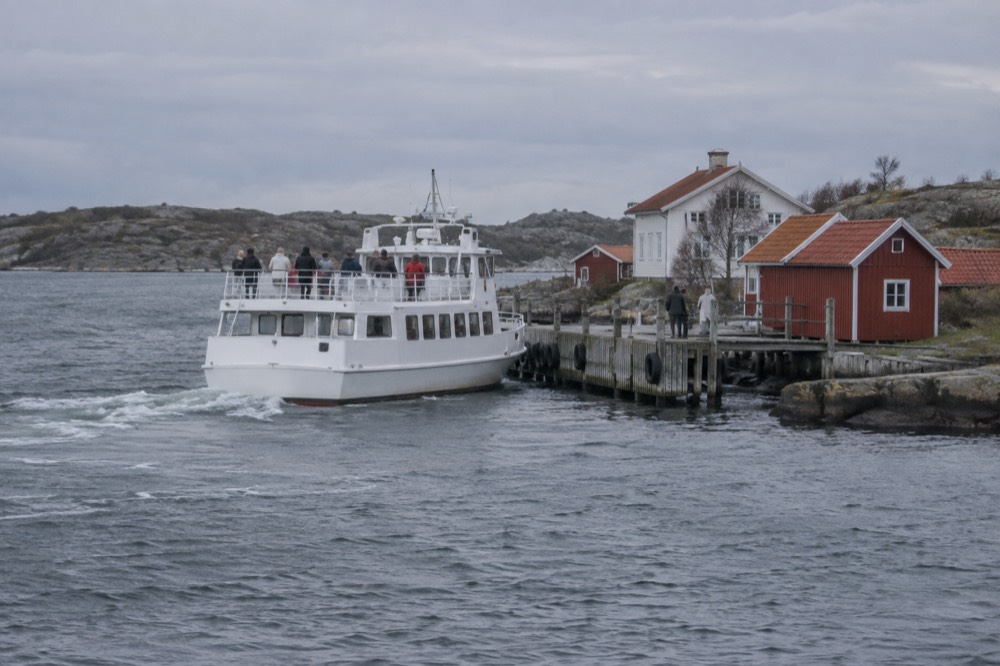
Gothenburg, Sweden, is one of very few cities where you can board a passenger ferry to a car-free island, using the same ticket that carried you there on a tram. That fact surprises a lot of visitors, and it produces a genuinely confusing question: is the ferry free? The question is asked constantly, and the honest answer is no, the ferries cost money, but the money is the ordinary Västtrafik fare you would pay for a tram ride anyway, and one ticket covers both legs of the journey. Västtrafik's own zone material puts the southern archipelago inside Zone A, the same zone as the city centre, which is what makes the whole thing work.
This page sorts out what is free, what is covered by a normal ticket, and what is a separate paid product, because Gothenburg has three different kinds of ferry and only one of them behaves like public transport. Get the distinction right and the archipelago becomes the cheapest big day out in the city. Get it wrong and you either overpay or stand at Saltholmen without a valid ticket.
Is the Ferry in Gothenburg Free?
No, the ferries in Gothenburg are not free. The archipelago passenger ferries from Saltholmen are part of the Västtrafik network, so they are covered by an ordinary ticket: a single Zone A fare is 38 kr and a 24-hour Zone A ticket is 125 kr, the same price as a tram ticket, and that ticket carries you across to the islands. The international ferries to Germany and the UK, and any commercial sightseeing boat, are separate paid products with nothing to do with Västtrafik.
The confusion comes from a good place. In most cities a boat trip is a tourist product with a tourist price. In Gothenburg the southern archipelago, meaning Styrsö, Brännö, Vrångö, Donsö, Asperö and Köpstadsö, is not a tourist destination in the administrative sense at all. These islands are areas of the city of Gothenburg, with permanent residents, school children and postal addresses, and the boats that serve them are scheduled public transport with Västtrafik line numbers. They appear on the same network maps as the trams.
So when people ask whether the ferry is free, what they usually mean is one of three things, and each has a different answer. Is there no charge at all? No. Is it included in a ticket I have already bought or was going to buy anyway? Yes, if that ticket is a valid Västtrafik ticket for Zone A. Is it a cheap add-on sold at the pier? No, there is no separate ferry fare to add on, the ordinary ticket simply is the ferry ticket.
That last point matters in practice. There is no ferry booth at Saltholmen selling a special island fare, because no such fare exists. You either hold a valid Zone A ticket when you board, or you do not, and inspectors do check on the boats in summer. If you arrived in the city wondering whether to bother with a day ticket, the ferry network is the strongest argument for one: a 125 kr 24-hour Zone A ticket covers the tram out to Saltholmen, the ferry to any island, the ferry between islands, and the tram back.
Which Gothenburg Ferries Does a Västtrafik Ticket Cover?
A Västtrafik ticket covers the scheduled southern archipelago passenger ferries that depart from Saltholmen and serve Asperö, Brännö, Styrsö, Donsö, Vrångö and Köpstadsö, all of which sit inside Zone A alongside the city centre. It does not cover commercial sightseeing boats, charter trips, or the long-distance ferries to Germany and the UK, which are sold by their own operators at their own prices.
The southern archipelago boats are the ones visitors almost always mean when they ask about "the ferry in Gothenburg". Saltholmen, the ferry terminal, is the western terminus of the tram network, so the journey is genuinely seamless: you ride a tram to the end of the line and walk onto a boat. Västtrafik's own network and zone map shows the boat lines alongside the tram lines, and the islands are drawn inside the Zone A boundary, the same zone that contains Göteborg C, Avenyn and Liseberg.
What the ordinary ticket does not cover is everything operated as a commercial product. The guided archipelago cruises sold by tour operators, the shrimp and salmon dinner cruises, the sauna boat, the sailing trips with a skipper: these are experiences, not transport, and they are priced and sold separately. That is not a loophole or a scam, it is the difference between a scheduled ferry that exists so islanders can get to work and a boat that exists so visitors can spend two and a half pleasant hours on the water with a guide.
There is a middle category worth naming clearly, because it is where most confusion lives. Some visitors assume that because the islands are served by public transport, everything on the water must be. Others assume the opposite, that because a guided cruise costs money, the ordinary ferry must too. Neither is true. The scheduled ferries are public transport, full stop, and the guided cruises are tourism products, full stop. If your goal is to set foot on Styrsö or Brännö and wander, the scheduled ferry is all you need. If your goal is a narrated round trip with fika served on board, that is a different purchase, and the listings for those trips state what is included.
The northern archipelago, Öckerö, Hönö and Björko, is also served by Västtrafik ferries, from Hisingen rather than Saltholmen, and the same principle applies there: an ordinary ticket covers the crossing, because the islands are inside the Öckerö part of Zone A. The southern islands get the attention because the tram connection from the centre is direct, but the ticketing logic is identical.
How Much Does a Ferry Ticket in Gothenburg Cost?
The ferry itself has no separate price. A single adult ticket for one zone costs 38 kr, a two-zone single 76 kr, and a 24-hour Zone A ticket costs 125 kr, bought in the Västtrafik app or at a shop at the same price, and any of these covers the archipelago ferries. A youth single in one zone is 29 kr. The 30-day period tickets are currently halved by a temporary subsidy, but that does not apply to visitor day tickets.
The fare table is worth reading carefully, because the temporary subsidy has created a genuinely misleading headline. Västtrafik's 30-day Zone A adult ticket has dropped from 890 kr to 445 kr under a temporary state support scheme running through the end of the year. That is real, and it is excellent value for anyone staying a month. But the tickets a short-stay visitor buys, the 24-hour and 72-hour day tickets, are not part of the subsidy, and their prices are unchanged. A page that tells you "transport in Gothenburg is half price" is telling you about a monthly ticket you will probably never buy.
| Ticket | Adult price | Covers the archipelago ferries? | Notes |
|---|---|---|---|
| Single, 1 zone | 38 kr | Yes, one journey | Youth 29 kr |
| Single, 2 zones | 76 kr | Yes | Youth 58 kr |
| Single, 3 zones | 114 kr | Yes | Youth 87 kr |
| 24-hour, Zone A | 125 kr | Yes, unlimited | Same price in app or shop |
| 72-hour, Zone A | Price not published on the customer page | Yes, unlimited | Verify the current fare with Västtrafik |
| 30-day, Zone A | 445 kr (temporarily halved from 890 kr) | Yes | Subsidy runs through year end |
For a visitor planning one archipelago day, the arithmetic is simple. A single ticket gets you to Saltholmen, but a single ticket is one journey, so once you board a ferry that journey is spent and you would need new tickets for the boat between islands and the tram home. The 24-hour ticket is almost always the better instrument for an island day: 125 kr, unlimited rides on trams, buses and the archipelago ferries across Zone A for a full day. Four island-hopping legs plus two tram rides would cost more in singles than the day ticket does in one payment.
One practical note on buying: the Västtrafik app is the easiest route, and the 24-hour Zone A ticket costs the same in the app as at a shop or ticket machine, so there is no penalty for buying in person if your phone situation is awkward. If you plan to pay by card at a shop, that works, the system is card-friendly throughout. What does not work is boarding without a ticket and planning to pay on board, because the ferries, like the trams, work on proof of payment and inspection.
If you would rather have someone else handle the water part of the day, the guided archipelago cruise is the obvious alternative to the scheduled ferry, and its listing states the current price, duration and what is included. It runs as a round trip rather than a hop-off service, so it suits visitors who want the archipelago scenery without island logistics. Many visitors do both, on separate days: the scheduled ferry for a slow day on foot on Brännö or Vrångö, and the guided cruise for the narrated overview. The cruise's own listing carries the live price and availability.
Is the Ferry to the Southern Archipelago Really Part of the City's Transport?
Yes, in a legal and administrative sense the southern archipelago ferries are ordinary public transport, and the islands themselves are districts of Gothenburg, not separate destinations. The boats carry Västtrafik line numbers, appear on the same network map as the trams, and the islands are inside the city's Zone A. Private cars are banned on the islands, which is why the ferry is not an alternative to driving there but the only ordinary way in.
This is the fact that reframes the whole question. Göteborgs Stad's own planning study states that the islands of the southern archipelago are protected from car traffic, with exceptions only for taxi, transport service and emergency vehicles. There is no "drive to the island and park" option to compare against the ferry. The ferry is the transport, the way the tram is the transport on the mainland, and it is ticketed exactly like the tram. The wider set of guides lives on Gothenburg Travel Guide.
The islands being part of the city also explains the fare zone. Västtrafik's Zone A covers Göteborg, Partille, Mölndal and Öckerö, and the southern islands sit within that boundary. So the 125 kr day ticket that a commuter might use for two tram rides and a bus is the same 125 kr day ticket that carries a visitor across open water to a car-free island with a village shop and a swimming rock. Very few cities in Europe offer a scheduled sea crossing inside a normal city fare zone, and it is fair to call this the best-value single day out in Gothenburg.
It also means the islands are not a day trip in the sense that Marstrand or the Bohuslän coast are. Those places are outside the city, reached by regional transport or a tour. Styrsö and its neighbours are inside the municipality, reached on the same ticket you used that morning to reach a museum. If you are building an itinerary, treat the archipelago as a neighbourhood of Gothenburg with a boat instead of a bus, and treat Marstrand, Tjolöholm, Trollhättan and the Bohuslän coast as the separate excursions they actually are. The distinction changes how you budget both time and tickets, and our overview of what Gothenburg is known for puts the archipelago in that city context.
For depth on the islands themselves, whether the Gothenburg archipelago is worth visiting works through the island-by-island case, and it is worth reading before you commit a day. The short version is that the ferry being cheap does not make the islands minor: Brännö and Vrångö are among the most distinctive places inside any Swedish city's limits.
One pairing that works well, reported here as a plan rather than an experience: take the free, tip-based Majorna walking tour on GuruWalk, led by a local guru who walks you through the district's history, people and culture, and then continue on the same tram corridor toward Saltholmen for a ferry afternoon. Majorna sits west of the centre on the way to the archipelago terminal, and the tour's listing on GuruWalk carries the meeting point and current schedule. It is free and tip based, so the cost is whatever you choose to give, which makes it a natural companion to the low-cost ferry day. The site's own round-up of things not to miss in Gothenburg covers how a Majorna morning and an island afternoon fit into a single day.
What About the Ferries to Germany and the UK?
The long-distance ferries from Gothenburg to Germany, and the historical ferry links toward the UK, are completely separate from the city's transport system and are sold by their own shipping operators at full commercial fares. A Västtrafik ticket, day ticket or period ticket has no validity on them, and no city pass or transport product includes them. These are sea crossings measured in hours and priced like travel, not like a tram ride.
This is the second meaning of "the ferry in Gothenburg", and it catches visitors who have read that Gothenburg is a ferry port and assumed one ticketing system covers everything. The port is one of the biggest in Scandinavia, and the passenger terminals serving continental routes are a real presence on the river. But a Stena Line crossing to Germany is a voyage with a cabin, a restaurant and a customs border, sold by the shipping line, and it has no more connection to Västtrafik than a flight does.
The practical advice is to book these crossings directly with the operator, well in advance for summer and holiday dates, and to treat the terminal as a destination in its own right that you reach by tram or taxi. If your question was actually "can I arrive in Gothenburg by ferry from the UK or Germany", that is a different journey entirely, and the answer involves the German routes that run year round. The port publishes no cruise-call schedule, so do not plan a visit around spotting a particular ship.
For orientation on arrival, whether you come by sea, air or train, the question of how many days in Gothenburg is enough is the natural next one, and the honest answer there depends heavily on whether you count the archipelago, since an island day is a full day.
Do You Need to Book the Archipelago Ferry in Advance?
No, the scheduled archipelago ferries cannot be booked in advance and do not need to be. They depart on a published timetable, you board with a valid Västtrafik ticket, and capacity is managed the way a bus manages capacity: if a sailing is full, the next one is usually not far behind. Only the commercial cruises and charter boats require advance booking, and their listings say so.
This is another point where the public-transport logic pays off. There is no reservation system for the Saltholmen ferries because there is no reservation system for any Västtrafik vehicle. You turn up, you wait at the jetty, you board. In peak summer the first sailings of a fine weekend morning can fill up, and locals spread the word about which departures run busy, but the boats cycle back and forth all day, and the islands are close enough that a missed sailing costs an hour, not a day.
What you should book in advance is anything with a guide, a meal or a limited passenger manifest. The guided cruises, the sailing experiences with a local skipper, the hot rod island tours and the sauna boat all run with small numbers, and their listings carry availability. The distinction to hold in your head: transport by water, no booking; experience by water, book ahead.
A note on timing, sourced from SMHI's own data rather than folklore: the sea around the archipelago peaks at 18.6 C in August, not July, and September water at 16.7 C is warmer than June water at 16.2 C. February is the coldest month for the sea at 2.7 C, not January. If your ferry day is partly a swimming day, and for many visitors it is, the calendar instinct that says "June for swimming" is wrong for this coast. The water runs about six weeks behind the air, which is why a September island trip can feel warmer in the sea than a midsummer one.
When Is the Best Time to Ride the Ferry in Gothenburg?
The best value ferry day is a fine-weather day between late June and early September, when the sea is at its warmest and the sailings are most frequent, though October is the wettest month of the year at 102.9 mm of rain and April the driest at 51.3 mm, according to SMHI's 1991-2020 normals. The ferry runs year round, so the question is really about weather and crowds, not whether the boats sail.
The rainfall numbers deserve their own sentence because the city's reputation exaggerates them. SMHI's station data for Göteborg shows 912 mm of precipitation across 127 days with at least a millimetre, roughly one day in three, and SMHI does not identify Gothenburg as Sweden's rainiest city, the national maxima sit in the western highlands and the mountains. October is the wettest single month, which is exactly when the summer ferries thin out, and April is the driest, which is a good month for a bracing island walk if you do not plan to swim.
For the ferry specifically, the seasonal shape matters. Summer brings the fullest timetable and the warmest water, but also the busiest jetties on the first sunny Saturday. Late August and September keep most of the sailings, hold sea temperatures above the June level, and lose a large share of the crowds. If your trip falls in that window, the archipelago ferry day is close to a guaranteed highlight. In winter the boats keep running, the islands go quiet, and the crossing becomes a short, grey, beautiful exercise in Nordic maritime atmosphere rather than a beach day.
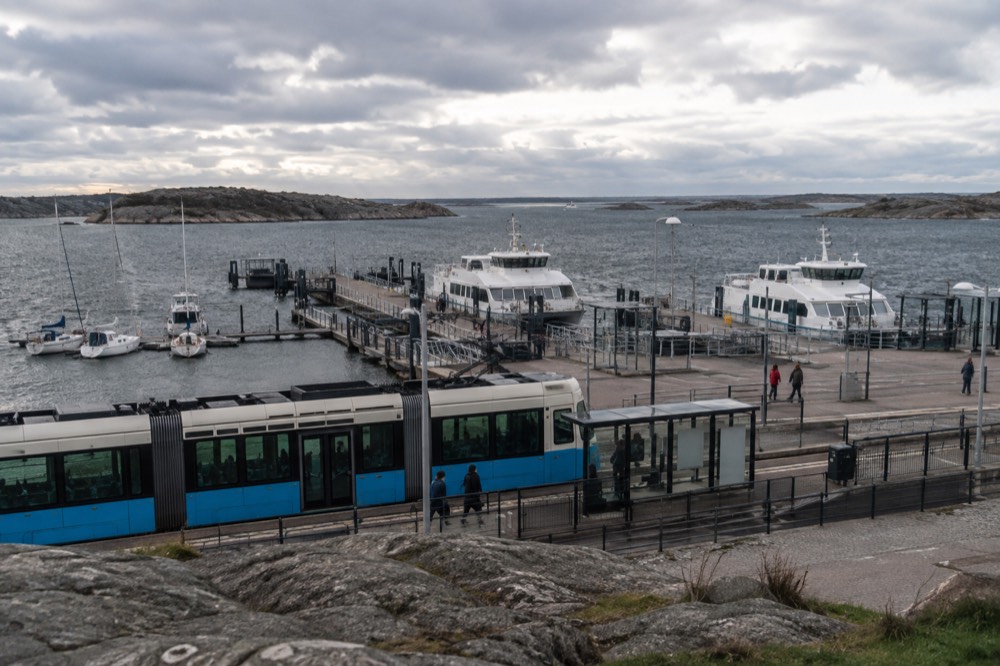
Daylight is the other seasonal variable worth planning around. Gothenburg sits at 57.7 degrees north, and the US Naval Observatory's tables give 18 hours 6 minutes of daylight on 21 June against 6 hours 32 minutes on 21 December, a swing of over eleven and a half hours. A midwinter ferry crossing happens in low blue light and ends in the dark; a midsummer one can start after work and still land you on an island in full evening sun. Neither is wrong, but they are different trips, and the timetable you check should be the one for the season you are actually in.
The overall planning picture, if you are budgeting a whole visit rather than one day, is covered in our assessment of whether Gothenburg is worth visiting for tourists, where the archipelago ferry day is one of the strongest arguments on the yes side, precisely because the ticket price is a tram fare.
If a ferry day is not the shape of water you want, the amphibious sightseeing bus, which drives the streets and then drives into the harbour, is the city's other signature way of seeing Gothenburg from a vehicle with an unusual itinerary, and the guided cruises cover the open water. All three listings carry live prices and availability. But if your question was only ever "is the ferry free", the answer stands: no, it costs a tram ticket, and that is the best deal the city offers.
Common Questions About Gothenburg Ferries
Is the ferry in Gothenburg free?
No. The scheduled archipelago ferries are covered by an ordinary Västtrafik ticket rather than being free, and since the islands are in Zone A, a 38 kr single or a 125 kr 24-hour ticket covers the crossing. Commercial cruises and international ferries are separate paid products.
Can I use my tram ticket on the archipelago ferry?
Yes, if it is a valid ticket for Zone A. The southern archipelago ferries from Saltholmen are part of the Västtrafik network and appear on the same zone map as the trams, so a day ticket covers tram, ferry and island-hopping in one payment.
Do I need to book the ferry to Styrsö or Brännö in advance?
No. The scheduled ferries operate like a bus service: you board with a valid ticket on a first-come basis. Only guided cruises, sailing trips and charter boats require advance booking, and their listings state availability.
Is the ferry to the northern archipelago also included?
Yes. The ferries serving Öckerö, Hönö and Björko from Hisingen are Västtrafik services inside Zone A, so the same ticketing applies. The southern islands are simply easier to reach from the centre because the tram runs directly to Saltholmen.
Can I take a car to the Gothenburg archipelago islands?
No. Göteborgs Stad's own study states the southern archipelago islands are protected from car traffic, with exceptions only for taxi, transport service and emergency vehicles. The ferry is the ordinary way in, which is why the islands feel the way they do.
Does the Gothenburg city pass include the ferry?
The old Göteborg City Card no longer exists and the [Go City](https://gocity.tpk.ro/HQKyKKW4) passes that replaced it are attraction products, not transport products. A Västtrafik ticket is the way to pay for the ferry, and a 125 kr 24-hour Zone A ticket covers trams and ferries together.