Is It a Good Idea to Travel to Sweden in the Winter? What a Gothenburg Winter Is Really Like
A fact-checked answer to whether winter travel in Sweden is a good idea, built on Gothenburg's own data: daylight hours, sea temperature, what stays open, and what it costs.
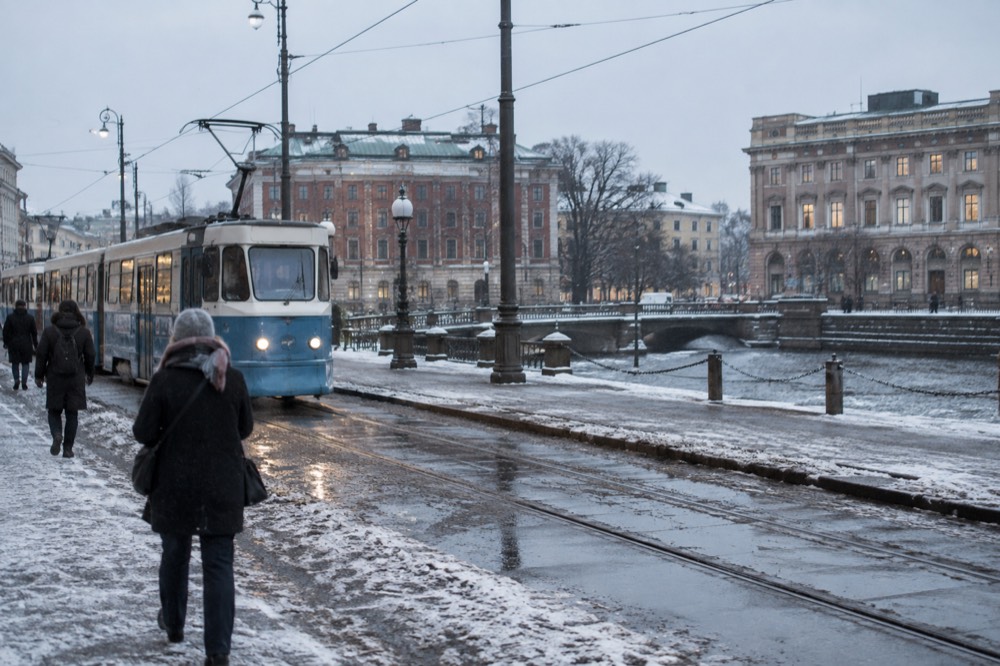
Gothenburg records 912 mm of precipitation a year across 127 wet days, and the wettest of those months is October at 102.9 mm, not anything in winter. That single fact tells you most of what the internet gets wrong about a Swedish winter: the reputation is built on autumn rain and December darkness, while January, February and March are drier, brighter and far emptier than the guidebook photos suggest. The question of whether winter travel in Sweden is a good idea is really a question about which Sweden you are visiting, and this site covers the one at the mouth of the Göta älv, where the trams keep running and the sea never quite freezes.
The short version: yes, it is a good idea, with two conditions. You accept that the biggest theme park in the city is shut from 24 December until mid-April, and you plan around a daylight budget that shrinks to 6 hours 32 minutes at the solstice. Everything else, the museums, the saunas, the archipelago ferries, the food halls, the Christmas market, not only continues but gets easier, because the record 6 million guest nights Göteborg & Co counted in 2025 were overwhelmingly not logged in February.
Is It a Good Idea to Travel to Sweden in the Winter?
Yes, winter is a good time to visit Sweden if your trip is built on museums, food, Christmas markets and Nordic light rather than beaches and amusement rides. Gothenburg's winter is milder than inland Sweden's, the city's trams and ferries run all year, hotel demand drops after the holidays, and attractions like Universeum stay open every single day. The trade is daylight: 6 hours 32 minutes on 21 December.
The honest answer depends on the month. November is the hardest sell: the Christmas market at Liseberg has not opened (it runs 14 November to 23 December in 2026), the autumn rain is still statistically the year's worst, and the leaves are gone. December is a different product entirely, a market-and-lights city that smells of glögg and ends at half past three in the afternoon. January and February are the connoisseur's months: dry by local standards, quiet, and cold enough that the light, when it arrives, is the hard, low, sideways light photographers come to Sweden for. March is when the whole thing tips toward spring and the days stretch visibly by several minutes every 24 hours.
What you are buying in winter is scarcity of crowds, not scarcity of things to do. Göteborgs konstmuseum, which holds about 70,000 works and draws roughly 250,000 visitors a year, is open Tuesday through Sunday through the coldest months. Universeum, the science centre, publishes opening hours of 10:00 to 18:00 every day of the year, no exceptions. World of Volvo, which took over from the old Volvo Museum after that museum closed permanently in December 2023, runs seven days a week. The city does not hibernate. It just puts on a coat.
How Cold Does a Gothenburg Winter Actually Get?
Gothenburg's coldest air month averages 0.7 C in February, with January at 0.8 C and December at 2.1 C, according to SMHI's 1991-2020 normals for station Göteborg A. That is coastal, maritime cold: milder than Stockholm's interior and far milder than northern Sweden, where real sub-Arctic conditions apply. The sea itself bottoms out at 2.7 C in February, with a recorded low of -1.2 C.
The numbers deserve their own reading. SMHI's normals, published for the 1991-2020 period at station 71420, give Gothenburg a July mean of 18.3 C against a February mean of 0.7 C. The sea lags behind the air by about six weeks, which is why the water is at its coldest in February, not January, and why brackish Kattegat water can dip below zero without freezing: the salt content depresses the freezing point, and SMHI's quality-controlled observations from the Vinga lighthouse station record a genuine -1.2 C.
What that means on the street is a winter that rarely feels violent. Snow comes and goes; the maritime air usually turns it to sleet within days. The classic Gothenburg winter day is around zero, damp, and grey, punctuated by cold snaps that clear the sky and drop the temperature hard. Locals plan for wind off the Kattegat more than for snow depth.
The comparison with the rest of Sweden matters. Kiruna, 1,000 km north, gets weeks where the sun does not rise at all. Gothenburg, at 57.7 N, always gets its six and a half hours in late December, and by late January it is already gaining more than a minute of daylight per day. If your mental image of "Sweden in winter" is polar night, Gothenburg is not that. It never has been. The full national picture, including where the real precipitation maxima sit, is on SMHI's own normals page.
What Is Still Open in Gothenburg in Winter?
Most of the city's indoor attractions run all winter: Universeum is open every day of the year from 10:00 to 18:00, World of Volvo opens seven days a week, Göteborgs konstmuseum runs Tuesday to Sunday, and Feskekôrka's food hall operates year-round. The big exception is Liseberg, which closes from 24 December until mid-April, though its Kaninlandet family area now opens on winter weekends and school holidays.
The Liseberg calendar is the fact that ruins more winter trips than the weather. The park's own season pages give a summer season of 18 April to 20 September in 2026, Halloween from 2 October to 1 November, and the Christmas market from 14 November to 23 December. Between those windows the gates are shut, and a visitor arriving in late January or February finds the biggest attraction in the city dark. New for 2026, Liseberg has added winter openings for Kaninlandet, its Rabbit Land family area, on winter weekends and school holidays, which softens the gap for families with small children but does not change the headline: the full park is a spring-to-Christmas product.
Everything else leans the other way. Winter is museum season in Gothenburg, and the city's museum density is high for its size. Göteborgs konstmuseum charges 75 kr for a day ticket, admits everyone under 20 free, includes the Hasselblad Center, and is open Tue 11-18, Wed 11-20, Thu 11-18, Fri-Sun 11-17, closed Mondays. One forward-looking note from the museum's own rebuild page: it closes in 2028 and reopens in 2032, so a winter trip in the next couple of years catches it while it is still open. Universeum's rainforest hall, aquarium and reptile house are included in admission, though the Wisdome dome shows are a separate ticket, and the venue is cashless.
If you are planning a winter visit around the indoor list, the practical question is how to pay for it.
Should You Buy an Attractions Pass for a Winter Trip?
An attractions pass makes more sense in winter than in summer, because winter itineraries concentrate on ticketed indoor attractions rather than free outdoor ones. The Go City All-Inclusive Pass covers 20-plus Gothenburg attractions in 1, 2, 3 or 5-day durations, and the operator's listing rates it 4.3 from 5 reviews. It does not include public transport, so budget tram and ferry tickets separately.
The old Göteborg City Card included transport; the Go City product that replaced it is a different thing under different terms, and the transport inclusion is not something this site has been able to confirm on the operator's own pages. What the pass does do is bundle the museum-and-attraction list, which is exactly the list a winter traveller works through. The Go City All-Inclusive Pass is listed from $56 per person, and the listing's cancellation terms are worth checking before you commit.
How Little Daylight Will You Get in December?
On 21 December in Gothenburg the sun rises at 08:54 and sets at 15:26, giving 6 hours 32 minutes of daylight, according to US Naval Observatory data for 57.7 N. Civil twilight extends the usable light from 08:03 to 16:17, so even the grey light lasts about eight hours. By 21 June the same coordinates get 18 hours 6 minutes, a solstice-to-solstice swing of 11 hours 34 minutes.
The practical reading of that is not "dark all day". It is "schedule deliberately". Museum first, because they open at 11 anyway. Lunch, which in Sweden is not optional. Then use the 12:00 to 15:00 window for whatever outdoor thing matters most that day: the viewpoint at Masthuggskyrkan, the harbour, a walk along the canal. By 15:30 you are into fika-and-dinner territory, and Gothenburg is well supplied for both. The city's rhythm in December is compressed rather than cancelled.
There is also a case that December light is an attraction in itself. Low sun on the Göta älv, shipyard cranes against an orange horizon at 15:00, the Christmas lights on Avenyn doing the work the sun declined to do: photographers and film crews book this latitude deliberately. The Göteborg Film Festival, the city's big winter cultural event, is built around exactly this darkness, programming screenings into the longest nights of the year.
Is Winter the Cheaper Time to Visit Gothenburg?
Winter is the cheapest time to visit Gothenburg on accommodation and crowds, though transport fares do not drop: a single Västtrafik ticket costs 38 kr and a 24-hour Zone A ticket 125 kr year-round. The widely reported half-price transport subsidy applies only to 30-day period tickets, halving Zone A adult from 890 kr to 445 kr, and does not cover the day tickets visitors actually buy.
That transport nuance is worth spelling out, because careless reporting gets it wrong constantly. Västtrafik's own subsidy page states the cut is "ett tillfälligt statligt stöd som gäller för resor året ut", a temporary state support valid through the end of the year, and it applies to monthly tickets. Your 24-hour ticket is still 125 kr whether you buy it in the app or at a shop, and that ticket is also the key to the archipelago, covering trams and ferries alike in Zone A. The fare detail is published on Västtrafik's own ticket pages. For a fuller breakdown of what a trip costs, see is Gothenburg worth visiting for tourists.
On the cost side, the pattern is familiar: Gothenburg set a record with over 6 million commercial guest nights in 2025, up from about 5.6 million in 2024, and almost none of that pressure lands in January and February. Rooms in the post-holiday window are the cheapest of the city's year. Restaurants do not discount, because Sweden's restaurant economics do not work that way, but you can walk into places that need a booking in July. Alcohol is the fixed cost it always is: beer above 3.5% ABV is sold only by Systembolaget, the state monopoly, under Alkohollag (2010:1622), and supermarkets stock only the weaker folköl. That does not change with the season. The wider set of guides lives on Gothenburg Travel Guide.
Is the Gothenburg Archipelago Worth Visiting in Winter?
Yes, and in some ways more than in summer: the southern archipelago islands, Brännö, Styrsö, Donsö, Vrångö and the rest, are ordinary parts of the city reached on an ordinary Västtrafik ticket, the ferries run all year, and the islands are car-free in every season. February sea temperature averages 2.7 C, so this is a coat-and-thermos trip, not a swimming one.
The fact that keeps surprising people is administrative rather than scenic: the islands are areas of Gothenburg, inside the same Zone A as the city centre, and Västtrafik's own materials say you can ride "på samma biljett hela vägen från centrum ut på havet", on the same ticket all the way from the centre out to sea. You take a tram to Saltholmen, the western terminus of the network, and step onto a ferry, all on the 125 kr day ticket. Private cars are banned on the islands, per a Göteborgs Stad study that describes them as "fredade från biltrafik", protected from car traffic.
Winter strips the islands to their essentials: granite, juniper, painted cottages, and weather that arrives straight off the Kattegat. Ferry frequencies drop against the summer timetable, so check the sailing times for your specific island before committing, and remember that the last boat back is a real deadline when the sun sets before four. For the summer version of the same trip, and a verdict on whether it is worth the crossing at all, see is it worth visiting the Gothenburg archipelago.
What Should You Pack for a Swedish Winter City Trip?
Pack for around-zero temperatures, wind and intermittent precipitation rather than deep snow: a proper waterproof shell, insulated layers, and shoes that handle wet stone and slush. Gothenburg's winter means 84.7 mm of rain in November and 93.0 mm in December against January's 83.0 mm, so rain and sleet are likelier than snow, and the sea wind makes the stated temperature feel colder than the number suggests.
The table below is the planning version, month by month, built from SMHI's 1991-2020 normals for station Göteborg A and the Vinga sea-temperature archive.
| Month | Mean air temp | Precipitation | Wet days (≥1 mm) | What it means for a visitor |
|---|---|---|---|---|
| November | 5.1 C | 84.7 mm | 12.0 | Grey, wet, pre-Christmas-market |
| December | 2.1 C | 93.0 mm | 13.3 | Darkest month, market season |
| January | 0.8 C | 83.0 mm | 11.5 | Cold snaps, quiet streets |
| February | 0.7 C | 61.0 mm | 9.7 | Coldest air and sea, driest winter month |
| March | 3.0 C | 54.0 mm | 8.8 | Days lengthen fast, spring hints |
Two packing notes the table hides. First, February is the driest of the winter months by a wide margin, 61.0 mm against December's 93.0 mm, which is why it is the month this desk would pick for a winter visit. Second, the wet days column counts days with at least 1 mm, and roughly one day in three qualifies across the year, so a compact umbrella earns its space in any season. If you want the full seasonal comparison, our piece on the best time to visit Gothenburg works through all twelve months.
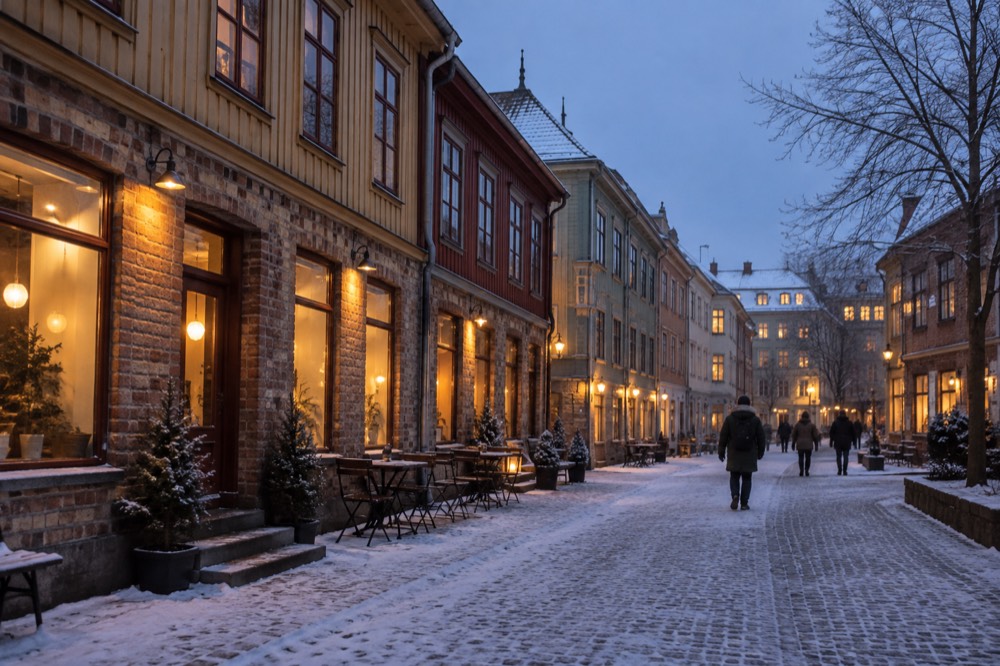
Which Winter Month Should You Actually Choose?
December for the Christmas market and lights, February for the driest weather and the emptiest streets, and November for almost nothing. Liseberg's Jul på Liseberg runs 14 November to 23 December in 2026, so a December trip catches the market; January and February trade festivity for low crowds, 61.0 mm of rain in February, and the coldest, clearest light of the year.
December is the obvious pick if the Christmas market is the point: Liseberg's own pages give the 2026 dates as 14 November to 23 December, and the market is one of the larger ones in Sweden. Pair it with glögg, the aforementioned museum list, and short days you have already accepted. February is the insider pick: the driest winter month, the coldest sea, sauna weather, and hotel rates at their annual floor. March is the hedge, a month that is technically still winter but behaves like a preview of spring, with daylight climbing past 11 hours by the end of it.
One more consideration for families: if the trip is built around children and the Christmas market window does not suit, the winter-weekend openings of Liseberg's Kaninlandet are the 2026 novelty worth checking, and Universeum remains the all-weather family anchor, open 365 days a year with under-3s admitted free. For whether the big attractions suit your children's ages, see is Liseberg worth visiting.
Common Questions About Winter Travel in Sweden
Is it a good idea to travel to Sweden in the winter?
Yes, if you plan for it. Gothenburg's winter averages around zero rather than deep sub-zero cold, its trams, ferries and museums run all season, and February is the driest winter month at 61.0 mm of rain. The trade-off is daylight: 6 hours 32 minutes on 21 December.
Does Sweden have six months of darkness?
No. Gothenburg, at 57.7 N, gets 6 hours 32 minutes of daylight on the shortest day of the year and 18 hours 6 minutes on the longest. Only places far north of the Arctic Circle experience polar night, and Gothenburg is not one of them.
Is Liseberg open in winter?
The full park is not. Liseberg's 2026 calendar runs summer 18 April to 20 September, Halloween 2 October to 1 November, and the Christmas market 14 November to 23 December, with the park closed between seasons. New for 2026, the Kaninlandet family area opens on winter weekends and school holidays.
How cold does the sea get near Gothenburg?
The sea around the archipelago averages 2.7 C in February, the coldest month, with a recorded low of -1.2 C at the Vinga station. Brackish Kattegat water can drop below zero without freezing, so winter swimming here is a sauna-and-dip activity, not a casual one.
Is winter the cheapest time to visit Gothenburg?
On accommodation, generally yes: the city logged over 6 million guest nights in 2025, and almost none of that demand falls in January and February. Transport fares do not drop, and the current half-price subsidy applies only to 30-day period tickets, not the 24-hour and 72-hour tickets visitors buy.
What should I wear in Gothenburg in winter?
A waterproof shell, warm layers and shoes that handle wet stone, because sleet is likelier than snow in a coastal winter. November brings 84.7 mm of rain and December 93.0 mm, and the wind off the Kattegat makes the stated temperature feel colder.
The verdict from this desk: a Gothenburg winter is a real winter, but a workable one, and the city is better built for it than most. Pick your month with the daylight table in hand, buy the tram ticket that also covers the ferries, and let the darkness do what it does best, which is send you indoors to a food hall that has been selling fish since 1874.