Is the Train Ride from Gothenburg to Stockholm Scenic? What You Actually See
An honest look at what the Gothenburg to Stockholm train ride offers: lakes, farmland, forest and a few genuine highlights, plus how it compares with flying.
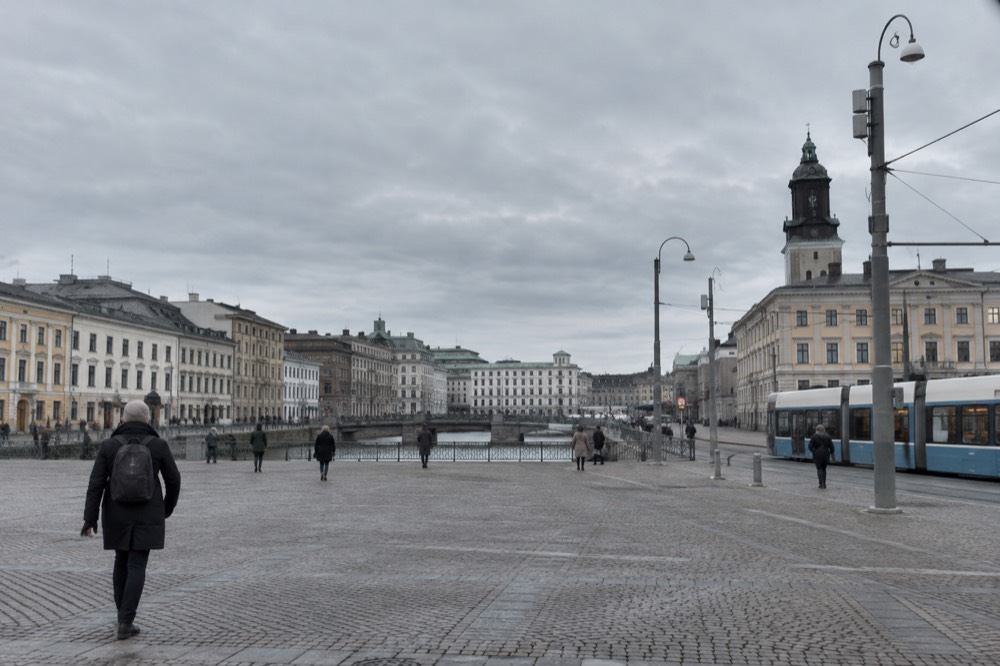
Sweden's two biggest cities sit about 400 kilometres apart on the map, and the railway between them is the country's busiest intercity line. Millions of people ride it every year, most of them on fast tilting trains that cut the trip down to a few hours. But a fast train is not the same thing as a beautiful train, and search results for this question are full of vague claims like "beautiful Swedish countryside" that tell a visitor almost nothing.
This page takes the question literally. What do you actually see from the window between Göteborg Centralstation and Stockholm? Which stretches earn the word scenic, which are plain, and is the scenery a reason to choose the train over the plane? One thing worth knowing up front: the line runs inland, not along the coast, so the granite islands and sea light that make Gothenburg memorable are gone within the first minutes of the journey. For more on what the city itself is famous for, see what Gothenburg is known for.
Is the Train Ride from Gothenburg to Stockholm Scenic?
It is scenic in patches rather than end to end. The ride alternates between rolling farmland, pine and birch forest, and a chain of lakes around the middle of the route, with the best water views roughly halfway through the trip. It never touches the coast, crosses no mountains and offers no dramatic gorges, so travellers who want a landscape showcase should temper expectations while still enjoying a genuinely pleasant few hours.
The honest summary is that this is a comfortable, quick, mildly pretty train ride, not a bucket-list one. The Swedish west coast and the Bohuslän archipelago are among the most photogenic landscapes in the country, and the railway goes nowhere near either. Instead it heads east-northeast through the interior of Götaland: agricultural plains around the start, then a long run of woodland, then the lake district north of Jönköping where the line strings together views over water.
That middle stretch is the part most riders remember. For perhaps forty minutes to an hour the train passes a sequence of lakes, with forest running down to the shoreline and, on a clear day, that particular flat Nordic light that makes water look like hammered metal. It is pretty. It is also bookended by long sections where the dominant view is production forest, spruce planted in rows, with the occasional gravel quarry, farmhouse or roadside ICA supermarket for variety.
Compare that with the alternatives. The drive up the coast through Bohuslän is far more scenic than the train. So, in a different way, is the ferry-and-archipelago travel that Gothenburg itself offers: an ordinary Västtrafik ticket covers the southern archipelago boats from Saltholmen, which is the cheapest big scenic day out in the city. The train to Stockholm is best judged as transport with scenery attached, not as a tour.
If you are still deciding whether the train beats the plane for this route, the speed and frequency questions are covered in detail on is there a high-speed train from Gothenburg to Stockholm.
What the Gothenburg to Stockholm Route Actually Looks Like, Stage by Stage
The route leaves Göteborg through industrial and suburban track, crosses open agricultural plains around Alingsås and Skövde, threads the lake district near Jönköping in its most attractive middle stretch, and finishes with forest and commuter suburbs approaching Stockholm. Roughly the first and last quarters are functional rather than beautiful, and the lakes around the halfway mark are the scenic core of the ride.
Stage by stage, this is what the window shows.
Out of Göteborg Centralstation the line runs through rail yards, port-side industry and outer-city suburbs. Nobody has ever called this pretty, and there is no reason to start now. Within half an hour the train is into the agricultural country east of the city, wide fields with long sightlines, stone walls and scattered red-painted farm buildings. In April and May this is at its best: the SMHI 1991-2020 normals put April as the driest month of the year in Gothenburg at 51.3 mm, and the same spring dry window tends to give clear, bright riding conditions inland too.
Through the middle of the route the train works through upland country around Skövde and Falköping, then drops toward the lake belt around Jönköping and Lake Vättern's southern end. This is the stretch where the word scenic earns its keep. The line skirts and crosses water several times, and the forest comes right down to the shore in the way that defines so much of the Swedish interior. Riders who have their camera or phone out for exactly one part of the journey usually have it out here.
North of the lakes the ride settles into long forest runs with occasional clearings, small towns and, near the end, the commuter belt south of Stockholm. The approach into Stockholm Central is urban and unremarkable, though arriving by rail puts you in the absolute centre of the capital, which is one of the train's real advantages over flying.
A rough guide to the stages:
| Stage of the ride | What you see from the window | Scenic value |
|---|---|---|
| Leaving Göteborg | Rail yards, port industry, suburbs | Low |
| East of the city | Farmland, fields, red farmhouses | Pleasant, open |
| Skövde and Falköping hills | Ridgelines, mixed farmland and forest | Moderate |
| Around Jönköping and the lakes | Lakes, shoreline forest, long water views | The best stretch |
| Northern forest runs | Pine and spruce, small towns | Low to moderate |
| Approaching Stockholm | Commuter suburbs, urban track | Low |
Before or after the ride, the scenery question is really about Gothenburg itself, and the city rewards more time than a departure-day schedule allows. See how many days in Gothenburg is enough for planning the whole trip.
Which Side of the Train Should You Sit on from Gothenburg to Stockholm?
There is no consistently superior side on the Gothenburg to Stockholm line, because the best lake views switch sides as the route curves around the water. Pick either seat, then move to the bistro or vestibule window when the lakes arrive, since Swedish intercity trains allow you to walk between carriages and the café car often has the best unobstructed views. The genuinely useful tip is to be at a window before the halfway lakes, not to fight over one particular side.
This is the question every rail-forum thread on the route eventually reaches, and the honest answer disappoints people who want a rule. The line curves enough that a view that opens on the left before one lake closes and reopens on the right at the next. Sitting rigidly on one side for three hours in the hope of catching everything is a worse plan than simply walking to the café car for the lake stretch, which most riders do anyway.
Two practical notes improve the odds. First, morning departures from Göteborg travel with the sun behind you for much of the middle section, which helps photography. Second, the light matters more than the seat: SMHI's normals for the region show long summer days, with Gothenburg getting 18 hours 6 minutes of daylight at the June solstice, and the inland route shares that. A June or July afternoon ride gives you golden light across the lakes for the entire middle stretch.
Winter is a different experience. Daylight on 21 December runs just 6 hours 32 minutes in Gothenburg, and a midwinter departure can mean boarding in the dark, riding through the dark, and arriving in the dark. The lakes are still there, but you will not see them. If scenery is the point of choosing the train, ride between April and September, and note that September is a fine month inland: the sea around Gothenburg actually peaks in August at 18.6 C and stays warmer in September (16.7 C) than in June (16.2 C), and the inland autumn colour tends to follow the same late-summer lag.
Is the Train Better Than Flying from Gothenburg to Stockholm?
For a city-centre to city-centre trip the train is usually the better choice: it departs from and arrives at central stations, avoids two airport transfers, and turns the journey into a single sitting rather than a three-part airport process. The scenery is a bonus rather than the reason, since the plane view of Sweden's interior from cruising altitude is mostly cloud and forest, and the train at ground level shows you more, even if not dramatically more.
The comparison usually comes down to time and hassle rather than beauty. Door to door, the two options are closer than the timetable suggests, because both cities' airports sit well outside the centre. In Gothenburg's case there is an extra wrinkle worth knowing: there is no rail link to Landvetter Airport at all. Swedavia's own transport pages list only coach and bus connections, and the airport coach is now branded Vy flygbussarna, running Landvetter to Korsvägen and Göteborg Centralstation with a stated 20-minute journey time, as published on Swedavia's Landvetter bus page. So flying out of Gothenburg means a coach ride before you have even started.
The train, by contrast, starts at Göteborg Centralstation, in the middle of the city and steps from the tram network that carried 126 million journeys in 2025. That matters for the scenic argument too: the railway is embedded in the landscape the whole way, while the flight experience is a window seat above cloud for ten minutes. The rest of the planning pages sit on Gothenburg Travel Guide.
One forward-looking fact changes the Stockholm end of the comparison. The first section of the Västlänken rail tunnel, with underground tracks at Göteborg Centralstation, is scheduled to open in December 2026, with the full project around 2030. That is a Gothenburg infrastructure story rather than a scenery one, but it is the kind of change that reshapes rail travel in the city within the lifetime of a trip you are planning now.
Does the Scenery Change with the Season, and When Is the Best Month to Ride?
Late May through September is the scenic window for this route: spring green gives way to long light and calm lakes in summer, and early autumn adds colour while keeping most of the daylight. Midwinter rides are dark in both directions, with barely six and a half hours of daylight at the solstice, and April offers the driest, clearest riding conditions of the whole year even if the landscape is still brown.
The seasonal logic follows the SMHI 1991-2020 normals for the Gothenburg station, and the inland route behaves similarly. April is the driest month of the year at 51.3 mm of precipitation on just 8.2 wet days, which makes it the most reliable month for clear window views, though the fields will be freshly ploughed rather than green. October is the wettest month at 102.9 mm, so an autumn ride is a gamble with the weather even when the colour is at its peak.
June and July give you the longest possible viewing time. With 18 hours of daylight at the summer solstice, even a late train runs entirely in daylight, and the lakes at the halfway mark hold their light well into the evening. September is the connoisseur's pick: the crowds are gone, the first colour hits the birch, and the daylight is still generous.
Midwinter is the honest exception. A December or January departure means riding through darkness or near-darkness for most of the route, and the lake district, the entire reason the ride is scenic at all, is invisible. If a winter trip is fixed, treat the train purely as transport and save the scenery ambitions for the destination.
For planning around the city at either end, the best time to visit Gothenburg covers the same seasonal logic in more depth.
What Should You Do in Gothenburg Before the Train North?
Give the city at least a full day before you leave, because Gothenburg's best scenery is not on the Stockholm line at all: it is the car-free southern archipelago, reached by tram and ferry from Saltholmen on an ordinary Västtrafik ticket, and the harbour and canal network in the centre. The train ride north is a pleasant coda, but the islands and the water are the real landscape experience of the region.
This is the point this page keeps circling back to. If scenery is what you are after, the strongest card the Gothenburg area holds is the archipelago, and it costs almost nothing: the islands sit inside Västtrafik's Zone A, the ferries are part of the ordinary network, and private cars are banned on them, so the islands are quiet in a way the mainland never is. Riders leave from Saltholmen, which is itself the western terminus of the tram network, meaning you ride a tram to the boat.
Back in the centre, the harbour and the canal route through the old moat give the city its maritime character, and a boat-based sightseeing trip is the natural way to take it in. For a fuller rundown of the city's highlights, see what not to miss in Gothenburg, and for the broader case for the city as a destination, is Gothenburg in Sweden worth visiting.
Then, when the bags are packed and the train is boarded, adjust the expectations one last time. The ride to Stockholm is a good train ride: fast, frequent, comfortable, with a genuinely pretty hour of lakes in the middle. It is not the coast, it is not the mountains, and it does not need to be. Sweden saves its dramatic landscapes for the edges of the country, and this railway runs through the quiet middle, which has its own appeal if you know what you are looking at.
Common Questions About the Gothenburg to Stockholm Train Ride
Is the train ride from Gothenburg to Stockholm scenic?
It is scenic in patches, not end to end. The strongest stretch is the lake district around the halfway mark, where the line passes a chain of lakes with forest running down to the water. The first and last quarters of the ride are industrial, suburban or plain forest, and the route never touches the coast.
Which side of the train has the best views on the Gothenburg to Stockholm route?
Neither side wins consistently, because the best lake views switch sides as the line curves. Sit anywhere with a window and move to the café car for the lake stretch, which usually has the best unobstructed views.
Is the train from Gothenburg to Stockholm better than flying?
For city-centre to city-centre travel it usually is, because it avoids airport transfers at both ends. Note that there is no rail link to Gothenburg's Landvetter Airport at all, so flying starts with a coach ride. The scenery is a bonus, not the main reason to choose rail.
What is the most scenic part of the Gothenburg to Stockholm train ride?
The lake district around the middle of the route, near the southern end of Lake Vättern, is the highlight. Expect roughly an hour of water and shoreline forest views, bookended by farmland and long stretches of production pine forest.
Is the Gothenburg to Stockholm train ride scenic in winter?
Not really. With only about six and a half hours of daylight at the winter solstice, a midwinter departure means riding mostly in the dark, and the lake district is invisible. Ride between April and September if the views matter to you.
Does the Gothenburg to Stockholm train go along the coast?
No. The line runs inland through the Swedish interior, and the coastal scenery of the Bohuslän archipelago is left behind within minutes of departure. If coastal scenery is the priority, the drive up the coast, or Gothenburg's own archipelago ferries, are far better options.