Which Is Nicer, Gothenburg or Stockholm?
An honest comparison of Gothenburg and Stockholm for visitors: size, sights, food, cost, transport and which city suits which trip.
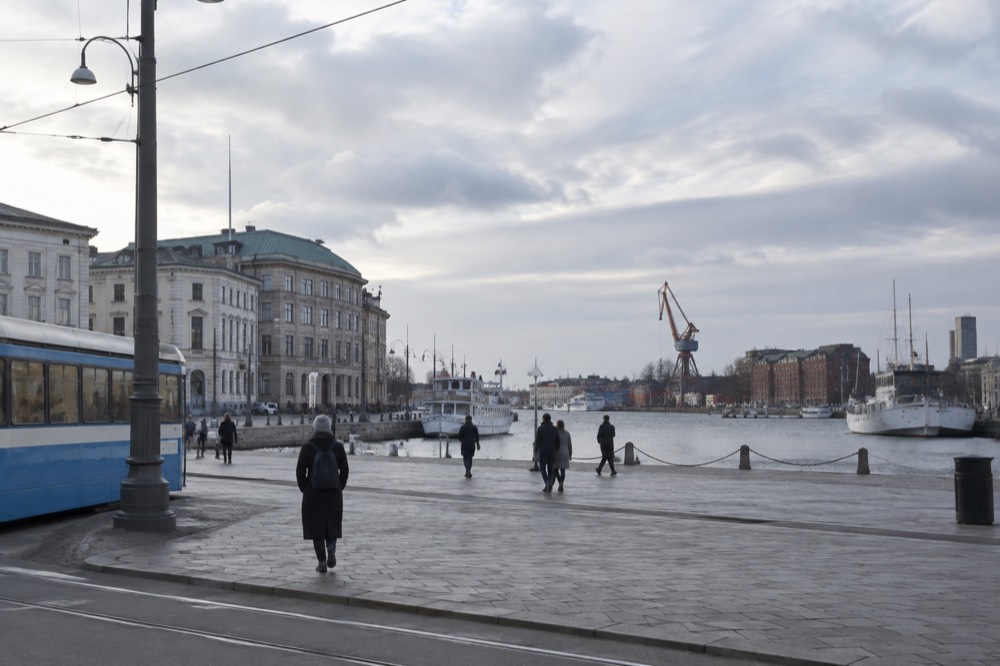
Sweden's two largest cities sit on opposite coasts and behave nothing alike. Stockholm is the capital, built across fourteen islands, with a far larger population and metropolitan spread than Gothenburg, which faces the Kattegat at the mouth of the Göta älv, was laid out by Dutch engineers inside a moat, and runs on trams. Anyone asking which is nicer is really asking which pace, which landscape and which price level suits their trip, because the cities do not compete on the same terms.
Which Is Nicer, Gothenburg or Stockholm?
Neither city is objectively nicer, and the choice comes down to scale and pace: Stockholm is grander, bigger and denser in famous sights, while Gothenburg is more compact, noticeably cheaper, more maritime in character, and easier to cover on a short visit. Stockholm rewards a first-time visitor to Sweden; Gothenburg rewards anyone who wants a working Nordic city rather than a showcase. Travellers who have time for both usually leave Gothenburg more surprised.
That is the short version. The longer version is that "nicer" hides several separate questions. Nicer to look at? Nicer to afford? Nicer for three days? Nicer with children? Each one has a different answer, and the sections below take them one at a time.
The comparison also gets distorted by search data. There is a Gothenburg, Nebraska, a small American town that shares the name, so any statistic about "Gothenburg" found online needs checking before it is believed. Everything in this article refers to Gothenburg, Sweden, in Västra Götaland on the west coast. If you are still weighing whether the west coast city is worth the detour at all, is Gothenburg in Sweden worth visiting covers that question directly.
What Does Each City Feel Like?
Stockholm feels like a capital: monumental, spread out, palace-and-museum scaled, with the grand stone of Norrmalm and the medieval lanes of Gamla Stan. Gothenburg feels like a port: red brick, painted wooden landshövdingehus houses, shipyard cranes, granite, and a sea light that shifts between silver and steel grey. Gothenburg is the city where the tram is the backbone and the sea is a tram ride away, and that difference in texture is the first thing a visitor notices.
Stockholm's beauty is concentrated and famous. The old town, the Royal Palace, the viewpoints over the water: these are genuinely spectacular, and they are the images most people carry of Sweden. The city earns its reputation. But it also earns its crowds, and in summer the central islands can feel like a procession.
Gothenburg's beauty is distributed and quieter. The wooden quarter of Haga, the granite hilltop fort of Skansen Kronan, the canal that rings the old town inside the former moat: none of it is monumental, and all of it is walkable. The city's nickname, "Little London", comes from its historic British trading links rather than any resemblance in scale, a story covered in why Gothenburg is called Little London.
The pace differs too. Gothenburg recorded over 6 million commercial guest nights in 2025, a record year with the strongest growth in Sweden, but the visitors spread across a city that still functions as an ordinary place of work. Stockholm tourism concentrates around a handful of blocks. In Gothenburg you can stand on a viewpoint like Ramberget on Hisingen and share it mostly with locals.
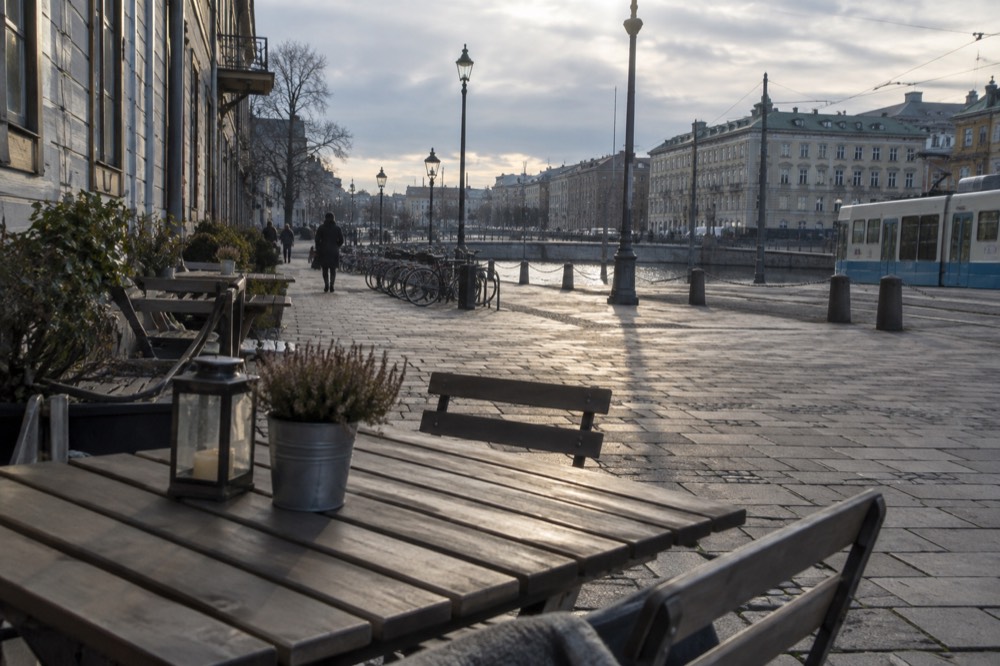
The buildings themselves tell the story. Gothenburg's signature landshövdingehus, the painted wooden houses with a stone ground floor and timber storeys above, exist because nineteenth-century fire rules banned all-timber construction in the city centre. Stockholm's equivalent streets are stone and stucco, grander and colder. Neither style is better, but they produce completely different walking cities, and the wooden version is the one that photographs warm on a grey day.
How Do the Sights Compare?
Stockholm wins on headline sights: the Vasa Museum, Gamla Stan, the Royal Palace and Skansen are national icons with no Gothenburg equivalent. Gothenburg wins on atmosphere sights: its car-free southern archipelago is part of the city itself, reached on an ordinary tram and ferry ticket, while Liseberg is one of Europe's most visited amusement parks and the canal-and-harbour layout is something you explore by boat rather than on foot. A Stockholm trip is about ticking landmarks; a Gothenburg trip is about being out in the weather.
The archipelago point deserves emphasis, because it is the fact most comparisons miss. Styrsö, Brännö, Vrångö, Donsö and the other southern islands are areas of the city of Gothenburg, not day trips. Västtrafik's own network map shows the ferries as part of the tram-and-bus system, and the islands sit inside Zone A, so a 24-hour ticket at 125 kr covers the tram to Saltholmen, the ferry out, and every island. Private cars are banned on the islands under a city ordinance. Stockholm's archipelago is larger and grander, but its boats are separate tourist ferries with separate fares and longer crossings.
Stockholm's equivalent experiences are indoors. The Vasa warship alone justifies the trip for many visitors, and no Gothenburg museum matches it. Gothenburg's answer is different rather than lesser: Universeum, the science centre open every day of the year, prices admission dynamically with a booked time slot, and includes a rainforest hall and aquarium under one roof. The city's art museum, Göteborgs konstmuseum, holds around 70,000 works and the Nordic region's strongest collection of turn-of-the-century painting, with a day ticket at 75 kr and free entry for anyone under 20.
For a quick orientation to Gothenburg's sights, the amphibious bus tour is an efficient opener: it drives the central streets, then drives into the harbour.
Liseberg is the other big differentiator. The park's own figures report around 2.5 million guests to the park itself in 2025, and its 2026 calendar runs summer 18 April to 20 September, Halloween 2 October to 1 November, and Christmas 14 November to 23 December. Entry from 95 kr buys no rides, rides are sold as a separate pass, and the park closes entirely between seasons. If Liseberg is on your list, the calendar matters more than the comparison with Stockholm does.
Is Gothenburg Cheaper Than Stockholm?
Yes, Gothenburg is generally the cheaper city to visit, though the gap is in the everyday costs rather than the headline attractions. Gothenburg's restaurant and hotel prices sit noticeably below central Stockholm's, its transport is cheap by capital standards, with a 24-hour Zone A ticket at 125 kr covering trams, buses and the archipelago ferries, and its best experiences include genuinely free ones: Slottsskogen park with its free zoo, the islands, and the viewpoints. Stockholm's costs are higher and its free options thinner.
The transport comparison is concrete. Västtrafik's fare table lists a single adult ticket in Zone A at 38 kr and a 24-hour Zone A ticket at 125 kr, and that day ticket includes the archipelago boats. There is currently a temporary state subsidy halving every 30-day period ticket in the region, but it does not apply to the 24-hour and 72-hour tickets visitors actually buy, so do not plan around a discount you cannot get.
On the attraction side, both cities charge for their big names, and neither is cheap in absolute terms. Gothenburg's floor prices are lower: the Paradox Museum lists from $24 per person, World of Volvo exhibition entry from 120 SEK online, Göteborgs konstmuseum at 75 kr with free entry for under-20s and students. The city pass question is worth checking before either city, and the old municipal Göteborg City Card no longer exists under that name, a change covered in detail on is Gothenburg cheap or expensive.
The side-by-side below sums up the differences that matter most to a visitor deciding between the two.
| Question | Stockholm | Gothenburg |
|---|---|---|
| Headline sights | Vasa Museum, Gamla Stan, Royal Palace, Skansen | Liseberg, Universeum, Göteborgs konstmuseum, the archipelago |
| Sea access | Separate tourist ferries, longer crossings | Ordinary tram and ferry ticket, car-free islands in Zone A |
| Local transport | Tunnelbana plus buses, larger network | 12 tram lines, 134 stops, ferries on the same ticket |
| Everyday costs | Higher | Lower across hotels, restaurants and transport |
| Food strength | Fine dining, Michelin depth | Seafood, Feskekôrka food hall, shrimp-sandwich culture |
| Best trip length | 4 days or more | 2 to 3 days |
| Free highlights | Fewer in the centre | Slottsskogen's free zoo, islands, hilltop viewpoints |
Alcohol is priced identically everywhere in Sweden, so it is not a differentiator. Anything above 3.5% ABV is sold only by Systembolaget, the state monopoly, under Alkohollag (2010:1622), the statute published by the Swedish parliament. Supermarket beer in both cities is the 3.5% folköl version of the brand you thought you were buying.
Which City Is Better for Food?
Stockholm has the deeper fine-dining scene and more Michelin-starred rooms, but Gothenburg is the stronger city for seafood, and it is the place where the west coast shrimp sandwich, oyster safaris and the fish-church food hall define the everyday food culture. Gothenburg's food reputation rests on raw material: the Kattegat catches arrive at a city that eats them within sight of the harbour, and the price of eating well there is lower than in the capital.
Feskekôrka, the fish-church market hall on Rosenlundsgatan, reopened in 2024 after renovation, and it is a food hall now rather than only fish counters: two fishmongers and five restaurants, including Haldis Kök, Pråmenaden and Victor von G. The building turned 150 the same year it reopened, which gives a sense of how long this trade has run.
Fika, the Swedish coffee-and-cake institution, is universal to both cities, and Gothenburg's version runs through Haga's cinnamon-bun-sized hulls and the student cafes of Vasastan. The local food specialities are collected in what food is Gothenburg famous for.
For structure, the honest summary is this: eat splurge meals in Stockholm if the budget allows, and eat the sea in Gothenburg either way. A shrimp sandwich at a harbour table in Gothenburg costs less than the equivalent plate in the capital, tastes of the same water, and comes with a ferry ride attached if you want one.
How Easy Is Each City to Get Around?
Gothenburg is easier for a visitor, because it is smaller and its tram network covers the whole city on one ticket system, including the ferries to the car-free islands. Göteborgs Spårvägar reports 12 lines across 134 stops and 188 km of single track, and 126 million journeys were made on the network in 2025. Stockholm's tunnelbana is excellent but the city is bigger, and its sights are more spread out.
There is no rail link to Gothenburg's Landvetter Airport, so the arrival experience is the Vy flygbussarna coach, 20 minutes to the central Nils Ericson Terminalen. Stockholm's Arlanda has both fast rail and coach options. This is one area where the capital genuinely wins on arrival logistics, and it is covered in are there two airports in Gothenburg.
Between the cities, the train runs roughly along Lake Vänern and takes in farmland and forest rather than mountains, and the question of scenery is answered honestly in is the Gothenburg to Stockholm train scenic.
Walkability is the quiet factor. Gothenburg's old town, Haga, the canal and the main museums sit inside a radius you cross on foot in twenty minutes, and the tram fills the gaps. Stockholm's islands are individually walkable but collectively far apart, so you ride the tunnelbana between them. Neither system is hard to use, but Gothenburg asks less planning of a first-time visitor.
Which City Suits Which Trip?
Choose Stockholm for a first visit to Sweden, for palace-and-museum sightseeing, for a longer city break of four days or more, and for the biggest single attractions in the country. Choose Gothenburg for a shorter trip of two or three days, for a lower budget, for islands and sea swimming, for travelling with children, and for a city that can be covered almost entirely on foot and by tram. Anyone with five or more days can take the train and do both, and the contrast is the point.
The children's case for Gothenburg is strong. Liseberg's ride split, Universeum's rainforest, the free animals at Slottsskogen and a ferry ride that doubles as transport all work for families, and the distances between them are short. The question of how long to stay is covered in how many days in Gothenburg is enough, and the honest answer is that two well-planned days reach most of the city.
The weather is not a differentiator, and the cliches about it are wrong anyway. SMHI's 1991-2020 normals, published at smhi.se, put Gothenburg at 912 mm of rain across 127 wet days a year, with October the wettest month at 102.9 mm and April the driest at 51.3 mm. SMHI does not call Gothenburg Sweden's rainiest city, and the national maxima are in the western highlands and the mountains. Both cities sit in the wet western band; neither is dry, and neither drowns you.
December light is the real constraint in both places. Gothenburg gets 6 hours 32 minutes of daylight on 21 December against 18 hours 06 minutes on 21 June. Stockholm, further north, swings harder. If you are choosing between the two for a winter or Christmas trip, the light matters more than the city does.
Common Questions About Gothenburg and Stockholm
Which is nicer, Gothenburg or Stockholm?
There is no objective answer. Stockholm is grander and richer in famous sights; Gothenburg is smaller, cheaper, more maritime and easier to cover quickly. First-time visitors to Sweden usually start with Stockholm; returning visitors often prefer Gothenburg.
Is Gothenburg cheaper than Stockholm?
Generally yes. Everyday costs, restaurant prices and local transport are lower in Gothenburg, and its 125 kr 24-hour ticket covers trams, buses and the archipelago ferries. Attraction tickets and alcohol are priced similarly in both cities.
Which city is better for a short trip?
Gothenburg. Two days cover the old town, Haga, the canal, a viewpoint and an island ferry. Stockholm needs three or four days before its spread-out sights stop feeling rushed.
Which city has better food?
Stockholm leads on fine dining; Gothenburg leads on seafood. The west coast catches, the reopened Feskekôrka food hall and the shrimp-sandwich culture make Gothenburg the stronger everyday eating city.
Is Gothenburg's archipelago as good as Stockholm's?
They are different products. Gothenburg's southern islands are part of the city, car-free, and included in an ordinary tram ticket. Stockholm's archipelago is larger and more dramatic but requires separate tourist ferries with longer crossings.
Can you visit both cities on one trip?
Yes. The train between them runs several times a day and takes roughly three hours. A five-day split, two or three days in Gothenburg and two in Stockholm, is a common way to see the contrast.
The verdict, if you want one: Stockholm is the city you photograph, Gothenburg is the city you inhabit. Nicer depends on which of those you are travelling for, and Gothenburg Travel Guide exists because a lot of people try the smaller city first and never regret it.