Linné and the Långgatorna Strip: Gothenburg's Bar Street and Parkside Quarter
Linnégatan and the parallel Långgatorna lanes run from Slottsskogen's edge to Järntorget, and this is where Gothenburg's students, park crowds and late-night bar scene overlap. Here is what the area actually is, and how to plan a visit.
Short answer
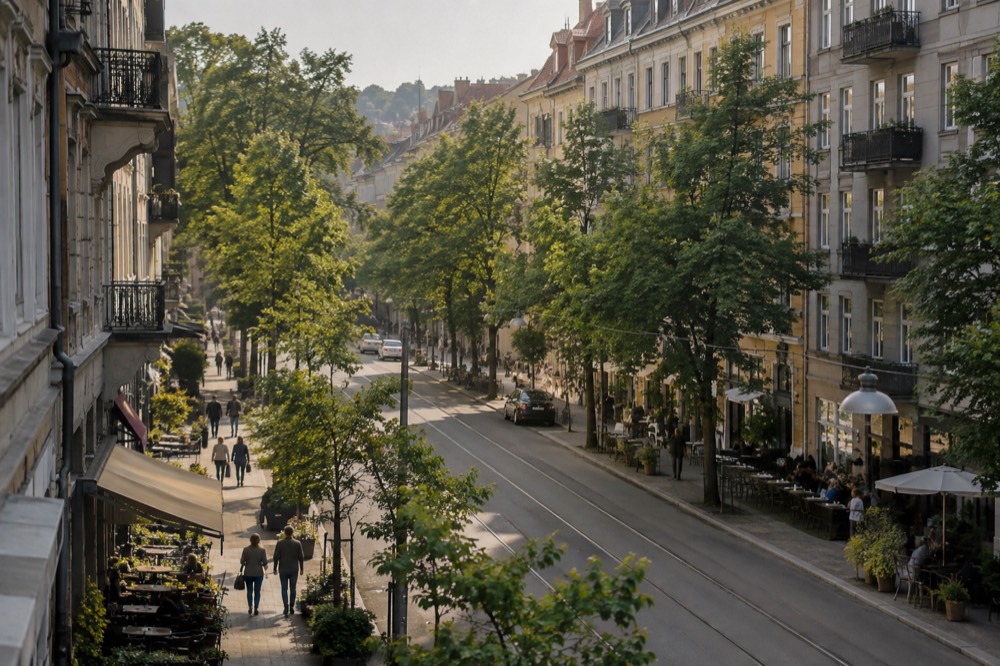
Linnégatan is the long street running from Linnéplatsen by Slottsskogen down to Järntorget, with the Långgatorna, Andra and Första Långgatan, running parallel as the bar-and-restaurant strip. Trams serve Linnéplatsen and Järntorget, and the area is walkable from Haga and Vasastan.
Linnéplatsen is the square where three of Gothenburg's favourite things meet: Slottsskogen, the city's big free park, the western end of Vasastan's stone streets, and the head of Linnégatan, the avenue that runs downhill to Järntorget and the old harbour. Carl Linnaeus gave the district its name, and the streets around it, Linnégatan plus the parallel lanes called Första Långgatan, Andra Långgatan and Tredje Långgatan, make up what locals call the Långgatorna strip. It is the part of the city where a daytime park walk turns into a bar crawl without anyone needing a plan. This guide from Gothenburg Travel Guide covers what the area is, what to do there, how the trams work, and when to go.
What Is Linné and Where Does the Långgatorna Strip Begin?
The Linné district is the quarter around Linnéplatsen and Linnégatan in western central Gothenburg, bounded by Slottsskogen park to the south, Vasastan to the north, Haga to the east and Majorna beyond the park. The Långgatorna strip is the set of parallel lanes, Första, Andra and Tredje Långgatan, running alongside Linnégatan down toward Järntorget, and together they form the city's densest run of bars, cafes and small restaurants.
Linnégatan itself is the wide, straight avenue. It starts at Linnéplatsen, the tram stop and square at the park gate, and runs about a kilometre downhill to Järntorget, the historic square that connects the area to Haga and the canal. The Långgatorna lanes sit just north of the avenue, parallel to it, and they are narrower, older and far more concentrated: bar after bar, door after door. Göteborgs Stad's own area descriptions treat Linné, Vasastan and Haga as one continuous inner-city belt, and on foot that is exactly how it reads. There is no gate, no ticket and no single attraction. The district is the attraction.
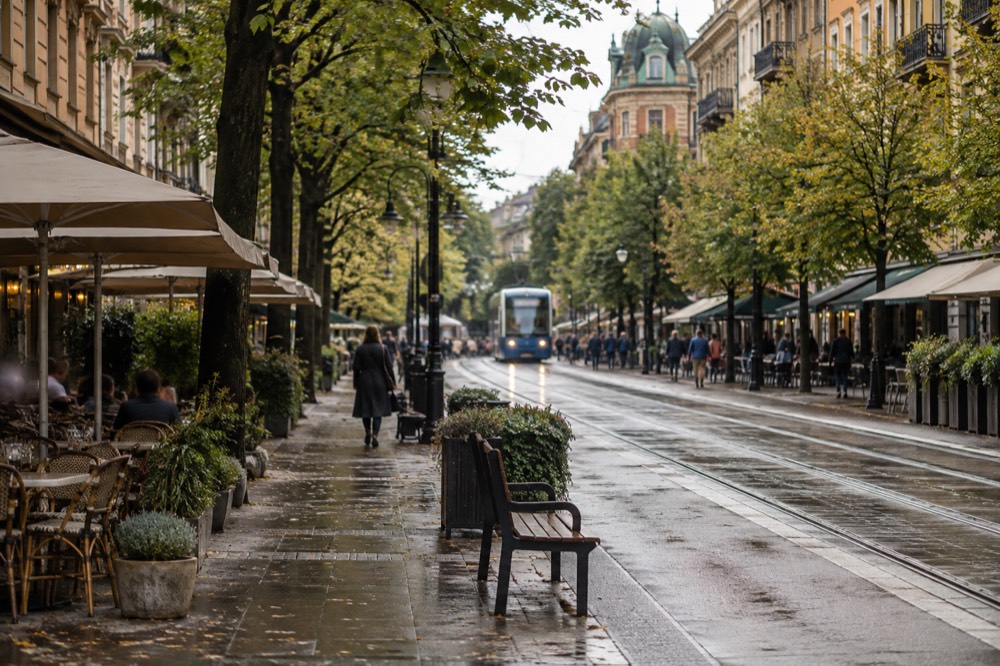
The geography matters because everything here is walkable. From Järntorget you can be in Haga's wooden quarter in five minutes, and from Linnéplatsen you can walk into Slottsskogen, which is free, open around the clock and holds the city's free zoo among its trees. If you are basing yourself in the city, the where to stay in Gothenburg guide covers the trade-offs between this district and the others, and the Haga old quarter page covers the neighbouring streets on the other side of Järntorget.
What Can You Actually Do Around Linné and the Långgatorna?
A visit to the Linné district usually means three things in one walk: Slottsskogen park at the top of Linnégatan, cafe and boutique browsing along the avenue itself, and the bar-and-restaurant lanes of the Långgatorna running down to Järntorget. The park is free, the avenue is ordinary city life, and the Långgatorna are where the evening happens, all connected on foot in under half an hour.
Slottsskogen is the anchor. It is Gothenburg's largest park, and its animal enclosures, seals, moose, penguins among others, cost nothing. On summer afternoons the lawns fill with picnics, and the park's position at the head of Linnégatan means you walk out of the trees straight into cafes. The avenue between the park and Järntorget carries the everyday commerce of the district: bakeries, bookshops, second-hand stores and the long stretches of outdoor seating that appear the moment the weather allows. April is the driest month of the year in Gothenburg, 51.3 mm over the month against October's 102.9 mm, according to SMHI's 1991-2020 normals for the Göteborg A station, so spring is when the outdoor tables actually stay out.
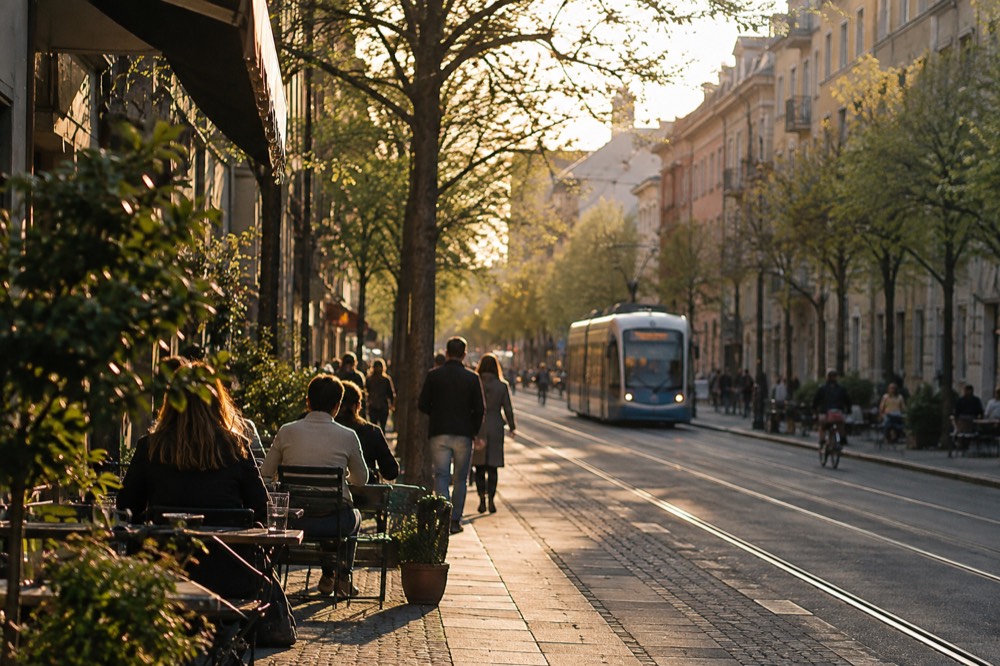
The Långgatorna lanes are the part most visitors come for. Första Långgatan and Andra Långgatan in particular are dense with small bars and restaurants, everything from craft beer rooms to late-night pizza windows, and the strip's character changes by hour: cafe territory in the morning, dinner territory in the evening, bar territory after dark. For a sense of how the strip's food fits into the city's wider scene, the where to eat in Gothenburg guide covers the restaurant landscape, and fika in Gothenburg explains the coffee-and-bun ritual that fills the district's cafes every afternoon.
If you want the area in a single structured outing rather than a self-directed wander, sightseeing tours that pass the western districts are an option:
The amphibious bus in particular drives the city streets and then enters the harbour water, which gives you the districts and the water in one hour, and the operator's live listing states the current schedule and meeting point.
Where Should You Eat and Drink on the Långgatorna Strip?
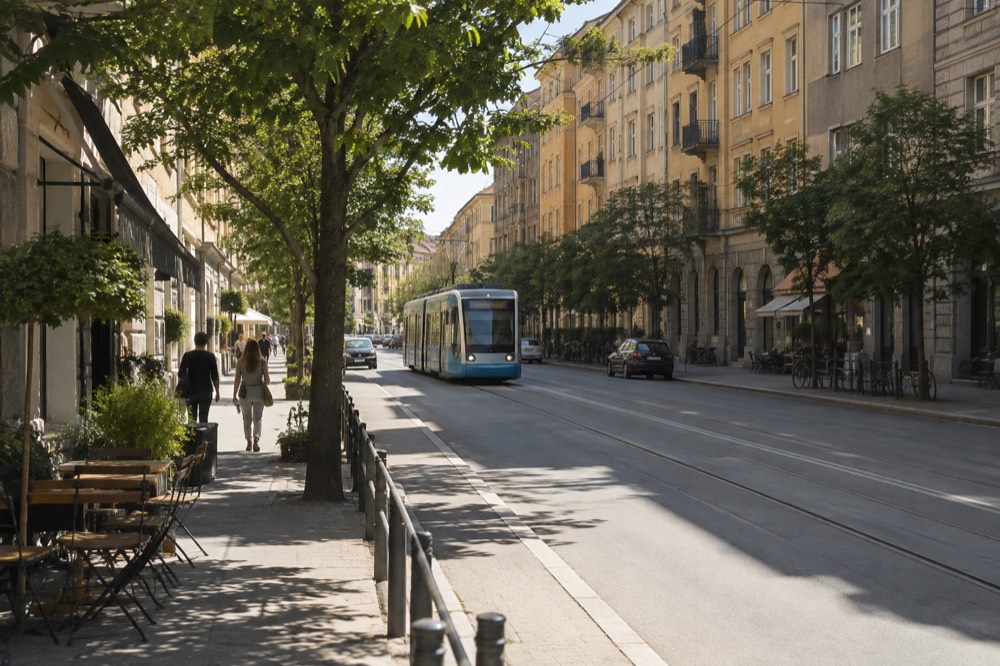
The Långgatorna lanes hold the densest concentration of bars and small restaurants in Gothenburg, with the busiest stretch on Första and Andra Långgatan between Linnéplatsen and Järntorget. There is no single must-book venue, the strip works by wandering, and kitchens run from cheap pizza windows to full restaurants, with prices that generally sit below Avenyn's.
The honest way to plan eating here is to not over-plan. The strip's venues change hands, open and close, and the reliable approach is to walk the lanes and read the boards. What is stable is the structure: Linnégatan for cafes, lunches and people-watching, the Långgatorna for evening drinking and dinner, Järntorget for the transition into Haga. Beer is the strip's drink, and one Swedish rule shapes every bar list here: beer above 3.5% ABV is sold only by Systembolaget, the state monopoly, under Alkohollag (2010:1622), so anything stronger than that in a bar was bought through the monopoly wholesale side, and supermarket shelves top out at folköl strength.
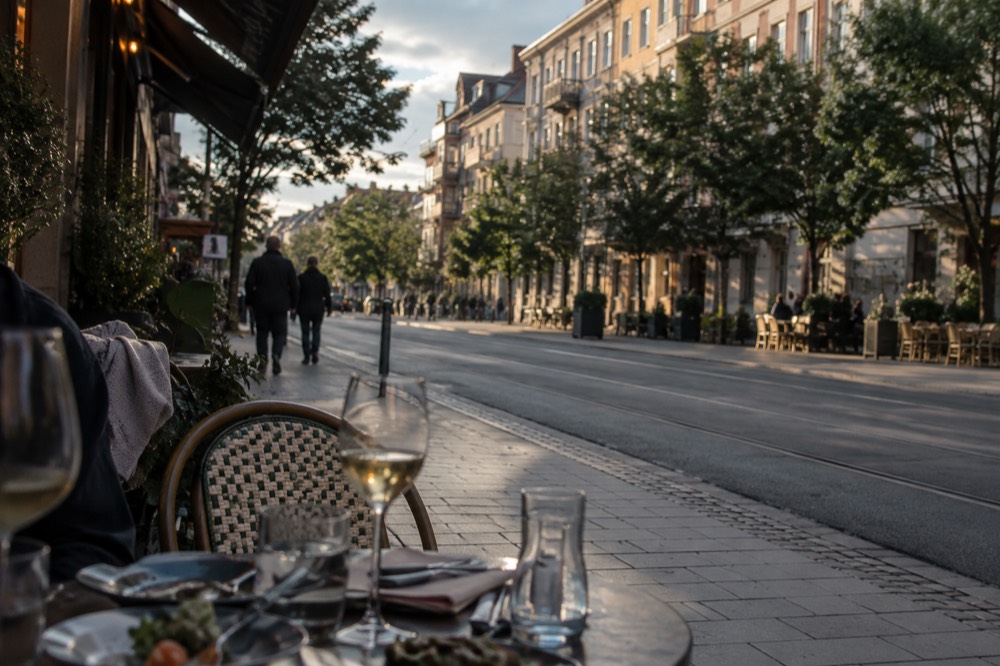
A rough shape of the strip, based on how the lanes are laid out:
| Lane | Character | Best for |
|---|---|---|
| Linnégatan | Wide avenue, cafes, bakeries, shops | Daytime fika, lunch, people-watching |
| Första Långgatan | Densest bar-and-restaurant lane | Evening drinks, dinner, bar hopping |
| Andra Långgatan | Bars and small kitchens, slightly quieter | Second stop of the night |
| Tredje Långgatan | Shorter, more residential feel | A calmer drink away from the crowd |
| Järntorget | Square, tram hub, gateway to Haga | Moving on toward Haga's cafes |
For a food-focused outing with a guide rather than self-direction, the city's food walking tours cover the west-coast kitchen, and the shrimp-sandwich tradition you will see on menus all over the strip is part of the same coastal food culture. If you are deciding between this district and the more polished restaurant strip near Avenyn, the Avenyn and Götaplatsen page covers the other side of the comparison.
How Do You Get to Linné and the Långgatorna Strip?
Linnéplatsen and Järntorget are both tram stops on Gothenburg's network, and a single Västtrafik Zone A ticket covers the ride, with an adult single at 38 kr and a 24-hour Zone A ticket at 125 kr as published on Västtrafik's fare pages. From either stop the whole strip is walkable, and the district is also a 15-minute walk from the central station area through Haga.
The tram is the natural way in. Göteborgs Spårvägar's own reporting counts 12 lines, 134 stops and 188 kilometres of single track as of its 2022 annual report, with 126 million journeys in 2025, and both Linnéplatsen and Järntorget sit on the western trunk of the network. You buy tickets in the Västtrafik To Go app or at ticket machines before boarding; there is no cash payment on board, and you do not tap out, the ticket is checked by inspection rather than readers at the door. The full fare and zone mechanics, including what a Zone A ticket covers, are laid out in getting around Gothenburg.
| Option | Route | Notes |
|---|---|---|
| Option | Route | Notes |
| --- | --- | --- |
| Tram to Linnéplatsen | Western lines stop at the park gate | Best for starting at Slottsskogen |
| Tram to Järntorget | Multiple lines, major hub | Best for starting at the Långgatorna end |
| On foot from Centralstationen | Through Haga, about 15 minutes | Free, and Haga is worth the detour anyway |
| Airport coach | Vy flygbussarna to Göteborg C, then tram | Swedavia states 20 minutes airport to centre |
One fare fact worth knowing before you load an app: a temporary state subsidy currently halves Västtrafik's 30-day period tickets, Zone A adult from 890 to 445 kr, but it does not apply to the 24-hour and 72-hour day tickets visitors actually buy. Your 24-hour Zone A ticket is still 125 kr, as the Västtrafik Zone A day-ticket page states. And that same ticket has a reach most visitors never use: the southern archipelago ferries from Saltholmen are part of the ordinary Västtrafik network, so one 125 kr day ticket covers tram, ferry and islands. The southern archipelago guide covers what is out there.
The amphibious bus tour is the one product that literally connects the districts to the water, and its listing states the departure point in the city centre, which is a short tram ride from Järntorget.
When Is the Best Time to Visit Linnégatan and the Långgatorna?
April and May are the best months for the Linné district, because April is Gothenburg's driest month at 51.3 mm, Slottsskogen is at its greenest, and the outdoor tables are out before the peak summer crowds. June through August is the busiest and lightest, with over 18 hours of daylight at midsummer, while October, the wettest month at 102.9 mm, pushes everything indoors into the bars.
The seasonal logic of this district is unusually clear because it is half park and half bar street. In the light months, from late May through July, the days run long: the US Naval Observatory's figures for Gothenburg show 18 hours 6 minutes of daylight on 21 June, with civil twilight from 02:58 to 23:30, so a Slottsskogen picnic can start absurdly late and the bars fill in daylight. In the dark months the park empties and the Långgatorna carry the district alone, with 6 hours 32 minutes of daylight on 21 December. The strip does not close for winter, and Gothenburg's winter guide covers what the city is like in those months.
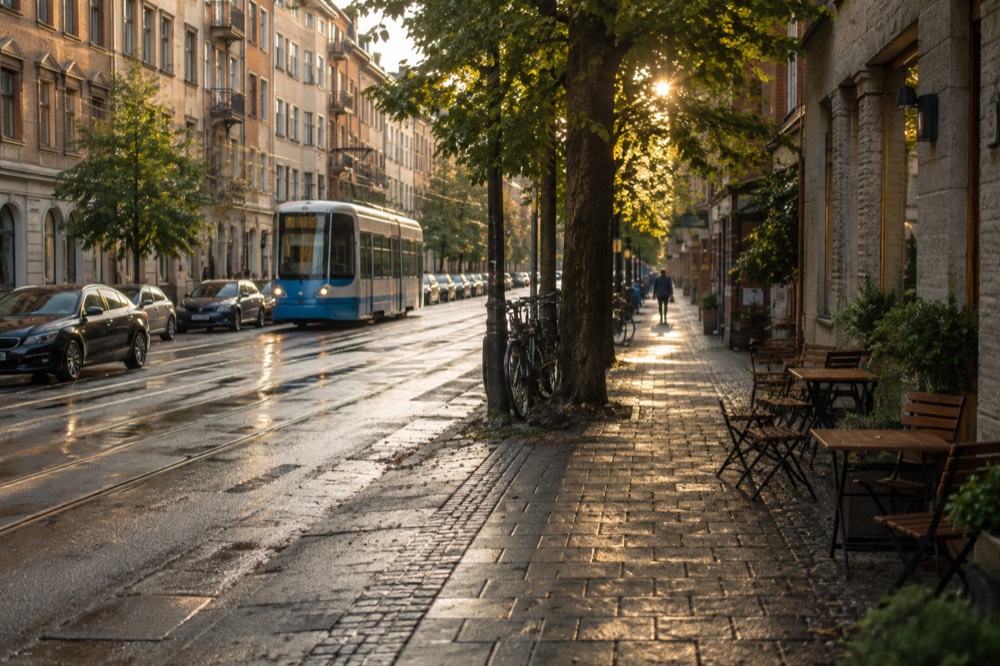
| Season | The park | The strip | Verdict |
|---|---|---|---|
| Spring (Apr-May) | Greenest, driest month April | Outdoor tables returning | Best overall |
| Summer (Jun-Aug) | Peak picnic season | Busiest, lightest evenings | Best for atmosphere |
| Autumn (Sep-Oct) | Colour, then wet, October wettest | Bars take over | Go for the bars |
| Winter (Nov-Mar) | Quiet, dark by 16:00 | Cosiest, indoor | Bar crawl weather |
The sea temperature, if a swim at nearby Saltholmen or in the archipelago is on your list, follows its own calendar: SMHI's archive for the Vinga station shows the water peaks in August at 18.6 C, not July, and September water, 16.7 C, is warmer than June water, 16.2 C. The best time to visit Gothenburg guide works through the whole city's seasonal trade-offs.
Is the Linné Strip Good at Night, and Is It Safe?
The Långgatorna are Gothenburg's main going-out strip, and the bars run late, especially on Friday and Saturday nights, with the crowd heavily student-flavoured because the district sits between Vasastan's student cafes and the park. It is an ordinary, well-trafficked central district, and the standard city-centre precautions apply rather than any area-specific warning.
Night is when the strip earns its reputation. The lanes fill from early evening, and the density of venues means a bar crawl requires no route planning at all. The crowd skews younger than Avenyn's, and the tone is more beer hall than cocktail lounge, though both exist. On weekend nights the noise carries, which is worth knowing if your hotel is above a bar: check which side of the street a room faces before booking. The city's wider nightlife picture, including where this strip sits against Avenyn and the harbour, is in the Gothenburg nightlife guide.
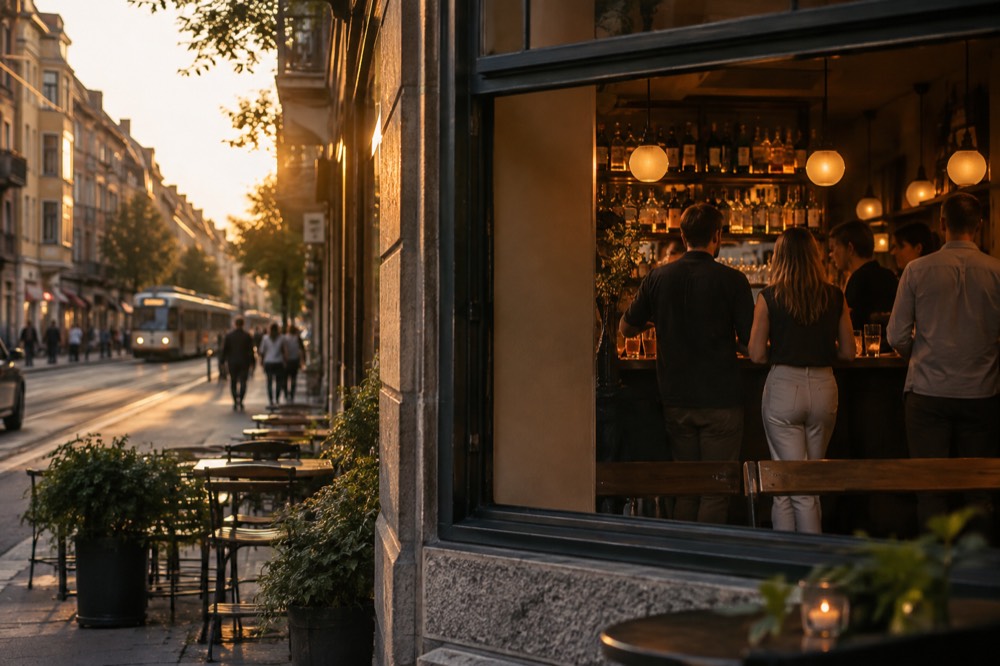
On safety, there is nothing unusual to report about this district. It is central, tram-served and busy, and the general guidance in is Gothenburg safe covers the city-wide common sense that applies here like anywhere else: keep an eye on phones in crowds, and know your tram home before the last one. The trams run a reduced late-night schedule, and Järntorget remains a hub stop through the evening.
If an evening on the strip is the plan but you want the water first, the harbour-based evening products give you both halves:
The canal cruise and the archipelago cruise both run from the city centre and return you to dry land with the evening intact, and their live listings state current departure times.
How Does Linné Fit Into a First-Time Gothenburg Itinerary?
Linné and the Långgatorna deserve an afternoon-and-evening slot rather than a whole day, and the natural route is Slottsskogen first, Linnégatan for fika on the way down, the Långgatorna for dinner, and Järntorget as the exit into Haga, all on foot. First-time visitors on a two-day itinerary should pair it with Haga on the same half-day, since the two districts share a border at Järntorget.
The district slots neatly into the standard itineraries. The two days in Gothenburg plan has room for Slottsskogen plus an evening on the strip, and the three-day version stretches the same route with a day on the water. On a first visit, the sequence that works is the one locals actually use: the park is a daytime thing, the avenue is a fika thing, and the lanes are a night thing. Anyone arriving from out of town should also read the airport to city centre guide before the day starts, since there is no train to Landvetter and the coach takes 20 minutes.
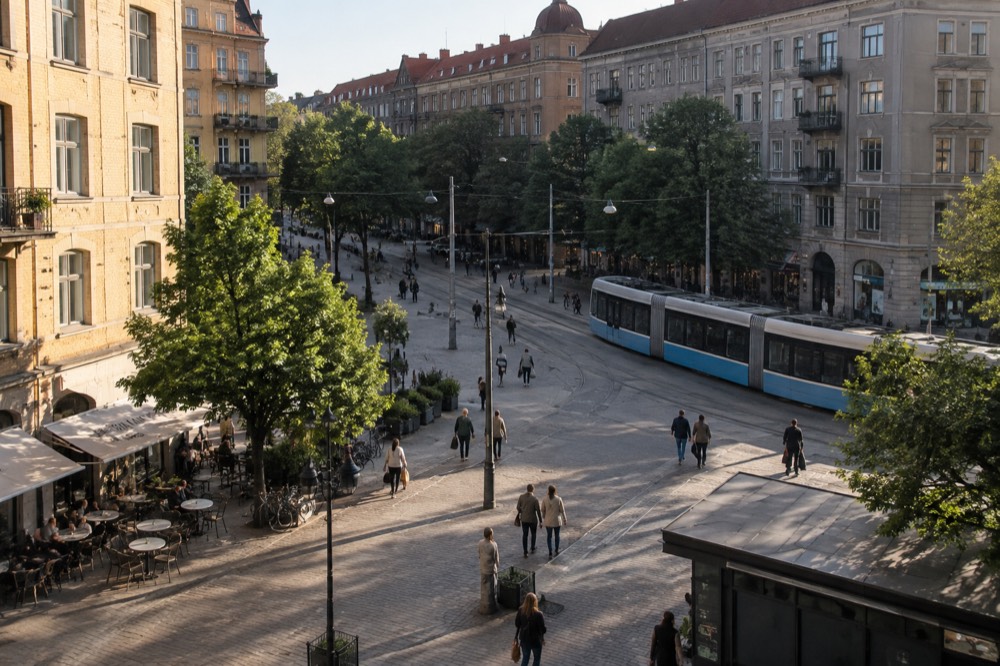
| Time block | Where | What |
|---|---|---|
| Morning | Slottsskogen | Park, free animal enclosures, lawns |
| Midday | Linnégatan | Fika and lunch on the avenue |
| Afternoon | Vasastan side streets | Second-hand shops, student cafes |
| Evening | Första and Andra Långgatan | Dinner and bars |
| Late | Järntorget | Tram home, or walk on into Haga |
For a wider view of the district's neighbours, the Vasastan guide covers the student quarter on the avenue's north side, and Majorna is the next district west beyond the park, with a slower, more local version of the same bar-and-bargain culture.
The archipelago cruise is the natural add-on if your Linné day has a spare morning: it runs from the centre, covers the islands in two and a half hours, and the listing states what is included.
Common Questions About Linné and the Långgatorna Strip
What is the Långgatorna strip in Gothenburg?
The Långgatorna are the parallel lanes, Första, Andra and Tredje Långgatan, running alongside Linnégatan from the Slottsskogen end down toward Järntorget. Together with the avenue they form Gothenburg's densest strip of bars, cafes and small restaurants.
Is Linnégatan the same as the Långgatorna?
No. Linnégatan is the wide avenue from Linnéplatsen to Järntorget. The Långgatorna are the narrower parallel lanes beside it, and they hold most of the bars. Locals use the names together for the whole district.
How do I get to Linné and the Långgatorna by tram?
Take a tram to Linnéplatsen for the Slottsskogen end or to Järntorget for the bar end. Both are ordinary Zone A stops, so a single ticket, 38 kr, or a 24-hour ticket, 125 kr, covers the ride.
Is the Linné district good for nightlife?
Yes. The Långgatorna lanes are the city's main going-out strip, with a dense run of bars that fills from early evening, especially on weekends. The crowd skews younger than Avenyn's.
Can you walk from Linné to Haga?
Yes, in about five minutes. Järntorget, at the bottom of Linnégatan, is the border between the two districts, and Haga's wooden quarter starts on the far side of the square.
Is Slottsskogen free?
Yes. The park is free and open around the clock, and its animal enclosures, including the seals and moose, cost nothing. It sits directly at the top of Linnégatan.