Röda Sten and the Älvsborg Bridge: Gothenburg's River-Mouth Edge
Röda Sten is the thin strip of Gothenburg where the Göta älv finally lets go of the city and meets the Kattegat, with the Älvsborg Bridge strung overhead. It is the grimmest, quietest, and in the right light most beautiful corner of the city centre, and it costs a single tram ticket to reach.
Short answer
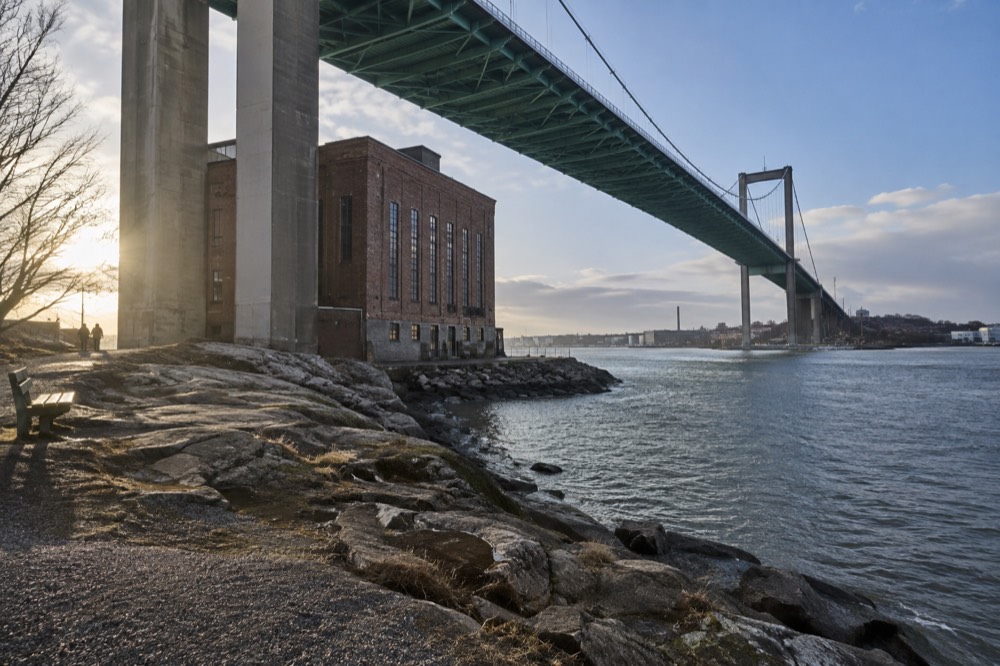
Röda Sten sits under the northern approach of the Älvsborg Bridge where the Göta älv meets the sea. You reach it by tram on an ordinary Västtrafik ticket, the art hall inside is the main indoor draw, and the bridge itself is a working road link that can be viewed from the banks rather than walked end to end.
Röda Sten is the point where Gothenburg stops pretending to be an inland city. The Göta älv, which has run through the middle of town since the Dutch laid out the moat, widens here into something that behaves like a sea channel, and the Älvsborg Bridge carries the road to Hisingen across it in one long suspended span. Below the bridge approach sits a district of converted harbour buildings, concrete quays, and a view straight down the river mouth toward the archipelago. This is the edge of the map for most visitors, and that is exactly its value. If you have been working through the neighbourhoods on Gothenburg Travel Guide, this is the one to save for an evening or a spare hour, not a whole morning.
What Is Röda Sten and Where Is It in Gothenburg?
Röda Sten is the small district at the southern, central-city side of the Älvsborg Bridge, where the Göta älv opens out toward the Kattegat. It sits on the river's south bank, west of Majorna and the harbour, directly under the bridge's approach ramps, and it is inside the ordinary Västtrafik Zone A that covers the whole city including the tram ride to Saltholmen and the archipelago ferries.
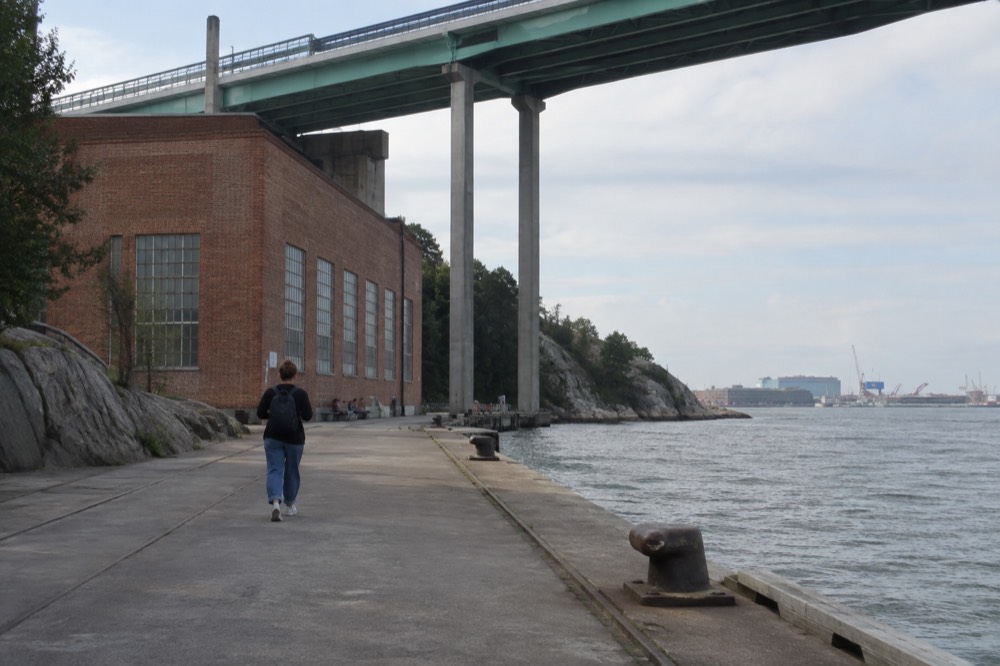
The name refers to a red-painted marker stone, and the district grew up around the harbour industry that once lined this stretch of the river. What stands there now is a mix of the industrial past and the reuse pattern Gothenburg applies to nearly all of its old waterfront: the shipyard cranes across the river at Lindholmen and the Hisingen waterfront tell the same story from the other bank. Röda Sten's version of that story is compact. A short quay, a couple of large converted buildings, a slipway ramp that locals use for swimming, and a concrete apron under the bridge that has become an unlikely viewpoint.
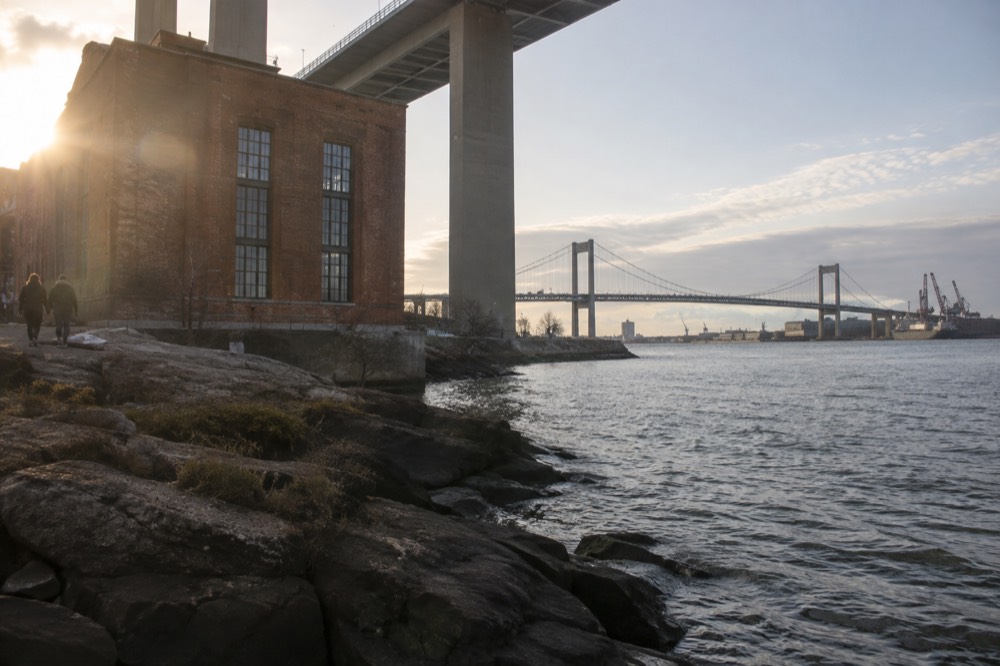
The bridge above it is the reason most people end up here. The Älvsborg Bridge is the road link between central Gothenburg and Hisingen, the island half of the city, and it is the dominant piece of infrastructure on this stretch of the river. You will cross it on a bus or in a car at some point on almost any Gothenburg trip, whether you notice it or not. Standing under it is a different experience from crossing it. The scale, the traffic hum, and the river opening out behind you make Röda Sten one of the most photographed industrial-landscape spots in the city, and photographers tend to come at golden hour for the silhouette against the western sky.
Geographically, think of Röda Sten as the last stop of the city proper before the water takes over. From here the river mouth runs west past Klippan and the old harbour village toward Älvsborg and the sea, and the southern archipelago islands of Styrsö, Brännö, Vrångö and Donsö lie beyond the horizon line. The district belongs to the same chain of west-end neighbourhoods as Majorna, Gothenburg's second-hand quarter, and the two pair naturally on a walk.
What Can You Actually Do at Röda Sten?
The main draw is the contemporary art space inside the converted industrial building on the quay, supported by harbour-view walking, the swimming ramp, and the simple act of standing under the Älvsborg Bridge. There is no ticket gate to the district itself, the outdoor areas are free, and the whole visit fits comfortably in two to three hours including the walk in.
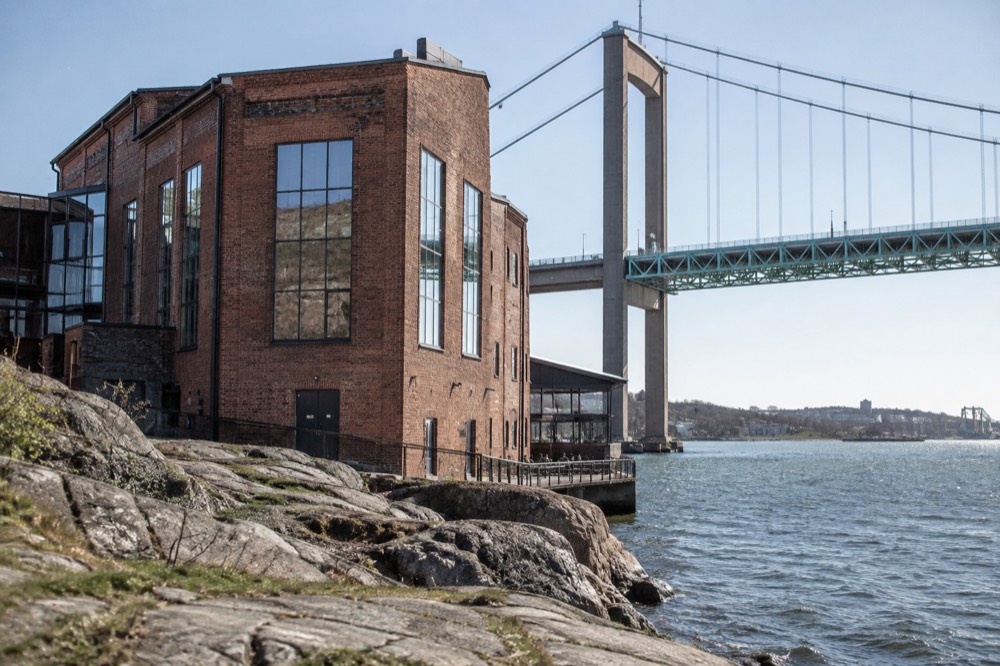
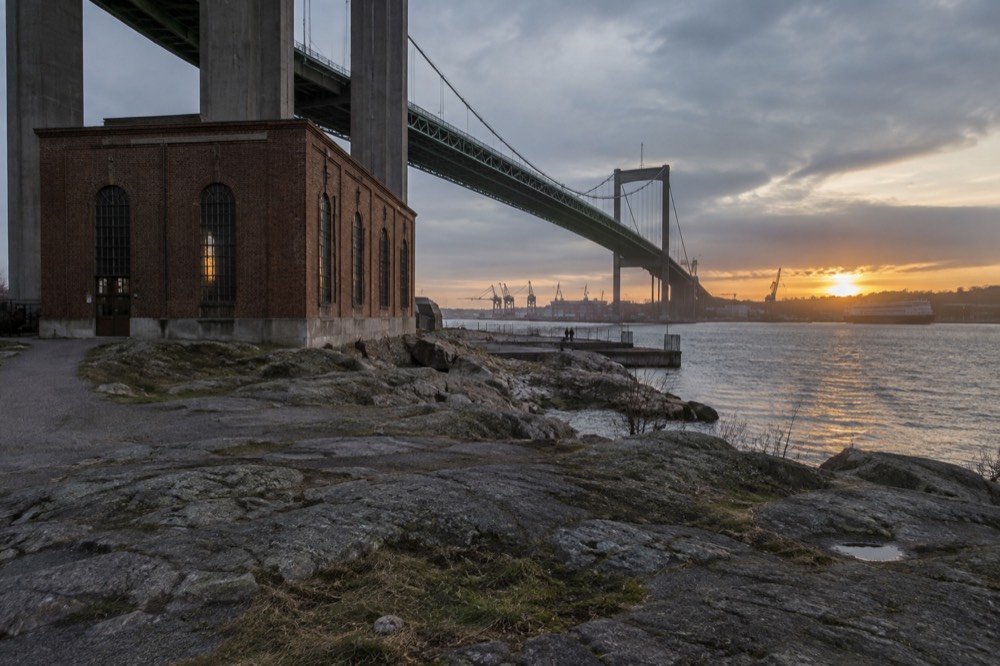
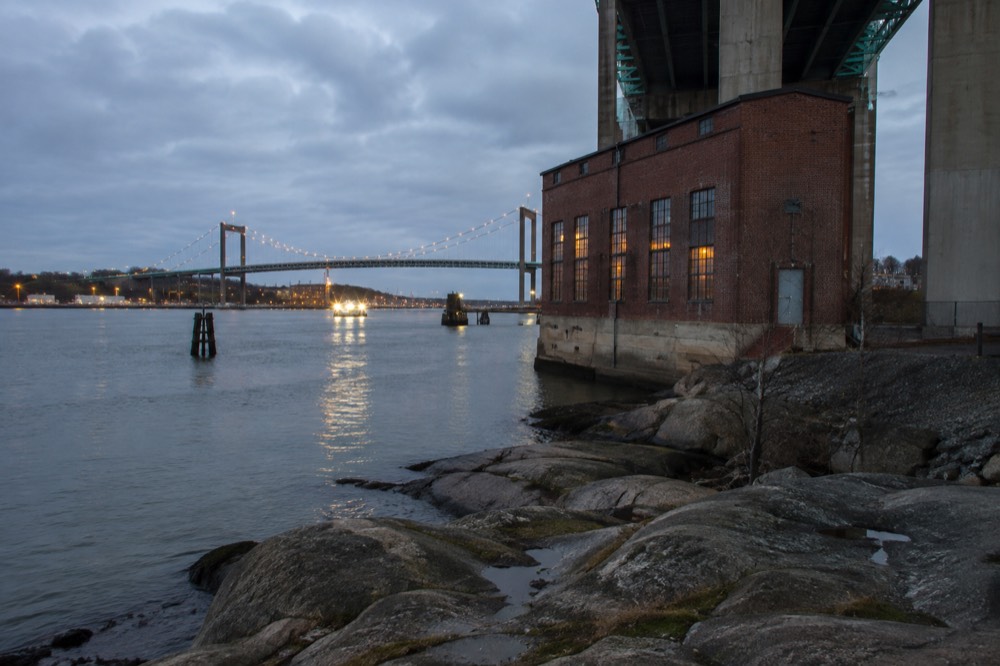
Röda Sten Konsthall is the anchor. It occupies a former boiler house at the foot of the bridge, and it shows contemporary art on a scale that the building's raw industrial shell makes possible. The listing information for Gothenburg's art venues changes season by season, so check the konsthall's own current programme before you plan around a specific exhibition. What does not change is the building, which is one of the more dramatic exhibition spaces in the city: steel, concrete, and windows framing the river. Göteborgs konstmuseum, the city's main art museum, is a very different proposition on the other side of town at Götaplatsen, and it has its own news: the museum's own rebuild page states it closes in 2028 and reopens in 2032, so contemporary art fans may find Röda Sten increasingly useful as the decade goes on.
The outdoor life here is as important as the indoor. The quay walk runs along the water with the bridge overhead, and the slipway at Röda Sten is a known swimming spot. The sea temperature data is worth knowing before you commit: SMHI's quality-controlled observations from the Vinga station show the water peaks in August at 18.6 C, not July, and September water at 16.7 C is actually warmer than June water at 16.2 C. February is the coldest month at 2.7 C. In other words, the swimming season here runs later than most visitors assume, and an early-autumn dip is warmer than the midsummer one people plan around. Cold-water swimming has its own culture in Gothenburg, and the sauna and cold-bath scene extends across the city's waterfront.
The third thing to do is simply to look. The view west from the quay takes in the river mouth, the outer harbour, and on clear days the low silhouettes of the archipelago. The view east runs back along the river toward the city centre and the cranes of the north bank. Sunset is the hour that delivers, because the bridge sits between you and the western sky and the towers catch the last light.
If you would rather see this stretch of water from on the water, the sightseeing options that pass the harbour are the practical route. These three tours all work from the central city:
The amphibious bus tour is the one that covers the most ground, or rather ground and water, in a single hour. The listing shows it rated 4.7 from 4,326 reviews, from $36 per person, and it drives the city streets before launching into the harbour for the waterborne half of the trip. The archipelago cruise with guide, from $44 and rated 4.4 from 1,488 reviews, heads the other way, out past the river mouth toward the islands, and gives you the seaward view of the coastline that Röda Sten only hints at. The canal cruise, from $28 and rated 4.7 from 783 reviews, stays inside the city's moat and canal system rather than reaching the open river.
How Do You Get to Röda Sten and the Älvsborg Bridge?
Röda Sten is reached on an ordinary Västtrafik ticket: a single Zone A adult ticket costs 38 kr, and the 24-hour Zone A ticket costs 125 kr and also covers the archipelago ferries from Saltholmen. The nearest tram stops are a short walk from the quay, the district sits at the western edge of the tram network before the Hisingen lines cross the bridge, and there is no separate fare or gate of any kind.
The tram is the honest answer to almost every getting-around question in Gothenburg, and this one is no exception. Göteborgs Spårvägar's own annual report describes a network of twelve lines running 188 km of single track from Mölndal in the south to Angered in the north, and from Saltholmen in the west to Kålltorp in the east, with the bridge to Hisingen included. The western lines that serve this river-mouth stretch are the ones that connect the district to the rest of the city. Full fare and zone detail lives in our guide to getting around Gothenburg: trams, tickets and zones.
One fare fact is worth repeating here because it changes itineraries. Västtrafik's own zone pages state that the islands of the southern archipelago are in Zone A, and the authority's wording is that you can ride the same ticket all the way from the centre out onto the sea. That means a 125 kr 24-hour ticket bought for a day of trams also covers the ferry to Styrsö or Brännö. A day that pairs Röda Sten in the morning with an island afternoon is therefore one ticket, not two. Be careful with the discount story currently in the news: Västtrafik confirms a temporary state subsidy halves 30-day period tickets, Zone A adult from 890 to 445 kr, but it does not apply to the 24-hour and 72-hour tickets visitors actually buy. Your day ticket is still 125 kr.
Walking in is also realistic. From Avenyn and Götaplatsen the walk west is long, so most people walk in from Majorna or Klippan instead, which turns Röda Sten into the endpoint of a neighbourhood stroll rather than a destination in its own right. Cyclists will find the riverbank paths flat and continuous, and the guided bike tours of the city include the western harbour in their routes.
If you are arriving from further out, the airport situation is simple and slightly awkward: there is no rail link to Landvetter at all, Swedavia's own transport pages list only coach and bus, and the Vy flygbussarna airport coach runs to Göteborg C in about 20 minutes, from where the tram network takes over. Our Landvetter airport to city centre guide covers that leg in detail.
Is the Älvsborg Bridge Worth Seeing Up Close?
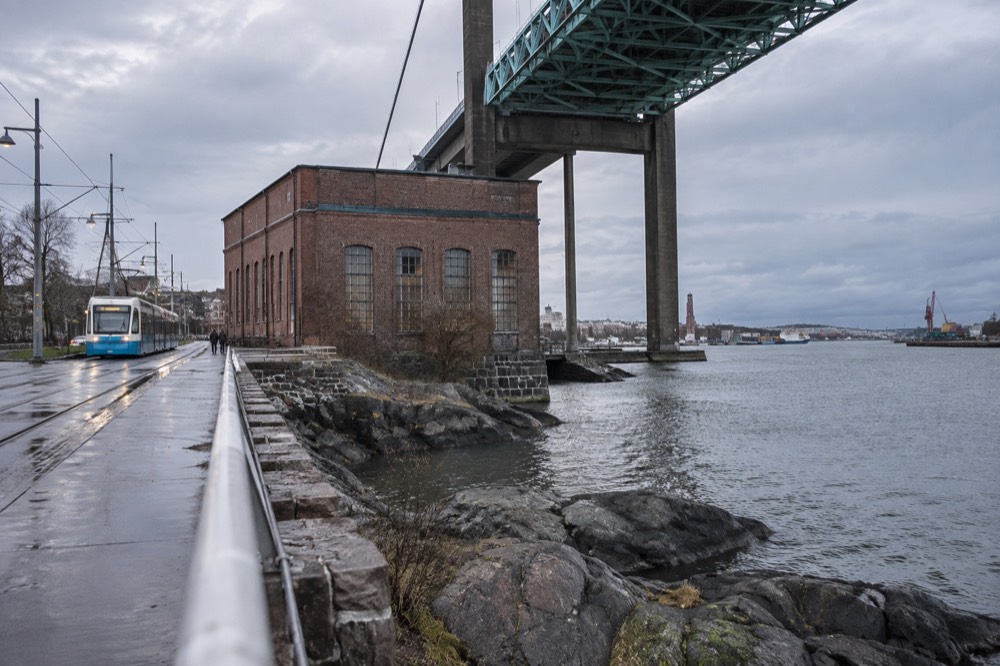
The Älvsborg Bridge is worth seeing up close for its scale and setting rather than as an attraction you walk across: it is a working suspension road bridge carrying traffic between central Gothenburg and Hisingen, the towers and cable geometry over the river mouth are genuinely dramatic from the Röda Sten quay, and the payoff is the view from underneath, not a crossing on foot.
The bridge is infrastructure first. It is one of the main road links onto Hisingen, the island side of the city where the shipyards, Lindholmen's science campus, and a large share of the population sit, so it carries a constant stream of vehicles. That matters for two reasons. First, the bridge is not a pedestrian promenade in the way some harbour bridges elsewhere are; the experience of it is the view from the banks and the crossing by bus or car. Second, the traffic is exactly what makes the underside atmosphere what it is: a low industrial hum under the deck, which some people find atmospheric and others find merely loud.
From the Röda Sten side you get the bridge at its most photogenic. The towers rise out of the water close enough to read, the main span carries the eye west toward the sea, and the foreground is a mix of quay, concrete, and river. Photographers shooting Gothenburg's industrial side use this angle constantly. If you want the bridge in a wider skyline context, the hilltop forts on the south side give the long view, and our piece on Skansen Kronan and Gothenburg's hilltop forts covers the viewpoints that look back over the river from the ridge.
The honest comparison is with the river's other crossings. The Älvsborg Bridge is the big, dramatic one; the bridges nearer the centre, around the opera house and the central harbour, are smaller and busier with pedestrians. If your interest is engineering, the Älvsborg is the one that rewards the trip. If your interest is a pleasant walk with water on both sides, the central harbour crossings do that better.
For the view from the water itself, the amphibious bus tour is the direct option, since its harbour leg puts you low in the water with the city's bridges and quays around you.
Where Does Röda Sten Fit in a Gothenburg Itinerary?
Röda Sten fits as a half-day western add-on: pair it with Majorna and Klippan on foot, or with a southern archipelago ferry afternoon on the same Zone A ticket, and slot it into day two or three of a visit rather than day one. In a two-day itinerary it competes with the archipelago for your western hours, and in three days you can comfortably do both.
The district is small, so the planning question is really what to attach it to. The natural walking chain is Majorna's second-hand shops and wooden houses, then the riverbank west through Klippan, ending at Röda Sten under the bridge. That is a half day at a gentle pace, with coffee stops along the way. Fika is not optional in this city, and our guide to fika in Gothenburg explains the ritual if the word is new to you.
The other natural pairing is the sea. Because the archipelago ferries are on the same ticket, a plan of Röda Sten in the morning and an island in the afternoon is one of the better single days available in Gothenburg, and it costs almost nothing in transport terms. The one-day Gothenburg itinerary has to make harder choices, but the two-day and three-day versions both have room for the west end.
Season matters more here than in the city centre, because Röda Sten's appeal is largely outdoor. The rainfall data is kinder to spring than you might expect: SMHI's 1991-2020 normals for the Göteborg A station put October as the wettest month at 102.9 mm and April as the driest at 51.3 mm, with rain on about 127 days a year overall, roughly one day in three. And whatever the guidebook cliché says, SMHI does not call Gothenburg Sweden's rainiest city; the national maxima are in the western highlands and the mountains. Our best time to visit Gothenburg guide has the full seasonal picture.
Daylight is the other constraint. The US Naval Observatory's figures for Gothenburg give 6 hours 32 minutes of daylight on 21 December against 18 hours 6 minutes on 21 June, a swing of over eleven and a half hours. In midwinter the golden-hour photography that makes this spot famous has to happen in the early afternoon. In June it can happen at ten in the evening.
What Does a Visit to Röda Sten Cost?
The district itself costs nothing: the quay, the bridge viewpoint, and the swimming ramp are free public space, and reaching them costs a 38 kr single tram ticket or a 125 kr 24-hour Zone A ticket that also covers the archipelago ferries. The only paid items are the konsthall's exhibition admission, priced on its own current programme, and any food or tour you add on top.
Here is how the numbers break down for a realistic visit:
| Item | Cost | Notes |
|---|---|---|
| Tram single, Zone A adult | 38 kr | Västtrafik fare table |
| 24-hour Zone A ticket | 125 kr | Covers trams, buses and archipelago ferries |
| Röda Sten quay and bridge viewpoint | Free | Public space, no gate |
| Swimming ramp | Free | Bring your own towel |
| Konsthall exhibition | Priced per current programme | Check the venue's own site before visiting |
| Amphibious bus tour | From $36 per person | Rated 4.7 from 4,326 reviews on the listing |
Two warnings about money traps nearby. First, the old Göteborg City Card no longer exists; Go City replaced it, and unlike the old municipal card the current pass does not include public transport, so do not buy one expecting to cover the tram out here. Our city card analysis of the passes goes into what the Go City products actually cover. Second, if you end the day with a drink, remember the Swedish rule that never dates: beer above 3.5% ABV is sold only by Systembolaget, the state monopoly, under Alkohollag (2010:1622). A bar or restaurant is a different matter, but a supermarket run for something stronger than folköl will come home empty.
Food nearby is the Majorna and Klippan spread rather than destination dining. For the city-wide picture, including where the seafood money should go, see where to eat in Gothenburg. Note that Feskekôrka, the fish church, reopened in 2024 as a food hall with five restaurants, not only the old fish counters, so it is a different and better lunch stop than older guides describe.
When Is the Best Time to Visit Röda Sten?
The best time to visit Röda Sten is a dry evening between May and September, when the quay is warm enough to linger on, the light lasts late, and the sea at the river mouth is near its annual peak; August and September are warmer in the water than June, and April is the driest month of the year on SMHI's normals, so the shoulder season beats midsummer for both rain and swimming.
The sea temperature point deserves its emphasis because it runs against instinct. SMHI's corrected archive from the Vinga station, built on tens of thousands of quality-controlled hourly observations, shows the water peaks at 18.6 C in August, holds 16.7 C through September, and sits at only 16.2 C in June. The air, by contrast, peaks in July at a monthly mean of 18.3 C. So the swim-from-the-ramp season is late summer and early autumn, not the Midsummer weekend everyone photographs.
For the photography, the calculation is about the sun. The bridge and the western sky are the composition, and the sun sets over the river mouth. In June the evening light stretches past ten o'clock; in December it is gone by half past three, with the US Naval Observatory giving sunrise at 08:54 and sunset at 15:26 on the winter solstice. Winter visits are not pointless, because the industrial greys and low light have their own mood, but plan them around midday and expect the concrete to be cold.
The rain question is less of a problem than the city's reputation suggests. SMHI's normals put the year at 912 mm over 127 wet days, with October the wettest month at 102.9 mm. If you are choosing between an October weekend and an April one, April is the drier bet at 51.3 mm across fewer wet days. And if the rain does arrive, the konsthall is the natural shelter, which is another reason to check its programme before you go.
For the seaward half of the day, the guided archipelago cruise is the tour that builds on this district's view.
And for the full harbour-and-canal picture from the water, the classic canal cruise remains the cheapest boat seat in the city.
If you are assembling the whole west-end day, these three tours are the ones that fit the river-mouth theme:
Common Questions About Röda Sten and the Älvsborg Bridge
Is Röda Sten free to visit?
The outdoor district is free: the quay, the bridge viewpoint, and the swimming ramp are public space with no gate or ticket. You pay only the tram fare to reach it, 38 kr for a single or 125 kr for a 24-hour Zone A ticket, plus the konsthall's exhibition admission if you go inside, which is priced on the venue's current programme.
Can you walk across the Älvsborg Bridge?
The bridge is a working road link between central Gothenburg and Hisingen carrying constant vehicle traffic, and the experience visitors come for is the view from underneath at Röda Sten, not a crossing on foot. To get to Hisingen, take a tram or bus over the bridge, or see the harbour from the water on a sightseeing cruise.
How do I get to Röda Sten by tram?
Ride the western tram lines toward the river mouth and the harbour; the district sits at the western edge of the network, a short walk from the nearest stops. Any ordinary Västtrafik ticket covers it, and a 125 kr 24-hour Zone A ticket also covers the archipelago ferries from Saltholmen if you want to continue to the islands on the same fare.
Can you swim at Röda Sten?
Yes, the slipway ramp at Röda Sten is a known swimming spot in the city. The water is warmer than most visitors expect late in the season: SMHI's Vinga station data shows August peaks at 18.6 C and September water at 16.7 C, warmer than June's 16.2 C. February is the coldest month at 2.7 C.
What is Röda Sten Konsthall?
It is a contemporary art space inside a converted industrial building at the foot of the Älvsborg Bridge, showing exhibitions that make use of the raw harbour-scale shell. Check the venue's own current programme before planning around a specific show, since exhibitions change seasonally.
Is Röda Sten worth visiting in winter?
It is, with adjustments. Daylight on 21 December runs only 6 hours 32 minutes, with sunset at 15:26, so plan a midday visit. The industrial greys and low winter light suit the district's mood, and the konsthall gives you an indoor option, but the swimming ramp and long evening photography sessions belong to the warmer months.