Lindholmen and the Hisingen Waterfront: Gothenburg's North Bank Explained
Hisingen is Gothenburg's island half, and its southern shore is where the shipyard cranes gave way to glass offices, science parks and one of the city's best skyline views.
Short answer
Lindholmen and the Hisingen waterfront sit directly across the Göta älv from central Gothenburg, reached by tram over the bridge, by river ferry, or on foot via the Älvborg bridge. The area mixes redeveloped shipyard land, Lindholmen Science Park, the World of Volvo experience centre and the Ramberget hill viewpoint, with the old Eriksberg shipyard area to the north.
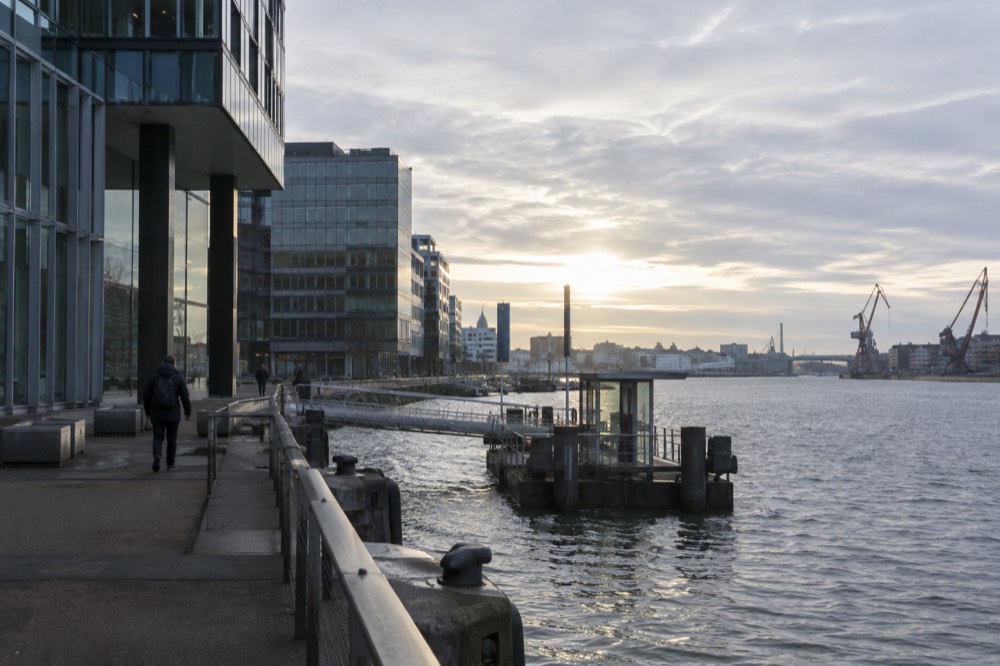
Hisingen is the island that makes up the northern half of Gothenburg, Sweden, and its southern waterfront is the part of the city that has changed most in the last two decades. Where the Kockums and Eriksberg shipyards once launched hulls into the Göta älv, there are now glass offices, a science park, campus buildings and apartment blocks built on the old slipways. The cranes are still there, several of them preserved as monuments, which is the honest way this city handles its past: it keeps the steel and repaints around it.
This is not the postcard Gothenburg of Haga's wooden old quarter or the café strip around Avenyn and Götaplatsen. It is the working city, and that is exactly why it rewards a half day. The river is narrow here, so the waterfront walks on Hisingen come with central Gothenburg spread out in front of you, and the view from Ramberget at the top of the island is the one locals point visitors towards. This guide from Gothenburg Travel Guide covers what is actually on the north bank, how to cross the river, and where the Volvo story now lives, because that story moved in 2024 and most guides have not caught up.
What Is Lindholmen and Where Is It in Gothenburg?
Lindholmen is the redeveloped shipyard district on the south-eastern shore of Hisingen, the large island that forms Gothenburg's northern half, sitting directly across the Göta älv from the city centre. It is anchored by Lindholmen Science Park and the Chalmers and University of Gothenburg campus buildings that followed the shipyards out, and it connects to central Gothenburg by tram over the bridge, by river ferry, and by the walkway on the Älvborg bridge.
Hisingen is Sweden's population centre on paper more than in feel: the island contains residential districts, industry, the port and the northern archipelago ferry terminals at a scale that surprises first-time visitors. The tram network runs across the bridge to Hisingen, as Göteborgs Spårvägar's own annual report describes, with lines reaching from Saltholmen in the west across the bridge to the island. That matters practically, because it means the waterfront is ordinary tram territory, not a special excursion.
The name "Lindholmen" specifically refers to the peninsula where the Kockums shipyard built its machine works, and where the science park now stands. The redevelopment kept the street grid and the dry docks and filled in the rest. Today the district is a weekday place first, busy with students and office workers, and quieter at weekends, which changes what kind of visit makes sense. Come on a weekday for the full atmosphere; come on a weekend for the paths and views with fewer people on them.
What Can You Actually See and Do on the Hisingen Waterfront?
The Hisingen waterfront offers a riverside walking and cycling path from Lindholmen west towards Eriksberg, preserved shipyard cranes and dry docks, the World of Volvo experience centre near the bridge on the Lindholmen side's southern approach, and the Ramberget hill viewpoint overlooking the whole city skyline. Allow a half day for the waterfront walk and the viewpoint, longer if you add World of Volvo.
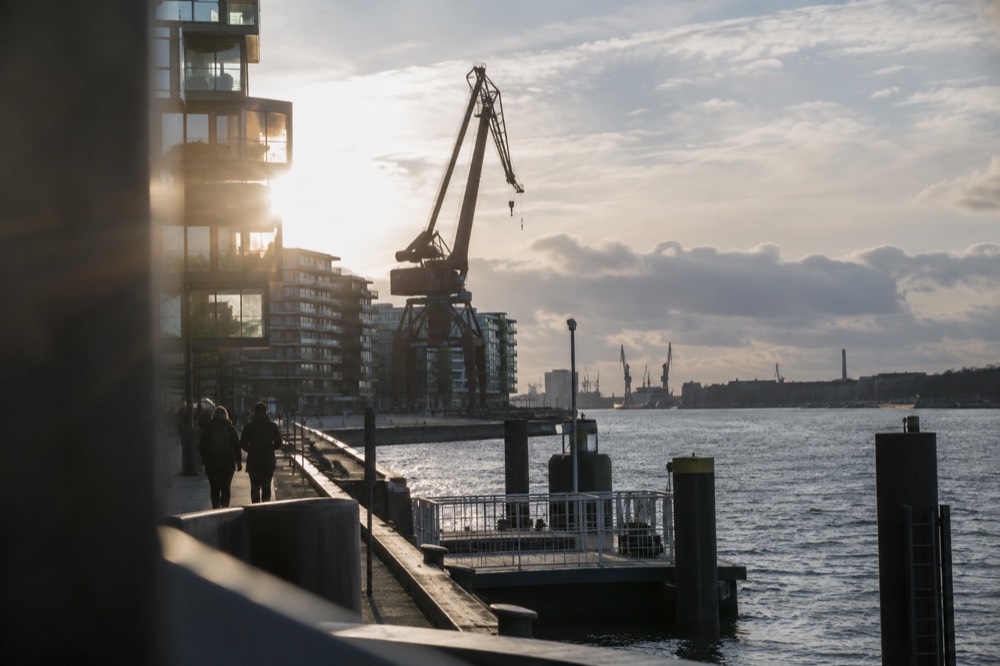
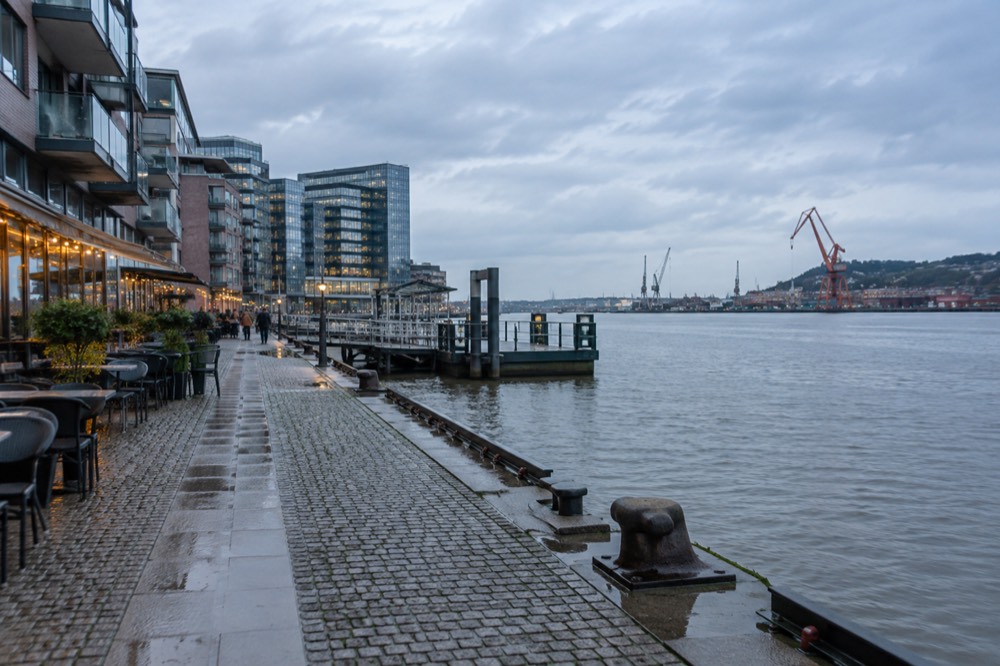
Start at Lindholmen itself. The science park buildings sit around a small harbour basin, and the promenade along the river looks straight back at the city centre: the cathedral, the office towers, and the moored ships of the Maritiman floating museum on the opposite bank. The path then runs west, past the old Eriksberg shipyard area, where the giant gantry crane, one of the largest in Sweden when it was built, still stands over what is now apartments and marinas. The shipyard closed as a working yard, but the crane is floodlit at night and functions as the district's landmark.
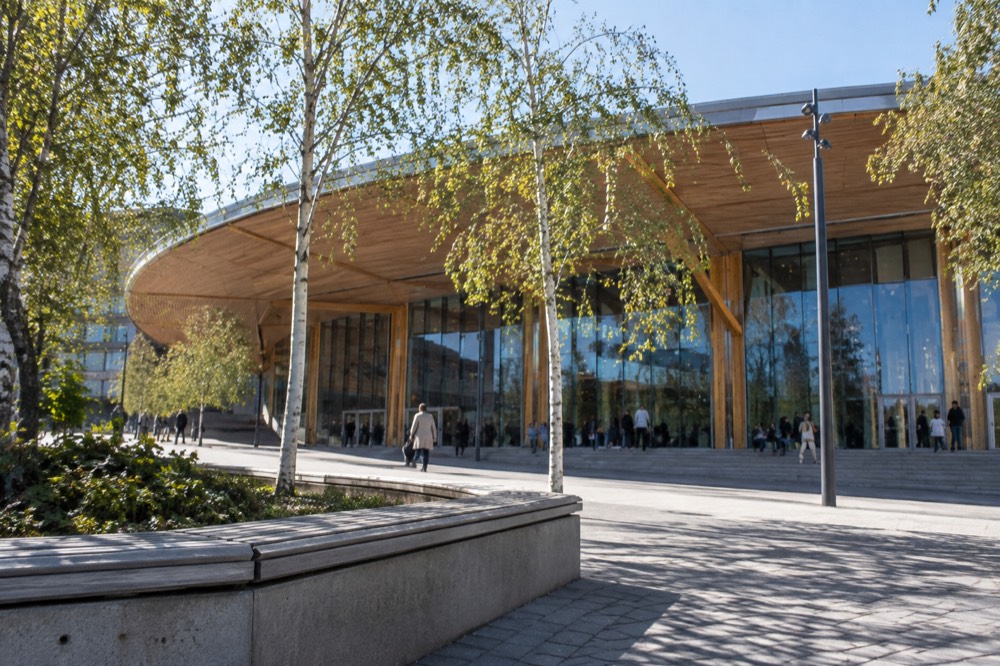
World of Volvo is the new anchor on the southern edge of this side of the river, near Liseberg rather than deep inside Hisingen, and it is the only Volvo visit that exists. The old Volvo Museum at Arendal closed permanently in December 2023, and its successor says so plainly on its own site. World of Volvo, at Lyckholms Torg 1, opened in 2024 as an experience centre rather than a conventional museum, and the listing for its entry ticket on our site shows a from-price of $19 per person with a 4.5 rating from 202 reviews. Hours are Monday to Wednesday 10:00-17:00, Thursday 10:00-19:00, Friday and Saturday 10:00-17:00, and Sunday 10:00-16:00. Exhibition tickets start from 120 SEK online, and the venue also runs the Volvo Cars Torslanda factory tour, from 175 SEK, with a bus departing every weekday.
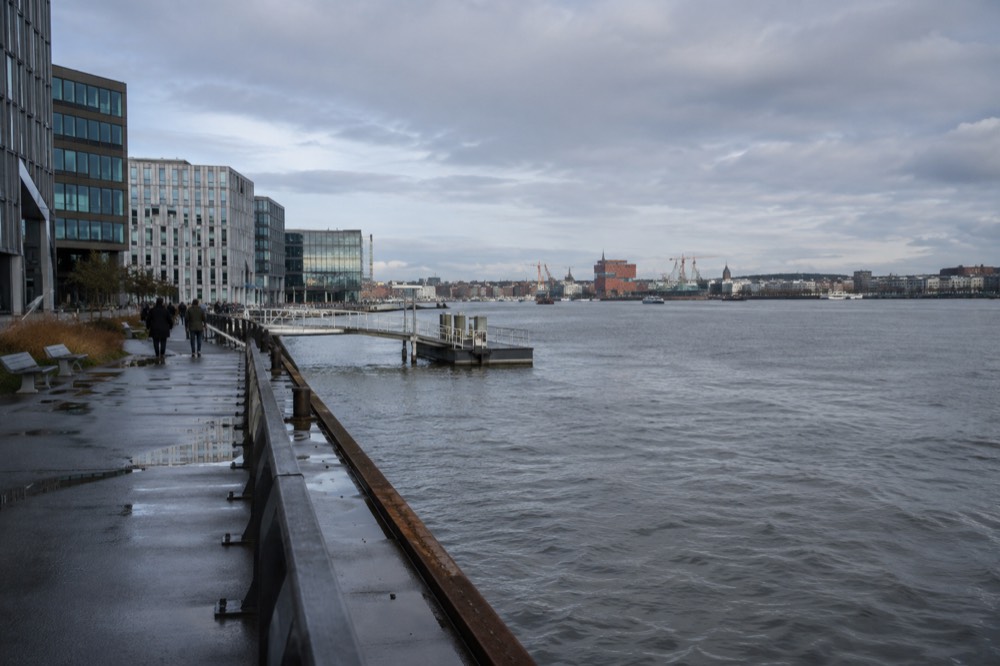
For the classic tourist overview of the river without the walking, three sightseeing options cover this water. The amphibious bus tour, which drives the streets and then launches into the river, is the one that covers both banks in a single hour. The guided archipelago cruise heads out past the river mouth towards the islands, and the canal sightseeing cruise stays inside the city's moat system on the south side. All three are bookable through their live listings.
The comparison below is the honest version: each of these covers different water.
| Tour | What it covers | Duration | From price | Rating |
|---|---|---|---|---|
| Land and Water Amphibious Bus | City streets, then the river, both banks | 1 hour | $36 per person | 4.7 from 4,326 reviews |
| Archipelago Cruise with Guide | The river mouth and the islands beyond | 2.5 hours | $44 per person | 4.4 from 1,488 reviews |
| City Canal Sightseeing Cruise | The 17th-century moat and inner canals | 50 minutes | $28 per person | 4.7 from 783 reviews |
How Do You Get to Lindholmen and Around Hisingen?
Lindholmen is reached by tram across the river, by river ferry from the city-centre side, or on foot across the Älvborg bridge, and ordinary Västtrafik tickets cover the trams and the river ferries, with a single adult ticket at 38 kr and a 24-hour Zone A ticket at 125 kr. Hisingen sits inside Zone A, so one day ticket covers the whole island including the archipelago ferry terminals.
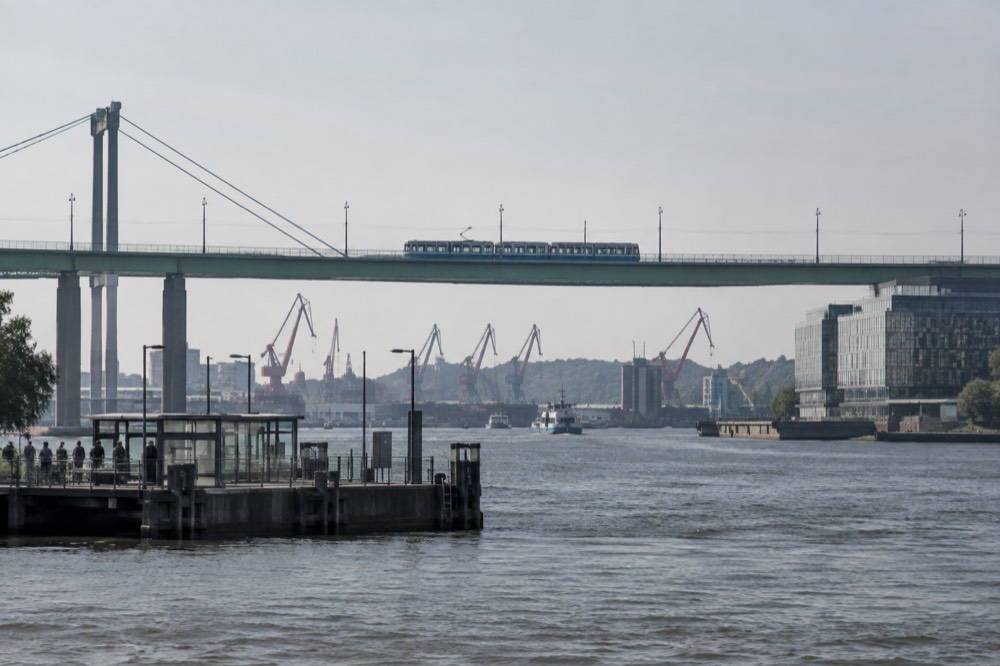
The tram is the backbone, as it is everywhere in Gothenburg. Lines cross the Älvborg bridge to Hisingen and fan out across the island, and the same ticket you used in the city centre works on them. The river ferry is the more scenic crossing and the one that fits a waterfront day: the boats cross the Göta älv between stops on the south bank and the Hisingen side, and Västtrafik's fare structure treats them as part of the network, so a single or day ticket is valid. Check the current timetable on Västtrafik's own ticket pages, because frequencies are thinner at weekends.
Walking across is free and, in good weather, the best option. The Älvborg bridge carries a dedicated pedestrian and cycle lane on its underside, and the crossing takes in the port and the river mouth. This is also how you reach Roda Sten and the Älvborg bridge area at the western end, an arts centre under the bridge pilings that anchors the south-bank end of the walk.
One fare note that trips people up: Västtrafik's 30-day period tickets are currently halved by a temporary state subsidy, but that subsidy does not cover the 24-hour and 72-hour day tickets visitors actually buy. A 24-hour Zone A ticket is 125 kr, in the app or at a shop, and it covers trams, buses, the river ferries and the southern archipelago boats from Saltholmen. Our getting around Gothenburg guide has the full fare table.
The crossing options side by side:
| Crossing | Time | Cost on a Zone A ticket | Best for |
|---|---|---|---|
| Tram over the Älvborg bridge | About 5 minutes from central stops | Covered, single 38 kr | Speed and onward connections |
| River ferry across the Göta älv | A few minutes on the water | Covered, same ticket | The scenic arrival |
| Walking the bridge walkway | About 15-20 minutes | Free | Good weather and the port views |
If the idea of a bus that drives into the river appeals, this is the tour to book for the day you explore the north bank: it starts on the city streets, crosses the bridge, and does the harbour leg from the water, which is the angle the waterfront walk gives you in reverse.
Where Does the Volvo Story Fit in on Hisingen?
The Volvo story now lives at World of Volvo, the experience centre that opened in 2024 near Liseberg, not at the old Volvo Museum at Arendal, which closed permanently in December 2023 and must not appear in any plan. The Torslanda factory, on Hisingen's western side, runs weekday factory tours from 175 SEK with the bus departing from World of Volvo, so the two visits chain together naturally for anyone with a full day.
This is the single biggest stale fact in circulation about Gothenburg, and it matters on this page because Hisingen is Volvo territory. The company's Torslanda plant sits on the island's west side, and for decades the museum at Arendal, out towards the coast, was the pilgrimage site. That building is closed. World of Volvo's own site states it directly, and the new centre took over as "the place where Volvo's history, innovation and community continue to live."
What you get at World of Volvo is different in kind from the old museum. It is an experience centre with interactive exhibitions rather than a warehouse of cars behind ropes, though the heritage vehicles are there. Tickets are sold online with a 10 percent online discount, from 120 SEK, and the venue offers family tickets, senior deals and a lunch-and-exhibition combination. The guided exhibition tour runs on Tuesdays and Thursdays at 10:30 for an extra 50 SEK, in Swedish on Tuesdays and English on Thursdays.
The factory tour is the deeper cut. It runs on weekdays only, from 175 SEK, with the bus leaving from World of Volvo, and it is the only way to see vehicle production on Hisingen. Book ahead, because weekday places are limited and the tour does not run at weekends. For the full Volvo picture, note that Liseberg, the amusement park next to World of Volvo, has its own irregular season calendar with a 95 kr entry ticket that includes no rides, so check dates before assuming a same-day visit works.
What About Ramberget and the View from the Top of Hisingen?
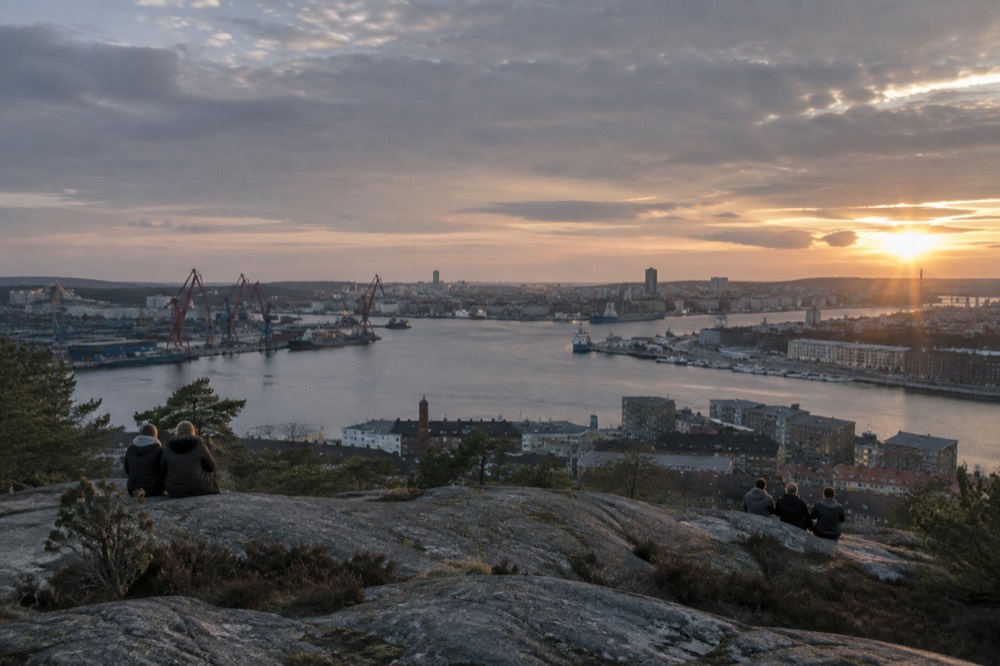
Ramberget is the rocky hill in the middle of Hisingen, roughly 87 metres at its high point, with a viewpoint that looks south over the entire Gothenburg city skyline, the river, the port and, on clear days, out towards the archipelago. It is free, reachable by bus or a stiff walk, and it is the viewpoint locals use rather than the one on the tourist postcards.
The hill sits in a large green space, Keiller's park, donated to the city in the same era that gave Gothenburg most of its public parks, and the network of paths up through it is popular with runners and dog walkers at all hours. The summit road is drivable and served by bus, so the view is not gated behind a hike, but the footpaths through the birch and granite are the better way up if the weather is on your side.
What you see from the top is the argument for going: the whole south-facing sweep of the city laid out across the water, from the harbour entrance and the Älvborg bridge in the west to the office towers and church spires of the centre. Sunset is the hour locals aim for, and in June that is very late indeed, because Gothenburg gets 18 hours and 6 minutes of daylight at the summer solstice against 6 hours 32 minutes in December, a swing of over 11 and a half hours between the solstices. Plan the summit for the golden hour and you get the skyline with the shipyard cranes of the north bank silhouetted in the foreground.
Pair Ramberget with the waterfront walk rather than treating it as a separate trip. The hill rises directly behind the Eriksberg area, so a natural loop is tram to Lindholmen, walk the river path west to Eriksberg, climb the hill, and come down to a bus stop on the far side. That loop is the best single half-day on Hisingen, and it costs nothing beyond the tram fare.
Where Do You Eat and Drink Around Lindholmen and the Waterfront?
Eating on the Hisingen waterfront means the cafés and lunch restaurants of Lindholmen Science Park, which are busy on weekdays and limited at weekends, the restaurants of the Eriksberg development with their marina views, and the food scenes just across the water at Klippan and Majorna, so most visitors eat on the south bank and walk off lunch on the north side.
The honest warning is the weekday rhythm. Lindholmen's cafés and lunch spots serve the campus and office population, which means they are full and good between Monday and Friday and thin on the ground on Saturday and Sunday. Eriksberg, further west, is the more reliable weekend option, with restaurants around the marina and the old shipyard buildings. If you are doing the waterfront on a weekend, plan lunch around Eriksberg or bring the picnic and use the parks.
Across the river, the choices multiply fast. Klippan and the old harbour village sits at the western foot of the Älvborg bridge on the south side, and Majorna, Gothenburg's second-hand quarter, with its workers' cottages and neighbourhood bars, is one bridge further along. Our where to eat in Gothenburg guide covers the city-wide picture, and the fika habit, the Swedish coffee-and-bun break, has its own explainer in fika in Gothenburg. One rule worth knowing before any beer stop: Swedish law caps supermarket beer at 3.5 percent ABV, and anything stronger is sold only through the Systembolaget monopoly, which is why the shelf version of a familiar brand often tastes weaker than its label suggests.
A planning table for the practical decisions:
| Decision | Weekday | Weekend |
|---|---|---|
| Lindholmen cafés and lunch | Full choice, campus crowds | Many closed, check ahead |
| Eriksberg restaurants | Open, quieter | Open, busier at marina |
| River ferry frequency | Frequent | Reduced, check timetable |
| World of Volvo | Open, Thu until 19:00 | Open, Sun closes 16:00 |
| Torslanda factory tour | Runs weekdays only | Does not run |
How Does the Hisingen Waterfront Fit Into a First Visit to Gothenburg?
Most first-time visitors should give the Hisingen waterfront a half day rather than a full one, pairing the river path and Ramberget with World of Volvo or the amphibious bus tour, and spending the rest of the time on the south bank, where the old town, Haga, the museums and the archipelago ferries are concentrated. The exception is the Volvo enthusiast, for whom the factory tour plus World of Volvo is a full day on its own.
The reason is geography. The south bank holds nearly everything a first visit is built around, and the itineraries on this site reflect that: one day in Gothenburg barely crosses the river, while two days in Gothenburg and three days in Gothenburg make room for the north side. Hisingen earns its slot through three things: the skyline view from Ramberget, the Volvo story, and the access it gives to the northern archipelago, whose ferry terminals at Öckerö, Hönö and Björkö sit on the island's western edge and are covered separately from the southern archipelago of Styrsö, Brännö, Vrångö and Donsö.
Season matters more here than on the south bank, because the waterfront walk and the hill are outdoor propositions. Gothenburg's rain is real but concentrated: SMHI's 1991-2020 normals for the city station show 912 mm a year falling across 127 days, with October the wettest month at 102.9 mm and April the driest at 51.3 mm, as SMHI's own normals pages set out. Spring is the dry window, and the best time to visit Gothenburg guide breaks the year down month by month. What SMHI's data does not support is the cliche that this is Sweden's rainiest city, because the national maxima sit in the western highlands and the mountains, not here.
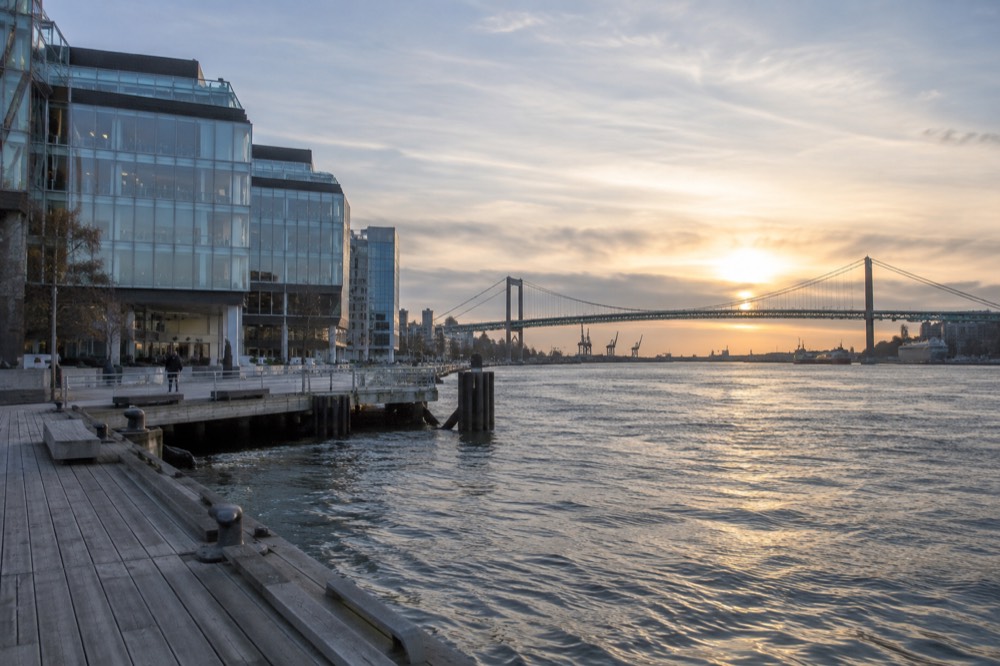
For the second tour of the water, once you have walked the north bank and seen the skyline from the hill, the guided archipelago cruise is the natural follow-on: it takes the river mouth you have been looking at and keeps going, out to the islands that belong to the city. The canal cruise is the alternative if your legs are done and you want the moat-and-canal version of the city from water level instead.
And for the inner-city water, the 50-minute canal cruise is the low-effort option that fits between a morning on Hisingen and an evening on Avenyn.
Common Questions About Lindholmen and the Hisingen Waterfront
Is Lindholmen worth visiting for tourists?
Yes, as a half day rather than a destination in itself. The riverside walk, the preserved shipyard cranes, the Ramberget viewpoint and World of Volvo together make a strong morning or afternoon, but the district is quieter at weekends when the campus population is away.
How do I get from central Gothenburg to Lindholmen?
By tram across the Älvborg bridge, by the river ferry across the Göta älv, or on foot across the bridge's dedicated walkway. Ordinary Västtrafik tickets cover the trams and the ferries, with a single adult ticket at 38 kr and a 24-hour Zone A ticket at 125 kr.
Is the Volvo Museum on Hisingen still open?
No. The Volvo Museum at Arendal closed permanently in December 2023. The only Volvo visit that exists is World of Volvo, the experience centre that opened in 2024 near Liseberg, plus the weekday Torslanda factory tour that departs from World of Volvo by bus.
What is the best viewpoint on Hisingen?
Ramberget, the hill in the middle of the island. The viewpoint looks south over the full Gothenburg skyline and the river, it is free, and it can be reached by bus or on foot through Keiller's park. Locals rate it above the postcard viewpoints on the south bank.
Can you walk along the whole Hisingen waterfront?
You can walk the southern shore from Lindholmen west to the Eriksberg area and up to Ramberget in a half-day loop, on riverside paths and park tracks. The full island shoreline is far longer and includes working port land that is not a public promenade.
Is the Hisingen waterfront good in winter?
It is usable but exposed, with December daylight down to 6 hours 32 minutes at the solstice and February the coldest month for sea temperature at 2.7 C. The paths and the viewpoint stay open year round, and World of Volvo is fully indoors, so a mixed indoor-outdoor winter day works well.