The Northern Gothenburg Archipelago: Öckerö, Hönö and Björkö Explained
North of the Göta älv mouth lies the second half of Gothenburg's archipelago: Öckerö, Hönö, Björkö and their neighbours, reached by Västtrafik ferry from Hisingen on the same Zone A ticket that runs the trams.
Short answer
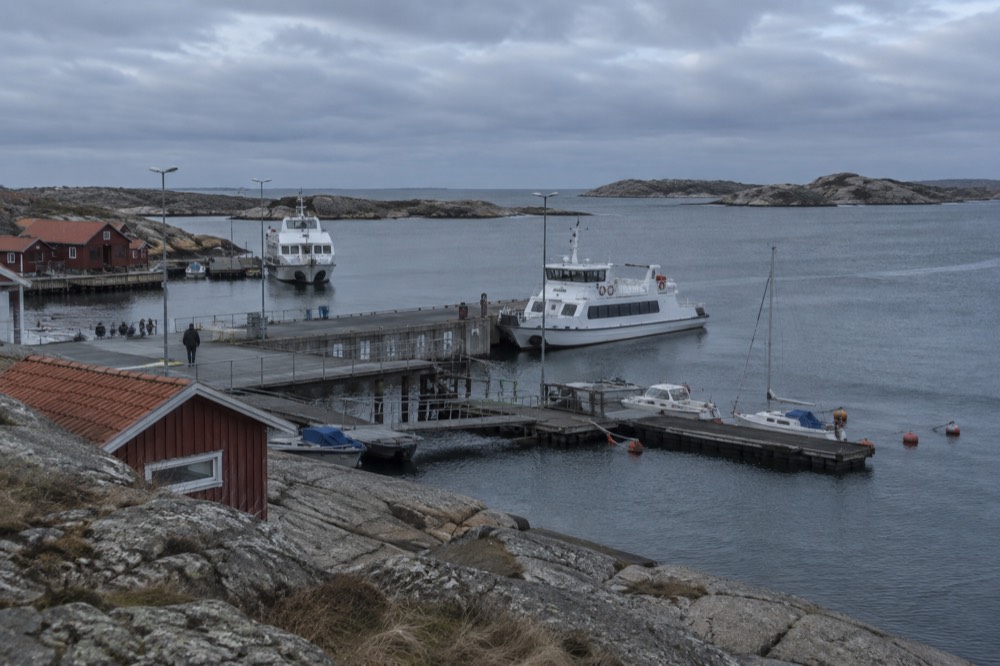
The northern Gothenburg archipelago is a chain of islands in Öckerö municipality, reached by Västtrafik ferry from Lilla Varholmen on Hisingen. Öckerö is in Zone A, so the ordinary 24-hour ticket covers bus and ferry. Unlike the car-free southern islands, the northern group has no car ban.
Gothenburg has two archipelagos, and most visitors only ever hear about one of them. The southern islands, Styrsö, Brännö and Vrångö, get the coverage because they are car-free and sit at the end of a tram line. The northern group, Öckerö, Hönö, Björkö, Fotö, Hälsö, Grötö, Rörö, Hyppeln, Knippla and Kalvsund, lies on the other side of the Göta älv mouth in Öckerö municipality, and it is a different animal entirely: fishing villages, granite slabs, holiday colonies and open Kattegat horizon, all still inside the Västtrafik fare system. Västtrafik's own zone table lists Öckerö in Zone A, the same zone as central Gothenburg, which means the ordinary day ticket that runs the trams also runs the boat. This guide covers what the northern archipelago is, how to get there, what each island offers, and when the water is actually warm enough to swim, with the sea-temperature numbers most visitors get wrong.
What Is the Northern Gothenburg Archipelago?
The northern Gothenburg archipelago is a chain of ten inhabited islands in Öckerö municipality, directly north of the Göta älv river mouth on the Kattegat coast. The largest and best known are Hönö, Öckerö and Björkö, followed by Fotö, Hälsö, Grötö, Rörö, Hyppeln, Knippla and Kalvsund. The group is administratively separate from the City of Gothenburg, but it sits inside the same Västtrafik fare zone as the city centre, so the same ticket covers bus and ferry.
The municipality, Öckerö kommun, has around 13,000 residents spread across the islands, and its identity is fishing to a degree the southern archipelago lost generations ago. Hönö was for decades the base of Sweden's largest inshore fishing fleet, and the harbour at Hönö Klåva still lands shrimp and whitefish that go straight into the harbour restaurants. Öckerö, the municipal seat, is the first stop on most ferry routes and the island most visitors see first, even if they only change boats there. Björkö, at the northern end of the chain, is quieter and rockier, with the kind of polished granite shoreline that the Bohuslän coast is famous for, only 40 minutes from central Gothenburg instead of two hours.
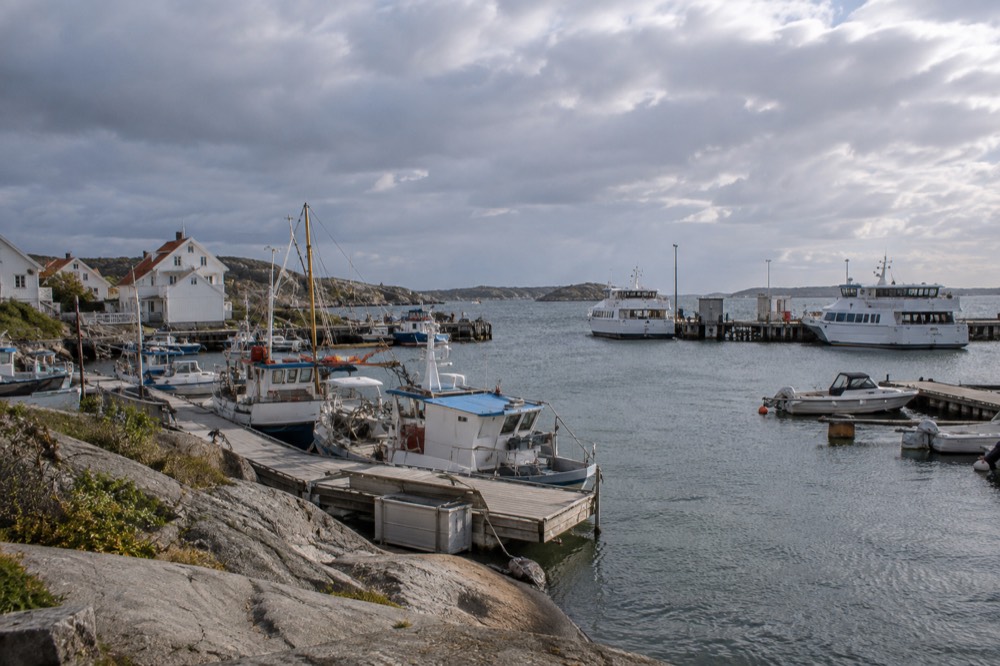
The distinction that matters for planning is the one between the two halves of the city's island world. The southern archipelago belongs to the City of Gothenburg itself, and Göteborgs Stad's own study states that "Öarna inom Södra skärgården är fredade från biltrafik", the islands of the southern archipelago are protected from car traffic, with only taxi, transport services and emergency vehicles allowed. The northern islands have no such ban. Cars run on the northern ferries and on the island roads, which changes the character completely: the south is a pedestrian and bicycle world, the north is a working coastal municipality where people commute to the city by boat. If you want the car-free stillness, read our guide to the southern islands at Styrsö, Brännö, Vrångö and Donsö. If you want harbours, fish counters and open water, keep reading.
The whole island group sits inside the Västtrafik network, and that is the single most useful fact about it. Västtrafik's zone page for the 24-hour ticket lists Zone A as covering Göteborg, Partille, Mölndal and Öckerö, which means the archipelago ferries to the northern islands run on the same fare as a tram ride across the city centre. The ferry terminal, Lilla Varholmen, is on Hisingen, the river island that holds much of Gothenburg's port and industry, and buses connect it with central Gothenburg. You can read more about that side of the river in our guide to Lindholmen and the Hisingen waterfront.
How Do You Get to Öckerö, Hönö and Björkö from Gothenburg?
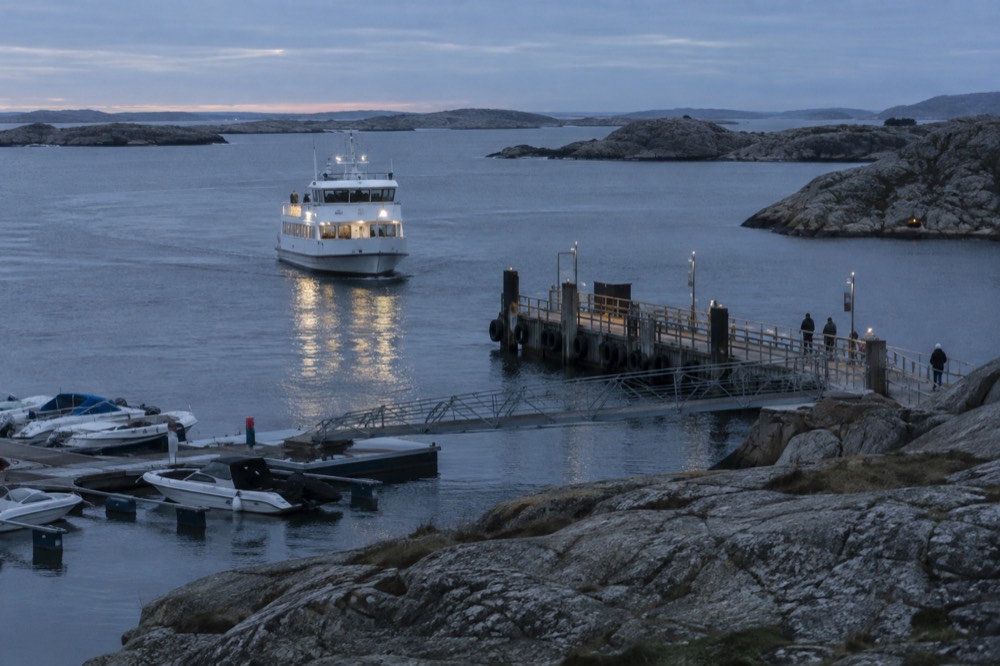
You take a Västtrafik bus from central Gothenburg to the Lilla Varholmen ferry terminal on Hisingen, then a Västtrafik ferry across to the islands, all on one ticket. Öckerö is inside Zone A, the same zone as the city centre, so a 24-hour Zone A ticket at 125 kr covers the bus, the ferry and unlimited travel once you are there. There is no separate archipelago fare and no need to buy anything at the jetty.
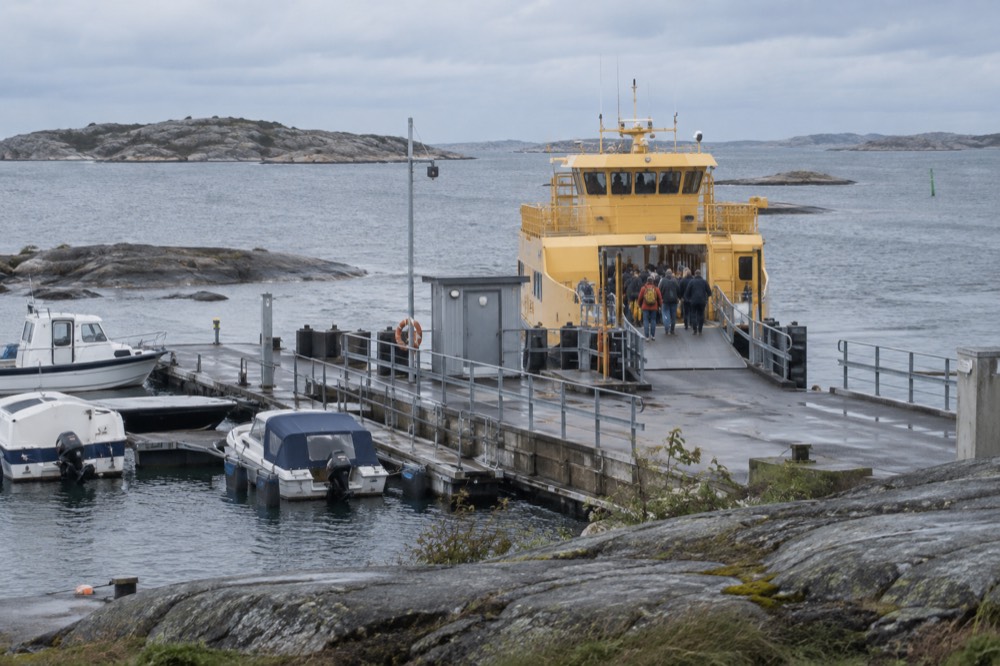
The journey works like any other Västtrafik trip, which is the beauty of it. Buy a single ticket, a 24-hour ticket or a 72-hour ticket in the Västtrafik To Go app before you board the bus, and the same ticket carries you onto the ferry. Västtrafik's fare table puts the adult single at 38 kr for one zone and the 24-hour Zone A ticket at 125 kr, the same price in the app and in the shop, so for a full day in the islands the 24-hour ticket is the obvious choice. The ferry crossing from Lilla Varholmen to the first island takes only a few minutes, and the boats then hop north through the chain, calling at Öckerö, Hönö, Björkö and beyond according to the route.
One nuance about fares is worth flagging because the headline numbers are misleading. Västtrafik currently halves the price of every ordinary 30-day period ticket through a temporary state subsidy, Zone A adult drops from 890 kr to 445 kr, but that subsidy does not cover the 24-hour and 72-hour day tickets a visitor actually buys. Your 125 kr day ticket is full price. The details, including how the zones work, are in our guide to getting around Gothenburg: trams, tickets and zones.
| Journey | Ticket | Adult price | What it covers |
|---|---|---|---|
| Bus to Lilla Varholmen + ferry, one way | Single, 1 zone | 38 kr | One trip, bus and ferry together |
| Full day in the islands | 24-hour, Zone A | 125 kr | Trams, buses and ferries across Zone A for 24 hours |
| Three-day island stay | 72-hour, Zone A | Price on Västtrafik's own page | Zone A travel for 72 hours |
| Youth, single | Single, 1 zone | 29 kr | One trip for under-20s |
For orientation, the ferry terminal sits on the western edge of Hisingen, the same river island where the port cranes and the Röda Sten and Älvsborg bridge area face the southern islands across the water. If you are combining a morning in the islands with an afternoon in the city, the geography is forgiving: the bus ride from the centre to Lilla Varholmen takes roughly half an hour, and the ferry adds minutes, not hours.
The ferry is not the only way to see the islands, of course. A guided archipelago cruise from central Gothenburg, the kind that runs from the harbour rather than the commuter jetty, covers the island coast with commentary in a couple of hours, and the listing for the guided option shows a 4.4 rating from 1,488 reviews at from $44 per person, making it the most-reviewed boat product in the city. The operator's live listing carries current departure times.
Is the Northern Archipelago Different from the Southern One?
Yes, and the difference is structural rather than cosmetic. The southern islands are part of the City of Gothenburg and ban private cars outright, while the northern islands form a separate municipality, Öckerö, with no car ban, larger populations, bigger harbours and a working fishing economy. The south is reached by tram then ferry from Saltholmen, the north by bus then ferry from Lilla Varholmen, and both sit in Västtrafik's Zone A on the same day ticket.
The character contrast is the thing to plan around. In the south, Brännö and Vrångö feel like a slower, quieter world of allotment gardens and footpaths, and the car ban is enforced by the city's own regulations. In the north, Hönö Klåva is a genuine fishing harbour with a fish market, smokehouses and restaurants serving shrimp sandwiches metres from where the boats land. The northern islands also carry more people: the municipality's population of roughly 13,000 dwarfs the few hundred year-round residents of the southern group, and in July it multiplies again when the holiday colonies, the rows of painted summer houses that fill the western shores of every island, open for the season.
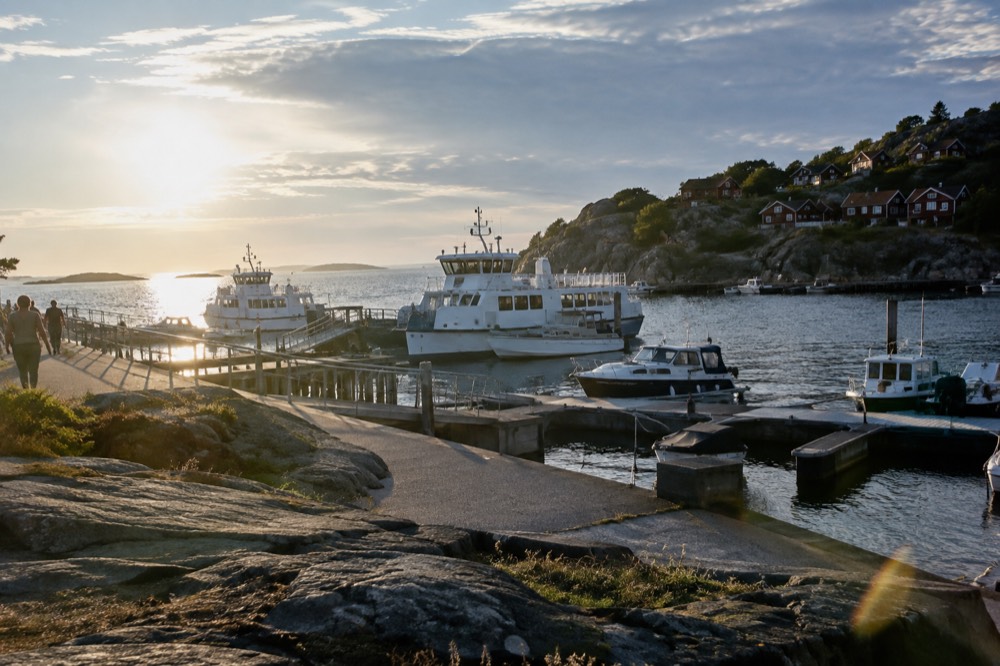
Which half suits you depends on what you want from the day. Swimmers and sunbathers tend to prefer the northern shores, which face west into the Kattegat and hold some of the best sandy and smooth-rock bathing in the whole region. Walkers who want stillness prefer the south. Our overall guide to the Gothenburg archipelago breaks down both halves in one place, and the comparison below is the short version.
| Southern archipelago | Northern archipelago | |
|---|---|---|
| Municipality | City of Gothenburg | Öckerö kommun |
| Departure point | Saltholmen, end of the tram line | Lilla Varholmen, Hisingen, by bus |
| Islands | Styrsö, Brännö, Vrångö, Donsö, Asperö, Köpstadsö | Öckerö, Hönö, Björkö, Fotö, Hälsö, Grötö, Rörö, Hyppeln, Knippla, Kalvsund |
| Cars | Banned, by Göteborgs Stad regulation | No car ban, ferries carry vehicles |
| Character | Car-free villages, footpaths, allotment gardens | Fishing harbours, holiday colonies, west-facing beaches |
| Ticket | Västtrafik Zone A | Västtrafik Zone A, Öckerö listed in the zone |
When Is the Water Warm Enough to Swim in the Northern Archipelago?
Sea temperature at the Vinga lighthouse station, the reference point for the archipelago, peaks at 18.6 C in August, not July, and September water at 16.7 C is warmer than June water at 16.2 C. The coldest month is February at 2.7 C, not January, and the water warms slowly through spring: April averages just 7.1 C. For swimming, August and early September are the best months, which is later than most visitors book.
Those numbers come from SMHI's oceanographic archive at station 35144 Vinga, the lighthouse that stands at the mouth of the archipelago, compiled from over 61,000 quality-controlled hourly observations. The pattern they show is one the whole Swedish west coast shares: the sea runs about six weeks behind the air. Air temperature peaks in July, at a monthly mean of 18.3 C in the city's own normals, but the water does not peak until August. Anyone who books a June trip expecting warm swimming finds 16-degree water, while the visitor who arrives in the first week of September, after the crowds have gone, finds the sea at its second-warmest of the year.
| Month | Mean sea temp at Vinga | What it means for swimming |
|---|---|---|
| May | 11.6 C | Cold, brief dips for the hardened |
| June | 16.2 C | Bearable, but colder than September |
| July | 18.3 C | Good, though not yet the peak |
| August | 18.6 C | The warmest water of the year |
| September | 16.7 C | Warmer than June, and quieter |
| October | 12.8 C | Cold-water swimming territory |
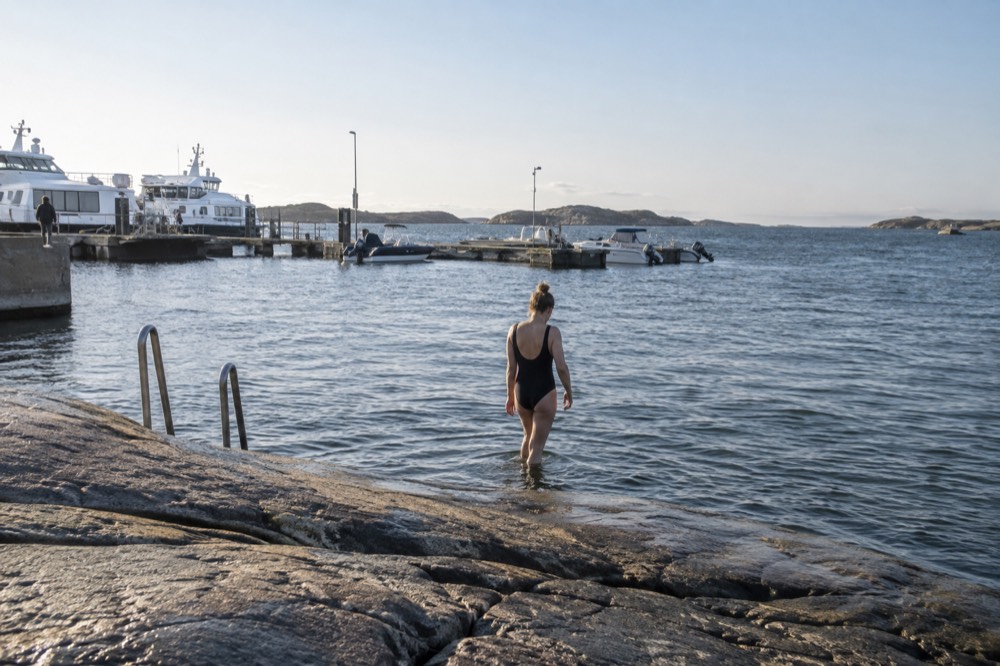
The west-facing shores of the northern islands are where this matters most. Hönö's western edge, Björkö's southern rocks and the beaches around the Hälleviksstrand area on Öckerö all take the full Atlantic swell of the Kattegat, and on an August afternoon with the water at 18.6 C they hold their own against any beach in Sweden. The cold-water tradition is strong here too: winter swimmers use the islands year-round, and February, the coldest water month at 2.7 C, is when the sauna-and-dip crowd is out in force. For the full picture on seasons, read when to visit Gothenburg.
What Should You Do on Öckerö, Hönö and Björkö?
Plan around three anchors: Hönö Klåva harbour for the fish market, smokehouses and shrimp-sandwich lunch, Öckerö town for the church, museum and ferry hub, and Björkö for the quiet western rocks and swimming. A day ticket lets you hop between them by ferry, and the islands are flat enough that walking covers most of each one, though the distances between harbours make the boat the sensible link.
Hönö Klåva is the highlight for most first-time visitors. The harbour walls hold working fishing boats, the fish shop sells the morning's catch, and the smokehouses turn out hot-smoked shrimp that locals eat straight from the paper bag on the quayside. The restaurants around the harbour serve the classic west-coast shrimp sandwich, the räksmörgås, and the quality ceiling is high because the supply chain is about forty metres long. If the fish theme appeals, our guide to Gothenburg seafood, shrimp sandwiches and oyster safaris covers the same tradition on the mainland.
Öckerö, the first ferry stop, is the municipal centre, and it rewards an hour rather than a day: the wooden church, the local heritage museum and the village streets around the harbour make a compact circuit. The island also holds the main ferry interchange, so you will likely pass through it whether you plan to or not. Björkö, further north, is the one to pick if your priority is shoreline: its southern and western faces are polished granite slabs dropping into clear water, and the swimming is among the best in the archipelago on a calm day.
For a faster and louder version of the island circuit, a hot rod tour of the archipelago runs from central Gothenburg in small two-seat roadsters, and the listing shows a 5.0 rating from 7 reviews at from $205 per person for three and a half hours. The operator's live listing has the current schedule and route.
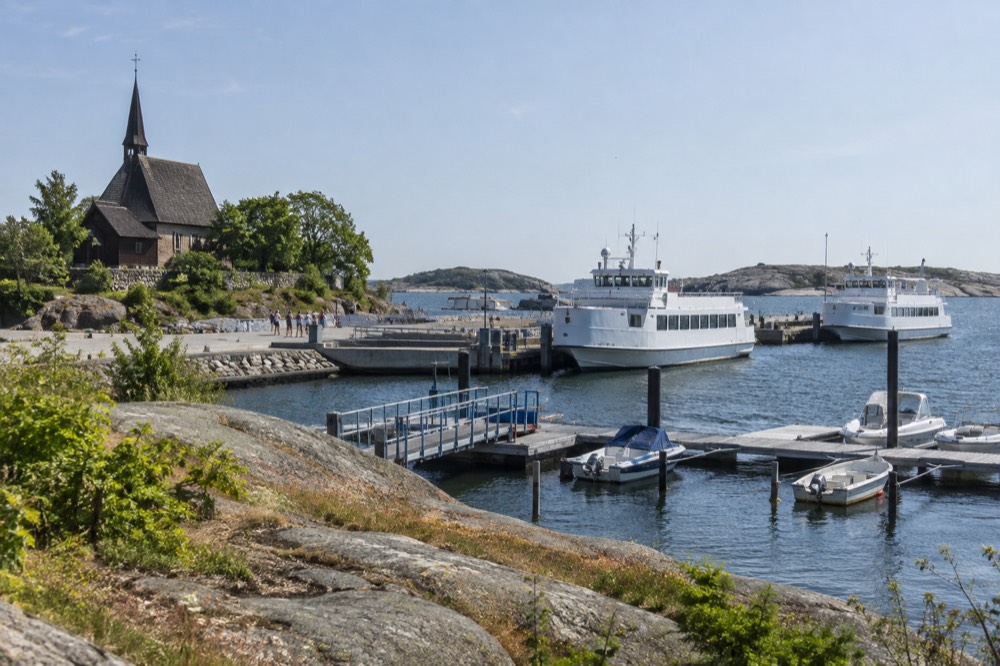
Beyond the three big islands, the chain continues north and west, and the smaller islands are where the archipelago stops performing for visitors and simply exists. Rörö, at the far northwestern end, is farmland and wild shoreline with a year-round community of a few hundred. Grötö and Hyppeln are small, quiet and connected by the same ferry threads. Kalvsund, the smallest of the inhabited islands, has a single village street. None of these need a plan; the day ticket covers whichever boat comes next, and the timetables are on Västtrafik's site.
Where Do You Eat and Stay in the Northern Archipelago?
Eating centres on the harbours, above all Hönö Klåva, where fish shops, smokehouses and harbour restaurants sell the day's catch, including the west-coast shrimp sandwich, within sight of the boats that landed it. Staying overnight means holiday cottages, guesthouses and small hotels concentrated on Hönö and Öckerö, with the summer season filling them from late June to early August, so book ahead for July.
The food culture here is the same one that made Gothenburg a seafood city, transported 40 minutes out to sea. The fish market at Hönö Klåva is the retail end of a fishing fleet that still works these waters, and the smokehouses around it sell hot-smoked shrimp and mackerel to eat on the spot. Restaurant menus across the islands lean on what the boats bring in, and the standard of the simple places is high for the same reason. If the weather turns, and it does, the harbour cafés are the shelter: the SMHI normals for the city show rain on 127 days a year, roughly one day in three, with October the wettest month at 102.9 mm.
Accommodation runs from campsites and cottage colonies to a small number of hotels, nearly all of it on Hönö and Öckerö. The summer-house tradition means that much of the island housing stock turns over to visitors in July, and the same month is when the archipelago is at its liveliest. For a trip that splits time between the islands and the city, our where to stay in Gothenburg guide covers the mainland base, and the three days in Gothenburg itinerary shows how an island day slots into a longer visit.
When Is the Best Season for the Northern Archipelago?
Late June through August is the high season, when the holiday colonies are full, the cafés and ferries run at full frequency and the sea reaches its 18.6 C August peak. September is the insider's month: the water is warmer than June at 16.7 C, the crowds have gone and the light is still long. Winter strips the islands back to the year-round communities, with short days, cold water and the stark beauty of the off-season.
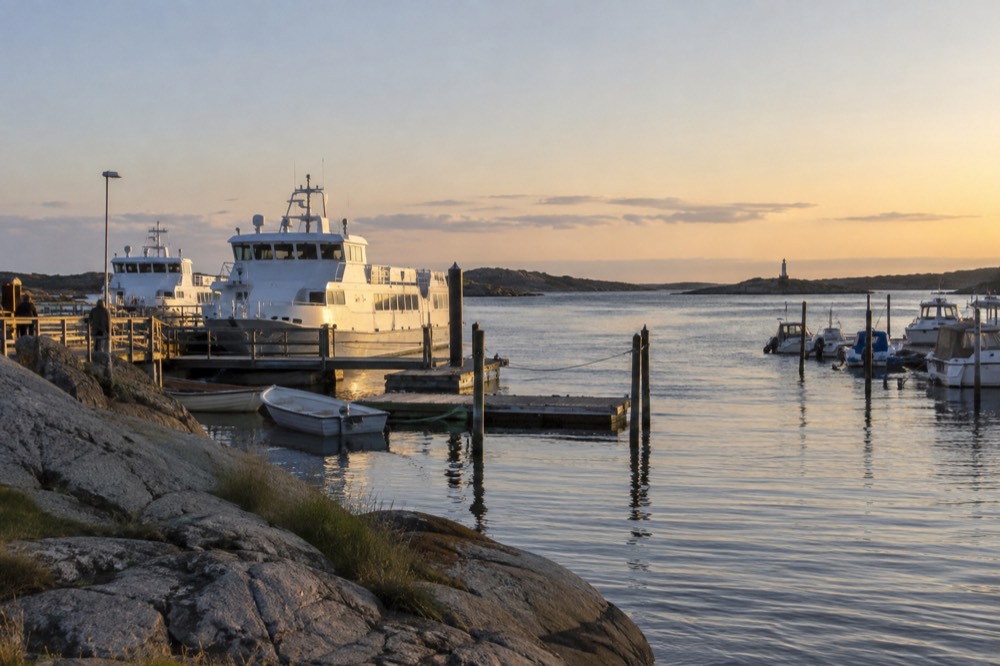
The daylight math shapes everything here. At Gothenburg's latitude of 57.7 degrees north, 21 June gives 18 hours and 6 minutes of daylight, with civil twilight from 02:58 to 23:30 local time, leaving only about three and a half hours of true night. Midsummer evenings on a west-facing Björkö rock, with the sun setting close to 22:17, are the archipelago at its best. The winter mirror is 21 December, with 6 hours and 32 minutes of daylight between sunrise at 08:54 and sunset at 15:26, and that is the season for harbour lights, hot smokehouse shrimp and cold-water swimming for those who practise it.
If your island time is limited to a single excursion, the guided archipelago cruise from central Gothenburg is the efficient option: the listing shows from $44 per person, a 4.4 rating from 1,488 reviews and a running time of two and a half hours, with the operator's live listing carrying current times. It is the tour we point most first-time visitors at, and it pairs naturally with a later ferry day if you want both the commentary and the independence.
One seasonal note that catches visitors out concerns the mainland's biggest attraction rather than the islands. Liseberg runs an irregular calendar: in 2026 the summer season runs 18 April to 20 September, Halloween from 2 October to 1 November, and the Christmas market from 14 November to 23 December, with the park closed in the gaps. If you are building an island-plus-Liseberg day in late September or early November, check the park's own calendar first; the details are in Liseberg rides, tickets and when to go. And for a fuller seasonal breakdown of the whole region, Gothenburg Travel Guide keeps a month-by-month guide alongside this one.
For something with the islands at its centre rather than its backdrop, a sunrise sailing tour with breakfast buffet runs three hours from the city and is priced from $66 per person, with no reviews published yet on the listing. The operator's live listing has current departure times, and a sunrise start fits the June daylight curve better than almost anything else in the city.
Common Questions About the Northern Gothenburg Archipelago
Is the northern archipelago part of Gothenburg?
The northern islands form Öckerö kommun, a municipality of roughly 13,000 residents that is administratively separate from the City of Gothenburg. However, the islands sit inside the Västtrafik fare system, and Västtrafik lists Öckerö in Zone A, the same zone as central Gothenburg, so in travel terms they function as part of the city.
Can you get to Öckerö, Hönö and Björkö on a normal Västtrafik ticket?
Yes. Västtrafik's zone table lists Öckerö in Zone A, so a 24-hour Zone A ticket at 125 kr covers the bus to Lilla Varholmen, the ferry across to the islands and onward travel once you are there. The adult single for one zone is 38 kr.
Are the northern islands car-free like the southern ones?
No. The car ban applies to the southern archipelago, where Göteborgs Stad's own study states the islands are "fredade från biltrafik", protected from car traffic. The northern islands have no such ban: the ferries carry vehicles and the islands have ordinary roads.
Which is better, the northern or southern Gothenburg archipelago?
It depends on what you want. The north has bigger harbours, a working fishing economy, west-facing swimming shores and the fish market at Hönö Klåva. The south is car-free, quieter and better for walking. Both are in Zone A on the same day ticket, so many visitors do one of each.
When is the sea warm enough for swimming?
Sea temperature at the Vinga station peaks at 18.6 C in August, and September at 16.7 C is warmer than June at 16.2 C. February is the coldest month at 2.7 C. August and early September are the best swimming months.
How long does it take to get to the northern archipelago from central Gothenburg?
Count on roughly half an hour by bus from central Gothenburg to the Lilla Varholmen ferry terminal on Hisingen, then a short ferry crossing to the first island. The whole journey runs on one Västtrafik ticket, and the boats then hop north through the island chain.