The Bohuslän Coast from Gothenburg: Smögen, Fjällbacka and the Granite Islands
North of Gothenburg the Swedish west coast turns into Bohuslän: bare granite, fishing villages and salt-stained wooden houses. This is a day trip, not part of the city, and here is how to plan it.
Short answer
The Bohuslän coast, including Smögen and Fjällbacka, is a day-trip destination north of Gothenburg, reached by car, bus or boat. It is not the same as the Gothenburg southern archipelago, which is car-free and inside the city's own Västtrafik zone. The sea is warmest in August, not July.
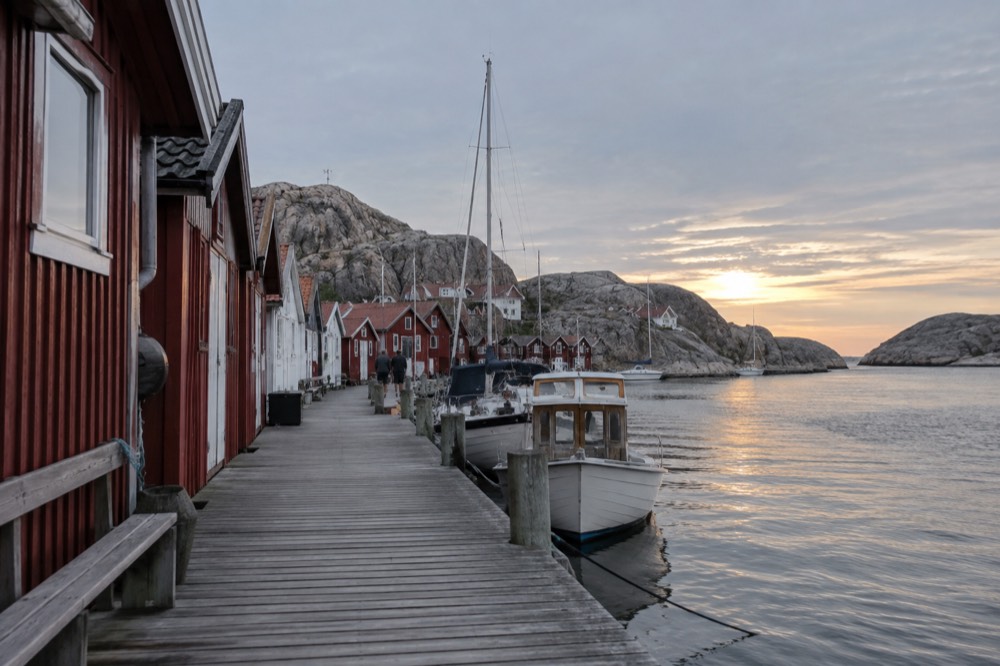
Granite is the whole story of Bohuslän. The Swedish west coast north of Gothenburg is a single slab of pink and grey rock, scraped bare by ice and then drowned by the sea, so that today it shatters into thousands of low islands, skerries and inlets. On the islands that stayed above water, people built fishing villages: red boathouses, white timber cottages, harbours that smell of salt, diesel and boiled shrimp. Smögen and Fjällbacka are the two names most visitors arrive with, and both sit on this coast, roughly two hours of travel from Gothenburg by road.
One distinction matters before anything else, because almost every first-time visitor gets it wrong. The Bohuslän coast is a day trip from Gothenburg. The southern archipelago, the islands of Styrsö, Brännö, Vrångö and Donsö, is not: those islands are areas of Gothenburg itself, car-free, and reached by tram and ferry from Saltholmen on an ordinary Västtrafik ticket. Bohuslän begins where the city's own zone ends, and it is a different proposition entirely, with a car, a long bus ride or a boat to get there. This page covers the day trip. For the city islands, read the Gothenburg archipelago guide and the day trips from Gothenburg overview.
What Is the Bohuslän Coast and Why Do Gothenburg Visitors Go?
The Bohuslän coast is the stretch of Swedish west coast north of Gothenburg, a province of about a thousand granite islands and old fishing harbours, of which Smögen, Fjällbacka, Lysekil, Marstrand, Grebbestad and Kungshamn are the best-known names. Visitors go for the landscape: bare pink rock, wooden boathouses, shrimp landed at the quay and swimming off sun-warmed granite. It is a day trip from Gothenburg, not part of the city.
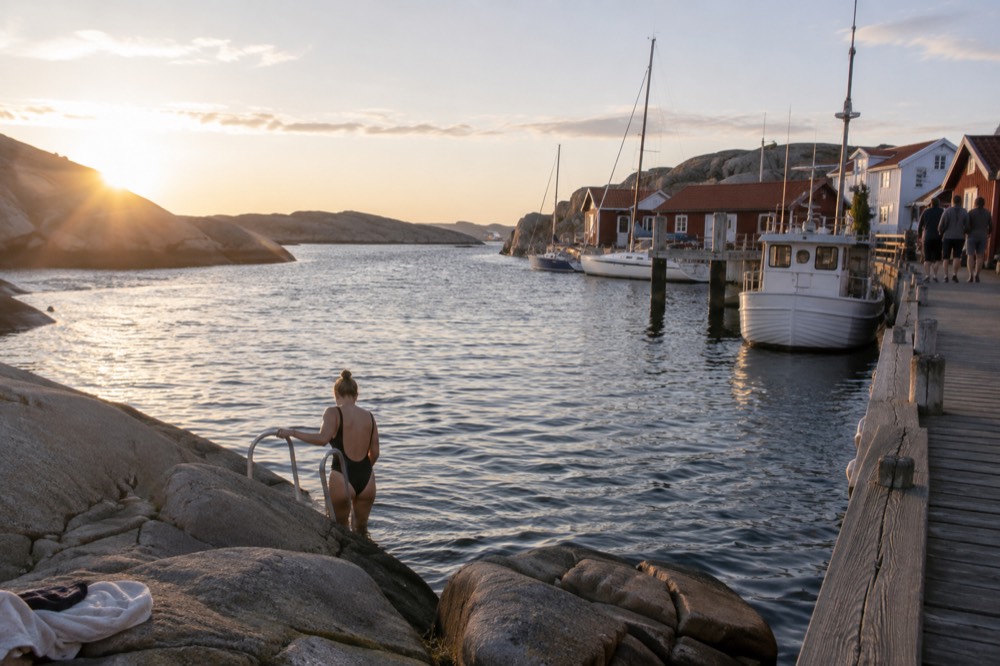
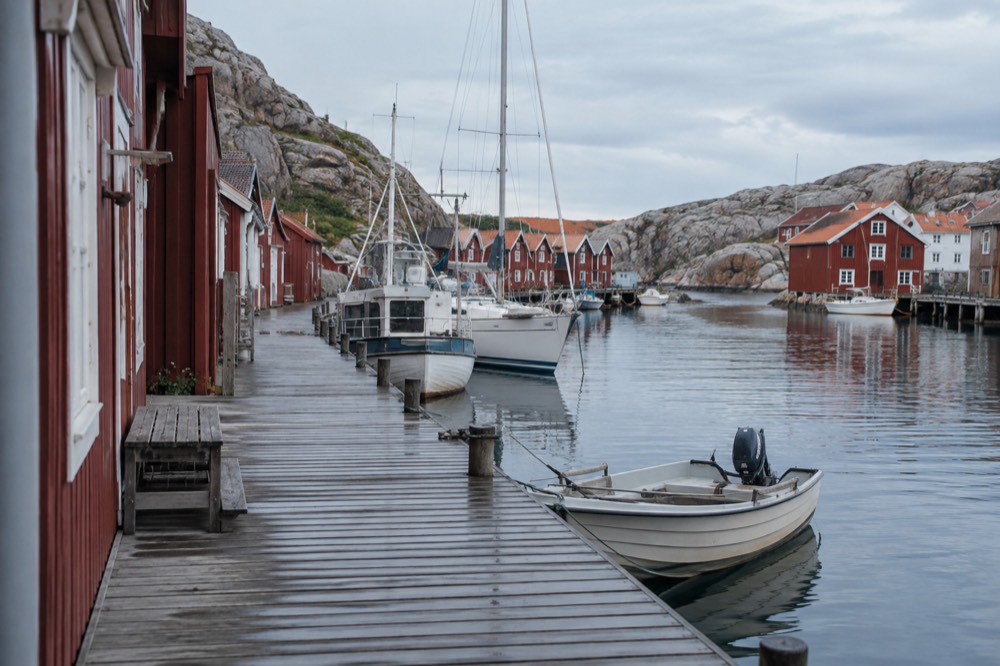
The coast has a working identity, not a museum one. Boats still land shrimp and lobster here, and the harbours double as the social centre of each village. In Smögen that means the long wooden pier, Smittingen, lined on one side by shops and on the other by the water, with a swimming ladder every hundred metres. In Fjällbacka it means the harbour below steep rock, and the walk up to the Kungsklyftan gorge that the writer Camilla Läckberg, who grew up here, made famous in her crime novels.
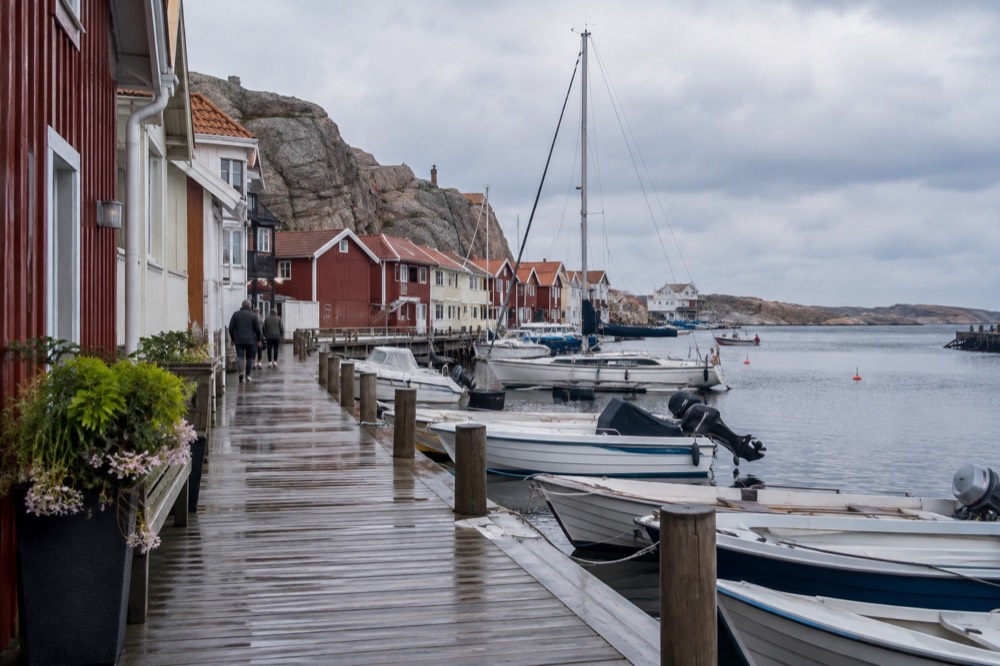
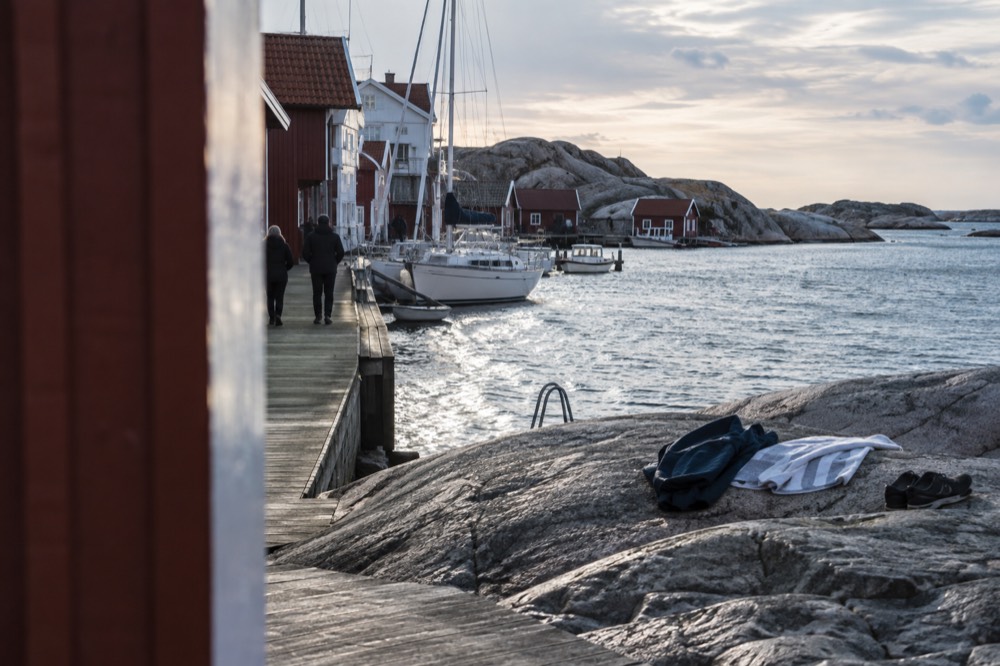
The granite itself is the attraction as much as anything built on it. The rock was polished by ice sheets and sits in great smooth shelves at the waterline, which is why swimming on this coast means walking down warm rock rather than sand. In summer the stone holds the day's heat into the evening.
How Do You Get from Gothenburg to Smögen and Fjällbacka?
You get to the Bohuslän coast from Gothenburg by car, by long-distance bus, or by boat tour, and the coast is far enough north that it is a genuine day trip rather than a half-day excursion. Smögen and Fjällbacka are the classic targets. There is no tram, no Västtrafik ferry and no city ticket that reaches them: once you leave Gothenburg's own zone, the ordinary Västtrafik ticket stops being the answer.
By car, the route runs up the E6 motorway and then onto smaller coast roads, and the drive is part of the point: the road threads between bare rock and small harbours the whole way once you leave the motorway. By bus, regional services run up the coast from Gothenburg, and they serve the main towns, though connections to the smallest villages are thin, so check the timetable before committing to a stop. A third option is to let someone else drive the boat: several operators run guided trips out of Gothenburg that head for open water and the island world, and the Marstrand seafood market sailing trip is the one that combines the coast with the food it is famous for.
If you want the water experience without leaving the city first, the sightseeing fleet in Gothenburg itself is strong, and the amphibious bus is the most-reviewed product on the whole roster:
The logic of pairing these is simple. The amphibious bus tour shows you Gothenburg from land and then drives into the harbour, the guided archipelago cruise takes you out among the city's own islands, and the canal cruise covers the moat and the river inside the old town. Doing one of these before your Bohuslän day gives you the contrast the coast depends on: city granite versus wild granite.
Is the Bohuslän Coast the Same as the Gothenburg Archipelago?
No. The Gothenburg southern archipelago, meaning Styrsö, Brännö, Vrångö, Donsö, Asperö and Köpstadsö, is part of the City of Gothenburg: car-free islands inside Västtrafik zone A, reached by tram to Saltholmen and then a ferry covered by the same ordinary ticket. The Bohuslän coast is a separate province north of the city, with cars, its own towns and its own transport, and it is a day trip.
Västtrafik's own material is explicit about the city side of the line: the operator's ticket pages state that an ordinary ticket carries you on the same ticket all the way from the centre out onto the sea, and the islands are reached with a zone A ticket. The city's own study of the southern archipelago states that the islands are protected from car traffic, with only taxi, transport service and emergency vehicles on the roads. A 24-hour zone A ticket at 125 kr covers tram and ferry and every island in the southern archipelago.
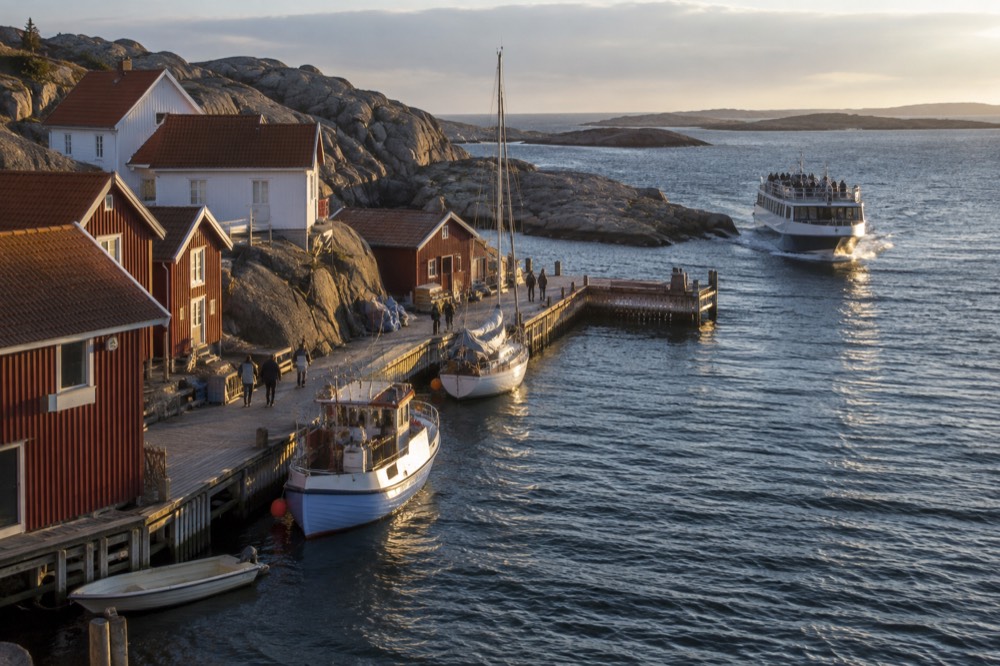
Bohuslän is the opposite arrangement. Cars are not just allowed, they are the default way people move along it, and the villages are strung out along roads rather than ferry lines. That is the honest test for your itinerary: if a place is reached by tram and a Västtrafik ferry, it is the city archipelago. If you need a car, a regional bus or a private boat, it is Bohuslän, or one of the other day trips from Gothenburg.
What Are Smögen, Fjällbacka and the Granite Islands Each Known For?
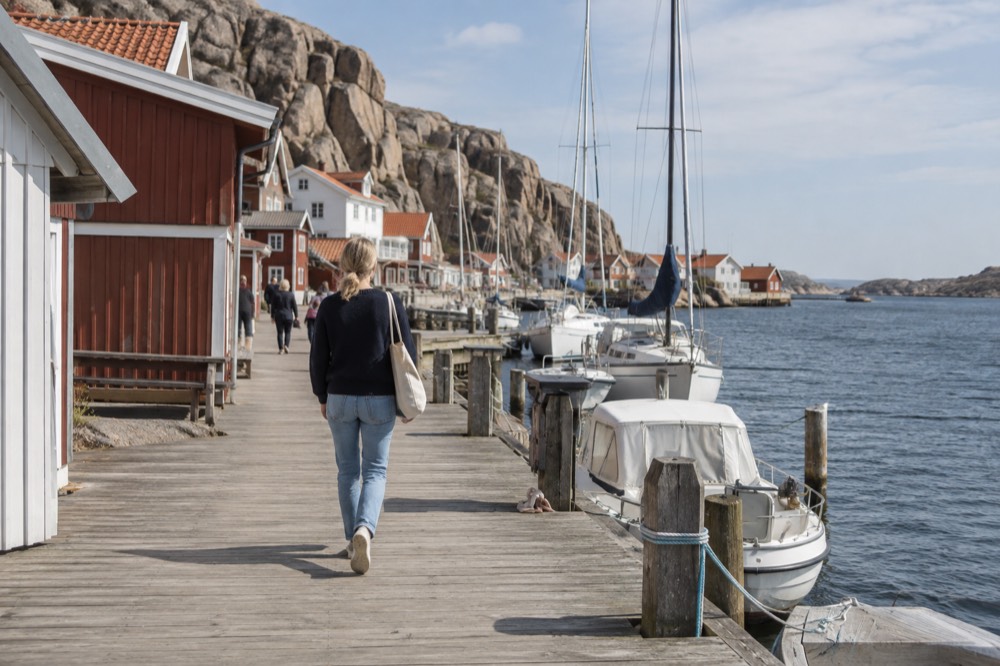
Smögen is known for its long wooden pier and harbour-front boardwalk, one of the most photographed stretches of the west coast. Fjällbacka is known for its steep granite setting and its association with the crime novelist Camilla Läckberg. The smaller granite islands between them, reached by short ferry hops, are known for almost nothing happening: rocks, swimming, summer houses and a general absence of anything faster than a bicycle.
Smögen's pier is the reason the village is on the map. It is a working harbour with a tourist spine, and in July it is busy enough that the shops and the ice cream queues run the full length of the boards. The swimming is off the rocks at the harbour mouth, and the water is the clear, brackish Kattegat that the whole coast shares.
Fjällbacka is tighter and steeper. The village sits under Vetteberget, the big rock that dominates the harbour, and the walk up through the Kungsklyftan gorge to the top is the standard visitor move. Läckberg's novels are set in a lightly fictionalised version of the village, and the tourist office leans into it. From Fjällbacka's harbour, boat trips run out to the islands of the outer archipelago, including Väderöarna, which are as remote as this coast gets.
Between and around the two, the coast offers a string of alternatives. Grebbestad is the shrimp capital, where the boats land the catch that ends up on räkmacka, the open shrimp sandwich, all over Sweden. Lysekil is the biggest town on the coast, with a stone church and an aquarium. Kungshamn and Smögen share a municipality and a fish-canning heritage. Marstrand, the island fortress town, sits at the southern end of the province and is close enough to Gothenburg to be its own half-day trip, covered in the Marstrand island fortress guide.
A quick comparison of the main targets:
| Place | Known for | Character | Best for |
|---|---|---|---|
| Smögen | The long pier and boardwalk | Busy in July, photogenic | First visit, families, swimming |
| Fjällbacka | Steep rock, Kungsklyftan gorge, Läckberg novels | Compact, dramatic | Views, walking, a bookish detour |
| Grebbestad | Shrimp and oyster boats | Working harbour | Food, seafood lunches |
| Lysekil | Stone town and aquarium | Largest town on the coast | Bad-weather day, base for ferries |
| Marstrand | Car-free island and Carlsten Fortress | Historic, easy from Gothenburg | A shorter day trip |
When Is the Best Time to Visit the Bohuslän Coast from Gothenburg?
The sea on this coast peaks at 18.6 C in August, not July, and September water at 16.7 C is warmer than June water at 16.2 C, according to SMHI's quality-controlled observations at the Vinga lighthouse station. That makes late August and early September the best swimming window. Rain-wise, October is the wettest month of the year at 102.9 mm and April the driest at 51.3 mm, so spring is the dry shoulder and autumn the wet one.
The sea runs about six weeks behind the air. Air temperature in Gothenburg peaks in July at a mean of 18.3 C, but the water does not catch up until August, and it stays swimmable well into September, which is the opposite of what most visitors book. February, not January, is the coldest month in the water, at a mean of 2.7 C, with a recorded low of -1.2 C, legitimately below freezing because brackish Kattegat water does not freeze at zero.
The rain data comes from SMHI's 1991-2020 normals for the Göteborg A station, and it kills a cliché: Gothenburg is often called Sweden's rainiest city, but SMHI's own normals page says the national precipitation maxima are the western highlands and the mountains, not the city. The coast gets 912 mm a year across 127 days with at least a millimetre, about one day in three. Wet, yes. Permanent drizzle, no.
| Month | Mean sea temp at Vinga | Notes for the coast |
|---|---|---|
| June | 16.2 C | Long days, cold-ish water |
| July | 18.3 C | Warmest air, busiest villages |
| August | 18.6 C | Peak sea temperature |
| September | 16.7 C | Warmer water than June, quiet quays |
| October | 12.8 C | Wettest month of the year |
| February | 2.7 C | Coldest water of the year |
How Do You Plan a Bohuslän Day Trip from Gothenburg?
A realistic plan is one target per day: pick a single harbour, Smögen or Fjällbacka, travel up in the morning, spend the middle of the day on the pier or the rocks, and travel back after dinner. Trying to string three villages together by bus burns the day in transit. With a car you can add one stop, but the coast rewards doing one place slowly over seeing several from a car park.
The morning matters. The pier at Smögen is calm before late morning and crowded by early afternoon in high summer, so arriving early buys you the photographs and the first swim before the coaches. The same is true in reverse at Fjällbacka, where the gorge walk up Vetteberget is narrow enough that you want it before or after the peak.
Food is not an afterthought on this coast. The shrimp sandwich is the regional dish, and the harbours are where it is best, because the boats that land the shrimp are tied up behind the tables. If you want the full food-and-coast treatment, the sailing trips that combine the water crossing with the seafood are worth a look, and the wildlife park at Nordens Ark, further north on the coast, gives families a second stop that travels well with children:
For the water crossing itself, the Marstrand sailings are the closest to Gothenburg and the easiest to combine with a half-day on the coast:
Where Does Bohuslän Fit Among Gothenburg's Other Day Trips?
Bohuslän is the classic coastal day trip from Gothenburg, but the city has a full ring of alternatives: Marstrand with its fortress island, Gunnebo house and gardens, the Trollhättan locks on the Göta canal, Läckö castle on Lake Vänern, Tjolöholm castle and Varberg on the Halland coast. Bohuslän is the pick for granite, swimming and seafood; the others split the history, engineering and countryside briefs between them.
The honest ranking is by what you want from the day. For coast and swimming, Bohuslän wins, with Marstrand as the shorter, easier version. For a grand house and gardens, Gunnebo house and gardens is the closest serious option. For industrial history and locks, Trollhättan and the Göta canal locks is the engineering day out. For a castle on a lake, Läckö castle and Lake Vänern is the long trip. Varberg, down the coast to the south, is covered in the Varberg and the Halland coast guide.
| Day trip | Direction | Theme | Suits |
|---|---|---|---|
| Bohuslän (Smögen, Fjällbacka) | North | Granite, harbours, swimming | Coast days, photographers |
| Marstrand | North, closer | Fortress island, sailing town | Shorter coastal day |
| Gunnebo | South-east | 18th-century house and gardens | History, gardens |
| Trollhättan | North-east | Canal locks and hydro history | Engineering, families |
| Läckö and Vänern | North-east | Castle and Sweden's biggest lake | A long day, castles |
| Varberg | South | Halland coast and fortress | Beaches, fortress |
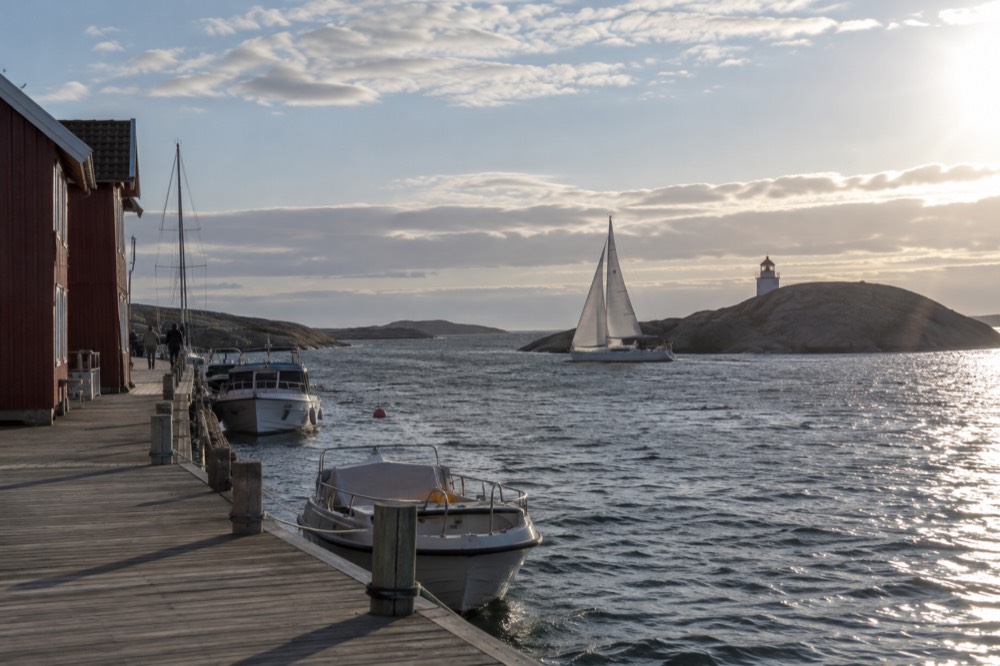
Season matters as much as direction. The best time to visit Gothenburg question has the same answer as the coast question: late August gives you the warmest water of the year and thinner crowds than July. In winter the coast is a different, starker trip, and the villages partly shut, so check what is open before you drive up. If your dates are fixed by Christmas markets instead, the [Gothenburg Christmas market guide](/guides/gothenburg-christmas-market/) is the better use of a short winter day.
What Should You Pack for the Bohuslän Coast?
Pack for rock, wind and sudden water: shoes with grip that you do not mind wetting, a windproof layer even in July, swimwear and a towel, and a hat you will not mourn. The swimming is off granite, not sand, so the towel doubles as a seat pad and the shoes matter more than the swimsuit. Sunscreen belongs in the bag even on grey days, because the light off the water is strong when it comes.
The wind is the variable that surprises people. The coast faces open water, and a warm still day in the city can be a blowing one on the pier, so the layer you bring should block wind rather than insulate. The rock holds heat in the evening, which is why the late swim is better than it sounds on paper, and why the September water data, warmer than June, is worth taking seriously.
Before you leave the city, one last contrast is worth building into the plan. Gothenburg's own amphibious bus tour is the most-reviewed sightseeing product on this site's roster, rated from thousands of reviews on the listing, and it shows you the harbour the Bohuslän boats leave from. Doing it on a different day from your coast trip keeps both halves of the west coast in proportion:
And if the coast day leaves you wanting more of the city's own water, the trio below covers the harbour, the archipelago and the canal. Gothenburg Travel Guide covers all of it, including the getting around guide for the tram-and-ferry logistics the city islands depend on.
Common Questions About the Bohuslän Coast from Gothenburg
Can you do the Bohuslän coast as a day trip from Gothenburg?
Yes. Smögen and Fjällbacka are realistic day-trip targets from Gothenburg by car or regional bus, with the travel taking up a real part of the day. Pick one harbour rather than trying to tour several.
Is the Bohuslän coast the same as the Gothenburg archipelago?
No. The Gothenburg southern archipelago is part of the City of Gothenburg, car-free and covered by an ordinary Västtrafik zone A ticket via tram and ferry from Saltholmen. Bohuslän is a separate province north of the city, with cars and its own transport, and it is a day trip.
What is the sea temperature on the Bohuslän coast?
SMHI's quality-controlled observations at Vinga put the mean sea temperature at 18.6 C in August, the annual peak, with September at 16.7 C warmer than June at 16.2 C. February is the coldest month at 2.7 C.
Do you need a car for the Bohuslän coast?
A car is the easiest way to move between villages, but regional buses serve the main towns and boat tours cover the water side. If you travel by bus, plan around one destination and check return timetables before you commit.
When is the best month to visit the Bohuslän coast?
Late August and early September. The sea is at its warmest in August and stays warmer than June well into September, while the July crowds have gone. April is the driest month on the weather record and October the wettest.
What is Smögen known for?
Its long wooden pier and harbour boardwalk, one of the most photographed stretches of the Swedish west coast, plus swimming off the granite at the harbour mouth and a busy summer scene of shops and food along the boards.