Gunnebo House and Gardens: The Neoclassical Day Trip from Gothenburg
Gunnebo House and Gardens sits just south of the city in Mölndal, close enough to reach on an ordinary Västtrafik ticket, and it is the most complete neoclassical estate experience in the Gothenburg area.
Short answer
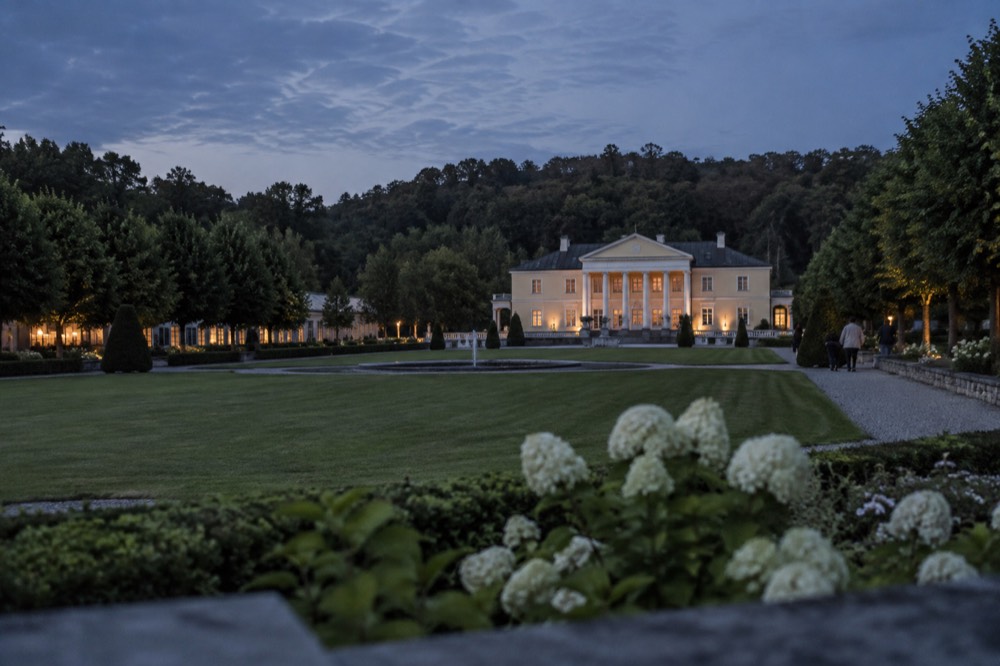
Gunnebo is an 18th-century neoclassical country house with restored gardens, a kitchen garden, farm animals and a café, reached from central Gothenburg by tram and bus inside Västtrafik Zone A. Allow half a day, and check the estate's own site for tour times and opening hours before you go.
Gunnebo House and Gardens is the closest thing Gothenburg has to a stately home, and it is barely outside the city. The estate sits in Mölndal, the municipality immediately south of Gothenburg, and Mölndal is inside Västtrafik's Zone A, the same fare zone as the trams in the city centre. That single fact changes the character of the trip: this is not a drive or a booked excursion, it is a tram ride and a short bus hop on a ticket you may already be holding.
The estate pairs a neoclassical house with a set of restored formal gardens, a kitchen garden, woodland walks and a working farm corner with animals, plus a café in the old estate buildings. It is the kind of place that works equally well for a gardener, a family with small children, or anyone who has done the city's museums and wants a green half day. This guide covers what the estate is, how to get there on public transport, what you can see, and how it fits alongside the other day trips from Gothenburg.
What Is Gunnebo House and Gardens?
Gunnebo is a neoclassical country house and estate in Mölndal, just south of Gothenburg, built as a summer retreat for a wealthy Gothenburg merchant family and now run as a heritage site with restored gardens, a kitchen garden, farm animals, woodland walks and a café. The house is one of the finest small neoclassical buildings in western Sweden, and the estate is small enough to see in half a day.
The house belongs to a specific moment in Gothenburg's history. The city's wealth in the 18th century came from trade, and the trading families built summer houses in the green hills south of town where they could escape the crowded wooden city inside the moat. Gunnebo is the survivor of that tradition, and the reason it stands out is completeness: the house, the kitchen garden, the formal grounds and the surrounding woodland were designed as one composition, and enough of that composition has been restored that you can read the original idea as you walk around.
The estate's own programme leans on that unity. Guided tours of the house interior run on a seasonal schedule, the kitchen garden is grown using historical methods, and the farm animals are there because the estate was designed to be partly self-sufficient. Göteborgs Stad, which owns the site, treats it as a working heritage landscape rather than a static museum, which is why the place feels different in each season: bulbs and bare topiary in spring, full flower borders in high summer, apples and root vegetables in autumn.
One practical note before anything else: opening hours, tour times and admission for the house interior change with the season, and the estate publishes its current calendar on its own site. The grounds and café generally keep longer hours than the house tours, so a visit outside tour times is still a real visit, but if seeing the interior is the point of your trip, check the tour times before you set out rather than after you arrive.
How Do You Get to Gunnebo from Gothenburg?
Gunnebo is reached from central Gothenburg by tram to Mölndal and then a short bus ride or walk, all inside Västtrafik Zone A. A single Zone A ticket costs 38 kr and a 24-hour Zone A ticket costs 125 kr, and the same ticket covers the tram, the bus and the walk-in entrance. There is no separate transport fare for the estate itself.
The transport fact that matters most is the zone. Västtrafik's fare table lists Mölndal inside Zone A alongside Göteborg, Partille and Öckerö, which means the same ticket that carried you on a tram along Avenyn carries you to the edge of the estate. A visitor holding a 24-hour Zone A ticket at 125 kr can reach Gunnebo, come back, and still ride trams and ferries the same day, including the archipelago boats from Saltholmen, which Västtrafik's own network map shows inside the same zone.
| Ticket | Price | What it covers for a Gunnebo trip |
|---|---|---|
| Single, 1 zone (adult) | 38 kr | One tram or bus journey, valid 90 minutes including changes |
| Single, youth (7-19) | 29 kr | Same validity, youth fare |
| 24-hour, Zone A | 125 kr | Unlimited trams, buses and archipelago ferries for 24 hours, including Mölndal |
| 30-day, Zone A adult | 445 kr during the state subsidy | Only worth it for a long stay; the subsidy halves monthly tickets through year end |
The fare details come from Västtrafik's own ticket pages. Note the last row: a temporary state subsidy currently halves every 30-day period ticket, so a Zone A adult monthly is 445 kr instead of 890 kr, but that discount does not apply to the 24-hour and 72-hour tickets visitors actually buy. Do not plan around transport being half price; only the monthly tickets are.
In practice the journey is simple. Trams run south from the city centre toward Mölndal, and from Mölndal's transport hub local buses serve the Gunnebo area, with a walk from the stop to the estate entrance. Västtrafik's journey planner in the To Go app gives the exact combination for your departure time, and the app sells the same tickets at the same prices as the shop. If you are staying anywhere on the tram spine, count on the whole journey taking well under an hour each way, which is what makes Gunnebo viable as a morning trip with an afternoon still left in the city.
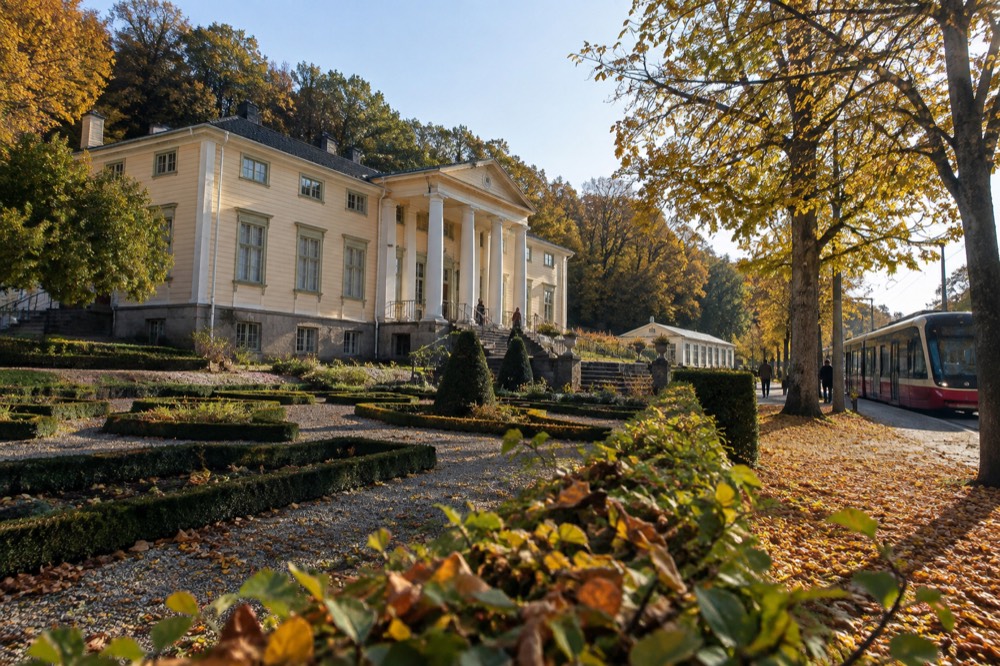
For drivers, the estate has its own car park, but the tram-and-bus route is the more Gothenburg way to do it, and it connects with everything else in this guide's advice on getting around Gothenburg. Cyclists can reach the estate on a mix of city paths and quieter Mölndal roads; the terrain south of the city is hilly, so allow more time than the distance suggests.
If a half day at Gunnebo sounds like the right pace but you would rather someone else handle the logistics, there are guided options in the other direction too, from the city itself out onto the water:
What Does a Visit Cost, and When Is Gunnebo Open?
The estate's grounds and café are generally open year round with free or low-cost access, while the house interior is seen on guided tours that are ticketed and run on a seasonal calendar. Gunnebo does not publish a single fixed price list that applies in every month, so treat the estate's own site as the source of truth for the day you plan to visit, and expect summer to offer the fullest programme.
The honest answer about prices is that they move with the season. High summer brings the fullest tour schedule, the kitchen garden at peak production, and the largest café offering; winter reduces the estate to its bones, with shorter café hours and far fewer, sometimes no, interior tours. This is not a place where you turn up in February expecting the full experience. The pattern matches the wider rhythm of the region: SMHI's 1991-2020 normals for station Göteborg A show April as the driest month of the year at 51.3 mm of rain, while October is the wettest at 102.9 mm, so spring and early summer are the statistically kindest months for a garden visit.
| Season | What Gunnebo offers | Weather context (SMHI 1991-2020, Göteborg A) |
|---|---|---|
| Spring (Apr-May) | Bulbs, blossom, first kitchen-garden growth, tours resume | Driest stretch of the year; April 51.3 mm, May 54.3 mm |
| Summer (Jun-Aug) | Full programme: house tours, gardens at peak, café at full service | Warmest months; July mean 18.3 C, but 81.3 mm of rain |
| Autumn (Sep-Oct) | Harvest in the kitchen garden, autumn colour, fewer tours | Wettest stretch; October 102.9 mm across 12.6 wet days |
| Winter (Nov-Mar) | Woodland walks, café on reduced hours, minimal touring | Cold and dark; December daylight is 6 h 32 m at the solstice |
The daylight row is worth pausing on. Gothenburg sits far enough north that the swing between the solstices is enormous: 18 h 06 m of daylight on 21 June against 6 h 32 m on 21 December. A garden estate is a daylight-dependent attraction, so a November visit and a June visit are effectively two different products. Our guide to the best time to visit Gothenburg works through this seasonal swing for the whole city.
One cost that does not exist here: there is no city card covering Gunnebo. The old Göteborg City Card no longer exists under that name, and the Go City product that replaced it is an attractions pass sold on its own terms, so do not buy a pass expecting it to include a country house in Mölndal. Our page on the Gothenburg city card and whether it is worth it explains what the current pass actually covers.
If your day trip appetite is for animals rather than architecture, Nordens Ark is the region's other big draw in that direction, a wildlife park on the Bohuslän coast working with endangered species. Entry tickets can be booked ahead:
What Can You Actually See and Do at Gunnebo?
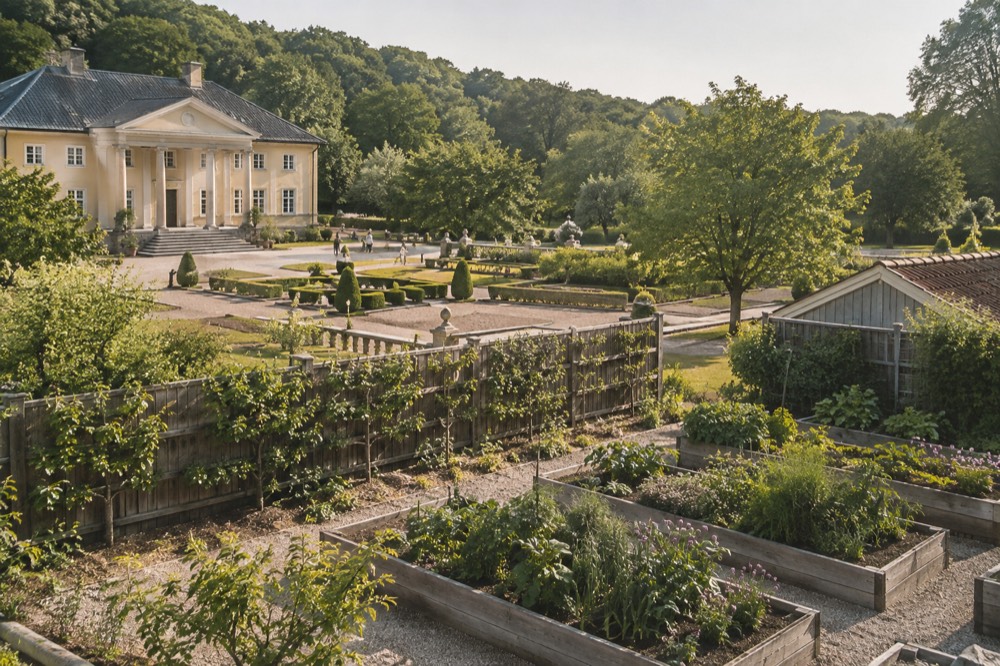
A visit splits into four parts: the house interior on a guided tour, the formal gardens and terraces in front of it, the kitchen garden and greenhouse area to the side, and the woodland and lake walks beyond, plus a café and shop in the old estate buildings. Families can add the farm animals, and the whole circuit is walkable at a relaxed pace in two to three hours.
The house is the anchor. The interior is furnished in the style of the period, and the guided tours are where the building earns its reputation, because the proportions and detailing of the rooms are the point of neoclassicism and a guide explains what you are looking at. Tour capacity is limited, which is another reason to check times in advance: the estate's own calendar, not this page, is where the current schedule lives.
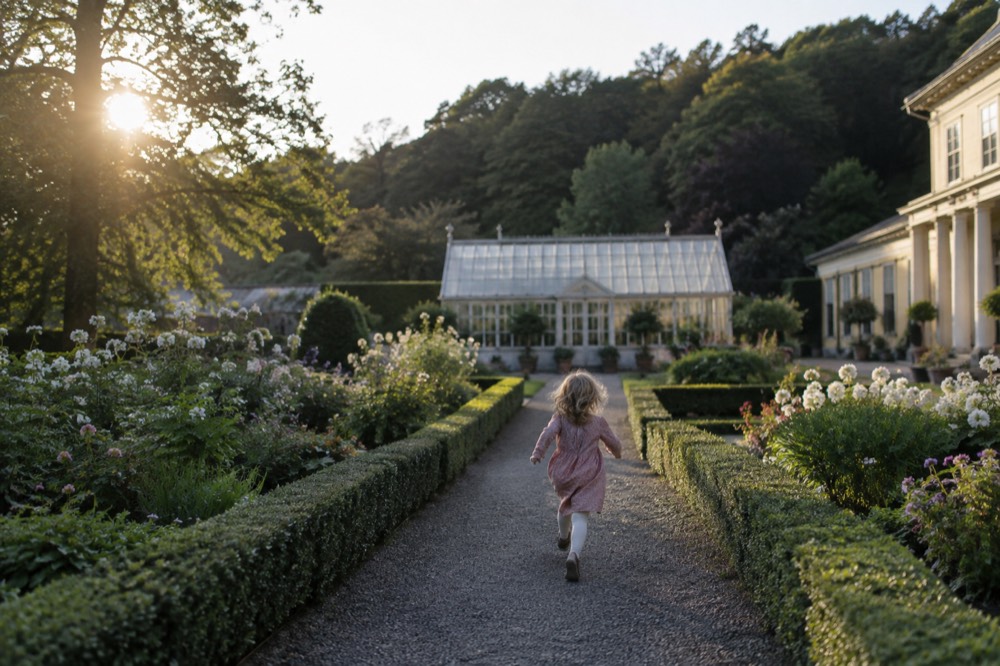
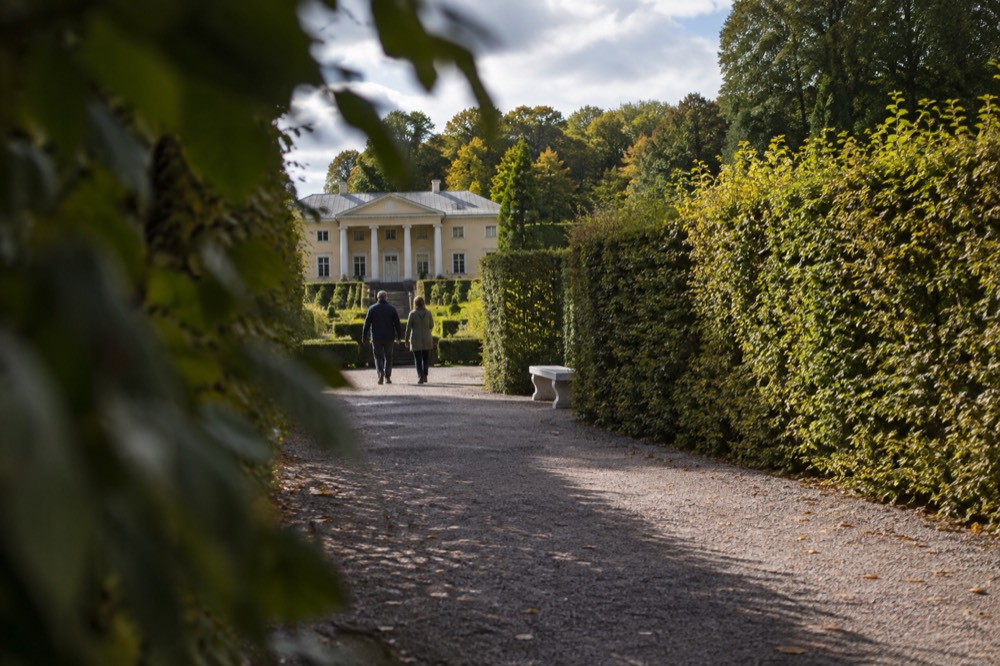
The gardens are the part most visitors remember. The formal layout in front of the house uses clipped hedges, gravel walks and framed views, in the tradition of English landscape design filtered through Swedish conditions. Behind the formality sits the kitchen garden, which is grown along historical lines and doubles as the source for the café kitchen, so the menu and the beds are connected in a way few attractions manage. In late summer the beds are at their most photogenic, and in autumn the harvest is visibly being lifted.
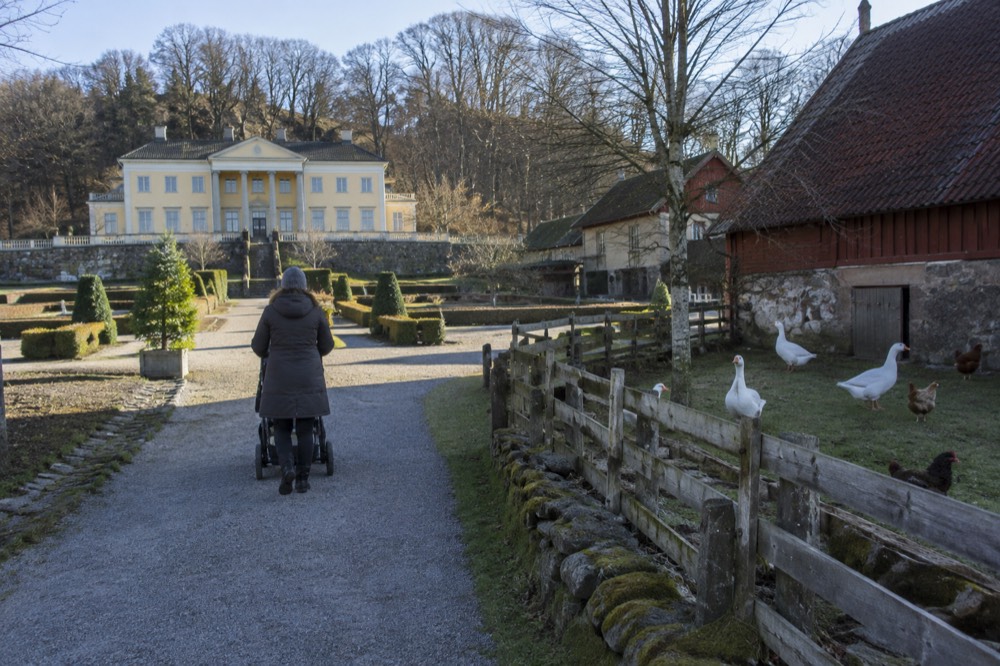
For children, the farm animals are the draw. The estate keeps a small collection of traditional breeds, and the combination of animals, open grass and a café makes Gunnebo one of the easier half days out with small children in the Gothenburg area. The animals are close to the café buildings, so a visit can alternate between petting, coffee and a run around without any long walks in between.
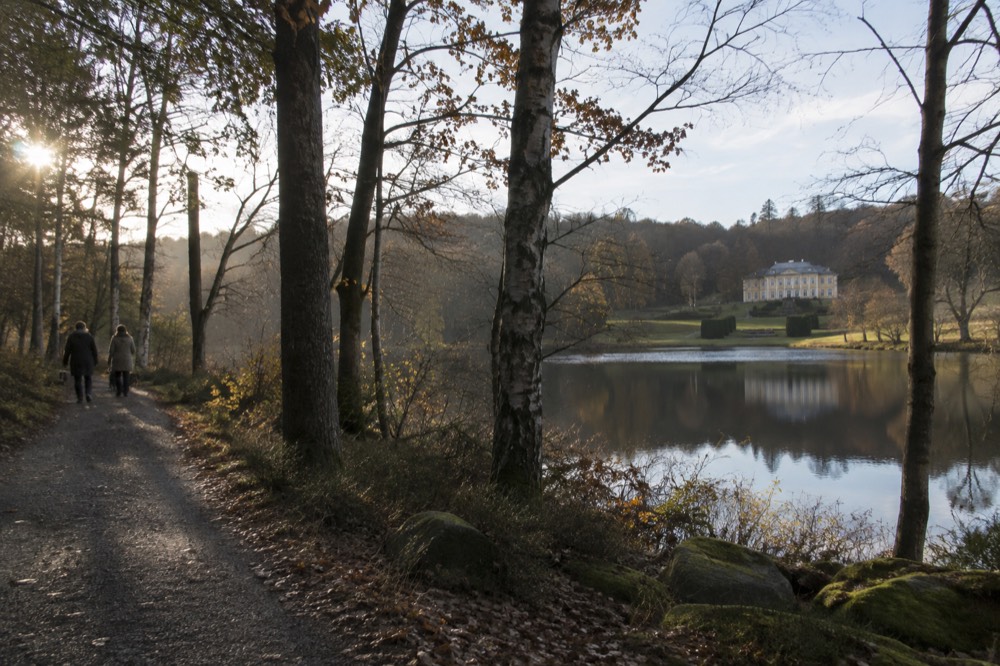
The woodland walks extend the visit for anyone who wants them. The estate sits in hilly, green country, and the paths around the grounds connect to the broader network of trails south of the city, so runners and dog walkers share the outer edges of the site. If you are pairing a Gunnebo morning with an afternoon back in town, keep the estate visit to the house, the gardens and lunch, and save the long trails for another day.
Back in the city, the amphibious bus tour is one way to see the centre from a different angle, driving past the main sights and then splashing straight into the river for the harbour leg. It is a good pairing with a quiet morning at Gunnebo: one half of the day green and slow, the other half a compressed city overview.
Is Gunnebo Worth the Trip Compared with Other Day Trips?
Gunnebo is the best day trip from Gothenburg for gardens, architecture and a relaxed half day with children, and it is the easiest to reach on an ordinary tram ticket. It is not the right choice if you want sea, islands or drama: for that, the archipelago, Marstrand or the Bohuslän coast do more, and they need more time.
The honest comparison is by what you want from the day. Gunnebo's strengths are proximity, gentleness and craft: it costs little to reach, it never feels rushed, and the restoration work on the house and gardens is genuinely expert. Its limitation is scale. This is a half-day estate, not a full-day region, and a visitor who spends a whole day here will have exhausted it.
| Day trip | Best for | Travel effort from Gothenburg |
|---|---|---|
| Gunnebo House and Gardens | Gardens, neoclassical architecture, families, half a day | Tram and bus, Zone A, under an hour |
| Marstrand | Island fortress, sailing town, seafood | Train or bus plus ferry, half to full day |
| The Bohuslän coast | Granite islands, swimming, coastal villages | Half to full day, transport varies by village |
| Tjolöholm Castle | Another historic country house, by the sea | Half day, train plus connection |
| Läckö Castle and Lake Vänern | A grand castle on Sweden's largest lake | Full day, best with a car or booked trip |
The table is a starting grid, not a ranking. Marstrand is the strongest full-day rival if you want water with your history, and the Bohuslän coast is the choice when the weather is good enough to swim, remembering that SMHI's sea-temperature data from the Vinga station shows the water peaks in August at 18.6 C, not July, and that September water at 16.7 C is warmer than June water at 16.2 C. Tjolöholm Castle is the direct architectural comparison, an arts-and-crafts country house on the Halland coast, and Läckö Castle is the grand option on Lake Vänern.
If you are travelling without a car, Gunnebo and the archipelago are the two day trips that work best on a plain Västtrafik ticket, because both sit inside Zone A. The southern archipelago islands, Styrsö, Brännö, Vrångö, Donsö and the rest, are areas of Gothenburg rather than day trips at all, reached by tram to Saltholmen and then ferry on the same ticket. Our guide to the Gothenburg archipelago covers that option in full.
How Long Should You Spend at Gunnebo, and How Does It Fit an Itinerary?
Two to three hours covers the house tour, the gardens and the café at a relaxed pace, making Gunnebo a half-day trip that pairs naturally with a morning or afternoon in central Gothenburg. On a two-day visit it slots into the afternoon of day two; on a longer stay it works as a light day between heavier sightseeing days.
The timing question is really a pairing question. Gunnebo alone is a pleasant half day, but it earns its place in an itinerary as the counterweight to city density: after a morning of the Museum of Art or Universeum, a green estate with animals and a café is exactly the change of scene a family needs. On the two days in Gothenburg plan, the estate fits the second afternoon; on three days, it can absorb a whole unhurried morning with lunch at the café before the journey back.
Season affects the length of the visit more than the estate's size does. In June, with 18 hours of daylight and the gardens at peak, three hours turns into five without effort. In November, with the solstice approaching and barely six and a half hours of grey light, the same circuit compresses sharply and the café becomes the destination. Plan the day length to the month, not to the map.
For the journey itself, the same rules that govern every Gothenburg transport decision apply here. Buy in the app, board with time to spare, and remember there is no tap-out on Västtrafik: your ticket is checked by inspection, not by a barrier. The system is forgiving once you have a ticket, and the tram spine south toward Mölndal runs frequently through the whole day.
If a half-day estate visit leaves the rest of the day open, the 50-minute canal sightseeing cruise is a gentle way to see the city from the water without committing a whole afternoon to it:
What Should You Know Before You Go?
Check the estate's own site for tour times and seasonal hours before travelling, buy transport in the Västtrafik To Go app, wear shoes that can handle gravel and grass, and plan around the weather rather than the calendar. The estate is cashless like most Swedish attractions, and the café is the natural lunch stop.
A few practical notes that come up repeatedly. The paths around the gardens and woodland are gravel and grass, not pavement, so the estate is at its easiest in dry weather and at its soggiest after the October rains. Pushchairs and wheelchairs manage the main garden paths but the woodland trails are rougher, so anyone with mobility needs should plan to stay on the formal side of the estate.
Payment is card or app, everywhere. Sweden is close to cashless and Gunnebo is no exception, and the same goes for the café and the shop. Bring a card that works internationally, or better, a phone with a payment app set up before you travel.
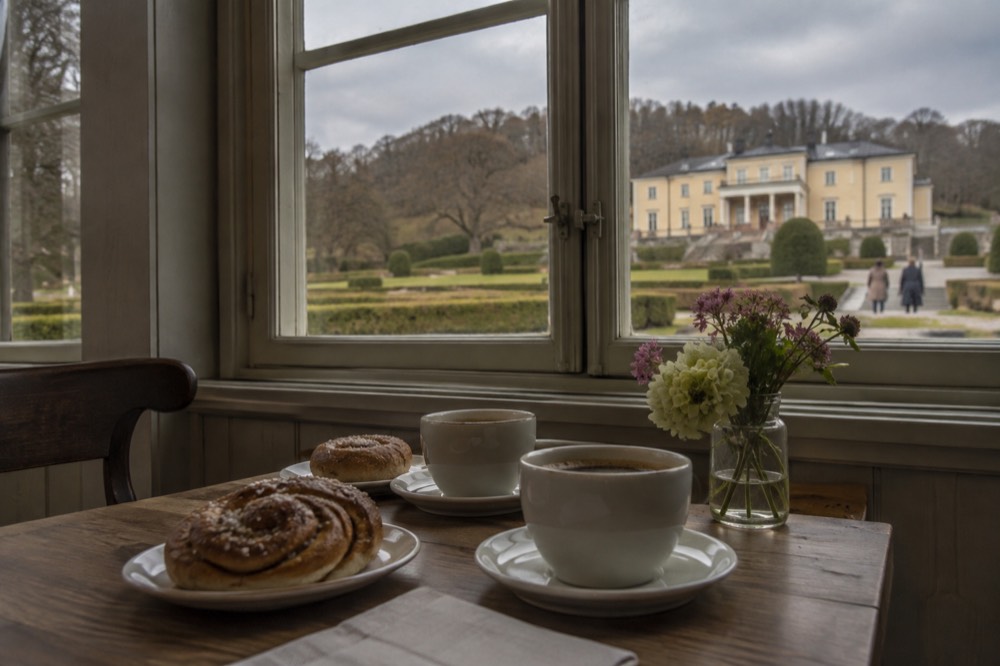
Food is simple: the café serves the estate's own produce and classic Swedish baking, and it fills up at lunchtime on summer weekends. If the weather turns, the café is also the shelter, so a rainy-hour there is not a wasted hour. The estate's kitchen garden supplies the menu, which is why the food is better than the setting strictly requires.
One last comparison worth making before you commit the day: Gunnebo is architecture in a green setting, but if the water is what draws you to Gothenburg at all, the guided archipelago cruise is the other half-day option, a boat trip through the islands that pairs well with a morning at the estate on a longer visit:
And if you are still building the wider trip, Gothenburg Travel Guide's day-trip section, starting from Gothenburg Travel Guide itself, covers the full ring of options around the city, from Trollhättan's canal locks to Varberg on the Halland coast and Borås's street art. Gunnebo is the gentlest of them all, and often the one visitors are glad they kept short and unhurried.
Common Questions About Gunnebo House and Gardens
How do I get to Gunnebo House and Gardens from Gothenburg?
Take a tram south toward Mölndal and then a connecting local bus toward the Gunnebo area, all inside Västtrafik Zone A. A single Zone A ticket costs 38 kr and a 24-hour Zone A ticket 125 kr, and both cover the whole journey. Use the Västtrafik To Go app's journey planner for the exact combination on your travel day.
Is Gunnebo worth visiting?
Yes, if gardens, neoclassical architecture, farm animals or a calm half day with children appeal to you. It is the easiest heritage day trip from Gothenburg on public transport. It is not the choice if you want sea and islands; the archipelago or Marstrand serve that better.
How long does a visit to Gunnebo take?
Two to three hours at a relaxed pace, including the house tour, the gardens, the kitchen garden and a café stop. The woodland walks add time if you want them. Treat it as a half-day trip.
When is the best time of year to visit Gunnebo?
Late spring through early summer is the statistical sweet spot: SMHI's normals show April as Gothenburg's driest month at 51.3 mm of rain, and the gardens peak in June and July. The kitchen garden is at its most productive in late summer, and October is the wettest month, at 102.9 mm, so autumn visits need waterproofs.
Can you visit Gunnebo with kids?
Yes, and it is one of the more family-friendly half days out in the area. The estate keeps farm animals, has open lawns and a café, and the walk from the bus stop is manageable. House tours are better suited to older children.
Do you need to book Gunnebo house tours in advance?
Check the estate's own calendar for tour times before travelling, since the interior is only seen on guided tours that run seasonally and capacity is limited. In high summer, booking ahead for a specific tour time is the safe move; outside the main season, tour availability shrinks and checking first is essential.