Varberg and the Halland Coast: The Seaside Day Trip from Gothenburg
South of Gothenburg the coast changes character: long sandy beaches replace granite skerries, and Varberg, a fortress town with a cold-bath house on stilts, sits at the centre of it. Here is how the day trip works.
Short answer
Varberg is a train day trip from Gothenburg, roughly an hour down the Halland coast. The town's fortress, its beaches and its wooden cold-bath houses are the draw, and Nordens Ark wildlife park sits on the route home.
Gothenburg's own coast is granite and islands. An hour south, in the county of Halland, it turns into something else entirely: kilometres of open sand, shallow water, and a shoreline built for swimming rather than island-hopping. Varberg is the town that anchors it, a fortress place with a spa culture older than the city it serves, and it is one of the few Gothenburg day trips that works better in summer than in any other season.
The Halland coast is a genuine day trip, not a suburb. It sits outside the Västtrafik zone system that carries you around Gothenburg and its archipelago, so the ticketing and the planning are different, and this guide covers both. It also covers Nordens Ark, the wildlife park that sits on the route between Varberg and Gothenburg and makes the return leg more than just a train ride.
Is Varberg Worth a Day Trip from Gothenburg?
Yes, if you want sand rather than skerries. Varberg is the closest place to Gothenburg where the coast becomes a classic sandy beach destination, and it pairs a 13th-century fortress, a historic cold-bath house and a working harbour town in one walkable centre. It is a full day out, roughly an hour each way by train, and it complements rather than repeats the granite islands of Gothenburg's own archipelago.
The case for Varberg is the case against confusing it with the Bohuslän coast to the north. Bohuslän, covered in our guide to Smögen, Fjällbacka and the granite islands, is bare rock, lobster shacks and painted boathouses. Halland is the opposite: dunes, sand, shallow warm water in summer and a resort history that goes back more than a century. If your image of a Swedish beach is empty sand under an evening sky, Halland is where that image lives.
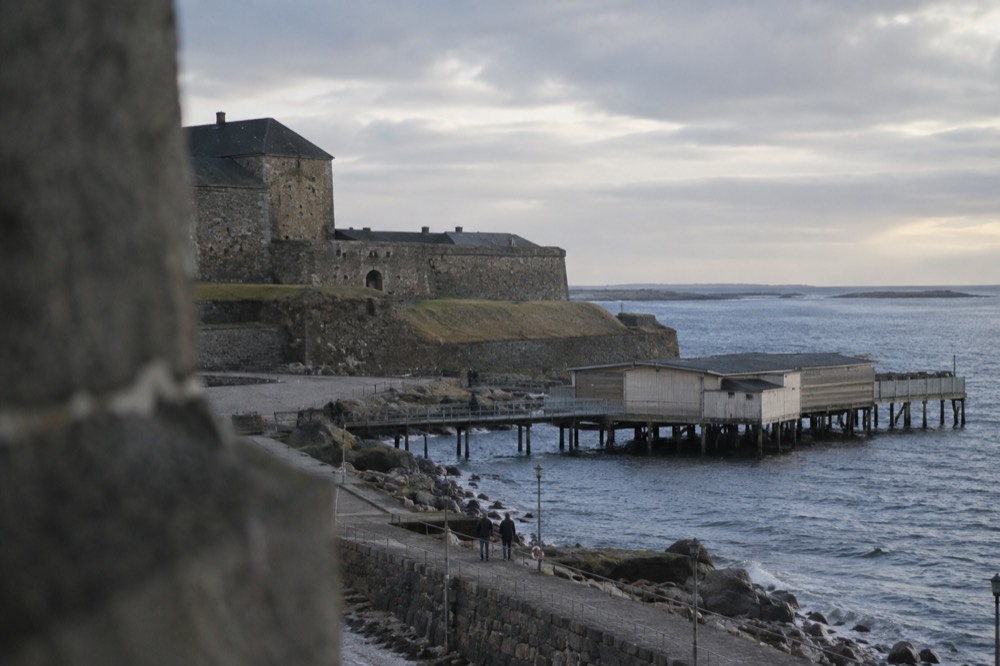
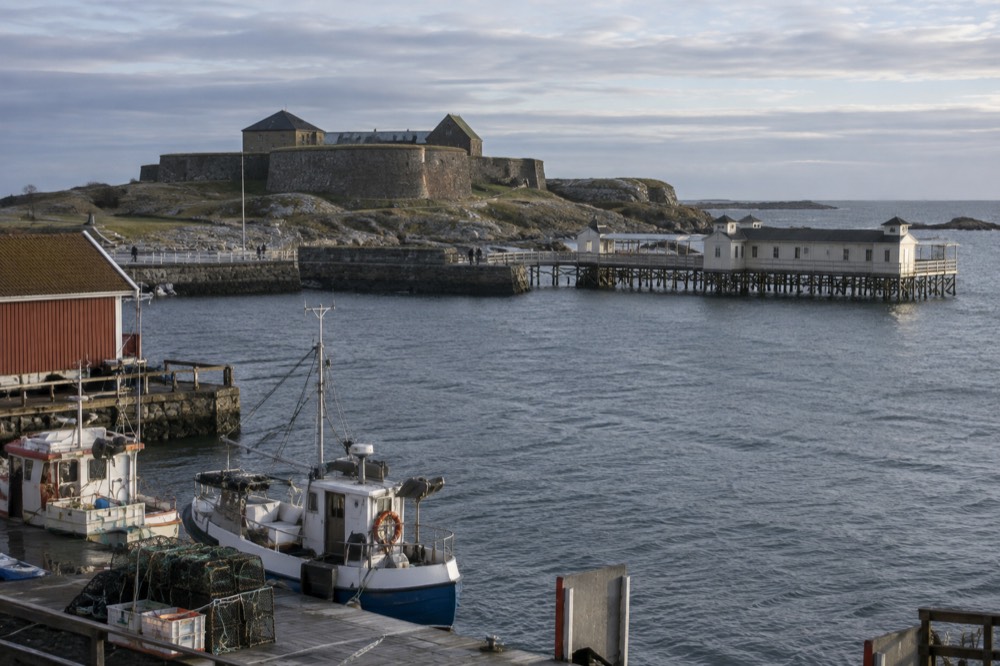
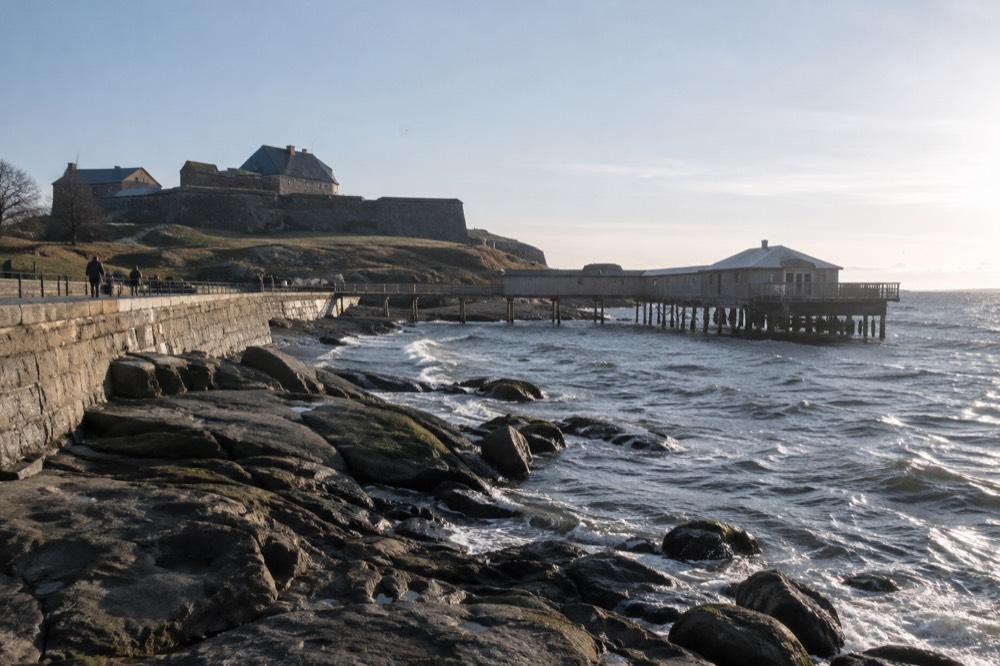
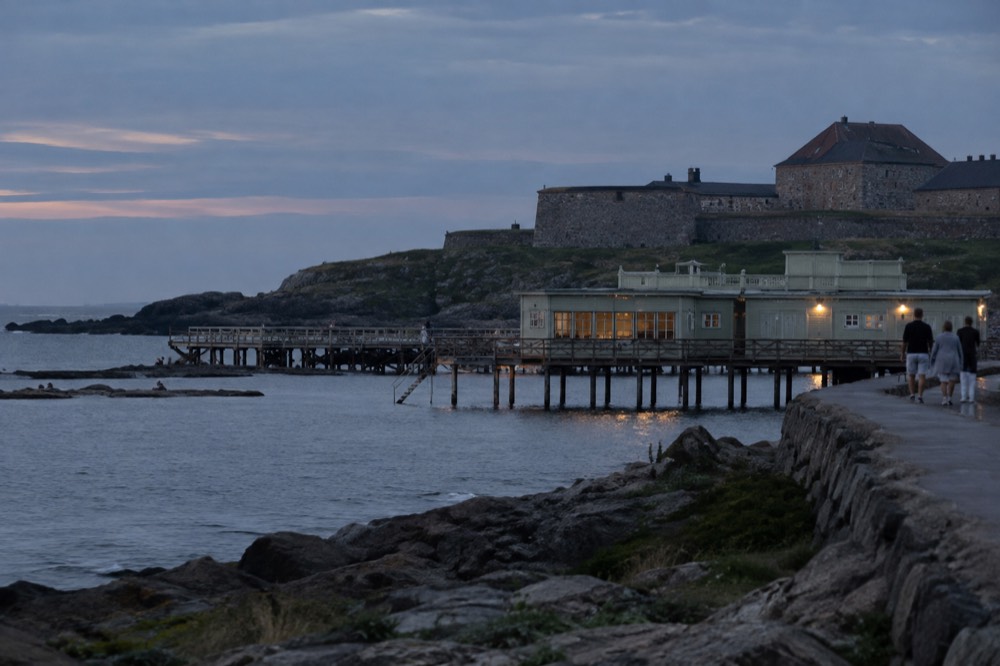
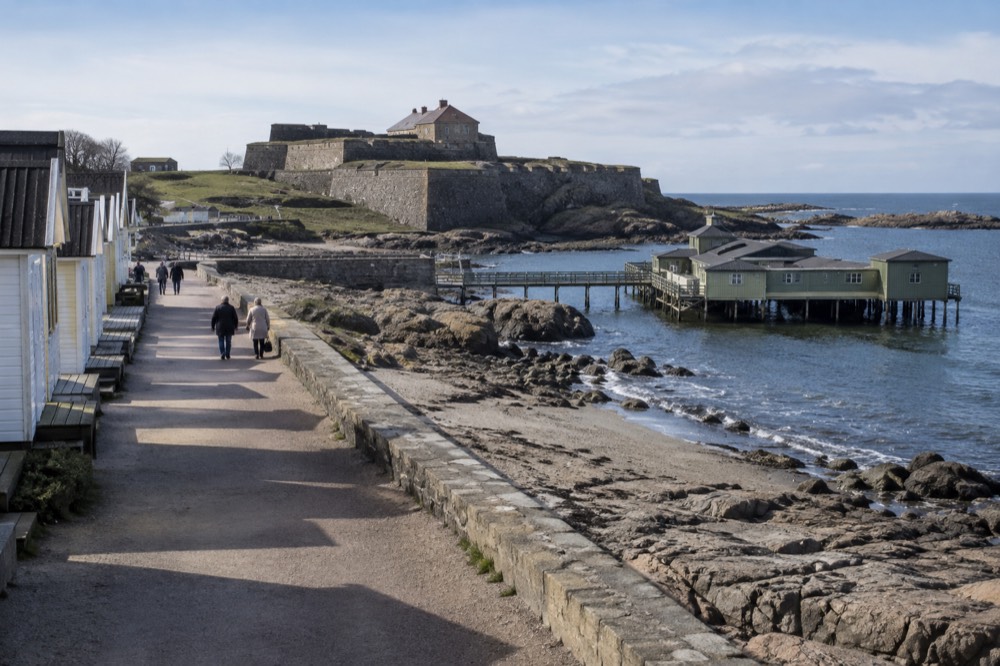
Varberg itself is a compact town. The fortress, Varbergs fästning, sits on a headland between two beaches and now houses a museum and a [hostel](https://hostelworld.tpk.ro/KnYZhaAE) rather than a garrison. The cold-bath house, Kallbadhuset, stands on stilts over the water a short walk north, a wooden structure where the sea-swimming culture this coast is known for happens year round. The harbour, the town centre and the promenade between them are all within a comfortable walking circuit.
What the town is not is a second Gothenburg. There is no tram, no archipelago ferry, and no Liseberg-scale attraction. The day is built from small things done well: a long walk, a fortress, a swim, a meal of shrimp or fish, and the train home along a coast that stays visible for much of the journey. For a fuller comparison of how the day trips around Gothenburg stack up, see our guide to day trips from Gothenburg.
| Day trip from Gothenburg | What the coast or countryside looks like | Best season | Who it suits |
|---|---|---|---|
| Varberg and the Halland coast | Long sandy beaches, shallow water, fortress town | June to September | Swimmers, families, spa-goers |
| Bohuslän coast (Smögen, Fjällbacka) | Granite islands, fishing villages, bare rock | May to September | Photographers, seafood lovers |
| Marstrand | Island fortress, sailing town, one hour west | Summer | Sailors, day trippers who want an island |
| Lake Vänern and Läckö Castle | Inland lake, baroque castle | May to September | Castle and countryside visitors |
| Tjolöholm | Arts-and-crafts manor and woods | Spring to autumn | Architecture and history visitors |
How Do You Get from Gothenburg to Varberg?
Varberg is reached by regional train from Göteborg Centralstation, with a journey time of roughly an hour along the coast, and the route is run by operators other than Västtrafik, so a Gothenburg tram ticket or a 24-hour Zone A day ticket will not cover it. Buy the train ticket separately, and once you arrive, Varberg's town centre, fortress and beaches are all walkable from the station.
The train is the sensible way down. It follows the coast for much of the route, and it deposits you within walking distance of everything that matters in Varberg. Driving is possible but adds little except flexibility; the town itself does not need a car, and parking near the beaches fills first on warm summer weekends. Check the operator's own timetable and fare pages before travelling, because regional train prices in Sweden vary by departure and by how early you book.
The ticketing point matters more than most visitors expect. Gothenburg's own transport, described in our guide to trams, tickets and zones, runs on Västtrafik's zone system, and a 24-hour Zone A ticket at 125 kr covers trams, buses and even the archipelago ferries, as Västtrafik's own Zone A ticket page confirms. Halland is outside that system. A traveler who assumes their Gothenburg day ticket rides the train to Varberg will be wrong, and one who tries to tap a Västtrafik card at a regional train platform will find it does not apply. Two separate tickets, one for each system.
The same logic applies to the airport, if you are combining this trip with a flight day: our guide to [Landvetter airport and the city centre](/guides/gothenburg-landvetter-airport-to-the-city-centre/) covers the coach and bus options, none of which extend to Halland.
If you would rather have the coast without any of the logistics, a guided departure from Gothenburg does the planning for you, and the most popular coastal experiences from the city sell out on good-weather summer days.
What Should You Actually Do in Varberg?
The core of a Varberg day is a walkable triangle: the fortress on its headland, the cold-bath house and the promenade along the water, and the town centre and harbour behind them. Add a swim if the season allows, a seafood meal at the harbour, and, on the way back toward Gothenburg, an optional stop at Nordens Ark wildlife park. The whole day fits inside a single comfortable circuit on foot.
Varbergs fästning is the anchor. The fortress has guarded the headland since the 13th century, and today it holds the county museum, including the Bocksten Man, a remarkably preserved medieval bog body found nearby, which is the kind of exhibit that stays with visitors longer than the fortress walls do. The grounds are open to walk, and the view from the headland takes in both of the town's main beaches at once.
The cold-bath house is the other signature. Kallbadhuset is a wooden bathing structure standing on stilts over the sea, with separate sections for men and women, naked sea bathing off the decks, and a sauna culture that runs through the winter. This is the same cold-water tradition that Gothenburg itself practises, covered in our guide to cold-water swimming and sauna, but in Varberg the bath house is the social centre of the waterfront rather than a side activity. A day ticket or single entry is bought on site; check the bath house's own page for current prices before you go.
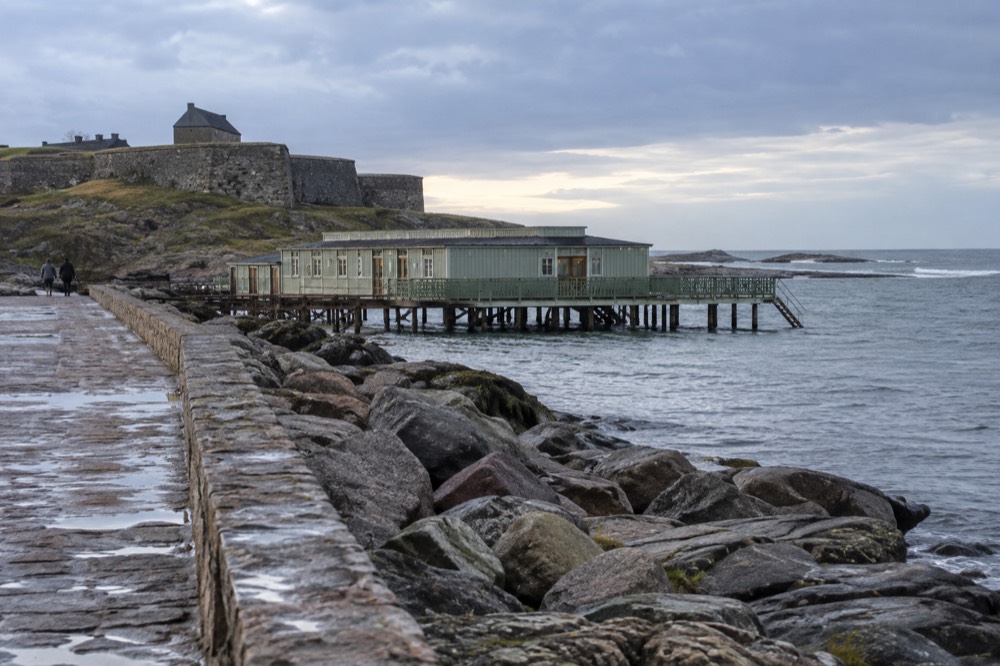
Then the beaches. The sand on either side of the fortress is the reason most Swedish families make this trip: shallow, wide and, in July and August, genuinely warm by Baltic standards. The water here is the Kattegat, the same sea that washes Gothenburg's islands, but the shallows warm faster than the deep water off the skerries.
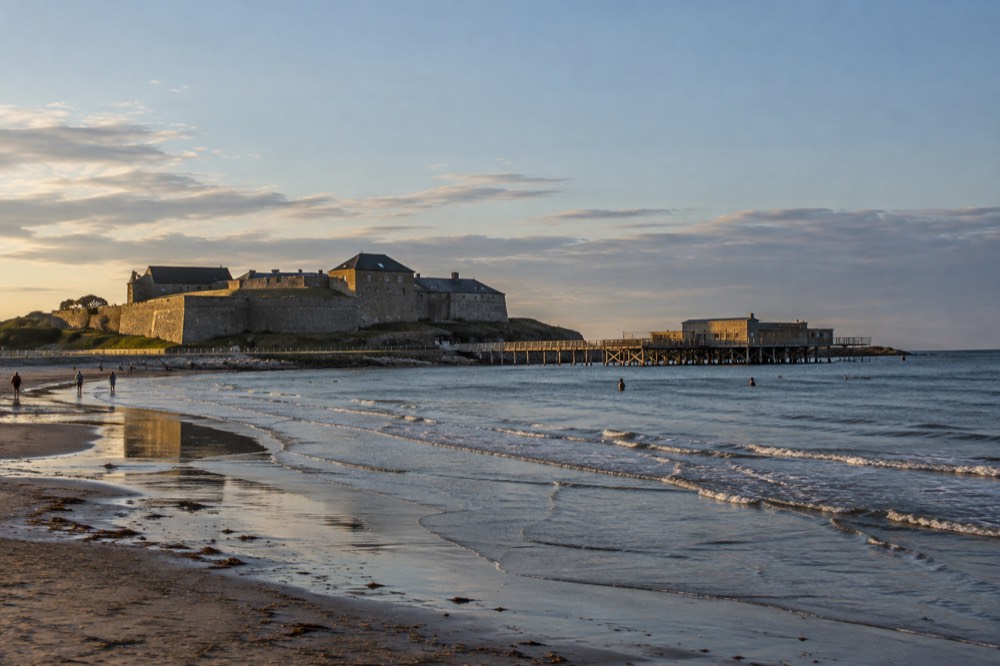
For lunch, the harbour area and the town centre handle it. Shrimp sandwiches and fresh fish are the regional staples, and the same west-coast seafood culture that we describe in our guide to Gothenburg seafood runs down the Halland coast too. Expect simpler, beach-town versions of the Gothenburg originals, which suits the day.
Is Nordens Ark Worth Stopping at on the Way Back?
Nordens Ark is a wildlife park in Halland dedicated to endangered Nordic and exotic species, from snow leopards to Scandinavian predators and amphibians, and it sits within reach of the Varberg-to-Gothenburg route, which makes it the natural final stop on the return leg. Entry is sold as a timed ticket from $29 per person, rated 4.5 from 10 reviews on the listing, and the park needs two to three hours to see properly.
The park's mission is conservation breeding rather than showing animals for spectacle, and the enclosures are wooded and large, which means some animals take patience to find. That trade suits some visitors perfectly and frustrates others, particularly those with very small children who want guaranteed sightings. The reviews on the listing, though few at ten, are strong.
Practically, the stop works best if you are driving or if you plan the day around it rather than treating it as a spur-of-the-moment add-on. By train it needs its own connection from the main line, so check the connection times before committing. Buy the entry ticket in advance through the operator's live listing, because the park caps numbers on busy days.
When Is the Best Time to Visit the Halland Coast?
The swim season is July to early September, because the sea peaks in August, not July: SMHI's quality-controlled hourly observations at the Vinga lighthouse station near Gothenburg show a mean sea temperature of 18.6 C in August against 18.3 C in July, and September water, at 16.7 C, is still warmer than June water at 16.2 C. Air temperature peaks in July at 18.3 C mean, and April is the driest month on the coast, at 51.3 mm against October's 102.9 mm.
That August sea peak is the single most useful planning fact for this trip, and almost nobody books around it. Visitors assume the Swedish beach season ends when the school holidays end in mid-August, but the water keeps warming through the month. A September weekend on the Halland coast can offer warmer swimming than a mid-June one, with emptier sand.
The rainfall pattern matters too. SMHI's 1991-2020 normals for the Göteborg A station show 912 mm of precipitation spread over 127 wet days a year, roughly one day in three, with October the wettest month at 102.9 mm and April the driest at 51.3 mm, figures published in SMHI's official normals dataset. The wet weather arrives after the tourists leave. And a note on the reputation: SMHI does not call Gothenburg, or this coast, Sweden's rainiest place; the national maxima are in the western highlands and the mountains, not here.
Daylight is the other variable. The US Naval Observatory's figures for this latitude show 18 hours 6 minutes of daylight on 21 June against 6 hours 32 minutes on 21 December, a swing of over 11 and a half hours. A midsummer Varberg day gives you beach hours well into the evening; a December one gives you a fortress visit in the dark and a bracing sauna. Our guide to daylight and darkness month by month has the full picture.
| Month | Mean sea temp (Vinga station) | Mean air temp | Rainfall | Verdict for the Halland coast |
|---|---|---|---|---|
| April | 7.1 C | 7.7 C | 51.3 mm | Driest month, too cold to swim |
| June | 16.2 C | 15.7 C | 73.7 mm | Beach weather, cooler water than September |
| July | 18.3 C | 18.3 C | 81.3 mm | Peak air temperature, busiest beaches |
| August | 18.6 C | 17.7 C | 92.8 mm | Warmest water of the year |
| September | 16.7 C | 14.0 C | 80.0 mm | Warm water, empty sand |
| October | 12.8 C | 9.0 C | 102.9 mm | Wettest month, fortress and sauna weather |
What Does a Varberg Day Look Like Hour by Hour?
A workable shape is a morning train from Göteborg Centralstation, the fortress and museum before lunch, a seafood meal at the harbour, a swim and sauna at the cold-bath house in the afternoon, and the evening train back, optionally broken at Nordens Ark if you have planned the connection. It is a relaxed day rather than a packed one, and the town rewards doing fewer things for longer.
The morning matters more than it looks. An early train buys you the fortress in the cool hours, and on summer weekends the beaches and the bath house both get busier through the afternoon. The fortress museum's hours shift seasonally, so check its own page the day before. Bring cash-free payment methods regardless: card is the norm across the Swedish coast, and several smaller kiosks near the beaches do not take notes at all.
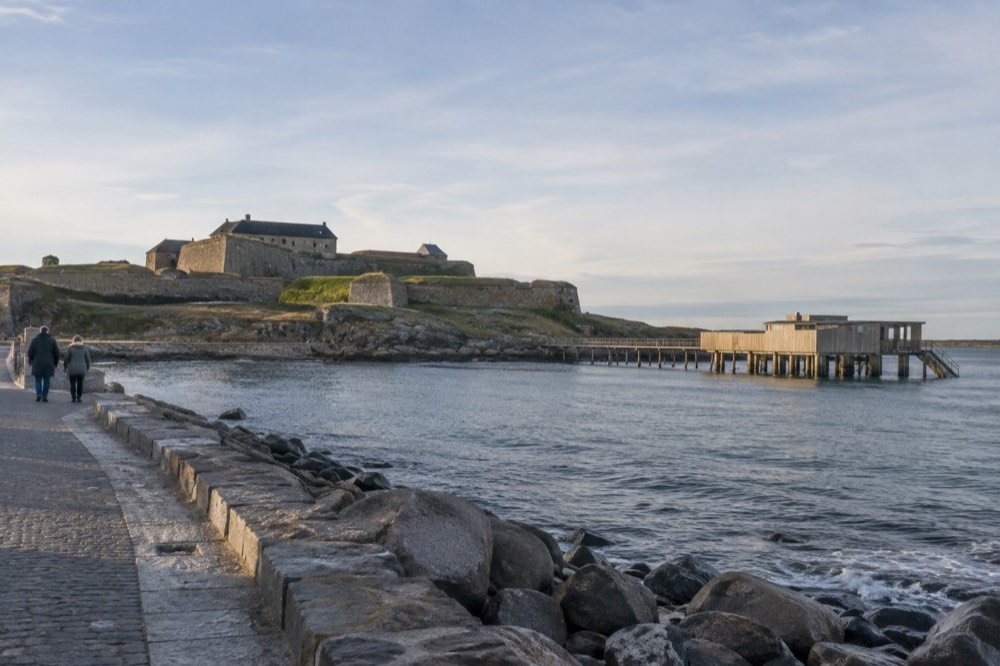
Afternoon is the water's. The bath house rents towels and sells single entries, and the sea off the decks is the same Kattegat water measured above. If swimming is not your thing, the promenade south from the fortress toward the harbour is one of the nicer hour-long walks on the west coast.
For travellers fitting this into a longer stay, the day trip slots naturally into the middle of a visit. Our three days in Gothenburg itinerary leaves the third day free for exactly this kind of excursion, and the two days in Gothenburg plan pairs a city day with a coast day.
| Time | What to do | Notes |
|---|---|---|
| Morning | Train from Göteborg Centralstation | Roughly an hour down the coast |
| Mid-morning | Varbergs fästning and the county museum | The Bocksten Man exhibit is the highlight |
| Lunch | Harbour area, shrimp sandwich or fish | Simpler than Gothenburg's equivalents |
| Afternoon | Swim and sauna at Kallbadhuset | Buy entry on site; check prices before travelling |
| Late afternoon | Promenade walk or beach time | September often beats June for water warmth |
| Evening | Train back, optional Nordens Ark stop | Needs a planned connection |
How Does the Halland Coast Compare with Gothenburg's Other Day Trips?
The Halland coast is the sandy-beach option in a day-trip roster that is otherwise dominated by granite, castles and lakes: it competes directly with Bohuslän to the north, overlaps with Marstrand for island atmosphere, and stands apart from the inland trips to Gunnebo, Läckö and Tjolöholm. If your priority is swimming and sand, Varberg wins; if your priority is scenery and seafood villages, the Bohuslän coast does.
The inland alternatives each answer a different question. Gunnebo House and Gardens is the shortest and gentlest, a neoclassical manor close to the city. Läckö Castle and Lake Vänern is the grand castle day, and Tjolöholm sits on the route south toward Halland itself, which makes it a possible pairing with this trip if you are driving.
What none of them offer is the water. Marstrand, covered in our island fortress day trip guide, comes closest, but Marstrand is rock and sailing, while Varberg is sand and swimming. Choosing between them is mostly choosing between those two nouns.
If you have more than one day-trip day, the honest advice is to take both coasts. North and south of Gothenburg are two different seasides, and the contrast is the point. For more on choosing the right season for any of it, see our best time to visit Gothenburg guide, and for the wider picture of the city itself, Gothenburg Travel Guide covers the rest.
Before you go, here are the experiences from Gothenburg that pair best with a coast day, whether you want the archipelago from the water or the city from a boat.
Should You Book Anything Before Travelling?
The two things worth booking ahead are the regional train ticket, which is cheaper bought early, and Nordens Ark entry, which is sold as a timed ticket and capped on busy days. The fortress museum and the cold-bath house both sell entry on site and rarely sell out, and the beaches need no booking at all, so most of the day can stay spontaneous.
The train is the one with real price movement. Swedish regional fares climb as departure approaches, so a ticket bought a week out costs less than one bought at the platform, even for the same seat. The wildlife park is the other: its timed-entry system exists to spread visitors through the day, and on summer weekends the popular morning slots go first.
Everything else in Varberg is walk-up. The bath house has capacity for drop-ins even in August, and the fortress grounds are open to anyone with a museum ticket bought at the gate. That balance, one booked leg and one free day, is what makes this an easy trip to add to a Gothenburg stay at short notice.
If a guided coastal experience appeals more than a self-planned train day, the archipelago cruise from Gothenburg is the most-reviewed boat trip in the region, and it runs on the water you will have just been swimming in.
Common Questions About Varberg and the Halland Coast from Gothenburg
Is Varberg a day trip from Gothenburg?
Yes. Varberg sits roughly an hour down the coast by regional train from Göteborg Centralstation, and the fortress, beaches and cold-bath house are all walkable from the station, so it works as a single-day excursion.
Does a Gothenburg tram ticket cover the train to Varberg?
No. Varberg is in Halland, outside the Västtrafik zone system, so a Gothenburg ticket, including the 24-hour Zone A ticket that covers trams and archipelago ferries, does not apply. The regional train is bought separately.
Can you swim at Varberg?
Yes, and the season is longer than most visitors expect. SMHI's sea temperature data for the nearby coast shows the water peaking in August at 18.6 C, with September, at 16.7 C, warmer than June at 16.2 C.
What is the cold-bath house at Varberg?
Kallbadhuset is a wooden bath house on stilts over the sea, with naked segregated sea bathing, saunas and a year-round swimming culture. Entry is bought on site; check the bath house's own page for current prices.
Is Nordens Ark on the way to Varberg?
It sits on the Halland side of the route between Gothenburg and Varberg, which makes it a natural stop on the return leg. By train it needs a connection, so plan the times before committing. Entry tickets are sold in advance from $29 per person.
Is Varberg better than the Bohuslän coast?
They do different things. Varberg is sand, swimming and shallow warm water; Bohuslän is granite islands, fishing villages and seafood. If swimming is the priority, Varberg; if scenery is, Bohuslän.