Tjolöholm Castle and Kungsbacka: A Gothenburg Day Trip South
Tjolöholm sits on a peninsula in the Kungsbacka fjord, half an hour south of Gothenburg, and pairs a single grand house with a coastline of small bathing places and forest trails. This is how to plan the day.
Short answer
Tjolöholm Castle is reached by commuter train to Kungsbacka and then a local bus or taxi, the estate is open to visitors year-round with the house itself on guided tours, and the surrounding Kungsbacka coast adds beaches, forest and a small town centre to fill the rest of the day.
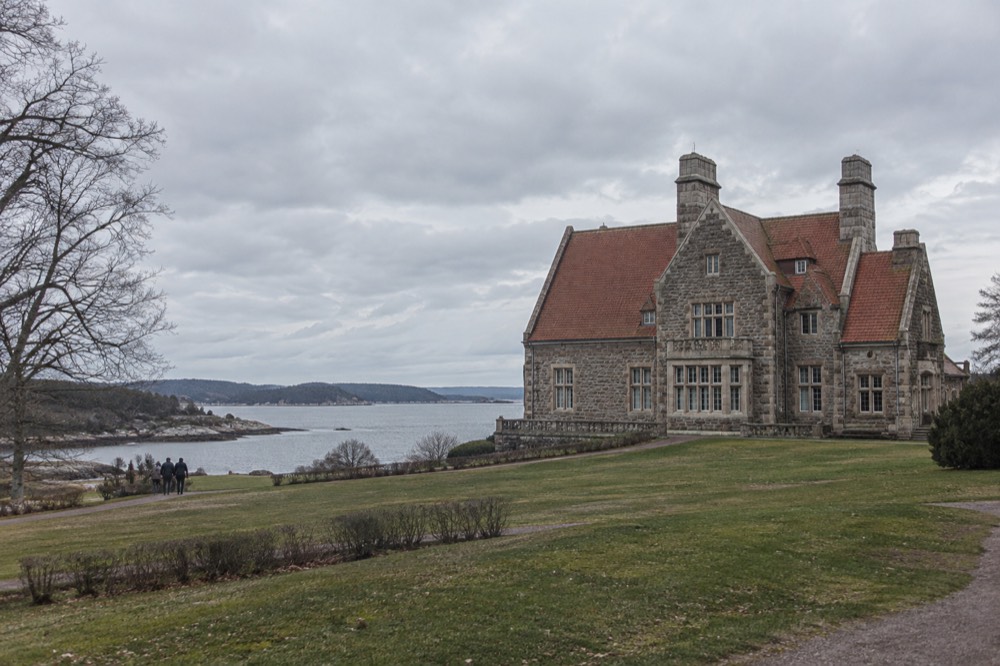
Tjolöholm is the odd one out among Gothenburg's day trips. Most of the region's grand houses are wooden, painted and 18th-century. This one is a stone-built English country house in the Arts and Crafts style, standing on a narrow peninsula in the Kungsbacka fjord about half an hour south of the city, surrounded by its own farmland and looking straight out over the Kattegat. The estate's own visitor information presents it as a complete planned community in miniature: the big house, workers' cottages, a church, gardens and shoreline all belonging to one design. Kungsbacka, the small town you pass through to reach it, is the practical half of the trip, with a compact old centre, a river of its own and a coastline of small bathing places stretching south towards Gothenburg Travel Guide's other Halland destinations.
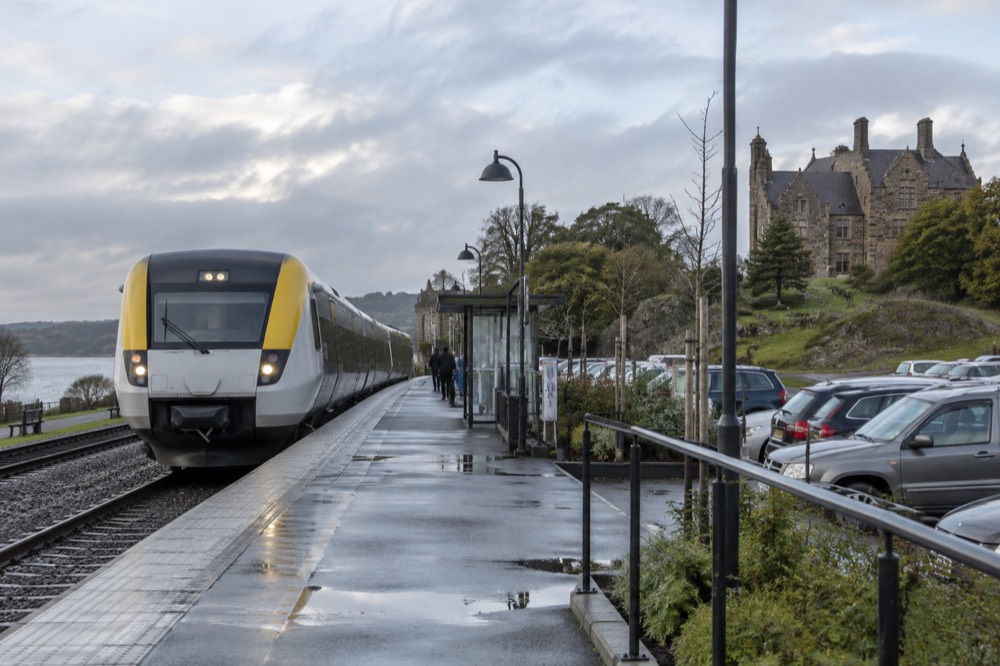
The pairing works because the transport is shared. Kungsbacka is on the Gothenburg commuter rail network, and from Kungsbacka station the local bus network runs towards the Tjolöholm area. One ticket system covers the whole journey, which makes this one of the easier car-free day trips from the city, alongside day trips from Gothenburg by train and the classic Gunnebo House and Gardens run inland.
How Do You Get to Tjolöholm Castle from Gothenburg?
The route is commuter train from Göteborg Centralstation to Kungsbacka, then a local bus or taxi for the last stretch to the estate, with the whole journey inside the Västtrafik zone system and a single correctly-zoned ticket covering train and bus together. Kungsbacka sits beyond Gothenburg's Zone A, so a ticket bought for the city alone will not cover the trip. Drivers follow the E6 south and turn off at Kungsbacka; the estate lies a short drive west of the town on the Tjolöholm peninsula, and there is parking at the estate.
The train is the sensible answer for most visitors. Kungsbacka station is served by regional and commuter trains from Gothenburg, and the ride is short enough that the estate is genuinely a half-day or full-day option rather than an expedition. From Kungsbacka station, Västtrafik's local buses run towards the peninsula area; check the current timetable on Västtrafik's own ticket pages before you travel, because rural bus frequency in Sweden is thin outside peak hours, and a taxi from the station is the fallback. The estate's own directions page is the place to confirm the current bus stop and walking distance before you set out.
One planning note that catches people: Västtrafik's zones are A, B and C, and Gothenburg city is Zone A while Kungsbacka lies beyond it. A ticket bought for one zone will not cover the trip. The tram and ticket zone guide explains the zone system in full, but the short version is that you buy for the zones you cross, and the Västtrafik app is the easiest way to do it. A 30-day period ticket is currently halved by a temporary state subsidy through the end of the year, but that does not apply to the single or day tickets a visitor actually buys, so price the day ticket at its normal fare.
What Is Tjolöholm Castle and Why Is It Unusual?
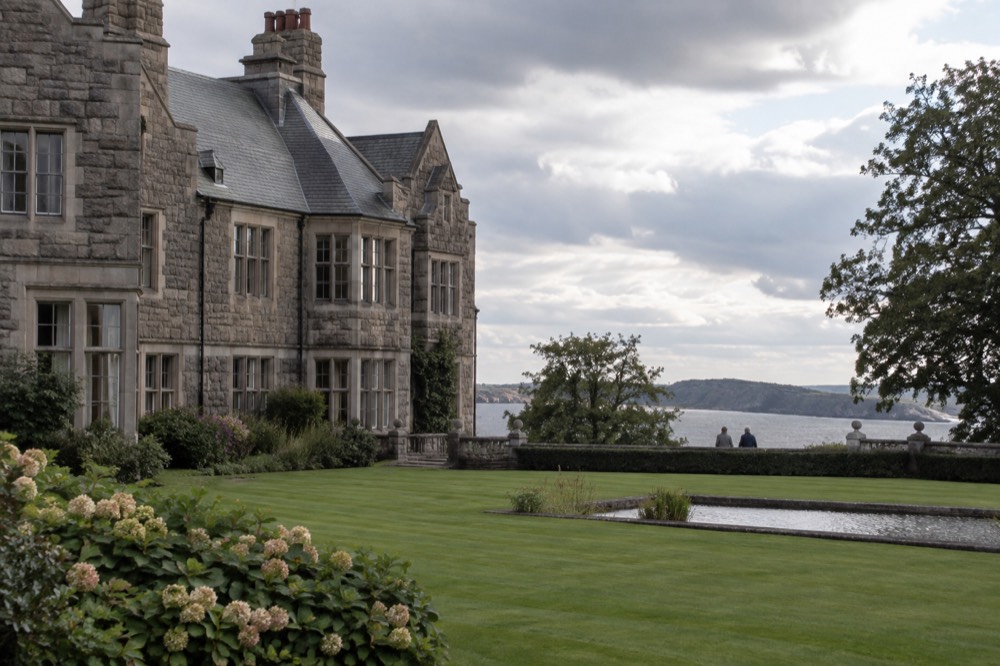
Tjolöholm is a stone manor house in the English Arts and Crafts style, built as a single planned estate with the big house, workers' housing, a church and landscaped grounds designed together, standing on its own peninsula in the Kungsbacka fjord. The estate's own visitor pages describe the house as one of Sweden's foremost Arts and Crafts buildings, and that is the honest frame: this is not a medieval castle but a purpose-built early-20th-century country seat, in a style that almost nothing else in Sweden shares. The interior is the reason people make the trip, and it is shown on guided tours rather than wandered freely.
The style is the hook. Arts and Crafts architecture, with its hand-crafted detail, steep roofs, local materials and horror of mass production, was a British movement, and it rarely travelled this far north intact. Tjolöholm is the Swedish example people cite, and the contrast with the painted wooden manors of the Gothenburg region, like Gunnebo or the wooden town quarters of Haga, is stark: dark stone, red tile, tall chimneys, and interiors where every fitting was designed for the house. The estate's own site lists the tours and opening arrangements, and because the house interior is seen with a guide, the tour timetable effectively sets your day plan. Book the house tour time first and build the rest of the day around it.
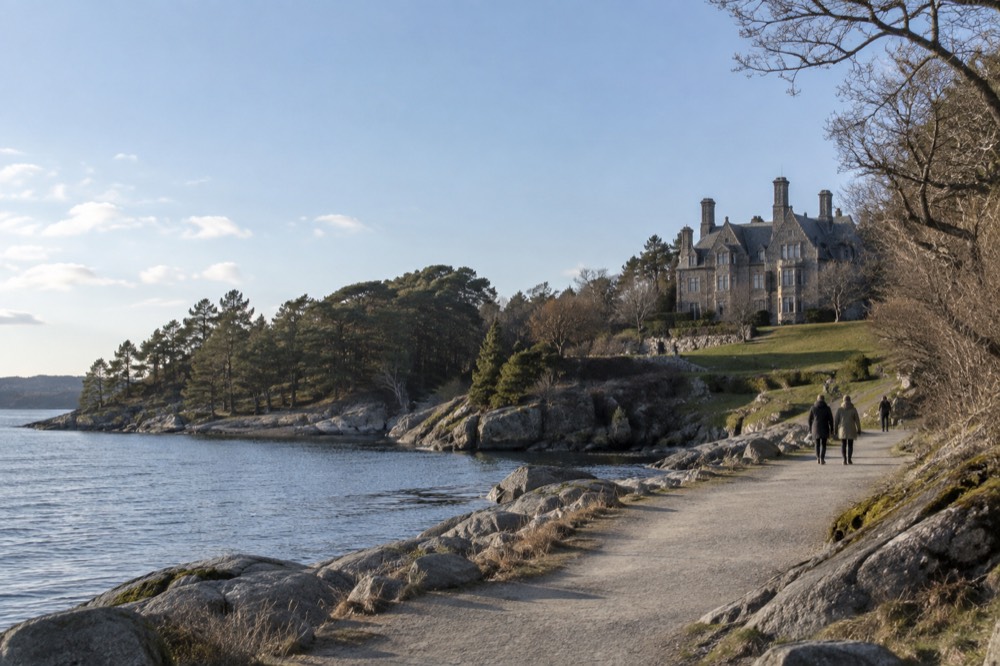
The estate is bigger than the house. The grounds run down to the water on several sides, with woodland paths, shoreline walks and the estate's own farmland still in use, and the workers' village and church are part of the same design. The estate's visitor information covers the café and shop, which are the practical anchors of a visit: this is not a town, so arrive with the expectation that lunch is the estate café, a picnic, or back in Kungsbacka.
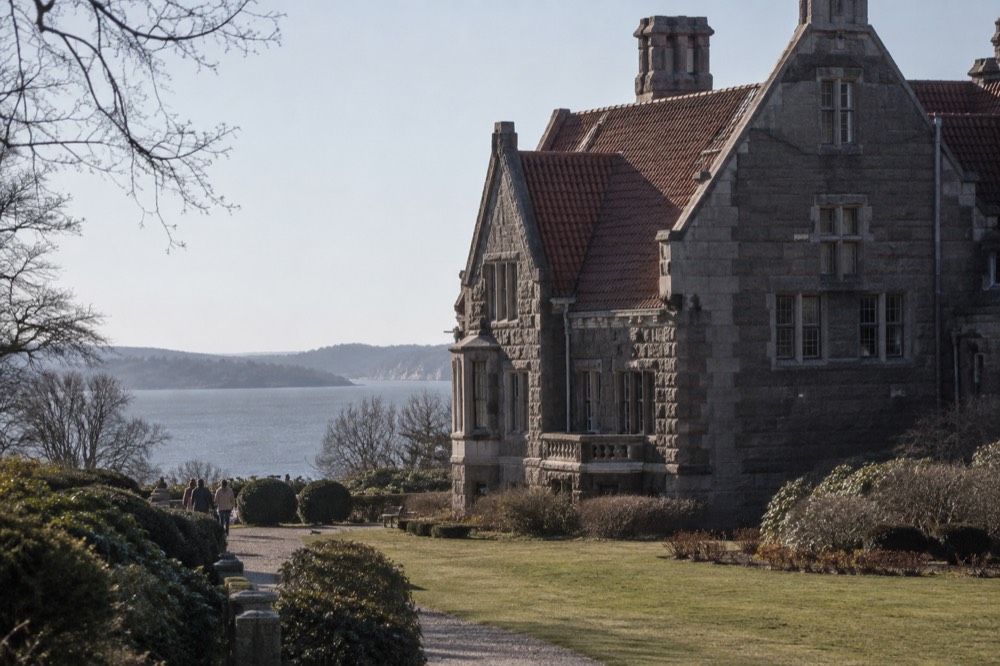
What the estate itself publishes is the only reliable source for current tour times, admission and seasonal opening, and those details change year to year, so this guide deliberately does not quote them. What does not change is the shape of the visit: you park or arrive at the entrance, walk the grounds freely, and take a timed guided tour for the house interior.
What Can You Actually See and Do at Tjolöholm in a Day?
A full visit covers the guided house tour, a walk through the gardens and down to the shoreline, the estate church and workers' village, and time in the café, which together fill three to four hours, with the surrounding peninsula adding forest and coastal paths for anyone who wants more. The house tour is the fixed item; everything else flexes around it. Families with children usually spend less time inside and more on the lawns and shore, while anyone with an interest in design or architecture should budget for the longest tour option the estate offers that day.
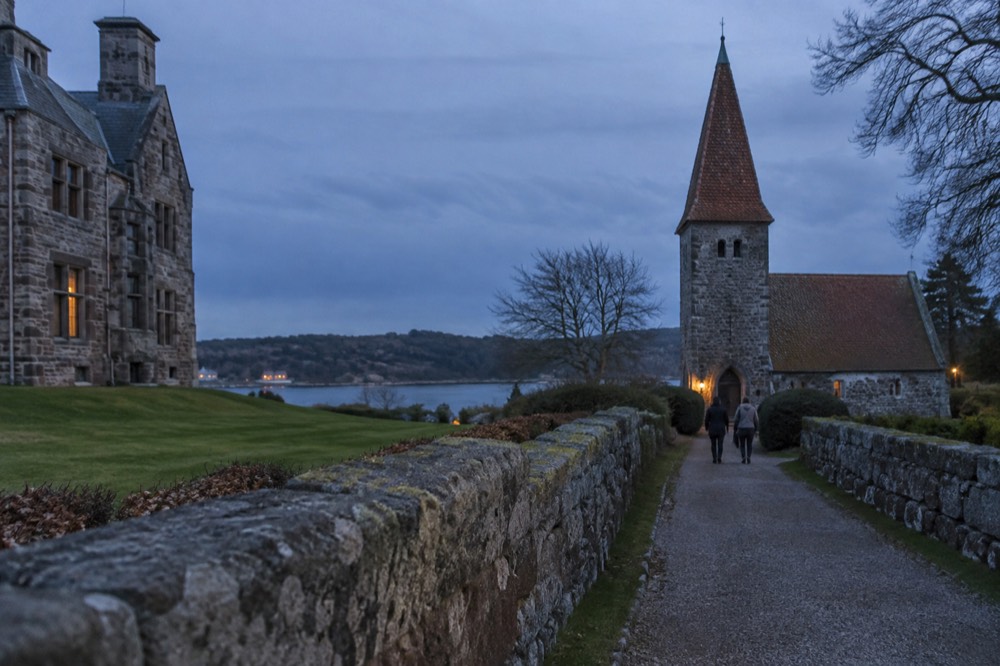
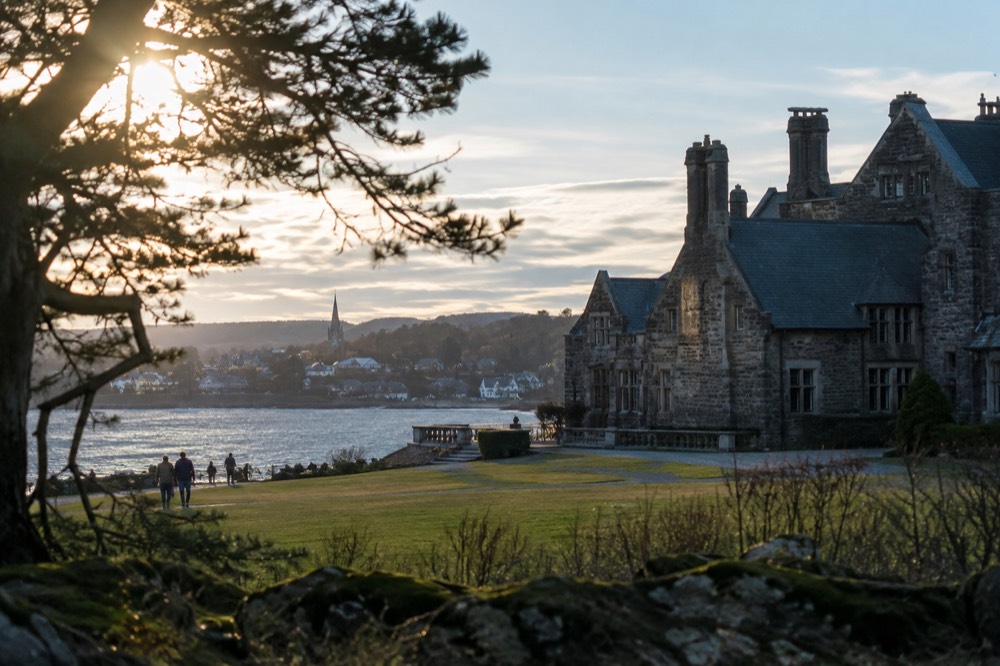
The grounds are the underrated half. The peninsula gives the estate water on three sides, and the estate's own map shows walking routes through the estate woodland and along the shore. The light on the fjord in late afternoon, in summer, is the photographic reason to stay after the tour rather than rushing back. The church, built as part of the original estate plan, is usually open to visitors and is a small, complete piece of the same design story as the house.
A practical visit breaks down roughly like this:
| Part of the estate | What it is | Time to allow |
|---|---|---|
| The house interior | Guided tour only, timed slots set by the estate | 1-1.5 hours |
| Gardens and lawns | Free to walk, formal beds and orchard areas | About an hour |
| Shoreline and woodland paths | Estate walking routes down to the fjord | 1-2 hours |
| Church and workers' village | Part of the original estate design, usually viewable | Half an hour |
| Café and shop | The estate's own catering, the only food on site | About an hour |
What Is Kungsbacka and What Does It Add to the Trip?
Kungsbacka is a small Halland town on the Kungsbacka river, with a compact old centre, a riverside setting and a surrounding coastline of small bathing places, and it works as the transport hub, lunch stop and second half of a Tjolöholm day trip. The town is where the train stops, so it is on your route whether you plan for it or not. Its centre is walkable from the station, and the river, which reaches the sea just west of town, gives the place its shape.
The town's own history is ordinary in the best way: a street grid, small shops, cafés and the remains of old fortifications around the church. It is not a destination that justifies the trip alone, but it earns an hour or two, particularly for lunch on days when the estate café is closed or full. Anyone travelling by train should check the return timetable against the time they want to leave, because the train frequency sets the outer limit of the day.
The coast is the real addition. South and west of Kungsbacka, the Halland coastline runs in a sequence of small sandy beaches and rocky points, and in summer these fill with locals rather than visitors. The sea here is the same Kattegat water that Gothenburg's own archipelago sits in, and the swimming season follows the same pattern: warmest water in August, not July, with September still warmer than June. The figures come from SMHI's own published normals, and the best time to visit Gothenburg guide covers the regional seasons in more detail, but for this trip the short version is that May through September is the comfortable window, and April, the driest month of the year at the Gothenburg weather station, is the one that surprises people.
| Kungsbacka element | What it offers | When it works best |
|---|---|---|
| Town centre | Cafés, small shops, walkable from the station | Lunch hour on the way to or from Tjolöholm |
| Kungsbacka river | Riverside walks through and out of town | Any daylight hour |
| Coastal beaches | Sandy bathing places south and west of town | June-September, warmest water in August |
| Surrounding forest | Marked walking and cycling routes | Spring and autumn |
How Long Does the Whole Day Trip Take?
A comfortable Tjolöholm and Kungsbacka day trip takes six to eight hours door to door from Gothenburg, with roughly an hour of total travel time each way by train and bus, three to four hours at the estate, and one to two hours in Kungsbacka or on the coast. It is a genuine day trip, not a half-day errand: the last-mile bus connection to the peninsula is the variable that decides whether the day feels relaxed or rushed, so the timetable is the first thing to check, before the house tour times.
The math is straightforward. Train from Göteborg Centralstation to Kungsbacka is a short ride on the coastal line. The bus or taxi from Kungsbacka to the estate adds a leg that, on thin rural frequencies, can mean waiting. Add the tour, the grounds, and lunch, and the realistic minimum is a five-hour round trip if everything aligns, with eight hours being the comfortable version that includes the coast. In winter, the 6 hours 32 minutes of daylight at the December solstice means the outdoor half of the day shrinks to almost nothing, and the visit becomes the house tour and an early train home. In June, with 18 hours 06 minutes of daylight and civil twilight until nearly half past eleven in the evening, the same trip can absorb a full afternoon on the coast and still get you home in light.
| Season | Daylight | Estate experience | Coast experience |
|---|---|---|---|
| Spring (Apr-May) | Long, growing | Driest months of the year, gardens waking | Cold sea, empty beaches, good walking |
| Summer (Jun-Aug) | 18 hours at solstice | Full tour schedule, café at its busiest | Warmest water in August at 18.6 C |
| Autumn (Sep-Oct) | Shortening fast | Quieter grounds, October is the wettest month | September sea warmer than June's |
| Winter (Nov-Mar) | Down to 6 h 32 m | Reduced tour schedule, check before travelling | Not swimming weather; forest walks only |
Is Tjolöholm Worth It Compared with Gothenburg's Other Day Trips?
Tjolöholm is worth the trip for anyone with an interest in architecture, design or country estates, and it is the strongest choice in the region for that specific interest, but for scenery, swimming or a classic Swedish wooden town experience, the archipelago, Marstrand and the Bohuslän coast offer more. The honest comparison is that Tjolöholm is a single exceptional building with pleasant surroundings, while the coastal day trips are about landscape and water. A first-time visitor with two or three days should probably see the city and the archipelago first; a second visit, or a traveller who has had enough of water, is exactly who Tjolöholm is for.
The regional comparison, in short:
| Day trip | The draw | Best for |
|---|---|---|
| Tjolöholm and Kungsbacka | Arts and Crafts architecture, estate design | Design and history travellers |
| Marstrand island fortress | Car-free island, fortress, sailing town | Coastal atmosphere, a classic day out |
| The Bohuslän coast | Granite islands, fishing villages, smögen | Scenery, photography, seafood |
| Varberg and the Halland coast | Fortress, beaches, cold bath houses | Beach days, spa culture |
| Gunnebo House and Gardens | 18th-century wooden manor, gardens | The nearest comparable estate, closer to the city |
Gunnebo is the natural rival, and the two make a neat contrast: Gunnebo is the 18th-century wooden manor in the neoclassical spirit, close to the city and easy by tram and bus, while Tjolöholm is the early-20th-century stone house in the English style, further out and more of an expedition. Anyone who enjoyed one will probably enjoy the other, and the pair bracket two centuries of Swedish country-house building.
For visitors who prefer their day trips packaged, there are booked options out of Gothenburg that remove the timetable problem entirely. The wildlife park at Nordens Ark sits on the Bohuslän coast north of the city and is one of the region's most reliable family days out:
What Should You Eat on a Tjolöholm and Kungsbacka Day?
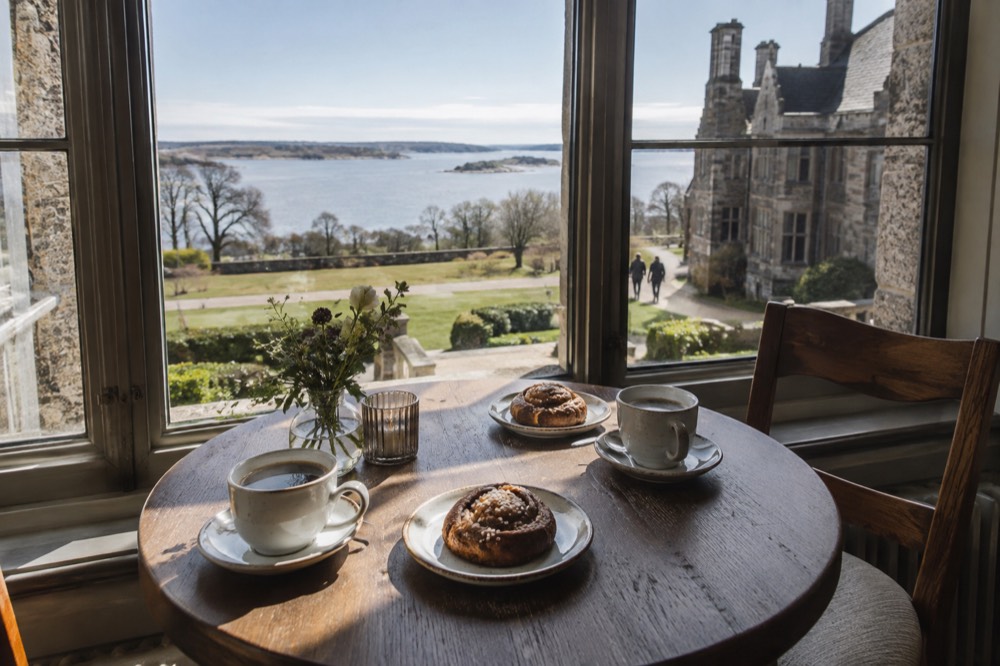
Lunch on this trip is either the estate café at Tjolöholm, a café or restaurant in Kungsbacka town centre, or a picnic carried from Gothenburg, and the estate café's hours follow the estate's opening schedule rather than town rhythms, so it is worth checking before you count on it. The estate has its own café and shop, which the estate's own site describes, and Kungsbacka's centre has the ordinary range of a small Swedish town: bakery cafés, lunch restaurants and pizzerias within walking distance of the station.
The picnic is the underrated option. The estate grounds and the Kungsbacka coast are both picnic country, and a bag from a Gothenburg food hall travels well on a short train ride. The saluhallen and food halls guide covers where to assemble one in the city, and fika, the Swedish coffee break, is the natural rhythm of the day: one fika in Kungsbacka on arrival, lunch at the estate, and the train home. The fika guide explains the custom if the word is new to you.
One thing to know about buying anything stronger than picnic lemonade: in Sweden, beer above 3.5% ABV, all wine and all spirits are sold only through Systembolaget, the state monopoly, under the alcohol act's own thresholds. Supermarkets sell only the lighter folköl. That does not matter much for a day trip, but it explains why a Swedish supermarket shelf looks the way it does if you plan to picnic with a bottle of something.
What Should You Not Miss, and What Can You Skip?
Do not miss the guided house tour, the shoreline walk below the gardens, and the estate church, and feel free to skip the workers' village interior, the shop, and the coast if the weather turns or the bus connection is tight. The house tour is the reason the estate is famous and the only way to see the interiors that carry its reputation. The shoreline walk costs nothing and delivers the setting. The church is small and quick. Everything else is pleasant rather than essential.
The skip list depends on your transport. If you are on public transport, the coast south of Kungsbacka is the first thing to cut, because the beaches are spread out and the buses that serve them are thinner than the one to the estate. If you are driving, the coast is nearly free in time terms and the workers' village, which you drive or walk past anyway, is worth ten minutes. In winter, cut everything outdoor and let the tour carry the day.
For anyone whose appetite for the water has survived the train ride, the city's two most-booked sightseeing products are both immune to rural bus timetables. The amphibious bus drives the streets and then rolls straight into the harbour, and the guided archipelago cruise runs out through the southern islands on an ordinary scheduled boat. Either works as a city day when the weather or the timetable kills the coast plan:
Common Questions About Tjolöholm Castle and Kungsbacka
Can you visit Tjolöholm Castle without a car?
Yes. Take the train from Göteborg Centralstation to Kungsbacka, then a local bus or taxi towards the estate. The train leg is frequent; the last leg depends on rural bus times, so check the Västtrafik timetable and the estate's own directions before travelling.
Is Tjolöholm Castle a real castle?
It is called a castle, slott in Swedish, but it is not medieval. It is an early-20th-century country house built in the English Arts and Crafts style, and the guided tours of the interior are the main attraction. The word slott is used broadly in Sweden for grand country houses.
How far is Tjolöholm from Gothenburg?
The estate lies on a peninsula in the Kungsbacka fjord, south of Gothenburg, reached via Kungsbacka. The train from Göteborg Centralstation to Kungsbacka is a short ride on the coastal line, and the total journey door to door takes roughly an hour including the last leg.
Can you swim near Kungsbacka?
Yes. The Halland coast south and west of Kungsbacka has small sandy beaches. The sea is warmest in August, at a mean of 18.6 C at the nearby Vinga station, and September water at 16.7 C is still warmer than June water at 16.2 C, so late summer is the swimming window.
Is Tjolöholm good for children?
The grounds, shoreline paths and open lawns work well for children, and the café gives the day a natural break. The house tour is the constraint: it is a guided, indoor hour, best suited to children old enough to enjoy interiors. Check the estate's own family arrangements before committing to a tour time.
What is the best time of year to visit Tjolöholm?
April and May, when the gardens are waking and April is the driest month of the year at the Gothenburg weather station, or late summer, when the tour schedule is full and the sea is at its warmest. October is the wettest month, and in midwinter daylight drops to 6 hours 32 minutes, which squeezes the outdoor half of the visit.
For anyone planning a wider tour of the region, Tjolöholm slots naturally into a southern loop that can continue down the Halland coast to Varberg, or pair with a longer stay built around a three-day Gothenburg itinerary that leaves one day for the coast. The estate is a half-day of architecture in a region that is mostly about water, and that contrast is exactly why it earns its place on the day-trip list.