Cold Water Swimming and Sauna in Gothenburg, Sweden: A Complete Guide
The sea around Gothenburg is warmer in September than in June, the coldest month is February, and the southern islands where most people swim are part of the city, reached on an ordinary tram ticket. Here is how cold water swimming and sauna actually work here.
Short answer
The sea at Vinga peaks at 18.6 C in August, not July, and September water (16.7 C) is warmer than June water (16.2 C). The southern archipelago islands are car-free areas of Gothenburg inside Västtrafik Zone A, so a 125 kr 24-hour ticket covers tram and ferry to the swimming rocks. Sauna options range from the archipelago sauna boat cruise to hot tub tours on Stora Amundön.
The water around Gothenburg is warmer than almost anyone books it to be. SMHI's quality-controlled archive from the Vinga lighthouse station, 61,749 hourly observations running to September 2026, shows the sea peaking at 18.6 C in August, a full month after the air peaks in July. September water at 16.7 C is measurably warmer than June water at 16.2 C, which is the exact opposite of what most visitors assume when they plan a summer trip. This guide covers where to swim, what the water is actually doing each month, and how the city's sauna and cold bath scene fits around it.
What Is the Sea Temperature in Gothenburg Month by Month?
The sea around Gothenburg, measured by SMHI at the Vinga lighthouse station, averages 18.6 C in August, 18.3 C in July and 16.7 C in September, while June manages only 16.2 C. The coldest month is February at 2.7 C, not January, and the record low is -1.2 C because the brackish Kattegat water does not freeze at zero. The water runs about six weeks behind the air temperature all year.
The six-week lag is the single most useful thing to understand. Air temperature peaks in July at 18.3 C on the SMHI 1991-2020 normals for station Göteborg A, but the sea is still absorbing heat then and only reaches its own peak in August. Anyone who has shivered through a midsummer swim and assumed the whole coast is like that is simply swimming a month too early or a month too late. The underlying data is published openly in SMHI's normals archive for the 1991-2020 period, and the sea temperature series comes from the agency's oceanographic open data at station 35144 Vinga.
| Month | Mean sea temp (C) | Record low (C) | Record high (C) |
|---|---|---|---|
| January | 3.9 | -0.1 | 7.1 |
| February | 2.7 | -1.2 | 6.7 |
| March | 4.1 | 1.3 | 6.1 |
| April | 7.1 | 3.5 | 11.4 |
| May | 11.6 | 7.9 | 18.1 |
| June | 16.2 | 12.9 | 21.5 |
| July | 18.3 | 13.5 | 23.6 |
| August | 18.6 | 15.6 | 22.2 |
| September | 16.7 | 13.6 | 19.5 |
| October | 12.8 | 8.6 | 16.5 |
| November | 9.3 | 3.7 | 13.0 |
| December | 5.5 | 1.5 | 9.0 |
The record lows and highs are genuine extremes from the archive, not forecasts, so treat a September mean of 16.7 C as the planning number and the 13.6 C record low as the worst case.
For swimmers the practical reading is this: August is the warmest month, late September still beats early June, and if you want the classic cold water experience the proper window is November through April, with February as the honest extreme. Our page on the best time to visit Gothenburg covers what the rest of the city is doing in each of those months.
Where Can You Swim in Gothenburg, Sweden?
The main swimming areas are the car-free southern archipelago islands of Styrsö, Brännö, Vrångö, Donsö, Asperö and Köpstadsö, the beaches at Stora Amundön and Långedrag on the mainland coast, and the harbour baths inside the city itself. The islands are areas of Gothenburg, not day trips, and they sit inside Västtrafik Zone A, so an ordinary ticket covers the tram to Saltholmen and the ferry out.
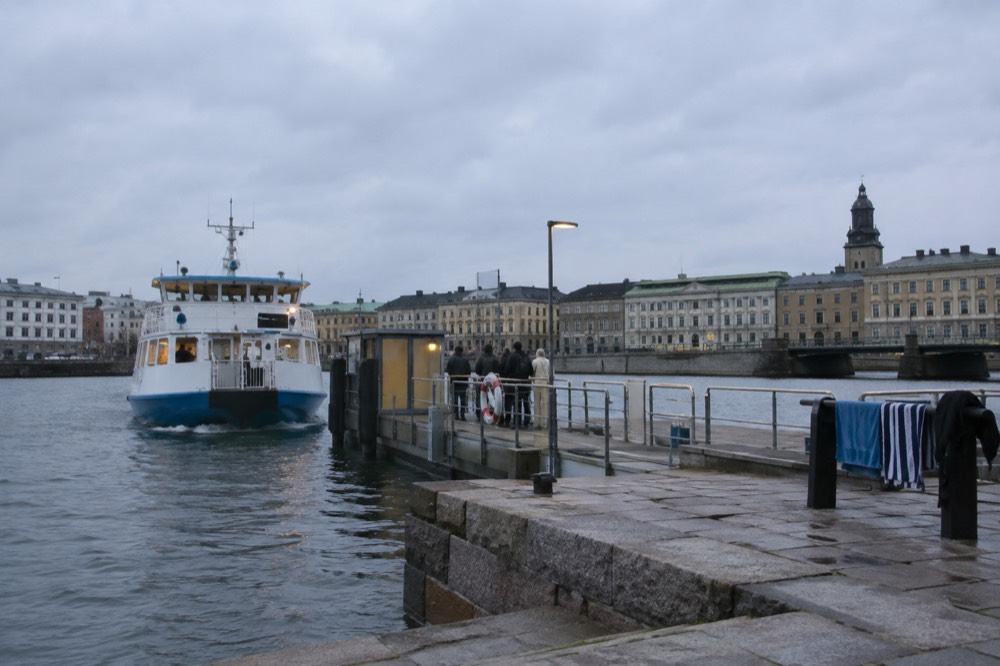
That last sentence is the part that changes budgets. Västtrafik's own zone map for trams, buses and archipelago boats shows the ferries as part of the network, and the islands are inside Zone A, so a 125 kr 24-hour ticket covers tram, ferry and every island in one go. You ride the tram to Saltholmen, the western terminus of the tram network, and step straight onto the boat. There is no tour to book, no ferry fare to add, and no car to hire, because private cars are banned on the islands. Göteborgs Stad's own study states it plainly: the islands of the southern archipelago are protected from car traffic, with only taxi, färdtjänst and emergency services on the roads.
Each island has its own character. Vrångö is the furthest out and has the longest combined swimming and walking terrain. Brännö is flat, green and popular with families. Donsö still works as a fishing island and has swimming rocks on the western side. Köpstadsö is tiny, with a famous hand-cranked ferry platform that hauls people up the cliff. The full island-by-island breakdown is in our guide to the Gothenburg archipelago, and the logistics of the tram-and-ferry journey are in getting around Gothenburg.
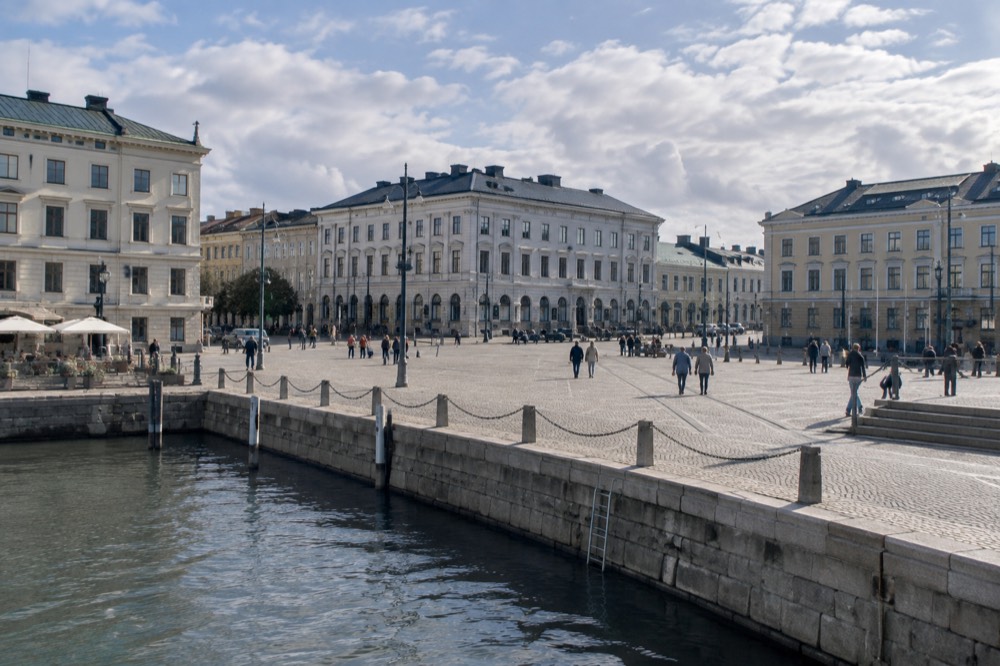
On the mainland side, Stora Amundön is a nature reserve with grassy beaches and shallow water that warms faster than the open sea, which matters in June. Långedrag is the classic old bathing spot with sandy beach and bathing houses. Inside the city, the harbour bath culture is smaller than in Copenhagen or Helsinki, but the riverside and dock areas around the old harbour offer saltwater dips minutes from the centre, and the Röda Sten and Älvsborg bridge area sits right on the water where the river meets the sea.
How Does Sauna Culture Work in Gothenburg?
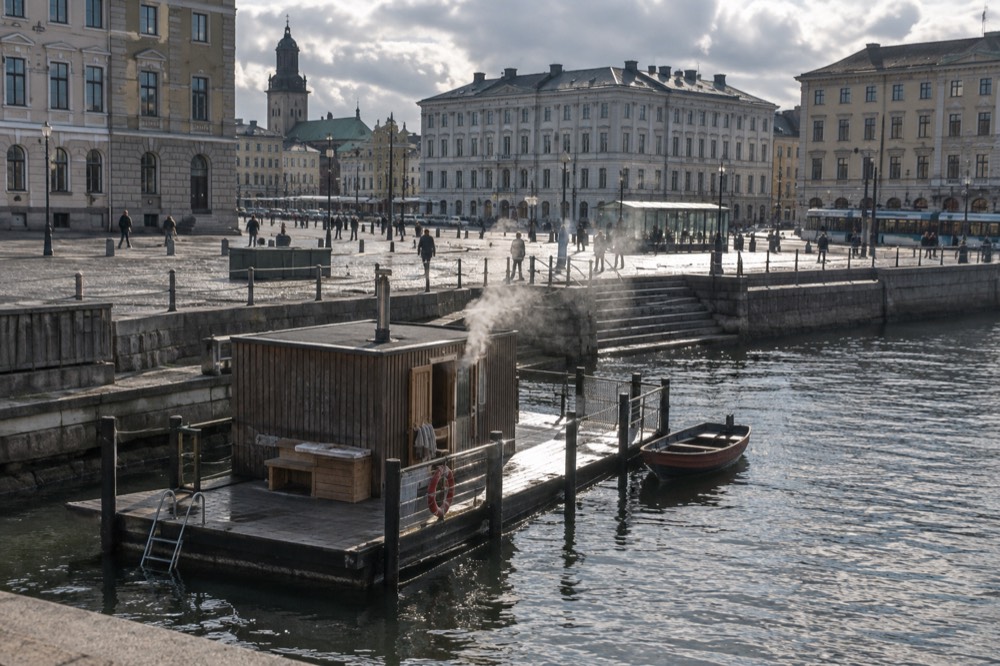
Gothenburg sauna culture is built around the cold dip cycle, a hot room followed immediately by sea water, repeated as long as you like. The options run from floating sauna boats that cruise the archipelago, to hot tub tours on Stora Amundön, to winter swimming clubs that cut holes in the ice. Nothing requires membership: the commercial tours and boat saunas are open to anyone who books, and the sea itself is free.
The Swedish tradition is less about the sauna as a destination and more about the alternation. The hot room raises your skin temperature, the cold water drops it fast, and the cycle is the point. In Gothenburg that cycle is unusually easy to arrange because the sea is never more than a tram ride away, and in winter the islands give you genuine open-water cold rather than a plunge pool.
The most complete version of the experience is the archipelago sauna boat cruise: four hours on a boat with its own sauna, cruising out of the city into the archipelago with stops for sea dips along the way. It is priced per person, runs year-round in principle, and the listing currently shows a 5 rating from a single review, so it is a new product with a strong first impression rather than a battle-tested one.
Two other operators cover the same cycle on land. The hot tub and sea dip tour at Stora Amundön runs three hours and combines a heated tub with dips in the reserve's shallow water, and the listing has no reviews yet, which is real information about a new product rather than a warning sign.
The hot tub escape with secret beach and harbour cruise is a different shape of product again. It is priced per group of up to five rather than per person, which changes the arithmetic for families but suits a party of friends, and it also has no reviews yet as a new listing.
If you would rather be on the water without the sauna, an evening sailing tour with Swedish fika runs three and a half hours and is rated 5 from 5 reviews, and the fika tradition it is named for is explained in our guide to fika in Gothenburg.
Is Cold Water Swimming in Gothenburg Safe?
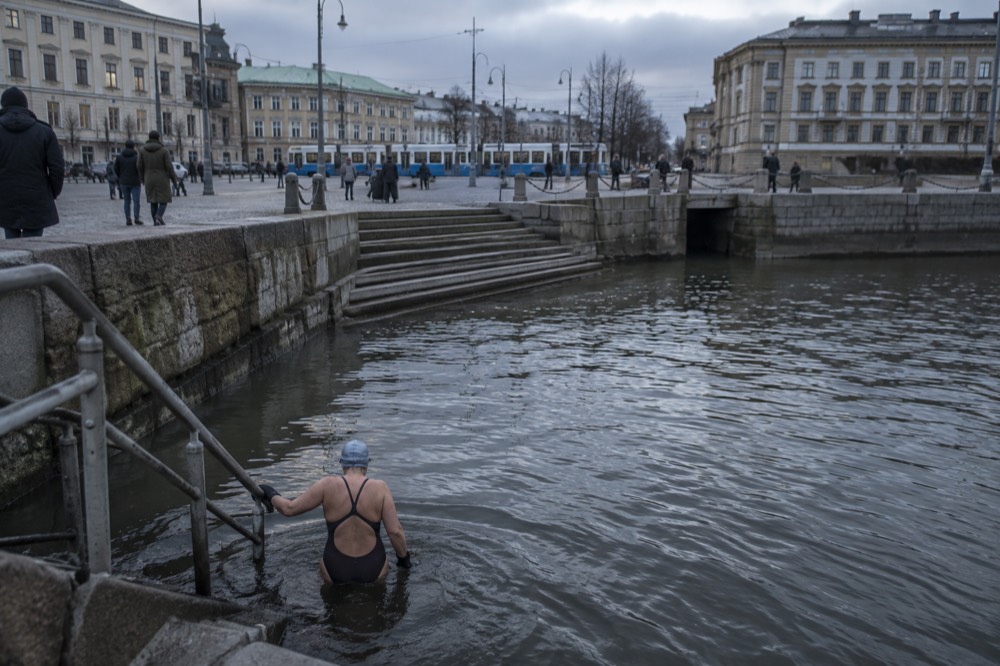
Cold water swimming in Gothenburg is safe within limits: enter slowly, know that cold shock peaks in the first minute, swim near others, and respect the February water at 2.7 C, which is genuinely dangerous for uncontrolled immersion. The archipelago islands have no lifeguards, so swimming there is at your own risk, and the rocks are granite, which is grippy dry and slippery wet.
The safety picture here is the same as anywhere on the Swedish west coast, with two local specifics. First, the swimming rocks on the islands are often accessed by ladder, and the granite around them is smooth and wet. Footwear that grips matters more than a towel. Second, the islands are quiet outside July, which is a feature for swimming but means help is further away if something goes wrong.
| Water temp (C) | What it feels like | Sensible precautions |
|---|---|---|
| 18+ (Jul-Sep peak) | Comfortable for most swimmers | Normal swimming caution |
| 12-16 (Jun, Oct) | Cool on entry, fine once moving | Shorter first dip, swim parallel to shore |
| 7-11 (May, Nov) | Cold, breathing goes shallow | Enter slowly, cap helps, time in water 10-15 min |
| 3-7 (Apr, Dec-Jan) | Cold shock on entry | Swim with others, short dips, warm layers ready |
| 2.7 (Feb mean) | Extreme cold | Winter swimming club conditions only |
The temperatures in the left column map directly onto the SMHI monthly means above. The February figure is a monthly average, not a worst case: the record low in the archive is -1.2 C. Winter swimmers here are almost always organised club swimmers, and the reason is not machismo, it is that a controlled entry with people and warm clothes present is a different activity from a solo February immersion off a wet rock.
One more local fact worth carrying: the sea around Gothenburg is brackish, a mix of Baltic outflow and saltier Kattegat water, so it is less buoyant than the Atlantic and freezes below zero. That is why the record low is -1.2 C rather than 0. It also means the water tastes only faintly of salt, which surprises people on their first archipelago swim.
What Should You Bring for Swimming and Sauna in Gothenburg?
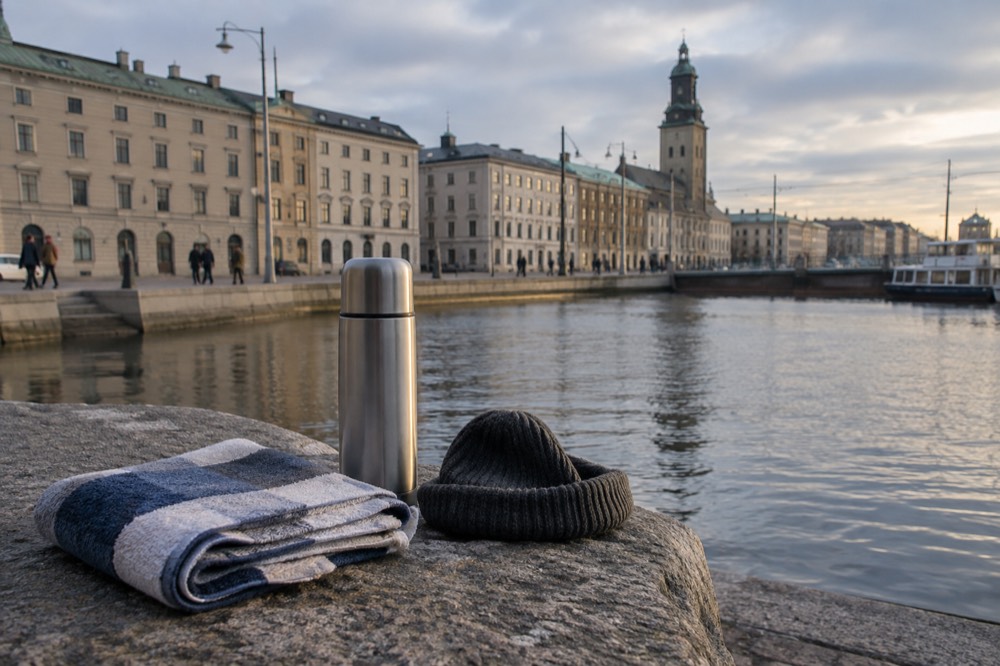
For a summer swim on the islands you need a towel, footwear that grips wet granite, and a dry bag, because the ferry and rocks offer nowhere to stow things. For sauna you need two towels, one to sit on and one to dry with, plus a swim suit if the sauna is mixed. For cold season add a wool hat, neoprene gloves or booties, and a thermos, and skip cotton entirely, it stays wet and cold against skin.
The granite point deserves repeating because it is the most common first-day mistake on the islands. The rocks are the swimming infrastructure. There are few sandy entries outside the mainland beaches, so you will be walking on stone that is wet, and ordinary flip flops are worse than bare feet on it. More of these guides are collected on Gothenburg Travel Guide.
| Season | Water | Essentials | Nice to have |
|---|---|---|---|
| Jun-Aug | 16-18.6 C | Swim suit, towel, grippy footwear | Dry bag, picnic, snorkel |
| Sep-Oct | 12.8-16.7 C | Towel, windproof layer, warm drink | Wetsuit top for longer swims |
| Nov-Jan | 3.9-9.3 C | Wool hat, neoprene gloves, warm layers, thermos | Reflective tow float |
| Feb-Mar | 2.7-4.1 C | Full cold kit, swim with others, sauna access nearby | Neoprene booties, changing robe |
The changing robe is the one item that earns its place quickly in this climate. Rain falls on 127 days a year here, 912 mm in total on the SMHI 1991-2020 normals, and October is the wettest month at 102.9 mm, right at the tail of the good swimming season. A robe turns a windy ferry stop into a non-event. Our page on what to pack for Gothenburg takes the full wardrobe further.
When Is the Best Time for Swimming in Gothenburg?
The best month for comfortable swimming in Gothenburg is August, when the sea averages 18.6 C at Vinga, and the second-best window is early September at 16.7 C, which is warmer than June. For cold water swimmers the season runs November to April, with February the coldest at 2.7 C. Avoid expecting warm water in June, despite the air temperature, the sea lags six weeks behind.
This is the section where Gothenburg defies the standard Nordic guide. The city's own climate data, station Göteborg A, shows July air at 18.3 C mean, which sounds like peak summer. But the sea is still climbing then. A swimmer who arrives in the first week of June finds 16.2 C water and often a breeze, while one who arrives the first week of September finds 16.7 C water, emptier islands and the ferry still running full schedule.
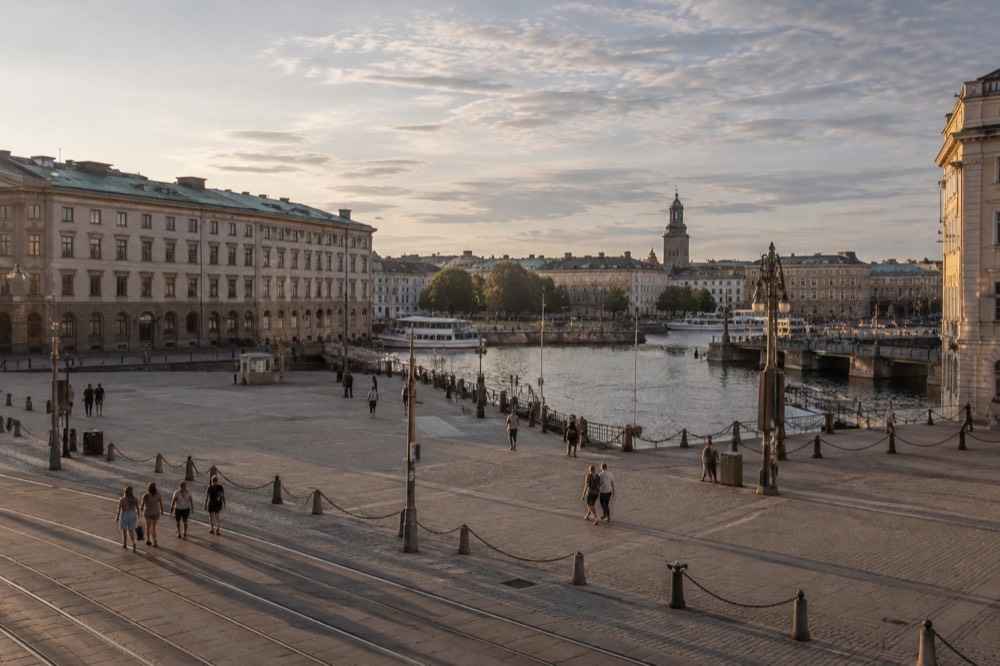
The daylight matters as much as the temperature. On 21 June the sun is up 18 hours 6 minutes, from 04:11 to 22:17, and civil twilight stretches from 02:58 to 23:30, so a late evening swim happens in full light. By 21 December daylight is down to 6 hours 32 minutes, 08:54 to 15:26, and a winter swim is a short-day activity by definition. The full month-by-month breakdown is in our guide to daylight and darkness in Gothenburg.
For the sauna-plus-swim combination, the shoulder seasons are the sweet spot. In May the water is 11.6 C, cold enough to make the sauna feel earned but not dangerous. In October it is 12.8 C and the archipelago boats run a quieter timetable. Our Gothenburg in autumn and Gothenburg in winter pages pick up what the rest of the city offers around those swims.
Can You Combine a Boat Tour with Swimming or a Sauna?
Yes, several Gothenburg boat tours combine water time with the sea itself: a four-hour archipelago sauna boat cruise with dips from the boat, a three-hour hot tub and sea dip tour at Stora Amundön, a four-hour hot tub escape with a harbour cruise priced per group of up to five, and a three-and-a-half-hour evening sail with Swedish fika for a gentler version. Prices and ratings are on each operator's live listing.
The sauna boat is the most direct answer to the question, because the sauna and the sea are on the same vessel. It runs four hours, is priced per person, and shows a 5 rating from 1 review on the listing. The hot tub tours do the same thing with heated tubs instead of a hot room, and the evening sail is for swimmers who want the water under them rather than around them.
For a day built around the islands without the sauna, the guided archipelago cruise runs two and a half hours and is rated 4.4 from 1,488 reviews, which makes it the most-reviewed boat product in the city. It is a sightseeing cruise rather than a swimming trip, but it shows you the islands you might swim from the next day.
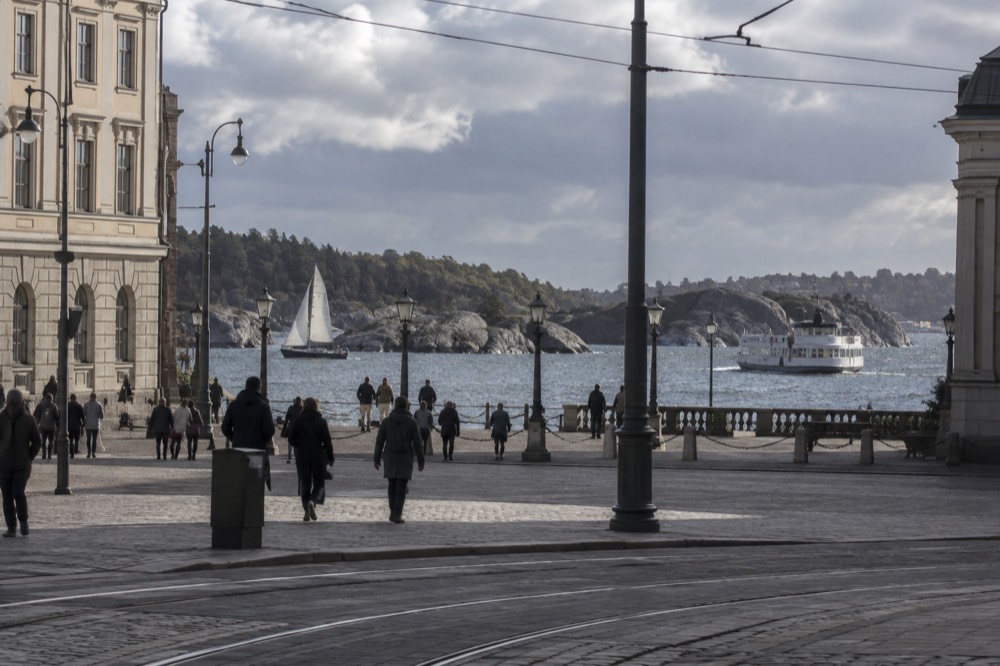
A practical pairing that works well: take the guided cruise or the amphibious bus tour to learn the geography, then ride the tram and ferry to Saltholmen and the islands on your own Zone A ticket to swim. The amphibious bus is rated 4.7 from 4,326 reviews and runs one hour on land and water, a good first-day orientation. Our guide to how to get to the Gothenburg archipelago has the full ferry logistics.
How Much Does Swimming and Sauna Cost in Gothenburg?
Swimming itself is free everywhere: the islands, the beaches and the sea carry no entry fee, and the ferry out is covered by a 125 kr 24-hour Zone A Västtrafik ticket. Guided sauna and hot tub experiences run from about 103 kr-equivalent in USD per person for the Stora Amundön tour to several hundred for private group options, with exact prices on each operator's live listing.
The free part is not a footnote, it is the headline. A visitor with a 24-hour ticket can swim off Vrångö, walk Brännö, and ride the tram back, all inside one ticket, which is the best-value single fact on this site. The paid products exist for the sauna half of the cycle and for people who want logistics handled.
| Experience | Basis | Duration | Reviews | Where to check |
|---|---|---|---|---|
| Swimming on the islands | Free, ferry on Västtrafik ticket | Any | n/a | Zone A ticket, 125 kr for 24 hours |
| Sauna boat cruise | Per person | 4 hours | 5 from 1 review | Operator's live listing |
| Hot tub and sea dip, Stora Amundön | Per person | 3 hours | No reviews yet | Operator's live listing |
| Hot tub escape, beach and harbour cruise | Per group, up to 5 | 4 hours | No reviews yet | Operator's live listing |
| Evening sail with Swedish fika | Per person | 3h 30m | 5 from 5 reviews | Operator's live listing |
Two honesty notes on that table. The two hot tub products with no reviews are new listings, and "no reviews yet" is the accurate description, not a soft way of implying good ratings. And the sauna boat's single review means the 5 rating carries very little weight either way. The wider cost picture for a Gothenburg trip, food and transport and beds, is in our guide to whether Gothenburg is expensive.
Common Questions About Cold Water Swimming and Sauna in Gothenburg
Is the sea in Gothenburg warm enough to swim in?
Yes, from late June through September. The sea peaks at 18.6 C in August at the Vinga measuring station, and September water at 16.7 C is warmer than June water at 16.2 C. Most swimmers find 16 C and above comfortable once they are in.
When is the sea coldest in Gothenburg?
February, at a mean of 2.7 C, with a record low of -1.2 C because the brackish Kattegat water freezes below zero. January is slightly warmer at 3.9 C. February swimming is a winter club activity, not a casual dip.
Can you swim on the Gothenburg archipelago islands?
Yes, and the islands are part of Gothenburg, not a day trip. They are car-free and sit inside Västtrafik Zone A, so a 125 kr 24-hour ticket covers the tram to Saltholmen and the ferry out. Vrångö, Brännö, Donsö, Styrsö, Asperö and Köpstadsö all have swimming rocks.
Do you need to book a sauna in Gothenburg?
The commercial sauna and hot tub experiences run on booked departures, so yes for those: the sauna boat cruise, the Stora Amundön hot tub tour and the group hot tub escape all sell per departure. The sea itself needs no booking and costs nothing.
Is cold water swimming dangerous in Gothenburg?
It carries real risk below about 10 C if you enter fast and alone. Cold shock peaks in the first minute of immersion. Enter slowly, swim with others in the cold months, keep dips short, and have warm layers ready. The islands have no lifeguards.
What should I wear for winter swimming in Gothenburg?
A wool cap, neoprene gloves and booties, and no cotton anywhere. Bring a changing robe or two towels, a thermos of something hot, and plan a warm-up plan for immediately after the dip, whether that is a sauna, a heated tub or a hot shower.
The sea around Gothenburg rewards anyone who checks the numbers before booking flights. August is the warm month, September beats June, and the islands where most of the swimming happens are inside the city's own tram and ferry zone. Whether you arrange the sauna half yourself or let a boat handle it, the cold water half is free, and it is closer than almost any other city in Sweden can manage.