What to Pack for Gothenburg Season by Season
Gothenburg's weather does not run on the calendar most visitors imagine. The rain peaks in October, the sea is warmer in September than in June, and daylight swings by more than eleven hours between the solstices. Pack for the data, not the reputation.
Short answer
Pack layers and a proper rain shell for any season. Spring is the driest time of year, summer is mild rather than hot, autumn is the wettest stretch, and winter is dark and just around freezing. Waterproof footwear matters more than an umbrella, and swimwear earns its place from June through September.
Gothenburg sits at 57.7 degrees north on the Kattegat coast, and that geography sets the packing rules. SMHI's 1991-2020 normals for station Göteborg A record 912 mm of rain a year spread across 127 wet days, roughly one day in three, with the wettest month arriving in October (102.9 mm) and the driest in April (51.3 mm). The US Naval Observatory's tables put the city at 6 hours 32 minutes of daylight on 21 December against 18 hours 6 minutes on 21 June, a swing of 11 hours 34 minutes. In June, civil twilight runs from 02:58 to 23:30 local time, leaving only about three and a half hours of true night. A packing list built on those numbers looks quite different from the one assembled from the city's rainy reputation, a reputation SMHI's own data does not support: the national precipitation maxima sit in the western highlands and the mountains, not here. This guide from Gothenburg Travel Guide works through each season with the actual figures attached.
What Should You Pack for Gothenburg in Spring?
Spring is Gothenburg's dry window, not a warm one: April brings just 51.3 mm of rain on 8.2 wet days, the lowest of any month, but mean air temperatures run 3.0 in March, 7.7 in April and 12.4 in May, so you are packing for cool, bright, dry days rather than T-shirt weather. A windproof midlayer, a light shell and closed shoes cover almost everything the season throws at you.
The numbers behind that answer come from SMHI's normals spreadsheet for station Göteborg A: March averages 3.0 C, April 7.7 C and May 12.4 C, while rainfall stays modest at 54.0, 51.3 and 54.3 mm respectively. March still carries winter's edge, and the sea is colder than the air all spring, with mean water temperature at just 7.1 C in April and 11.6 C in May according to SMHI's Vinga station archive. Nobody swims in spring without a wetsuit, so leave the swimwear at home unless your trip runs into late May.

What that means in the suitcase: two long-sleeve base layers, one warm fleece or wool midlayer, a light waterproof shell, jeans or trousers rather than shorts, and one scarf for March mornings. Gloves are worth it in March but dead weight by May. Spring is also the season where the layer system earns its keep, because a March day can start at freezing and finish at eight degrees in sunshine.
| Item | March | April | May |
|---|---|---|---|
| Warm midlayer | Yes | Yes | Light one |
| Gloves and scarf | Yes | Optional | No |
| Waterproof shell | Yes | Yes | Yes |
| Shorts | No | Rarely | Late May |
| Swimwear | No | No | Marginal |
| Sunglasses | Yes | Yes | Yes |
If you are deciding when to come rather than what to bring, the best time to visit Gothenburg guide breaks the year down month by month, and the case for spring is largely the rain table above. Spring visitors also get the city at its emptiest: the record 6 million commercial guest nights of 2025 were concentrated around the summer peak, so an April or May trip means shorter queues at Universeum, whose own visit page states it is open every day of the year from 10:00 to 18:00, and easier ferry seats out to the islands.
What Should You Pack for Gothenburg in Summer?
Summer in Gothenburg is mild, not hot: mean air temperature peaks at 18.3 C in July, and even the warmest sea water of the year, 18.6 C in August, is barely swimmable by southern European standards. Pack light layers, a proper rain shell because July still averages 81.3 mm of rain, swimwear for the archipelago, and an eye mask, because in late June the sky never fully darkens.
That 18.3 C July figure is a monthly mean, so individual days push into the mid twenties, but Gothenburg summers rarely deliver the sustained heat that makes heavy packing worthwhile. The rain point surprises people: June (73.7 mm), July (81.3 mm) and August (92.8 mm) are all wetter than April, and August is wetter than every winter month except December. The shell jacket stays in the bag all summer.
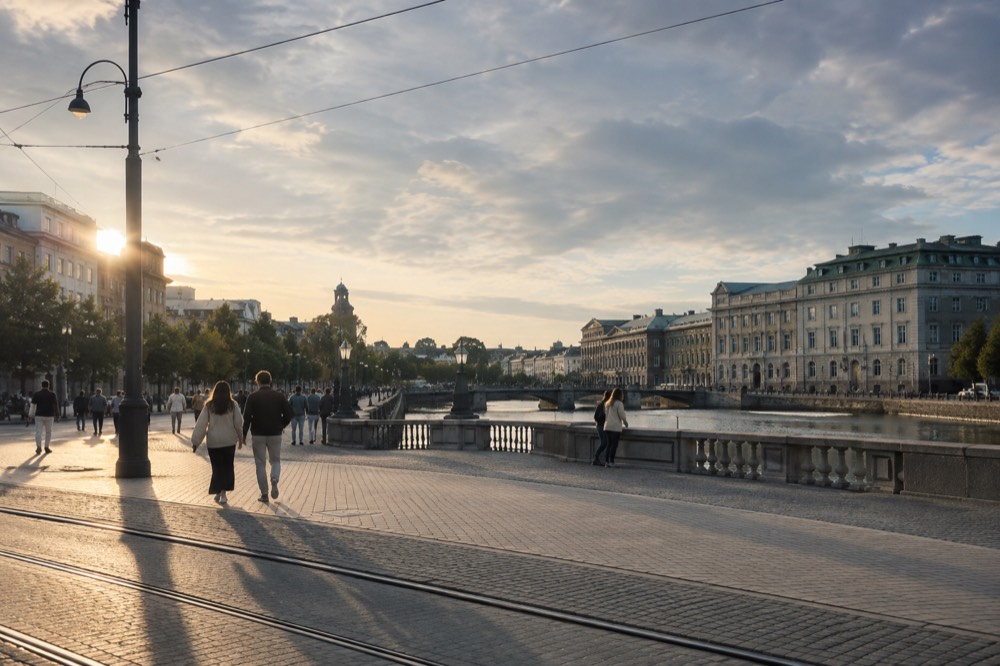
The eye mask is the item nobody thinks about. On 21 June the sun rises at 04:11 and sets at 22:17, and civil twilight stretches from 02:58 to 23:30, so a hotel room with thin curtains glows all night. If you sleep dark, pack one.
Swimwear is genuinely worth bringing, and not just for July. SMHI's Vinga station data shows the sea peaks in August at 18.6 C, not July, and September water (16.7 C) is warmer than June water (16.2 C). A September swim in the archipelago is warmer than a June one, which is the opposite of what most visitors book around. The car-free islands of Styrsö, Brännö and Vrångö are reached by tram and ferry on an ordinary Västtrafik ticket, so a swim trip needs no extra packing beyond a towel. The swimming and beaches guide covers where the water is best, and kayaking the Gothenburg archipelago covers the paddling angle, where a dry bag belongs on the list.
Summer clothing in practice: T-shirts plus one warm layer for evenings, because a 25-degree afternoon can follow a 14-degree evening. Long trousers at least half the week. Comfortable walking shoes rather than sandals, because cobbles in the old town and gravel paths on the islands punish flimsy soles. A packable rain shell, not an umbrella, because the wind on the waterfront makes umbrellas a losing proposition.
A quick-dry towel rounds out the summer list. It weighs nothing, it dries on a ferry railing, and it doubles as a picnic blanket on the island rocks. If you plan to rent a kayak, the operators supply the safety equipment, so the towel and a change of clothes are the only additions your bag needs.
What Should You Pack for Gothenburg in Autumn?
Autumn is the season that catches visitors out: October is the wettest month of the year at 102.9 mm of rain across 12.6 wet days, and by November the mean temperature has fallen to 5.1 C with daylight shrinking fast. Pack real waterproofs, insulated footwear, warm layers you can add and remove, and a reflective detail on your outer layer if you plan to walk after about 17:00 in November.
The rain arrives after the tourists leave. September is still pleasant at a 14.0 C mean with 80.0 mm of rain, but October jumps to 102.9 mm and November holds at 84.7 mm, and the wet-day count climbs from 10.8 in September to 12.6 in October. Meanwhile the daylight collapses: the city loses roughly five and a half hours of it between the September equinox and the end of November.
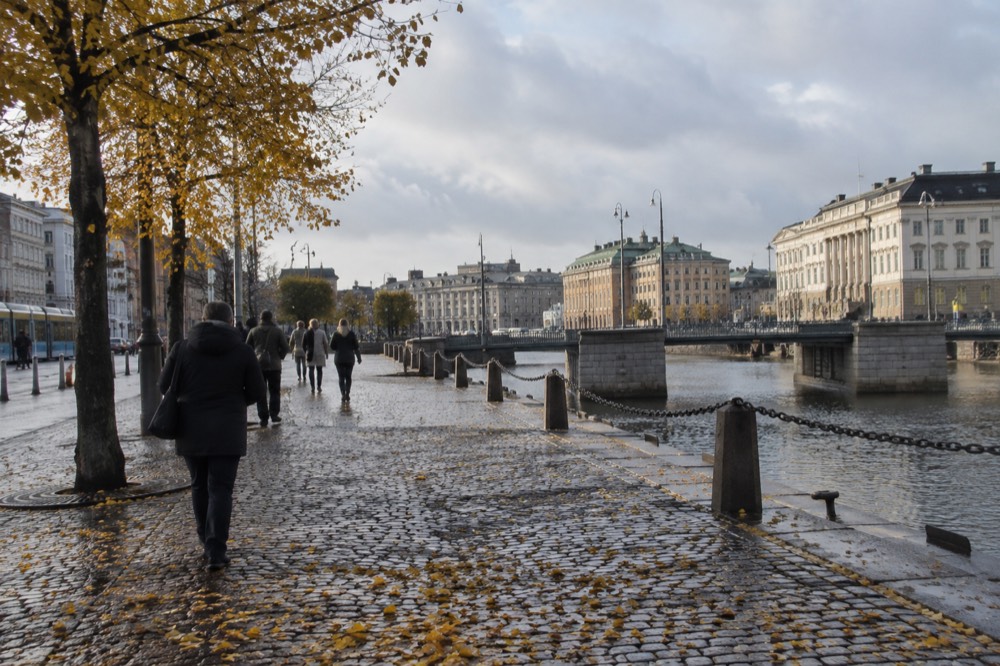
The honest autumn packing list is short on glamour: a genuinely waterproof jacket with a hood, waterproof shoes or boots, wool socks, two midlayers, and a warm hat by November. An umbrella is fine in the city centre but useless on the waterfront and banned from most museums' cloakrooms when wet. The gothenburg on a rainy day guide lists what to do when the forecast wins, and it leans on exactly the indoor attractions that make a wet afternoon survivable.
One autumn consolation: the sea is still relatively warm. September's mean water temperature of 16.7 C beats June's 16.2 C, so an early-autumn archipelago dip is on the table if you pack a quick-dry towel. By October the water has fallen to 12.8 C, and by November to 9.3 C, at which point the cold-water swimmers take over and everyone else watches.
| Month | Mean air temp | Rain | Wet days | Sea temp |
|---|---|---|---|---|
| September | 14.0 C | 80.0 mm | 10.8 | 16.7 C |
| October | 9.0 C | 102.9 mm | 12.6 | 12.8 C |
| November | 5.1 C | 84.7 mm | 12.0 | 9.3 C |
What Should You Pack for Gothenburg in Winter?
Winter in Gothenburg is dark, damp and hovering around freezing: December averages 2.1 C and January 0.8 C, with rain on roughly one day in three, so you need a warm waterproof coat, insulated boots, gloves, a hat and a light-boosting plan, because 21 December delivers only 6 hours 32 minutes of daylight. Proper thermal underwear earns its place if you are out after dark.
The temperature numbers look mild for a city at 57.7 degrees north, and they are: Gothenburg's coastal position keeps winter from going deep continental. What the numbers hide is the combination of damp and dark. December brings 93.0 mm of rain and January 83.0 mm, and the rain often arrives as sleet, which is worse for shoes than snow. Meanwhile daylight bottoms out at 6 hours 32 minutes on 21 December, with sunrise at 08:54 and sunset at 15:26, and civil twilight only stretching the grey light from 08:03 to 16:17.

Pack accordingly. A waterproof insulated coat, boots with actual grip, wool socks, gloves, a warm hat and a scarf are the core. Ice cleats are optional: the city salts its central streets, but side streets and the archipelago islands can be slick in January and February. The gothenburg in winter guide covers what the season offers in exchange, and the gothenburg christmas market guide covers the Liseberg Christmas season, which liseberg.se lists as running 14 to 23 December, the single biggest reason people visit in the dark months.
One winter packing trap: Liseberg's Christmas market is outdoors, and the park's own calendar shows it closing on 23 December with the whole park shut until mid-April. People arrive in late January expecting the amusement park and find it closed. Check the Liseberg rides, tickets and when to go guide before you pack for a winter visit built around it.
What Footwear and Daypack Items Does Every Gothenburg Trip Need?
Whatever the season, every Gothenburg trip needs waterproof or water-resistant shoes with real tread, a packable rain shell, a reusable bag or small daypack, and a card or phone for payment, because the city's museums and transit are cashless and the cobblestones, tram steps and island gravel punish smooth soles. Add a power bank in winter, when cold and dark conspire against phone batteries.
The footwear point is the one that matters most. Gothenburg's old town, Inom Vallgraven, runs on cobblestones laid by Dutch engineers in the seventeenth century, the archipelago islands run on gravel and rock, and rain makes both slick. Trams have high steps. Sandals and smooth-soled sneakers are the two most common footwear mistakes visitors make here.
The payment point is practical rather than climatic. Göteborgs konstmuseum takes card or Swish only, Universeum is entirely cashless, and Västtrafik tickets live in an app or on a card. Cash has almost no role in the city. The money, cards and cash in Gothenburg guide covers the details, and the getting around Gothenburg guide covers the ticket side, including the fact that Västtrafik's fare page shows a 24-hour Zone A ticket at 125 kr covering trams, buses and the archipelago ferries alike.
| Daypack item | Why |
|---|---|
| Packable rain shell | Rain falls one day in three, year round |
| Reusable bag | Shops charge for bags, and it doubles for fika runs |
| Power bank | Cold drains batteries, and everything from tram tickets to museum entry runs on the phone |
| Reusable bottle | Tap water is excellent, and refill points are common |
| Eye mask | Only in May to July, when the night sky stays light |
Do You Need to Pack for Rain in Gothenburg?
Yes, but proportionately: rain falls on about 127 days a year, one day in three, totalling 912 mm, which is wet but nowhere near the permanent drizzle of the city's reputation, and the heaviest rain is concentrated in October, December and August rather than spread evenly. A hooded shell and waterproof shoes cover it. An umbrella is optional in the centre and useless on the coast.
The month-by-month table from SMHI's normals tells the real story. October leads at 102.9 mm, December follows at 93.0 mm, August at 92.8 mm and November at 84.7 mm. April is the driest month at 51.3 mm on just 8.2 wet days. May (54.3 mm) and March (54.0 mm) are nearly as dry. If your trip falls in March, April or May, rain barely makes the packing list; if it falls in October, it is the packing list.
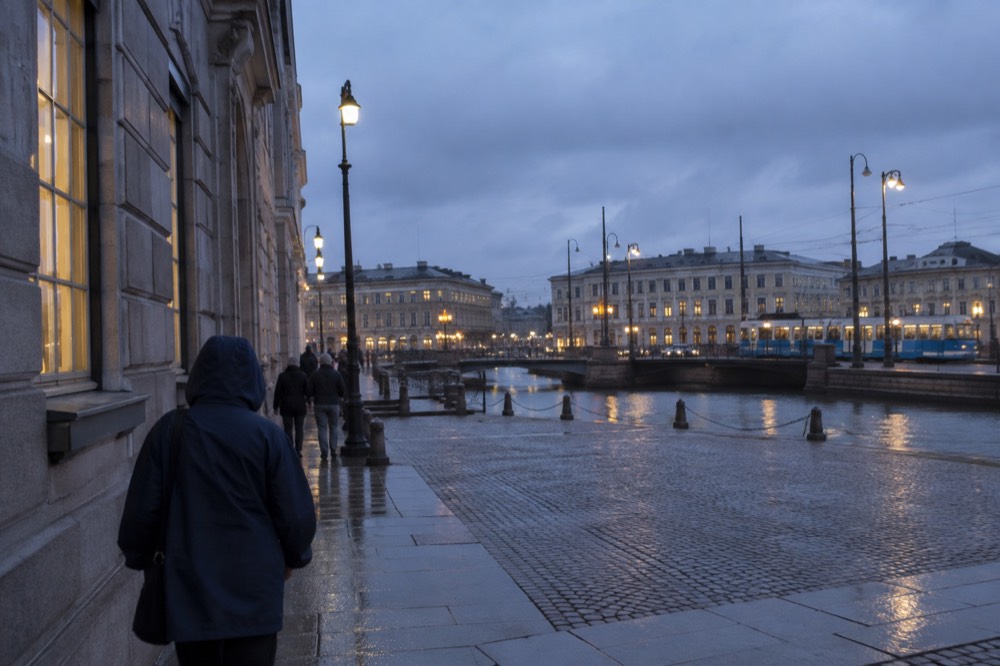
What the data does not say is that Gothenburg is Sweden's rainiest city. SMHI's own description of the 1991-2020 normals places the national precipitation maxima in the western highlands and the mountain fjäll regions, with annual means over 1000 mm there, while Gothenburg's 912 mm sits inside the wet western Götaland band. The cliché is repeated everywhere and supported nowhere. Pack for one wet day in three, not for a monsoon.
What Should You Not Bother Packing for Gothenburg?
Leave behind heavy winter gear outside December to February, a bulky umbrella, formal evening wear unless you have a specific plan, more than one outfit per two days, and any expectation that you will need cash, because Gothenburg is a cashless, casually dressed city where the practical list is short and the overpacked suitcase is the most common mistake.
The dress code point deserves emphasis. Gothenburg is a jeans-and-sneakers city, from its museums to its Michelin-starred restaurants' lunch services. Nobody will look twice at a rain jacket in a nice restaurant. What you will regret is hauling a second suitcase of "just in case" clothes through the tram system's high steps and narrow doors.
A few specifics worth knowing before you finalise the list. Beer above 3.5% ABV is sold only through Systembolaget, the state monopoly, under Alkohollag (2010:1622), so if your packing plan included buying strong beer in a supermarket for a hotel picnic, adjust it: supermarkets carry folköl at 3.5% and below, and Systembolaget stores close on Sundays. And if your trip includes a Liseberg day, note that the entry ticket at 95 kr includes no rides, so budget space in the daypack for the layers you will shed in the queue lines rather than for purchases inside the park.
For the cost side of planning, the is Gothenburg expensive guide runs the numbers, and the where to stay in Gothenburg guide covers the neighbourhood choices that determine how much walking your shoes will do each day.
If the weather turns on any of these picks, the amphibious bus keeps rolling: it drives the streets, launches into the harbour, and finishes in an hour, which makes it the one sightseeing option that genuinely does not care about the forecast.
Common Questions About Packing for Gothenburg
Do I need an umbrella in Gothenburg?
A hooded rain jacket works better. Rain falls on about one day in three year round, but the waterfront and archipelago wind makes umbrellas awkward, and wet umbrellas are a nuisance in museums. A packable shell plus a hood covers the typical shower.
Is Gothenburg Sweden's rainiest city?
No. SMHI's 1991-2020 normals put the national precipitation maxima in the western highlands and the mountains, not in Gothenburg. The city records 912 mm a year across 127 wet days, roughly one day in three, which is wet but ordinary for western Sweden.
What should I pack for Gothenburg in June?
Light layers, a rain shell, swimwear and an eye mask. July is the warmest month at a mean of 18.3 C, but June still averages 73.7 mm of rain, and the late-June sky never fully darkens, with civil twilight running from 02:58 to 23:30 local time.
Do I need swimwear for Gothenburg?
From June through September, yes. SMHI's Vinga station data shows the sea peaking at 18.6 C in August, and September water at 16.7 C is warmer than June water at 16.2 C. Outside those months the water is cold enough that only cold-water swimmers bother.
How cold is Gothenburg in winter?
Mild for the latitude but damp. Mean temperatures run 2.1 C in December, 0.8 C in January and 0.7 C in February, with rain or sleet on roughly one day in three. Pack a waterproof insulated coat, boots with grip, gloves and a hat, and plan around only 6 hours 32 minutes of daylight on the shortest day.
Should I pack cash for Gothenburg?
No. The city is effectively cashless: Göteborgs konstmuseum takes card or Swish only, Universeum is card only, and Västtrafik tickets live in an app or on a card. A payment card and a phone cover everything.