Gothenburg Christmas Market: Dates, Tickets and What to Expect
Gothenburg's main Christmas market is Jul på Liseberg, and in 2026 it runs 14 November to 23 December. Here is what the tickets really cost, what the entry fee does and does not include, and how to plan around a city that has six and a half hours of daylight in late December.
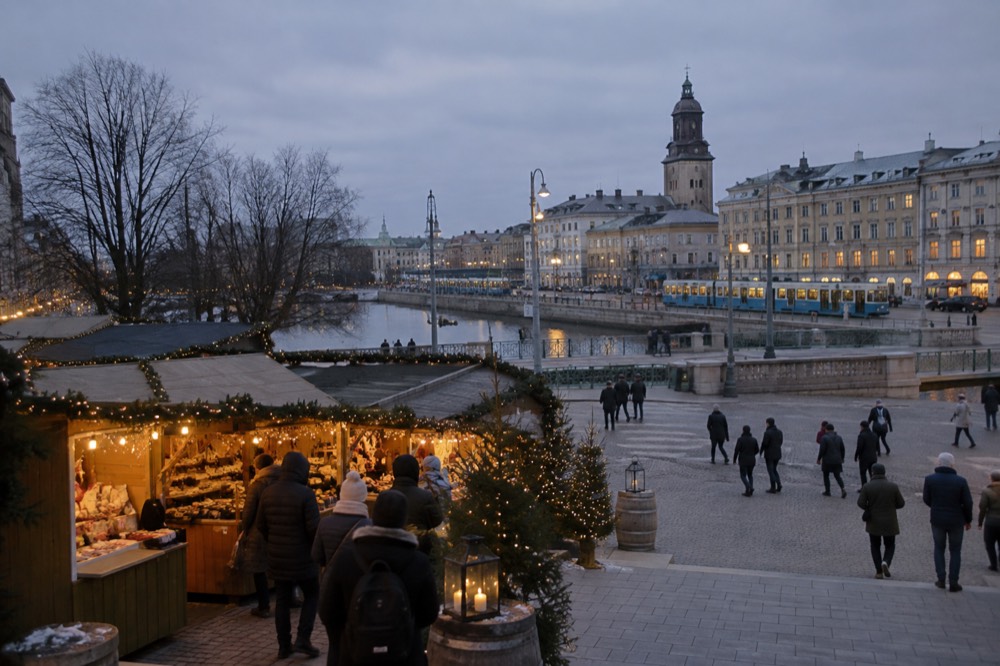
Short answer
The Gothenburg Christmas market, Jul på Liseberg, runs 14 November to 23 December 2026. Entry starts at 95 kr online, but that ticket includes zero rides. The park is closed from 24 December until mid-April, so time your trip to the market window.
Gothenburg's biggest Christmas event is not a market square at all. It is an amusement park. Jul på Liseberg, the Christmas season at Liseberg, turns the city's single largest attraction into a market and light festival at the same time, and in 2026 it runs from 14 November to 23 December, dates confirmed on liseberg.se/jul. That makes Gothenburg, Sweden, one of the easier Nordic Christmas cities to plan for, because the headline event has a published calendar, published prices and a tram stop of its own. This guide from Gothenburg Travel Guide covers what the tickets really include, what December actually feels like on the west coast, and how to extend the trip beyond the park gates.
When Is the Gothenburg Christmas Market Open in 2026?
Jul på Liseberg, Gothenburg's main Christmas market, runs 14 November to 23 December 2026, and the park is completely closed outside its published season windows. There is no Christmas opening on 24, 25 or 26 December, and no January winter market. Before 14 November the park sits dark between the Halloween season, which ends 1 November, and the Christmas opening. Anyone booking a hotel for the days after 23 December will find the gates shut.
Liseberg does not operate year round, and the gaps are longer than most visitors assume. The 2026 calendar, read directly from Liseberg's own pages, looks like this:
| Season | 2026 dates | Status |
|---|---|---|
| Summer (Lisebergsparken) | 18 April to 20 September | Closed |
| Halloween | 2 October to 1 November | Closed |
| Gap between seasons | 21 September to 1 October | Closed, except Kaninlandet |
| Jul på Liseberg (Christmas) | 14 November to 23 December | Open |
| Winter closure | 24 December to mid-April | Closed |
One exception softens the gaps: Kaninlandet, the small-children's area, has been given its own winter season and now opens on winter weekends and school holidays, a change Liseberg announced for 2026. That is useful for families with small children but it is not the Christmas market, and the rest of the park stays closed outside the three seasonal windows.
The practical planning point is the exit date. The market ends on 23 December, the day before Christmas Eve, which in Sweden is the main celebration of the year. From 24 December the city goes quiet, shops shut and families retreat indoors. A Christmas market trip to Gothenburg is a November or early-to-mid December trip, not a Christmas Day one. If your dates are flexible, the earlier weeks of the season are calmer, and the final weekend before 23 December is the busiest of the year at the park.
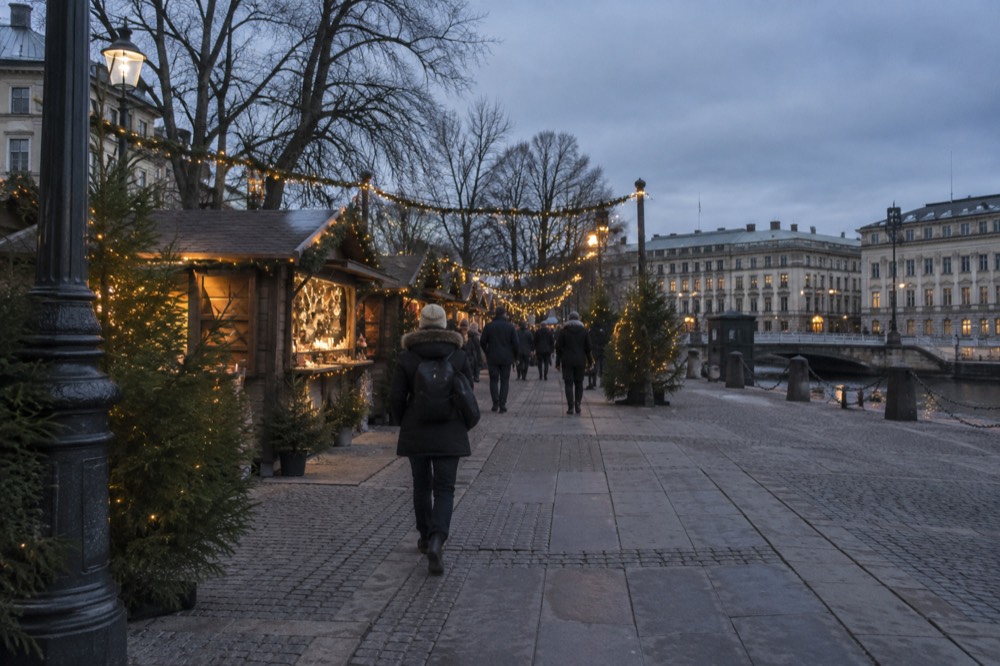
What Do Liseberg Christmas Tickets Really Cost?
Online entry starts at 95 kr, but a 95 kr Entré ticket includes zero rides, and that is the single fact visitors get wrong. Rides require a separate Åkpass wristband from 310 kr, or the combined Entré plus Åkpass from 365 kr. Children under 110 cm enter free. Evening tickets valid from 18:00 start at 275 kr for the combined option. Buying at the gate costs more than buying online, which Liseberg states plainly on its own ticket page.
The entry and ride split is the trap. Liseberg's own wording on the ticket page is explicit: the entry ticket does not include the attractions. A family that buys four entry tickets and expects to ride will spend the evening looking at rides, not riding them. Here is the full price structure as published on liseberg.se:
| Ticket | Online price from | What it includes |
|---|---|---|
| Entré | 95 kr | Park entry only, no rides |
| Åkpass | 310 kr | Unlimited rides, entry NOT included |
| Entré + Åkpass | 365 kr | Entry plus unlimited rides |
| Entré + Åkpass Kväll | 275 kr | Same, valid from 18:00 |
| Åkpass Kväll | 225 kr | Rides only, from 18:00, entry separate |
| Children under 110 cm | Free | Entry; ride rules still apply |
For a Christmas market visit, the honest question is whether you need rides at all. Jul på Liseberg is substantially a lights, market and atmosphere event, and the Christmas sections are walkable with a plain entry ticket. Families with children who want the rides should budget for the combined ticket. Adults coming for the market stalls, the glögg and the lights can enter on the cheapest ticket and spend the difference on food.
Liseberg is not sold on any booking platform, and there is no affiliate or third-party ticket reseller for it. Buy on the official site, where the online discount against the on-site price is applied automatically. Prices also vary by date, so a peak December Saturday costs more than a midweek November evening, and the price calendar on the ticket page shows the exact figure for the day you choose.
Is the Gothenburg Christmas Market Worth Visiting?
Yes, if you treat it as a lights festival with a market attached rather than a market with rides attached. Liseberg drew roughly 2.5 million guests to the park itself in 2025, and the Christmas season is one of its three annual peaks. The market stalls, the mulled wine and the light installations are included with entry, the setting is a real park rather than a cordoned street, and the tram ride there takes minutes from the centre. The rides are optional and priced separately.
The case for it is scale and setting. The Christmas market at Liseberg sits inside a full amusement park on a hill in the middle of the city, with the lights strung across trees and rides rather than along a single street. The case against it is that it is not a traditional town-square market, and if what you want is a small wooden-stall market with a church behind it, Liseberg's version is loud, big and commercial.
Gothenburg softens that with its ordinary December streets. The city centre, and especially the Avenyn boulevard and the streets around it, carries its own light displays, and the shop windows along the main walking streets do the traditional festive work. The Haga old quarter, with its wooden landshövdingehus buildings, is the closest thing Gothenburg has to a historic Christmas setting, and a walk there pairs well with an evening at the park. Our guide to Haga, Gothenburg's wooden old quarter covers the neighbourhood street by street.
For a second opinion on the city itself, our Gothenburg or Stockholm comparison is honest about where Gothenburg wins and where it does not, and our two days in Gothenburg itinerary slots a Liseberg evening into a full weekend.
How Cold and Dark Is Gothenburg in December?
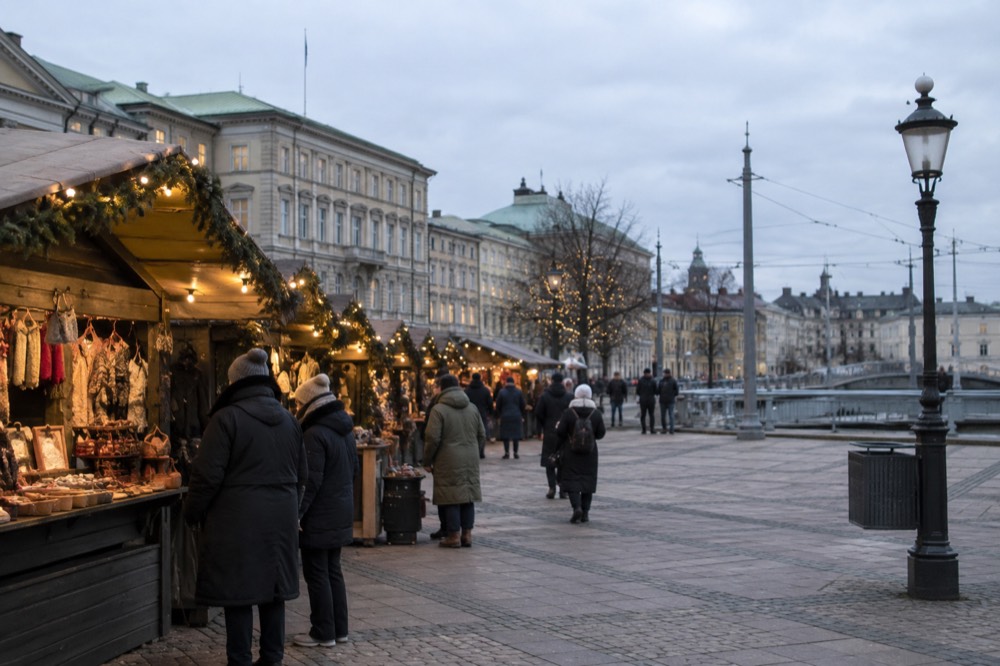
Gothenburg's December is mild for its latitude but very dark: the shortest day, 21 December, runs from sunrise at 08:54 to sunset at 15:26, just 6 hours 32 minutes of daylight. Mean December air temperature sits around 2.1 C, with the sea off the archipelago at 5.5 C. December rainfall averages 93 mm across 13.3 wet days, so expect rain rather than reliable snow, and plan the market visit for the late afternoon when the lights carry the darkness.
The darkness is the defining fact of a Gothenburg December, and it shapes how the city does Christmas. The US Naval Observatory's figures for Gothenburg put the 21 June day at 18 hours 6 minutes against 6 hours 32 minutes on 21 December, a swing of over 11 and a half hours. By mid-December, the sun is effectively a brief grey appearance between long blue twilights, which is exactly why the light installations matter so much here. Nordic cities invest in festival lighting because for six weeks a year the lights are the daylight.
| December fact | Figure | Source |
|---|---|---|
| Daylight on 21 December | 6 h 32 m (08:54 to 15:26) | US Naval Observatory |
| Mean December air temperature | 2.1 C | SMHI 1991-2020 normals, station Göteborg A |
| December precipitation | 93 mm over 13.3 days of 1 mm or more | SMHI 1991-2020 normals |
| Mean sea temperature off Vinga | 5.5 C | SMHI oceanographic archive, station 35144 Vinga |
Snow is not a given. Gothenburg sits at the mouth of the Göta älv where the river meets the Kattegat, and the maritime air keeps the city hovering around freezing rather than well below it. The reliable December weather is overcast and around 2 C, with rain on roughly one day in three. Pack for wet and dark, not for a snow-globe market. Our what to pack for Gothenburg guide has the full winter list, and the broader Gothenburg in winter guide covers everything the season offers beyond the park.
The counterintuitive fact worth knowing is about the sea, not the air. SMHI's quality-controlled observations from the Vinga lighthouse station show the water peaks in August at 18.6 C, not July, and that September water at 16.7 C is warmer than June water at 16.2 C. None of that helps a December swimmer, but it explains why the archipelago ferries keep running so calmly in winter, and why the cold-water swimming culture here is a year-round one.
What to Eat and Drink at the Gothenburg Christmas Market?
The Christmas market menu is glögg, the Swedish mulled wine, served with raisins and almonds, alongside grilled sausages, roasted almonds, pepparkakor ginger biscuits and the seasonal julmust soft drink. One rule shapes the drinks list: beer above 3.5% ABV, all wine and all spirits can only be sold by Systembolaget, the state monopoly, under the Swedish alcohol statute. Market stalls therefore serve glögg at festival strength or below, and anything stronger needs a licensed venue.
The 3.5% threshold is statutory, from Alkohollag (2010:1622), chapter 1, section 8, published in the Swedish statute book. Beer up to 3.5% is folköl and appears in ordinary supermarkets; anything stronger is starköl, Systembolaget territory. The practical effect at a Christmas market is that the glögg in your cardboard cup is a lighter drink than its German cousin, and the warmth comes from the cup rather than the percentage.
The food beyond the stalls is where Gothenburg genuinely excels, because this is a west-coast seafood city. Feskekôrka, the fish church building on Rosenlundsgatan, reopened in 2024, the year the 1874 building turned 150, and it is now a food hall with five restaurants alongside its two fish counters rather than the fish-only market it once was. The seafood is Kattegat catch: shrimp, langoustine, salmon and mussels. Our Feskekôrka guide covers what is inside now, and the broader where to eat in Gothenburg guide handles the rest of the city, from shrimp sandwiches to the Michelin rooms.
For the sit-down version of the Christmas table, the Swedish julbord, the Christmas buffet of ham, herring and meatballs that restaurants run through December, booking ahead matters. Tables for the weekends closest to 23 December go early. And if fika, the Swedish coffee break, is new to you, our fika in Gothenburg guide explains the custom and where the best rooms are.
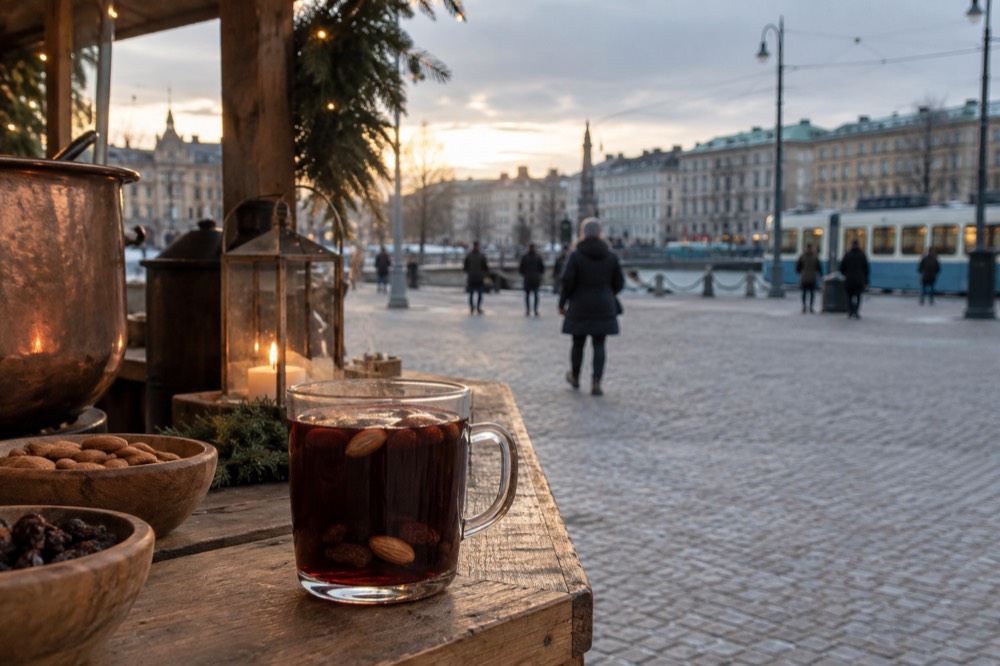
Can You Combine the Christmas Market with the Archipelago?
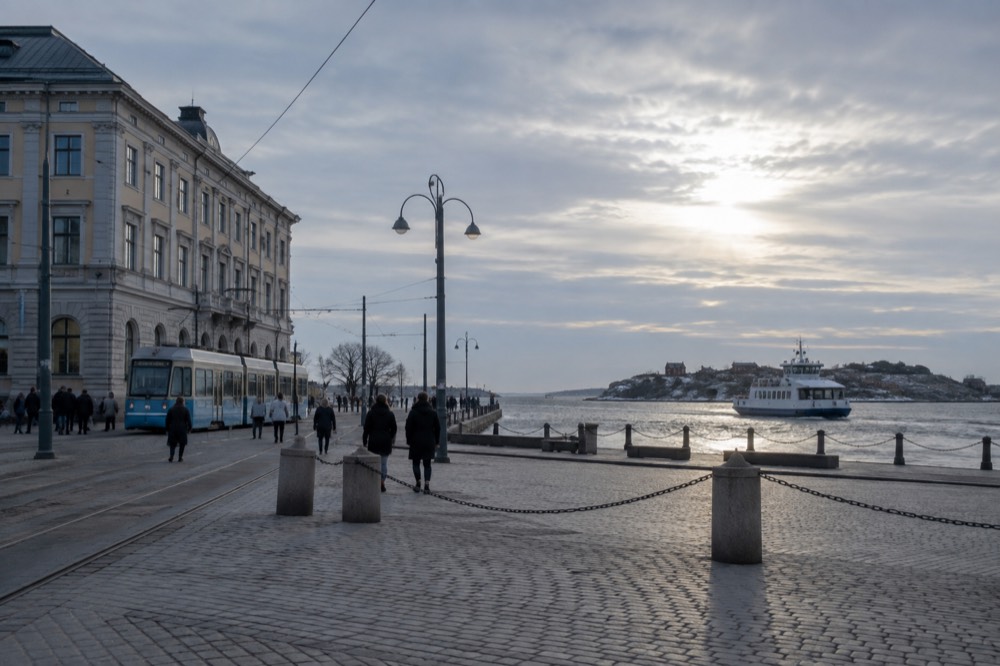
Yes, and the ferry is covered by the same ordinary Västtrafik ticket as the tram, because the southern archipelago islands sit inside the city's own Zone A. A 24-hour Zone A ticket at 125 kr covers the tram to Saltholmen and the ferry out to car-free islands like Styrsö, Brännö and Vrångö. In December the boats run a reduced timetable and the sea sits around 5.5 C, so it is a short, bracing visit rather than a beach day.
The archipelago is part of Gothenburg, not a day trip from it. Västtrafik's own network map shows the archipelago ferry lines as part of the same system as the trams, and the islands are in Zone A alongside Göteborg, Mölndal, Partille and Öckerö. The ferries depart from Saltholmen, which is itself the western terminus of the tram network, so the journey is tram to boat with one ticket. Private cars are banned on the southern islands, which is why they stay quiet even in the city's busiest weeks.
In December the islands are a different proposition from summer. The villages are small and largely residential, the daylight window is short, and the value is in the crossing itself: grey sea, granite, lighthouse lights and the city skyline on the way back. Check the winter timetable on the Västtrafik Zone A ticket page before committing, because sailings are thinner outside the summer schedule. Our southern archipelago guide and the general Gothenburg archipelago guide cover the islands individually.
If you would rather have someone else handle the boat, two operators run winter water trips from the city. The guided archipelago cruise is a short outing suited to a market-and-water day, and the amphibious bus tour runs from the city centre and drives straight into the harbour, which is a warmer way to see the waterline in December.
Is a Christmas Day Trip to Marstrand Worth It?
Marstrand, the island fortress town in the Bohuslän archipelago north of Gothenburg, runs a Christmas market of its own, and a sailing trip from Gothenburg pairs the market with the crossing and about five hours on the island. It is a genuine day trip, unlike the city's own southern islands, and the operator's listing shows the current price and departure details. Carlsten's Fortress, the 17th-century hilltop fort, dominates the island, and cars are banned there too.
Marstrand is the classic Gothenburg excursion: an hour or so up the coast, a proper sailing and boat town, and a fortress climb with a wide sea view. In December it is quiet, atmospheric and cold, which suits it. The Marstrand Christmas market sailing trip runs from Gothenburg and handles the logistics, which matters because winter public transport connections to Marstrand are slower than summer ones and the island is a walk-on-only destination.
The listing for that trip currently shows no reviews yet, which is real information about a new listing rather than a warning sign, and the price is on the operator's live listing. Our Marstrand island fortress guide covers the town itself, and the wider day trips from Gothenburg guide ranks the alternatives, from the Bohuslän granite coast to Lake Vänern and Läckö Castle.
How Do You Get to the Gothenburg Christmas Market?
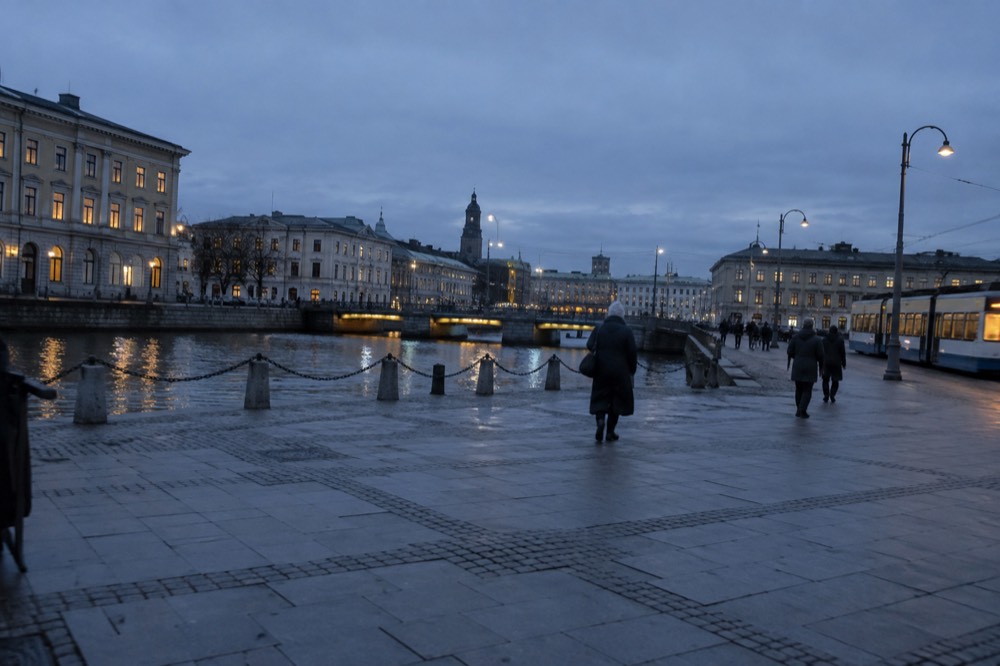
Liseberg has its own tram stop on lines running through the city centre, and a single Västtrafik ticket at 38 kr covers the ride, while a 24-hour Zone A ticket at 125 kr covers a full day of trams, buses and the archipelago ferries. From Landvetter Airport the Vy flygbussarna coach takes 20 minutes to the centre, and there is no rail link to the airport at all. The park gates are a short walk from the Korsvägen and Liseberg stops.
Gothenburg runs on its trams. The network carried 126 million journeys in 2025, and the lines reach from Mölndal in the south to Angered in the north and out to Saltholmen in the west, where the archipelago boats start. For a Christmas trip the relevant fact is simplicity: the tram to Liseberg is ordinary public transport, no special event ticket, no shuttle.
| Journey | Best option | Cost | Notes |
|---|---|---|---|
| City centre to Liseberg | Tram, single ticket | 38 kr | Own stop, frequent |
| Full day of trams and ferries | 24-hour Zone A ticket | 125 kr | Covers archipelago ferries too |
| Landvetter Airport to centre | Vy flygbussarna coach | Fare on the coach operator's site | 20 minutes, no rail link exists |
| Airport alternative | FlixBus line 691 | Fare on the operator's site | Stops at Korsvägen, near Liseberg |
| Centre to Marstrand | Boat tour or regional transport | See listing | A real day trip, unlike the city islands |
One fare warning. Västtrafik's 30-day period tickets are currently halved by a temporary state subsidy, Zone A adult from 890 kr down to 445 kr, but that subsidy does not cover the 24-hour and 72-hour tickets a visitor actually buys. Your day ticket is still 125 kr. The full fare picture, including how the zones work, is in our getting around Gothenburg guide, and the airport transfer options are compared in Landvetter to the city centre.
For staying close to the action, our where to stay in Gothenburg guide maps the districts, and the cost question, December hotel prices included, is answered honestly in is Gothenburg expensive.
What Would a Full Gothenburg Christmas Weekend Look Like?
A workable pattern is one Liseberg evening, one daytime in the old quarters and food halls, and one day trip out to Marstrand or the archipelago, with the market visit booked for the late afternoon so the lights land in the darkness. Two to three days is enough to cover all of it without rushing, because the city is compact and the tram does the connecting. The one unmissable booking is the Liseberg ticket itself, bought online in advance for the specific date.
The sequencing matters more than the length. Daylight in December is a six-and-a-half-hour window, so the outdoor sightseeing belongs in the middle of the day and the lights belong at the edges. A sensible shape:
| Time block | What to do | Why |
|---|---|---|
| Morning | Haga, Feskekôrka, the cathedral quarter | Wooden old quarter and food hall in daylight |
| Early afternoon | Museum or viewpoint | Indoor option when rain arrives, and rain arrives |
| Late afternoon | Tram to Liseberg | Lights start working as the sun sets mid-afternoon |
| Evening | Jul på Liseberg | Market, glögg and lights in full darkness |
| Second day | Marstrand sailing trip or archipelago ferry | The sea in winter, on a single Zone A ticket |
For the indoor hours, Gothenburg's museum stock holds up well in December. Göteborgs konstmuseum at Götaplatsen holds around 70,000 works and charges 75 kr for a day ticket, free for visitors under 20, though note its own published plan: the museum closes in 2028 for a rebuild and reopens in 2032, so a visit in the next two December seasons is on the old building. Universeum, the science centre, is open every day of the year from 10:00 to 18:00, with dynamically priced timed entry rather than a fixed adult ticket. Our Gothenburg museums guide ranks them all.
Common Questions About the Gothenburg Christmas Market
When is the Gothenburg Christmas market open?
Jul på Liseberg runs 14 November to 23 December 2026, dates confirmed on liseberg.se. The park is fully closed from 24 December until mid-April, so there is no market on Christmas Day or in January. Kaninlandet, the small children's area, opens on some winter weekends and school holidays outside the main season.
How much does it cost to get into the Gothenburg Christmas market?
Online entry to Liseberg starts at 95 kr, children under 110 cm enter free, and evening tickets valid from 18:00 start at 275 kr for the combined entry and rides option. The 95 kr entry ticket includes no rides; an Åkpass wristband starts at 310 kr and the combined ticket at 365 kr. On-site prices are higher than online.
Is Liseberg open at Christmas?
Only up to 23 December. The Christmas season ends the day before Christmas Eve, and the park then stays closed until the summer season opens on 18 April 2026. Sweden's main celebration is on Christmas Eve itself, and the city is quiet from 24 December.
Does it snow in Gothenburg in December?
Not reliably. The December mean air temperature is around 2.1 C and precipitation averages 93 mm across 13.3 wet days, so rain is more likely than snow. The maritime Kattegat climate keeps the city hovering near freezing rather than well below it. Pack waterproof layers rather than ski gear.
Can you buy tickets for Liseberg in advance?
Yes, and you should. Liseberg sells tickets only through its own official site, not through any booking platform, and online prices are lower than on-site ones. Prices vary by date, so the peak December weekends cost more than midweek November evenings.
Is the Gothenburg archipelago worth visiting in December?
For a short visit, yes. The southern islands are part of the city and the ferries are covered by an ordinary Zone A ticket, including the 125 kr 24-hour option. The sea sits around 5.5 C and daylight is short, so it is a bracing crossing and a walk rather than a summer outing, and winter sailings are less frequent than summer ones.
The Gothenburg Christmas market rewards planning more than most. The dates are fixed and published, the ticket structure has a trap in it that costs nothing once you know it, and the city around the park, from Feskekôrka's reopened food hall to the car-free islands on a single tram ticket, is at its most atmospheric in exactly the weeks the lights are on. Pick a date between 14 November and 23 December, buy the Liseberg ticket online for that date, and let the darkness do the rest.