Gothenburg or Stockholm: Which Swedish City Should You Visit?
Sweden's two biggest cities compete for the same tourists and most comparisons settle into cliché. This one uses verified numbers: Västtrafik's fare tables, SMHI's sea-temperature archive, Liseberg's own calendar, and the city's population register.
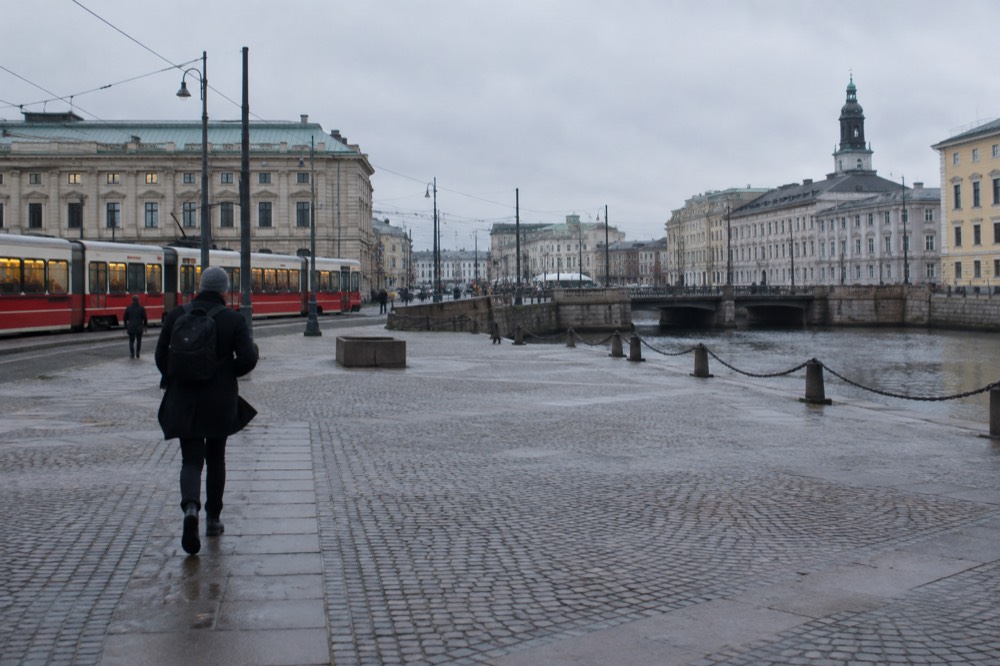
Short answer
Pick Stockholm for the grand waterfront capital with the most famous museums. Pick Gothenburg for a smaller, cheaper, friendlier city where the car-free archipelago sits inside the ordinary tram ticket and the sea is warmest in September, not July. Both are worth a trip; they reward different travellers.
Sweden's two largest cities get compared constantly, and most comparisons dissolve into vibes: Stockholm is the capital, Gothenburg is the "friendly one". This guide takes the other route. Göteborgs Stad's own population register puts the city at 613,274 people at the end of 2025, Göteborg & Co reported over 6 million commercial guest nights in 2025, and SMHI's oceanographic archive holds 61,749 quality-controlled hourly sea-temperature readings from the Vinga lighthouse station off the city's coast. The data exists, so the comparison can be argued with numbers instead of adjectives.
One warning before anything else: every fact below about Gothenburg refers to Gothenburg, Sweden, at the mouth of the Göta älv. It is not Gothenburg, Nebraska, a real American town that shares the name and quietly poisons search results. And the city's own name for itself is Göteborg; Gothenburg is the English exonym, and both point at the same granite-and-tram city on the Kattegat.
Which Is Better for Most Travellers, Gothenburg or Stockholm?
For a first and possibly only trip to Sweden, Stockholm is the safer pick: it has the royal palace, the Vasa Museum and the postcard old town, and more of the country's famous sights in one place. Gothenburg is the better pick for a second visit, a lower budget, or a trip built around the sea, because its car-free southern archipelago is reached on an ordinary tram-and-ferry ticket and the city is compact enough to walk. Roughly, Stockholm impresses; Gothenburg relaxes.
Neither city is a mistake. The honest framing is that Stockholm is a capital doing capital things, while Gothenburg is a port city doing port things, and the difference in atmosphere follows from that. Gothenburg's old town was laid out by Dutch engineers inside a moat, the shipyard cranes still stand over the river on Hisingen, and the tram network, 12 lines and 188 kilometres of single track as of Göteborgs Spårvägar's 2022 annual report, carries 126 million journeys a year. Stockholm's scale is simply another order: the capital stretches across fourteen islands and its metropolitan region is several times the size of Göteborg's roughly 1.1 million.
The decision usually comes down to three questions. How long do you have? What does your budget look like? And do you want famous things or do you want the sea? The rest of this guide answers each with the actual published numbers, and if you are leaning Gothenburg already, two days in Gothenburg is a good place to see how the city fits together.
How Do Gothenburg and Stockholm Compare on Size and Feel?
Gothenburg has 613,274 residents in the city proper against Stockholm's far larger capital region, and the difference shows on the street: Gothenburg's centre is walkable in a day, its main drag Avenyn is a single avenue rather than a district, and its tourist pressure is lower, with just over 6 million guest nights in the whole Göteborg region in 2025, a record year, against the capital's much heavier visitor flow. Gothenburg reads as a big town; Stockholm reads as a metropolis.
The guest-night figure deserves a second look because it says something about crowding. Göteborg & Co's January 2026 press release called 2025 a record year with over 6 million commercial guest nights and the strongest growth in Sweden, driven by international guests up roughly 15 percent January to October. Even at record levels, that is a fraction of what Stockholm absorbs. The practical effect is that you can walk into Gothenburg restaurants and attractions without the queueing that defines a Stockholm summer weekend.
Feel is harder to measure but the built environment gives clues. Gothenburg's signature building type is the landshövdingehus, a wooden-and-brick townhouse style born here because the city once taxed ground floors in stone, so builders put wood above brick. Haga, the old wooden quarter, survives as a whole neighbourhood of it. Stockholm instead has the stone island city, Gamla Stan, and the palace. One city was built by merchants and shipbuilders, the other by kings and bureaucrats, and both still behave accordingly.
If the smaller-city feel is what attracts you, the fastest way to get oriented is a sightseeing circuit, and Gothenburg's most popular one is genuinely unusual: the amphibious bus drives the streets and then drives into the harbour. The trio below covers the three most useful first-day purchases in the city.
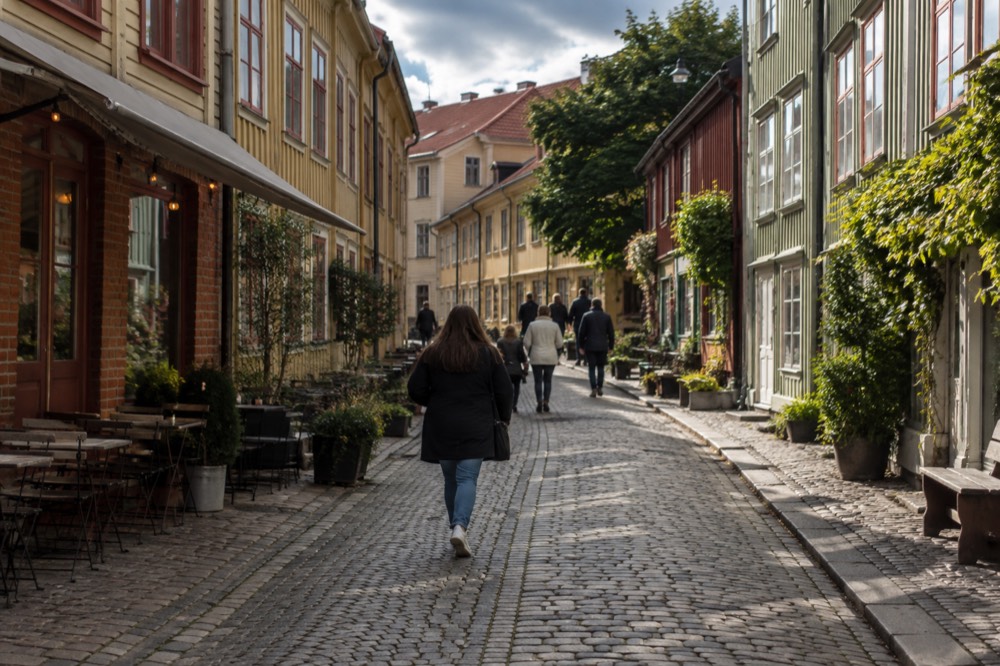
For a deeper look at the neighbourhood that most symbolises the difference in feel, see Haga, Gothenburg's wooden old quarter, and for the view that locals actually use instead of a tourist viewpoint, Ramberget, the skyline view locals use.
Which City Is Cheaper to Visit?
Neither city is cheap, Sweden is a high-cost country, but Gothenburg is consistently the cheaper of the two on lodging, food and attractions, and its single best money fact is transport: a 125 kr 24-hour Zone A Västtrafik ticket covers trams, buses and the ferries to the car-free southern archipelago, so a full island day costs no more than a city day. Stockholm's equivalent island hopping is not part of any ordinary transit ticket.
The transport comparison is the sharpest one, so take it slowly. Västtrafik's fare pages show a single adult ticket at 38 kr for one zone, and a 24-hour Zone A ticket at 125 kr, the same price in the app or a shop. Zone A includes Göteborg, Mölndal, Partille and Öckerö, and Västtrafik's own zone map shows the archipelago boats on the same network. Stockholm's archipelago boats, by contrast, are largely separate operators with separate fares. A Gothenburg visitor buys one ticket and rides a tram to Saltholmen, then a ferry to Styrsö, Brännö or Vrångö, on the same fare.
One fare warning that trips up even careful readers: Västtrafik's 30-day period tickets are currently halved by a temporary state subsidy, Zone A adult 890 kr down to 445 kr, but that subsidy does not cover the 24-hour and 72-hour day tickets a visitor actually buys. The day ticket is still 125 kr. Do not plan around a half-price transport claim.
| Cost item | Gothenburg | Notes |
|---|---|---|
| 24-hour transit ticket, Zone A | 125 kr | Västtrafik price page; covers archipelago ferries |
| Single tram ticket, 1 zone | 38 kr | Adult, app or card |
| Liseberg entry only | from 95 kr | Buys zero rides; under 110 cm free |
| Liseberg entry + unlimited rides | from 365 kr | Online "from" price |
| Göteborgs konstmuseum day ticket | 75 kr | Free under 20; free for students |
| World of Volvo exhibition ticket | from 120 kr online | Old Volvo Museum closed Dec 2023 |
| Sea swim off Vinga | 0 kr | Sea is warmest in August, 18.6 C |
For a full costed breakdown of a Gothenburg trip, from beer prices to what a meal really runs, read is Gothenburg expensive: what a trip really costs, and for the attraction-pass question specifically, the Göteborg City Card, is it worth it explains why the old municipal card no longer exists and what replaced it.
If you are weighing the pass route, the [Go City](https://gocity.tpk.ro/HQKyKKW4) All-Inclusive Pass covers 20-plus attractions in the city and the listing carries a 3.8 rating from 238 reviews. It suits a packed two- or three-day museum schedule more than a slow single-day visit, so check the attraction list against your own itinerary before committing.
The pass covers the indoor side of the city, but the cheapest good hour in Gothenburg is still the amphibious bus, which doubles as both a sightseeing tour and a working orientation lesson in how the moat, the canals and the harbour fit together. The listing shows a 4.7 rating from 4,326 reviews, which makes it the most-reviewed product in the city by a wide margin.
Which City Wins on Islands, Sea and Swimming?
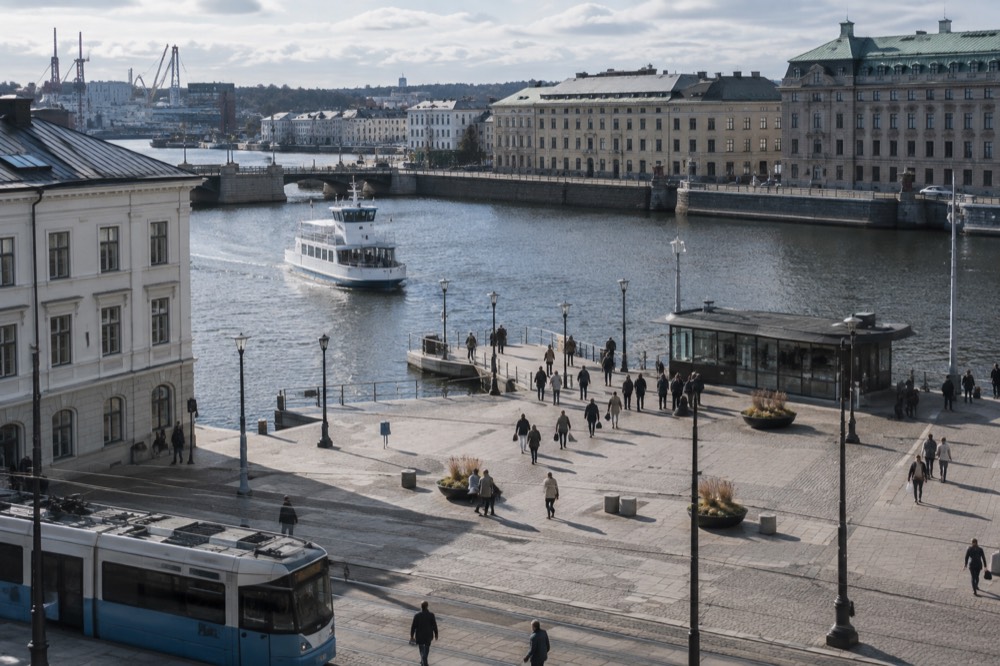
Stockholm's archipelago is bigger and more famous, but Gothenburg's southern archipelago is part of the city itself: the islands are car-free, they sit inside Västtrafik Zone A, and SMHI's sea-temperature record from the Vinga station shows the water peaks at 18.6 C in August and stays warmer in September, 16.7 C, than in June, 16.2 C, so the best swimming month is later than almost anyone books.
That last number is the one to sit with. SMHI's corrected archive at station 35144 Vinga, the lighthouse out at the archipelago's edge, holds 61,749 quality-controlled hourly observations. Aggregated, they show air temperature peaking in July at 18.3 C but the sea lagging about six weeks behind, peaking in August at 18.6 C. September's mean water of 16.7 C beats June's 16.2 C. February, not January, is the coldest month in the water, at 2.7 C, with a record low of -1.2 C, legitimately below zero because brackish Kattegat water does not freeze at exactly 0 C.
| Month | Mean sea temp at Vinga (C) | What it means for swimming |
|---|---|---|
| June | 16.2 | Brisk; locals swim anyway |
| July | 18.3 | Good, but not the peak |
| August | 18.6 | Warmest month of the year |
| September | 16.7 | Warmer than June; empty beaches |
| October | 12.8 | For the committed only |
Stockholm's archipelago, stretching east into the Baltic, is a destination in its own right with thousands of islands, and if your trip is built around island-hopping at scale, it wins on range. But the Gothenburg version wins on friction. You ride tram line 11 to Saltholmen, the western terminus of the tram network, and step onto a Västtrafik ferry serving Asperö, Brännö, Styrsö, Donsö, Vrångö and Köpstadsö. Göteborgs Stad's own study states the islands are protected from car traffic, with only taxi and emergency vehicles on the roads. No booking, no tour operator, no separate ticket.
The guided archipelago cruise is the alternative if you want commentary rather than a timetable, and at 4.4 from 1,488 reviews it is the most-reviewed boat product in the city.
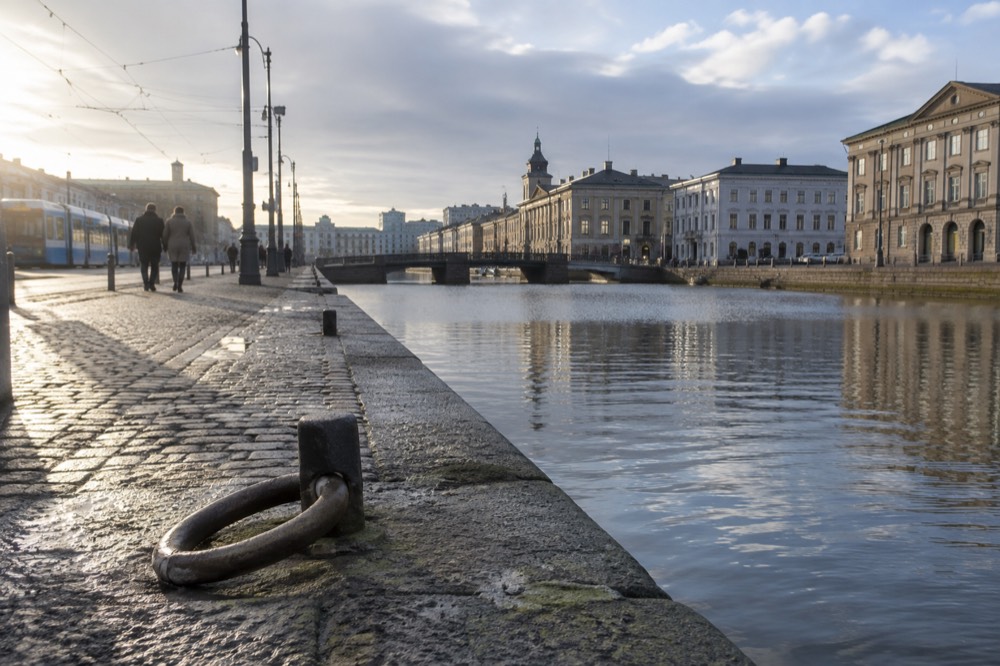
For island-by-island detail, start with the southern archipelago: Styrsö, Brännö, Vrångö and Donsö and how to get to the Gothenburg archipelago, and for the full swimming picture, swimming and beaches in Gothenburg covers the city's harbour baths as well.
How Do the Two Cities Compare on Getting Around?
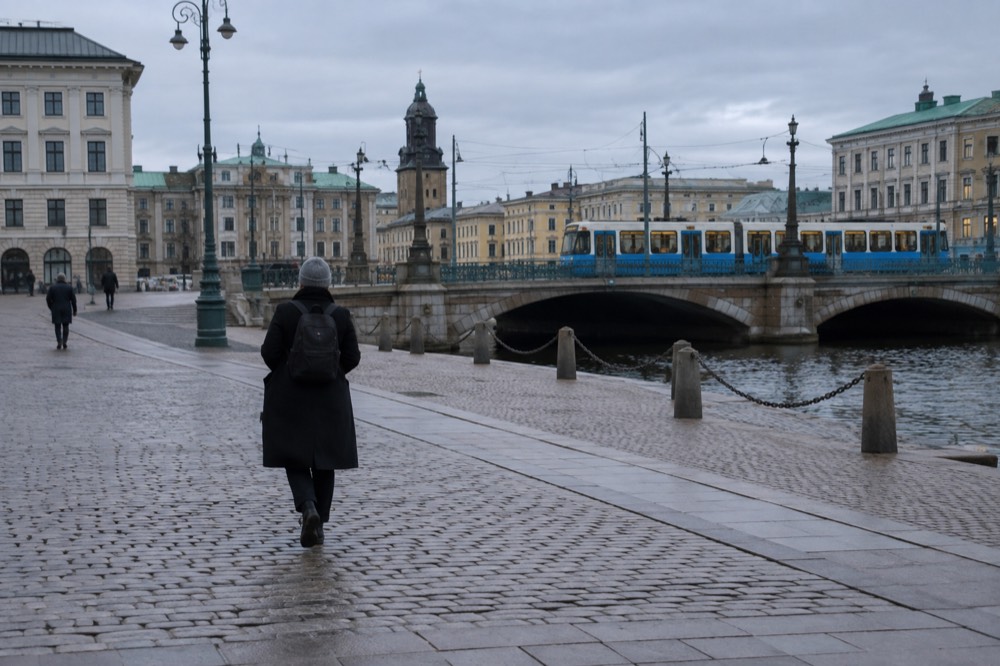
Gothenburg is a tram city, Stockholm is a metro city, and for a visitor the tram wins on charm and simplicity: Gothenburg's 12 lines and 134 stops cover the whole centre on a flat 38 kr single or a 125 kr day ticket with no tap-out, while Stockholm's tunnelbana is faster over longer distances but is a subway, so you see less of the city you came for.
The Gothenburg figures come from Göteborgs Spårvägar, the municipal tram operator, whose annual report states the network runs twelve lines, 134 stops and 188 kilometres of single track, from Mölndal in the south to Angered in the north and out to Saltholmen in the west. The 2025 ridership was 126 million journeys. The 2022 vintage of the line-count figures is worth noting, but the shape of the network has not changed.
Payment is the part visitors get wrong, so it is worth being precise. You buy in the Västtrafik To Go app or at a ticket machine before boarding; there is no cash on the tram and no tap-out at the end of the ride, the single ticket is bought once and lasts its duration. Västtrafik's fare pages list the single at 38 kr for one zone, 76 kr for two, 114 kr for three, and the 24-hour Zone A ticket at 125 kr. The full ticket-and-zone mechanics, including the current temporary halving of 30-day tickets, are laid out in getting around Gothenburg: trams, tickets and zones.
Stockholm's system is bigger and its SL cards and app work fine, but the comparison point that matters is what you see. A tram ride from Brunnsparken to Saltholmen passes canals, wooden houses and harbour. A metro ride in Stockholm passes tunnels, some of them famously decorated with art, but tunnels nonetheless.
Which City Is Better for Food?
Stockholm has more Michelin stars and the grander dining scene, but Gothenburg is the food city most Swedes themselves point to for seafood: it sits at the mouth of the Göta älv where the North Sea shrimp and langoustine land, its fish hall Feskekôrka reopened in 2024 as a full food hall with five restaurants and two fish counters, and the shrimp sandwich is a local institution rather than a menu item.
Feskekôrka, the fish-church-shaped hall on Rosenlundsgatan, is the concrete example. Higab, the municipal property owner, confirms it reopened in 2024, the same year the building turned 150. Its own site now lists fish counters Ebbes Fångst and Flåtens Fiskhandel plus five restaurants, Haldis Kök, Pråmenaden, Victor von G, Lilla Åstol and Ekmans, with Lilla Åstol seasonal and reopening each spring. Guides written before 2020 describe fish counters only, and guides from 2020 to 2023 say closed for renovation; both are now wrong.
One rule that affects any food shopping in either city: Swedish alcohol law, Alkohollag (2010:1622) chapter 1 section 8, defines beer over 2.25 but not over 3.5 percent as folköl, sold in ordinary supermarkets, while anything over 3.5 percent, plus all wine and spirits, is sold only by Systembolaget, the state monopoly. This is why the supermarket version of a Swedish beer often tastes weaker than its label suggests: the shelf stock is frequently a 3.5 percent reformulation. The rule is identical in both cities, but it surprises visitors in both.
For the practical eating guide, see where to eat in Gothenburg, and for the coffee culture that structures every Swedish day, fika in Gothenburg: how it works and where to do it. The city's seafood story, from shrimp sandwiches to oyster safaris, has its own page, and so does Feskekôrka, the fish church.
Which City Is Better in Winter and at Christmas?
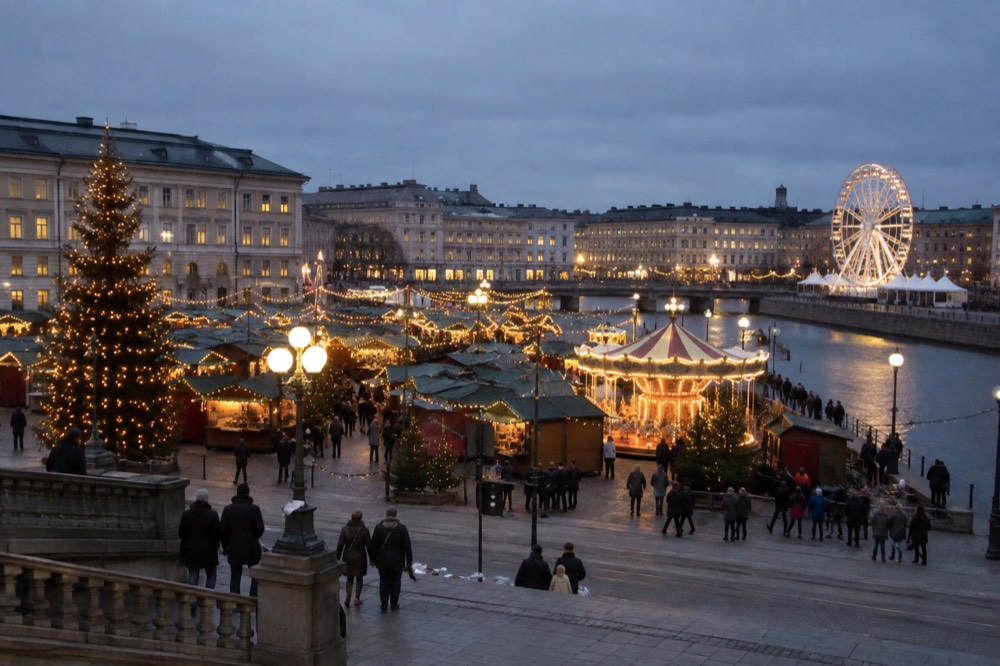
Stockholm's Christmas is bigger and more staged, but Gothenburg's is easier: Liseberg's Jul på Liseberg runs 14 to 23 December 2026 as one of Sweden's largest Christmas markets, the city's December daylight is 6 hours 32 minutes on the solstice, exactly as short as Stockholm's, and Gothenburg's October, not December, is statistically the wet month to avoid, at 102.9 mm against December's 93.0 mm in SMHI's 1991-2020 normals.
The rain myth needs killing here because it distorts this comparison. Gothenburg has a reputation as Sweden's rainy city, and SMHI's own data does not support the superlative. The 1991-2020 normals for station Göteborg A show 912 mm of precipitation a year across 127.3 days with at least 1 mm, about one day in three, which is wet, but SMHI's national summary puts the Swedish maxima in the western highlands and the mountains, not in this city. October is the wettest month at 102.9 mm and April the driest at 51.3 mm. The rain arrives after the tourists leave.
Daylight is where latitude does the talking, and the two cities are nearly identical. The US Naval Observatory gives Gothenburg 6 hours 32 minutes of daylight on 21 December against 18 hours 06 minutes on 21 June, a swing of 11 hours 34 minutes. In June, civil twilight runs from 02:58 to 23:30 local time, leaving only about three and a half hours of true night. Stockholm, a few degrees further south, differs by minutes, not by experience.
| Winter factor | Gothenburg | Stockholm |
|---|---|---|
| Solstice daylight | 6 h 32 m | Similar, marginally longer |
| Wettest month | October (102.9 mm) | Summer months |
| Christmas market | Jul på Liseberg, 14-23 Dec 2026 | Larger, city-wide staging |
| Sea temperature, February | 2.7 C | Baltic side often colder |
| Atmosphere | Port city, lanterns, Haga | Capital, polished |
The Liseberg calendar is the winter planning fact that ruins trips when ignored. The park's own pages give summer 2026 as 18 April to 20 September, Halloween 2 October to 1 November, and Christmas 14 November to 23 December. Between those windows, roughly 21 September to 1 October, 2 to 13 November, and 24 December to mid-April, the biggest attraction in the city is closed, though new for 2026 the Kaninlandet children's area opens on winter weekends and school holidays. A February visitor to Gothenburg who assumed an open amusement park finds a shut gate. The full mechanics, including the fact that a 95 kr entry ticket buys zero rides, are in Liseberg: rides, tickets and when to go and Liseberg's seasons: summer, Halloween and Christmas.
For the broader cold-month picture, Gothenburg in winter covers what stays open, and the Gothenburg Christmas market covers the seasonal city beyond Liseberg.
Which City Should You Choose for a Short Trip?
For two or three days, Gothenburg is the more efficient choice: the centre, Haga, the canals and the archipelago all sit inside one tram zone, and the city rewards a short stay because its highlights are close together. Stockholm needs four or five days to stop feeling rushed, because its famous sights are scattered across islands and water. If you have a week, do both: the train between them is the sensible link.
The short-trip arithmetic is Gothenburg's strongest card. In one day you can walk Inom Vallgraven, the old moat town, take a canal cruise, eat a shrimp sandwich, and still have daylight left. In two you add the archipelago on the same transit ticket. In three you add Liseberg in season and a museum cluster. The itineraries already exist on this site: one day in Gothenburg, two days in Gothenburg and three days in Gothenburg, plus how many days do you need in Gothenburg for the general question.
If the two-city trip is what you decide on, the rail link is direct and comfortable, and Gothenburg to Stockholm by train covers times, booking and whether the scenery is worth the window seat. Coming from Denmark or Norway instead changes the calculus towards Gothenburg, since it is the country's west-coast gateway.
For the last-mile decision, here again are the three products that most efficiently buy you the Gothenburg side of the comparison: the amphibious bus for the overview, the pass for the museums, and the archipelago cruise for the sea.
Common Questions About Gothenburg or Stockholm
Is Gothenburg or Stockholm better for a first visit to Sweden?
Stockholm, for most first-time visitors. It concentrates the country's most famous sights, the royal palace, the Vasa Museum and Gamla Stan, in one region. Gothenburg is the better choice if your first trip is in summer or autumn and you want the sea, because its archipelago is inside the ordinary transit ticket.
Is Gothenburg cheaper than Stockholm?
Generally yes, on lodging and food. Gothenburg's transport is also unusually good value: a 125 kr 24-hour Zone A ticket covers trams, buses and the archipelago ferries. Neither city is cheap by European standards.
Is Gothenburg rainier than Stockholm?
Gothenburg receives 912 mm of precipitation a year over about 127 wet days, per SMHI's 1991-2020 normals, with October the wettest month. It is wetter than Stockholm, but it is not Sweden's rainiest city, a claim SMHI's own data does not support.
Can you visit both Gothenburg and Stockholm on one trip?
Yes, and the train is the natural link between them. Direct rail services connect Göteborg Centralstation with Stockholm, and the journey is comfortable enough to treat as part of the holiday rather than a transfer.
Which city has better access to islands?
Stockholm's archipelago is vastly larger. Gothenburg's southern archipelago is easier: the islands are car-free, they are areas of the city itself, and the ferries from Saltholmen run on an ordinary Västtrafik Zone A ticket.
Which city is warmer for swimming?
Gothenburg's west-coast water, at the Vinga station, peaks at 18.6 C in August. The Baltic side is generally a few degrees cooler in summer. In both cities, August and early September beat June for water temperature.
The short version, from the desk that reports this city: Stockholm if you want the famous Sweden, Gothenburg if you want the liveable one, and if the numbers above pulled you west, Gothenburg Travel Guide has the rest of the city, from where to stay in Gothenburg to the best time to visit Gothenburg and getting from Landvetter airport to the city centre.