Is Gothenburg as Nice as Stockholm? An Honest Comparison for 2026
Is Gothenburg as nice as Stockholm? A fair, fact-based comparison of Sweden's two biggest cities: size, sights, archipelagos, food, cost and which visitors each one suits.
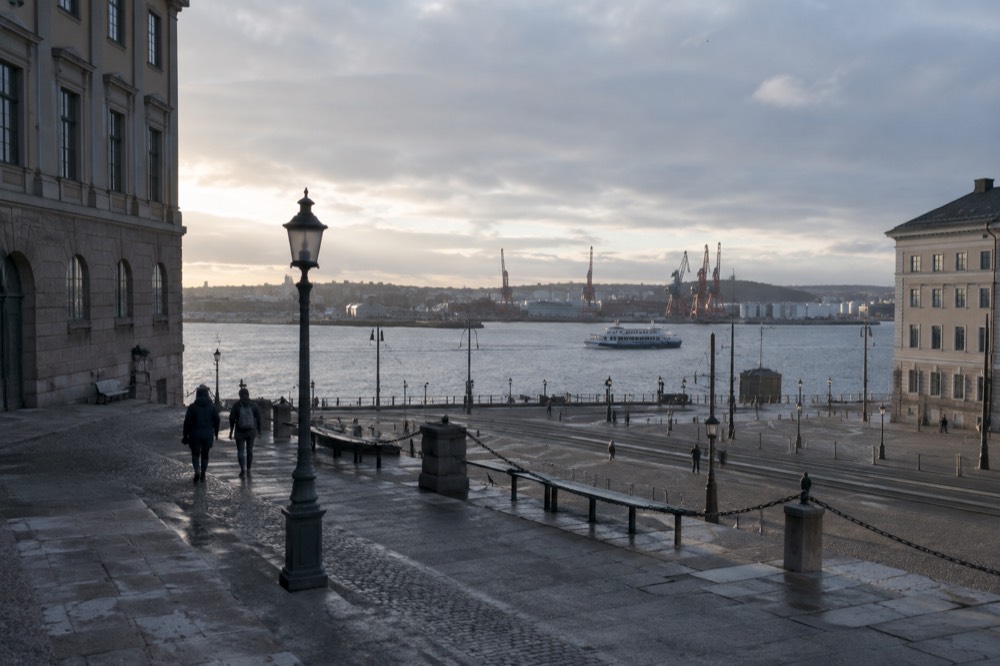
Stockholm has roughly twice the population, the royal palace, the Nobel Prize ceremony and a postcard skyline that appears in every Sweden brochure ever printed. Gothenburg has 613,274 residents at the last count, a car-free archipelago inside its own tram zone, and a habit of finishing second in every ranking it appears in. The question "is Gothenburg as nice as Stockholm" is really two questions wearing one coat: whether the smaller city can compete on the things Stockholm is famous for, and whether it offers things Stockholm cannot. The honest answer is that it loses the first contest and quietly wins the second.
Nobody at this desk has a dog in the fight. What follows is sourced reporting: population and guest-night figures from Göteborgs Stad and Göteborg & Co, transport facts from Västtrafik, and the things each city's own tourism bodies publish about themselves. For background on what the smaller city is actually known for, start with what Gothenburg is known for, and if the naming confuses you, Gothenburg and Göteborg are the same place. This site is edited by the team behind Gothenburg Travel Guide, so the facts lean coastal, but the verdicts below try to be fair.
Is Gothenburg as Nice as Stockholm?
On the classic big-city measures, no: Stockholm is roughly twice the size, has the national museums, the royal buildings and the postcard old town, and it draws the international fame. But "nice" is not the same as "grand". Gothenburg counters with a car-free archipelago inside its own tram zone, a compact walkable centre, cheaper prices and a more relaxed pace, and for a lot of travellers those things make it the nicer of the two cities to actually spend time in.
The scale gap is real and worth stating plainly. Göteborgs Stad counted 613,274 residents at the end of 2025, up from 608,993 a year earlier. The Stockholm municipality is around a million, and the wider capital region is far larger than Gothenburg's roughly 1.1 million metropolitan area. Twice the people means twice the museums, twice the restaurant scene, twice the theatre calendar. If your trip is about maximum sightseeing per day, the capital wins on sheer inventory, and no amount of coastal charm changes that.
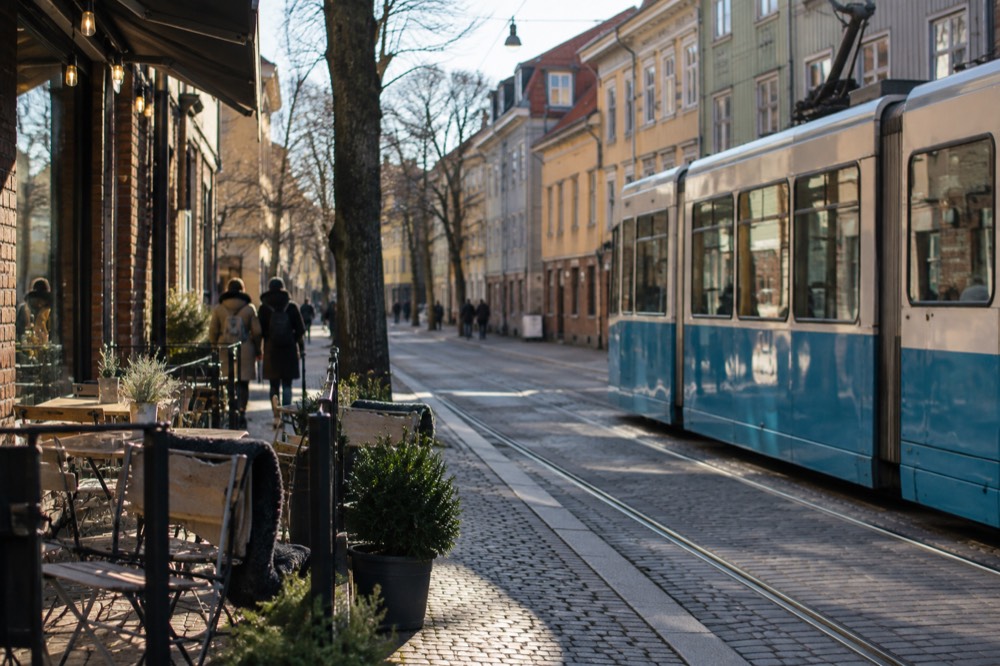
But inventory is not the same as experience. Gothenburg's centre is small enough that you can walk from the old moat at Vallgraven to the harbour in fifteen minutes, and the tram network, 12 lines and 188 km of single track as of the 2022 network report, stitches the rest together. Stockholm's attractions are spread across islands and require more planning, more transit and more decisions. Plenty of visitors find that a smaller city where everything is close is, in the everyday sense of the word, nicer.
There is also the question of temperament. Gothenburg has a self-deprecating, jokey local identity that locals themselves will tell you about at length, and the city's nickname, explained in why Gothenburg is called Little London, points to a working-class, maritime, British-influenced history rather than a courtly one. Stockholm can feel formal and status-conscious by comparison. Neither is wrong. They are simply different flavours, and which one reads as "nice" is a matter of taste.
Which City Has the Better Archipelago?
Gothenburg's southern archipelago is part of the city itself: Styrsö, Brännö, Vrångö, Donsö, Asperö and Köpstadsö are reached by ordinary Västtrafik ferry from Saltholmen, the islands are car-free, and a 125 kr 24-hour Zone A ticket covers the tram to the boat and the boat itself. Stockholm's archipelago is far larger, with tens of islands and towns, but its boats are mostly separate tourist or Waxholmsbolaget services outside the city's fare system. Bigger versus easier: Stockholm has the scale, Gothenburg has the integration.
This is the single strongest card Gothenburg holds against the capital, and it is worth understanding why. Västtrafik's own zone map shows the archipelago ferries as ordinary lines within Zone A, and the city's own planning documents confirm the southern islands are "fredade från biltrafik", protected from car traffic, with only taxi and emergency vehicles allowed. So you tap the same ticket you used on the tram, board a public ferry at Saltholmen, and twenty minutes later you are on a car-free fishing island that is administratively still Gothenburg. No tour booking, no separate operator, no island-hopping pass.
Stockholm's archipelago is genuinely magnificent and genuinely vast, stretching out toward the open Baltic with famous islands like Sandhamn, Grinda and Vaxholm. But it is a destination you plan and pay for separately, often with dedicated boat companies and their own fare structures. A Stockholm visitor who wants the archipelago buys an archipelago trip. A Gothenburg visitor just rides the tram west and gets on a boat, which is why the question of whether the ferry is free comes up constantly. It is not free, but it is included in an ordinary day ticket, which is nearly as good.
For a swimmer there is a second, subtler difference: the water. Gothenburg faces the Kattegat and its sea temperature peaks in August at 18.6 C, with September water at 16.7 C actually warmer than June water at 16.2 C, according to SMHI's quality-controlled observations at the Vinga lighthouse station. The water around Stockholm is brackish Baltic water, calmer and less salty. If your version of "nice" includes a proper sea swim off granite rocks, the west coast city is the better bet, and late summer beats midsummer there.
Is Gothenburg Cheaper Than Stockholm?
Generally yes, on the costs that matter to a visitor: Gothenburg's guest houses, restaurant meals and attraction tickets tend to run below Stockholm equivalents, and the city's single best-value item, the 125 kr 24-hour Zone A ticket covering trams plus the archipelago ferries, has no real Stockholm counterpart. Sweden as a whole is expensive, so the gap is one of degree rather than a different price universe, but on a fixed budget your money goes measurably further in Gothenburg.
Start with the honest framing: Sweden is an expensive country, and neither city will feel cheap to a visitor from most of Europe or North America. But within Sweden, the capital carries a premium. Rents are higher, which flows through to restaurant prices, hotel rates and everything else. The same is true in most countries: the capital costs more, and the premium compounds across every day of a trip.
The transport arithmetic is where Gothenburg's advantage becomes concrete. A single adult tram ticket in Zone A is 38 kr, and the 24-hour Zone A ticket is 125 kr, per Västtrafik's published fare page, and that day ticket covers the archipelago boats. Stockholm's SL network is excellent but its tickets cover city transit only, not the archipelago. One caveat worth knowing: a temporary state subsidy currently halves Västtrafik's 30-day period tickets, but that discount does not apply to the 24-hour and 72-hour tickets visitors actually buy, so do not arrive expecting half-price transport.
Attractions follow the same pattern. Liseberg, Gothenburg's amusement park, sells entry from 95 kr online, and while that entry ticket buys zero rides, the combined entry-and-rides ticket starts at 365 kr, which is modest by international theme-park standards. Universeum, the science centre, uses dynamic pricing with no fixed published adult rate, but the on-site price is simply the online price plus 30 kr, and children under three enter free. The museum scene is mostly inexpensive too: Göteborgs konstmuseum charges 75 kr with free entry for everyone under 20 and for students. Stockholm's flagship museums include some free national collections, which narrows the gap, but its paid attractions generally cost more.
If you are weighing the two cities for a short break, the sightseeing options tell the same story. Gothenburg's amphibious land-and-water bus tour, the one that drives into the harbour, is a one-hour orientation that costs less than a Stockholm equivalent, and the canal and archipelago cruises are priced for a city that knows its visitors are watching a budget. None of this makes Gothenburg cheap in absolute terms. It makes it the cheaper of two expensive cities, which is the comparison that actually matters here.
That amphibious bus is also a decent shorthand for the difference between the cities. Stockholm's equivalent orientation experiences tend to be grander and pricier; Gothenburg's are a bit scruffier, a bit funnier, and easier on the wallet. The same character runs through the whole comparison, which is why we point people toward it as a first-hour-in-town activity.
Which City Is Better for Food?
Stockholm has more Michelin stars and a deeper top-end dining scene, and that is not really arguable. Gothenburg's answer is narrower but distinctive: it is Sweden's seafood capital, sitting at the mouth of the Göta älv with a working fish trade behind it, and its signature dishes, shrimp sandwiches, west coast oysters and the fish hall Feskekôrka, are things you genuinely cannot eat the same way in the capital. For most visitors the difference is a matter of what you are hungry for.
The seafood case deserves specifics. Feskekôrka, the fish-market building shaped like a church on Rosenlundsgatan, reopened in 2024 after renovation as a food hall with two fish counters and five restaurants, a change most older guides have not caught up with. The city's food identity runs through it. We cover the whole picture in what food Gothenburg is famous for, and the short version is that the west coast's shrimp, langoustine and oyster trade defines the local table in a way Stockholm's more cosmopolitan scene does not attempt.
Stockholm's dining is broader: more cuisines, more starred restaurants, more of everything, because it is twice the city. If your trip is built around one splurge dinner, the capital probably has the deeper bench. But Gothenburg's food culture is more of a piece with the place, tied to the harbour and the islands, and that coherence is a kind of quality in itself. The fika tradition, the coffee-and-bun institution, is strong in both cities, though Gothenburg's old wooden quarter of Haga is home to the most photographed cinnamon bun in the country, and the queues outside the bakery there are their own argument for the west coast.
Which City Is Better for First-Time Visitors?
For a first trip to Sweden, Stockholm is the safer recommendation: it has the concentrated icons, Gamla Stan, the Vasa Museum, the palace, and a short visit there will feel like you saw Sweden's headline attractions. Gothenburg is the better city for a second trip, a relaxed trip, or a traveller who prefers one unhurried base with the sea attached, and it is the one where three days feel generous rather than rushed. Both are easy, safe and English-friendly, so neither choice is a mistake.
The practical facts support both cases. Both cities are walkable in their centres, safe by any European measure, and fully manageable in English. Both have efficient airport links, though Gothenburg's Landvetter has no rail connection and is served by the Vy flygbussarna coach, a 20-minute run to the central Nils Ericson Terminalen. Stockholm's Arlanda has both trains and coaches, which matters if you hate buses.
Where they diverge is trip shape. Stockholm rewards a packed itinerary: island to island, museum to museum, with transit time between each. Gothenburg rewards a loose one: a morning in Haga, an afternoon on a ferry to Styrsö, an evening on the Avenyn. First-timers with four or five days could honestly do both, since the trains between the cities are fast and comfortable, and a short Gothenburg stay usually resolves to two or three well-used days before the city gives up its remaining surprises.
One scheduling warning that applies only to the smaller city: Liseberg, the biggest single attraction in western Sweden, keeps an irregular calendar. In 2026 its summer season ran 18 April to 20 September, with Halloween from 2 October to 1 November and the Christmas market from 14 to 23 December, and the park is closed for long stretches in between, including from late December until mid-April. Arrive in late January expecting Scandinavia's best amusement park and you will find a locked gate. We cover whether the park justifies a trip in is Liseberg worth visiting.
How Do the Two Cities Compare at a Glance?
The table below is the short version of everything above: Stockholm is roughly twice as big with the grander sights and the bigger food scene, while Gothenburg is cheaper, more compact, and uniquely has its car-free archipelago inside the ordinary city ticket system. Read it as a tiebreaker rather than a verdict, because the right choice depends on whether your trip is about seeing the famous things or enjoying a slower, saltier version of Sweden.
| Measure | Gothenburg | Stockholm |
|---|---|---|
| Population (city) | 613,274 (end of 2025) | Roughly twice as large |
| Old town character | Dutch-built inside a moat, wooden Haga quarter | Gamla Stan, royal palace, national icons |
| Archipelago | Car-free islands inside the city tram and ferry zone | Far larger archipelago, separate boat services |
| Food identity | West coast seafood, Feskekôrka food hall | More Michelin stars, broader top-end scene |
| Transport | 12 tram lines, 24-hour Zone A ticket 125 kr | Metro and commuter rail, city transit only |
| Pace | Compact, walkable, unhurried | Spread across islands, faster and denser |
| Best for | Second trips, sea swimming, relaxed bases | First trips, headline sights, splurge dining |
So Which Should You Choose?
Choose Stockholm if this is your first and possibly only trip to Sweden, or if you want the famous buildings, the national museums and the biggest restaurant scene. Choose Gothenburg if you have been to the capital already, if you want the sea genuinely in the city, if you are travelling on a budget, or if a slower, smaller, funnier city sounds nicer than a grander one. Doing both in one trip is easy and, honestly, the best answer of all.
The train between them makes the either/or partly artificial. Fast services connect Göteborg Centralstation and Stockholm in a few hours, and reservations are recommended at busy times. A week split between the two gives you the capital's icons and the west coast's salt air, and the contrast is precisely what makes each city easier to appreciate.
If you must pick one, weigh what "nice" means to you. If it means impressive, Stockholm. If it means pleasant, easy, a bit funny and never more than twenty minutes from a boat to a car-free island, Gothenburg. The city rewards people who arrive with realistic expectations about where not to spend their evenings, which we cover candidly in where to avoid in Gothenburg.
Common Questions About Gothenburg Versus Stockholm
Is Gothenburg as nice as Stockholm?
On grandeur and sheer sightseeing inventory, no: Stockholm is roughly twice the size with the national museums and the postcard old town. On compactness, cost, pace and access to a car-free archipelago on an ordinary tram ticket, Gothenburg is arguably nicer to actually spend days in. The honest answer is that they are different kinds of nice.
Is Gothenburg cheaper than Stockholm?
Yes, generally. Sweden is expensive everywhere, but the capital carries a premium on hotels, meals and attractions. Gothenburg adds one cost advantage Stockholm cannot match: a 125 kr 24-hour Zone A ticket that covers trams plus the archipelago ferries.
Which city has the better archipelago?
Stockholm's is far bigger. Gothenburg's is easier and wilder in feel: the southern islands are car-free, sit inside the city's own Västtrafik Zone A, and are reached by ordinary public ferries from the Saltholmen tram terminus.
Is Gothenburg good for a first trip to Sweden?
It works, but Stockholm is the conventional first choice because its headline sights are concentrated and famous. Gothenburg suits a relaxed first trip or a second visit, especially in late summer when the sea is at its warmest.
Can you visit both Stockholm and Gothenburg on one trip?
Yes, easily. Fast trains link Göteborg Centralstation and Stockholm in a few hours, and reservations are recommended at busy times. A week split between the two is enough to see the capital's icons and the west coast's islands.
Is Gothenburg worth visiting if you have already been to Stockholm?
Yes, and arguably more so, because it is the opposite experience: smaller, maritime, cheaper and less formal, with a car-free archipelago inside the city fare system and a seafood culture the capital does not replicate.