Is Gothenburg Nicer Than Stockholm? An Honest Comparison
Gothenburg and Stockholm both sit on the water, but they feel like different countries. A grounded comparison of size, cost, archipelagos, food and pace, for travellers choosing between Sweden's two biggest cities.
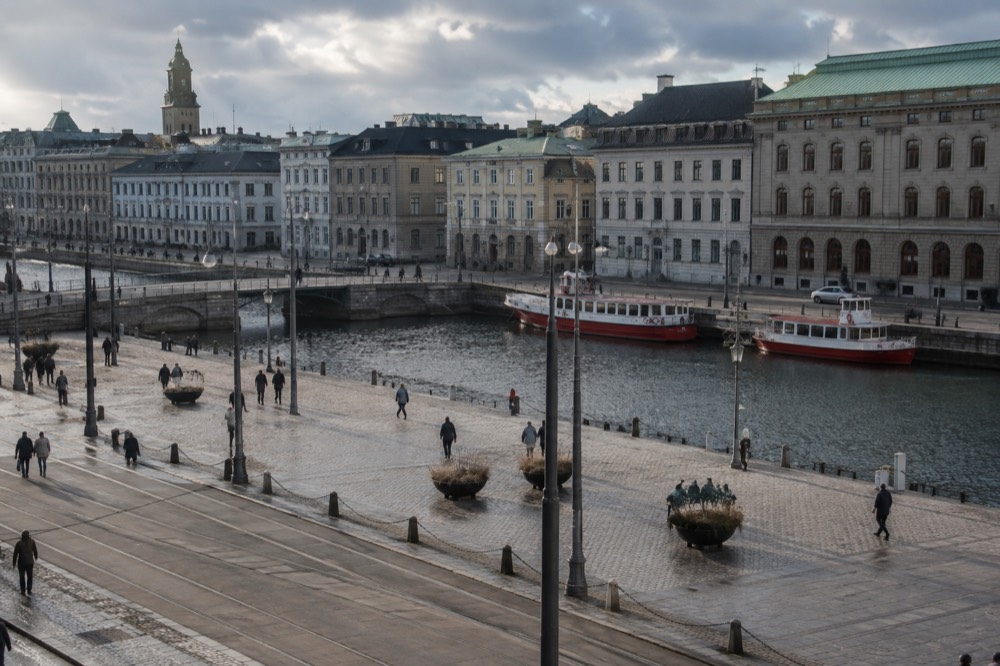
Stockholm has roughly four times Gothenburg's population and a capital's worth of palaces, museums and islands to prove it. Gothenburg answers with 613,274 people at the end of 2025, a record 6 million commercial guest nights the same year, and an archipelago you reach on an ordinary tram ticket. The question "is Gothenburg nicer than Stockholm" is really a question about what kind of Sweden you want: a grand, spread-out capital built across fourteen islands, or a compact west-coast port where the sea, the shipyard cranes and the wooden houses are all within a 20 minute tram ride of each other. This comparison sticks to verified figures and honest trade-offs, and it does not pretend there is one right answer.
Is Gothenburg Nicer Than Stockholm?
Neither city is objectively nicer, and the honest answer splits on three measurable differences: Stockholm is far larger and grander, Gothenburg is cheaper and easier to cover on foot and by tram, and Gothenburg's car-free southern archipelago is reachable on a 125 kr day ticket while Stockholm's islands need separate boat fares. Travellers who want scale and spectacle lean Stockholm. Travellers who want compact, maritime and manageable lean Gothenburg.
The case for Stockholm is not complicated. It is the capital, with the Vasa Museum, the Royal Palace and Gamla Stan, and it gets the international attention that comes with that. If your trip to Sweden is likely to be a one-off and you want the headline sights, Stockholm delivers more of them per square kilometre than anywhere else in the country. The city has been the seat of Swedish power since the medieval period, and the architecture shows it: stone palaces, national institutions, a skyline that looks designed rather than accumulated.
The case for Gothenburg is quieter but real. The city recorded over 6 million commercial guest nights in 2025, a record, with international guest nights up about 15% in the first ten months of the year, so the growth is coming from people who chose it. Göteborg & Co's own press release calls it the strongest tourism growth in Sweden. People are not coming by accident. For more on what actually pulls them in, see what Gothenburg is known for.
The third difference is the one that decides most itineraries: geography. Stockholm's attractions are spread across islands and neighbourhoods linked by metro, bus and ferries. Gothenburg's core sits inside the old moat, and the tram network, 12 lines and 188 km of single track as of the 2022 Göteborgs Spårvägar annual report, carries 126 million journeys a year, reaching from Saltholmen in the west to Kålltorp in the east. One city rewards a week. The other rewards three days and a ferry.
Is Gothenburg Cheaper Than Stockholm?
Yes, on the costs a visitor actually pays. Gothenburg's tram single is 38 kr and a 24-hour Zone A ticket is 125 kr, and that same ticket covers the southern archipelago ferries, while the city's headline attractions price well below capital levels: Liseberg entry starts at 95 kr, Göteborgs konstmuseum at 75 kr, and World of Volvo tickets from 120 SEK online. Stockholm's equivalents run higher across the board, and its island transport adds up.
Start with transport, because it is the clearest gap. Västtrafik's fare table shows a single one-zone adult ticket at 38 kr and a 24-hour Zone A ticket at 125 kr, and Västtrafik's own materials confirm that an ordinary ticket covers the southern archipelago boats: "Du kan åka på samma biljett hela vägen från centrum ut på havet", the same ticket all the way from the centre out onto the sea. In practice that means one 125 kr day ticket buys trams, buses and ferries to Brännö, Styrsö, Donsö and Vrångö, islands that are formally areas of Gothenburg, not day trips.
Attractions follow the same pattern. Liseberg's own price page lists entry from 95 kr, though note that entry buys zero rides: a ride pass starts at 310 kr separately. Universeum prices dynamically with a booked time slot, so there is no fixed adult price to quote, but the on-site price is the online price plus 30 kr. Göteborgs konstmuseum charges 75 kr for a day ticket, free for anyone under 20, and includes the Hasselblad Center.
The comparison below pulls together the verified Gothenburg figures a visitor budgets against. Stockholm's side of the ledger is not itemised here because its fares sit outside this site's verified facts pack, but the pattern is consistent: the capital prices above the port.
| Cost item | Gothenburg, verified price | What it buys |
|---|---|---|
| Tram single, 1 zone | 38 kr | One adult journey anywhere in Zone A |
| 24-hour ticket, Zone A | 125 kr | Unlimited trams, buses and archipelago ferries for a day |
| Liseberg entry | from 95 kr | Park entry only, rides sold separately from 310 kr |
| Göteborgs konstmuseum | 75 kr | All exhibitions plus the Hasselblad Center, free under 20 |
| World of Volvo | from 120 SEK online | Exhibition entry, 10% online discount |
| Airport coach to centre | 20 minutes | Vy flygbussarna, Landvetter to Göteborg C |
One nuance worth flagging: a temporary state subsidy currently halves every 30-day Västtrafik period ticket, Zone A adult 890 to 445 kr, but this does not touch the 24-hour and 72-hour tickets visitors actually buy. Do not plan a weekend around half-price transport that does not apply to you. The broader cost picture, including food and accommodation, is covered in detail in is Gothenburg cheap or expensive.
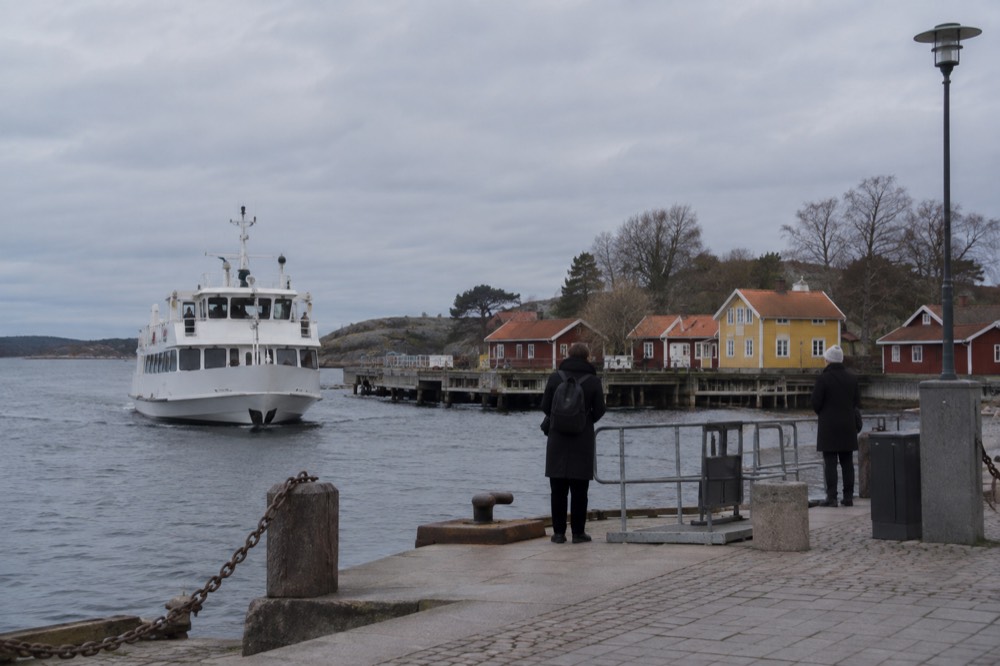
Which City Has the Better Archipelago?
Gothenburg's southern archipelago is easier and more unusual: its islands are car-free, sit inside the city's own Västtrafik Zone A, and are reached by tram to Saltholmen and then an ordinary ferry, all on the same 125 kr day ticket. Stockholm's archipelago is vastly larger, with islands running far into the Baltic, but it is a separate boat system with separate fares and mostly needs planning rather than a spontaneous afternoon.
The Göteborgs Stad study on the southern archipelago states it plainly: "Öarna inom Södra skärgården är fredade från biltrafik", the islands of the southern archipelago are protected from car traffic, with exceptions only for taxi and emergency services. That means Brännö, Vrångö, Styrsö, Donsö, Asperö and Köpstadsö are villages of bicycles, wheelbarrows and footpaths. Saltholmen, the ferry terminal, is the western terminus of the tram network, so the journey is tram, then boat, on one ticket. Västtrafik publishes the full tram, bus and boat network on its combined network map, which shows the ferry lines carrying ordinary Västtrafik line numbers.
Stockholm's archipelago is a different beast. It stretches far into the Baltic with islands and skerries numbering in the tens of thousands, and the classic trips, Sandhamn, Grinda, Vaxholm, are run by dedicated boat companies whose fares are separate from the SL transport system. It is magnificent, and in raw scenery it arguably out-scales Gothenburg's southern islands. But it is a planned excursion, not a Tuesday afternoon.
For a visitor deciding between the cities on the water alone, the honest framing is: Stockholm has the bigger, more dramatic archipelago; Gothenburg has the more accessible and stranger one, because a car-free island you reach on a city tram ticket is genuinely rare in Europe. Whether the islands justify the whole trip is weighed in is it worth visiting Gothenburg archipelago.
Which City Is Easier to Visit?
Gothenburg is the easier city to visit: it is compact, its tram and ferry system runs on one simple zone ticket, its airport coach takes 20 minutes to the centre, and its main sights sit within walking or short-tram distance of each other, while Stockholm demands more planning, more transit time and a bigger map to cover the equivalent ground.
Scale is the whole argument. Gothenburg's population of 613,274 makes it Sweden's second city, but the core a visitor needs, Inom Vallgraven, Haga, Avenyn, Liseberg, Universeum, the harbour, fits inside a rough rectangle you can cross end to end in under half an hour by tram. Göteborg Landvetter Airport, Sweden's second-largest with 5,435,850 passengers in 2025, is connected to Göteborg Centralstation by the Vy flygbussarna coach in a stated 20 minutes. There is no rail link to Landvetter, which sounds like a downside until you realise the coach is that quick. More of these guides are collected on Gothenburg Travel Guide.
Stockholm is not hard, but it is bigger in every dimension. The metro is excellent, yet the distances between Gamla Stan, Djurgården, Södermalm and the outer neighbourhoods eat real time. A first-time visitor in Gothenburg can be orientated within an hour; in Stockholm the first day is partly spent learning the map. Add the archipelago question and the gap widens: in Gothenburg the boat is part of the city ticket, so an island afternoon costs nothing extra to reach, while in Stockholm the archipelago boats are their own purchase and their own schedule.
English is a non-issue in both cities, which removes a common travel anxiety. The practical comparison, including how the two cities handle a short visit, is in how many days in Gothenburg is enough.
What Does Each City Do Best?
Gothenburg does maritime everyday life best: a working harbour, a fish-market-turned-food-hall in Feskekôrka, Liseberg's three distinct seasons, and fika culture on the west coast model, while Stockholm does grandeur best: the royal architecture, the national museums and a capital's density of world-class institutions that Gothenburg, by design, does not try to match.
Gothenburg's strengths are specific and slightly sideways. Feskekôrka, the fish church, reopened in 2024 after renovation, and it is no longer only fish counters: its own site now lists two fish sellers and five restaurants inside a building that turned 150 the same year. Liseberg runs summer, Halloween and Christmas as three separate seasons, with summer 2026 from 18 April to 20 September, Halloween 2 October to 1 November, and the Christmas market 14 November to 23 December, so the city's biggest attraction is a different place depending on when you arrive. The park drew about 2.5 million guests in 2025 according to Liseberg AB's own annual reporting, which is a striking number for a city of 613,000.
Stockholm's strengths are the ones you already know from any guidebook: the Vasa warship, ABBA the Museum, the palace, Fotografiska, and a skyline that is genuinely one of Europe's best. Gothenburg cannot compete on that register, and it does not try. What it offers instead is a city that feels like it is going about its business around you rather than performing for you. The nickname "Little London" belongs to Gothenburg's British-influenced shipbuilding history, and it says something about the city's temperament: industrial, unpretentious, a bit stubborn.
Food splits the difference. Gothenburg has a strong claim as Sweden's seafood capital, with shrimp sandwiches, oyster safaris up the Bohuslän coast and a cluster of Michelin-starred rooms, and the west coast's produce is the reason. Stockholm has more restaurants in absolute terms, because it is four times bigger. What Gothenburg is actually famous for eating is covered in what food is Gothenburg famous for.
Which Should You Choose: Gothenburg or Stockholm?
Choose Stockholm if this is your only trip to Sweden and you want the capital's headline sights, grand architecture and big-island scenery. Choose Gothenburg if you want a compact, cheaper, walkable port city with a car-free archipelago on a city tram ticket, strong seafood and fewer crowds. If you have five days or more, take the roughly three-hour train between them and stop asking the question.
The train between the cities is the pragmatic answer that dissolves the dilemma. There is no true high-speed line, but the intercity connection covers the distance in about three hours, and the route is pleasant if not dramatic, which is assessed honestly in is the Gothenburg to Stockholm train scenic. Two cities, one week, no false choice.
If you must pick one, use three tests. First, pace: if you want a trip where you walk everywhere and never study a metro map, Gothenburg wins. Second, spectacle: if you want the postcard Sweden of palaces and island skylines, Stockholm wins. Third, season: Gothenburg's calendar, Liseberg's seasons, the archipelago swimming, which peaks in August at 18.6 C sea temperature, not July, rewards a summer or Christmas visit especially, while Stockholm is more of an all-rounder. The sea around Gothenburg runs about six weeks behind the air: September water at 16.7 C is actually warmer than June water at 16.2 C, so a September dip beats a June one, which is the opposite of what most visitors book.
There is also a temperament test that no statistic captures. Stockholm is a capital and behaves like one. Gothenburg is a port town and behaves like one: less polished, more direct, with a working harbour still at its centre. Some travellers find that refreshing. Others find Stockholm's confidence exactly what they came to Europe for. For a fuller verdict on the smaller city's travel value, see is Gothenburg worth visiting for tourists.
Common Questions About Gothenburg vs Stockholm
Is Gothenburg nicer than Stockholm?
Neither is objectively nicer. Stockholm is bigger, grander and has the capital's headline sights. Gothenburg is compact, cheaper on visitor costs, and has a car-free archipelago reachable on a 125 kr day ticket. Nicer depends on whether you want spectacle or manageability.
Is Gothenburg cheaper than Stockholm?
Yes, on visitor costs. A Gothenburg tram single is 38 kr, a 24-hour Zone A ticket is 125 kr and covers the archipelago ferries, and major attractions price at 75-95 kr entry. Stockholm's transport and attractions generally run higher.
Is Gothenburg or Stockholm better for a short trip?
Gothenburg is easier for a short trip: the core sights fit within a walkable or short-tram radius, the airport coach takes 20 minutes to the centre, and two to three days cover the city plus an island. Stockholm rewards a longer stay.
Which city has the better archipelago?
Stockholm's archipelago is far larger and more dramatic. Gothenburg's southern archipelago is more accessible and unusual: the islands are car-free, inside the city's tram zone, and reached on an ordinary Västtrafik ticket from Saltholmen.
How far apart are Gothenburg and Stockholm?
They are connected by an intercity train of roughly three hours each way. There is no high-speed line between them, so a visit to both cities is realistic within a week-long trip.
Is Gothenburg worth visiting if you have already been to Stockholm?
Yes. The two cities feel different: Gothenburg is a west-coast port with a maritime food scene, Liseberg's seasonal calendar and the car-free islands, while Stockholm is a capital built across islands. Most travellers who liked one find the other a genuinely different experience.