Is Public Transport Easy in Gothenburg? Trams, Tickets and Zones Explained
Yes, public transport in Gothenburg is easy: one Västtrafik ticket covers trams, buses, ferries and the car-free archipelago. Here is how the zones, fares and payment actually work.
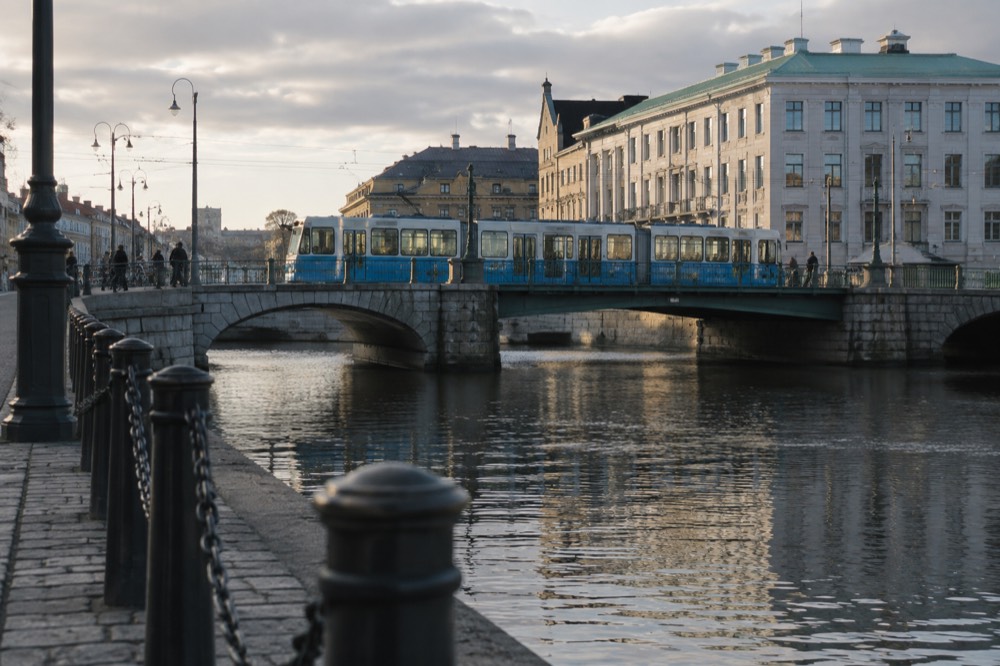
Gothenburg is one of the few European cities where the answer to "should I rent a car?" is a flat no. Göteborgs Spårvägar, the municipal tram operator, recorded 126 million journeys in 2025, and the network it runs reaches from Mölndal in the south to Angered in the north, from Saltholmen in the west to Kålltorp in the east, and across the bridge to Hisingen. Its own annual report describes "twelve lines, 134 stops and 188 kilometres of single track", figures from the 2022 report but still the working shape of the city. The part most visitors never realise is that the same ticket also puts you on a ferry to a car-free island in the North Sea. This page explains how all of it works, what it costs, and where the system catches people out.
Is Public Transport Easy in Gothenburg?
Yes, public transport in Gothenburg is easy by almost any European standard. The tram network has 12 lines running every few minutes through the centre, all tickets work across trams, buses and the archipelago ferries on one Västtrafik system, fares are zoned rather than distance-based, and the Västtrafik To Go app handles buying, storing and validating tickets without any paper or machines to hunt for. The only things that trip visitors up are the zone map, the fact that you must validate before boarding, and the difference between the halved monthly ticket prices and the undiscounted day tickets tourists actually buy.
Start with the backbone. Trams in Gothenburg are not a heritage line or a tourist attraction; they are the ordinary way the city moves. The network's western terminus at Saltholmen is the archipelago ferry terminal, which tells you the design philosophy: you ride a tram to the boat, on the same ticket, without ever thinking about it. Göteborg Centralstation, the main rail hub, sits at the centre of the tram web, and virtually every hotel district in the city is within a short walk of a stop.
The system is run by Västtrafik, the regional transport authority for the whole of Västra Götaland. That matters because one ticketing system covers an enormous area: trams in Gothenburg, commuter trains, regional buses, and the ferries to the southern archipelago. There is no separate ferry fare, no separate island boat company to negotiate with, no tourist surcharge. If you are weighing Gothenburg against other Nordic cities, this integration is the thing that makes it easy rather than merely adequate.
The scale is worth pausing on. A city of 613,274 people, per Göteborgs Stad's own population reporting for the end of 2025, moved 126 million tram journeys in a single year. That is more than two hundred tram trips per resident, and it explains why the streets are calibrated around the tram rather than around parking. The 2019 record was 141 million journeys, the pandemic low 93 million, and the recovery to 126 million in 2025 is the operator's own published figure.
For a wider picture of what the city offers beyond its tram lines, see what Gothenburg is known for, and for the naming question that confuses search engines and travellers alike, Gothenburg and Göteborg are the same place.
How Do You Pay for Transport in Gothenburg?
You pay with the Västtrafik To Go app, a contactless bank card, or a Västtrafikkort, and a single adult ticket for one zone costs 38 kr, with youth fares at 29 kr. A 24-hour Zone A ticket, the one most visitors buy, costs 125 kr and covers every tram, bus and archipelago ferry in the zone for a full day. There are no paper tickets sold on trams, so you buy before you board or tap a card reader at the stop.
The payment mechanics are the part where Gothenburg is genuinely simpler than most. The app is the cleanest route: create the ticket, and it activates when you start a journey. Card readers at tram stops let you tap a contactless card directly. The physical Västtrafikkart still exists for anyone who prefers a card, and it can be bought and topped up at service shops and press agents around the city.
Here is the fare table Västtrafik publishes, with the prices a visitor actually pays:
| Ticket | Adult | Youth (7-19) | Notes |
|---|---|---|---|
| Single, 1 zone | 38 kr | 29 kr | 90 minutes of travel within the zone |
| Single, 2 zones | 76 kr | 58 kr | |
| Single, 3 zones | 114 kr | 87 kr | |
| 24-hour, Zone A | 125 kr | - | Trams, buses and archipelago ferries included |
The single-ticket prices come straight from Västtrafik's own single-ticket page, and the 24-hour Zone A price from its Zone A day-ticket page, which also confirms the zone's boundaries: Göteborg, Partille, Mölndal and Öckerö.
One warning about prices you may have read elsewhere. Västtrafik's 30-day period tickets are currently halved by a temporary state subsidy, cutting a Zone A adult monthly from 890 kr to 445 kr. Västtrafik describes it as "ett tillfälligt statligt stöd som gäller för resor året ut", a temporary state support valid for travel through the end of the year. But the 24-hour and 72-hour day tickets a visitor buys are not discounted. The 24-hour Zone A ticket is still 125 kr. Any article telling you transport in Gothenburg is half price is conflating a commuter subsidy with tourist tickets.
There is one genuinely useful companion rule: an adult holding a period ticket bought in the app may bring three under-20s free. That is a monthly-ticket benefit, not a day-ticket one, so it mostly helps longer stays.
If you would rather see the city from the water than from a tram window, the sightseeing boats share the same harbour the ferries use:
Do You Need a Car in Gothenburg?
No, you do not need a car in Gothenburg, and in two important places you cannot use one at all. The islands of the southern archipelago, including Styrsö, Brännö, Vrångö, Donsö, Asperö and Köpstadsö, are legally protected from private car traffic; Göteborgs Stad's own planning study states that the islands are "fredade från biltrafik", with only taxi, transport services and emergency vehicles allowed. The city centre, Haga, Majorna and the museum district are all walkable or a short tram ride apart.
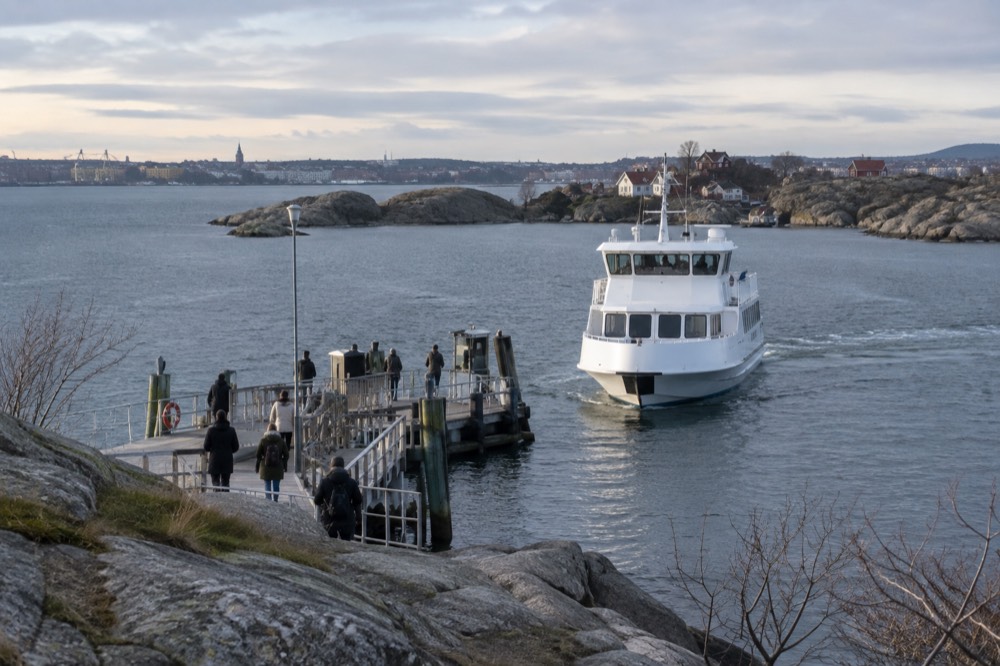
The car-free island rule is the single best-value fact in Gothenburg transport. Because the ferries from Saltholmen are ordinary Västtrafik services inside Zone A, a 125 kr 24-hour ticket buys you the tram to the coast, the ferry across open water, and a full day on islands where the loudest traffic is a bicycle. Västtrafik's own network map shows the boat lines alongside trams and buses, and the islands sit inside the same Zone A that covers the city centre.
The islands served from Saltholmen are Asperö, Brännö, Styrsö, Donsö, Vrångö and Köpstadsö, and the ferry lines carry ordinary Västtrafik line numbers, appear on the official tram, bus and boat network map, and charge nothing beyond the standard zone fare. There is no island entry fee, no bicycle charge, and no separate summer timetable price. What you see on the Västtrafik map is what you pay.
For drivers, the pain point is Saltholmen parking, which is limited and fills up in summer. The fix is built into the system: the tram is the way to get there. Tram lines terminate at Saltholmen precisely so the boat journey begins where the road stops being useful.
If your trip is short and you are deciding how to split your days, how many days in Gothenburg is enough works through the trade-offs, and is Gothenburg worth visiting for tourists covers the broader case for the city.
Is the Airport Connected by Train or Tram?
No, there is no rail link of any kind to Göteborg Landvetter Airport, and Swedavia's own transport pages list only coaches and buses. The airport coach is branded Vy flygbussarna and runs Landvetter to Korsvägen to Göteborg Centralstation in about 20 minutes, a time Swedavia states on its own site. Västtrafik bus 612 also serves the airport, and FlixBus line 691 runs into the city centre.
This is a fact worth stating plainly because so much online copy implies a train exists or is imminent. The Västlänken rail tunnel under construction in the city centre will bring regional trains to new underground stations at Centralen, Haga and Korsvägen, with its first section at Centralen opening in December 2026, but none of it reaches the airport. Landvetter is a coach-and-bus airport and will remain one for the foreseeable future.
The coach rebrand matters for travellers who search for "Flygbussarna" and find confusing results. The service is now Vy flygbussarna, running to the Nils Ericson Terminalen at the central station. Swedavia gives the journey time as 20 minutes; it publishes no distance in kilometres, and neither will we, because the primary source does not.
The airport's own scale explains why the coach is frequent and well-run. Swedavia reports 5,435,850 passengers in 2025 across 77 international and 2 domestic destinations, making Landvetter Sweden's second-largest airport. An airport moving more than five million people a year on a single 3,300-metre runway has a coach operation that behaves like a shuttle, not a rural bus service.
One planning note for anyone flying in and heading straight for the coast: the airport is in Landvetter the town, and bus 612's 14-minute run goes to Landvetter resecentrum, not to Gothenburg. Check which direction your bus goes before boarding.
What Are the Zones and Which One Do You Need?
Zone A is the only zone almost every visitor needs, and it covers Gothenburg, Partille, Mölndal and Öckerö, which includes the entire southern archipelago. A single ticket buys 90 minutes of unlimited travel inside one zone, and the zone boundaries matter mainly for day trips out to Alingsås, Trollhättan or the Bohuslän coast, which cross into Zone B or C and cost 76 kr or 114 kr for a single adult journey.
Västtrafik divides its territory into three zones, A, B and C, and prices every ticket by how many zones you cross. The design favours the visitor: the city, its islands and its immediate suburbs all sit in one zone, so the cheapest ticket covers the journeys tourists actually take. The 24-hour Zone A ticket at 125 kr is the default purchase for a day of trams and ferries.
The zone map also settles a question people ask constantly: is the archipelago a day trip? It is not. Styrsö, Brännö, Vrångö and Donsö are areas of the city of Gothenburg, inside Zone A, reached on an ordinary ticket. Marstrand, the Bohuslän coast, Tjolöholm and Trollhättan are different places entirely, outside the zone, and those genuinely are day trips.
A practical way to think about the 90-minute single ticket: it is a transfer window, not a point-to-point fare. A single ticket lets you change trams, buses and even boats inside the zone for an hour and a half, so a journey from the central station to the harbour via a stop for coffee is still one ticket. What it does not do is let you pause for two hours and travel on; the clock runs from validation, not from boarding.
For the question of whether the ferry itself costs extra, is the ferry in Gothenburg free answers it directly, and is it worth visiting the Gothenburg archipelago makes the case for the islands themselves.
What Are the Common Mistakes Visitors Make?
The four mistakes that recur are: not validating a ticket before boarding, assuming the temporary monthly-ticket price cut applies to day tickets, expecting a train from the airport, and planning archipelago trips around a car. Each one is avoidable with a minute of preparation, and none of them is a flaw in the system itself, which is consistent, integrated and unusually honest about its own rules.
Validation is the one with a fine attached. Tickets bought in the app activate when you start a journey, and card taps happen at the stop, not on the tram. Boarding without a valid ticket is a fare-dodging offence regardless of intent, and inspectors do check. The habit to build is simple: open the app or tap the reader before the tram arrives, every time.
The price-cut confusion is worth repeating because it is spreading. The halved 30-day fares are real, temporary, and aimed at residents. The 24-hour ticket a tourist buys at 125 kr is full price. Anyone budgeting from a headline about half-price transport in Sweden is budgeting wrong.
The airport mistake wastes time rather than money. Travellers arrive at Landvetter expecting a railway and find a coach terminal. The coach is fast, 20 minutes to the centre, but knowing in advance that no train exists means you walk straight to the Vy flygbussarna stop instead of hunting for a platform that is not there.
The car mistake is the most expensive one. Renting a vehicle for a Gothenburg city break buys you parking problems, cobbled streets in Haga, and a ferry terminal that does not want your car anyway. The islands ban private traffic outright, the centre is compact, and the tram reaches everything the centre does not. A car in Gothenburg is a liability with wheels.
For a sense of how the city rewards not driving, why Gothenburg is called Little London explains the historic British connection behind the city's layout, and this whole site, Gothenburg Travel Guide, is built around getting you around the city the way the city gets around itself.
If you want the transport system itself turned into the sightseeing, the amphibious bus is the one product that makes the network's geography the attraction:
Common Questions About Public Transport in Gothenburg
Is public transport easy in Gothenburg?
Yes. Twelve tram lines, one integrated ticket system covering trams, buses and the archipelago ferries, an app that handles everything, and a single Zone A that contains nearly every place a visitor goes. The system is zoned rather than complicated, and the ferries to the car-free islands are ordinary Västtrafik services on ordinary tickets.
Do you tap out on Gothenburg trams?
No. You validate or tap before boarding, at the stop or in the app, and you do nothing when leaving. There is no tap-out at the end of a journey, unlike London or systems with distance-based fares. Gothenburg fares are zoned, so the system needs to know where you started, not where you got off.
How much is a day pass in Gothenburg?
A 24-hour Zone A ticket costs 125 kr for an adult, the same price in the app as in a shop, and it covers trams, buses and the southern archipelago ferries. It is not affected by the temporary state subsidy that halves 30-day period tickets; that discount applies to monthly tickets only.
Are the trams free in Gothenburg?
No. Every journey needs a valid ticket, bought in the Västtrafik To Go app, tapped with a contactless card at the stop, or loaded on a Västtrafikkart. A single adult single-zone ticket costs 38 kr. Inspectors check, and boarding without a validated ticket is treated as fare evasion.
Does the Gothenburg tram ticket include the archipelago ferry?
Yes. The ferries from Saltholmen to Asperö, Brännö, Styrsö, Donsö, Vrångö and Köpstadsö are part of the Västtrafik network and sit inside Zone A, so an ordinary ticket or 24-hour pass covers the tram to the coast and the boat out to the islands on the same fare.
Is there a train from Landvetter Airport to Gothenburg city centre?
No. There is no rail link to Landvetter at all. The Vy flygbussarna airport coach runs to Göteborg Centralstation in about 20 minutes, and Västtrafik bus 612 and FlixBus line 691 also serve the airport. Swedavia's own pages list only road options.
The short version: Gothenburg is a city where the transport is not something you solve, it is something you use. Buy the 24-hour ticket, tap before you board, take the tram to Saltholmen, and let the same 125 kronor carry you out into open water.