What Are the Most Unique Things to Do in Gothenburg, Sweden?
The most unique things to do in Gothenburg, Sweden: a bus that sails into the river, a car-free archipelago inside the city's tram zone, a fish church turned food hall, and a sauna boat in the Kattegat.
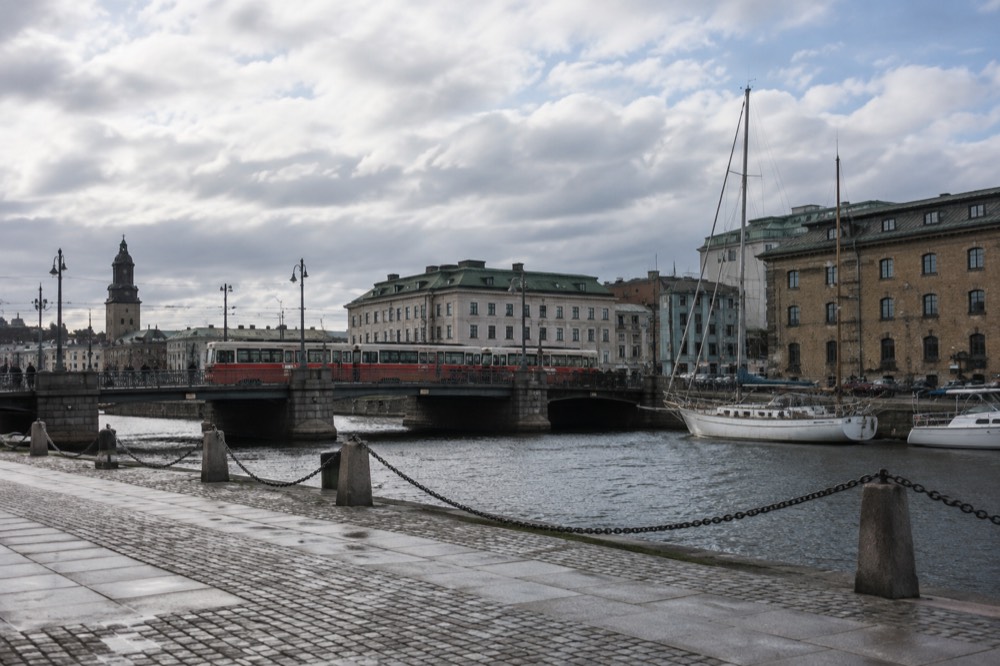
Gothenburg, Sweden does a small number of things that no other Nordic city does, and it does them without making much noise about it. A sightseeing bus drives into the Göta älv on purpose. A string of car-free islands sits inside the city's own transport zone, so an ordinary tram-and-ferry ticket reaches open sea. A fish market built in 1874 to look like a church reopened in 2024 as a food hall. And a wood-fired sauna chugs around the southern archipelago while passengers dip into water that SMHI's Vinga station data shows is warmer in September than in June.
This page rounds up the experiences that are genuinely hard to replicate elsewhere, with the verified prices, dates and transport facts behind each one. If you are still deciding whether the city merits the trip, is Gothenburg in Sweden worth visiting? covers that question directly.
What Is the Single Most Unique Thing to Do in Gothenburg?
The amphibious bus tour is the one experience that exists nowhere else in Sweden in this form: a 60-minute sightseeing loop that drives through the city and then launches directly into the Göta älv, floating past the harbour with commentary from the water. It is rated 4.7 from 4,326 reviews and costs from $36 per person, and no other Nordic city runs a comparable land-and-water vehicle on a scheduled public basis.
The vehicle is a real bus, not a boat with wheels bolted on, and the transition happens at a slipway in the harbour. The tour passes the opera house and the shipyard cranes before the driver becomes a skipper. The listing shows the route covering the main city sights on land and the river mouth afloat, which is the exact geography that makes Gothenburg unusual in the first place: a city built where a river meets the Kattegat, with the sea visible from downtown.
The amphibious bus is also a decent orientation move. It compresses the waterfront, Avenyn and the old moat into one loop, so you arrive at the rest of this list knowing where things sit relative to each other. Gothenburg Travel Guide covers the city's layout in more depth if you want the full picture before choosing.
Can You Really Reach a Car-Free Archipelago on an Ordinary Tram Ticket?
Yes. The southern archipelago islands of Asperö, Brännö, Styrsö, Donsö, Vrångö and Köpstadsö are areas of the city of Gothenburg, reached by tram to Saltholmen and then a Västtrafik ferry, all covered by one Zone A ticket. A 24-hour Zone A ticket costs 125 kr, and private cars are banned on the islands under a city ordinance that permits only taxi, färdtjänst and emergency vehicles.
This is the fact that surprises even Swedes. Västtrafik's own network map shows the archipelago boats as ordinary lines in Zone A, the same zone as the city centre, and the islands are administratively part of Göteborgs Stad, not a separate municipality. You ride a tram to the Saltholmen terminus, the western end of the whole tram network, and step onto a ferry with the ticket you already hold. The transport authority's fare pages, published at vasttrafik.se, confirm the 125 kr day ticket covers the zone.
What you get at the far end is not a theme park. Brännö and Vrångö are villages of wooden houses, grazing sheep and swimming rocks, with no roads worth the name and no cars at all. The pace is set by the ferry timetable. Pack for weather rather than for glamour; the islands are granite, heather and grey sea light, and SMHI's data for the area shows rain on roughly one day in three across the year, wettest in October at 102.9 mm.
For the island-by-island comparison, is it worth visiting the Gothenburg archipelago? breaks down which island suits which kind of day, and is the ferry in Gothenburg free? answers the ticket question in detail.
What Is Feskekôrka, the Fish Church That Is Now a Food Hall?
Feskekôrka is a fish market hall on Rosenlundsgatan built in 1874 in the shape of a Norwegian stave church, which reopened in 2024 after renovation as a food hall containing two fish counters and five restaurants. The nickname "fish church" predates the renovation, and the building turned 150 in the same year it reopened.
The renovation changed what the place is. Guides written before 2020 describe a hall of fish counters where you bought shrimp and salmon and took them home; guides written between 2020 and 2023 say "closed for renovation", which is also now wrong. The current tenant list, on the building's own site, runs to fish counters Ebbes Fångst and Flåtens Fiskhandel plus restaurants Haldis Kök, Pråmenaden, Victor von G, Lilla Åstol and Ekmans. Lilla Åstol is seasonal and closes over winter.
Eating there is the point now, not just buying. A shrimp sandwich, the west coast's signature dish, is the thing to order, and the hall is ten minutes' walk from the canal. What to eat at the building, and what the dishes actually are, is covered in what food is Gothenburg famous for?.
What Unique Things Can You Do on the Water in Gothenburg?
Beyond the amphibious bus, the city offers a 50-minute canal cruise through the old moat from $28, a guided archipelago cruise from $44 rated 4.4 from 1,488 reviews, self-drive electric boats from $92 per group of up to 12, and a wood-fired sauna boat cruise from $344 per person that combines a hot deck with a dip in open sea. Kayak tours run from $62 and kayak hire from $31.
The canal cruise is the Paddan-style classic: an open boat low enough to pass under the bridges of the 17th-century moat that Dutch engineers designed into the city's foundations. The archipelago cruise goes the other direction, out past Älvsborgsbron to the islands described above. The sauna boat is the oddity, a floating bathhouse that tours the southern archipelago for four hours with stops for swimming, which in February means water the SMHI archive shows averaging 2.7 C at Vinga, with a record low of -1.2 C. Swedes do this on purpose.
The table below compares the water-based options on price, duration and the basis the price is quoted on, which matters because two of them are priced per group rather than per person:
| Experience | From (USD) | Basis | Duration | Rating |
|---|---|---|---|---|
| Amphibious bus (land and water) | $36 | per person | 1 hour | 4.7 from 4,326 reviews |
| City canal sightseeing cruise | $28 | per person | 50 minutes | 4.7 from 783 reviews |
| Guided archipelago cruise | $44 | per person | 2.5 hours | 4.4 from 1,488 reviews |
| Electric self-drive boat | $92 | per group, up to 12 | 1 hour | 4.3 from 80 reviews |
| Guided kayak tour | $62 | per person | 2 hours | 4.9 from 81 reviews |
| Sauna boat archipelago cruise | $344 | per person | 4 hours | 5 from 1 review |
| Sailing with a local skipper | $138 | per person | 4 hours | 5 from 9 reviews |
The sailing options deserve a word because they are the most local of the lot. An evening sail with Swedish fika costs from $46 per person and runs three and a half hours, and the four-hour skipper experience from $138 has a perfect rating from a small pool of nine reviews. The shrimp-and-salmon dinner cruise with live music, from $95, is the one where dinner and the harbour happen at the same time.
What Is Unique Indoors: World of Volvo, Universeum and the Museums?
The unique indoor picks are World of Volvo, the 2024 brand centre that replaced the Volvo Museum after that museum closed permanently in December 2023, with entry tickets from $19; Universeum, a science centre open every day of the year 10:00 to 18:00 with dynamically priced tickets from $25 and a rainforest hall under one roof; and Göteborgs konstmuseum, which is open now but is scheduled to close in 2028 and reopen in 2032.
The Volvo fact trips up more visitors than any other. The old museum at Arendal, out towards Torslanda, shut its doors in December 2023, and its successor's own site states this plainly. Anyone following an older guide to Gustaf Larsons Väg arrives at a closed building. World of Volvo, at Lyckholms Torg 1, is the replacement: an exhibition centre with a factory tour option to Torslanda, and a ticket on our roster from $19 per person, rated 4.5 from 202 reviews.
Universeum is the rainy-day answer, and in a city with 912 mm of annual rainfall that is not a throwaway category. It is open every single day of the year, admission is dynamically priced with a booked time slot, and there is no fixed published adult price to quote, only the roster's from-$25 entry ticket. The rainforest hall and aquarium are included in admission; the Wisdome dome shows are a separate ticket.
Göteborgs konstmuseum holds about 70,000 works and draws roughly a quarter of a million visitors a year, with a day ticket at 75 kr and free entry for anyone under 20. The museum's own rebuild page states the closure plan: it shuts in 2028 and reopens in 2032, and blasting is already happening near the building at intervals. Anyone planning around the collection should know the clock is running.
What Free Unique Experiences Does Gothenburg Have?
The free picks are real and specific: Slottsskogen park with its free zoo of Nordic animals, the wooden 19th-century quarter of Haga with its preserved landshövdingehus architecture, the viewpoint from Skansen Kronan, and the GuruWalk free walking tours, which are tip-based and include a Majorna district walk rated 4.77 from 234 reviews.
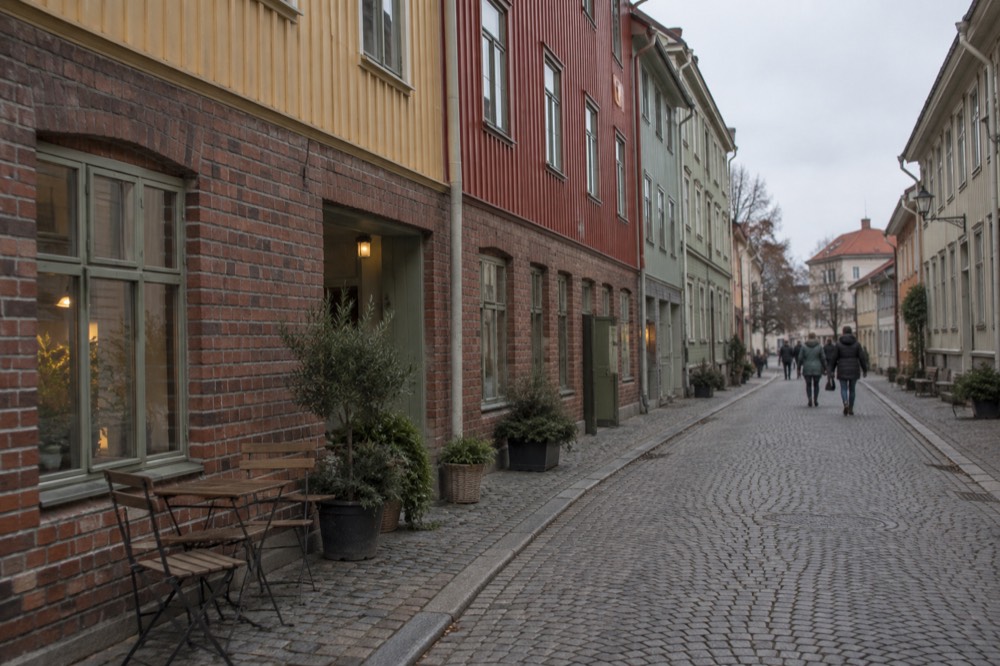
Slottsskogen's free animal enclosures, including moose and Gute sheep, cost nothing and sit at the end of a tram ride. Haga's low wooden houses with their upper storeys in timber over ground floors in stone, the landshövdingehus style unique to this city, line cobbled streets that survived the 20th century's redevelopments. The climb to Skansen Kronan, one of the city's hilltop forts, ends at a view over the rooftops and the river mouth.
The free walking tours run on tips and are booked through GuruWalk, which is worth naming because they are not our products and the operator is the honest disclosure. Four walks run in the city: three in English and one in Spanish only. The Majorna walk, rated 4.77 from 234 reviews, covers the second-hand quarter; a hidden-corners walk rated 4.88 from 24 reviews runs two and a quarter hours; and a history-culture-gastronomy walk rated 5 from 63 reviews runs two and a half. Check the language on the listing before booking, because the Spanish-only walk should not be offered to an English reader as though it were in English.
For the full no-cost itinerary, including which museums run free days, see what are some free things to do in Gothenburg? and the free-things roundup on this site's known-for page.
What Unique Things Can You Eat and Drink in Gothenburg?
The food experiences unique to the city include a Swedish fika walking tour from $93 rated 4.4 from 71 reviews, a west coast food walking tour from $144 rated 4.8 from 17 reviews, a distillery tour with guided tasting from $56, and a shrimp and salmon cruise with live music from $95. Beer above 3.5% ABV is sold only through the state monopoly Systembolaget, under chapter 1, section 8 of the Swedish alcohol statute.
The fika tour is the cultural key. Fika, the coffee-and-cinnamon-bun pause that structures the Swedish working day, is explained in full on what does fika mean in Sweden?, and the guided version walks you through the institutions that practise it. The west coast food tour is the one for the seafood reputation: shrimp sandwiches, smoked fish and whatever the counters are holding that day.
The alcohol rule is a genuine piece of local law that catches visitors out. Supermarkets may sell beer only up to 3.5% ABV, the folköl tier; anything stronger, plus all wine and spirits, is Systembolaget's monopoly. The shelf version of a familiar beer brand is often a 3.5% reformulation of the same beer, which is why supermarket beer in Sweden tastes weaker than the label suggests. The craft beer walking tour with tastings, from $112, works around this by pouring at the breweries and bars themselves.
The distillery options go further than tasting. A craft distillery tour with a gin-making workshop runs two hours from $206 per person, no reviews yet on the listing, and the shorter distillery tour with guided tasting, from $56, carries a perfect rating from three reviews. Both are new listings, so the absence of review volume is real information rather than a warning sign.
When Should You Do These Unique Things?
The best-value window is April, the driest month of the year at 51.3 mm of rain over 8.2 wet days, and September, when the sea at the archipelago averages 16.7 C, warmer than June's 16.2 C. October is the wettest month at 102.9 mm, and Liseberg closes between roughly 21 September and 1 October, and again from 24 December to mid-April.
The sea temperature fact is the one worth building a trip around. Air temperature peaks in July at 18.3 C, but the water peaks a month later, at 18.6 C in August, and stays swimmable into September. A September archipelago day is warmer in the water than a June one, which runs against every instinct a summer-booking visitor has. February is the coldest month for the sea at 2.7 C, not January.
Daylight matters too. The city sits at 57.7 N, so 21 December offers 6 hours 32 minutes of daylight against 18 hours 6 minutes on 21 June. The full month-by-month breakdown, including the twilight hours that make June nights barely dark at all, is on what is the best time to visit Gothenburg?.
Common Questions About Unique Things to Do in Gothenburg
What are the most unique things to do in Gothenburg?
The amphibious land-and-water bus tour, the car-free southern archipelago reachable on an ordinary Zone A tram-and-ferry ticket, Feskekôrka the fish church reopened as a food hall, World of Volvo, the sauna boat cruise, and the free GuruWalk walking tours including the Majorna district walk.
Is the Gothenburg archipelago really part of the city?
Yes. Asperö, Brännö, Styrsö, Donsö, Vrångö and Köpstadsö are areas of the city of Gothenburg, inside Västtrafik Zone A, reached by tram to Saltholmen and then ferry. Cars are banned on the islands.
Does the Volvo Museum still exist in Gothenburg?
No. The Volvo Museum at Arendal closed permanently in December 2023. Its successor, World of Volvo, opened in 2024 at Lyckholms Torg 1, with entry tickets from $19.
What is the strangest tour in Gothenburg?
The amphibious bus, which drives through the city and then launches into the Göta älv, rated 4.7 from 4,326 reviews and priced from $36 per person. The sauna boat cruise, a floating bathhouse touring the archipelago, is the runner-up.
Can you swim in the Gothenburg archipelago?
Yes, and later in the year than most people expect. SMHI's Vinga station data shows the sea peaking at 18.6 C in August and September averaging 16.7 C, warmer than June's 16.2 C.
Are there free unique experiences in Gothenburg?
Slottsskogen's free zoo, the Haga wooden quarter, the Skansen Kronan viewpoint and the tip-based GuruWalk free walking tours, three of which run in English and one in Spanish only.