What I Wish I Knew Before Going to Sweden: The Things Visitors Learn Too Late
The practical things visitors to Sweden, and especially Gothenburg, consistently wish they had known first: cashless payments, Systembolaget, Liseberg's split tickets, the archipelago ferry ticket trick, and the real weather numbers.
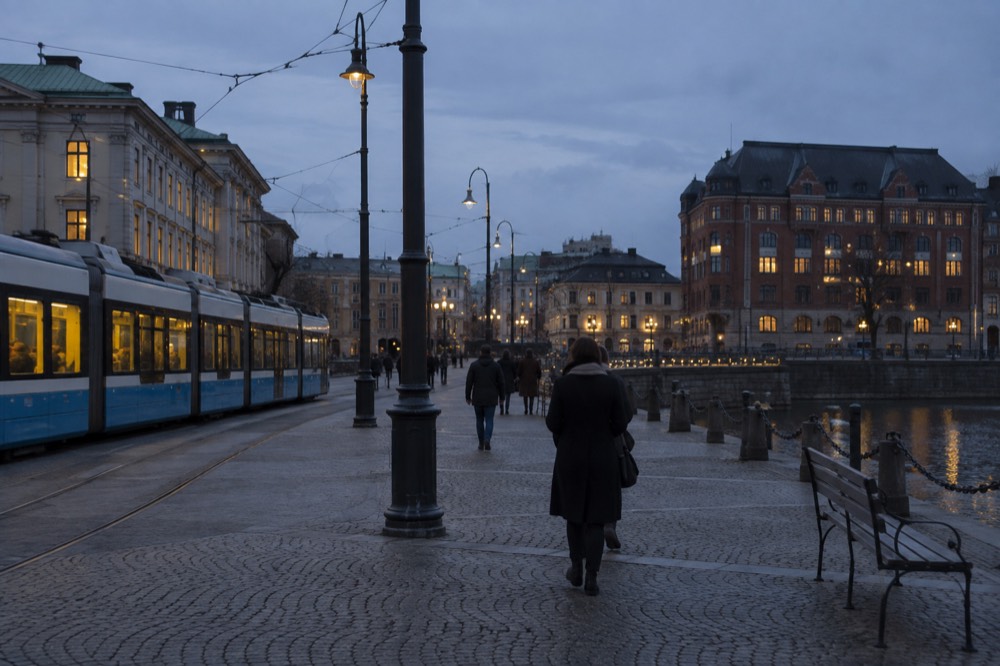
Sweden is one of the easiest countries in Europe to visit and one of the easiest to get subtly wrong. Nothing goes catastrophically badly. The failures are smaller: a card that works nowhere, a supermarket beer that tastes thin, a February swim that was booked on July assumptions, a theme park that turns out to be shut in March. Göteborgs Stad puts the city's population at 613,274 at the end of 2025, and Göteborg & Co reported a record of over 6 million commercial guest nights in 2025, so a lot of people are arriving and learning the same lessons the hard way.
This page gathers the things visitors to Sweden, and to Gothenburg in particular, consistently say they wish someone had told them. Nothing here is folklore. Every figure comes from the transport authority, the meteorological institute, the statute book or the venue's own site, and the city-specific detail lives in the Gothenburg Travel Guide coverage, where each of these topics has its own full page.
What I Wish I Knew Before Going to Sweden
The five things visitors most often say they wish they had known are that Sweden is effectively cashless, that beer above 3.5% is sold only in the state monopoly shops, that Liseberg closes entirely for months each year, that the archipelago ferries are covered by an ordinary tram ticket, and that the sea is warmest in August and September, not July. Each of these catches people out in a small, avoidable way, and each has a primary source behind it.
Start with the cashless point, because it touches every hour of a trip. Universeum, the science centre in Gothenburg, states plainly on its ticket page that the venue is card only. Göteborgs konstmuseum lists card or Swish as its only payment methods. This is not a Gothenburg quirk; it is the national direction of travel, and visitors carrying euro cash as a fallback will find the fallback rarely exists.
The beer point is statutory rather than cultural. Alkohollag (2010:1622), 1 kap. 8 § defines "folköl" as beer over 2.25% but not over 3.5% ABV, and "starköl" as anything over 3.5%. Only Systembolaget, the wholly state-owned monopoly, may retail starköl, wine and spirits under 5 kap. 1-2 § of the same statute. The practical consequence: the supermarket version of a familiar beer brand is often a 3.5% reformulation, and if you want the real thing you plan around a Systembolaget visit.
Liseberg is the biggest single attraction in Gothenburg and the one with the most misleading calendar. In 2026 the summer season runs 18 April to 20 September, Halloween runs 2 October to 1 November, and the Christmas market runs 14 November to 23 December, per liseberg.se. Between those windows the park is closed, full stop. A visitor arriving in late January finds the biggest attraction in the city shut, which is why the season calendar deserves a check before flights are booked. The is Liseberg worth visiting page covers what you actually get inside.
The ferry point is the best-value fact in Swedish public transport. Västtrafik's own zone map shows the southern archipelago boats as part of the network, and the islands sit inside Zone A, so a 125 kr 24-hour Zone A ticket covers the tram to Saltholmen and the ferry out to Styrsö, Brännö, Vrångö, Donsö, Asperö and Köpstadsö. Göteborgs Stad's own study confirms the islands are protected from private car traffic, so the boat is not just the cheap option, it is close to the only option.
How Do You Pay for Things in Sweden?
You pay by card or by phone almost everywhere, and cash is close to useless in practice: major Gothenburg venues including Universeum and Göteborgs konstmuseum publish card-only or card-and-Swish payment policies, and Sweden's central bank has spent a decade steering the country toward a cash-free retail economy. Bring a debit or credit card with no foreign transaction fee and expect to tap it dozens of times a day.
The failure mode is predictable. A visitor arrives with a wallet of banknotes, discovers that neither the museum till nor the tram app wants them, and spends the first day hunting for an ATM that the second day renders unnecessary. Swish, the Swedish instant payment app, is everywhere in daily life, but it requires a Swedish bank account, so it is not a visitor's tool. The card is.
Two practical notes. First, contactless works on Västtrafik trams and buses through the app or a blipp-enabled card, so small purchases and transport run through the same plastic. Second, tipping is modest by American standards and is not expected anywhere; rounding up a restaurant bill or leaving a small amount is normal. There is no service charge culture to decode, and nobody will chase a tip that was never coming.
For visitors based in Gothenburg, the what food is Gothenburg famous for page covers the drinking-adjacent food culture, and the distillery and beer walking tours in the tour roster are run by operators who hold their own serving permits, so they are unaffected by the retail monopoly.
Do You Need to Book Things Ahead in Sweden?
Yes for anything with a time slot and for Liseberg, because Liseberg is not sold on any booking platform at all and sells its own tickets only, while Universeum uses dynamic pricing with booked entry times and its own site states that busy days and slots sell out. Sweden's headline attractions are not walk-up products, and the visitor who treats them as such arrives to find the day gone.
Liseberg has a second trap inside the first: the entry and ride split. A park entry ticket, from 95 kr online, includes zero rides. Ride passes, the Åkpass, are sold separately from 310 kr, or combined with entry from 365 kr. Liseberg's own wording is explicit that the entry ticket does not include attractions. A family that buys four entry tickets at the gate and discovers the split on the other side of the turnstile has paid for the privilege of walking around. The how much does a Liseberg ticket cost page breaks down every ticket type.
Universeum is the other big one. Admission is dynamically priced with a booked entry time, there is no fixed published adult price, and the on-site price is the online price plus 30 kr. Free cancellation runs to 60 minutes before the slot, which is generous, but the slot itself has to exist. The rainforest hall, the aquarium and the guided tours are all inside the admission; the Wisdome dome shows are the one thing that is not.
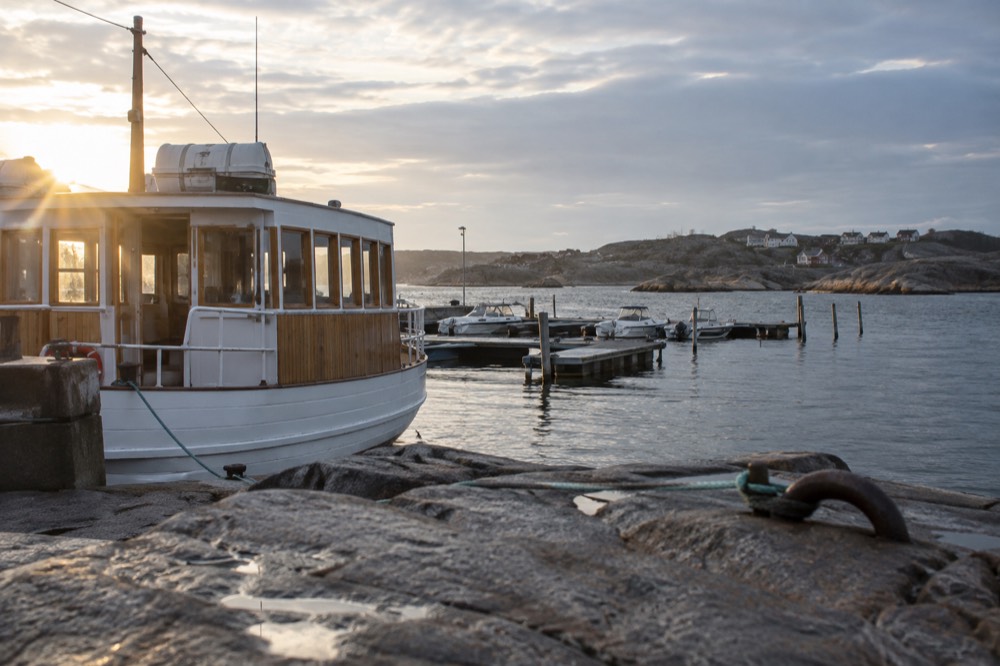
Restaurants follow the same pattern at the top end. Michelin-starred rooms in Gothenburg release bookings on fixed schedules and fill them, and even casual dinner spots in the Linné and Vasastan quarters run full on weekend evenings. Train tickets are the one place where advance booking matters less than people fear, though it does change the price, and the same logic applies to long-distance routes out of Göteborg Centralstation.
What Is the Weather Really Like?
Gothenburg records 912 mm of precipitation across 127 days a year, the wettest month is October at 102.9 mm, the driest is April at 51.3 mm, and SMHI, Sweden's meteorological institute, does not call Gothenburg the country's rainiest city, because the national maxima sit in the western highlands and the mountains. The city is wet, about one day in three, but the permanent-drizzle reputation is a myth the data does not support.
The numbers come from SMHI's 1991-2020 normals for station Göteborg A (71420). The month structure surprises people twice. First, October, after most tourists have gone home, is the wettest month of the year. Second, April is the driest, on the fewest wet days, which makes spring the overlooked window. Summer rain is moderate and comes in bursts rather than weeks of grey.
The sea runs about six weeks behind the air, and this is the single most useful swimming fact for the west coast. Air temperature peaks in July at a mean of 18.3 C, but sea temperature at the Vinga station peaks in August at 18.6 C, and September water at 16.7 C is warmer than June water at 16.2 C. A September swim in the archipelago is warmer than a June one, which is the exact opposite of what most visitors book. February, not January, is the coldest month in the water at 2.7 C.
| Month | Precipitation (mm) | Wet days (≥1 mm) | Mean air temp (°C) | Mean sea temp (°C) |
|---|---|---|---|---|
| January | 83.0 | 11.5 | 0.8 | 3.9 |
| February | 61.0 | 9.7 | 0.7 | 2.7 |
| March | 54.0 | 8.8 | 3.0 | 4.1 |
| April | 51.3 | 8.2 | 7.7 | 7.1 |
| May | 54.3 | 8.8 | 12.4 | 11.6 |
| June | 73.7 | 10.0 | 15.7 | 16.2 |
| July | 81.3 | 9.8 | 18.3 | 18.3 |
| August | 92.8 | 11.9 | 17.7 | 18.6 |
| September | 80.0 | 10.8 | 14.0 | 16.7 |
| October | 102.9 | 12.6 | 9.0 | 12.8 |
| November | 84.7 | 12.0 | 5.1 | 9.3 |
| December | 93.0 | 13.3 | 2.1 | 5.5 |
Source: SMHI 1991-2020 normals, station Göteborg A (71420), and SMHI oceanographic archive, station 35144 Vinga. The what is the best time to visit Gothenburg page turns this into a month-by-month recommendation.
How Does Public Transport Work for Visitors?
A single adult ticket in Zone A costs 38 kr, a 24-hour Zone A ticket costs 125 kr, the same ticket covers trams, buses and the southern archipelago ferries, and the heavily advertised halving of Västtrafik prices applies only to 30-day period tickets, not to the day tickets visitors actually buy. The subsidy story is the one to get right, because headlines say half-price transport and the small print does not.
Västtrafik's fare pages list the visitor-facing prices: 38 kr for a single adult ticket in one zone, 76 kr for two zones, 114 kr for three, and 125 kr for a 24-hour Zone A ticket, the same price in the app or at a shop. Zone A covers Göteborg, Partille, Mölndal and Öckerö, and the archipelago islands sit inside it. The temporary state subsidy halves 30-day period tickets, Zone A adult from 890 kr to 445 kr, through the end of the year, but it does not touch the 24-hour or 72-hour products.
The tram network is the backbone of the city. Göteborgs Spårvägar's annual reporting puts it at 12 lines, 134 stops and 188 km of single track as of the 2022 report, running from Mölndal in the south to Angered in the north and out to Saltholmen in the west, which is the ferry terminal. In 2025 the network carried 126 million journeys. There is no tap-out; a ticket is bought in the app, at a machine or at a shop before boarding, and inspectors check rather than barriers block.
The archipelago ferry trick deserves its own sentence, because it is the difference between a 125 kr island day and a private charter. The boats from Saltholmen carry Västtrafik line numbers, appear on Västtrafik's own zone map, and the islands are Zone A territory, so the ordinary ticket is the boat ticket. The is the ferry in Gothenburg free page answers the question visitors ask once they realise what they have been paying for elsewhere.
What About Daylight and Darkness?
Gothenburg gets 18 hours 6 minutes of daylight on 21 June against 6 hours 32 minutes on 21 December, a swing of 11 hours 34 minutes, and in June civil twilight runs from 02:58 to 23:30 local time, leaving only about three and a half hours of true night. Sweden does not have six months of darkness, but it does have two months in which the day is a long lunch.
The December figure is the one to plan around. Sunrise at 08:54 and sunset at 15:26 compress sightseeing into a narrow window, and the grey light between civil twilight boundaries, 08:03 to 16:17, barely extends it. Museums with 11:00 openings lose half their day to darkness, and outdoor attractions like Slottsskogen are best scheduled for the noon hours rather than the afternoon.
June inverts the problem. A 04:11 sunrise and a 22:17 sunset mean dinner outdoors in full light and a midnight that never fully arrives, which is disorienting in the other direction and is the reason blackout curtains are standard in Swedish hotels. Visitors planning photography, hiking or long archipelago days should put them in June and accept that sleep requires effort.
Is English Enough to Get By?
Yes, comfortably: English is taught to a high standard nationwide, signage in Gothenburg's transport system is bilingual or symbol-based, and visitor-facing staff across museums, restaurants and tours operate in English as a matter of course, so a visitor with no Swedish loses nothing practical. The is English widely spoken in Gothenburg page covers the detail.
The one place the language gap bites is naming. The city is Gothenburg in English and Göteborg in Swedish, and both refer to the same place, which the are Gothenburg and Göteborg the same page settles. Venue names stay in Swedish, so Göteborgs konstmuseum is never "the Gothenburg Art Museum" on its own signage, and Feskekôrka keeps its circumflex. Learning to say the names correctly is courtesy, not necessity.
Common Questions About Going to Sweden for the First Time
What I wish I knew before going to Sweden?
That Sweden is effectively cashless, that beer over 3.5% ABV is sold only at Systembolaget, that Liseberg closes for months at a time and sells entry and rides separately, that the archipelago ferries in Gothenburg are covered by an ordinary tram ticket, and that the sea is warmest in August and September rather than July.
Do I need cash in Sweden?
No. Major venues including Universeum and Göteborgs konstmuseum publish card-only payment policies, and contactless card payment works across retail and public transport. Bring a fee-free card instead of banknotes.
Why is supermarket beer in Sweden so weak?
Swedish law defines beer over 2.25% but not over 3.5% ABV as folköl, the only beer supermarkets may sell. Anything stronger is starköl and is retailed exclusively by the state-owned Systembolaget monopoly, so the supermarket version of a brand is often a 3.5% reformulation.
Is Gothenburg the rainiest city in Sweden?
No, and SMHI does not say so. Gothenburg records 912 mm of rain a year across 127 days, inside the wet western Götaland band, but the national precipitation maxima are in the western highlands and the mountains. October is the wettest month and April the driest.
Can I visit the Gothenburg archipelago on a normal tram ticket?
Yes. The southern islands are inside Västtrafik Zone A and the ferries from Saltholmen are part of the network, so a 125 kr 24-hour Zone A ticket covers the tram to the quay and the boat to Styrsö, Brännö, Vrångö, Donsö, Asperö and Köpstadsö.
Is Liseberg open all year?
No. In 2026 the summer season runs 18 April to 20 September, Halloween runs 2 October to 1 November, and the Christmas market runs 14 November to 23 December. Outside those windows the park is closed, and entry tickets from 95 kr include no rides.