What Is the Shortest Day in Sweden? Daylight Hours in Gothenburg Explained
The shortest day in Sweden falls around 21 December. In Gothenburg it lasts 6 hours 32 minutes, from sunrise at 08:54 to sunset at 15:26. Here is what that actually means for a visitor.
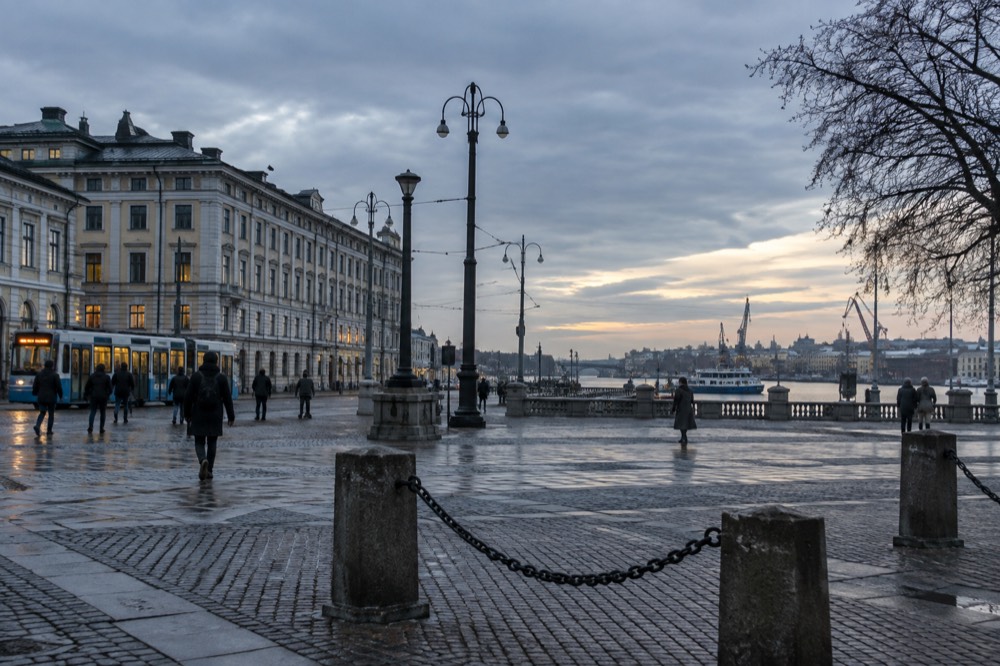
Sweden's shortest day falls on the winter solstice, around 21 December. In Gothenburg, the country's second city at 57.7 degrees north, the US Naval Observatory's computed sunrise and sunset for 21 December 2026 are 08:54 and 15:26, which makes the day exactly 6 hours 32 minutes long. That is the number people search for, and it is the honest answer. But it is only the start of the story, because Sweden spans a long stretch of latitude from Skåne in the south up past the Arctic Circle in Lapland, so the same calendar day is dramatically darker in the far north than on the west coast. This page, published by Gothenburg Travel Guide, works through the solstice numbers for Gothenburg, explains how the daylight swings across the year, and covers what the short day actually means for sightseeing, opening hours and the archipelago ferries.
What Is the Shortest Day in Sweden?
The shortest day in Sweden is the winter solstice, which falls on or within a day of 21 December each year. In Gothenburg the sun rises at 08:54 and sets at 15:26 on 21 December 2026, giving 6 hours 32 minutes of daylight. That is the city's floor: every other day of the year is longer, and the swing to the June solstice is 11 hours 34 minutes.
Those figures come from the US Naval Observatory's sunrise and sunset computation for Gothenburg's coordinates, 57.7 N, 12.0 E, the same position SMHI uses for its Göteborg A weather station. The solstice itself is an astronomical event, not a Swedish one: the Northern Hemisphere is tilted furthest from the sun, and every place north of the equator gets its shortest day within a day or so of the same date.
Sweden, though, is unusually sensitive to it. The country stretches from Skåne's southern tip up past the Arctic Circle, so the solstice experience ranges from a shortened day in the south to genuine polar night in Lapland. In Gothenburg, at 57.7 north, the day is short but the sun does appear, climbing barely above the rooftops before turning round and going down again.
The character of that light matters as much as its length. December daylight in Gothenburg is low-angle and grey, filtered through the cloud that sits over the Kattegat for much of the winter. Even the twilight is brief: civil twilight on 21 December runs 08:03 to 16:17, so the grey light that is not quite daylight lasts under eight hours in total. Visitors from southern Europe often find the quality of the dark, not its quantity, is what surprises them.
How Many Hours of Daylight Does Gothenburg Get Through the Year?
Gothenburg swings from 6 hours 32 minutes of daylight on 21 December to 18 hours 06 minutes on 21 June, a range of 11 hours 34 minutes. In midsummer the sun rises at 04:11 and sets at 22:17, and civil twilight stretches from 02:58 to 23:30, leaving only about three and a half hours of true night.
The summer end of the swing is the part that needs its own explanation. Sunset at 22:17 means an ordinary restaurant terrace is still in full light at the time many visitors would be thinking about bed. And because civil twilight runs from 02:58 to 23:30 local summer time, the sky never properly darkens in late June: the three and a half hours between the twilights are dim rather than black. People notice it. Hotel rooms without blackout curtains become a real problem, and Swedes themselves plan around it, closing curtains at night in June that stay wide open in December.
The transition between the two extremes is fast, which is the detail most visitors underestimate. Sweden does not ease gently through the seasons. Around the equinoxes the day length changes by several minutes per day in Gothenburg, so a week in late March looks and feels nothing like a week in mid-March. February is noticeably lighter than December even though it is colder on average, and by April the evenings are long enough that outdoor terraces reopen.
Here is the shape of the year at Gothenburg's latitude, using the two solstice anchors:
| Date in Gothenburg | Sunrise | Sunset | Daylight | Notes |
|---|---|---|---|---|
| 21 December 2026 | 08:54 | 15:26 | 6 h 32 m | Shortest day; civil twilight 08:03-16:17 |
| 21 June 2026 | 04:11 | 22:17 | 18 h 06 m | Longest day; civil twilight 02:58-23:30 |
| Difference | - | - | 11 h 34 m | One of Europe's larger seasonal swings |
The swing of 11 hours 34 minutes between the solstices is the number that defines the city's rhythm. It is why Gothenburg's Christmas market at Liseberg matters so much to local life, why June evenings stretch so far, and why the archipelago ferries feel like a different service in each season. If you are choosing when to visit, the best time to visit Gothenburg depends far more on daylight than on temperature, because the light is what changes most.
Is the Shortest Day the Same Everywhere in Sweden?
No. Sweden spans a long stretch of latitude, so the solstice day varies enormously. Gothenburg, at 57.7 degrees north, gets 6 hours 32 minutes. Stockholm, further east and slightly further south, gets a bit more. North of the Arctic Circle, the sun does not rise at all around the solstice, a period Swedes call polar night, while in midsummer it never sets.
The Arctic Circle crossing is the sharp boundary. South of it, every place in Sweden has some daylight on the shortest day, however thin. North of it, the weeks around 21 December bring days when the sun stays below the horizon entirely, and the corresponding weeks around 21 June bring a midnight sun. Kiruna, Sweden's northernmost city, sits well inside that zone. Gothenburg sits a long way south of the circle, which is why its winter days are short but never sunless.
Latitude also changes the summer. Gothenburg's 18 hours 06 minutes in June is generous, but it is not the midnight sun; the sun does set, at 22:17, even if the sky barely dims. Only the far north gets the sun that refuses to go down. So a visitor planning a summer trip who wants to experience true midnight sun has to travel to Lapland, while a visitor who wants long, bright evenings without polar conditions will find Gothenburg or Stockholm entirely sufficient.
One practical consequence of Sweden's width: national opening-hour advice is unreliable. Daylight that suits a Malmö walking tour in January is not the same daylight that suits a Kiruna dogsled, and both differ from Gothenburg's. For this city specifically, the sightseeing tours that run year-round, including the amphibious bus and the canal boats, compress their winter schedules around the light, which is worth checking on the operator's live listing before you book a December arrival.
What Does the Short Day Mean for Visiting Gothenburg in Winter?
In practice, a Gothenburg winter day gives you usable daylight from roughly 09:00 to 15:30, so sightseeing needs to be front-loaded and outdoor time planned for the middle of the day. Museums, Feskekôrka's food hall and the indoor attractions carry the afternoons, and by 16:00 the city has switched to its evening lighting, which in December is an attraction in itself.
The arithmetic is simple but unforgiving. Sunrise at 08:54 means you are unlikely to see daylight before you have had breakfast, and sunset at 15:26 means the last two hours of a typical sightseeing day happen under street lamps. The compensation is that Gothenburg handles darkness well. Liseberg's Christmas market, which runs 14 to 23 December 2026, is built entirely around the dark, and the city's lantern-lit streets in Haga and the canal-side paths along the Göta älv are designed to be walked after dusk.
The tram network makes the short day easier to absorb. Göteborgs Spårvägar reports 126 million journeys a year on a network that, as of its 2022 annual report, covered 12 lines, 134 stops and 188 km of single track, so you rarely lose daylight walking between things. A single Västtrafik ticket is 38 kr for one zone, and a 24-hour Zone A ticket at 125 kr covers trams, buses and, remarkably, the archipelago ferries from Saltholmen, because the islands are inside the same fare zone.
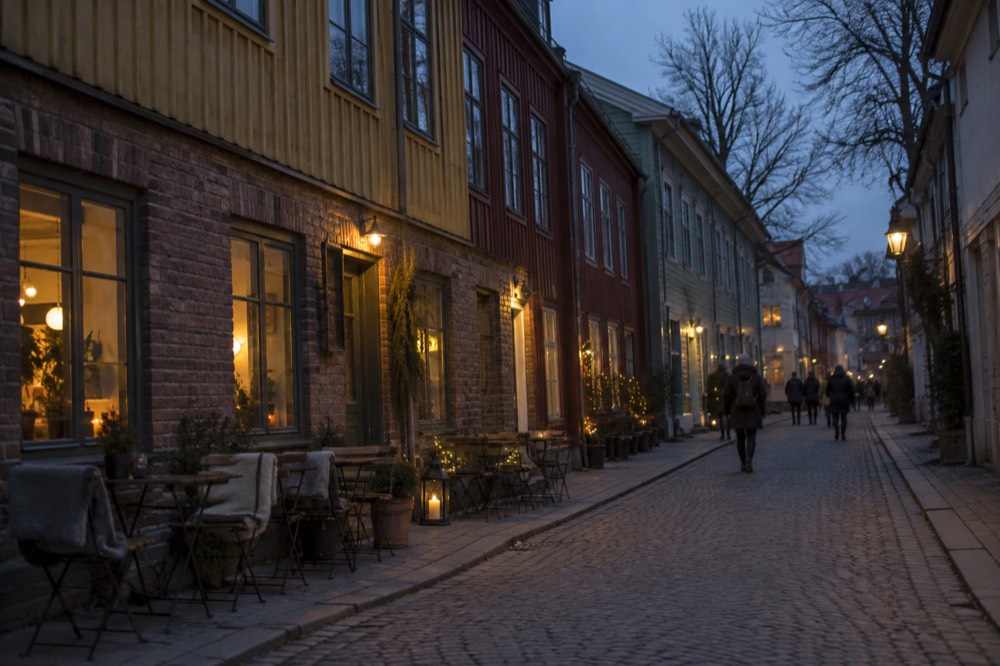
Two adjustments make a December day work. First, put anything outdoors, such as a viewpoint walk up to Skansen Kronan or a stroll along the harbour, in the 11:00 to 14:00 window when the light is at its best. Second, book the indoor anchors, Universeum or the Museum of Art, for the late afternoon. Universeum is open every day of the year, 10:00 to 18:00, and its admission is dynamically priced with a booked entry time, so a dark-afternoon slot is easy to fill. Göteborgs konstmuseum, for its part, stays open until 20:00 on Wednesdays, one of the few genuinely late museum evenings in the city.
There is a second, quieter advantage to the short day that itineraries rarely mention: December compresses the city into a walkable core. With six and a half hours of light, nobody attempts the archipelago, the long waterfront walks or the far-flung museums in one day. Instead the day naturally settles into the old town inside the moat, Haga's wooden quarter, and a single well-chosen indoor stop, which for many visitors is a more relaxed pace than the summer version of the same city. The dark is not a limitation so much as a filter.
If you are weighing a winter trip against a summer one, the honest comparison is this: summer gives you 18 hours of daylight and the sea at its warmest in August, while winter gives you six and a half hours, Christmas lights and a city that looks its most atmospheric after 15:30. Neither is wrong. The is Gothenburg worth visiting for tourists question has a yes in both seasons, but the itineraries are almost different trips.
Does Gothenburg Have a Midnight Sun or Polar Night?
No to both. Gothenburg at 57.7 degrees north sits well south of the Arctic Circle, so the sun always rises and always sets, every day of the year. Around the June solstice the day is 18 hours 06 minutes with sunset at 22:17, and around the December solstice it is 6 hours 32 minutes, but neither extreme reaches the continuous daylight or continuous darkness of the far north.
The near-misses are still worth understanding. In late June, Gothenburg's sky dims to civil twilight but never to full night between 02:58 and 23:30, which visitors describe as the sky never really going dark. In the depths of December, the day shrinks to a six-and-a-half-hour sliver, but the sun still clears the horizon. Polar night and midnight sun are Lapland phenomena; the west coast gets their mild cousins.
This matters for planning because some online advice about Sweden is written as if the whole country were Kiruna. Claims that Sweden has months of darkness, or that the sun never sets in summer, are true only for the far north. Gothenburg's actual pattern is a strong but ordinary temperate swing, closer to Edinburgh's or Copenhagen's than to anything inside the Arctic Circle.
For a summer visitor, the practical upside of 18 hours is enormous: an archipelago ferry trip, a long dinner and an evening walk can all happen in daylight, in sequence. The archipelago boats from Saltholmen run on an ordinary Västtrafik ticket, and midsummer gives you the light to use them late. Whether the islands repay the crossing is its own question, covered in is it worth visiting Gothenburg archipelago.
How Fast Does the Daylight Come Back After December?
The recovery is quick. In Gothenburg the day lengthens by several minutes per day through late winter and spring, so by the end of January the city has already gained back roughly an hour, and by late April the evenings are longer than in most of southern Europe. The shortest day is a floor, not a plateau, and the city climbs off it fast.
This is the encouraging half of the answer. The solstice is the turning point, and the weeks immediately after it are when the change is most visible, because the day length curve is steepest around the equinoxes, not the solstice. A visitor who arrives in early February experiences a noticeably lighter city than one who arrived in mid-December, even though February is on average the coldest month for the sea off Gothenburg, at a mean of 2.7 C at the Vinga station.
The sea lags even further behind. SMHI's quality-controlled observations at Vinga show the water peaking in August at 18.6 C, about six weeks after the air peaks in July, and September water, at 16.7 C, is actually warmer than June water at 16.2 C. The light comes back in February; the swimming season does not. Anyone planning around both should separate the two calendars.
By April, Gothenburg is also in its driest stretch of the year: SMHI's 1991-2020 normals for the Göteborg A station put April at 51.3 mm of precipitation over just 8.2 wet days, the lowest of any month. Long light, dry weather and a city before the summer crowds make late spring a strong window, and one that visitors chasing summer often miss.
One way to use a short winter day well is to let someone else do the navigating. The amphibious bus tour, rated 4.7 from 4,326 reviews on its listing, covers the city's streets and its harbour in a single hour, which is roughly the span of usable midwinter light between late morning and early afternoon. In summer the same tour becomes a relaxed way to see the waterfront while the evening stretches ahead of you.
Common Questions About the Shortest Day in Sweden
What is the shortest day in Sweden?
The winter solstice, on or within a day of 21 December. In Gothenburg that day lasts 6 hours 32 minutes, with sunrise at 08:54 and sunset at 15:26 on 21 December 2026.
How short is the shortest day in Gothenburg?
6 hours 32 minutes between sunrise and sunset, according to US Naval Observatory figures for Gothenburg's coordinates. Civil twilight extends the grey light from 08:03 to 16:17.
Does Gothenburg have polar night?
No. At 57.7 degrees north the city sits well south of the Arctic Circle, so the sun rises every day of the year. Polar night occurs only north of the circle, in Swedish Lapland.
How long is the longest day in Gothenburg?
18 hours 06 minutes on 21 June, with sunrise at 04:11 and sunset at 22:17. Civil twilight runs from 02:58 to 23:30, leaving only about three and a half hours of true night.
Is December a bad time to visit Gothenburg?
It depends on what you want. Daylight is scarce, but the Christmas market at Liseberg runs 14 to 23 December, the trams make the dark easy to move through, and the city is at its most atmospheric after 15:30.
How quickly do the days get longer after the solstice?
Quickly. The day lengthens by several minutes per day through late winter, so by the end of January Gothenburg has already gained back roughly an hour of daylight, and by late April the evenings are longer than in most of southern Europe.