What Is Worth Seeing in Sweden? A Gothenburg-Based Answer
What is worth seeing in Sweden, answered from Gothenburg: the archipelago, Liseberg, the west coast, Stockholm by train, and what to skip.
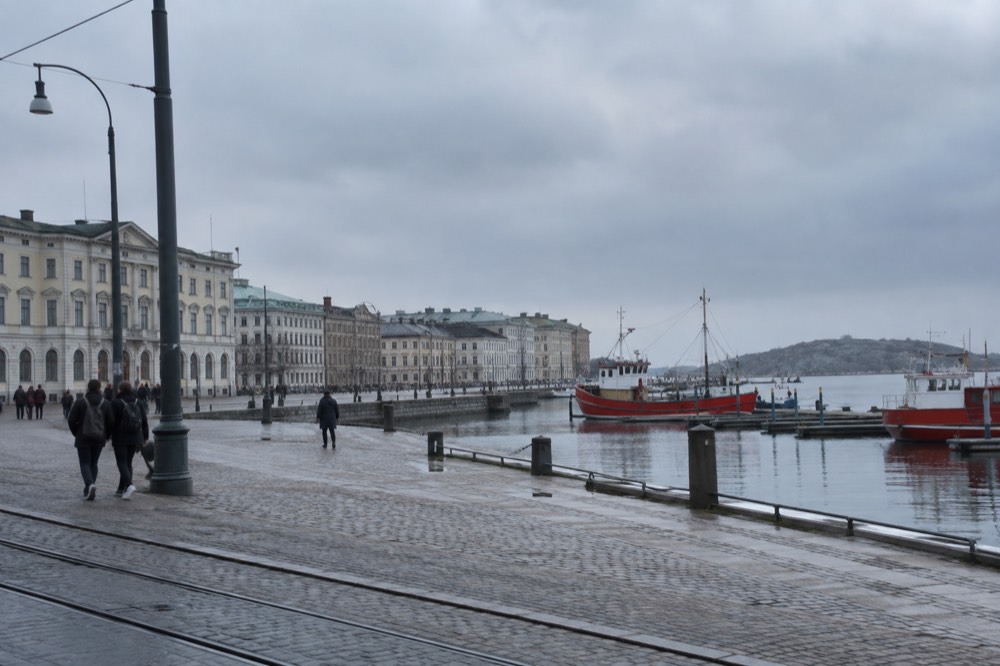
Sweden is a long country, and almost every "what is worth seeing in Sweden" list compresses it into Stockholm's old town, the Icehotel and a reindeer. The west coast rarely appears, which is odd, because Sweden's second-largest airport is there. Göteborg Landvetter handled 5,435,850 passengers in 2025, Swedavia's own figures show, and the city it serves, Gothenburg, sits at the mouth of the Göta älv with a car-free archipelago inside its own public transport zone. This site, Gothenburg Travel Guide, argues the case for seeing Sweden from the west rather than the east, and lists what is genuinely worth the journey in between.
What Is Worth Seeing in Sweden If You Arrive in Gothenburg?
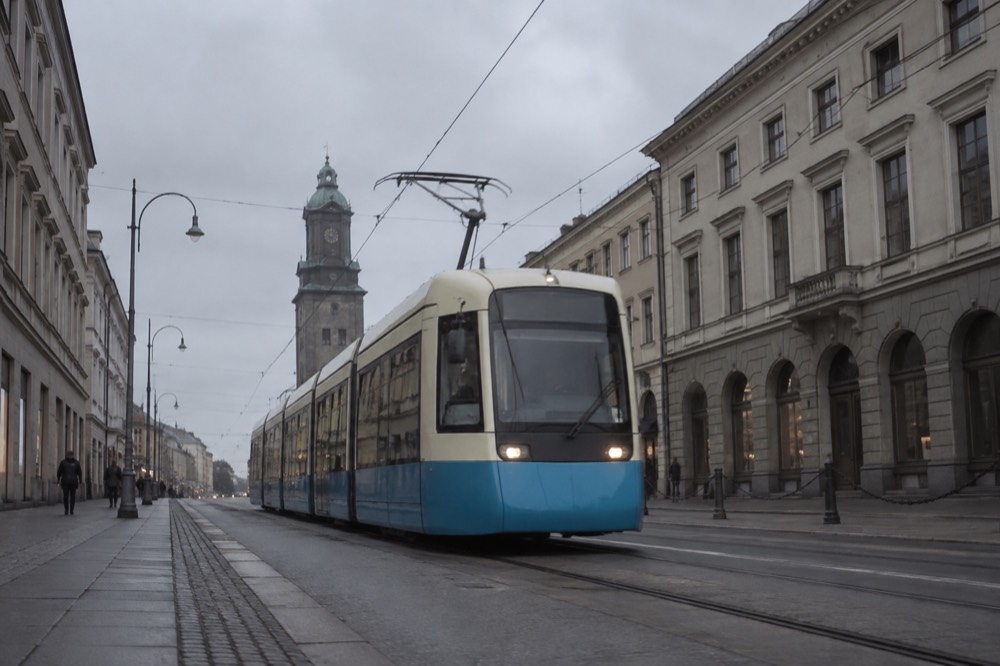
The short answer is the city itself plus its archipelago, and both fit inside one tram ticket. Gothenburg's old core was laid out by Dutch engineers inside a moat, the tram network runs 12 lines over 188 km of single track, and the southern archipelago islands of Styrsö, Brännö and Vrångö are areas of the city, reached by ordinary ferry from Saltholmen. A 24-hour Zone A ticket at 125 kr covers tram, bus and boat together, per Västtrafik's fare pages.
That last fact is the one that surprises people. The islands are not a day trip with a separate boat operator charging tourist prices. Västtrafik, the regional transport authority, publishes the boats on its own network map and states that a Zone A ticket takes you "from the centre out onto the sea". Cars are banned on the southern islands under a city ordinance, so what you get is granite, painted cottages and footpaths, an hour from the tram terminus. Göteborgs Spårvägar, the tram operator, recorded 126 million journeys in 2025, its own reporting shows, and Saltholmen is the western terminus of the whole network: you ride a tram to the boat.
Inside the city, the worth-seeing list is compact and walkable. Haga's wooden landshövdingehus, the Feskekôrka food hall, which reopened in 2024 after renovation, the Avenyn and Götaplatsen axis with Göteborgs konstmuseum at its head, and the harbour. Göteborgs konstmuseum holds about 70,000 works and charges 75 kr for a day ticket, free for visitors under 20, though note the museum's own rebuild page: it closes in 2028 and reopens in 2032, so plan accordingly. The museum also warns of intermittent blasting near the building right now, which it flags for sensitive visitors.
Feskekôrka deserves a correction of its own, because older guidebooks get it wrong twice. The building, which turned 150 in 2024, the same year it reopened, is no longer a fish-only market. Its own site now lists two fish counters, Ebbes Fångst and Flåtens Fiskhandel, and five restaurants: Haldis Kök, Pråmenaden, Victor von G, Lilla Åstol and Ekmans. Lilla Åstol is seasonal, reopening in spring. So the "fish church" is a food hall now, and worth seeing as one.
For a fuller rundown of the city's signature sights, see what Gothenburg is known for. If you are still deciding whether the city merits the trip at all, the case is made at is Gothenburg in Sweden worth visiting.
Is the Gothenburg Archipelago Worth Seeing?
Yes, and it is the single best-value sight on Sweden's west coast. The southern islands, Asperö, Brännö, Styrsö, Donsö, Vrångö and Köpstadsö, are car-free, sit inside Västtrafik zone A, and are covered by the same 125 kr 24-hour ticket that runs the trams. The northern islands, Öckerö, Hönö and Björkö, sit in the same zone. Sea temperature peaks at 18.6 C in August, not July, per SMHI's Vinga station data.
The swimming fact deserves emphasis because it inverts what visitors book. SMHI's quality-controlled archive from the Vinga lighthouse station, built from over 61,000 hourly observations, shows September water at 16.7 C is warmer than June water at 16.2 C. The sea runs about six weeks behind the air, so the archipelago is at its swimmable best in late August and early September, after the domestic holiday crowds have gone home. February, not January, is the coldest month in the water, at 2.7 C, with a record low of -1.2 C, legitimately below zero because brackish Kattegat water does not freeze at 0.
The islands themselves have distinct characters, and choosing between them is half the planning. Styrsö is the largest and most village-like, Brännö is flat and made for walking circuits, Vrångö is the wildest and least developed, Donsö mixes a working fishing harbour with swimming rocks, and Köpstadsö is the smallest of the lot. None of them has a car. The city's own study of the southern archipelago states the islands are protected from car traffic, with exceptions only for taxi, transport services and emergency vehicles.
If you would rather see the islands from the deck than from a ferry queue, guided options exist. The listings below compare three boat-based ways to do it, from the amphibious bus that drives into the harbour to the guided archipelago cruise and the canal boat through the city's moat.
For the independent version, the logistics are simple: tram to the Saltholmen terminus, then the ferry line for your island. The question of whether it is worth it as a day trip has its own answer at is it worth visiting the Gothenburg archipelago, and the honest answer is that one day is enough for one island, not all of them. The ferry itself costs nothing extra, which is covered at is the ferry in Gothenburg free.
Which Gothenburg Sights Are Worth Your Time, and Which Are Not?
Worth your time: Liseberg in season, Universeum any day of the year, the Haga quarter, Slottsskogen's free zoo and the harbour. Not worth your time: the old Volvo Museum at Arendal, which closed permanently in December 2023, replaced by World of Volvo, and any plan that puts Liseberg into a spring weekend without checking its calendar, because the park shuts between roughly 24 December and mid-April.
The Liseberg calendar is the detail that ruins trips. Liseberg's own pages give the 2026 seasons as summer 18 April to 20 September, Halloween 2 October to 1 November, and the Christmas market 14 November to 23 December. In between, the park is closed, apart from the Kaninlandet children's area, which for 2026 also opens winter weekends and school holidays. And the ticket structure trips people up: entry from 95 kr buys zero rides, per Liseberg's own ticket page, which sells the ride pass separately from 310 kr and the combined ticket from 365 kr. Liseberg is not sold on any booking platform, so buy from the park directly.
Universeum, the science centre, is the opposite: open every day of the year, 10:00 to 18:00, with dynamically priced entry and no fixed published adult price, so the only way to know the cost is to book a time slot. Its rainforest hall, aquarium and reptile house are all included in admission, though the Wisdome dome shows are a separate ticket. World of Volvo, the Volvo Museum's successor, sells exhibition tickets from 120 kr online and runs the Torslanda factory tour from 175 kr on weekdays, with buses departing from the venue itself.
Here is the core sightseeing list with what each one costs, using only figures from the venues' own pages:
| Sight | Cost basis | Notes |
|---|---|---|
| Southern archipelago ferry | Covered by 125 kr 24-hour Zone A ticket | Tram, bus and ferry on one ticket |
| Liseberg entry | From 95 kr online | Buys entry only, zero rides; ride pass from 310 kr |
| Göteborgs konstmuseum | 75 kr day ticket | Free under 20; closes 2028, reopens 2032 |
| Universeum | Dynamically priced, book a time slot | Open every day of the year |
| World of Volvo | From 120 kr online | Replaced the closed Arendal museum |
| Slottsskogen park and zoo | Free | Open city park with a free zoo |
| Feskekôrka food hall | Free to enter | Two fish counters, five restaurants |
Should You See Gothenburg from a Boat, a Bus or on Foot?
The amphibious bus is the efficient compromise: one hour, the main city sights, then a harbour leg. The listing shows a 4.7 rating from 4,326 reviews. If your time is short, the question of how long to stay has a full answer at how many days in Gothenburg is enough, and the honest summary is that one day covers the core, two covers the core plus an island, and three lets you breathe.
What About Stockholm: Is It Worth Seeing Too?
Yes, Stockholm is worth seeing, and from Gothenburg it is a train ride with no flying required. The two cities complement each other: Stockholm for the royal palace, Vasa Museum and the eastern archipelago's flat-washed granite, Gothenburg for the working harbour, the car-free western islands and a food scene built on shrimp, oysters and the Kattegat. The train between them is the sensible link.
The comparison question comes up constantly, and the honest framing is that they are different products. Stockholm is the capital, built on fourteen islands, with museum density no Swedish city matches. Gothenburg is a port city whose best sights are free or nearly free: Slottsskogen's zoo costs nothing, the archipelago costs a tram ticket, and the viewpoints from Skansen Kronan and Masthuggskyrkan cost only the walk up. Göteborg & Co reported over 6 million commercial guest nights in 2025, a record, with international guest nights up roughly 15% in the first ten months of the year, so the city is not exactly undiscovered, but its sightseeing still prices like a regional city rather than a capital.
For the rail logistics, the connections are covered in detail at is the Gothenburg to Stockholm train scenic. Trains run the corridor all day from Göteborg Centralstation, and booking ahead is cheaper than buying on the day. If you are weighing the two cities as a single trip, the question of which deserves the bigger share of your days is genuinely hard, and the fair answer is that Gothenburg rewards slow, cheap, outdoor sightseeing while Stockholm rewards museum days and paid entries.
One more comparison worth making before you commit: Copenhagen is also on the west-coast rail line, and many visitors string Denmark and Sweden together. The ferry and rail connections make it straightforward, and the Swedish west coast sits between the two capitals, which is exactly why basing yourself in Gothenburg for part of the trip is a plan more travellers should consider.
Is the Swedish West Coast Worth Seeing Beyond Gothenburg?
Yes, and it is the stretch of Sweden most international visitors never see. The Bohuslän coast north of the city, Marstrand with its island fortress, Smögen's granite boardwalk and Fjällbacka, sits within a day trip of Gothenburg, as do Läckö castle on Lake Vänern, Tjolöholm and the Trollhättan locks on the Göta canal. The rainiest month on this coast is October at 102.9 mm, and the driest is April at 51.3 mm, per SMHI's 1991-2020 normals.
That rainfall detail matters for planning. The cliche that this is Sweden's rainy corner is half true at best: SMHI's own normals for station Göteborg A give 912 mm a year over 127 wet days, about one day in three, and SMHI does not call Gothenburg Sweden's rainiest city, since the national maxima sit in the western highlands and the mountains. April, not high summer, is the driest month of the year, on the fewest wet days. A spring trip to Bohuslän gets the granite light, the empty paths and the least rain the coast offers. The rain arrives properly in October, after the tourists have gone.
The practical base for all of it is Gothenburg. Marstrand is a short trip out the coast, and the seafood towns of Bohuslän, Smögen, Fjällbacka, Grebbestad with its oyster safaris, string north from there. Each is a different flavour of the same geology: pink granite scraped smooth by the ice sheet, fishing harbours the colour of rust and blood, and open water toward Norway. Marstrand adds a fortress, Carlstens Fästning, and a sailing culture that fills the harbour in summer.
The day-trip boundary matters here. Marstrand, Bohuslän, Tjolöholm, Gunnebo, Trollhättan, Borås, Varberg and Läckö are day trips from Gothenburg. The southern archipelago islands are not day trips, they are districts of the city, and treating them as an excursion misunderstands both the transport system and the islands. For the food angle, the regional specialities have their own rundown at what food Gothenburg is famous for, and the shrimp sandwich alone justifies the coast.
What Is Worth Seeing in Sweden in Winter?
In winter the worth-seeing list narrows to the Christmas markets, the coast in low light and, if your dates align, Liseberg's Christmas season, which in 2026 runs 14 November to 23 December. Daylight on 21 December is 6 hours 32 minutes in Gothenburg, against 18 hours 06 minutes on 21 June, per US Naval Observatory data for the city's latitude, so plan for dark afternoons and lit markets rather than long sightseeing days.
The light is not a reason to stay home, it is the reason the Christmas period works. Gothenburg's own market at Liseberg is among the largest in the country, and the city's guest-night numbers hold up through December for exactly that reason. The swing between the solstices is 11 hours 34 minutes, and in June it never properly gets dark: civil twilight on 21 June runs from 02:58 to 23:30 local time, leaving only about three and a half hours of true night. In December, even the grey light lasts barely eight hours.
What does not work in winter is the archipelago as a swimming trip: the water sits at 3.9 C in January and bottoms at 2.7 C in February, with a record low of -1.2 C, because brackish Kattegat water freezes below zero. The islands are still open, still car-free and still covered by the tram ticket, but pack for a walk, not a dip, unless a sauna boat is involved. The islands in winter are their own experience: empty paths, sea smoke off the rocks and a ferry that still runs on the ordinary timetable.
The rest of Sweden in winter splits into two products: the north, for snow, aurora and the Icehotel, and the south, for cities, markets and museums. From Gothenburg the north is a flight or a very long train, while the south is all within a few hours on rails. If you are deciding between the two biggest cities for a Christmas trip, the seasonal comparison is covered at is Gothenburg worth visiting at Christmas, and the winter city itself has a full guide.
Common Questions About What Is Worth Seeing in Sweden
What is worth seeing in Sweden?
From a Gothenburg base: the city's old quarter of Haga, the car-free southern archipelago covered by an ordinary tram-and-ferry ticket, Liseberg in its open seasons, the Bohuslän coast to the north and Stockholm by train to the east. The old Volvo Museum no longer belongs on the list, it closed in December 2023.
Is Gothenburg or Stockholm better for sightseeing?
Stockholm has more museums per square kilometre and the royal sights. Gothenburg has the archipelago inside its transport zone, a compact walkable core and cheaper sightseeing. Many visitors do both, linked by a train ride from Göteborg Centralstation.
Is the Gothenburg archipelago worth seeing?
Yes. The southern islands are car-free areas of the city, reached by Västtrafik ferry from Saltholmen on the same Zone A ticket as the trams, 125 kr for 24 hours. The sea is warmest in August at 18.6 C per SMHI.
What is worth seeing in Sweden in winter?
Christmas markets, Liseberg's Christmas season from mid-November to 23 December in 2026, and the lit cities of the south. Daylight runs under seven hours in late December, so plan around markets and museums rather than long outdoor days.
What is worth seeing near Gothenburg?
Marstrand's island fortress, the Bohuslän fishing towns of Smögen and Fjällbacka, Läckö castle on Lake Vänern, Tjolöholm and the Trollhättan canal locks are all day trips. The southern archipelago islands are not day trips, they are part of the city itself.