Where Do Cruise Ships Dock in Gothenburg, Sweden? What to Expect at the Port
Cruise ships calling at Gothenburg, Sweden berth inside the city's working harbour on the Göta älv. Here is what the port itself publishes, how the berth connects to the centre, and what a day ashore can realistically hold.
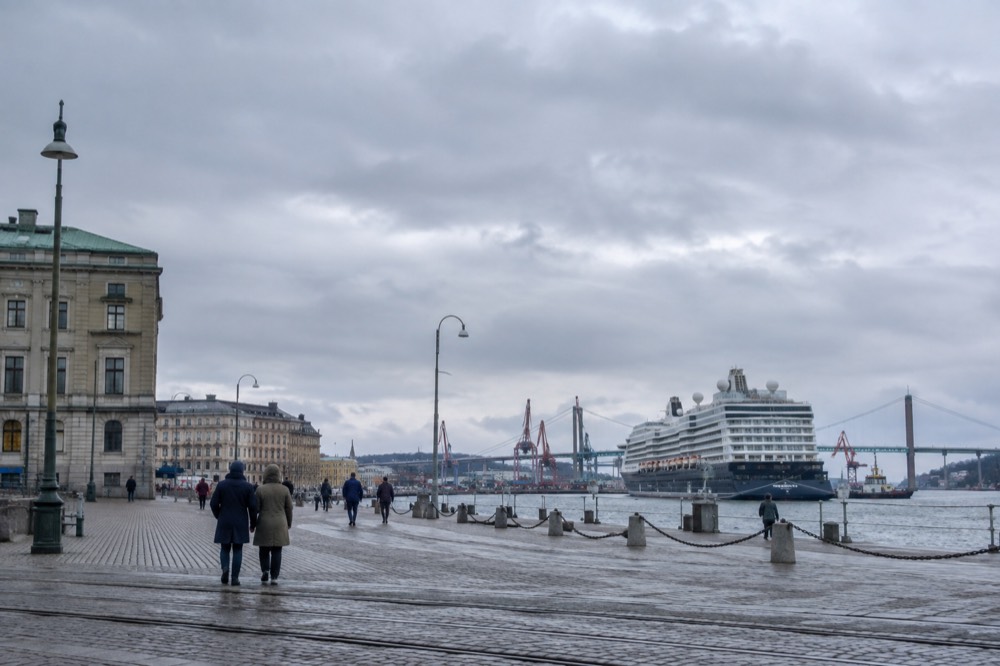
Gothenburg, Sweden sits at the mouth of the Göta älv, where the river drains into the Kattegat, and the city's harbour is a working port first and a cruise stop second. Shipyard cranes, ferry terminals and container quays share the water with whatever cruise ship happens to be in town. The Port of Gothenburg is Sweden's largest combined cargo and passenger port, and its own website is candid about one thing that matters to anyone planning a cruise visit: it publishes no cruise-call schedule. The port's "Cruise calls 2026" page exists but carries no table, no calendar and no downloadable list, and its arrivals and departures pages publish none either. That gap shapes everything below. What can be stated with confidence is the geography, the connections, and what a day ashore can hold.
Where Do Cruise Ships Dock in Gothenburg, Sweden?
Cruise ships calling at Gothenburg berth inside the Port of Gothenburg's harbour area on the Göta älv, within the city's own boundaries and a short transfer from the centre, rather than at some remote out-of-town terminal. The port does not publish a berth-by-berth cruise schedule, so the reliable way to learn where your specific ship ties up is to ask your cruise line directly or check the port's own arrivals channels on the day.
The harbour runs along both banks of the river close to where it meets the sea. The south bank carries most of the passenger infrastructure: the Stena Line ferry terminals, the guest harbour areas, and the quays that serve visiting vessels. The north side, Hisingen, holds the shipyard and industrial berths. A cruise ship in port is a visible event, because the working harbour sits cheek by cheek with the city rather than at a distance from it. The Älvsborg bridge carries the road traffic over the river mouth, and the harbour's cranes are part of the skyline rather than hidden behind a fence in a dockland suburb.
One distinction the port itself would insist on, and which this site's reporting confirms: a scheduled Stena Line ferry to Denmark or Germany is not a cruise call. The ferry terminals run daily services and are permanent infrastructure. Cruise calls are separate events, and the port authority, despite publishing general port information, publishes no list of them. That is unusual for a cruise port of this size and it is the single most important thing a cruise passenger can know before arrival. If your itinerary says "Gothenburg (Sweden)", the ship will be in this harbour; the exact quay is information your cruise line holds, not something to hunt for on port websites.
The city behind the quays is worth understanding before you step off the gangway. Gothenburg, not to be confused with the much smaller town of Gothenburg, Nebraska in the United States, is Sweden's second city, with a population of 613,274 at the end of 2025 according to Göteborgs Stad's own reporting. The old town was laid out by Dutch engineers inside a moat, which is why the canal sightseeing route exists at all: the moat is still water, and boats still run through it. The tram network is the backbone of daily movement, the southern archipelago is car-free and sits inside the city's own transport zone, and the whole place reads as Nordic maritime: granite, red brick, painted wooden landshövdingehus, shipyard cranes, grey sea light.
For context on the city on the other side of the gangway, our what is Gothenburg known for page covers the harbour identity, the trams and the archipelago that grew out of this port.
How Far Is the Cruise Berth from the Gothenburg City Centre?
The honest answer is that the distance depends on which quay the ship receives, and the port does not publish that assignment in advance, but Gothenburg is a compact city where the harbour and the centre are continuous with each other, so no cruise berth in this port puts you hours from town. Trams, buses and taxis connect the harbour edge to Avenyn, the old town and the canal district in minutes rather than half-days.
Gothenburg's tram network is the backbone of local movement. Göteborgs Spårvägar reports 126 million journeys in 2025 across a network that its 2022 annual report described as twelve lines, 134 stops and 188 kilometres of single track, running from Mölndal in the south to Angered in the north, and from Saltholmen in the west to Kålltorp in the east. The harbour district sits inside that mesh. The network's record year was 2019 with 141 million journeys, its pandemic low was 93 million, and the recovery to 126 million in 2025 is a real signal of how much the city rides its own trams. A cruise passenger joining that flow for a day is using the same system locals use for every trip.
The fares a visitor needs are simple, and Västtrafik, the regional transport authority, publishes them on its own ticket pages. A single adult ticket for one zone costs 38 kr, with youth fares at 29 kr. A 24-hour Zone A ticket costs 125 kr whether bought in the app or at a shop, and it covers trams, buses and the archipelago ferries alike. Zone A includes Göteborg, Partille, Mölndal and Öckerö, which is to say the whole city plus the islands.
| Ticket | Adult price | What it covers | Source |
|---|---|---|---|
| Single, 1 zone | 38 kr | One journey within one zone | Västtrafik single-ticket page |
| Single, 2 zones | 76 kr | One journey across two zones | Västtrafik single-ticket page |
| Single, 3 zones | 114 kr | One journey across three zones | Västtrafik single-ticket page |
| 24-hour, Zone A | 125 kr | Unlimited trams, buses and archipelago ferries for 24 hours | Västtrafik Zone A day-ticket page |
| 30-day, Zone A | 445 kr (halved from 890 kr) | Monthly travel, temporary state subsidy through year end | Västtrafik discount page |
Two cautions from the verified fare picture. A temporary state subsidy currently halves the price of every 30-day period ticket, cutting a Zone A adult monthly from 890 kr to 445 kr, but it does not apply to the 24-hour and 72-hour day tickets a visitor actually buys. Västtrafik's own discount page states the cut is a temporary state support valid for travel through the end of the year. Do not budget for half-price transport as a cruise passenger. And if someone tells you the old Göteborg City Card covers your tram rides, that product no longer exists; it was replaced by a commercial pass that does not include public transport.
For the wider picture of how the city moves, our is public transport easy in Gothenburg neighbours cover the walkability question, and the tram-and-ticket detail lives in the site's transport guides. The short version for a cruise day: buy one 125 kr day ticket in the app when you leave the ship and stop thinking about fares until you are back on board.
What Can You Do on a Cruise Day in Gothenburg?
A cruise day in Gothenburg can cover the canal and harbour from the water, the Haga old quarter, Feskekôrka food hall and the Museum of Art on foot, and even a ferry ride into the car-free southern archipelago, because the harbour, the centre and the islands all sit inside one transport zone reachable on an ordinary ticket. Eight to nine hours ashore is enough for two of those three, not all of them at a rush.
Start with the water, because you are already on it. The city's sightseeing boats run the historic moat and canal route through the centre, and the Paddan boats are a Gothenburg institution that predates the cruise trade by generations. From there the walkable core takes over. Haga's wooden landshövdingehus streets, the fish-church-turned-food-hall Feskekôrka, which reopened in 2024 with two fish counters and five restaurants inside, and the Götaplatsen end of Avenyn are all within a sensible walking loop from the centre. Feskekôrka's own site lists the current operators: the fish counters Ebbes Fångst and Flåtens Fiskhandel, and the restaurants Haldis Kök, Pråmenaden, Victor von G, Lilla Åstol and Ekmans. The building turned 150 the year it reopened, which places its construction in 1874.
The Museum of Art at Götaplatsen charges 75 kr for a day ticket, is free for visitors under 20, and includes the Hasselblad Center. Its own site confirms a coming closure: the museum shuts in 2028 for a rebuild and reopens in 2032, with intermittent blasting near the building already flagged for sensitive visitors. If a cruise itinerary has you ashore before 2028, the collection of roughly 70,000 works is there to see; plan around the Monday closing and the 11:00 opening on other days. The museum is cashless, taking card or Swish only, which is the pattern across most of the city's institutions now.
One attraction to strike from any shore plan: the old Volvo Museum at Arendal. It closed permanently in December 2023, confirmed by its successor's own site. The replacement is World of Volvo in the city, open Monday to Wednesday 10:00 to 17:00, Thursday 10:00 to 19:00, Friday and Saturday 10:00 to 17:00, and Sunday 10:00 to 16:00, with exhibition tickets from 120 SEK online. Countless guides still send people to the closed Arendal building; a cruise passenger with limited hours cannot afford that error.
Liseberg, the amusement park, is the city's biggest single attraction and its calendar is irregular in a way that catches visitors out. The park's summer season in 2026 runs 18 April to 20 September, Halloween runs 2 October to 1 November, and the Christmas market runs 14 November to 23 December. Between those seasons the park is shut, and a cruise call in late January or early March finds it closed. Liseberg's own ticket page states the prices plainly: entry from 95 kr buys no rides at all, a combined entry and ride pass starts at 365 kr, and a ride pass alone starts at 310 kr. Children under 110 cm enter free. Liseberg is not sold on any booking platform, so buy from the park directly if a seasonal date lines up with your call.
| Attraction | Hours | Entry | Notes for a cruise day |
|---|---|---|---|
| Göteborgs konstmuseum | Tue-Thu 11:00-18:00, Wed to 20:00, Fri-Sun 11:00-17:00, closed Mon | 75 kr day ticket, free under 20 | Includes Hasselblad Center; closes 2028 for rebuild |
| World of Volvo | Mon-Wed 10:00-17:00, Thu 10:00-19:00, Fri-Sat 10:00-17:00, Sun 10:00-16:00 | From 120 SEK online | Replaced the Volvo Museum, which closed Dec 2023 |
| Universeum | Every day of the year, 10:00-18:00 | Dynamically priced, book a time slot | No fixed adult price exists; on-site costs online plus 30 kr |
| Liseberg | Seasonal: check calendar before planning | Entry from 95 kr, rides separate | Closed roughly 24 Dec to mid-April |
| Feskekôrka food hall | Varies by operator | Free to enter | Reopened 2024; five restaurants plus two fish counters |
Universeum, the science centre, deserves a line of caution rather than a price. Its admission is dynamically priced with a booked entry time, there is no fixed published adult price, and the on-site price is the online price plus 30 kr. It is open every day of the year from 10:00 to 18:00, which makes it one of the few guaranteed-open options on any call date, but busy time slots sell out, so a cruise passenger should book ahead rather than walk up.
Can You Visit the Gothenburg Archipelago from a Cruise Ship?
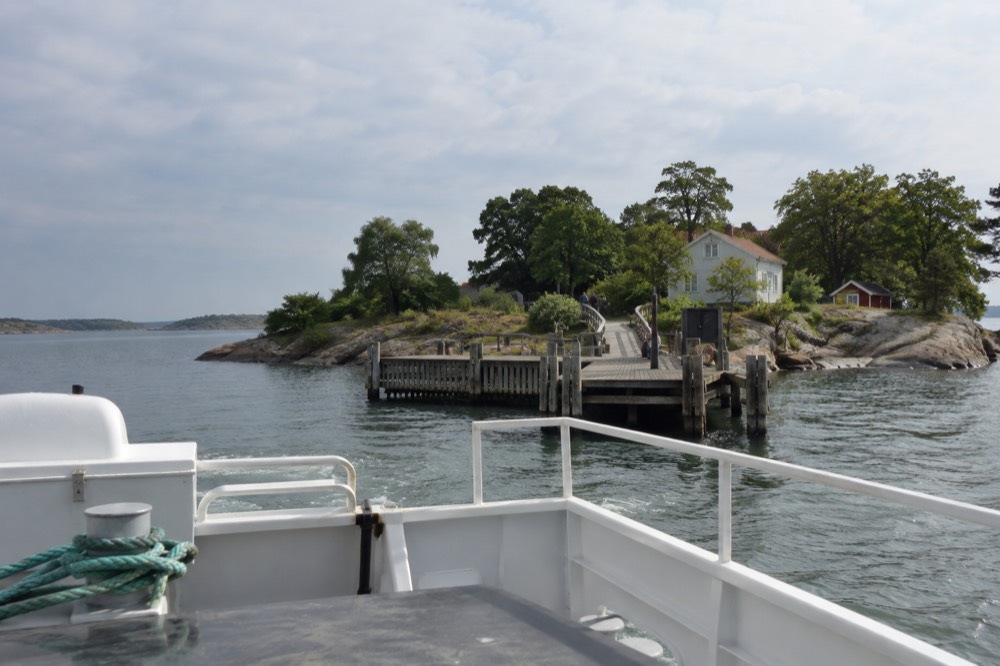
Yes, and it is the highest-value move a cruise passenger can make, because the southern archipelago, including Styrsö, Brännö, Vrångö, Donsö, Asperö and Köpstadsö, is part of the city of Gothenburg, not a day trip, and the ferries from Saltholmen are covered by the same ordinary Västtrafik ticket as the tram that takes you to the quay. A 125 kr 24-hour Zone A ticket covers tram, ferry and island in one purchase.
Västtrafik's own zone map shows the archipelago boats carrying Västtrafik line numbers inside Zone A, and the islands are car-free by municipal decision: Göteborgs Stad's study states that the islands of the southern archipelago are protected from car traffic, with exceptions only for taxi, transport service and emergency vehicles. You ride a tram to Saltholmen, the network's western terminus, and step onto a boat. Saltholmen parking is the known pain point for drivers, which is irrelevant advice for a cruise passenger, since arriving by tram is the better plan anyway. The Västtrafik tram, bus and boat network map shows the whole system on one sheet, boats included.
Timing is the honest constraint. Ferries run on timetables that thin out outside the summer season, and a cruise day is a fixed window. Check the sailing times before committing, and keep a margin for the return leg. The islands themselves are small, green and quiet: Brännö has a village core and swimming rocks, Vrångö is the most southerly and the most tranquil, Styrsö has the largest settlement, and Donsö still has a working fishing fleet. None of them needs a car, which is the point of them.
The sea itself is warmer than most visitors expect late in the season. SMHI's quality-controlled observations from the Vinga lighthouse station, over 61,000 hourly readings, show the water peaks in August at 18.6 C, and September water at 16.7 C is actually warmer than June water at 16.2 C. A September cruise call offers a warmer swim than a June one, which is the opposite of what most people book for. February, not January, is the coldest month in the water at 2.7 C, with a verified record low of -1.2 C, legitimately below zero because brackish Kattegat water does not freeze at 0.
| Month | Mean sea temp at Vinga | What it means for a cruise call |
|---|---|---|
| June | 16.2 C | Swimmable but not the warmest window |
| July | 18.3 C | Peak air month; water still climbing |
| August | 18.6 C | Warmest water of the year |
| September | 16.7 C | Warmer than June; quiet islands |
| February | 2.7 C | Coldest water; a sauna-and-view day |
If a self-directed ferry day feels like too much logistics for a fixed sailing window, a guided archipelago cruise from the city centre compresses the same water into 2.5 hours. Our is it worth visiting the Gothenburg archipelago page weighs the options in more depth.
Is There a Published Cruise Schedule for the Port of Gothenburg?
No. The Port of Gothenburg publishes no cruise-call calendar on any of its own pages, which means the many websites listing "cruise ships in Gothenburg today" are not quoting the port, and any specific ship dates you find online should be treated as unverified until your cruise line confirms them. The port publishes general port and arrivals information but no cruise schedule, and it does not substitute the Stena Line ferry timetable for one.
This matters practically. Passengers trying to confirm a berth, a docking time or a sailing date from port sources will find nothing authoritative. The correct chain of information runs through the cruise line's own itinerary, and the port's empty cruise page should stop anyone trusting third-party cruise calendars for this city. A scheduled ferry is not a cruise call, and the port makes no attempt to blur the two. This site's own reporting checked the port's cruise and arrivals pages directly and found them carrying no schedule, which is why this article reports the absence rather than inventing dates.
For shore-planning purposes, the absence of a schedule changes nothing about what to do once ashore. The transport fares, the attraction hours and the ferry network described above hold regardless of which ship is alongside. What does change with the calendar is daylight and weather. The sun is up 6 hours 32 minutes on 21 December against 18 hours 06 minutes on 21 June, a swing of over eleven and a half hours between solstices, per the US Naval Observatory's own figures. A winter cruise call is a short-light day, and the itinerary should respect that. In June, civil twilight runs from roughly 03:00 to 23:30 local time, leaving only about three and a half hours of true night.
On rain, the reputation outruns the record. SMHI's 1991-2020 normals for the Göteborg A station put the city at 912 mm of precipitation across 127 days a year, about one day in three. October is the wettest month at 102.9 mm and April the driest at 51.3 mm, so the rain arrives after the peak tourist season. SMHI's own normal-period page makes clear that the national precipitation maxima sit in the western highlands and the mountains, not in this city, so the old line about Gothenburg being Sweden's rainiest city is not supported by the institute that measures it. Pack a shell jacket anyway; one day in three is one day in three.
Common Questions About Cruise Ships Docking in Gothenburg
Where do cruise ships dock in Gothenburg, Sweden?
Cruise ships berth inside the Port of Gothenburg's harbour on the Göta älv, within the city's boundaries and close to the centre. The port publishes no berth-by-berth cruise schedule, so confirm your ship's exact quay with your cruise line rather than with port websites.
How do I get from the Gothenburg cruise berth to the city centre?
Gothenburg's tram network covers the harbour edge and the centre in a single Zone A fare: a single adult ticket costs 38 kr and a 24-hour ticket costs 125 kr. Taxis also serve the port, and the compact centre is walkable from the inner harbour quays.
Can I visit the archipelago on a cruise day in Gothenburg?
Yes. The southern archipelago islands are areas of Gothenburg, reached by tram to Saltholmen and then ferry, all on the same ordinary Västtrafik ticket within Zone A. Check ferry sailing times against your ship's departure and keep a margin for the return leg.
Does the Port of Gothenburg publish a cruise ship schedule?
No. The port's own cruise and arrivals pages carry no cruise-call calendar, and it publishes no list of visiting ships. Third-party cruise calendars for Gothenburg are not quoting the port, so treat their dates as unverified.
Is the old Volvo Museum a good cruise-day excursion in Gothenburg?
No, because it closed permanently in December 2023. The replacement is World of Volvo in the city, open daily except it closes at 16:00 on Sundays, with exhibition tickets from 120 SEK online.
What is the weather like on a cruise call to Gothenburg?
SMHI's 1991-2020 normals show 912 mm of rain a year across about 127 wet days, roughly one day in three. October is the wettest month and April the driest, and the sea around the archipelago is warmest in August at 18.6 C, with September water warmer than June water.
For more on the city waiting beyond the quay, see is Gothenburg worth visiting for tourists and the rest of Gothenburg Travel Guide.