Ullevi and Gothenburg's Stadium District: What to See, Do and Book Around the Arena
Ullevi is Gothenburg's main arena, and the district around it, from Korsvägen down towards Liseberg and Universeum, is one of the busiest corners of the city. Here is how the area works for a visitor: how to arrive by tram, what the district offers on a day with nothing scheduled, and which sightseeing tours depart within walking distance.
Short answer
Ullevi sits just south of Gothenburg's inner city, a short tram ride from Göteborg Centralstation and walkable from Avenyn. The stadium district around Korsvägen combines the arena with Liseberg, Universeum and the museum cluster, and ordinary Västtrafik tickets cover the trams that serve it.
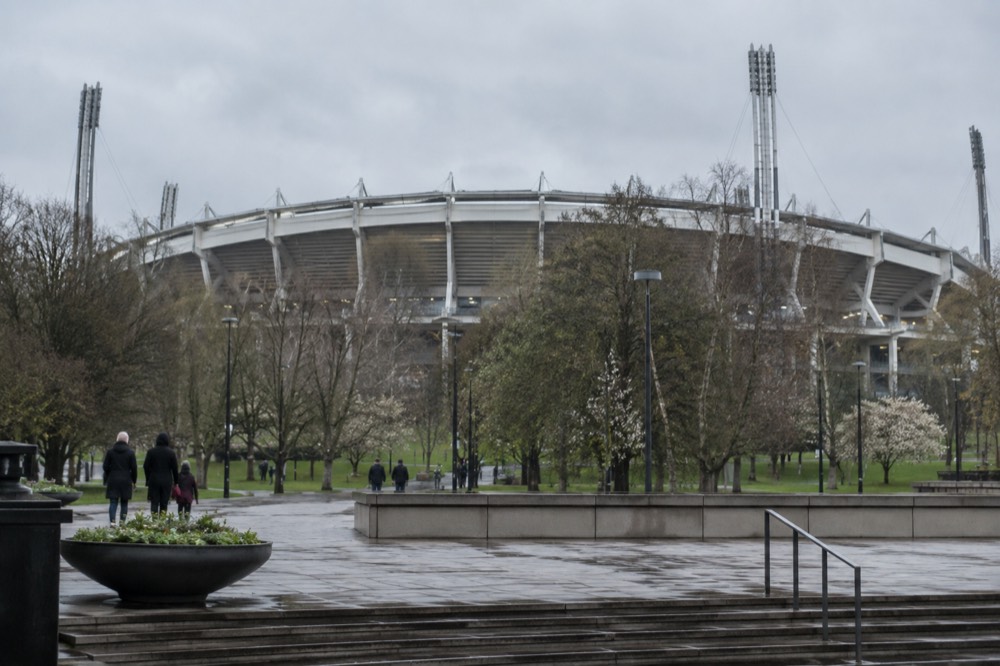
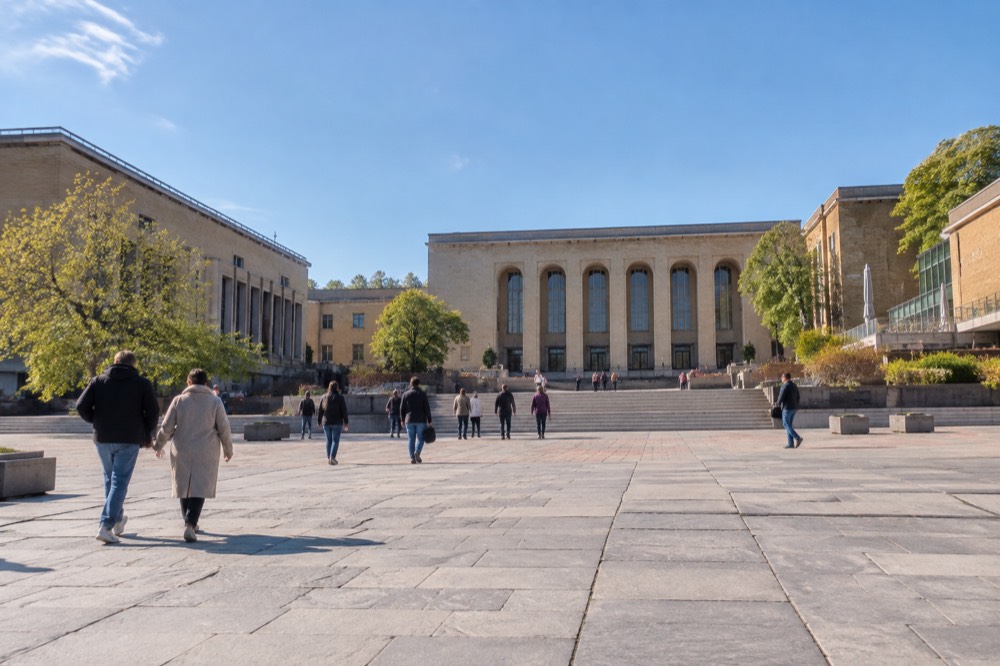
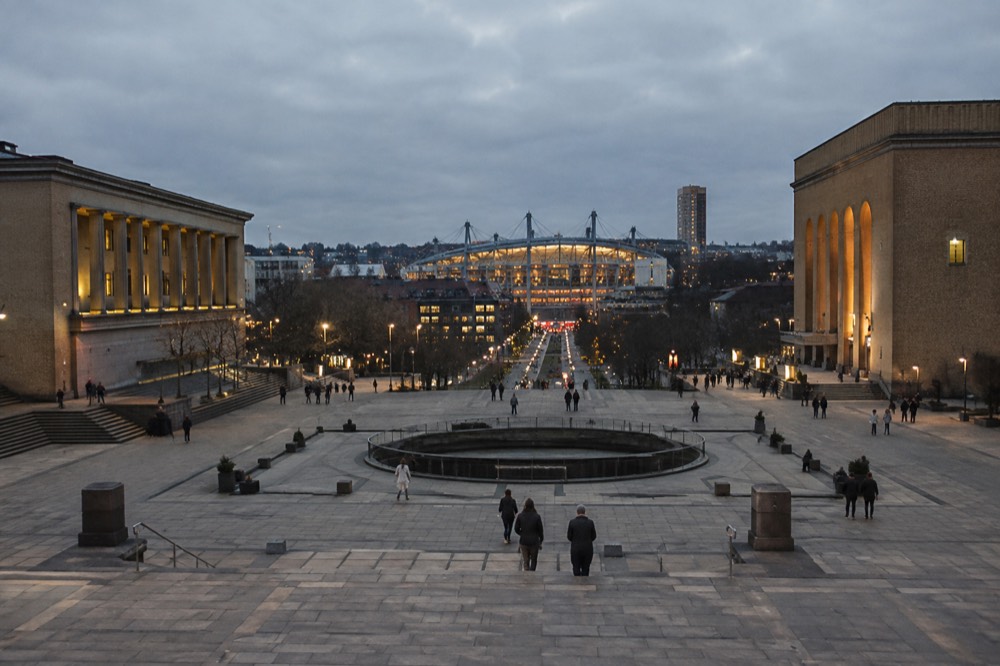
Ullevi is the arena a visitor to Gothenburg, Sweden, is most likely to end up near, whether they came for a match, a concert or simply because the Korsvägen transport hub drops them there on the way to Liseberg. The district around it is not a single stadium block but a strip of the city that runs from the southern end of Avenyn, over Korsvägen, and down towards the amusement park and the science centre, with museums, parkland and tram lines stitched through it. Göteborgs Stad lists the area as ordinary city ground: nothing about it is gated, and on a day with no event scheduled it functions as a normal, walkable part of town.
This guide from Gothenburg Travel Guide covers the practical questions: where the district sits, how the tram network delivers you to it, what there is to do when the arena itself is dark, and which sightseeing tours depart close enough that a stadium-district hotel makes a sensible base.
Where Is Ullevi in Gothenburg?
Ullevi stands immediately south of Gothenburg's inner city, at the top of the Korsvägen transport hub, roughly a 20 to 25 minute walk from Göteborg Centralstation and a few minutes from the southern end of Avenyn, the city's main parade boulevard. The arena's neighbours are Liseberg to the south, Universeum beyond that, and the museum and parkland cluster that fills the space between the stadium and the river. Trams stop at Ullevi and at Korsvägen, which is the district's interchange.
The geography is the useful part. Korsvägen is where several tram lines cross, and it is also the stop the airport coach calls at on its way between Landvetter and the central station, a fact Swedavia states on its own airport transfer pages. That makes the stadium district one of the best-connected corners of Gothenburg for a visitor arriving by air: the coach stops at Korsvägen before it reaches the terminal building in the city centre, so a visitor staying near Ullevi can step off the airport coach almost at the arena's door. Our guide to Landvetter Airport transfers covers that route in detail.
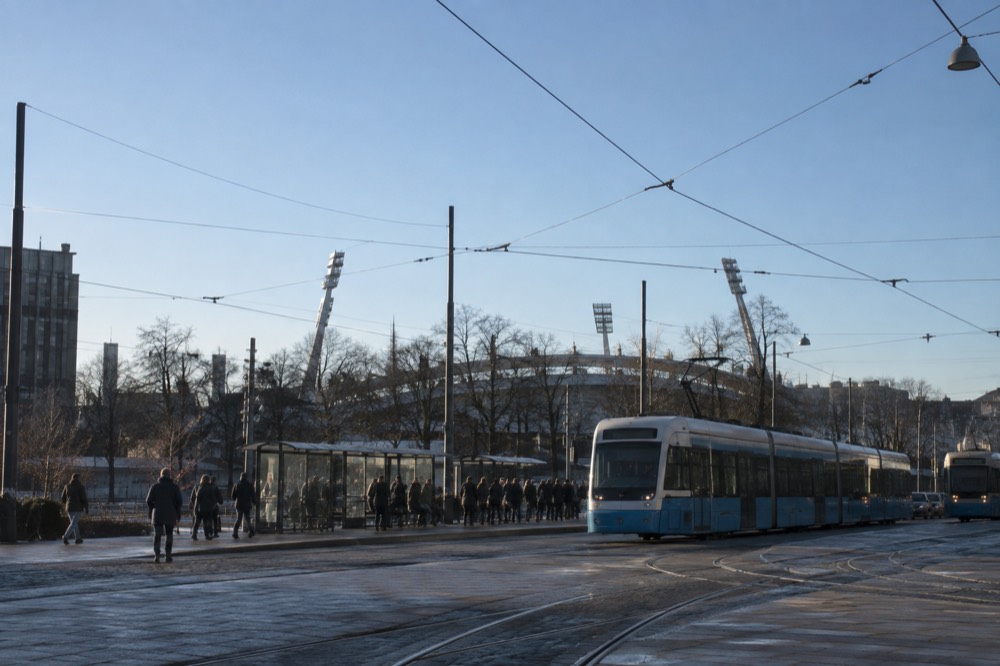
On foot, the district connects north to Avenyn and Götaplatsen, and east towards the Liseberg entrance. The distances are short. A visitor can walk from the arena forecourt to the Liseberg gates, continue to Universeum, and still be back at Korsvägen inside half an hour of steady walking, which is why the area works as a single sightseeing zone rather than a list of separate destinations.
What Is There to Do Around Ullevi and Korsvägen?
The stadium district packs Liseberg, the Universeum science centre, the Museum of World Culture and a stretch of parkland into the space around the arena, plus the restaurants and hotels that serve them. On an event day the arena itself is the draw; on every other day the district behaves like Gothenburg's entertainment quarter, with the amusement park's season calendar, the science centre's daily 10:00 to 18:00 opening, and the tram hub tying it together.
Liseberg is the anchor. The park's own season calendar matters more here than anywhere else in the city, because a visitor staying by Ullevi in, say, February will find the biggest attraction in the district shut. Liseberg's published 2026 calendar runs the summer season from 18 April to 20 September, Halloween from 2 October to 1 November, and the Christmas market from 14 November to 23 December, with the park closed in the gaps between. Entry and rides are sold separately: a 95 kr entrance ticket buys the gate and nothing that moves, while the combined entry and ride pass starts at 365 kr online. Liseberg is not sold on any booking platform, so tickets come from the park itself.
Universeum, next door, runs on a different rhythm: the science centre is open every day of the year, 10:00 to 18:00, with dynamically priced timed entry and no fixed published adult price, so the booking flow on its own site is the only source of the real figure. Children under three enter free but still need a ticket.
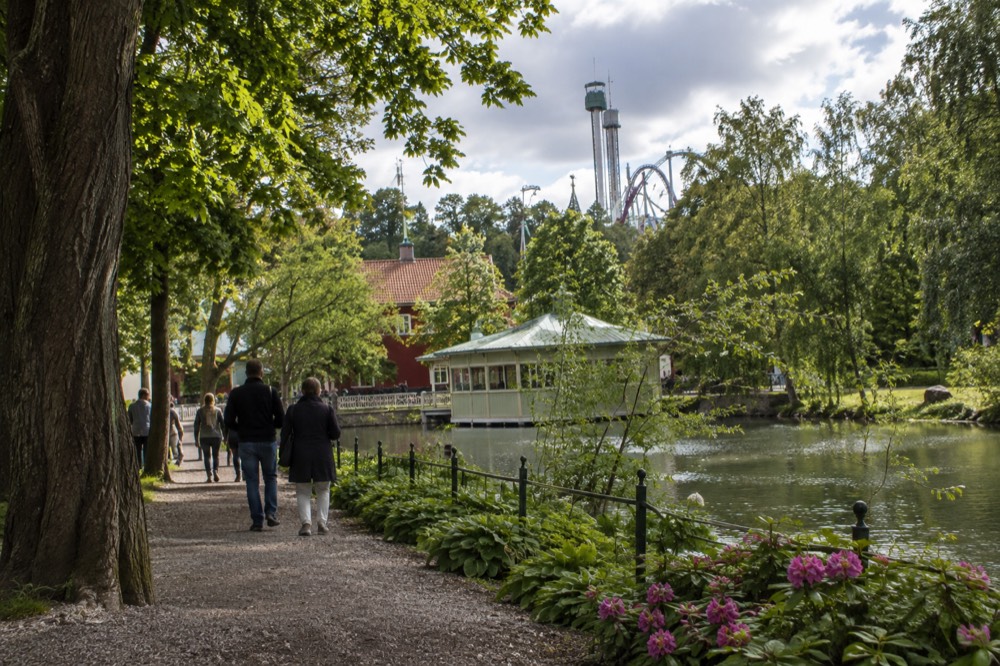
Beyond the headline attractions, the district holds the Museum of World Culture, the city's convention centre, and enough parkland that a quiet walk between venues does not feel like moving through a building site, although the Västlänken rail tunnel project has construction works in this part of the city, with a planned station at Korsvägen, so hoardings and diversions are part of the current streetscape. For a fuller picture of what the city offers beyond this district, our overview of free things to do in Gothenburg lists the parks and museums that cost nothing.
If the district itself is your base for the day, these are the three tours most visitors combine with it:
How Do You Get to Ullevi by Tram, and What Do Tickets Cost?
Trams are the way in: Göteborgs Spårvägar reports 12 lines serving 134 stops across 188 km of single track, and Korsvägen and Ullevi are among the best-served stops in the city. A single adult ticket for one zone, which covers the whole stadium district, costs 38 kr, and a 24-hour Zone A ticket costs 125 kr, the same price in the app as in a shop, per Västtrafik's fare pages.
The tram network is the backbone of the city, and the stadium district sits on it rather than beside it. Saltholmen, the archipelago ferry terminal, is the western terminus of the network, so the same tram system that delivers you to a match at Ullevi also delivers you to the boats, and an ordinary Zone A ticket covers the ferries to the car-free southern islands as well. That single-ticket reach, from the stadium district out onto the open sea, is the best-value transport fact in Gothenburg, and it is confirmed on Västtrafik's own zone pages.

One nuance deserves care, because headlines get it wrong. A temporary state subsidy currently halves the price of every 30-day period ticket, dropping the Zone A adult monthly from 890 kr to 445 kr, but that subsidy does not apply to the 24-hour and 72-hour tickets a visitor actually buys. A day ticket is still 125 kr. Do not plan around "half-price transport" if you are staying three days.
| Ticket | Adult price | Notes |
|---|---|---|
| Single, 1 zone | 38 kr | Covers the whole stadium district and the archipelago ferries |
| Single, 2 zones | 76 kr | For trips beyond Zone A |
| 24-hour, Zone A | 125 kr | Same price in app or shop |
| 30-day, Zone A | 445 kr during the state subsidy | Normally 890 kr; subsidy runs through year end |
| Youth single, 1 zone | 29 kr | Ages 7 to 19 |
Payment is by app or card; there is no cash on board. Our full guide to Gothenburg's trams, tickets and zones walks through the app, the card and the zone map in more depth.
Seeing the District from the Water
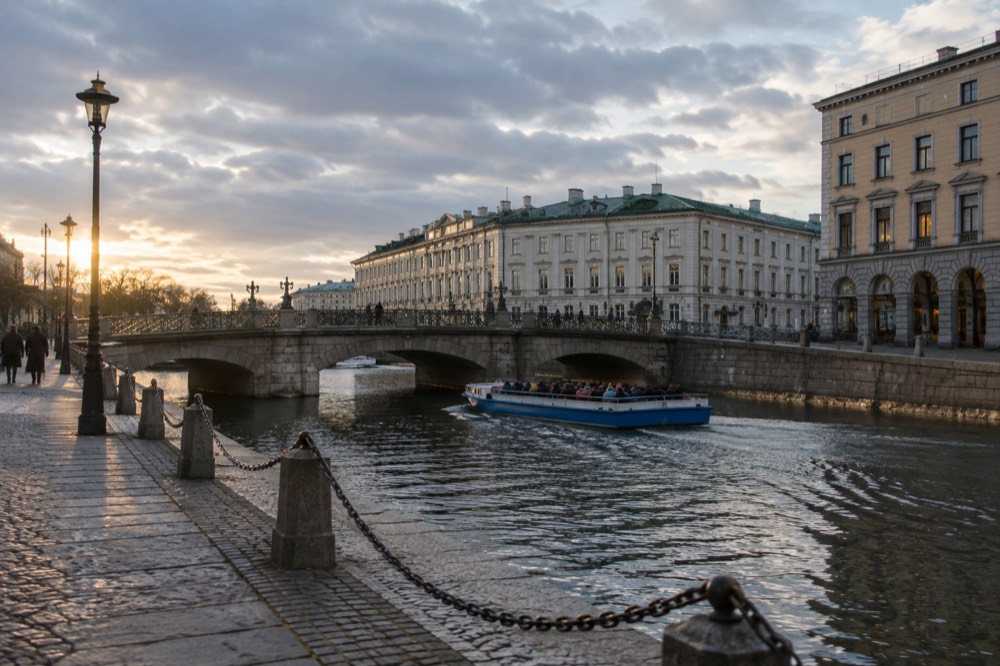
The stadium district sits inside the loop of moat and canal that Dutch engineers drew around the old town, and the classic way to see that loop is from a boat. The Paddan sightseeing cruise runs the river Säveån and the canal ring, and it boards in the city centre, a short tram hop or a brisk walk from Korsvägen.
Is the Stadium District Worth Visiting When Nothing Is On?
Yes, because the district's attractions do not depend on the arena's calendar: Universeum opens every day of the year, the Museum of World Culture and the surrounding parkland are ordinary daytime destinations, and Liseberg runs its own seasonal schedule independent of Ullevi's events. The arena itself is a building you walk past rather than into on a quiet day, but the district around it carries a full day of sightseeing without any event at all.
The honest framing is that Ullevi is a venue, not a visitor attraction in the museum sense. What makes the district worth a non-event visit is density. Within the walk described above you have an amusement park in season, a science centre with a rainforest hall and aquarium, a state museum, and the tram hub that connects all of it to the rest of the city. On a wet day, which in Gothenburg is a planning reality rather than a surprise, the district has more indoor fallbacks per square metre than almost anywhere else in the city. SMHI's 1991-2020 normals for the Göteborg A station record 912 mm of precipitation across 127 days a year, with October the wettest month at 102.9 mm and April the driest at 51.3 mm, so the indoor-heavy character of this district is a genuine advantage, not a coincidence.
For families, the combination is close to ideal, and our Gothenburg with kids guide treats this district as the default base for exactly that reason. For anyone travelling on a tighter budget, the parkland is free, the district is walkable, and the costs of a Gothenburg trip are easier to control here than in the restaurant-heavy streets of the inner city.
One tour format suits a non-event day particularly well, because it turns the district's own geography into the itinerary:
The amphibious bus tour is the one sightseeing product that explicitly connects the land-side and water-side views of the city, launching from the city centre and driving and sailing past the districts that surround the stadium quarter. The listing carries a 4.7 rating from 4,326 reviews, which makes it the most-reviewed sightseeing tour in the city's roster.
What Tours Start Near the Stadium District?
The three tours most conveniently combined with a stadium-district base are the Paddan river and canal cruise from the city centre, the amphibious land-and-water bus tour, and the guided archipelago cruise, which departs from the waterfront and reaches the islands on the same Zone A ticket territory the trams cover. All three board within tram distance of Korsvägen, and none requires a car.
The archipelago cruise is the one that changes shape with the seasons. The guided 2.5-hour cruise carries a 4.4 rating from 1,488 reviews and runs from the harbour, and the islands it sails towards, Styrsö, Brännö, Donsö and their neighbours, are administratively part of Gothenburg, reached on ordinary Västtrafik tickets, with private cars banned on the islands by city ordinance. A visitor based near Ullevi can ride a tram to Saltholmen, board a ferry, and be on a car-free island within the hour, all on tickets that already cover the stadium district. Our Gothenburg archipelago guide covers the islands themselves.

For comparison, here is how the three district-adjacent tours stack up on the facts that matter at the booking stage:
| Tour | Duration | From price | Rating |
|---|---|---|---|
| Paddan cruise on the river Säveån | 2 hours | $40 per person | 4.6 from 105 reviews |
| Land and water amphibious bus tour | 1 hour | $36 per person | 4.7 from 4,326 reviews |
| Guided archipelago cruise | 2.5 hours | $44 per person | 4.4 from 1,488 reviews |
Prices and ratings come from the operators' live listings and can change; the table is a planning comparison, not a quote. If a water-based view of the city is the priority, the Paddan cruise is the classic choice:
When Is the Best Time to Visit the Stadium District?
April to September is the strongest window: Liseberg's summer season runs 18 April to 20 September, the sea around the archipelago is at its warmest in August at 18.6 C, and April is statistically the driest month of the year at 51.3 mm of rain. October is the wettest month at 102.9 mm, and from late December to mid-April the amusement park is closed, though Universeum and the museums keep normal hours.
The seasonal logic of this district is really the Liseberg calendar plus the weather. Summer gives the full district: park, science centre, museums, and warm enough water that the archipelago ferries double as a swimming trip. SMHI's oceanographic data from the Vinga station shows the sea peaks in August at 18.6 C, and that September water, at 16.7 C, is actually warmer than June water at 16.2 C, which surprises visitors who assume the swim season ends when the schools go back. October flips the district indoors: it is the wettest month of the year, but the Christmas market season at Liseberg, running 14 November to 23 December in 2026, gives the late autumn a second peak. Our month-by-month best time to visit Gothenburg guide has the full breakdown.
| Month | Rainfall (mm) | Mean air temp (C) | Mean sea temp (C) | District note |
|---|---|---|---|---|
| April | 51.3 | 7.7 | 7.1 | Driest month; Liseberg opens mid-month |
| June | 73.7 | 15.7 | 16.2 | Long daylight, 18 h 06 m at the solstice |
| August | 92.8 | 17.7 | 18.6 | Warmest sea of the year |
| September | 80.0 | 14.0 | 16.7 | Sea warmer than June; park closes 20 Sep |
| October | 102.9 | 9.0 | 12.8 | Wettest month; indoor district |
| December | 93.0 | 2.1 | 5.5 | Christmas market until 23 Dec |
Where Do You Eat and Stay Near Ullevi?
The stadium district's own food offering is dominated by Liseberg's in-park restaurants and the hotel attached to the park, but the practical answer is that Avenyn's restaurant strip begins a few minutes' walk north, and the Liseberg Grand Curiosa Hotel, open since 2023, sits inside the district itself. Feskekôrka, the reopened 1874 fish-market building now running as a food hall with five restaurants and two fish counters, is a tram ride away in Rosenlund.
Staying near Ullevi puts the arena, the amusement park and the science centre on the doorstep, which is why the district is the default base for families and event visitors. The trade-off is that the immediate restaurant scene is event-driven and park-driven, and the richer eating streets of the inner city, the Linné quarter's café strip and the Haga old quarter's cinnamon-bun institutions, are a short tram ride north. Our where to stay in Gothenburg guide compares the districts, and the where to eat and fika guides cover the food side. One legal footnote worth knowing before a beer run: Swedish law, Alkohollag (2010:1622), restricts supermarket beer to 3.5% ABV, and anything stronger is sold only through the state monopoly Systembolaget, which is why the shelf version of a familiar brand often tastes weaker than expected.
For evening plans beyond the arena, the Gothenburg nightlife guide maps the districts that stay loud after the stadium empties, and the Way Out West festival guide covers the August weekend when the whole city tilts towards music.
These three tours are the ones most visitors book from a stadium-district base:
Common Questions About Ullevi and Gothenburg's Stadium District
How far is Ullevi from Gothenburg city centre?
Ullevi sits just south of the inner city, at the Korsvägen interchange. It is roughly a 20 to 25 minute walk from Göteborg Centralstation, a few minutes' walk from the southern end of Avenyn, and the airport [coach from](https://busbud.tpk.ro/pZ1aQZGA) Landvetter calls at Korsvägen on its way into town.
Which tram stops serve the stadium district?
Korsvägen is the district's interchange, and Ullevi has its own adjacent stops. Göteborgs Spårvägar reports 12 tram lines across 134 stops citywide, and the district is among the best-connected parts of the network, with Saltholmen, the archipelago ferry terminal, at the western end of the same system.
Is Liseberg open all year?
No. Liseberg's published 2026 calendar runs summer from 18 April to 20 September, Halloween from 2 October to 1 November, and the Christmas market from 14 November to 23 December, with the park closed in the gaps between seasons. Universeum, next door, is open every day of the year.
Can you swim near the stadium district?
Not in the district itself, but the car-free southern archipelago islands are reached by tram and ferry from Saltholmen on an ordinary Zone A ticket. The sea peaks at 18.6 C in August, and September water at 16.7 C is warmer than June water at 16.2 C, per SMHI's data from the Vinga station.
Do you need a car around Ullevi?
No. The district is walkable, tram-served and connected to the airport coach. Private cars are banned on the archipelago islands anyway, so even the district's best day trip works better without one. A 24-hour Zone A ticket at 125 kr covers trams and the archipelago ferries.
Is the stadium district good for families?
Yes, it is the default family base in Gothenburg: Liseberg in season, Universeum year-round, parkland between them, and the Grand Curiosa Hotel inside the district. Children under 110 cm enter Liseberg free, and under-3s enter Universeum free with a ticket.