Does Sweden Have 6 Months of Darkness? What Gothenburg Actually Gets
No, Sweden does not have six months of darkness. Gothenburg gets 6 hours 32 minutes of daylight at the winter solstice and 18 hours in June. Here is what the light really does.
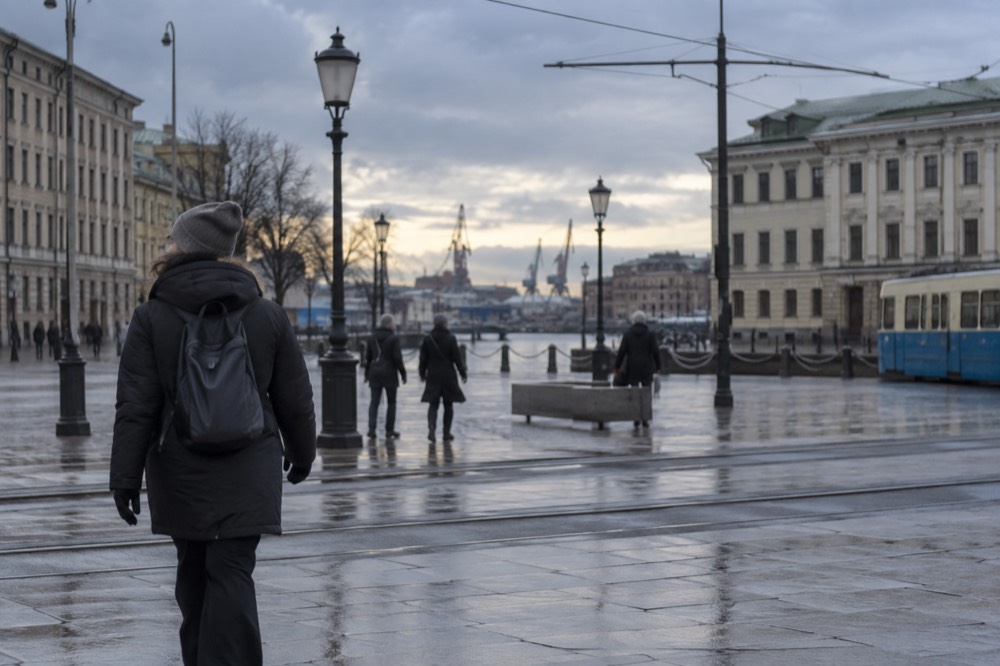
The idea that Sweden spends half the year in the dark is one of the most stubborn travel myths on the internet, and it collapses the moment you look at a map. Sweden stretches from its southern tip in Skåne all the way up into Lapland, and only a small fraction of the country lies above the Arctic Circle, the latitude where the midnight sun and the polar night actually occur. Gothenburg sits at 57.7 degrees north, about the same latitude as Aberdeen in Scotland, and it never loses the sun for a full day at any point of the year. What it gets instead is a wide, honest swing: 18 hours 06 minutes of daylight on 21 June against 6 hours 32 minutes on 21 December, according to the US Naval Observatory's own sunrise and sunset tables for the city.
That is a big seasonal change. It is not six months of darkness, and the difference matters for anyone planning a trip, because the myth pushes people toward midsummer and away from months that are genuinely pleasant. This site, Gothenburg Travel Guide, keeps the numbers in one place so the answer is easy to check.
Does Sweden Have 6 Months of Darkness?
No. Six months of darkness happens only above the Arctic Circle, and only a sliver of Sweden lies that far north. In Gothenburg, the darkest day of the year, 21 December, still has 6 hours 32 minutes of daylight, and the sunniest, 21 June, has 18 hours 06 minutes. Kiruna, in Swedish Lapland, does lose the sun for weeks in winter, but that is a different part of a very long country.
The myth has a real origin, which is probably why it survives. Abisko, Kiruna and other places in Swedish Lapland sit above the Arctic Circle, and there the sun stays below the horizon for weeks around the winter solstice, while in summer it refuses to set at all. That is the genuine polar night and midnight sun. But Sweden's population, its cities and almost everything a visitor actually comes to see are in the southern two-thirds of the country, well below the Circle. Stockholm, Gothenburg and Malmö all get a sunrise and a sunset every single day of the year.
Gothenburg's latitude, 57.7 degrees north, is confirmed by SMHI's own station data for Göteborg A. That puts the city on a level with northern Scotland and well south of Anchorage. The six-month figure is not a rounding error or a mild exaggeration; it is a description of a different country, or at least a different end of this one.
It helps to picture what the polar night actually is. Above the Arctic Circle the sun's daily arc sinks so low that, for a stretch around midwinter, it never clears the horizon at all. The length of that sunless window shrinks rapidly as you move south from the Circle: at Kiruna's latitude it lasts weeks, a short distance further south it is a single day or two, and by the middle of Norrland it disappears entirely. This gradient is why the myth feels true to some visitors. Someone who spent a December week in Lapland and then read a lazy headline about "Sweden" can honestly believe the whole country shuts its lights off. The headline is describing one end of a country that also contains a city where you can read a newspaper outside at 22:00 in June.
How Much Daylight Does Gothenburg Get Month by Month?
Gothenburg swings from 6 hours 32 minutes of daylight on the winter solstice to 18 hours 06 minutes on the summer solstice, a difference of 11 hours 34 minutes. In June there are only about three and a half hours of true night, because civil twilight runs from 02:58 to 23:30 local time. In December the grey light barely lasts eight hours.
The US Naval Observatory's tables give the exact figures for the city. On 21 June 2026 the sun rises at 04:11 and sets at 22:17 local summer time. On 21 December it rises at 08:54 and sets at 15:26. Between those two extremes the change is fast and uneven: February gains daylight at a rate most visitors can feel week to week, while October loses it just as quickly.
A few practical consequences follow from the numbers. In midwinter, the sun rises after most people have started work and sets before many finish, which is why Swedes talk about catching daylight at lunchtime. In midsummer, the evenings stretch so long that an after-dinner walk at 22:00 still happens in full light, and the "night" is a bright twilight rather than darkness. If you want to see how this shapes the seasons in practice, Gothenburg month by month light and dark breaks the whole year down.
The swing also changes what tours are worth booking. In June and July, evening sailing and archipelago cruises run in full daylight late into the evening, and a 20:00 departure still counts as an afternoon trip by the light. In December, sightseeing compresses into a window between about 09:00 and 15:30, so anything outdoors needs to be planned around the middle of the day.
Twilight is the part of the equation most people never account for. Daylight, strictly measured, runs from sunrise to sunset, but civil twilight, the period when the sun is close enough below the horizon to light the sky, extends usable visibility well beyond it. In Gothenburg in late June, civil twilight runs from 02:58 to 23:30 local time, which means the sky never gets properly dark at all: there are roughly three and a half hours of dim twilight that locals still call night. In late December the same twilight runs from about 08:03 to 16:17, so the city has around eight hours of usable grey light even though the sun itself is up for less than seven. Neither extreme matches the myth. June is bright almost around the clock, and December is dim but never black.
Is Gothenburg Dark and Grey in Winter?
Gothenburg's winter is dim rather than dark: the December solstice day still has 6 hours 32 minutes of daylight plus civil twilight from about 08:03 to 16:17, so usable light lasts roughly eight hours. The bigger winter problem is cloud and rain, not the absence of the sun, and the city's wettest month is October at 102.9 mm.
The cloud matters more than the geometry. SMHI's 1991-2020 normals for station Göteborg A record 912 mm of precipitation across 127 days a year with at least 1 mm, which is about one day in three. The wettest month is October at 102.9 mm and the driest is April at 51.3 mm, so the rain is an autumn problem, not a summer one. A December day may have only a few hours of thin grey light under cloud, and that is what people remember as "darkness" when the actual sunless period never happens here at all. The full national picture is on SMHI's own normals page, which is the primary source for every figure in this section.
One cliche deserves killing while we are here: Gothenburg is not Sweden's rainiest city, and SMHI's own climate pages do not support the claim. The national precipitation maxima sit in the western highlands and the mountains, where annual figures exceed 1,000 mm. Gothenburg's 912 mm is wet by national standards but well short of the record areas.
| Season | Daylight in Gothenburg | What it feels like |
|---|---|---|
| Late June | 18 h 06 m, twilight almost all night | Bright until late evening, never fully dark |
| Late September | Around 12 h | Balanced, crisp, early sunsets |
| Late December | 6 h 32 m plus twilight | Short grey days, lights on by 15:30 |
| Late March | Around 12 h and gaining fast | Noticeably lighter every week |
For what the short days are actually like to visit in, Gothenburg in winter covers the practical side, from what stays open to how the city lights itself through the dark months.
Where in Sweden Does the Polar Night Actually Happen?
The polar night begins north of the Arctic Circle, and in Sweden that means Lapland: Kiruna loses the sun for roughly four weeks around the winter solstice, while Abisko and Riksgränsen have similar sunless periods. Everywhere south of the Circle, including all of Sweden's three largest cities, gets at least some direct sunlight every day of the year.
The length of the sunless period shrinks fast as you move south from the Circle. At Kiruna's latitude the gap is weeks; a short distance further south it is a single day or two; and by the time you reach the middle of Norrland it disappears entirely. This gradient is why the myth feels true to some visitors: someone who spent a December week in Lapland and then read a lazy headline about "Sweden" can honestly believe the whole country shuts its lights off.
For a Gothenburg traveller, the practical takeaway is simple. You cannot see the midnight sun or the polar night from this city, and you should not plan a Gothenburg trip around either. What you can see is the long June twilight, which is its own spectacle: the harbour and the archipelago islands stay navigable and bright until nearly midnight, and the ferries run on ordinary tickets. The question of whether the Gothenburg archipelago is worth visiting has a different answer in June than in January, and light is most of the reason.
It is also worth being precise about what "darkness" means when you see it in a Swedish weather forecast. Meteorologists here talk about dagsljus, daylight hours, and mörkertid, dark time, and the dark time in southern Sweden is a matter of long evenings and late sunrises, not a sun that fails to appear. Gothenburg's December sunrise at 08:54 is late by the standards of most of Europe, but it is a sunrise. The city's streetlights, window candles and harbour floodlights do the rest, and the Swedish instinct for cosy indoor light, the thing the Danes call hygge and the Swedes have their own quieter version of, exists precisely because the winter here is grey rather than polar.
When Is the Best Time to Visit Gothenburg for Daylight?
For maximum light, visit between mid-May and late July, when Gothenburg has 17 to 18 hours of daylight and the nights stay bright. For a balance of light, dry weather and smaller crowds, aim for April or May: April is the driest month of the year at 51.3 mm, and daylight is already past 14 hours by the end of April.
The daylight curve and the rain curve do not peak together, which is the detail most planning advice misses. Summer has the light but also the crowds and the July average high of 18.3 °C, which is mild rather than hot. Spring has shorter but still generous days, the driest month of the year, and a city that has just come out of hibernation. October, the wettest month, is when the light starts collapsing fast, and November is when the short-day feeling really sets in.
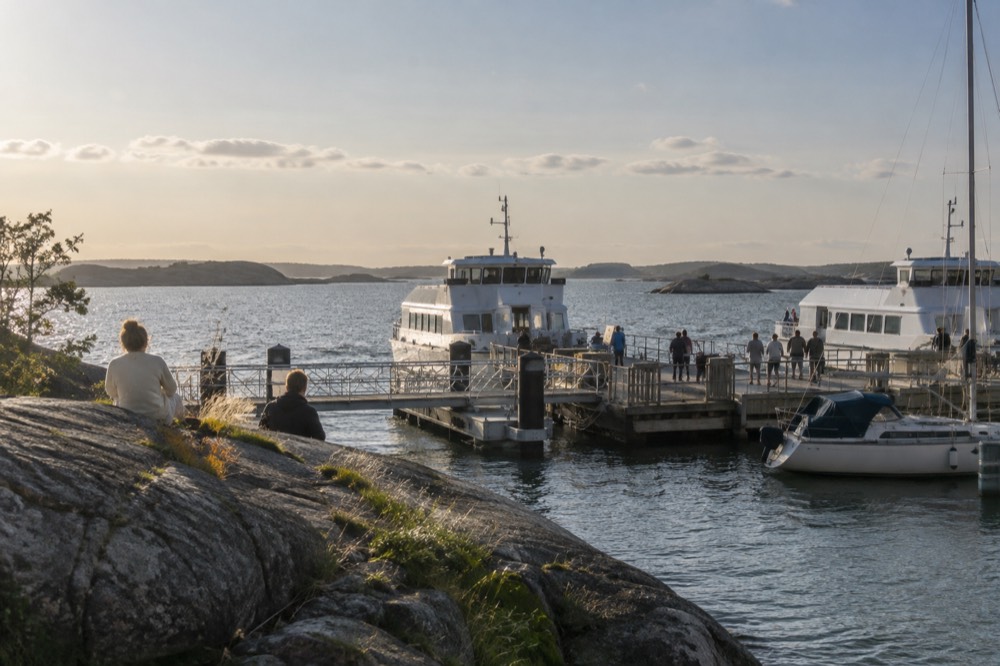
If darkness is what you are curious about rather than worried by, December has its own logic. The Christmas lights, the Liseberg Christmas market that runs from 14 November to 23 December, and the candle-lit window tradition make the short days feel deliberate rather than deprived. The full seasonal argument is in what is the best time to visit Gothenburg, and the question of how many days in Gothenburg is enough changes with the season too, because winter daylight compresses an itinerary.
Do the Short Days Ruin a Gothenburg Trip?
No, but they reshape one. In December you have roughly six and a half hours of daylight plus usable twilight, so outdoor sightseeing works best between about 09:00 and 15:30, museums and food halls carry the afternoons, and the evening starts early by design. Visitors who plan around the light window rather than fighting it tend to rate winter Gothenburg highly.
The city is built for this. Trams run frequently and the indoor options are strong: Universeum is open every day of the year from 10:00 to 18:00, Göteborgs konstmuseum holds evening hours on Wednesdays until 20:00, and Feskekôrka reopened in 2024 as a food hall with five restaurants, not only fish counters. The konstmuseum's own rebuild page also notes the museum closes in 2028 and reopens in 2032, so if a long winter visit is on your list, the art galleries are a now-or-later question.
A December day in Gothenburg rewards a specific rhythm. Treat 09:00 to 15:30 as the outdoor block: a morning walk through Haga's wooden quarter, the viewpoint at Skansen Kronan, or the harbour all work in the low golden light that sits close to the horizon all day. After 15:30, move indoors without guilt, because the city's museums, cafes and food halls are designed to receive you. The long evening, from about 17:00 onward, is when Gothenburg's restaurants and bars do their real business, and the Swedish habit of eating dinner early in winter exists partly to match the light. Visitors who fight this schedule, booking a 14:00 outdoor tour and a 19:00 museum, end up cold and disappointed. Visitors who follow it get a city that feels coherent with its own season.
Day trips compress too. Nordens Ark wildlife park, entry ticket bookable below, is a full-day outing in summer but a shorter, darker one in December; the upside is that the park's Nordic animals are more active in cold weather.
For a deeper answer on the season itself, is it a good idea to travel to Sweden in the winter covers the national picture, and what is the shortest day in Sweden gives the solstice numbers in full.
Common Questions About Darkness in Sweden
Does Sweden have 6 months of darkness?
No. The polar night only occurs above the Arctic Circle, in Swedish Lapland around Kiruna and Abisko, and even there it lasts weeks rather than months. Gothenburg gets 6 hours 32 minutes of daylight on the darkest day of the year.
How dark is Gothenburg in December?
The winter solstice day has 6 hours 32 minutes of daylight, with sunrise at 08:54 and sunset at 15:26. Civil twilight extends the usable light to roughly eight hours, so the days are short and grey but never sunless.
Does it ever stay light all night in Gothenburg?
The sun always sets in Gothenburg, but in late June it sets after 22:00 and civil twilight runs until about 23:30, resuming before 03:00. That leaves roughly three and a half hours of true night, and it never gets properly dark.
Is Gothenburg dark and rainy all year?
No. SMHI's normals show 912 mm of rain across 127 wet days a year, about one day in three, with October the wettest month at 102.9 mm and April the driest at 51.3 mm. Summer days are long, mild and often dry.
Where in Sweden can you see the midnight sun?
Only above the Arctic Circle, in Swedish Lapland: Kiruna, Abisko and the surrounding mountains. Gothenburg, Stockholm and Malmö are all too far south and get a sunrise and a sunset every day of the year.
When should you visit Gothenburg if you hate the dark?
Between mid-May and late July, when the city has 17 to 18 hours of daylight and bright nights. April and May are also good, combining over 14 hours of daylight by month's end with the driest weather of the year.
The six-months myth is worth correcting precisely because the reality is more interesting. Gothenburg has one of the steepest light curves in Europe that never quite hits the extremes, a city that gets bright June nights without ever losing a December sunrise. Plan around the curve and the calendar does the rest.