How Do Swedes Pronounce Gothenburg? Göteborg, Said Properly
Swedes never say Gothenburg. The Swedish name is Göteborg, pronounced roughly YET-eh-bor-y, and the hard G English speakers expect does not exist in it.
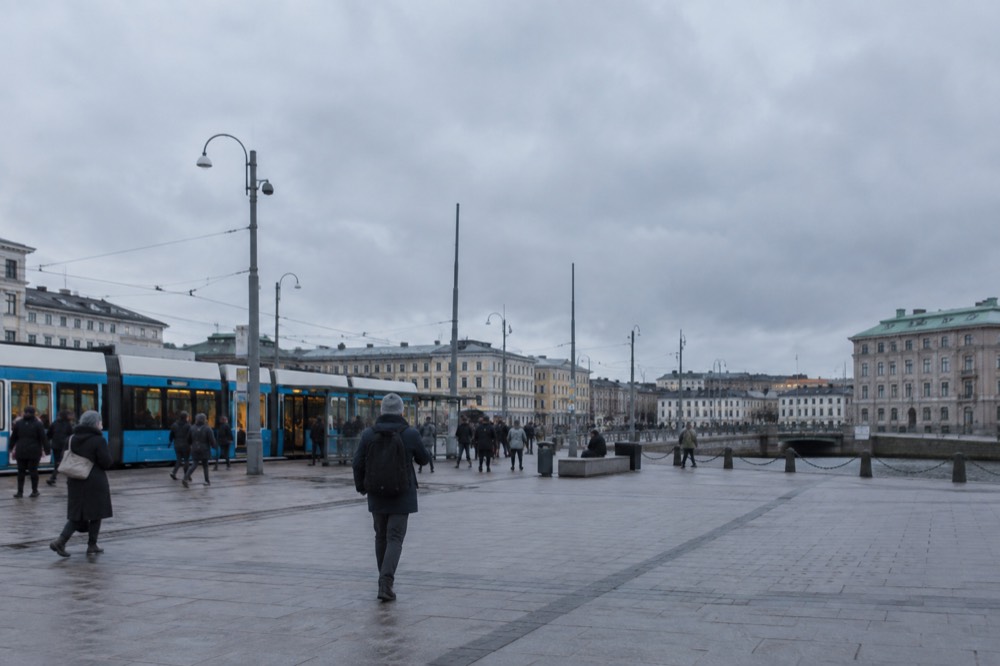
Ask for "GOTH-en-berg" in Sweden and you will be understood, because every Swede who works near tourists has heard the English name a thousand times. But nobody in the city says it. The name on the trams, the road signs, the stadium and the official city website is Göteborg, and the sounds in that word do not map onto English spelling in any obvious way. The short version: Swedes pronounce Göteborg roughly as YET-eh-bor-y, with a soft y-sound where English speakers expect a hard G, a short e in the middle, and a final g that is not a g at all. Göteborgs Stad, the municipal government, uses only the Swedish spelling in its own communications, and the English "Gothenburg" appears almost exclusively in material aimed at foreign visitors.
How Do Swedes Pronounce Gothenburg?
Swedes do not pronounce Gothenburg at all, because that is not the city's name in Swedish. The Swedish name is Göteborg, and it is said roughly as YET-eh-bor-y: the initial G softens to a y-sound before the ö, the middle syllable is a short, crisp teh, and the final g dissolves into a y-glide at the back of the mouth. The stress lands on the last syllable, bor. A hard English G at the start is the single biggest giveaway of a foreign visitor.
Breaking that down syllable by syllable makes it easier. Göteborg has three syllables: Gö-te-borg.
The first syllable, Gö, is the trap. In Swedish, the letter g before a soft vowel (e, i, y, ä, ö) is pronounced like the y in "yes", not the g in "go". So Gö is not "go" and not "guh". It is closer to "yuh", with the ö vowel inside it. The Swedish ö is made with rounded lips while the tongue says something between "uh" and "eh", a sound English does not have a letter for. Put the two together and you get something like "yuh" but with the lips pursed. If you can produce a passable ö, you are most of the way to a convincing Göteborg, because the consonants around it are actually easier than they look.
The second syllable, te, is short and light. Say "teh" as in the first half of "tennis" and you are close. Do not stretch it into "tee". Swedish vowels come in long and short pairs, and the e in Göteborg is a short one, clipped and unstressed. Holding it too long is a small error, but it is the kind of small error that makes the whole word wobble, because the rhythm of Swedish depends heavily on getting long and short vowels in the right places.
The third syllable, borg, carries the stress. Swedes say it like "bor" with a soft ending. That final g in Swedish, after certain vowels, becomes a sound like the y in "boy" or the si in "vision" depending on dialect, and in Göteborg most speakers end the word on a soft y-glide: BOR-y. The rg combination in Swedish regularly produces this effect, which is why Malmö ends in a similar soft sound and why Göteborg never ends in a hard "g" clunk.
Stress matters as much as the letters. English speakers tend to say GOTH-en-berg with weight on the first syllable. Swedish puts the weight on the last: gö-te-BOR(y). If you can only fix one thing, fix the stress. A first-syllable English stress pattern with perfect vowels still sounds foreign, while rough vowels with the stress on BOR will be understood instantly. This is true across Swedish generally: the language loves late stress, and place names follow the rule. Visitors who nail the vowels but keep English stress patterns sound more foreign than visitors who do the reverse.
Why Is the English Name Gothenburg and the Swedish Name Göteborg?
Göteborg is the city's only official name, and Gothenburg is an English exonym, an old anglicised form that stuck. The Swedish name comes from the Göta älv, the river the city sits at the mouth of, combined with borg meaning castle or fortified place, so Göteborg means fortress on the Göta river. English adopted a German-style rendering centuries ago and never updated it, which is why the two names look related but sound nothing alike.
The river explains everything. The city was founded at the mouth of the Göta älv, where the river meets the Kattegat, and its name is literally "the fort on the Göta". Göta itself is an old name tied to the Geats, the Götaland region and the götar, the peoples of southern Sweden. So when you say Göteborg you are saying "Göta fortress", which is also why the region around the city is called Västra Götaland and why the canal locks upstream at Trollhättan carry the same root. The name is a piece of geography wearing armour.
The English form is not a translation of anything. Gothenburg is what English and Scots merchants and diplomats called the town in the seventeenth century, a time when English place-name conventions (think Hamburg, Copenhagen, Edinburgh) regularly reshaped foreign city names into familiar shapes. The city's founding era involved heavy Scottish, German, Dutch and English involvement in trade, and each language produced its own rendering: German says Göteborg almost correctly, English said Gothenburg, and the name froze in that form in English documents. Four centuries later, English never dropped the habit.
This split is common in Sweden. The capital is Stockholm in both languages, but plenty of Swedish places have divergent English names: Copenhagen versus København, Gothenburg versus Göteborg, and even within Sweden, foreigners say "Lapland" where Swedes say Lappland or Sápmi. What makes Gothenburg unusual is that the English name looks like it should be pronounceable from the Swedish spelling, and it is not. For more on the two-name problem, see our piece on whether Gothenburg and Göteborg are the same place, which covers where each name is used and when it matters.
A practical note for travellers: the airport code is GOT, the tourism board brands itself in English as Gothenburg, and every sign in the city says Göteborg. You will never see "Gothenburg" written inside Sweden outside of hotel tourist menus. Say either and people will understand, but if you want to sound like you have been paying attention, say Göteborg. The name you choose also signals something small but real: locals hear "Gothenburg" from a foreigner as neutral and expected, while a decent attempt at "Göteborg" reads as interest in the place rather than just its attractions.
How Do You Say Göteborg Without Butchering It?
The fastest workable approximation for English speakers is YET-eh-bor-y, with the stress on bor. If that feels like too much, YUR-tuh-bor-y is an acceptable tourist version and will be understood everywhere. The two things to avoid are a hard G at the start and a hard G at the end; both consonants in Göteborg are soft, and the hard-G version, GOTH-en-berg, is purely an English word that no Swede uses for their own city.
Here is a drill that works for most English speakers, built from the sounds you already have:
| Syllable | Swedish spelling | What to say | Common mistake |
|---|---|---|---|
| 1 | Gö | "yuh" with rounded lips, like the ye in "yes" plus an uh | Saying "go" or "guh" with a hard G |
| 2 | te | short "teh", as in tennis | Stretching to "tee" or "tay" |
| 3 | borg | "BOR-y", stress here, soft y ending | A hard "berg" or "burg" clunk |
Say the three pieces slowly, then run them together: yuh-TEH-BOR-y. Then move the emphasis so the last part is the loudest: gö-te-BOR-y. That is the whole trick. The ö vowel is the hardest part, and imperfect ö is fine. Swedes are used to hearing their vowels approximated, and the consonants matter more. Get the soft start and the soft finish right and the middle can be rough. The full index of guides sits on Gothenburg Travel Guide.
A useful practice method is to borrow a Swedish word you already say correctly without thinking about it. If you have ever ordered a smörgåsbord or said "Stockholm" the Swedish way, you have already produced the soft final sounds Göteborg needs. Smörgåsbord ends in exactly the same soft way, because it carries the same borg element: SMOR-gas-bor-y. English speakers who happily say "smorgasbord" with a soft ending then revert to a hard "berg" for Göteborg are applying two different rules to the same word-ending, and the fix is simply to notice that.
If you want to hear the name said correctly by locals before you try it, sightseeing tours are the easiest listening practice, because guides say the city's name constantly and slowly, over a microphone, for an international audience.
There is also a free option with no booking at all: listen at any tram stop. The recorded announcements on Västtrafik's trams and the departure boards at Göteborg Centralstation say Göteborg in a neutral Swedish voice, and the tram network's own reporting describes twelve lines, 134 stops and 188 km of track, so the announcements are frequent. Ten minutes at Drottningtorget and you will have heard the name twenty times. Göteborgs Spårvägar, the tram operator, publishes these network figures in its own annual reporting at goteborgssparvagar.se, and the same site is a decent place to hear the city's name written by Swedes for Swedes, with no English softening anywhere on the page.
Does Göteborg Mean Anything?
Yes. Göteborg is a compound of Göta, the old name tied to the Göta älv river and the peoples of Götaland, and borg, the Swedish word for a castle or fortified place. The full meaning is roughly "fortress on the Göta river", which is an accurate description of why the city exists: it was built as a fortified trading town at the river's mouth, guarded against the sea.
The borg element is the same word you see across Scandinavia and northern Europe: Hamburg, Luxembourg, Borgen, and in Sweden names like Vänersborg on Lake Vänern. A borg was a stronghold, and seventeenth-century Sweden was building several of them along its western approaches, because the coast here was contested ground between Sweden and Denmark-Norway for decades. Gothenburg was founded as a fortified city in the moat-and-canal style that Dutch engineers specialised in, and the old town still sits inside its original moat, which is part of why the central canal layout survives. The moat is not a museum piece either; it is the water the Paddan sightseeing boats run on today, so the fortifications that named the city are still carrying tourists through it.
The Göta element reaches much further back. Göta is the root of Götaland, the southern third of Sweden, and of the götar, the Geats who appear in old English poetry, most famously Beowulf. The Göta älv, the river the city stands on, carries the same name, and so does the Göta canal, the nineteenth-century waterway that links the river eastward across the country toward Stockholm. So the city's name is a small piece of very old Scandinavian geography: the fort on the Göta. When you pronounce it correctly you are, in a small way, saying the oldest recorded name in the region's vocabulary.
English dropped both meanings when it adopted Gothenburg. The English name is not a translation, it is a reshaping, so it carries no fortress and no river inside it. That is a fair summary of the whole relationship between the two names: Göteborg is a description, Gothenburg is a habit. If you are curious how the city's English identity grew, including the "Little London" nickname that comes from its nineteenth-century British traders, we cover that in why Gothenburg is called Little London.
What Other Gothenburg Names Do Visitors Get Wrong?
Several everyday names in the city trip up English speakers, and the same rule explains all of them: Swedish g goes soft before e, i, y, ä and ö, and the letter j is always a y-sound. Göteborg, Göta älv, Gustav Adolf and even the district Haga all follow patterns English does not expect. The single most useful habit is to replace every hard G before a soft vowel with a y and see if the word still sounds plausible.
The soft-g rule is the master key. It is why Göteborg starts with a y-sound, and it governs a surprising amount of the city's signage:
- Göta älv, the river: YU-ta elv. The älv is the word for river, and the ä is the same rounded "eh" family as ö.
- Gustav Adolf, the square and the king: GU-stav, with a hard g here, because the u after it is not one of the soft vowels. Visitors often soften this one wrongly. Hard g in Gustav, soft in Göteborg.
- Haga, the old wooden quarter: HAH-ga, hard g, because the a is not a soft vowel. Easy one.
- Liseberg, the amusement park: LEE-seh-beh-ry, with the same soft final rg as Göteborg. The stress is on the first syllable here, unlike the city name.
- Feskekôrka, the fish church food hall: FES-keh-kor-ka, with the ô pronounced like a long "oo". It is the local dialect word for church, kyrka, worn down by generations of west-coast speech.
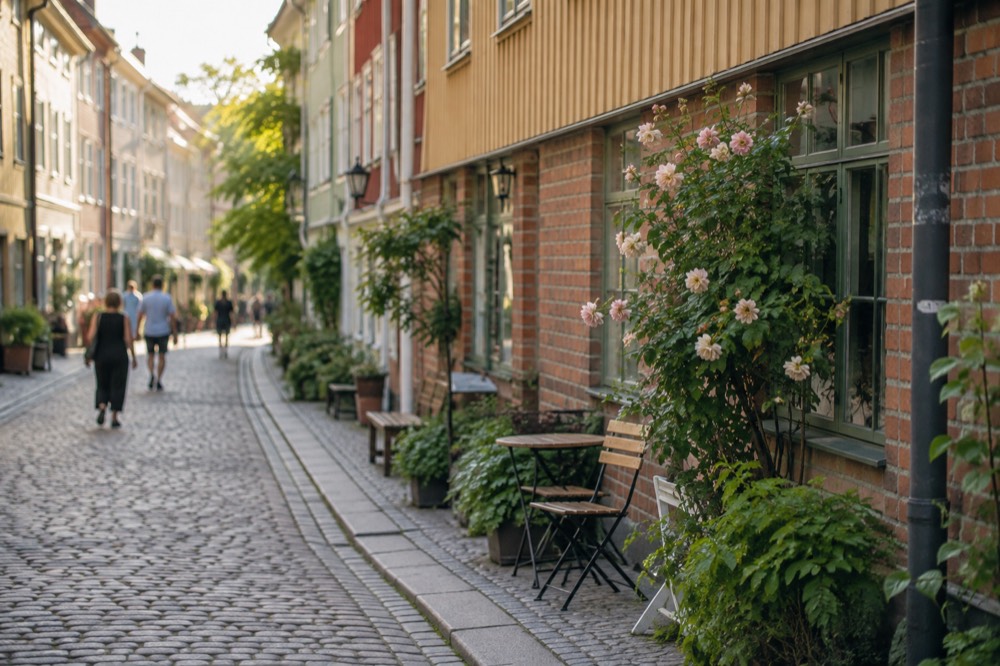
The final rg sound deserves its own mention because it appears in both of the city's big names, Göteborg and Liseberg. In much of Sweden, rg at the end of a word produces what linguists call retroflex or r-coloured articulation, and in Gothenburg's case the practical result is that soft y-glide: BOR-y, LEH-ry. Trying to force a clean English "berg" ending on either word is the second-biggest giveaway after the hard initial G.
Dialect adds one more layer. Gothenburg has Sweden's most recognisable urban accent, the göteborgska, which is famous for its drawn, almost singing intonation and its habit of softening and extending word endings. A local saying Göteborg may sound almost like "YUR-te-BOR-ee-a" as the ending trails off. You do not need to imitate that, and you should not try, but knowing it exists stops you from thinking you misheard something. The singing tone is the accent, not the word. The same accent also mangles borrowed English cheerfully, which is part of its charm: the city's own speech has been borrowing and bending foreign words since its founding, and it has never apologised for it.
If you want a gentler entry point into Swedish sounds before tackling city names, the coffee break word fika is a good warm-up, and we have a full guide on how to pronounce fika in Swedish. The broader language question, including how much English you can get by on, is covered in what language is spoken in Gothenburg. The short answer there: almost everyone under sixty will switch to fluent English the moment you hesitate, which is convenient, and which is also why you will hear the name Göteborg less often than you might expect once you are here.
One last reassurance. Swedes are famously relaxed about foreigners approximating their language, and nobody in Gothenburg will correct you or take offence at GOTH-en-berg. The name is used to being said badly; it has been absorbing foreign accents since Scottish merchants were running its trade houses in the city's founding era, which is the same period that gave the city its English name in the first place. Saying Göteborg well is a courtesy and a small pleasure, not a test. For the wider question of whether the city rewards the effort, start with is Gothenburg worth visiting for tourists, and for what the city is actually famous for, see what Gothenburg is known for.
Common Questions About Pronouncing Gothenburg
How do Swedes pronounce Gothenburg?
Swedes do not use the name Gothenburg at all. The city's name in Swedish is Göteborg, pronounced roughly YET-eh-bor-y, with the stress on the final syllable and soft consonants at both the start and the end of the word.
Is Göteborg pronounced with a hard G?
No. In Swedish, g before the soft vowels e, i, y, ä and ö is pronounced like the y in "yes". Because Göteborg starts with Gö, the first sound is a y-sound, and the word begins roughly "yuh", never "guh".
Why is the last g in Göteborg soft?
The rg combination at the end of a Swedish word regularly softens into a y-glide. Göteborg ends BOR-y, not "berg". The same thing happens in Liseberg, which ends roughly LEH-ry.
Do locals mind if you say Gothenburg?
No. Everyone in the tourist-facing parts of the city knows the English name, and Göteborg has absorbed foreign pronunciations for centuries. Saying Göteborg is appreciated but never expected.
Which is correct, Gothenburg or Göteborg?
Both are correct in their own language. Göteborg is the official name used on every sign, map and municipal document inside Sweden. Gothenburg is the established English name, used in English-language tourism material and this site's headings. They refer to the same city.
How do you pronounce the ö in Göteborg?
Round your lips as if to say "oh" while saying "eh" with your tongue. It is a single vowel sound that English lacks a letter for. An approximation with "uh" is perfectly understandable.