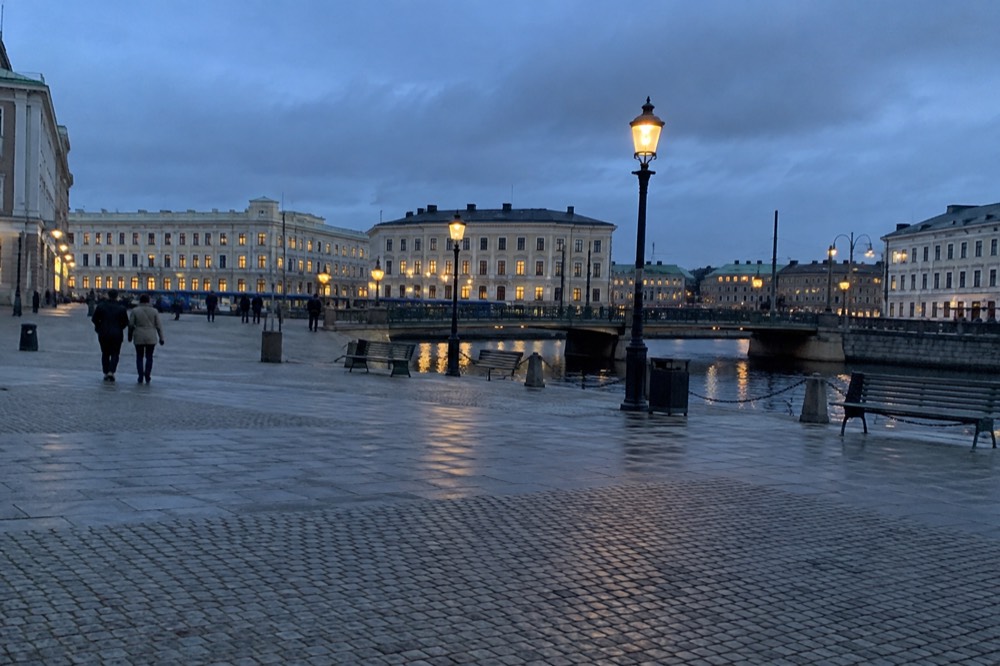
Is Gothenburg Worth Visiting from Copenhagen? What the Trip Actually Gives You
A clear answer for Copenhagen travellers weighing a trip to Gothenburg, Sweden: what the city offers, how the two cities differ, transport facts, archipelago access and real costs.
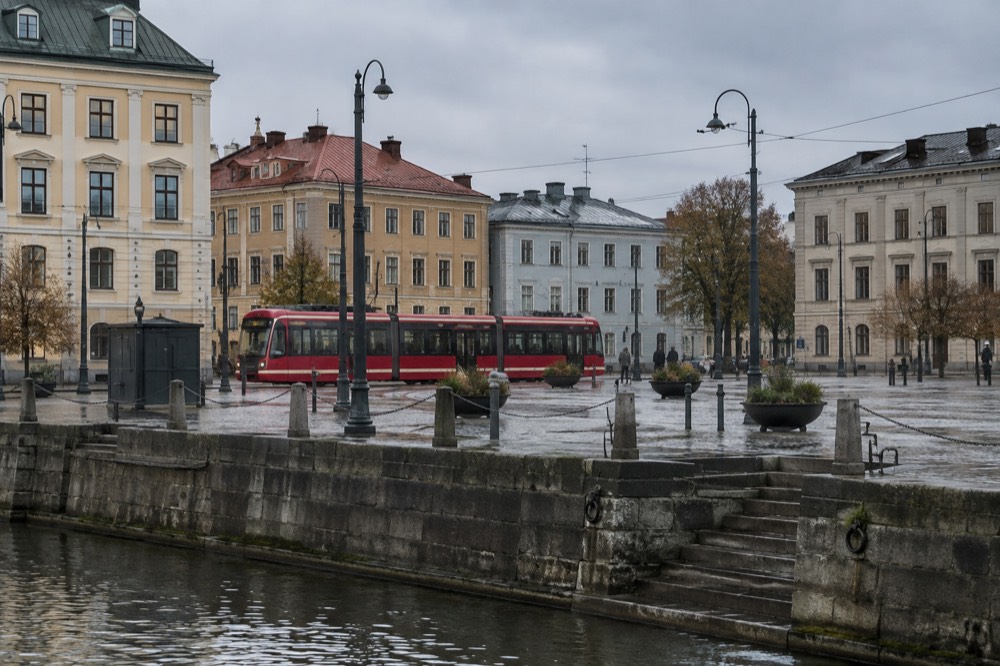
Copenhagen travellers ask this question for a good reason: the two cities are close, they share a sea and a design language, and guidebooks keep describing Gothenburg as a smaller, cheaper version of the Danish capital. That framing is wrong, and it undersells the place. Gothenburg, Sweden, is a port city of 613,274 people at the mouth of the Göta älv, built by Dutch engineers inside a moat, with a tram network that carried 126 million journeys in 2025 and a car-free archipelago that is technically part of the city itself. It is not a discount Copenhagen. It is a different proposition, and whether it is worth the trip depends on what you want from the days you spend getting there.
This page works through the question properly: what Gothenburg has that Copenhagen does not, what the journey involves, what a first day there looks like, what the archipelago adds, and what the whole thing costs. The short version is that the trip is worth it for travellers who want granite islands, shipyard cranes and a working maritime city, and less worth it for travellers whose real interest is another European capital of fine dining and palace architecture.
Is Gothenburg Worth Visiting from Copenhagen?
Yes, if you want a different kind of Scandinavian city rather than a bigger one, Gothenburg is worth the trip from Copenhagen. It offers a car-free archipelago inside its own transport zone, a wooden old quarter in Haga, a food-hall fish church, the Liseberg amusement park and a harbour working culture Copenhagen left behind decades ago, all reachable without a car and without booking much in advance.
The honest test is what you would do with a second Scandinavian city. If the answer is "more restaurants, more museums, more designer homeware," Gothenburg will feel thin next to Copenhagen, which is simply larger and more international. Göteborg & Co reported over 6 million commercial guest nights in 2025, a record year with the strongest growth in Sweden, but that is still a regional city receiving fewer visitors than Copenhagen sees in a fraction of the season.
If the answer is "islands, boats, trams and a city that still smells faintly of the shipyard," Gothenburg delivers something Copenhagen structurally cannot. The southern archipelago, the islands of Styrsö, Brännö, Vrångö, Donsö, Asperö and Köpstadsö, is part of the city of Gothenburg, protected from car traffic by a municipal decision, and served by ordinary public transport ferries from Saltholmen. Copenhagen has its own charm, but nothing equivalent sits inside its fare system. For a fuller rundown of the city's identity, see what Gothenburg is known for.
What Makes Gothenburg Different from Copenhagen?
The differences that matter are scale, water and attitude: Gothenburg is roughly a third the size of Copenhagen, it sits on an estuary facing open sea rather than a sheltered strait, and its architecture is granite, red brick and painted wooden landshövdingehus rather than copper roofs and pastel facades. The two cities read as related but not interchangeable.
Gothenburg was laid out in the 17th century by Dutch engineers, and the old town still sits inside its moat, the Vallgraven, which the Paddan sightseeing boats still navigate. The classic Gothenburg building type is the landshövdingehus: a wooden upper storey raised on a stone ground floor, a 19th-century fire regulation that gave whole districts like Haga and Majorna their striped look. Copenhagen has nothing like it at scale.
The working harbour is the other difference. Shipyard cranes still stand on the Hisingen waterfront, and the northern archipelago of Öckerö is a commuter ferry ride away. Gothenburg's nickname, "Little London," dates from the 19th century when British merchants and shipbuilders dominated the port, a history explained in why Gothenburg is called Little London. The comparison stuck because of the merchant culture, not the architecture.
There is also a seasonal difference worth planning around. SMHI's 1991-2020 normals for station Göteborg A put the city at 912 mm of rain across 127 days a year, with October the wettest month at 102.9 mm and April the driest at 51.3 mm, figures published by SMHI, the Swedish weather service. The sea around the archipelago, measured at the Vinga lighthouse station, peaks at 18.6 C in August, not July, and September water at 16.7 C is warmer than June water at 16.2 C. The practical takeaway for a summer traveller from Copenhagen: the swimming season runs later than you would guess.
For orientation once you arrive, the city's sightseeing options cluster around the harbour and the canal:
Each of these covers a different slice of the city: the amphibious bus runs on land and then floats, the archipelago cruise heads out toward the islands, and the canal cruise stays inside the moat. Between them they cover the estuary, the old town and the outer islands without a single transfer.
How Do You Get from Copenhagen to Gothenburg?
The standard route from Copenhagen to Gothenburg is the direct train across the Öresund bridge and up the Swedish west coast, with no airport connection needed at either end, since Gothenburg's Centralstation sits in the city centre and the tram network starts at its door. You can also drive, or fly, but the train is the option most travellers choose because both endpoints are city-centre to city-centre.
The train is the answer most Copenhagen visitors want: it crosses into Sweden at Malmö and follows the Kattegat coast north. You do not need to book a domestic flight, and you do not need to think about Landvetter Airport at all unless your plans involve flying. If you do fly, the airport coach is branded Vy flygbussarna, runs Landvetter to Korsvägen to Göteborg C in 20 minutes, and there is no rail link to the airport, a fact Swedavia's own transport pages confirm by listing only coach and bus options.
Gothenburg Centralstation is a terminus in the middle of everything, and the tram network is the backbone of local transport: 12 lines, 134 stops and 188 km of single track as of the 2022 network report, running from Mölndal in the south to Angered in the north and out to Saltholmen in the west. Fares are zoned. A single Zone A adult ticket costs 38 kr, and a 24-hour Zone A ticket costs 125 kr in the app or at a shop, the same price either way, per the Västtrafik fare pages.
One fare nuance matters right now. A temporary state subsidy has halved Västtrafik's 30-day period tickets through the end of the year, cutting a Zone A adult monthly from 890 kr to 445 kr. That subsidy does not cover the 24-hour and 72-hour tickets a visitor actually buys. Anyone telling you "transport in Gothenburg is half price" is describing a monthly commuter product, not your day ticket.
| Transport fact | Figure | Notes |
|---|---|---|
| Single ticket, 1 zone, adult | 38 kr | Youth 29 kr |
| 24-hour ticket, Zone A | 125 kr | Covers trams, buses and archipelago ferries |
| 30-day Zone A adult | 445 kr during the subsidy | Normally 890 kr; subsidy runs to year end |
| Airport coach to city centre | 20 minutes | Vy flygbussarna, Landvetter to Göteborg C |
| Tram network | 12 lines, 188 km single track | Figures from the 2022 network report |
Should you commit to the trip now, or keep weighing it while you plan?
The amphibious bus is a reasonable first-day anchor because it covers the harbour and the old town in one loop, and the listing carries one of the largest review bases of any tour in the city. Cancellation terms are on the operator's live listing, so booking ahead of the train ride costs you little if plans shift.
What Does a First Day in Gothenburg Look Like?
A realistic first day starts at Götaplatsen and Avenyn, walks down to the canal and the fish church, crosses to Haga for the wooden old quarter, and finishes on a tram out toward the harbour, with everything inside a compact centre that is genuinely walkable and stitched together by trams when your legs give out.
Start high. Götaplatsen, the plaza at the top of the Avenyn boulevard, holds the Göteborgs konstmuseum, which charges 75 kr for a day ticket, admits under-20s and students free, and includes the Hasselblad Center. One planning note for anyone reading this in the late 2020s: the museum's own rebuild page states it closes in 2028 and reopens in 2032, and there is intermittent blasting near the building right now. Visit before 2028 or plan around it.
Walk south and downhill toward the moat. Feskekôrka, the fish church, the 1874 building that looks like a place of worship for herring, reopened in 2024 after renovation, and it is a food hall now rather than a bare fish market: two fish counters, Ebbes Fångst and Flåtens Fiskhandel, and five restaurants including Haldis Kök and Victor von G. Guides written before 2024 still describe it as closed or as counters only. Both are stale.
Then Haga, the wooden old quarter of landshövdingehus buildings, cobbles and second-hand shops, one of the few central districts that survived the 20th century intact. It is small enough to cross in half an hour and atmospheric enough to hold you for two. For a Copenhagen traveller, the closest local analogy is the streets behind Assistens, but with more granite and fewer bicycles.
If the weather turns, and on 127 days a year it does something, the indoor options are stronger than the city's reputation suggests. Universeum, the science centre, is open every day of the year from 10:00 to 18:00, with dynamically priced admission and no fixed published adult rate, so book a time slot online rather than turning up, since on-site costs the online price plus 30 kr. World of Volvo, the experience centre that replaced the old Volvo Museum after that museum closed permanently in December 2023, sells exhibition tickets from 120 SEK online.
Is the Gothenburg Archipelago Worth the Detour?
The southern archipelago is the single best reason to make the trip from Copenhagen, because the islands are car-free, they are administratively part of Gothenburg, and an ordinary Västtrafik ticket covers the tram to Saltholmen and the ferry out to sea, so a 125 kr day ticket buys you a whole island chain. Copenhagen has beaches and a fort island; it has nothing like this inside its fare system.
Västtrafik's own materials state it plainly: you can ride on the same ticket all the way from the centre out onto the sea, and the islands are reachable with a Zone A ticket. The ferries run from Saltholmen, which is itself the western terminus of the tram network, so the journey is tram, then boat, no car park, no booking, no tour operator. The islands served are Asperö, Brännö, Styrsö, Donsö, Vrångö and Köpstadsö.
The islands are protected from private car traffic by a Göteborgs Stad decision, with exceptions only for taxi, färdtjänst and emergency services. What that means in practice is villages of wooden houses, footpaths, swimming rocks and a working fishing culture on Donsö, with the city skyline visible on a clear day across the water. Vrångö is the quietest of the main islands; Styrsö has the most infrastructure.
For a summer visitor the sea data is the planning tool. The water at Vinga peaks at 18.6 C in August, and September's 16.7 C beats June's 16.2 C, so a September trip from Copenhagen buys warmer swimming than a June one, which is the opposite of what most people book. February, not January, is the coldest month in the water at 2.7 C, with a recorded low of -1.2 C, legitimately below zero because the brackish Kattegat does not freeze at 0 C.
| Month | Mean sea temp at Vinga | Rainfall, Gothenburg A | What it means for the trip |
|---|---|---|---|
| April | 7.1 C | 51.3 mm | Driest month of the year, cold water |
| June | 16.2 C | 73.7 mm | Long days, 18 h 06 m on 21 June |
| August | 18.6 C | 92.8 mm | Warmest water of the year |
| September | 16.7 C | 80.0 mm | Warmer water than June, fewer crowds |
| October | 12.8 C | 102.9 mm | Wettest month; the rain arrives after summer |
If the islands are the reason you would go, read is it worth visiting the Gothenburg archipelago before committing your days. The answer for most Copenhagen travellers is yes, precisely because it is the one thing their own city cannot replicate on a day ticket.
What Does Gothenburg Cost Compared to Copenhagen?
Gothenburg is cheaper than Copenhagen on accommodation and eating out, broadly similar on transport and alcohol because Sweden's state alcohol monopoly sets the same rules nationwide, and cheaper again if you build your day around the archipelago ferries, which cost nothing beyond an ordinary 125 kr day ticket. It is a lower-cost city, but not a dramatically cheap one.
Sweden's alcohol law is the fixed cost that surprises Danish visitors less than others: beer above 3.5% ABV, all wine and all spirits are sold only through Systembolaget, the state monopoly, under Alkohollag (2010:1622). Supermarkets sell only folköl up to 3.5%. Copenhagen visitors used to buying a normal-strength beer in a supermarket will not find that in Gothenburg, and the bar prices that follow are a function of the same system.
The tourist discount that genuinely matters here is structural, not a coupon. The old Göteborg City Card no longer exists; Go City replaced it, and unlike the old municipal card it does not include public transport. So the pass question is separate from the transport question, and the transport answer, a 125 kr day ticket covering trams and ferries, is better value than any attraction pass for a first visit. The pass landscape is covered in is Gothenburg cheap or expensive.
Liseberg, the amusement park, is its own cost case. Entry starts at 95 kr online, but that ticket buys zero rides; the ride pass, Åkpass, is separate, from 310 kr, or combined with entry from 365 kr. The 2026 summer season runs 18 April to 20 September, Halloween runs 2 October to 1 November, and the Christmas market runs 14 November to 23 December. Between those seasons the park closes entirely, which matters if your Copenhagen trip is in, say, late January, when the biggest attraction in the city is shut. Season strategy is laid out in what is the best time to visit Gothenburg.
When Should You Make the Trip?
The best windows for a Copenhagen-to-Gothenburg trip are late April into May, when the city is at its driest and the parks open, and August into September, when the sea is at its warmest and the archipelago ferries run full schedules. Avoid the gap between late September and mid-April if Liseberg matters to you, because the park closes between seasons.
April is the statistically driest month, 51.3 mm across 8.2 wet days, and the light is already long. June gives you 18 hours 6 minutes of daylight on the solstice, with civil twilight from 02:58 to 23:30, so the city barely goes dark. December gives you 6 hours 32 minutes, which is a real experience but not a sightseeing plan.
The September case is the one most travellers miss. The water is warmer than June, the summer crowds have gone, and the ferries still run. October is the wettest month at 102.9 mm, so the shoulder season has a cliff edge, but September sits safely before it. For a Copenhagen traveller with flexible dates, September is the sweet spot: warm sea, dry-ish month, and the archipelago still in full swing.
Whenever you go, the conversion question is what to book ahead. The sightseeing boats and the island excursions are the categories that sell out:
Book the amphibious bus and the archipelago cruise ahead if you are travelling in high season, and leave the canal cruise flexible, since it runs frequently and is the easiest to slot in around weather. Everything else in the city, the trams, the ferries, the islands themselves, needs no booking at all.
Common Questions About Visiting Gothenburg from Copenhagen
Is Gothenburg worth visiting from Copenhagen?
Yes, if you want a different kind of Scandinavian city: a car-free archipelago inside the city's own transport zone, a wooden old quarter, a working harbour and the Liseberg park. It is not a smaller Copenhagen, and travellers expecting a discount version of the Danish capital will be disappointed.
How different is Gothenburg from Copenhagen?
Gothenburg is about a third the size, built on an estuary facing open sea, and architecturally a city of granite, red brick and painted wooden landshövdingehus rather than copper and pastel. The harbour still works, and the archipelago islands are part of the city itself.
Do you need a car in Gothenburg?
No. The tram network covers the city, a 125 kr 24-hour Zone A ticket covers trams, buses and the archipelago ferries, and the southern islands are closed to private cars anyway by municipal decision.
Is the Gothenburg archipelago worth it?
It is the strongest single reason to make the trip. The islands of Styrsö, Brännö, Vrångö and Donsö are car-free, reached by ordinary Västtrafik ferry from Saltholmen on a standard ticket, and the sea is warmest in August and September.
When is the worst time to visit Gothenburg?
Late September to mid-April if Liseberg matters to you, since the park closes between seasons, roughly 21 September to 1 October, 2 to 13 November, and from 24 December to mid-April. October is also the wettest month at 102.9 mm.
Is Gothenburg cheaper than Copenhagen?
Generally yes on hotels and restaurants, similar on transport and alcohol. Sweden's Systembolaget monopoly applies statewide, and the old city card that included transport no longer exists, so a 125 kr day ticket is usually better value than a pass.
The verdict, in plain terms: Gothenburg Travel Guide exists because the city rewards this kind of trip, but it rewards it on its own terms. Come for the islands and the trams, time it for April or September, and treat it as Sweden's west-coast port rather than Copenhagen's little sibling. For the broader case, see is Gothenburg in Sweden worth visiting, and for the neighbourhood-level answer, what not to miss in Gothenburg.