Is There a Train Between Gothenburg and Stockholm? Sweden's Main Line Explained
Yes, a direct train runs between Gothenburg and Stockholm, Sweden's two largest cities. Here is how the route works, which stations it uses, and how to book it.
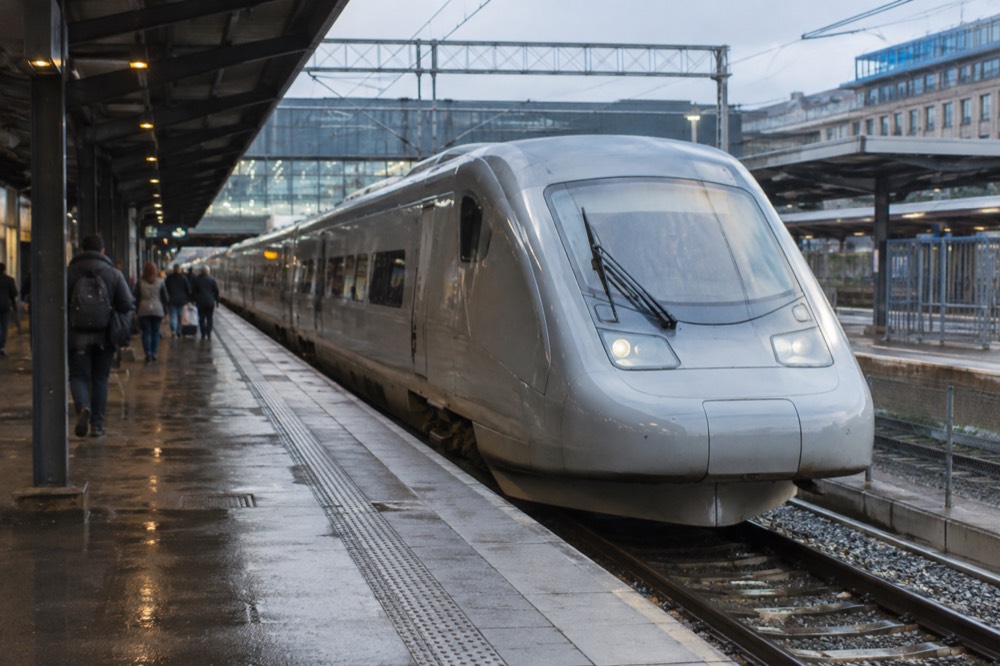
Gothenburg and Stockholm are Sweden's two largest cities, and the rail line between them is the country's busiest intercity corridor. Direct trains run between Göteborg Centralstation and Stockholm Central throughout the day, and the route is the default way Swedes themselves travel between the two cities rather than flying. This page answers the question plainly, then covers the stations, the booking process, what the journey looks like from the window, and how the trip fits into a wider Gothenburg itinerary.
Is There a Direct Train Between Gothenburg and Stockholm?
Yes, there is a direct train between Gothenburg and Stockholm, and it is the main intercity rail route in Sweden. Trains depart Göteborg Centralstation and arrive at Stockholm Central several times a day, every day, with no change required. The service is operated by SJ, Sweden's state rail company, alongside other operators on the corridor, and seats can be booked on the operators' own sites or at the station.
The route follows the west coast north from Gothenburg, skirts Lake Vänern, and then runs east across the country to Stockholm. Because the two cities sit on opposite sides of southern Sweden, the train crosses a big slice of the Swedish interior: forests, lakes, farmland and a handful of small towns that most visitors never otherwise see.
The corridor is well used. Demand for travel between Sweden's two biggest urban areas is constant, which is why departures are spread across the whole day rather than clustered at a few peak hours. Airlines compete on the same city pair, but the train drops you in the centre of both cities, which for most trips cancels out any time advantage from flying once airport transfers are counted.
The route also matters to Gothenburg's own economy. Göteborg & Co reported a record year for the city in 2025, with over 6 million commercial guest nights and the strongest growth in Sweden, driven largely by international visitors. A city pulling that many overnight guests needs a dependable rail link to the capital, and this corridor is it.
If you are planning a trip that starts in Gothenburg and ends in Stockholm, or the reverse, the train is the sensible default. You can read more about the city itself in what Gothenburg is known for, and about the naming question in are Gothenburg and Göteborg the same.
Which Stations Does the Gothenburg to Stockholm Train Use?
Trains depart from Göteborg Centralstation, the city's main station, and arrive at Stockholm Central in the heart of the capital. Both stations sit within walking distance of their city centres, so no transfer is needed at either end. Göteborg Centralstation is also the hub for Gothenburg's trams, buses and airport coaches, which makes the last leg of any journey simple.
Göteborg Centralstation sits at Nils Ericson Terminalen, where the airport [coach from](https://busbud.tpk.ro/pZ1aQZGA) Landvetter also stops. That matters for the airport question, because there is no rail link to Landvetter at all: Swedavia's own transport pages list only coach and bus connections, and the coach is branded Vy flygbussarna. So a visitor landing at Landvetter rides the coach into the city, then walks straight into the station for a train north.
Inside the station you will find ticket machines, SJ's travel centre, shops and cafés, and the tram stops just outside the main entrance. The tram network is the backbone of the city: Göteborgs Spårvägar reported 126 million journeys in 2025, and the network's 12 lines and 188 kilometres of single track run from Mölndal in the south to Angered in the north, with Saltholmen, the archipelago ferry terminal, as the western terminus. The line and track figures come from the operator's 2022 annual report, so treat them as being of that vintage rather than a live count.
One thing worth knowing before you arrive: the station area around Göteborg Centralstation has been reshaped by the Västlänken rail tunnel project, with construction around Centralen, Haga and Korsvägen. Allow a few extra minutes to find your platform, because signage and entrances have shifted as the works progress.
If you have spare hours in Gothenburg before a northbound train, the station is a short walk or one tram hop from most of the centre, and attractions like Universeum and Liseberg sit close to the Korsvägen stop on the same corridor. Universeum is open every day of the year, 10:00 to 18:00, with dynamically priced timed entry, so it works even on a tight schedule if you book a slot in advance.
How Do You Buy Tickets for the Gothenburg to Stockholm Train?
Tickets are sold by SJ, Sweden's state rail operator, through its own website and app, at ticket machines in the stations, and at staffed counters. Booking opens a few months ahead, and prices vary by departure and demand, so there is no single fixed fare to quote. The cheapest seats tend to go first, and the operator's own booking page is the only reliable source for a current price.
Sweden's long-distance trains use airline-style yield pricing, which means the fare depends on when you travel and how early you book. A midweek off-peak departure booked weeks ahead costs a fraction of a same-day walk-up ticket on a Friday afternoon. The operators' own sites show live prices for every departure, so treat those pages as the source of truth rather than any figure printed in a guide.
Here is how the booking options compare:
| Booking method | How it works | What to watch for |
|---|---|---|
| Operator's website or app | Live prices, seat selection, e-tickets | Usually the cheapest channel for advance bookings |
| Ticket machines at the station | Buy close to departure, card payment | Walk-up prices apply, no advance discounts |
| Staffed counter at the station | Help with complex or international bookings | Same fares as machines, but queues at peak times |
Seat reservations are generally included with long-distance tickets in Sweden, and your carriage and seat number are printed on the ticket. Boarding is open, without gates or passport checks on domestic routes, so you simply find your carriage on the platform display and get on.
A few practical notes make the day easier. Arrive fifteen minutes before departure rather than an hour, because there is no check-in process. Keep your ticket on your phone, since the app version updates automatically if the departure changes platform. And if you are connecting from a flight into Landvetter the same morning, build in a buffer: the coach takes 20 minutes to the city centre per Swedavia, but flight delays are the variable you cannot control.
If your trip is part of a bigger Swedish itinerary, it is worth reading do you need to book trains in advance in Sweden for the booking-timing question in detail.
Is the Gothenburg to Stockholm Train Ride Scenic?
The Gothenburg to Stockholm train is moderately scenic rather than spectacular, and the best views come in the first and last thirds of the journey. The line runs along the shores of Lake Vänern, Sweden's largest lake, then crosses forest and farmland inland. It is a pleasant ride with long water views, but it is not a mountain railway, and the middle section is mostly trees.
The early stretch out of Gothenburg is the part regular travellers mention most. The tracks run north through the Göta älv valley, and the line passes close to the river for much of the way toward Trollhättan, where the Göta canal locks sit. After that the route bends east around the northern shore of Lake Vänern, and on a clear day the lake views are genuinely good, with water stretching to the horizon on the western side.
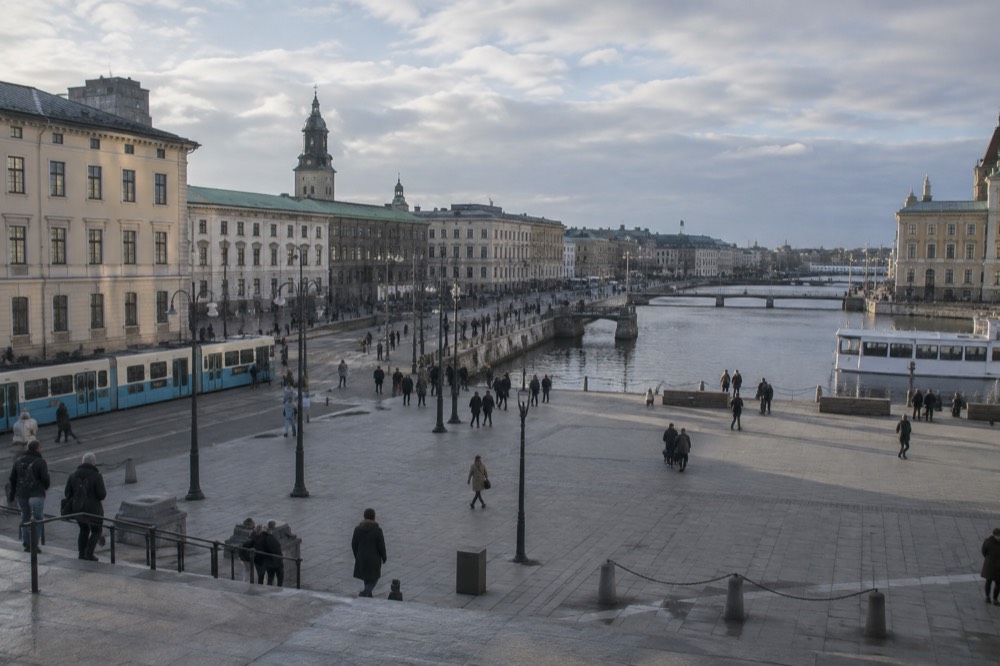
The middle of the journey is classic Swedish inland landscape: pine and spruce forest, occasional clearings, small stations and a lot of quiet. If you want a fuller breakdown of what you actually see from the window, the dedicated pages on is the Gothenburg to Stockholm train scenic and is the train ride from Gothenburg to Stockholm scenic go window by window through the route.
Sit on the left side heading north for the lake sections if you can pick your seat at booking. Daylight matters too: on 21 December Gothenburg gets only 6 hours 32 minutes of daylight, against 18 hours 06 minutes on 21 June, a swing of 11 hours 34 minutes between the solstices. A winter departure means much of the scenic stretch happens in the dark, so if the view is the point, travel in the lighter half of the year.
What Is on Board the Gothenburg to Stockholm Train?
Swedish intercity trains on this corridor carry a bistro car or a trolley service selling coffee, snacks and light meals, free wifi in most carriages, power sockets at the seats, and space for luggage in racks at the carriage ends and overhead. First-class tickets add wider seats and quieter carriages. Bicycles and pets travel under the operator's own rules, which are on its booking pages.
The bistro is the part that surprises visitors used to budget airlines. You can sit at a table with a coffee and a cinnamon bun, or something more substantial, and the trolley comes through the carriages on departures without a full bistro car. Fika culture travels onto the train: the coffee break is built into Swedish daily life, and the onboard service reflects that rather than treating food as an upsell.
Luggage is not weighed or charged for on Swedish trains. You carry your own bags on, put them in the racks, and that is the whole process. For a two-city trip with a suitcase each, this is the single biggest quality-of-life difference between the train and the flight, where baggage fees and size limits start applying before you have even left home.
Accessibility is handled at the station rather than the platform door: SJ offers assistance boarding, booked in advance through its own service channels, and both Göteborg Centralstation and Stockholm Central have step-free routes to the platforms. If you or someone in your party needs help, arrange it when you book rather than on the day.
How Long Does the Train Take, and Should You Fly Instead?
The train between Gothenburg and Stockholm takes roughly three hours on the fastest direct services, with some departures taking longer depending on stops, and the operator's timetable is the only source for a specific journey time. Flying takes less time in the air but more time door to door, because both airports sit outside their cities and require a transfer at each end.
Sweden's intercity trains on this corridor are among the fastest domestic services in the country, and the rail journey time has come down over the years as the line has been upgraded. Even so, the exact minutes depend on which departure you pick, so check the timetable on the operator's page for the service you intend to catch rather than relying on a rounded figure from a guide.
The door-to-door comparison is where the train usually wins. Landvetter Airport has no rail link, Swedavia confirms only coach and bus connections, and the coach takes 20 minutes to the city centre. Stockholm's main airport, Arlanda, likewise needs its own transfer into the capital. Add check-in, security and boarding and the flight rarely beats the train by much, if at all, once you count the whole journey.
The train also drops you at Göteborg Centralstation and Stockholm Central, both of which are on the local transit networks of their cities, so the transfer at each end is a single ride. In Gothenburg a 24-hour Zone A ticket costs 125 kr according to Västtrafik's fare page, and that same ticket covers trams, buses and the archipelago ferries, which makes a station-to-hotel move trivially cheap.
One caveat on fares, because a headline discount is doing the rounds. Västtrafik's 30-day period tickets are currently halved by a temporary state subsidy, Zone A adult dropping from 890 to 445 kr, but that subsidy does not cover the 24-hour and 72-hour tickets a visitor actually buys. Your day ticket still costs 125 kr. Do not build a budget around the monthly-ticket discount unless you are genuinely staying a month.
Where Does the Gothenburg to Stockholm Train Fit in a Wider Trip?
The train works best as one leg of a two-city trip, and most travellers ride it in one direction only, pairing a few days in Gothenburg with a few days in Stockholm. Gothenburg rewards two to three days for the centre and the archipelago, and the southern islands are part of the city, reached on an ordinary tram and ferry ticket, so you do not need to sacrifice a day to see them.
A common pattern is to fly into one city, spend a few days, take the train, and fly home from the other. That avoids backtracking across the country and turns the transfer itself into part of the trip. For how to split your days in Gothenburg, see how many days in Gothenburg is enough.
If you have time before departure, the archipelago is the thing to prioritise. The islands of Styrsö, Brännö, Vrångö, Donsö, Asperö and Köpstadsö are served by Västtrafik ferries from Saltholmen, the western terminus of the tram network, and Västtrafik's own materials confirm that one ordinary Zone A ticket covers the whole journey from the centre out onto the sea. Private cars are banned on the islands, per a Göteborgs Stad study, so everyone arrives by boat.
Timing matters for the wider trip. October is the wettest month in Gothenburg at 102.9 mm of rain in the SMHI 1991-2020 normals, while April is the driest at 51.3 mm, so spring is the better window if you want dry days for the islands. And if you are weighing the two cities against each other first, is Gothenburg worth visiting for tourists covers the case for the smaller city.
Before or after the train ride, a day of sightseeing in Gothenburg fills easily. The amphibious bus tour runs from land into the harbour water, and the guided archipelago cruise covers the islands from a different angle than the public ferries. Both pair naturally with a morning or afternoon around the station, since the departure points sit in or near the centre.
Common Questions About the Train Between Gothenburg and Stockholm
Is there a train between Gothenburg and Stockholm?
Yes. Direct trains run between Göteborg Centralstation and Stockholm Central several times a day, every day, and the corridor is Sweden's busiest intercity rail route. SJ and other operators sell tickets on their own sites and at the stations.
How long does the train from Gothenburg to Stockholm take?
The fastest direct services take roughly three hours, and slower departures take longer depending on the number of stops. Check the operator's timetable for the specific departure you plan to catch, because journey times vary by service.
Do you need to book the Gothenburg to Stockholm train in advance?
You do not have to, but you should. Swedish long-distance fares are demand-based, so advance bookings are considerably cheaper than walk-up prices, and busy departures on Fridays and Sundays can sell out. Booking a few weeks ahead is the usual advice.
Is the train ride from Gothenburg to Stockholm scenic?
Moderately. The best views are along Lake Vänern and the Göta älv valley near the start; the middle of the journey is mostly forest. It is a comfortable, pleasant ride rather than a headline scenic railway.
Is the train better than flying between Gothenburg and Stockholm?
For most trips, yes. Both airports sit outside their cities with no rail link at the Gothenburg end, so the flight's time advantage disappears once transfers, check-in and security are counted. The train runs centre to centre.
Which station does the train leave from in Gothenburg?
Göteborg Centralstation, the city's main station, which is also the terminus for the Vy flygbussarna airport coach from Landvetter and the hub for the tram network. Stockholm-bound trains use the main platforms; check the departure boards on the day.
For everything else about the city at the western end of the line, Gothenburg Travel Guide covers the archipelago, the museums and the neighbourhoods in depth.