Good Places to Visit Near Gothenburg, Sweden: The Best Day Trips and Close Escapes
The best places to visit near Gothenburg, Sweden: the car-free archipelago, Marstrand, the Bohuslän coast, Gunnebo, Tjolöholm, Trollhättan and Läckö Castle, with honest travel times and what to skip.
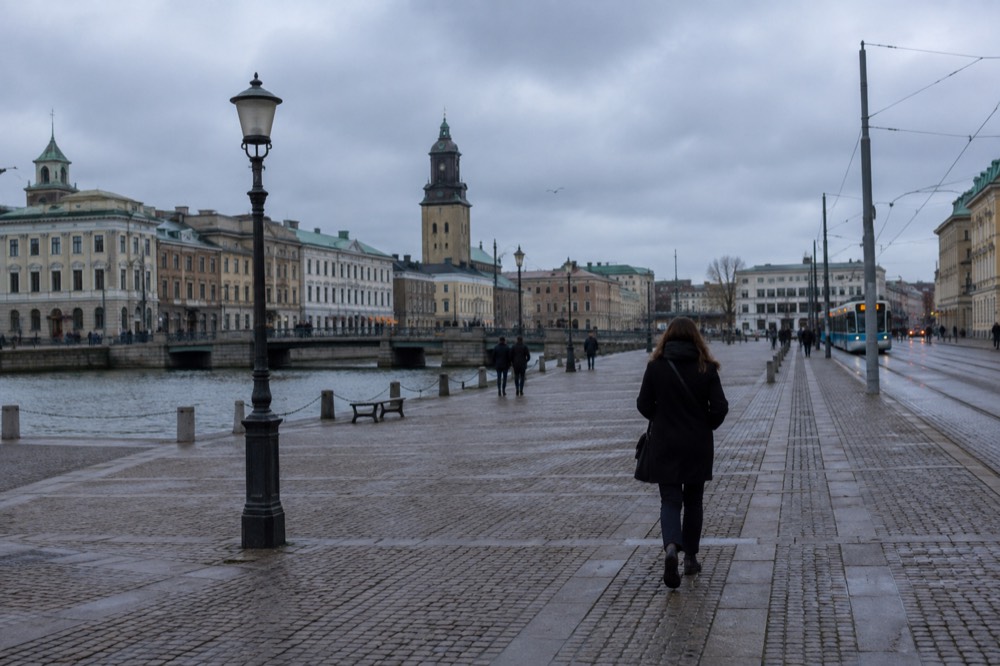
Gothenburg's own tourism data says the city pulled in over 6 million commercial guest nights in 2025, a record year, and a good share of those visitors eventually ask the same question: what is worth seeing within reach of the city? The answer is unusually generous. Sweden's second city stands at the mouth of the Göta älv, with a car-free archipelago inside its own tram zone, a fortress island an hour up the coast, and a lake-and-castle interior behind it. This page sorts the real options from the ones that only sound good, and it draws a hard line that most guides blur: the southern archipelago is not a day trip at all, it is part of Gothenburg.
What Are Some Good Places to Visit Near Gothenburg?
The best places to visit near Gothenburg are the car-free southern archipelago islands of Styrsö, Brännö and Vrångö, the fortress island of Marstrand, the Bohuslän fishing villages of Smögen and Fjällbacka, Gunnebo House and Tjolöholm Castle, the Trollhättan canal locks, and Läckö Castle on Lake Vänern. All sit within roughly two hours of the city by public transport or car, and several need no car at all.
That is the short list, and it is deliberately split into three kinds of place. First, the islands: the southern archipelago belongs to Gothenburg itself, reached by tram and ferry on an ordinary ticket. Second, the coast: Marstrand, Smögen and the rest of Bohuslän are the classic summer drive, granite and red boathouses and cold clear water. Third, the interior: castles, lakes and the Göta Canal, which most visitors never get to and which reward the ones who do.
The table below is the honest summary of the whole region, sorted the way a visitor actually plans: what kind of trip it is, whether a car helps, and what each place is really for.
| Place | What it is | Car needed? | Best for |
|---|---|---|---|
| Southern archipelago (Styrsö, Brännö, Vrångö, Donsö) | Car-free city islands, tram and ferry | No, tram to Saltholmen | Walking, swimming, island life |
| Marstrand | Fortress island and sailing town | Helpful, island itself car-free | History, boats, harbour town |
| Bohuslän coast (Smögen, Fjällbacka) | Granite islands and fishing villages | Yes, a full day | Coastal scenery, summer swimming |
| Gunnebo House | Neoclassical estate and gardens | No, close to the city edge | A half day of history and woodland |
| Tjolöholm Castle | Arts and Crafts manor by the sea | Yes | Architecture, a full coastal day |
| Trollhättan | Göta Canal locks and hydro heritage | No, train works | Engineering, a half or full day |
| Läckö Castle and Lake Vänern | Renaissance castle on Sweden's largest lake | Yes, or a long tour | The grandest day out, 10 hours |
A note on the name before anything else. This page is about Gothenburg, Sweden. There is a real and much smaller town called Gothenburg in Nebraska in the United States, and it shares the name closely enough to poison search results. If you are reading about a place near Gothenburg and it mentions the Platte River rather than the Göta älv, you are reading about the wrong one. For background on the Swedish city itself, see what Gothenburg is known for and whether Gothenburg and Göteborg are the same.
Is the Gothenburg Archipelago a Day Trip?
No, the southern archipelago is not a day trip, it is part of Gothenburg. The islands of Styrsö, Brännö, Donsö, Vrångö, Asperö and Köpstadsö are city districts reached by tram to Saltholmen and then a Västtrafik ferry, all covered by an ordinary Zone A ticket. A 24-hour Zone A ticket, listed at 125 kr, covers the tram, the ferry and every island in one price.
This is the single most useful fact in the whole region and the one most guides get wrong. Västtrafik's own network map shows the archipelago boats with line numbers alongside the trams, and the islands sit inside Zone A, the same zone as the city centre. You do not book a tour, you do not buy a special boat ticket, you simply tap the same ticket you used on the tram and ride out onto the open sea. Västtrafik's Zone A ticket page is the authority on the current price, and it is worth checking before you travel because fares do move.
The islands are car-free. Göteborgs Stad's own study states that the islands of the southern archipelago are protected from private car traffic, with exceptions only for taxi, transport services and emergency vehicles. That means the visit is walking, cycling and sitting, in roughly that order. Brännö is flat and small enough to cross in an afternoon. Vrångö has the best swimming beaches. Styrsö has the largest settlement and a small harbour village feel. Donsö still works as a fishing island, home to ships rather than souvenir shops.
Saltholmen, the ferry terminal, is the western terminus of the tram network, so the logistics collapse into one line: tram to the end, boat to an island. The pain point is parking, because Saltholmen's car park fills in summer, and there is no reason to drive anyway.
If you want the islands with a guide rather than a timetable, a boat with commentary is the other way out.
For more on the islands themselves, see whether the Gothenburg archipelago is worth visiting.
Which Coastal Towns Are Worth the Trip from Gothenburg?
Marstrand is the standout coastal day trip from Gothenburg, an island fortress town about an hour from the city, followed by the Bohuslän granite coast of Smögen, Fjällbacka and the surrounding islands, and Varberg on the Halland coast to the south. All three are reachable by public transport or car in under two hours, and Marstrand needs no car once you arrive.
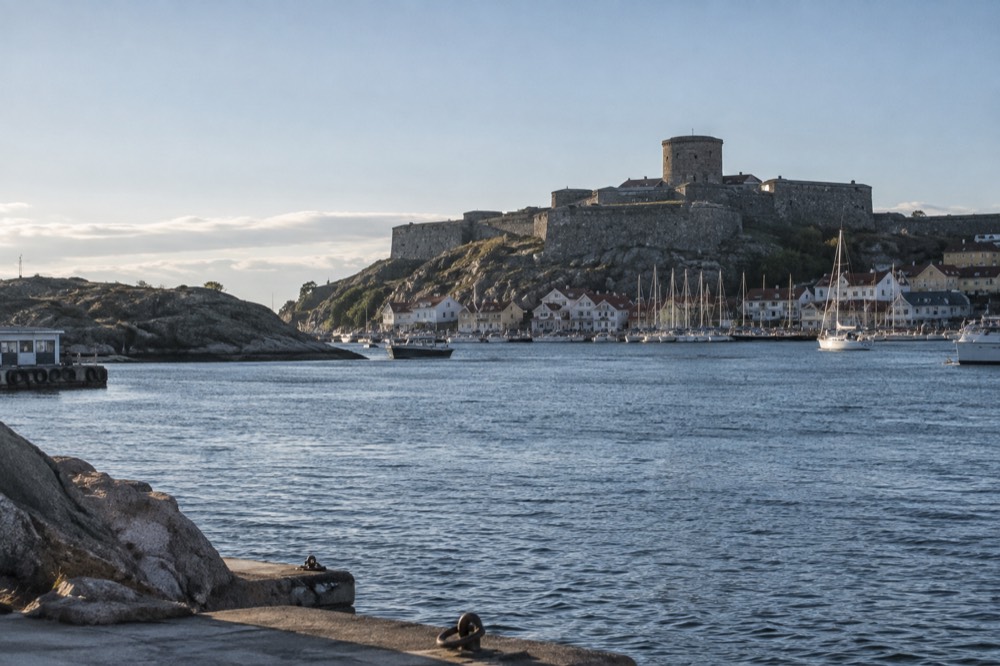
Marstrand is Sweden's sailing capital and has been a fortified harbour for centuries, with the Danish-built Carlsten Fortress on the island's granite crown. The town is car-free like the archipelago islands, the ferry across the strait is short and frequent, and the fortress walk is the best combination of history and view on the whole coast. In season there is a seafood market, and in December a Christmas market; both are served by sailing trips that leave from Gothenburg itself, which saves the drive entirely. The listing for the Marstrand seafood market sailing trip shows a five-hour round trip with no reviews yet, so check the operator's live listing for current dates before committing.
The Bohuslän coast north of the city is a different proposition: a string of granite islands and fishing villages, with Smögen's wooden harbour walk and Fjällbacka's cliff-backed village as the two names most visitors recognise. This is a car itinerary, or a very patient bus itinerary, and it deserves a full day rather than a detour. The granite here is some of the oldest rock in Sweden, and the swimming in August is warmer than most visitors expect, because the sea along this coast peaks in August rather than July.
Varberg, to the south, is the quieter option: a fortress town on the Halland coast with a famous cold bathhouse and a long sandy beach, a different coastline entirely from the granite to the north. It is also the easiest of the three by train, which makes it the natural pick for a visitor without a car.
One thing that should shape your timing: October is the wettest month on the Gothenburg coast, at 102.9 mm of rain in SMHI's 1991-2020 normals, while April is the driest at 51.3 mm. The coast in April is dry, empty and cold. The coast in October is beautiful and wet. Plan accordingly. SMHI's normals page publishes the full monthly breakdown if you want to check a specific month.
What Castles and Country Houses Can You Reach from Gothenburg?
The best castles and country houses near Gothenburg are Gunnebo House, a neoclassical 18th-century estate in the woods south of the city, Tjolöholm Castle, an Arts and Crafts manor on the coast near Kungsbacka, and Läckö Castle on Lake Vänern, which is the grandest of the three but the farthest, best combined with a Vänern day. All three are open to visitors, and Gunnebo is the easiest to reach without a car.
Gunnebo is the closest thing Gothenburg has to a stately home, a restored 18th-century house with gardens, a working kitchen garden and woodland trails, sitting in Mölndal's municipality on the southern edge of the city. It is close enough that a half-day works. Tjolöholm, by contrast, is a full day out: a striking early-20th-century manor built in Arts and Crafts style, on its own peninsula with a beach and village of workers' cottages attached, south along the coast towards Kungsbacka. The house is unusual in Sweden, more English country estate than Scandinavian manor, and its interiors are the reason to go. The wider set of guides lives on Gothenburg Travel Guide.
Läckö Castle is the big one, a white Renaissance fortress on a headland in Lake Vänern, Sweden's largest lake, and it pairs naturally with a Trollhättan stop. Trollhättan's canal locks are the engineering half of the day: the Göta Canal's lock staircase and the hydro power heritage of the town, with boat trips through the locks in season. The private day trip to Lake Vänern and Läckö Castle in our listings runs about ten hours, priced per person, with no reviews yet, so treat it as a new listing and read the fine print on the operator's page.
If castles are the theme of your trip, the practical split is simple. Gunnebo for a half day without a car. Tjolöholm for a full day with a car, ideally combined with the Kungsbacka coast. Läckö only if you are happy to spend most of the day travelling, or if you take the long guided tour and let someone else handle the logistics.
The amphibious bus is the city-side counterpart to all of this: it shows you Gothenburg's own streets and then drives into the harbour, which is a useful reminder that the coast starts at the city limits rather than an hour out. The listing rates it 4.7 from 4,326 reviews, which makes it one of the most-reviewed experiences in the whole roster, and it runs about an hour.
Before you leave the city, one warning that matters: the old Volvo Museum at Arendal closed permanently in December 2023, and World of Volvo is its replacement. Any itinerary that sends you to Gustaf Larsons Väg is sending you to a shut building. The new centre is in central Gothenburg, so it belongs in the city day, not the day-trip list.
How Far Can You Get in a Day by Train from Gothenburg?
By train from Gothenburg you can reach Alingsås, Trollhättan, Borås, Varberg and even Oslo in a day, with Alingsås the easiest small-town escape at under an hour away and Oslo the ambitious end of the range at roughly four hours each way. The useful middle ground is Trollhättan for the canal locks and Borås for street art, both well inside a day trip by train.
Alingsås is the quiet star of this list: a small lakeside town known in Sweden for its café culture, close enough to Gothenburg that locals go for fika and come back the same afternoon. If you want to understand what fika actually is before you go, read what fika means in Sweden. Borås, inland to the east, has reinvented itself around street art, with murals across the city centre and a textile museum that records its industrial past. Varberg, south on the coast, is covered above.
The train network fans out from Göteborg Centralstation, and the practical point for visitors is that regional trains in Sweden generally do not need to be booked far ahead for ordinary journeys, though seat reservations are worth having on longer runs in summer. The first section of the Västlänken rail tunnel opens at Centralen in December 2026, with the full project around 2030, so central-city construction is ongoing and worth expecting if your hotel sits near the station.
What Should You Skip or Rethink Near Gothenburg?
Skip the old Volvo Museum at Arendal, which has been closed since December 2023, and rethink any plan that treats the southern archipelago as a separate excursion requiring a tour booking, because it is an ordinary tram-and-ferry ride inside the city's own ticket zone. Also rethink Copenhagen as a day trip: it is too far, unlike Oslo, which is genuinely reachable if you accept a long day.
The Arendal point cannot be repeated enough because almost every guide in English still lists it. World of Volvo is the successor, it is central, and its own site states plainly that the old museum closed its doors in December 2023. The Torslanda factory tour departs from there on weekdays if you want the industrial story, and that is the correct version of the Volvo day out.
The archipelago point is about money as much as clarity. Because the islands are Zone A, a tour is optional rather than necessary. A guided island walk, such as the Brännö and Galterö hiking tour with fika in our listings, adds interpretation and a meal to a day you could otherwise do independently for the price of a day ticket. That tour has no reviews yet, so read what the operator's live listing says about the route and what is included before booking.
Copenhagen is the common planning error at the other end of the scale. It is a three-to-four-hour train ride each way, which makes it a destination swap rather than a day trip. Oslo, by contrast, sits at roughly four hours and is a legitimate, if long, day out for a determined traveller. For a comparison of the two Nordic capitals as destinations, our pages on the Stockholm and Oslo train routes cover the practical details.
The sea temperature table below is the reason to push a coastal trip into late summer or September rather than June. The water off Vinga, the archipelago lighthouse station, tells a story that contradicts how most people book.
| Month | Mean sea temp off Vinga | What it means for a visit |
|---|---|---|
| June | 16.2 C | Swimmable, but not the warmest window |
| July | 18.3 C | Air and sea both warm, peak crowds |
| August | 18.6 C | The annual peak, the best swimming month |
| September | 16.7 C | Warmer than June, far fewer people |
| February | 2.7 C | The coldest month, for sauna and cold-dip swimmers |
If your day trip planning is really a question of how to split limited time, the honest hierarchy is: archipelago first, because it is unique and inside the tram zone; Marstrand second, because the fortress and the sailing town justify the hour; Bohuslän third, if you have a car and a full day; castles and canal locks fourth, for a second or third visit. For more on the city you would be leaving behind, see where to avoid in Gothenburg and why Gothenburg is called Little London.
Common Questions About Places to Visit Near Gothenburg
What are some good places to visit near Gothenburg?
The southern archipelago islands of Styrsö, Brännö and Vrångö, the fortress island of Marstrand, the Bohuslän coast at Smögen and Fjällbacka, Gunnebo House, Tjolöholm Castle, Trollhättan's canal locks and Läckö Castle on Lake Vänern. The archipelago is part of Gothenburg itself; the rest are genuine day trips within about two hours.
Is the Gothenburg archipelago a day trip?
No. The southern archipelago is part of the city, reached by tram to Saltholmen and then a ferry covered by an ordinary Västtrafik Zone A ticket. You can go for a day, but it is not a separate excursion and needs no tour booking.
Can you visit Marstrand from Gothenburg?
Yes. Marstrand is roughly an hour from Gothenburg by car or public transport, and the island itself is car-free, reached by a short ferry crossing. Carlsten Fortress is the main sight, and sailing trips from Gothenburg serve the seasonal markets.
What is the closest castle to Gothenburg?
Gunnebo House, a neoclassical 18th-century estate on the southern edge of the city in Mölndal's municipality, is the closest and can be done in a half day. Tjolöholm Castle on the coast near Kungsbacka and Läckö Castle on Lake Vänern are farther and deserve full days.
Is the Volvo Museum near Gothenburg worth visiting?
The old Volvo Museum at Arendal closed permanently in December 2023. Its successor, World of Volvo, opened in 2024 in central Gothenburg, and the Torslanda factory tour departs from there on weekdays. Do not travel to the Arendal site.
Can you swim near Gothenburg?
Yes, and later in the year than most visitors expect. SMHI's data from the Vinga station shows the sea peaks in August at 18.6 C, and September water at 16.7 C is warmer than June water at 16.2 C. The archipelago beaches on Vrångö and Brännö are the closest swimming to the city.
Gothenburg Travel Guide covers the city and its coast in depth; the day trips above are the ones that hold up on the ground, not just on a map.