What Are Some Things I Can Do for Free in Gothenburg, Sweden?
Free things to do in Gothenburg, Sweden: Slottsskogen's free zoo, Haga's wooden quarter, waterfront walks, free GuruWalk tours, and which museums genuinely cost nothing.
Gothenburg, Sweden is one of the cheaper Nordic cities to be broke in. The city's own statistics show why it can afford to be generous: Göteborg & Co reported over 6 million commercial guest nights in 2025, a record year, so the big attractions do their business at the gate while the parks, viewpoints and waterfront stay open to everyone. A day built entirely from free things here is not a consolation day either. Slottsskogen's zoo, the Haga old quarter and the Göta älv harbour edge are on most visitors' highlight lists, paid tours or not.
This page is the honest version of that list. Some things marketed as free come with fine print: the Botanical Garden asks for a voluntary contribution rather than charging a ticket, the art museum is free only if you are under 20 or a student, and the archipelago ferries are covered by an ordinary Västtrafik ticket rather than being free at all. The site behind this list, Gothenburg Travel Guide, reports each one as the operators and the city publish it, not as a brochure would.
What Are Some Things I Can Do for Free in Gothenburg?
The genuinely free list in Gothenburg, Sweden runs: Slottsskogen park and its free zoo, the Haga old quarter, the Klippan harbour village, the Göta älv and Stenpiren waterfront, Masthuggskyrkan and Ramberget viewpoints, Skansen Kronan's hilltop, Feskekôrka's reopened food hall, and a set of tip-based GuruWalk walking tours. Nordic animals at Slottsskogen cost nothing to see, and the city's best view costs nothing to climb to.
That is the short answer, and almost every item on it carries a caveat worth knowing before you plan a day. The zoo is free but the animals are on their own schedule, not a show timetable. The viewpoints are free but December daylight lasts only 6 hours 32 minutes, per the US Naval Observatory tables for 57.7 N, so a winter sunset climb starts in the dark. And the walking tours are free to join but tip based, which is a different social contract than a museum with a suggested donation.
Here is how the free day usually stacks up, using only things verified on the operators' and the city's own pages:
| Free thing | What it is | The catch |
|---|---|---|
| Slottsskogen | Large city park with a free zoo of Nordic animals | Open parkland; animals appear on their own terms |
| Haga old quarter | Wooden landshövdingehus streets, cafés, second-hand shops | Free to walk; the famous cafés are not |
| Klippan | Old harbour village under the Älvborg bridge | A short walk from Järntorget, hilly paths |
| Göta älv waterfront | Stenpiren, harbour walks, shipyard cranes | Free; boat crossings are not |
| Masthuggskyrkan and Ramberget | Two of the best city viewpoints | Sunset timing matters; December light is scarce |
| Skansen Kronan | Hilltop fort above Haga | The fort interior is a separate matter; the hilltop is free |
| Feskekôrka | Fish-church food hall, reopened 2024 | Free to enter; the five restaurants are not |
| GuruWalk tours | Tip-based walks with local guides | Free to book, tips expected |
One thing that is not on the list: the Göteborg City Card, which used to bundle attractions. It no longer exists under that name, and the Go City product that replaced it is a paid pass, not a free anything. The city card guide covers that separately.
Is Slottsskogen Really Free, Animals Included?
Yes, Slottsskogen is free to enter, and the animal park inside it is free too: moose, seals, penguins and other Nordic species cost nothing to see. Göteborgs Stad runs it as a public park, there is no gate and no ticket, and the zoo area has no separate charge. It is the largest free animal attraction in the city and one of very few free zoos of this scale in Scandinavia.
The park sits on the city's southern ridge, between Linné and Majorna, and it doubles as the locals' park: lawns, gravel paths, a pond zone and the animal enclosures spread across a large swathe of green. Because it is a public park rather than a ticketed attraction, the experience is closer to a walk with animals along the way than a zoo visit with a map and a schedule. The seals and the penguins are the reliable draws; the moose keep their own hours.
The practical points are the ones people miss. Slottsskogen is free, but it is also big, and it sits at the top of a hill network that connects to the Haga quarter below it, so the free walk and the free park combine naturally into one long free afternoon. In winter the park stays open and free, but the December daylight window is narrow: sunrise 08:54, sunset 15:26 on 21 December, per the US Naval Observatory data for Gothenburg's latitude. Plan the animal walk for the middle of the day.
Weather is the other planning fact, and the reputation is worse than the data. SMHI's 1991-2020 normals for station Göteborg A put the city at 912 mm of rain a year over about 127 days with at least 1 mm, which is roughly one day in three, not a permanent drizzle. The driest month is April at 51.3 mm, on just 8.2 wet days, so a spring visit is the statistically smart free-park day. SMHI does not call Gothenburg Sweden's rainiest city, whatever the cliches say; the national maxima are in the western highlands and the mountains, per SMHI's own 1991-2020 normals page.
If the free land-based day appeals but you want a guide's structure, these are the site's picks for the area:
The Majorna walk above is the free one, and it starts in the district immediately west of Slottsskogen, so it pairs with the park on the same day. The other two are paid, but they cover the two things walking cannot: the water and the archipelago.
Are the Free Walking Tours in Gothenburg Actually Free?
The free walking tours in Gothenburg are tip based: booking costs nothing, the guide is paid by tips at the end, and the standard tip is whatever you feel the walk was worth. Four such walks run in the city through GuruWalk, and three of them are in English while one is Spanish only, so an English speaker has three real options and should not book the Spanish-language walk.
GuruWalk is the operator here, and this site names it plainly because these are not this site's tours. The Majorna walk, "Majorna, were Gothenburg comes alive: The history, the people and the culture", is run by a local guide through GuruWalk, runs about 1 hour 30 minutes, and carries a 4.77 rating from 234 reviews. It covers Majorna, the second-hand and working-class district west of the centre, which is the neighbourhood most visitors walk past on the way to Slottsskogen without ever being told why its wooden houses look different from Haga's.
The other English-language options on GuruWalk cover the city centre's history, culture and architecture, including a food-and-architecture walk rated 5 from 63 reviews and a hidden-corners walk rated 4.88 from 24 reviews. The Spanish-only walk is a real product, but it is not offered in English, and this site will not present it as if it were. Booking any of them costs nothing up front; the tip is the payment.
The honest framing matters because "free tour" is a phrase that has come to mean something specific. It means the guide works for tips. It does not mean the guide is a volunteer, and it does not mean the walk is a teaser for a paid upgrade. The Majorna walk's listing describes a full district history, the people and the culture, and that is what the 234 reviewers rated. Treat the tip as the price and budget it like one.
A walking tour also solves the structure problem of a free day. Gothenburg is compact and walkable, but the free highlights are spread across three areas: the old town inside the moat, Haga on the ridge, and Majorna beyond it. A guided walk stitches two of those together and leaves the third for the afternoon.
Which Gothenburg Museums and Galleries Cost Nothing?
Göteborgs konstmuseum is free for everyone under 20 and for students with a student ID, and its day ticket is 75 kr for everyone else, so it is only conditionally free. No museum in Gothenburg currently offers a free day that this site could verify on the museum's own pages, and the art museum is also scheduled to close in 2028 for a rebuild that lasts until 2032, so plan around both facts.
The art museum is the one worth getting exactly right, because two common claims about it are both wrong in different directions. It is not free for adults: the day ticket is 75 kr, cashless, per the museum's own visit page. It is also not simply open: the museum states that under the current timetable it closes in 2028 and reopens in 2032 for a rebuild and extension, and it currently warns of intermittent blasting near the building, which it flags for sensitive visitors. Anyone planning a visit around the free-under-20 rule should also plan around the closure window. The museum of art guide carries the full detail.
What is genuinely free indoors is thinner, and this site will not pad it:
| Venue | Free or not | The condition, from the venue's own page |
|---|---|---|
| Göteborgs konstmuseum | Free under 20 and for students | Day ticket 75 kr otherwise; closes 2028, reopens 2032 |
| Feskekôrka food hall | Free to enter | Reopened 2024 as a hall with two fish counters and five restaurants; eating costs money |
| Slottsskogen animal park | Free | No ticket, no gate |
| Botanical Garden | Voluntary contribution, not a ticket | The garden asks rather than charges; do not call it simply free or simply paid |
| Universeum | Not free | Dynamically priced with a booked time slot; no fixed published adult price |
The Botanical Garden's status is the subtle one. It asks for a voluntary entry contribution rather than selling a fixed ticket, so it belongs in the "costs nothing if you choose" category rather than the free list proper. The garden is also a serious destination in its own right, one of the larger botanical gardens in Europe by area, and the botanical garden guide covers what to expect.
Feskekôrka deserves its line because the building's story changed recently. The fish church, built 1874, closed for renovation and reopened in 2024, its 150th year, as a food hall rather than a fish market alone. Its own site now lists two fish counters, Ebbes Fångst and Flåtens Fiskhandel, and five restaurants: Haldis Kök, Pråmenaden, Victor von G, Lilla Åstol and Ekmans. Walking in costs nothing, and the building itself, a stone church shell built for fish, is the sight.
Can You See the Gothenburg Archipelago for Free?
No, the archipelago ferries are not free, but they are covered by an ordinary Västtrafik ticket, and the islands are inside the city's Zone A, so a 125 kr 24-hour Zone A ticket covers the tram to Saltholmen, the ferry out, and every island in the southern archipelago in one fare. The islands themselves, once you step off, are free to walk, and private cars are banned on them.
The distinction matters because "free" and "included in a ticket you were buying anyway" get blurred in most guides. Västtrafik's own materials say you can ride the same ticket all the way from the centre out onto the sea, and the islands are reachable with a Zone A ticket. The 24-hour Zone A ticket costs 125 kr for an adult, the same price in the app as in a shop, per Västtrafik's Zone A day-ticket page. A single one-zone ticket is 38 kr, so a day of island hopping on the 24-hour ticket is the better arithmetic.
Once on Styrsö, Brännö, Vrångö, Donsö, Asperö or Köpstadsö, everything you do on foot is free, and the islands are areas of Gothenburg, not day trips. Göteborgs Stad's own study states the southern archipelago islands are protected from car traffic, with exceptions only for taxi, accessible transport and emergency services, so the walking is the whole point. The southern archipelago guide covers island by island differences.
Swimming is the free activity people underestimate. SMHI's quality-controlled sea temperature record from the Vinga station shows the water peaks in August at 18.6 C, not July, and September water at 16.7 C is warmer than June water at 16.2 C. A September ferry-and-swim day is warmer in the water than a June one, which is the opposite of what most visitors book. February is the coldest month in the water at 2.7 C, with a record low of -1.2 C, because brackish Kattegat water freezes below zero.
The budget version of the archipelago day, then, is not free but close: one 125 kr ticket, a packed lunch, and the ferry deck as the sightseeing. The paid version, if you want the archipelago explained rather than just visited, is the guided cruise, which is why it sits in the site's picks.
What Do the Free Neighbourhoods and Viewpoints Cost?
Haga, Klippan, the Göta älv waterfront, Masthuggskyrkan and Ramberget all cost nothing to walk, and together they form a full free day: Haga's wooden landshövdingehus quarter on the ridge, the old harbour village of Klippan below the bridge, the Stenpiren waterfront in between, and two hilltop viewpoints that locals use more than any ticketed attraction in the city.
Haga is the anchor. It is Gothenburg's oldest surviving suburb, a grid of low wooden houses with the landshövdingehus style the city is known for: one stone storey, two wooden ones, a building type invented here because wooden upper floors dodged the fire rules of the 19th century. Walking it costs nothing, and the cafés are not free, and the famous oversized cinnamon buns at the bottom of Haga Nygata are the one expense most visitors happily accept.
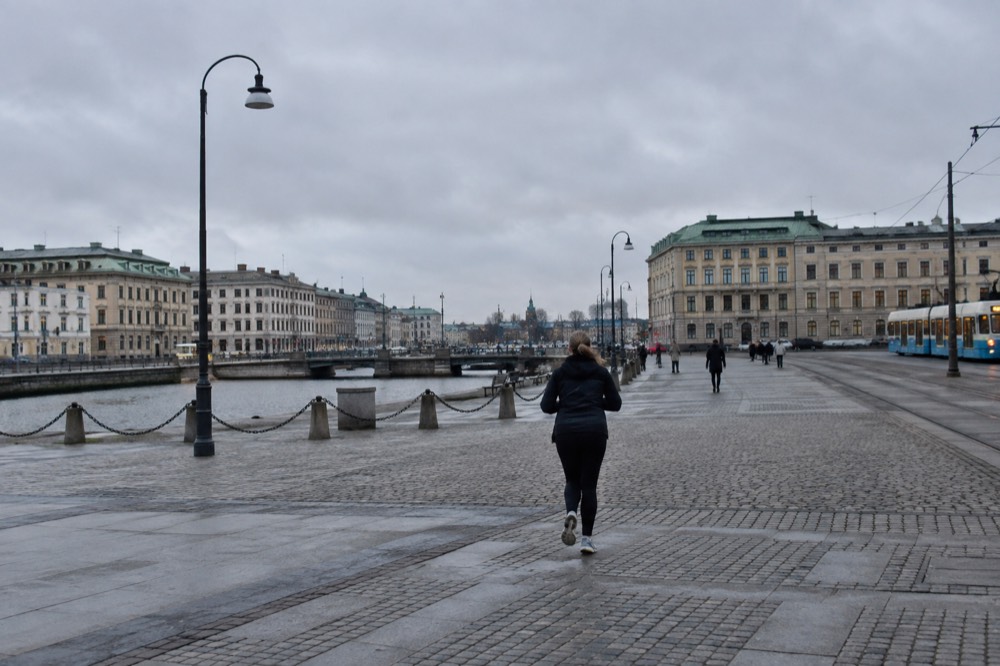
Klippan is the quieter free walk. It is the old harbour village under the Älvborg bridge, a cluster of low wooden buildings on the water that predate the shipyards, and it connects to the waterfront path toward the centre. Between Klippan and the centre, Stenpiren and the river edge give you the shipyard cranes and the ferry traffic of the Göta älv without a boat ticket.
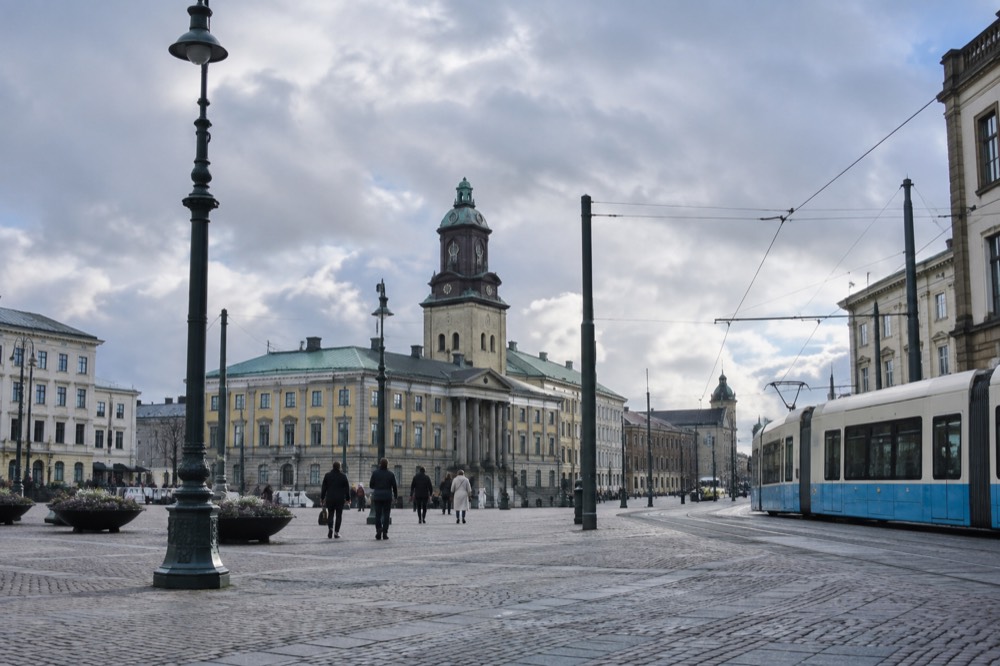
The viewpoints are the free finale. Masthuggskyrkan, the church above the river mouth, has the harbour view that appears on most Gothenburg postcards, and the church's own hilltop is public. Ramberget on Hisingen is the skyline view locals use, a short climb from the Keillers park entrance, with the whole city and the river spread below. Both cost nothing, and the Ramberget guide explains how to reach it by tram. Skansen Kronan, the hilltop fort above Haga, adds a third free panorama; the hill and the view are free, and the climb from Haga takes minutes.
Timing is the one variable worth planning. In June, Gothenburg gets 18 hours 6 minutes of daylight, with civil twilight from 02:58 to 23:30 leaving only about three and a half hours of true night, so a late viewpoint walk costs nothing and stays light absurdly late. In December the same walk has a 6 hour 32 minute window between sunrise at 08:54 and sunset at 15:26. The view is free in both months; the light is not equal.
For the days when the legs are willing but the planning is not, these are the tours this site would put against a free walking day:
The free Majorna walk covers the district; the amphibious bus covers the land-and-water gimmick sightseeing in an hour; the guided archipelago cruise covers the sea. Between the three of them and a pair of shoes, the paid and free versions of Gothenburg are both accounted for.
Common Questions About Free Things in Gothenburg
What are some things I can do for free in Gothenburg?
Slottsskogen park and its free zoo of Nordic animals, the Haga wooden quarter, the Klippan harbour village, the Göta älv waterfront, the Masthuggskyrkan and Ramberget viewpoints, Skansen Kronan's hilltop, the reopened Feskekôrka food hall, and the tip-based GuruWalk walking tours, three of which run in English.
Is Slottsskogen zoo really free?
Yes. Slottsskogen is a public park with no gate and no ticket, and the animal park inside it, including the moose, seals and penguins, carries no separate charge. It is one of the few free zoos of its scale in Scandinavia.
Are the free walking tours in Gothenburg actually free?
They are tip based. Booking through GuruWalk costs nothing, the guide is paid by tips, and four walks run in the city: three in English and one in Spanish only. The Majorna walk runs about 1 hour 30 minutes and is rated 4.77 from 234 reviews.
Is the Gothenburg Museum of Art free?
Only conditionally. Admission is free for children and young people under 20 and for students with a student ID; the day ticket is 75 kr for everyone else. The museum also closes in 2028 for a rebuild and reopens in 2032, and it currently warns of intermittent blasting near the building.
Can you visit the Gothenburg archipelago for free?
The ferries are not free, but they are covered by an ordinary Västtrafik ticket, and the islands are in Zone A. A 125 kr 24-hour Zone A ticket covers the tram to Saltholmen, the ferry and every island. Once ashore, walking is free and private cars are banned on the islands.
Is the Gothenburg Botanical Garden free?
It asks for a voluntary entry contribution rather than selling a fixed ticket, so it is not simply free and not simply paid. You can walk in without paying, and the contribution is what keeps it running.