What Can I Do in Gothenburg in 2 Days? A Two-Day Sweden Itinerary
A realistic two-day plan for Gothenburg, Sweden: the old town and Haga on day one, the southern archipelago or Liseberg on day two, with ticket prices and timing facts.
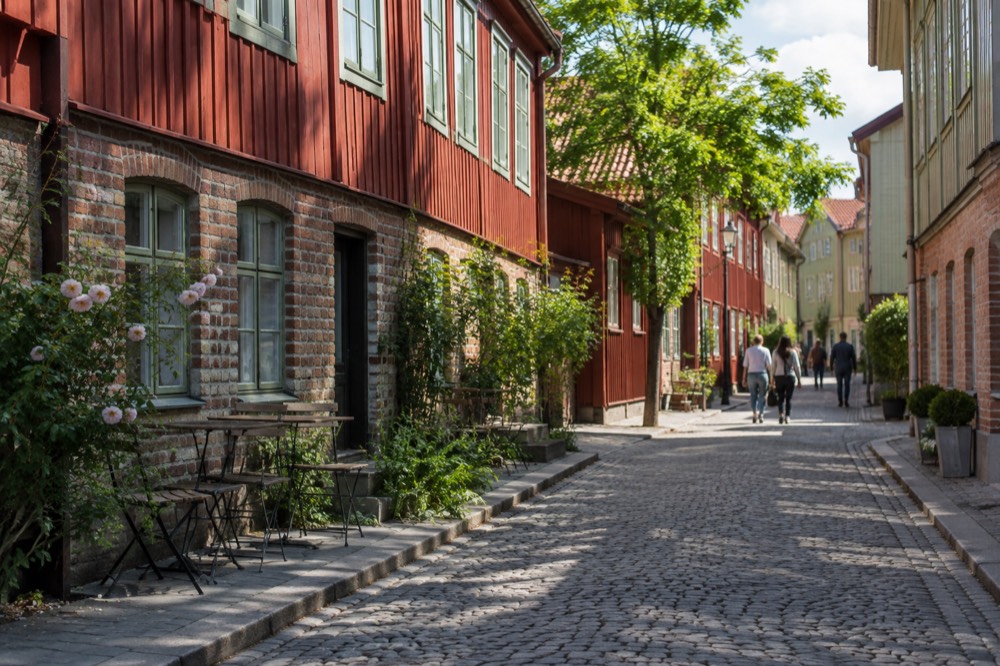
Gothenburg, Sweden fits two days well. The city centre sits inside the old moat the Dutch engineers drew when the town was founded, the tram network carries 126 million journeys a year according to Göteborgs Spårvägar, and the car-free southern archipelago is reached on an ordinary Västtrafik ticket, so nothing on a sensible weekend plan requires a car or more than half an hour of transit. The one thing that ruins two-day plans is the calendar: Liseberg, the biggest attraction in the city, closes for roughly three weeks in autumn, two weeks in November and the whole late winter, so the season you visit in matters more than the number of hours you spend planning.
What Can I Do in Gothenburg in 2 Days?
In two days you can cover the old town inside the moat, the wooden quarter of Haga, the harbour and one museum on day one, then spend day two on the southern archipelago islands reached by tram and ferry from Saltholmen, or at Liseberg if it is open and you prefer rides. A 24-hour Västtrafik Zone A ticket at 125 kr covers every tram and every archipelago ferry, so both days run on one ticket type.
The honest framing is that two days is a weekend dose of the city, not a survey. Göteborgs Stad counts 613,274 residents, and the centre is walkable in a way Stockholm's never is, but the archipelago alone deserves a full day and the Bohuslän coast deserves a week. What two days does well is the combination almost no other Swedish city offers: granite-and-brick urbanism in the morning, open sea in the afternoon.
Day one stays on foot. Day two uses the tram. That is the whole plan, and everything below is detail hanging off it.
Before the detail, one practical note on arrival. Most visitors land at Göteborg Landvetter Airport, and Swedavia's own transport pages confirm there is no rail link: the connection is the Vy flygbussarna coach, which runs Landvetter, Korsvägen and Göteborg C in twenty minutes, plus Västtrafik bus 612 and a FlixBus line. If your two days start on a Friday evening, the coach puts you at Nils Ericson Terminalen beside the central station, which is exactly where day one begins anyway.
Day One in Gothenburg: Old Town, Haga and the Harbour
Start day one at Göteborg Centralstation, walk the moat ring of the old town through Inom Vallgraven, climb to Haga for the wooden houses and a fika break, then finish along the harbour at Maritiman or the Roda Sten arts centre under the Älvsborg bridge. The whole loop is under five kilometres and needs no ticket until the evening.
The old town is small enough that a map barely helps. The early street plan survives in the grid between the canal and the granite bastions, and the cathedral, the city museum and the main shopping streets all sit inside it. Skansen Kronan, the hilltop fort above Haga, gives the classic roof-level view of the whole layout, and it costs nothing to walk up. The view from up there explains the city faster than any museum: you see the moat as a green ring, the harbour masts to the west, and the grid of stone blocks running out to the nineteenth-century expansions.
Haga is the midday anchor. The quarter is built of landshövdingehus, the two-storey wooden houses with brick ground floors that Gothenburg invented because wooden upper floors dodged the fire rules of the era. The main street, Haga Nygata, runs the length of the quarter and holds the densest cluster of cafés and second-hand shops in the city. The fika break belongs here: the tradition is a coffee plus something baked, and the question of what fika actually means has its own answer on this site at what does fika mean in Sweden. The classic Haga pairing is a huge cinnamon bun, and the bakeries along Nygata compete openly on size.
The quarter also answers the "little London" question people ask about the city. The nickname has real historical roots in British trade connections, and this site covers the story at why is Gothenburg called little London. For a two-day visitor the practical residue of that history is the church architecture and the merchant-house scale of the streets, which feel more British port town than Nordic capital.
The afternoon belongs to the water. The harbour front runs from the opera house past Maritiman, the floating museum of moored ships, to Roda Sten at the bridge foot. If the weather turns, Göteborgs konstmuseum on Götaplatsen holds 70,000 works and charges 75 kr for a day ticket, free for anyone under 20, though note the museum's own rebuild page states it closes in 2028 and reopens in 2032. The museum also warns of intermittent blasting near the building while the surrounding works proceed, which is worth knowing if loud noise is a problem for anyone in your group.
For the evening, the Linné and Långgatorna strip west of the old town holds the city's bar density, and the craft beer scene there is strong. One Swedish rule worth knowing before the first bar: beer above 3.5% ABV is only sold by Systembolaget, the state monopoly, under Alkohollag (2010:1622), so anything a normal bar or pub pours is fine, but supermarket shelves stop at the 3.5% folköl line. That is also why the same brand on a supermarket shelf often tastes weaker than the version you were served in a bar: the shelf version is a reformulation brewed to fit under the legal threshold.
If the evening is more your speed than the bar strip, the canal itself is the alternative. The Paddan sightseeing boats run from the harbour into the moat, and the roster lists a fifty-minute canal cruise rated 4.7 from 783 reviews, plus a two-hour Paddan trip on the River Säveån. The amphibious bus, which drives into the water and floats, is the city's most-reviewed sightseeing product at 4.7 from 4,326 reviews, and it fits a day-one afternoon if the weather is grey and walking loses its appeal.
Day Two in Gothenburg: The Archipelago or Liseberg
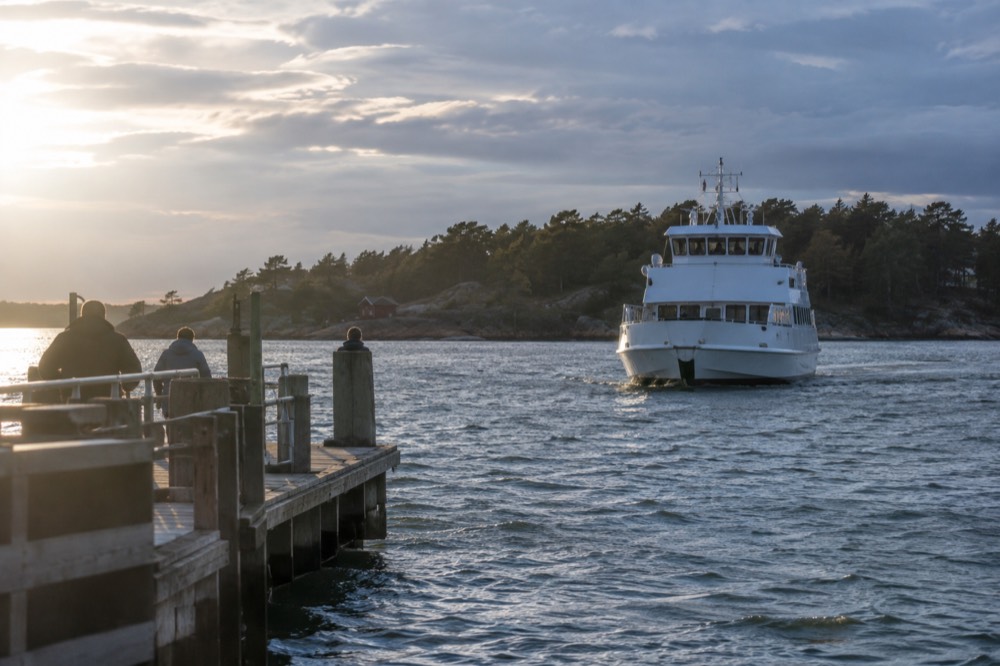
Day two splits into a sea day or a park day. The sea day is tram 11 to Saltholmen, then the Västtrafik ferry to Styrsö, Brännö, Vrångö or Donsö, all inside Zone A on the same 125 kr ticket. The park day is Liseberg, open 18 April to 20 September 2026 in summer, where entry from 95 kr buys no rides and the combined entry-plus-ride pass starts at 365 kr online.
The archipelago option is the one this site pushes hardest, because the numbers behind it are unusual. The southern islands are areas of the city of Gothenburg, not separate towns, and Göteborgs Stad's own planning study states the islands are protected from car traffic, with only taxi and emergency vehicles on the roads. You ride a tram to the western terminus at Saltholmen, walk to the pier, and board a ferry that carries an ordinary Västtrafik ticket. Västtrafik's Zone A ticket page confirms the coverage area, and the operator's own line map shows the archipelago boats as part of the tram and bus network.
Styrsö is the largest island and has a village feel with a small harbour. Brännö is flatter and quieter, with swimming rocks on the south side. Vrångö is the outermost of the served islands and the one with the least on it, which is the point. Pick one or two, not four: the ferries run hourly at best and the crossing itself is part of the day.
The swimming question comes up here, and the data surprises people. Sea temperature at the Vinga lighthouse station peaks at 18.6 C in August, not July, and September water at 16.7 C is warmer than June water at 16.2 C, according to SMHI's quality-controlled archive. So a September dip off Brännö is genuinely warmer than a June one. February is the coldest month in the water at 2.7 C, with a recorded low of -1.2 C, which happens because brackish Kattegat water freezes below zero.
If two days feels too tight to manage ferries alone, the guided archipelago cruise compresses the islands into 2.5 hours on the water, and the listing shows a 4.4 rating from 1,488 reviews with prices from $44 per person. It is the efficient version of the sea day. There are also lunch and fika versions of the cruise on the roster, from $68 and $58 per person respectively, if you want the sea day to double as a meal.
The Liseberg option needs calendar discipline. The park's own ticket and price page confirms the 2026 seasons: summer 18 April to 20 September, Halloween 2 October to 1 November, Christmas market 14 November to 23 December. Between those windows the park is shut, and a February visitor finds the gates closed. The pricing split matters too: the 95 kr entry ticket includes no rides, the Åkpass ride pass alone starts at 310 kr, and the combined ticket starts at 365 kr online, with on-site prices higher. Evening tickets valid from 18:00 start at 275 kr for the combined version. Whether the park justifies a day against the islands is argued at is Liseberg worth visiting.
How Much Does 2 Days in Gothenburg Cost?
A two-day visit runs on roughly 250 kr of transit, museum entries from 75 kr at the art museum, 95 to 365 kr for Liseberg depending on whether you ride, and food costs that start around 100 kr for a casual lunch and climb steeply from there, with alcohol priced by Systembolaget rules above the 3.5% line. The single biggest lever is the 125 kr 24-hour Zone A ticket, which covers trams and archipelago ferries together.
The transit arithmetic deserves a sentence of its own. Two 24-hour Zone A tickets, one per day, total 250 kr and cover every tram ride plus every archipelago ferry crossing. A single ticket is 38 kr for one zone, so the day ticket pays for itself at four rides, and a Saltholmen round trip plus a ferry crossing clears that bar before lunch. The temporary state subsidy that halves 30-day tickets does not apply to these day tickets, so do not budget for a discount that is not there.
The budget question has a full treatment at is Gothenburg cheap or expensive, but the two-day shape looks like this:
| Item | Typical cost | Notes |
|---|---|---|
| 24-hour Västtrafik Zone A ticket | 125 kr | Covers trams, buses and the southern archipelago ferries |
| Single tram ticket, 1 zone | 38 kr | Adult, from Västtrafik's fare page |
| Göteborgs konstmuseum day ticket | 75 kr | Free under 20; museum closes 2028 for rebuild |
| Liseberg entry only | from 95 kr | Buys zero rides; under 110 cm free |
| Liseberg entry + ride pass | from 365 kr | Online price; on-site is higher |
| Universeum entry | dynamic | No fixed adult price exists; book a time slot, on-site costs online plus 30 kr |
| Guided archipelago cruise | from $44 | 2.5 hours, per the listing |
| Free walking tours | tip-based | Including the Majorna walk on GuruWalk, rated 4.77 from 234 reviews |
Two structural savings are worth planning around. Slottsskogen park with its free zoo costs nothing, and the free walking tours listed in the city run on tips, including the Majorna walk on GuruWalk with a 4.77 rating from 234 reviews. Neither is a compromise: the park is one of the best things in the city at any price, and the free walks cover ground the paid tours do, particularly in Majorna, the second-hand and working-class quarter west of the centre that most two-day itineraries skip entirely.
Food costs hinge on where you eat. The casual baseline is a shrimp sandwich or a lunch plate in the hundred-kronor range, and the food halls, including the reopened Feskekôrka with its fish counters and five restaurants, let you assemble a meal from counters instead of a sit-down menu. Feskekôrka is no longer the fish-only institution older guides describe: it reopened in 2024 as a food hall, which this site covers at what food is Gothenburg famous for.
What to Skip on a Two-Day Gothenburg Trip
Skip the Volvo Museum at Arendal, which closed permanently in December 2023 and is now World of Volvo, skip any day trip beyond the city boundary, and skip the old Göteborg City Card, which no longer exists and was replaced by a Go City pass that does not include public transport. Two days does not support Marstrand, the Bohuslän coast or Lake Vänern, however good they are.
The Volvo point is the most repeated error in Gothenburg content. The museum at Gustaf Larsons Väg shut in 2023 and its own successor states this on its site. The replacement, World of Volvo at Lyckholms Torg, is an experience centre with exhibition tickets from 120 SEK online, and it is a legitimate half-day if Volvo matters to you, but it is not the old museum and it is not in Arendal. The full story is in this site's coverage of what is Gothenburg known for.
Day trips are the other trap. Marstrand, the Bohuslän fishing villages and Läckö Castle are all real and all reachable, but each eats a full day, which on a two-day visit means deleting the archipelago or the old town to fit it. The southern islands give the same granite-and-sea aesthetic inside the transit zone, so the trade is not close. If your heart is set on Marstrand, the honest move is to extend to three days, a question this site answers at how many days in Gothenburg is enough.
The city pass point is a booking hygiene issue. The municipal Göteborg City Card is gone, the domain now redirects to [Go City](https://gocity.tpk.ro/HQKyKKW4), and the current pass products on the roster are the Go City All-Inclusive Pass from $56 and the Essentials Pass from $47. Neither is needed for a two-day plan built on one Zone A ticket and one or two paid entries. The pass math only starts to work at three or more paid attractions per day, which a two-day plan rarely reaches.
One more skip that saves real money: the airport taxi. The coach and bus options from Landvetter cover the twenty-minute run, and Swedavia publishes no rail alternative because none exists. The comparison, including the coach details, is at are there two airports in Gothenburg, which also settles the confusion between Landvetter and the city's other, much smaller airfield.
What If It Rains on One of My Two Days?
Rain on one day is a planning assumption, not a disaster: SMHI's 1991-2020 normals for the Göteborg A station record 912 mm of precipitation across 127 days a year, about one day in three, with October the wettest month at 102.9 mm and April the driest at 51.3 mm. Swap the archipelago day for Universeum, the konstmuseum or the canal boats, and keep the islands for the better window.
The rain reputation is overdone, and the data says so. SMHI does not call Gothenburg Sweden's rainiest city; the national maxima sit in the western highlands and the mountains, and the city's 912 mm falls inside the wet western Götaland band rather than at the top of it. What the numbers do show is that October is the wettest month and April the driest, so a spring weekend is statistically the safer bet for an outdoor-heavy plan.
The indoor bench is deep enough to absorb a wet day. Universeum, the science centre, is open every day of the year from 10:00 to 18:00, with dynamically priced timed entry and no fixed published adult price, so book a slot rather than budgeting a figure. The konstmuseum takes a half day at 75 kr. The city museum covers the town's history, and the design and world-culture museums round out a full wet afternoon within tram range of the centre.
The archipelago in rain is not automatically wrong, either. The ferries run in all normal weather, the islands have cafés, and grey sea light on granite is its own aesthetic. The call is yours: the only genuinely bad sea day is a windy one, when the crossing is unpleasant and the islands offer no shelter.
Common Questions About 2 Days in Gothenburg
What can I do in Gothenburg in 2 days?
Spend day one on foot in the old town, Haga and the harbour, and day two either on the southern archipelago islands by tram and ferry from Saltholmen or at Liseberg if the park is open. Both days fit inside a 125 kr 24-hour Zone A ticket.
Is 2 days in Gothenburg enough?
Two days covers the compact centre and one archipelago trip comfortably. It is not enough for Liseberg, the archipelago and a Bohuslän day trip together. The fuller answer is at [how many days in Gothenburg is enough](/answers/how-many-days-in-gothenburg-is-enough/).
Can you visit the Gothenburg archipelago in one day?
Yes. The southern islands are inside Västtrafik Zone A, the ferries take ordinary tickets, and the tram reaches the Saltholmen terminal directly. One island for a half day or two islands for a full day is the realistic pace.
Is Gothenburg walkable in 2 days?
The centre inside the moat, Haga and the harbour front are all walkable in a single loop. The archipelago, Liseberg and the museum district need trams, which run every few minutes on the twelve-line network.
What is the best month for a 2-day Gothenburg trip?
April is the driest month of the year at 51.3 mm per SMHI's 1991-2020 normals, and the sea is warmest in August at 18.6 C. Liseberg's summer season runs 18 April to 20 September 2026, so late April through September covers both the islands and the park.
Do you need a car for 2 days in Gothenburg?
No. The trams, the airport coach and the archipelago ferries cover every sensible two-day plan, and the southern islands ban private cars outright. A car is a liability at Saltholmen, where parking is the known bottleneck.
The two-day version of Gothenburg is a city walk and a sea trip, joined by a tram. Keep the calendar honest, buy the Zone A ticket, and the weekend holds together. More planning depth is on the Gothenburg Travel Guide homepage, including whether Gothenburg is worth visiting for tourists and the naming question at are Gothenburg and Göteborg the same.