What Is the Best Month to Visit Gothenburg, Sweden?
The best month to visit Sweden depends on what you want: sea temperature, daylight, rain and opening calendars all point to different answers. This guide uses SMHI data to pick the winner for Gothenburg.
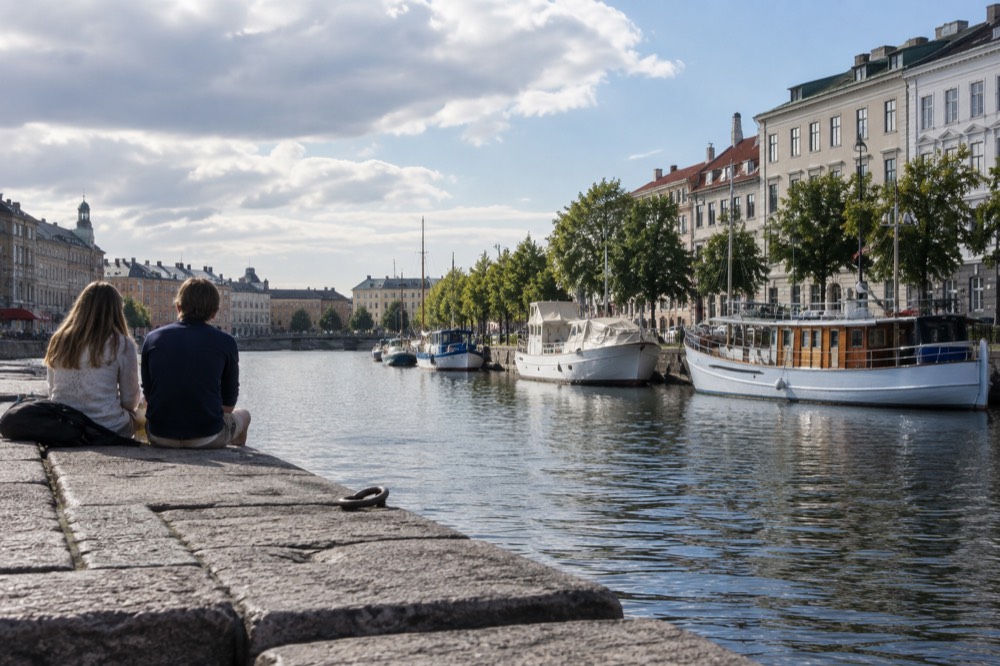
Sweden stretches from the smooth beaches of Skåne to the midnight sun of Abisko, so a single "best month" for the whole country is a stretch. What the question usually means in practice is the southern half, where the big cities and the ferry-linked archipelagos sit, and that is where the weather data is clearest. Gothenburg, on the west coast at 57.7 degrees north, is a good test case because SMHI, the Swedish weather service, publishes detailed 1991-2020 climate normals for its downtown station, plus a long quality-controlled record of sea temperature from the Vinga lighthouse out in the archipelago. Those two datasets, read together, answer the question with more precision than any list of "top tips" ever manages.
This site, Gothenburg Travel Guide, is built around one city, so the month-by-month verdict below is grounded in Gothenburg's numbers rather than averages smeared across a very long country. If your trip is really about Stockholm or Lapland, the same logic applies but the dates shift, and the notes at the end explain how.
What Is the Best Month to Go to Sweden?
For Gothenburg and the Swedish west coast, August is the best single month: the sea reaches its yearly peak of 18.6 C, air temperature holds near 17.7 C, rain stays at summer levels, and Liseberg is open every day until 20 September. July is a close second with the warmest air (18.3 C) and the longest days, but its water is a fraction cooler and its crowds are thicker. The bare question "what is the best month to go to Sweden" has no single national answer, but for the country's second city the data is unambiguous.
The reason August beats July on the coast is a lag that most visitors never hear about. Air temperature in Gothenburg peaks in July at a monthly mean of 18.3 C, according to SMHI's 1991-2020 normals for station Göteborg A (71420). The sea, measured at the Vinga lighthouse station in the archipelago from a long run of quality-controlled hourly observations, peaks a month later at 18.6 C in August. Water holds heat longer than air, so the swimming season runs weeks behind the sun. A September dip at 16.7 C is actually warmer than a June one at 16.2 C, which is the opposite of what most people book for.
For a broader city-by-city framing, including how Gothenburg compares with the capital, see when to visit Gothenburg by season.
How Does Each Month in Gothenburg Actually Feel?
The year splits into four usable blocks: April and May are the driest and brightest spring months, June to August carry the warmth and the 18-hour days, September offers warm water with thinning crowds, and October through March belong to rain, short daylight and indoor life. February is the coldest month at 0.7 C air and 2.7 C sea, while October is the wettest at 102.9 mm of rain. No month is impossible, but the value gap between April and November is enormous.
Here is the full picture from SMHI's own spreadsheets, station Göteborg A (71420), 1991-2020 normals:
| Month | Mean air temp | Rain, mm | Days with 1 mm+ rain | Mean sea temp (Vinga) |
|---|---|---|---|---|
| January | 0.8 C | 83.0 | 11.5 | 3.9 C |
| February | 0.7 C | 61.0 | 9.7 | 2.7 C |
| March | 3.0 C | 54.0 | 8.8 | 4.1 C |
| April | 7.7 C | 51.3 | 8.2 | 7.1 C |
| May | 12.4 C | 54.3 | 8.8 | 11.6 C |
| June | 15.7 C | 73.7 | 10.0 | 16.2 C |
| July | 18.3 C | 81.3 | 9.8 | 18.3 C |
| August | 17.7 C | 92.8 | 11.9 | 18.6 C |
| September | 14.0 C | 80.0 | 10.8 | 16.7 C |
| October | 9.0 C | 102.9 | 12.6 | 12.8 C |
| November | 5.1 C | 84.7 | 12.0 | 9.3 C |
| December | 2.1 C | 93.0 | 13.3 | 5.5 C |
Two rows surprise people. April, not any summer month, is the driest time of year at 51.3 mm across only 8.2 wet days. And October, the month when many autumn-city-break calendars point at Sweden, is in fact the wettest month of the Gothenburg year at 102.9 mm. The rain reputation belongs to autumn and winter, not to the season tourists actually come for.
One myth needs killing here, because it appears on the first page of almost any search: Gothenburg is not Sweden's rainiest city, and SMHI's own text on the 1991-2020 normals says the national precipitation maxima sit in the western highlands and the mountain fjäll country, with western Götaland merely a wetter band. The city's 912 mm annual total is real, but the superlative is invented.
Whichever month you pick, the city's classic sightseeing formats run all summer, and the shortlist below covers the ones that work in nearly any weather.
Is Summer the Only Good Time to Visit Sweden?
No. Summer is the best time for warmth and swimming, but September matches it for sea temperature at 16.7 C with smaller crowds, and April beats every other month for dry weather with 51.3 mm of rain across just 8.2 wet days. Winter is a different product: 6 hours 32 minutes of daylight in Gothenburg on 21 December, offset by a famous Christmas market at Liseberg. The right month depends on whether you are buying a beach, a city break or a market.
The summer case is straightforward. From mid-June the daylight becomes absurd in the best way: on 21 June the sun is up from 04:11 to 22:17, a span of 18 hours 6 minutes, and civil twilight stretches from 02:58 to 23:30, leaving only about three and a half hours of true night. Liseberg, the amusement park that anchors most family trips, runs its summer season from 18 April to 20 September, and the archipelago ferries run on an ordinary Västtrafik ticket, so a 125 kr 24-hour Zone A day ticket covers tram, ferry and islands alike. The islands of the southern archipelago, from Styrsö to Vrångö, are car-free and swim-friendly, and the water out there in August is at its yearly warmest.
The September case is the insider one. Sea temperature of 16.7 C is warmer than June's 16.2 C, the holiday crowds have gone home, and the park is still open. Rain rises modestly to 80 mm across about 11 days, which is normal for the city in any case. For a visitor whose priority is the archipelago rather than tanning, September arguably beats July. The ferries keep running, the swimming spots stay swimmable, and hotel rates soften once the school holidays end. What you trade away is the guarantee of long evenings: by late September sunset is creeping back through the early evening, and the last weeks of the park's season carry a definite autumn chill after dark.
The winter case is honest about its trade. December daylight in Gothenburg runs 6 hours 32 minutes between sunrise at 08:54 and sunset at 15:26, and the sea sits at 5.5 C. What winter sells instead is Jul på Liseberg, the Christmas market running 14 to 23 December, mulled glögg, and candle-lit Haga. It is a real product, just a different one. For a fuller weighing of the city across the year, is Gothenburg worth visiting for tourists covers what the trip actually delivers.
What About Daylight and Darkness?
Daylight in Gothenburg swings by 11 hours 34 minutes across the year, from 18 hours 6 minutes on 21 June down to 6 hours 32 minutes on 21 December, according to US Naval Observatory tables for the city's coordinates. That swing is the single biggest planning variable in Sweden, bigger than temperature, and it should drive your month choice more than any hotel price comparison. Get the light right and the weather almost takes care of itself.
In practical terms, the usable-light season runs from early May to mid-August. In May the evenings are already long enough that a boat trip after dinner is normal. By late June the sky never properly darkens. From late August the shortening accelerates: September still gives pleasant evenings, October light is grey and ends by early evening, and by November the city is in its indoor rhythm of museums, food halls and saunas.
The December traveller should plan around the light rather than fight it. Sunrise at 08:54 and sunset at 15:26 means a sightseeing day compresses into six and a half hours, and even civil twilight only extends that from 08:03 to 16:17. Museums carry the load: Göteborgs konstmuseum is open Tuesday to Sunday with late hours on Wednesday, and its collection of about 70,000 works draws roughly a quarter of a million visitors a year. One forward-looking note from the museum's own rebuild page: it closes in 2028 and reopens in 2032, so a trip planned for later in the decade should check status first.
What Is the Best Month for Swimming and the Archipelago?
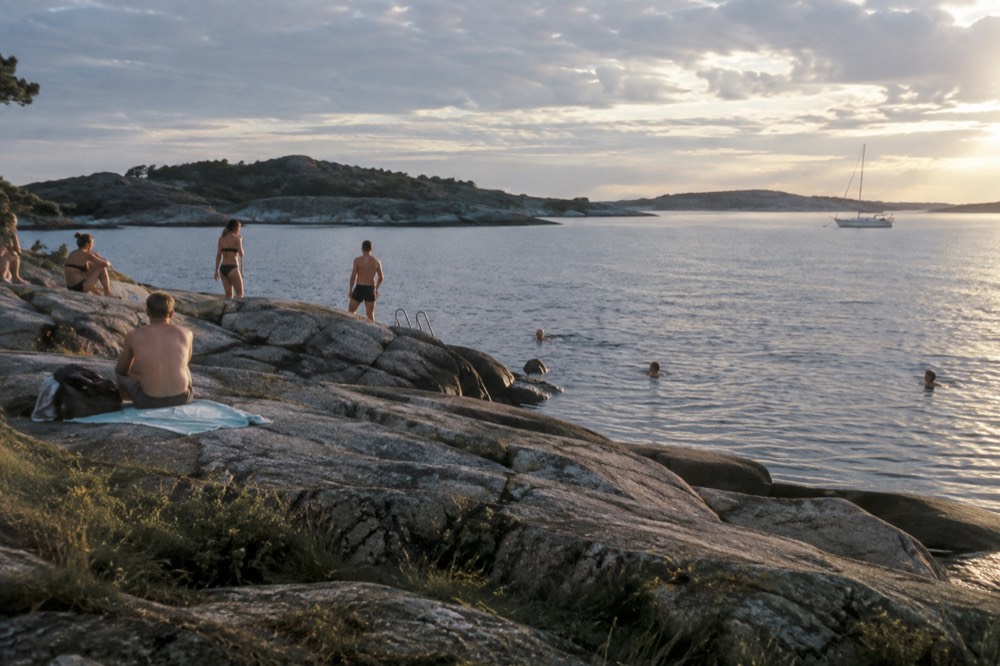
August, followed by September. The sea at the Vinga station peaks at a mean of 18.6 C in August, holds 16.7 C through September, and is warmer in September than in June (16.2 C). February is the coldest month in the water at 2.7 C, with a recorded low of -1.2 C, because brackish Kattegat water freezes below zero. Anyone planning a Sweden trip around swimming should book late July to early September, not midsummer.
The record matters less than the mean, but it tells you what the water can do: the Vinga archive shows a record August high of 22.2 C and a record July high of 23.6 C. On a warm year the archipelago swims like the Mediterranean for a fortnight. On the other side, the record June low of 12.9 C explains why a midsummer dip can be bracing even when the air feels warm.
Getting to the water is cheap, which is the archipelago's quiet advantage over almost every other Swedish experience. The islands are inside the city's own Västtrafik Zone A, so the same 125 kr 24-hour ticket that runs the trams also runs the ferries from Saltholmen. Cars are banned on the southern islands, which is why the swimming beaches stay quiet. Whether the islands justify the ferry ride at all is covered in detail in is it worth visiting the Gothenburg archipelago.
Which Month Is Cheapest and Least Crowded?
April and May are the value window: April is the driest month of the Gothenburg year at 51.3 mm of rain, daylight is climbing fast, and the city is between the winter and summer visitor waves. October is the cheapest month on hotel rates but also the wettest at 102.9 mm across 12.6 rain days, so the saving buys weather risk. Late September is the best compromise of price, crowds and still-warm sea.
The crowd calendar in Gothenburg is dominated by a handful of fixed points. Liseberg's summer season, 18 April to 20 September, pulls families hard in July. The Gothenburg Culture Festival and the Way Out West music festival fill the city in August, which paradoxically makes early September the calmest warm-weather window. Christmas market weeks from 14 to 23 December are busy in the centre and quiet everywhere else.
Price-conscious travellers should also know what not to expect. The old Göteborg City Card no longer exists; the [Go City](https://gocity.tpk.ro/HQKyKKW4) pass that replaced it is an attractions product with published from-prices of 449 kr for an Essentials version, and it should be evaluated against single tickets rather than assumed to include transport. The temporary state subsidy that currently halves Västtrafik's 30-day tickets, cutting a Zone A adult monthly from 890 to 445 kr, does not apply to the 24-hour and 72-hour tickets visitors actually buy; a 24-hour Zone A ticket costs 125 kr at full price.
What Should You Plan Around Whatever Month You Choose?
Three calendars matter more than the weather forecast: Liseberg's seasonal openings (summer 18 April to 20 September, Halloween 2 October to 1 November, Christmas market 14 to 23 December), the fact that the old Volvo Museum closed permanently in December 2023 and only World of Volvo now exists, and Feskekôrka's 2024 reopening as a five-restaurant food hall rather than a fish-only market. Getting any of these wrong ruins a day more surely than rain does.
The Liseberg trap is the closed spring. The park shuts from 24 December until mid-April, so a visitor arriving in late January or March finds the biggest attraction in the city locked, whatever the brochures imply. Ticket structure matters too: a 95 kr entry ticket includes zero rides, because entry and ride passes are sold separately at the gate.
The Volvo trap catches even careful planners. The museum at Arendal closed its doors in December 2023, and its successor, World of Volvo at Lyckholms Torg, is a different kind of venue: an experience centre with exhibition tickets from 120 SEK online and a factory bus tour from Torslanda from 175 SEK. Any guide still directing you to Gustaf Larsons Väg is out of date.
The food trap is smaller but real. Feskekôrka, the fish-church-shaped market hall from 1874, reopened in 2024 with two fish counters and five restaurants inside, so it now works as a lunch stop rather than a quick counter visit. If your month is October or November, the indoor options, from Universeum, open every day of the year from 10:00 to 18:00 with dynamically priced time-slot tickets, to the food halls of Saluhallen, are what carry the trip.
Common Questions About the Best Month to Visit Sweden
What is the best month to go to Sweden?
For Gothenburg and the west coast, August: the sea peaks at 18.6 C, air temperature holds near 17.7 C, and Liseberg is open daily. July is close behind with the warmest air (18.3 C) and the longest days. The question has no single national answer because Sweden is a very long country.
What is the rainiest month in Gothenburg?
October, at 102.9 mm across 12.6 days of at least 1 mm of rain, per SMHI's 1991-2020 normals for station Göteborg A. April is the driest month at 51.3 mm. Gothenburg is not, however, Sweden's rainiest city; SMHI places the national precipitation maxima in the western highlands and the mountains.
Which month has the warmest sea for swimming?
August, with a mean of 18.6 C at the Vinga station in the archipelago. September (16.7 C) is warmer than June (16.2 C), so late summer and early autumn both beat midsummer for swimming.
Is Sweden too dark in winter to visit?
Gothenburg gets 6 hours 32 minutes of daylight on 21 December, from sunrise at 08:54 to sunset at 15:26. It is short but workable, and the Christmas market at Liseberg runs 14 to 23 December as compensation.
What is the cheapest good month to visit?
Late September or April. September keeps a 16.7 C sea and thinning crowds after the summer festivals; April is the driest month of the year at 51.3 mm of rain and sits between visitor waves.
Is Liseberg open all year?
No. The 2026 seasons are summer 18 April to 20 September, Halloween 2 October to 1 November, and the Christmas market 14 to 23 December. The park is closed from 24 December until mid-April, apart from winter weekend openings in the Kaninlandet children's area.
Whatever month you settle on, the length of your stay shapes it as much as the date does, and how many days in Gothenburg is enough is the natural next question once the calendar is fixed. Pick August for the water, April for the dry, December for the candles, and you will not go far wrong.