What Not to Miss When Visiting Sweden? Start with Gothenburg and the West Coast
What not to miss when visiting Sweden: Gothenburg's archipelago, fika, Liseberg's seasons, the Bohuslan coast and the practical rules of Swedish travel, from a desk that checks the primary sources.
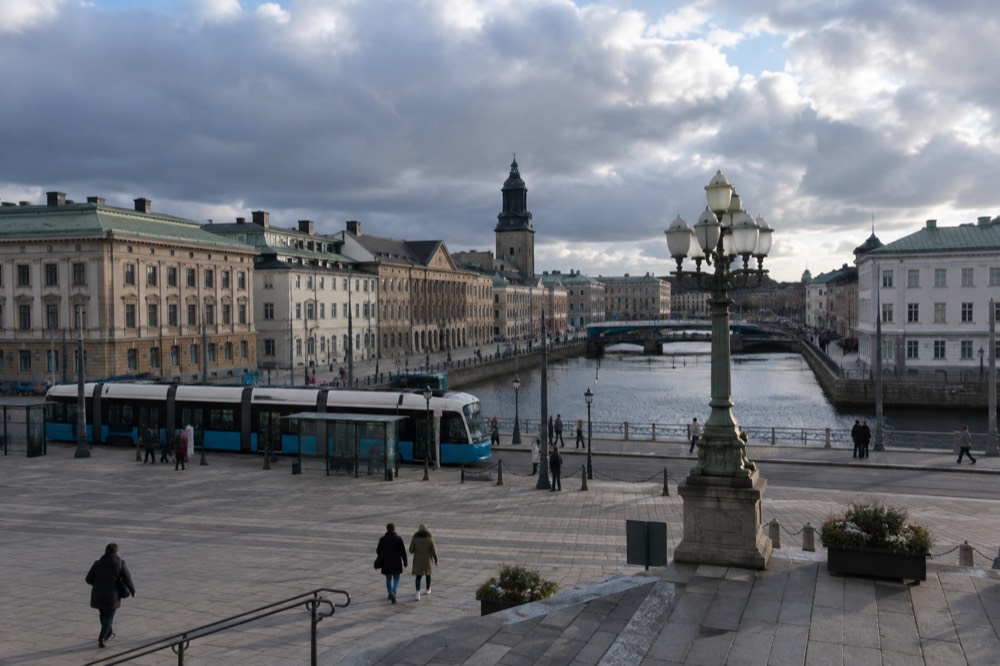
Sweden's second city sits at the mouth of the Göta älv, where the river meets the Kattegat, and it is the part of the country most Sweden itineraries skip. The city counted 613,274 residents at the end of 2025, and Göteborg & Co reported a record year with over 6 million commercial guest nights, growth the tourism body described as the strongest in the country. The visitors came anyway. The checklists just did not keep up.
This page is written by an editorial desk that reports from primary sources: Västtrafik's fare pages, SMHI's normals, liseberg.se, Swedavia, the Swedish statute book. Nobody here has taken these trips. Every figure below carries a source, and where a figure could not be verified, it says so.
What Not to Miss When Visiting Sweden?
The four things a Sweden trip should not miss are the Gothenburg archipelago islands reached on an ordinary tram and ferry ticket, fika as the Swedes actually practise it, the Bohuslän granite coast north of the city, and a city that works: Gothenburg's trams, canals and food halls. Stockholm is the capital, but the west coast holds the country's most accessible islands, its seafood tradition and its second-largest airport, and it sits within two hours of the fortress island of Marstrand and the locks at Trollhättan.
That is the short answer. The rest of this page unpacks it, because each of those four items has a trap attached. The islands are car-free and run on a ticket system most visitors misunderstand. Fika is a social institution, not a snack. The Bohuslän coast is a day trip, not a base. And Gothenburg's biggest attraction closes for months at a stretch.
Is Gothenburg Worth Building a Sweden Trip Around?
Yes, and the numbers back it: the city logged over 6 million commercial guest nights in 2025, a record, with international guest nights up roughly 15% in the first ten months of the year against 2024. Göteborg Landvetter is Sweden's second-largest airport, handling 5,435,850 passengers in 2025 across 77 international destinations, and there is no rail link, so the airport coach, now branded Vy flygbussarna, is the standard way in, a journey Swedavia states takes 20 minutes.
Gothenburg is the working half of Sweden in a way Stockholm is not. The shipyard cranes still stand on Hisingen. The tram network carried 126 million journeys in 2025, according to Göteborgs Spårvägar, its second-best year after the 2019 record of 141 million. Twelve lines and 188 km of single track, as of the operator's 2022 annual report, run from Mölndal in the south to Angered in the north, and from Saltholmen in the west, the archipelago ferry terminal, to Kålltorp in the east.
The city is also compact in a way that surprises first-time visitors. The old town, Inom Vallgraven, sits inside the old moat, and you can walk it in under an hour. The question of whether the city justifies the trip has its own answer on is Gothenburg in Sweden worth visiting, and the naming question, Gothenburg versus Göteborg, is settled on are Gothenburg and Göteborg the same.
For a first pass at the city itself, the sightseeing options cluster around the harbour and the canals, and the three below are the ones the review counts support.
What Should You Not Miss Inside Gothenburg?
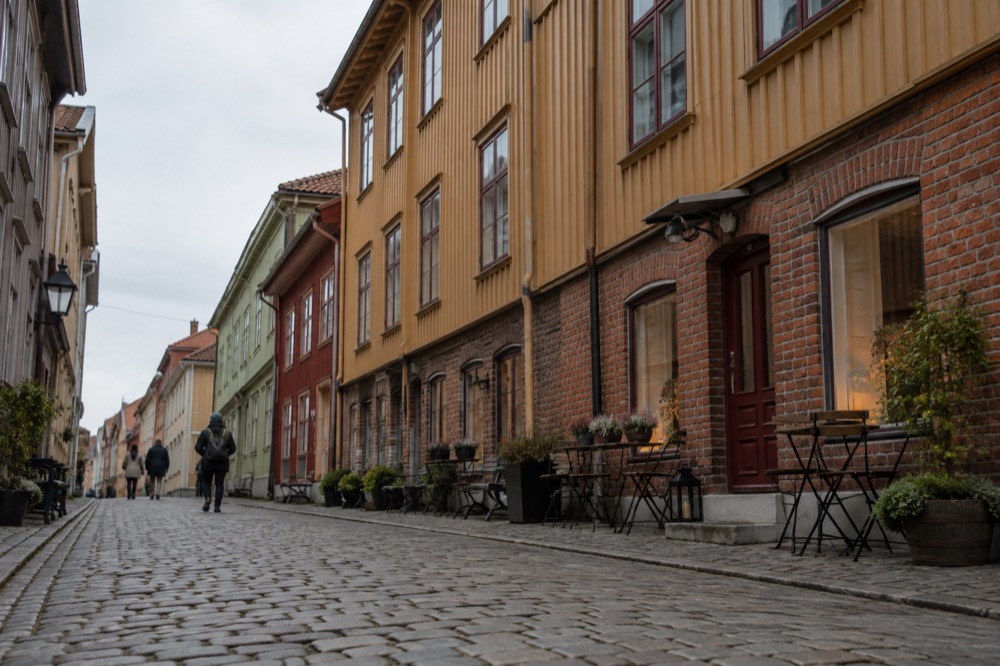
Do not miss the southern archipelago, the Haga wooden quarter, Feskekôrka in its new form as a food hall, and the canal route through the city. Haga's landshövdingehus, the timber-and-brick houses unique to this city, survive in blocks. Feskekôrka, the 1874 fish hall shaped like a church, reopened in 2024 with two fish counters and five restaurants. The archipelago islands are areas of Gothenburg, not day trips, and a 125 kr 24-hour Zone A ticket covers the tram to Saltholmen and the ferry out.
Start with the ticket, because it is the best-value single fact in Swedish domestic travel. Västtrafik's own zone map shows the archipelago boats carrying Västtrafik line numbers inside Zone A, and the islands served from Saltholmen are Asperö, Brännö, Styrsö, Donsö, Vrångö and Köpstadsö. Private cars are banned on them: Göteborgs Stad's own study states the islands are "fredade från biltrafik", protected from car traffic, with exceptions only for taxi, transport services and emergency vehicles. You ride a tram to the end of the line and step onto a boat.
Back on the mainland, Haga is the neighbourhood that gives the city its wooden-quarter texture, and it has its own detailed treatment on what to do in Haga. Feskekôrka matters because almost every guide written between 2020 and 2023 says it is closed for renovation. It is not. Higab, the municipal property owner, confirms it reopened in 2024, the year the building turned 150, and its own site now lists the fish counters Ebbes Fångst and Flåtens Fiskhandel plus the restaurants Haldis Kök, Pråmenaden, Victor von G, Lilla Åstol and Ekmans. Lilla Åstol is seasonal, its own copy says it reopens in spring.
One warning that belongs in every Sweden checklist: the Volvo Museum at Arendal closed permanently in December 2023. World of Volvo, the 2024 replacement at Lyckholms Torg, is the only Volvo attraction in the city, open Mon-Wed 10-17, Thu 10-19, Fri-Sat 10-17 and Sun 10-16, with exhibition tickets from 120 SEK online. Any guide still sending you to Gustaf Larsons Väg is sending you to a shut building.
Is Liseberg Something Not to Miss in Sweden?
Liseberg is Scandinavia's most-visited amusement park and it belongs on the list, but only if your dates align: in 2026 the summer season runs 18 April to 20 September, Halloween runs 2 October to 1 November, and the Christmas market runs 14 November to 23 December. The park is shut for roughly late September, the first half of November and the entire period from 24 December to mid-April. Liseberg AB reported 3.0 million destination guests in 2025, about 2.5 million of them in the park itself.
The pricing is the part that catches visitors. Liseberg's own ticket page sells entry and rides separately: an Entré ticket starts at 95 kr online and buys no rides at all, an Åkpass ride pass starts at 310 kr and does not include entry, and the combined Entré + Åkpass starts at 365 kr. Children under 110 cm enter free. The park is not sold on any booking platform, so the ticket page is the only place to buy.
The season question gets a fuller treatment on is Liseberg worth visiting. The comparison with Copenhagen's Tivoli, the other big Scandinavian park, is argued out on the site's Liseberg versus Tivoli page.
What Is Fika and Why Is It on the List?
Fika is the Swedish coffee break, a seated pause with something baked, usually a cinnamon bun or cardamom bun, and it is a workplace and social institution rather than a tourist activity; the word functions as both noun and verb, and the practice is protected in Swedish working culture to the point that many union agreements schedule it. It is the single easiest genuinely Swedish thing a visitor can do, because every café in the country participates and the cost is the price of a coffee and a bun.
The desk cannot tell you the best bun in Gothenburg from experience, and will not pretend to. The mechanics of the custom, how to pronounce it and where the tradition sits in Swedish daily life, are covered on what does fika mean in Sweden.
What the sources do support is the food culture around it. Gothenburg is the seafood city: the west coast shrimp sandwich, the oyster flats north toward Lysekil, and the food halls, Saluhallen and the reopened Feskekôrka. The city's food reputation has its own page on the site, and the seafood tradition runs from the shrimp counters at Feskekôrka out to the smokehouses on the islands, where the ferry ticket is the only cost of the journey.
What About the Rest of Sweden: Day Trips from Gothenburg?
The unmissable day trips from Gothenburg are Marstrand, the fortress island in Bohuslän; the granite coast itself, Smögen and Fjällbacka; and Lake Vänern with Läckö Castle, all reachable by public transport or tour. Marstrand sits about an hour away and holds Carlsten's Fortress. The Bohuslän coast is the classic Swedish summer landscape of bare pink granite and red boathouses. Trollhättan's canal locks lie inland, and Tjolöholm and Gunnebo are the manor-house options closer to the city.
The distinction that matters here is the one this site enforces everywhere: Styrsö, Brännö, Vrångö and the other ferry islands are areas of Gothenburg, reached on a Zone A ticket. Marstrand, Bohuslän, Tjolöholm, Gunnebo, Trollhättan, Borås, Varberg and Läckö are day trips. A traveller who spends a day on Vrångö has not left the city; a traveller who spends it in Marstrand has.
The train network makes the wider region plausible. The Stockholm run gets assessed on the site's scenic-train page, and how long any of this needs is argued on how many days in Gothenburg is enough.
What Practical Rules Should You Know Before Visiting Sweden?
Three rules matter more than any packing list. First, beer above 3.5% ABV, all wine and all spirits are sold only by Systembolaget, the state monopoly, under Alkohollag (2010:1622); supermarkets sell folköl up to 3.5%. Second, the daylight swing is extreme: Gothenburg gets 6 hours 32 minutes of daylight on 21 December against 18 hours 06 minutes on 21 June.
Third, the rain reputation is overstated: SMHI's 1991-2020 normals for station Göteborg A show 912 mm a year across 127 wet days, wettest in October at 102.9 mm and driest in April at 51.3 mm.
The alcohol law is the one that changes behaviour. The statute is exact: beer over 2.25% but not over 3.5% ABV is folköl, sold in ordinary supermarkets; anything stronger is starköl, reserved to the monopoly. That is why the supermarket version of a Swedish beer brand often tastes weaker than the label abroad suggests, it is frequently a 3.5% reformulation of the same beer. The statute also reserves all retail of spirits, wine and starköl to the wholly state-owned monopoly.
The rain deserves its correction. SMHI does not call Gothenburg Sweden's rainiest city, and the institute's own text puts the national precipitation maxima in the western highlands and the mountains, with annual means above 1000 mm there against Gothenburg's 912. October, after most tourists leave, is the wettest month. April is the driest, on the fewest wet days of the year, so spring rather than summer is the dry window.
The sea has its own counterintuitive fact, drawn from SMHI's oceanographic archive at the Vinga lighthouse station: the water peaks in August at 18.6 C, not July, and September water at 16.7 C is warmer than June water at 16.2 C. A September swim in the archipelago is warmer than a June one. February, at 2.7 C, is the coldest sea month, with a verified record low of -1.2 C, below the freezing point of fresh water because Kattegat brackish water freezes lower.
| Sweden travel fact | The verified figure | Source |
|---|---|---|
| Daylight, 21 Dec (Gothenburg) | 6 h 32 m (sunrise 08:54, sunset 15:26) | US Naval Observatory |
| Daylight, 21 Jun (Gothenburg) | 18 h 06 m (sunrise 04:11, sunset 22:17) | US Naval Observatory |
| Annual rainfall | 912 mm over 127 days, wettest October 102.9 mm, driest April 51.3 mm | SMHI 1991-2020 normals, station Göteborg A |
| Sea temperature peak | 18.6 C in August; September 16.7 C beats June 16.2 C | SMHI archive, station Vinga |
| Supermarket beer limit | 3.5% ABV; stronger only at Systembolaget | Alkohollag (2010:1622) 1 kap. 8 |
| 24-hour Zone A transport ticket | 125 kr, covers trams, buses and archipelago ferries | vasttrafik.se |
When Should You Visit Sweden, and for How Long?
The best-value window for the west coast is late August and September: the sea is at or near its 18.6 C peak, the October rains have not arrived, Liseberg is still open until 20 September, and the crowds of July have gone. For daylight maximists, June gives 18 hours 06 minutes of light and barely three and a half hours of true night.
For the Christmas-market Sweden of postcards, Gothenburg's market period, 14 to 23 December in 2026 at Liseberg, is the honest window, and it is short.
The seasonal trade-offs are argued on what is the best time to visit Gothenburg. The one thing the desk will state flatly: do not build a Sweden trip around Liseberg without checking its season dates first. The park's closed spring, from 24 December to mid-April, is the fact that ruins trips, and its own calendar is the only reliable source because the dates shift every year.
For the water, the guided options out of the city centre are the ones with the review history behind them, and the trio below covers the harbour, the archipelago and the canal.
Common Questions About What Not to Miss When Visiting Sweden
What not to miss when visiting Sweden?
The archipelago islands off Gothenburg on an ordinary tram-and-ferry ticket, fika in a proper café, the Bohuslän granite coast, Haga's wooden quarter, and Liseberg if your dates fall inside its seasons. Stockholm has the palace; the west coast has the islands, the seafood and the second city.
Is Gothenburg better than Stockholm for a first Sweden trip?
Neither is objectively better. Gothenburg is smaller, walkable inside its moat, cheaper on average, and has the archipelago inside its own transport zone. Stockholm is the capital with the bigger museum set. The comparison is argued in detail on the site's Gothenburg or Stockholm page.
Do you need a car for the Gothenburg archipelago?
No, and you cannot use one there. The southern islands are protected from car traffic by city ordinance, with exceptions only for taxi, transport services and emergencies. You reach them by tram to Saltholmen and then ferry, all covered by a Zone A ticket.
Is the Volvo Museum open in Gothenburg?
No. The Volvo Museum at Arendal closed permanently in December 2023. World of Volvo, opened in 2024 at Lyckholms Torg, is its successor and the only Volvo attraction in the city.
Is Gothenburg really Sweden's rainiest city?
No. SMHI's 1991-2020 normals put Gothenburg at 912 mm a year, and the institute identifies the national precipitation maxima in the western highlands and the mountains, not the city. October is the wettest month, at 102.9 mm.
Can you swim in the sea near Gothenburg?
Yes, and later than most visitors assume. SMHI's Vinga station data shows the sea peaking at 18.6 C in August, with September water warmer than June water. February is the coldest sea month at 2.7 C.
The short version of the whole page: build the Sweden trip around the west coast, buy a 125 kr day ticket the moment you land, check Liseberg's calendar before you book anything, and swim in September. That is the list, and every number in it came from Västtrafik, SMHI, liseberg.se, Swedavia or the Swedish statute book. Gothenburg Travel Guide carries the rest of the detail, neighbourhood by neighbourhood.