Where Is the Best Christmas Market in Sweden? Gothenburg Makes a Strong Case
Sweden's best Christmas market is a contest between Gothenburg's Jul på Liseberg, Stockholm's old town stalls and the small west-coast island markets. Here is how they actually compare.
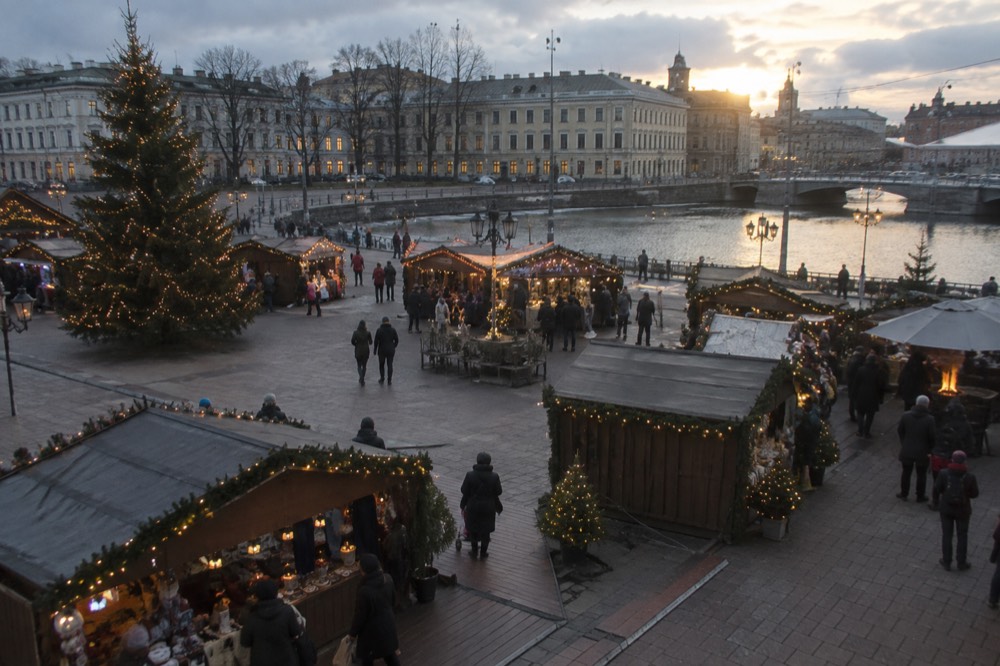
Sweden does Christmas markets the way it does daylight in December: briefly, intensely and with a lot of candles. The season runs roughly from mid-November until a few days before Christmas Eve, which is the real holiday in Sweden, and then it stops. Everything closes. The question of where the best market is therefore has a short answer window and a few serious contenders, and the strongest case this desk can make from the verified facts is for Gothenburg, specifically Jul på Liseberg, with the island market at Marstrand as the west-coast runner-up and Stockholm's Gamla Stan as the eastern rival.
This site covers Gothenburg, so read the argument with that in mind, but the argument is not homemade sentiment. It rests on scale, dates and the price structure published by the venues themselves. Nobody writing here has stood in any of these markets; every figure below comes from the operators' own pages and from the official tourism bodies.
Where Is the Best Christmas Market in Sweden?
The best-supported single answer is Jul på Liseberg in Gothenburg, running 14 November to 23 December 2026, because it is the country's largest Christmas market set inside a working amusement park, reachable by ordinary tram and open late into the evening. Stockholm's Gamla Stan market is the classic alternative, and Marstrand's island market is the most atmospheric small one, but Liseberg's scale and setting are unmatched in Sweden.
Liseberg is not a market with a few rides bolted on. It is one of Scandinavia's biggest amusement parks, with around 2.5 million park guests in 2025 according to Liseberg AB's own annual reporting, and for six weeks each winter it re-skins itself as a Christmas market: millions of lights, a market quarter of wooden stalls, and rides running in the dark. The park's own season page confirms the 2026 Christmas window as 14 November to 23 December. That is the whole season. There is no January market, and anyone planning a trip around New Year will find the gates shut.
The honest comparison is not really "which market has the nicest stalls". It is "which city gives you the best Christmas market day". Gothenburg's answer stacks three things: a tram network that runs from the centre to the park gate, a second set of markets and food halls in walking distance of each other, and an archipelago and coast within the same transit ticket for the days around it. If you want the deeper background on the city itself, start with what Gothenburg is known for.
What Makes Jul På Liseberg the Strongest Contender?
Three verified things set it apart: it is the largest Christmas market in Sweden inside a full amusement park, the 2026 dates run 14 November to 23 December, and entry costs from 95 kr while rides are sold separately, so a family can do the market, the lights and the food without paying for a single ride.
The scale is the first point. Liseberg's own reporting puts the destination at 3.0 million guests in 2025, and the Christmas season is one of its three big seasons alongside summer and Halloween. The market quarter sits inside the park among the rides, which means mulled glögg, grilled sausages and handicraft stalls share space with a rollercoaster skyline lit up against a December dusk that ends at 15:26 on the shortest day. Daylight on 21 December in Gothenburg is 6 hours 32 minutes, sunrise 08:54 to sunset 15:26, per the US Naval Observatory, so an evening market that starts glowing in mid-afternoon is not a luxury. It is the only way you see anything.
The price structure is the second point, and it is the single thing visitors get wrong. Liseberg's ticket page sells entry (Entré) from 95 kr, children under 110 cm free, and that ticket includes zero rides. Rides need a separate Åkpass, from 310 kr, or a combined Entré + Åkpass from 365 kr. For a Christmas market visit, that split works in your favour: adults who want the lights, the stalls and the food pay the entry price and nothing more. Liseberg is not sold on any booking platform, so there is no third-party ticket and no availability check; you buy on liseberg.se or at the gate, and online is cheaper than on-site.
The third point is access. The park sits at the end of the Avenyn boulevard, and trams stop at Liseberg from across the city. A single Västtrafik Zone A ticket, 38 kr at the current fare table, covers the ride. That matters in December, because Gothenburg's wettest month is October at 102.9 mm per SMHI's 1991-2020 normals, and December is not far behind at 93.0 mm: you want the door-to-tram distance short.
Here is how the ticket options stack up, all from Liseberg's own price page:
| Ticket | What it covers | Online from |
|---|---|---|
| Entré | Park entry, market, lights, stalls. Zero rides | 95 kr |
| Entré + Åkpass | Entry plus unlimited rides | 365 kr |
| Åkpass alone | Rides only, entry NOT included | 310 kr |
| Children under 110 cm | Free entry | 0 kr |
Around the park, the city fills out the day. Feskekôrka, the 1874 "fish church" market hall, reopened in 2024 as a food hall with five restaurants alongside its two fish counters, and it is a short walk from the canal. Stora Saluhallen on Kungstorget is the other historic hall. Both run winter opening hours and both are indoor, which in a month with 13 wet days on average is a real consideration. For the food angle in depth, see what food Gothenburg is famous for.
What Other Gothenburg Christmas Markets Are Worth It?
Beyond Liseberg, the strongest Gothenburg-area Christmas market is on Marstrand, the island fortress town an hour from the city, reachable on an organised sailing trip priced at $206 per person with no reviews published yet. In the city itself, the Feskekôrka food hall and Stora Saluhallen carry the seasonal food, and the old quarter of Haga has the classic wooden-house atmosphere.
Marstrand is the west-coast answer to "small and atmospheric". It is a Bohuslän island town built around Carlsten Fortress, and in December its Christmas market draws people out from Gothenburg for the combination of granite, sea air and stalls. There is a dedicated product for exactly this: the Marstrand Christmas Market Sailing Trip, a five-hour round trip from Gothenburg by boat, listed from $206 per person. It is a new listing with no reviews published yet, which is real information rather than a bad sign; read the operator's live listing for what the fare includes before booking.
Closer to the centre, Haga is the neighbourhood that photographs like old Sweden: wooden landshövdingehus houses, cobbled lanes and cafés that sell the giant cinnamon buns the area is known for. There is no single verified "Haga Christmas market" date list this desk can confirm, so treat Haga as atmosphere rather than a scheduled market, and check with the tourism office for any pop-up stalls. The same caution applies to the smaller neighbourhood markets: dates shift year to year, and the two anchor points you can plan around are Liseberg's published window and the food halls' regular hours.
One planning note that keeps a December day honest: Gothenburg's sea temperature in December averages 5.5 C off Vinga, per SMHI's quality-controlled archive, so the archipelago in winter is a wrap-up-warm experience, not a swim. If you are weighing whether the islands are worth it at all in the cold months, this assessment of the Gothenburg archipelago covers the trade-offs.
How Does Gothenburg Compare to Stockholm's Christmas Markets?
Stockholm's Gamla Stan Christmas market is the oldest and most postcard-famous in Sweden, set in the old town's main square, but it is small in footprint and crowded, while Gothenburg's offering is bigger, cheaper to enter and paired with an amusement park. Stockholm wins on historic setting; Gothenburg wins on scale, food and the overall day around the market.
The Gamla Stan market in Stortorget is the one international guidebooks name, and its setting is genuinely unmatched: an old cobbled square, candlelit windows, the Royal Palace a few minutes away. The honest criticism, repeated by Swedish travel writers every year, is that it is compact and that the stalls lean tourist-heavy: glögg, reindeer jerky and knitwear. It is a photo stop more than a full evening. The full index of guides sits on Gothenburg Travel Guide.
Gothenburg's counter-argument is the rest of the day. Within one tram ticket you get Liseberg's lights, two historic food halls, a canal-and-harbour city core laid out by Dutch engineers, and a coast and archipelago that Stockholm's geography cannot offer in the same way. And the city is cheaper to be in generally; the cost comparison is covered in detail in is Gothenburg cheap or expensive.
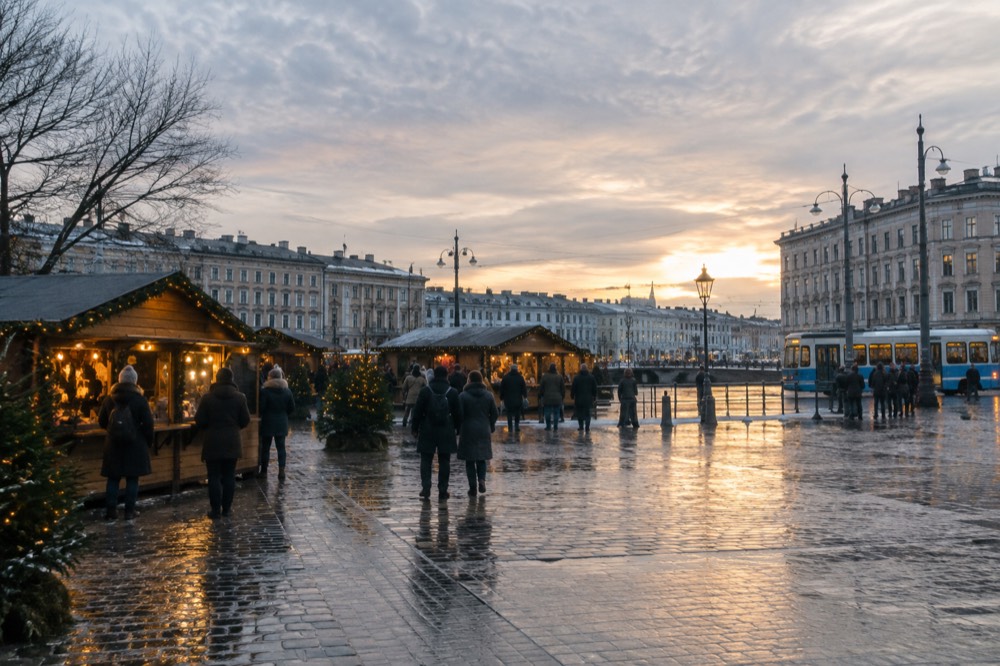
A fair verdict, stated as reporting rather than boosterism: if your trip is Stockholm-centric, Gamla Stan is excellent and you should see it. If you are choosing a city for a Christmas-market weekend, Gothenburg gives you more market per hour and more to do around it. Whether the city works for you as a base at all is covered in is Gothenburg worth visiting for tourists.
When Should You Visit a Swedish Christmas Market?
Visit between mid-November and 22 December, with the sweet spot in early December: Liseberg's Christmas market runs 14 November to 23 December 2026, Swedish Christmas Eve on 24 December ends the season everywhere, and early December combines full market operation with smaller crowds before the school holidays start.
The Swedish calendar is the thing foreign visitors miss. Christmas Eve, not Christmas Day, is the main event in Sweden, and by the afternoon of 24 December the country shuts down for three days. Markets do not run into the week between Christmas and New Year the way German ones do. Liseberg's own calendar confirms it: Christmas season ends 23 December 2026, and the park then stays closed until the summer season opens on 18 April 2027, apart from winter weekend openings for the Kaninlandet children's area.
Weekends are the crowd problem. Early December weekends at Liseberg are busy; weekday evenings are quieter and the lights are the same. One dated fact worth folding into planning: SMHI's normals put December daylight at 6 hours 32 minutes on the solstice, with civil twilight stretching the usable grey light to roughly eight hours, so an afternoon arrival turns into a lit evening market without any effort.
For the broader timing question, including whether December is a good month for the city at all, the best time to visit Gothenburg works through the whole year, and how many days in Gothenburg is enough helps size the trip.
What Should You Eat at a Swedish Christmas Market?
The core Swedish Christmas market menu is glögg (hot spiced mulled wine), grilled sausages, pepparkakor ginger biscuits, and the December smörgåsbord staples: ham, herring and lutfisk. In Gothenburg the seafood layer runs deeper than in Stockholm, because the city sits on the Kattegat and its market halls sell west-coast shrimp, langoustine, salmon and mussels year-round.
Glögg is the drink that defines the market. It is served hot, spiced with cinnamon, clove, cardamom and orange, traditionally with raisins and blanched almonds dropped into the cup, and every stall sells it. Non-alcoholic versions are standard. One Swedish peculiarity worth knowing before you shop for bottles to take home: beer above 3.5% ABV, plus all wine and spirits, is sold only through the state monopoly Systembolaget under Alkohollag (2010:1622), and Systembolaget closes on Sundays. Ordinary supermarkets carry only the weaker folköl.
The food at Liseberg's market leans traditional: grilled sausages, reindeer and elk meats, cheese from Västerbotten, and the sweet stalls selling pepparkakor and knäck toffee. Around the city, Feskekôrka's five restaurants and two fish counters carry the seafood side of the season, and Stora Saluhallen adds the broader deli range. If fika, the Swedish coffee break, is new to you, what fika means in Sweden explains the custom, and the cinnamon buns of Haga are the classic December pairing with glögg.
Common Questions About Christmas Markets in Sweden
Where is the best Christmas market in Sweden?
On the verified numbers, Jul på Liseberg in Gothenburg is the strongest single answer: the country's largest Christmas market, set inside a full amusement park, running 14 November to 23 December 2026 with entry from 95 kr. Stockholm's Gamla Stan market is the historic alternative and Marstrand is the best small one.
When do Swedish Christmas markets open?
Most open in mid-November. Liseberg's Christmas season runs 14 November to 23 December 2026 per liseberg.se. The season ends everywhere by Christmas Eve on 24 December, which is the main holiday in Sweden.
Is the Liseberg Christmas market included in the entry ticket?
Yes, the market, the lights and the stalls are inside the park entry, which starts at 95 kr online. What entry does not include is rides: those need a separate Åkpass from 310 kr or a combined ticket from 365 kr. Liseberg sells nothing through booking platforms, so buy on its own site.
Is Gothenburg good at Christmas?
The city stacks a large park-based market, two historic food halls including the reopened Feskekôrka, a compact walkable core and an archipelago within one transit ticket. December is wet, 93.0 mm on SMHI's normals, so pack for rain and short days.
Does Sweden have Christmas markets after Christmas Day?
Essentially no. Christmas Eve is the main celebration and the country closes down for several days around it. Liseberg's Christmas season ends 23 December and the park reopens for summer on 18 April 2027. Plan a Swedish market trip before 24 December.
What is glögg?
Swedish mulled wine, spiced and served hot with raisins and almonds, and the standard drink at every Swedish Christmas market. Non-alcoholic versions are common. Anything above 3.5% ABV in Sweden is sold only through the Systembolaget monopoly, per Alkohollag (2010:1622), though market stalls serve glögg under their own event permits.
The verdict, stated plainly one last time: Sweden's best Christmas market is in Gothenburg, and the best small one is a boat ride away at Marstrand. Book the window between mid-November and 23 December, buy Liseberg entry online where it is cheaper, and let the trams handle the rest.