Which Is Better to Visit, Stockholm or Gothenburg?
Stockholm or Gothenburg: an honest comparison of size, cost, sights, food, archipelagos and transport, with current facts for both Swedish cities.
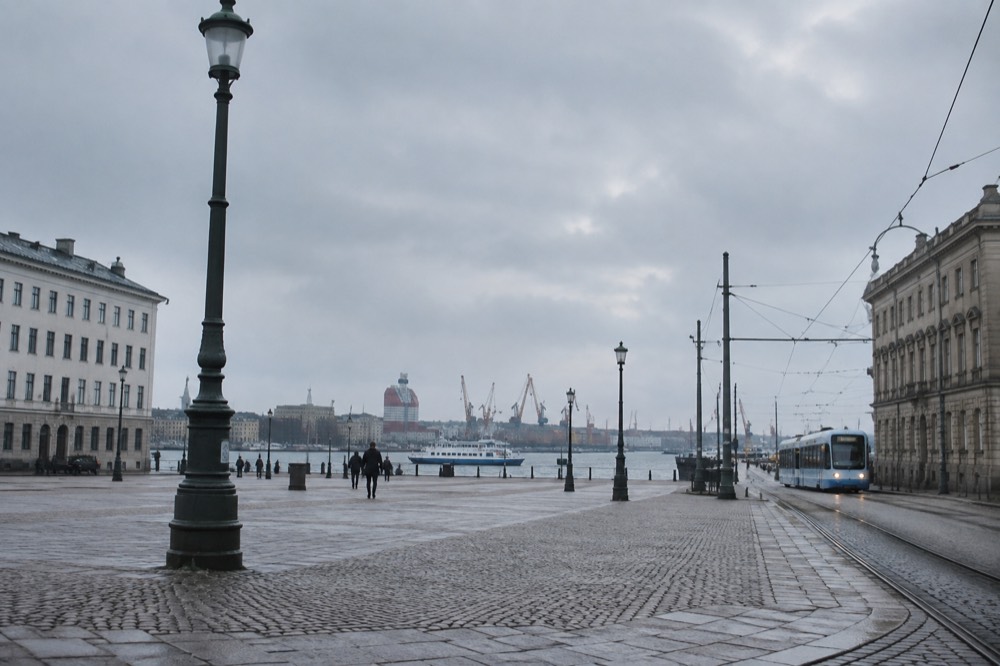
Sweden's two largest cities are an hour apart by plane and about three hours apart by train, and they could hardly feel more different. Stockholm is the capital: fourteen islands, a royal palace, two million people in the metro area and prices to match. Gothenburg is the second city, 613,274 residents at the end of 2025 per Göteborgs Stad's own figures, built by Dutch engineers inside a moat at the mouth of the Göta älv and still shaped by shipyard cranes and granite. Neither is "better" in the abstract. Which one wins depends on what you are buying a ticket for, and this comparison works through the categories travellers actually decide on: scale, sights, cost, food, water, weather and transport. It is written from the Gothenburg side of the fence, by a desk that reports facts rather than opinions dressed up as trips.
Which Is Better to Visit, Stockholm or Gothenburg?
Gothenburg is better for a shorter, cheaper, sea-facing city break with a car-free archipelago reachable on an ordinary tram ticket, while Stockholm is better for first-time visitors who want national museums, royal architecture and the biggest sightseeing list in the country. Gothenburg wins on cost, food culture per krona and ease; Stockholm wins on sheer volume of famous sights. Two or three days suit Gothenburg, four or five suit Stockholm.
That is the short version. The rest of this page is the long version, and it sticks to numbers that can be checked: Göteborgs Stad's population figures, Västtrafik's fare tables, SMHI's climate normals and Liseberg's own published calendar. Where something is genuinely a matter of taste, it says so.
Start with scale, because scale drives everything else. Stockholm's urban region is around two million people; Gothenburg's city proper is 613,274, up from 608,993 a year earlier, and its wider region is roughly 1.1 million according to city planning documents. Stockholm is roughly three times the size. That shows up in the museum count, the hotel count and the queue at every famous viewpoint. It also shows up in the price of the hotel.
Gothenburg had over six million commercial guest nights in 2025, a record, with international guest nights up about 15 percent in the January-to-October period, according to Göteborg & Co's January 2026 press release. All of the city's priority markets, Norway, Denmark, Germany, the UK and the US, grew. The city is having a moment. Stockholm has been having its moment for three centuries, and it shows no sign of stopping.
There is also a temperamental difference that no statistic quite captures. Stockholm presents itself: broad water vistas, palace facades, museums built for state occasions. Gothenburg gets on with things: trams grinding past wooden landshövdingehus houses, ferries loading commuters and tourists at the same pontoon, fish counters doing brisk trade at nine in the morning. Visitors who like cities that feel like they would exist whether tourists came or not tend to prefer the western one. Visitors who want a city staged around its own history prefer the capital.
Is Gothenburg Cheaper Than Stockholm?
Yes, on most travel costs Gothenburg is cheaper than Stockholm, typically by a noticeable margin on accommodation and restaurant prices, though the gap narrows on transport and attractions because both cities use similar national price levels. No published index compares the two precisely, so treat this as a consistent pattern in listed prices rather than a fixed percentage.
The honest answer is that Sweden is expensive everywhere, and the difference between its two biggest cities is one of degree. What can be stated with figures is the Gothenburg side, because those numbers are verified. A single Västtrafik tram ticket in one zone costs 38 kr, a 24-hour Zone A ticket costs 125 kr, and that same 125 kr ticket covers the tram to Saltholmen and the archipelago ferries out to Styrsö, Brännö and Vrångö, because the islands sit inside Zone A, as Västtrafik's own ticket page confirms. A day of transport plus a boat trip across open sea for the price of a sandwich and a coffee in Stockholm is Gothenburg's single best value fact.
On attractions, Liseberg's entry ticket starts at 95 kr online, though the listing is explicit that entry buys zero rides; the combined entry and ride pass starts at 365 kr. Göteborgs konstmuseum charges 75 kr for a day ticket and is free for anyone under 20. Universeum prices dynamically, so there is no fixed adult price to quote, only the rule that on-site costs the online price plus 30 kr. None of these are capital-city prices.
One thing worth knowing before you budget either city: a temporary state subsidy currently halves Västtrafik's 30-day period tickets, dropping the Zone A adult monthly from 890 kr to 445 kr. But that subsidy does not apply to the 24-hour and 72-hour tickets a visitor actually buys, so do not read a headline about half-price transport and plan around it. The day ticket remains 125 kr.
Alcohol is priced identically across the country, because the state monopoly sets it. Anything above 3.5 percent ABV is sold only by Systembolaget under Alkohollag (2010:1622), and that is as true on Kungsgatan in Stockholm as on Avenyn in Gothenburg. If your budget question is "how much is a pint", the answer is governed by national rules, not by which city you are in.
If cost is the deciding factor, Gothenburg is the safer pick. For a fuller breakdown of the western city's costs, see is Gothenburg cheap or expensive, and for what the city is actually famous for, start with what Gothenburg is known for.
Which City Has Better Sights, Stockholm or Gothenburg?
Stockholm has more world-famous sights: the Vasa Museum, the Royal Palace, Gamla Stan and Skansen are national icons, and no Gothenburg attraction matches their international pull. Gothenburg's strongest sights are Liseberg, Universeum, the Haga old quarter and the archipelago, which are excellent but regional in fame. If you want postcards your relatives will recognise, Stockholm wins. If you want fewer queues, Gothenburg does.
Liseberg deserves a specific mention because it is genuinely a national-scale attraction: about 2.5 million guests visited the park itself in 2025, around 3 million counting the whole Liseberg destination, per Liseberg AB's annual report. It is Scandinavia's most-visited amusement park and it sits in the middle of the city, a tram ride from anywhere. But note its irregular calendar: in 2026 the summer season runs 18 April to 20 September, Halloween 2 October to 1 November, and the Christmas market 14 November to 23 December, with the park shut in the gaps, including from Christmas Eve until mid-April. Arrive in February and the biggest attraction in the city is closed. The old Volvo Museum at Arendal closed permanently in December 2023 and only World of Volvo, which opened in 2024, exists now, so ignore any guide that still lists the Arendal address.
Gothenburg's museum scene is solid but not capital-grade. Göteborgs konstmuseum holds about 70,000 works and draws roughly a quarter of a million visitors a year, with the Hasselblad Center included in the 75 kr ticket, and the museum is scheduled to close in 2028 for a rebuild and reopen in 2032, per its own site. There is even intermittent blasting near the building right now, which the museum flags for sensitive visitors. Stockholm's Nationalmuseum and Moderna Museet operate at a different scale entirely, and no amount of west-coast charm changes that.
The honest framing: Stockholm is the sightseeing city, Gothenburg is the living-in-a-city city. The capital's sights are destinations in themselves; Gothenburg's rewards are distributed across neighbourhoods, viewpoints and water rather than concentrated into a single must-see quarter. For what a first-timer should actually prioritise on the western side, what is a must-see in Gothenburg covers the short list.
Which City Has the Better Archipelago?
Gothenburg's southern archipelago is easier and cheaper to reach, because the ferries from Saltholmen are part of the ordinary Västtrafik network and the car-free islands are inside Zone A, so a 125 kr day ticket covers tram and boat. Stockholm's archipelago is far larger, with dozens of islands, but its boats charge separate fares that cost more than a Västtrafik ticket.
This is Gothenburg's clearest win, and it is a fact of geography and administration rather than marketing. The southern archipelago islands, Styrsö, Brännö, Vrångö, Donsö, Asperö and Köpstadsö, are areas of the city of Gothenburg, not day trips. Västtrafik's own materials say you can ride the same ticket all the way from the centre out onto the sea, and the islands are car-free by municipal decision, per a Göteborgs Stad study: only taxis, transport services and emergency vehicles use the island roads. You ride a tram to the western terminus at Saltholmen and step onto a ferry. Some islands have small villages and bakeries, others are little more than grazing land, rocky shores and a jetty, and all of it is inside the same fare zone as the city centre.
Stockholm's archipelago is bigger and wilder, stretching across a vast stretch of the Baltic with islands like Sandhamn, Grinda and Utö, and it is beautiful. But each boat is a separate ticket, and a round trip to a mid-distance island costs real money for a family. Gothenburg gives you a genuine sea crossing for the price of a bus fare, and you can hop between islands all day on the same ticket.
The water temperature surprises people either way. SMHI's quality-controlled observations at the Vinga lighthouse station show the sea around Gothenburg peaks in August at 18.6 C, not July, and September water, 16.7 C, is warmer than June water, 16.2 C. February is the coldest month at 2.7 C, with a record low of -1.2 C, legitimately below zero because brackish Kattegat water does not freeze at 0. If swimming off a car-free island is part of the plan, late summer is the window, and is it worth visiting the Gothenburg archipelago works through the details.
Which City Has Better Food, Stockholm or Gothenburg?
Stockholm has more Michelin stars and the country's densest fine-dining scene, but Gothenburg is the stronger food city for most visitors: it sits at the mouth of the Göta älv on the Kattegat, its seafood tradition is the best in Sweden, and its casual eating, from shrimp sandwiches to food halls like the reopened Feskekôrka, costs less than the capital's. Fine dining: Stockholm. Everything you actually eat on a trip: Gothenburg.
Feskekôrka, the fish-church-shaped market hall, reopened in 2024 after renovation as a food hall with two fish counters and five restaurants, per the property owner Higab, so any guide describing it as closed is years out of date. The building turned 150 the same year it reopened, which gives a sense of how long this trade has run. The city's seafood reputation is not a cliche; it is a harbour town with a working fish trade, and the shrimp sandwich is treated as a civic institution rather than a menu item.
Stockholm counters with a deeper bench of starred restaurants and a more international scene, and if a once-a-year tasting menu is the purpose of the trip, the capital is the right answer. But for the meals in between, the harbour town punches above its size.
One national rule levels the drinking field: above 3.5 percent ABV, only Systembolaget sells it, everywhere in Sweden, and supermarket beer above that threshold simply does not exist. The shelf version of a brand is often a 3.5 percent reformulation of the same beer, which is why Swedish supermarket beer can taste weaker than its label suggests. That is identical in both cities. For the ritual that structures every Swedish afternoon, what does fika mean in Sweden explains the coffee-and-cake custom both cities observe with equal seriousness.
Is the Weather Different Between Stockholm and Gothenburg?
Yes, but less than the reputations suggest. Gothenburg has a maritime west-coast climate with 912 mm of rain a year spread over about 127 wet days, wettest in October, while Stockholm sits on the east coast and is generally drier and slightly more continental, with colder winters and warmer summer spells. SMHI's 1991-2020 normals put Gothenburg's annual mean air temperature at 8.9 C.
The number worth repeating: SMHI's data does not support the claim that Gothenburg is Sweden's rainiest city. The national precipitation maxima are in the western highlands and the mountains, and Gothenburg's 912 mm sits inside the wet western Götaland band, nothing more. October is the wettest month at 102.9 mm and April the driest at 51.3 mm, so the rain arrives after the tourists leave, and spring, not summer, is the dry window.
Daylight is broadly similar at both cities' latitudes; Gothenburg gets 6 hours 32 minutes of daylight on 21 December and 18 hours 06 minutes on 21 June, per US Naval Observatory data, a swing of 11 hours 34 minutes between the solstices. In June the sky never properly darkens, with only about three and a half hours of true night. The real weather difference is the sea: Gothenburg's water is swimmable in late summer, and it is reachable by tram, which changes what the weather is for.
How Many Days Do You Need in Each City?
Gothenburg is comfortably done in two or three days: the city centre is compact, Haga and the canal take a morning, Liseberg a day, and the archipelago a second day, all on one transport zone. Stockholm needs four or five days to cover Gamla Stan, Djurgården's museums, Södermalm and one archipelago island without rushing. Gothenburg rewards a weekend; Stockholm rewards a week.
The comparison table below pulls the categories together.
| Category | Stockholm | Gothenburg |
|---|---|---|
| Metro population | about 2 million | about 1.1 million |
| Best for | national museums, royal sights | harbour atmosphere, seafood, car-free islands |
| Archipelago access | separate boat fares | ordinary tram-and-ferry ticket, Zone A |
| Headline attraction | Vasa Museum | Liseberg (about 2.5 m park guests in 2025) |
| Cost level | Sweden's most expensive | cheaper, same national price rules |
| Days needed | 4-5 | 2-3 |
| Weather character | drier east coast, more continental | maritime, 912 mm rain, 127 wet days |
For the western city's pacing, how many days in Gothenburg is enough answers the question directly. The short answer is that two days covers the centre and Haga, three adds the archipelago properly, and a fourth is only needed if Liseberg is in season and you want a full day there. Stockholm's sight list, by contrast, starts at three days and keeps going.
Should You Visit Both, and How Do You Travel Between Them?
Yes, most travellers with five or more days should visit both, and the train is the best link: the Stockholm-Gothenburg line is Sweden's busiest rail route, roughly three hours each way on the mainline, with high-speed options covered in detail on this site. Doing both gives you the capital's sights and the west coast's sea in one trip, and the contrast is the point.
The train ride between the two is its own question, and this site covers it separately: is the Gothenburg to Stockholm train scenic. The short version is that the mainline is fast and flat, not a fjord route, so treat it as transport rather than an excursion. Flying is an option too, but once airport time is counted the train is usually the calmer choice, and it lands you at Göteborg Centralstation in the middle of the city.
If you must pick only one: pick Stockholm if it is your first and possibly only trip to Sweden and you want the famous postcards. Pick Gothenburg if you have been to a European capital or two, you care about food and sea air more than palaces, or you are travelling with a budget that flinches at capital prices. The two cities are not rivals so much as complements, and the travellers who enjoy both most are the ones who arrive expecting different things from each. For everything the western city offers in one place, Gothenburg Travel Guide keeps the full picture.
Common Questions About Stockholm or Gothenburg
Which is better to visit, Stockholm or Gothenburg?
Stockholm for famous sights and first-time visitors; Gothenburg for lower costs, seafood, and a car-free archipelago reachable on an ordinary tram-and-ferry ticket. Gothenburg suits two or three days, Stockholm four or five.
Is Gothenburg cheaper than Stockholm?
Generally yes, especially on hotels and restaurants. Transport and alcohol prices follow national rules in both cities, so the gap is smaller there. Gothenburg's 125 kr 24-hour ticket even covers the archipelago ferries.
Is Gothenburg smaller than Stockholm?
Much smaller. Gothenburg's city population was 613,274 at the end of 2025 per Göteborgs Stad, with a region of roughly 1.1 million, against a Stockholm metro of around two million.
Which city has better food?
Stockholm has more Michelin-starred restaurants. Gothenburg has the stronger seafood tradition and cheaper everyday eating, anchored by the harbour and the reopened Feskekôrka food hall.
Is Gothenburg rainier than Stockholm?
Gothenburg gets 912 mm of rain a year over about 127 wet days, per SMHI's 1991-2020 normals, which is wetter than Stockholm's east coast. But Gothenburg is not Sweden's rainiest city; SMHI's national maxima are in the western highlands and mountains.
Can you visit both cities in one trip?
Yes. The train between them takes roughly three hours on the mainline, so five to seven days comfortably covers both, with the contrast between capital and harbour town as the reward.