Gothenburg or Oslo: Which Nordic City Should You Visit?
Gothenburg and Oslo sit 300-odd kilometres apart on the same Scandinavian coastline, and travellers with time for only one keep asking which to pick. The honest answer depends on what you are buying: Oslo is a capital with fjord day trips and capital prices, Gothenburg is a compact maritime city where a 125 kr day ticket covers trams and car-free islands.
Short answer
Choose Oslo for fjord scenery, national museums and capital-city scale. Choose Gothenburg for lower costs, a car-free archipelago inside the city's own transit zone, a working tram network and a more walkable centre. The two are close enough that a combined trip is realistic.
Gothenburg and Oslo are the two cities travellers most often hold up against each other on a Scandinavian itinerary, and the comparison is fairer than most: both are west-coast, both are port towns at heart, and both sit within a few hours of open water. The differences are in the price tag, the scale, and what "the water" means in each place. In Oslo the water leads to a fjord. In Gothenburg it leads to a car-free archipelago that is legally part of the city, reachable on an ordinary tram ticket.
This comparison comes from Gothenburg's side of the fence, and it is written by an editorial desk that reports rather than remembers. Every Gothenburg figure below is sourced from the venue, the transport authority or the weather institute that publishes it, and where something cannot be confirmed, it says so. Oslo is described in qualitative terms precisely because this site's verified facts pack covers Gothenburg, and an honest comparison beats a confident invented one.
Gothenburg or Oslo: Which Should You Visit?
Choose Oslo if you want fjord scenery, national-museum weight and the energy of a capital, and choose Gothenburg if you want lower prices, a compact walkable centre, a working tram network and a car-free island archipelago that is inside the city's own transit zone. Oslo is the bigger, more expensive stage. Gothenburg is the cheaper, more manageable one, and the sea is woven into the city rather than sitting at the end of a fjord cruise.
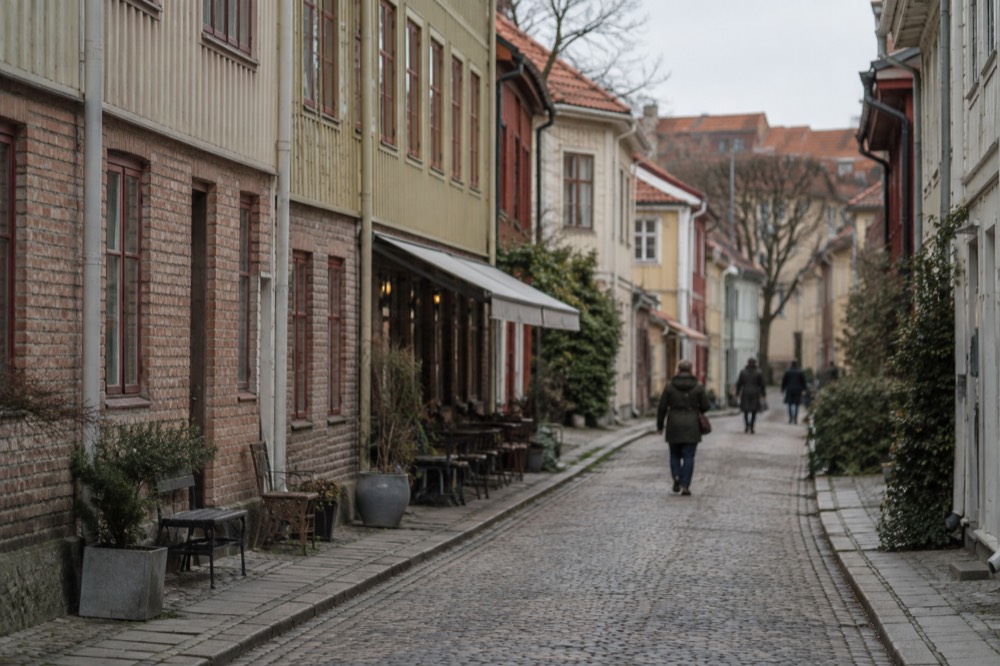
The two cities are not interchangeable, and the mistake travellers make is treating the choice as a coin flip. Oslo is a national capital with the institutions that implies: the Munch collection, the Viking Ship Museum complex, the opera house you can walk on. Gothenburg is Sweden's second city, population 613,274 at the end of 2025 according to Göteborgs Stad's own population report, and its character is maritime and local rather than monumental. Shipyard cranes, granite, red brick and painted wooden houses define it.
There is a third option that deserves stating early: the cities are close enough, roughly half a day apart by train or coach, that a two-centre trip is entirely practical. Many travellers fly into one and out of the other. If that appeals, our Gothenburg for first-time visitors primer covers the Swedish half of the route.
How Do Gothenburg and Oslo Compare on Price?
Norway is the more expensive country, full stop, and Oslo sits at the top of it, so Gothenburg is the cheaper city for hotels, food, drink and transport by a clear margin. A Gothenburg 24-hour transit ticket costs 125 kr and covers trams, buses and the archipelago ferries, while a single tram ride is 38 kr. Comparable Oslo purchases cost more, and the gap compounds across a week.
The currency difference is the structural fact. Sweden uses the krona at a favourable level for most visitors; Norway's krone buys more locally and the price tags are set higher to match. Alcohol is the clearest example of the gap. In Sweden, beer at or below 3.5% ABV is sold in ordinary supermarkets under Alkohollag (2010:1622), while anything stronger, plus all wine and spirits, is sold only through the Systembolaget monopoly. Norway's monopoly, Vinmonopolet, works the same way, but the shelf prices are higher.
What the price gap actually buys in each city is worth a table:
| Category | Gothenburg | Oslo |
|---|---|---|
| Overall cost level | Lower of the two | Norway's capital pricing, among the highest in Europe |
| Transit day ticket | 125 kr for 24 hours, Zone A, ferries included | Higher, and the fjord boats are separate products |
| Theme park | Liseberg entry from 95 kr, rides sold separately | No comparable city amusement park |
| Alcohol | Supermarket folköl to 3.5%, Systembolaget above | Vinmonopolet only, higher prices |
| Museums | Many free or cheap; art museum 75 kr | National-museum pricing, higher |
| Seafood | West coast supply, Feskekôrka food hall | Fjord and North Sea supply, pricier plates |
The Gothenburg transit numbers come straight from Västtrafik's own fare pages, and the Liseberg entry price from Liseberg's ticket page, which states the from-prices and the entry-and-rides split explicitly. Neither figure is an estimate.
For a fuller budget breakdown of the Swedish side, is Gothenburg expensive: what a trip really costs goes line by line through what a realistic week costs, and it is honest about the expensive parts. The short version: Gothenburg is not cheap, it is just cheaper than Oslo.
What Is Each City Actually Like on the Ground?
Gothenburg is compact, low-rise and organised around trams and canals, with a 12-line network and 188 km of single track, while Oslo is bigger, hillier, more vertical and more spread out, with a metro tunnelled under the city and a capital's worth of districts. Gothenburg's core is walkable end to end; Oslo rewards a transit pass.
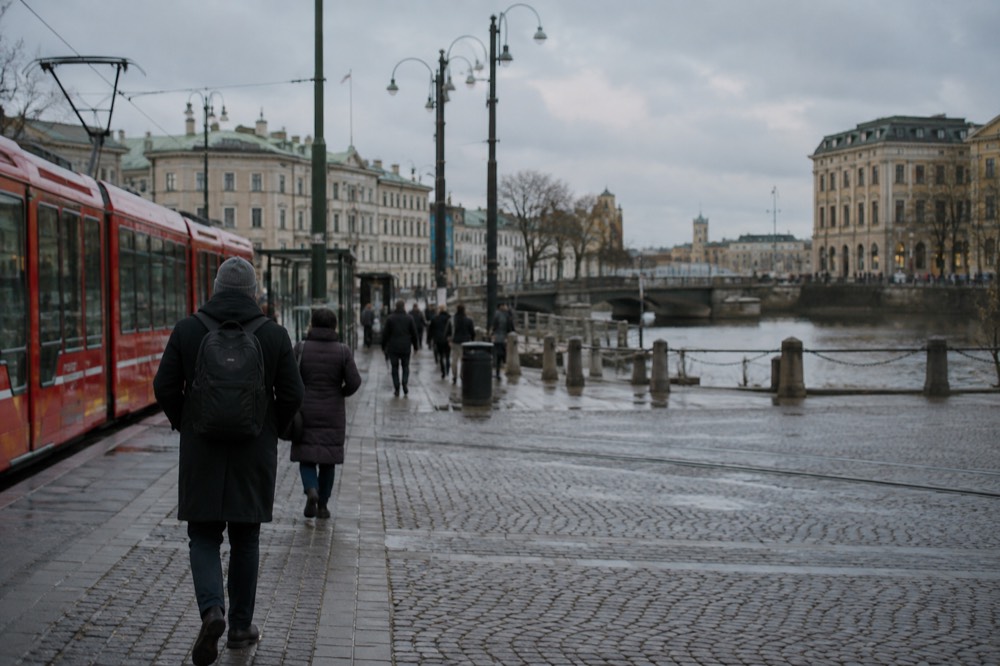
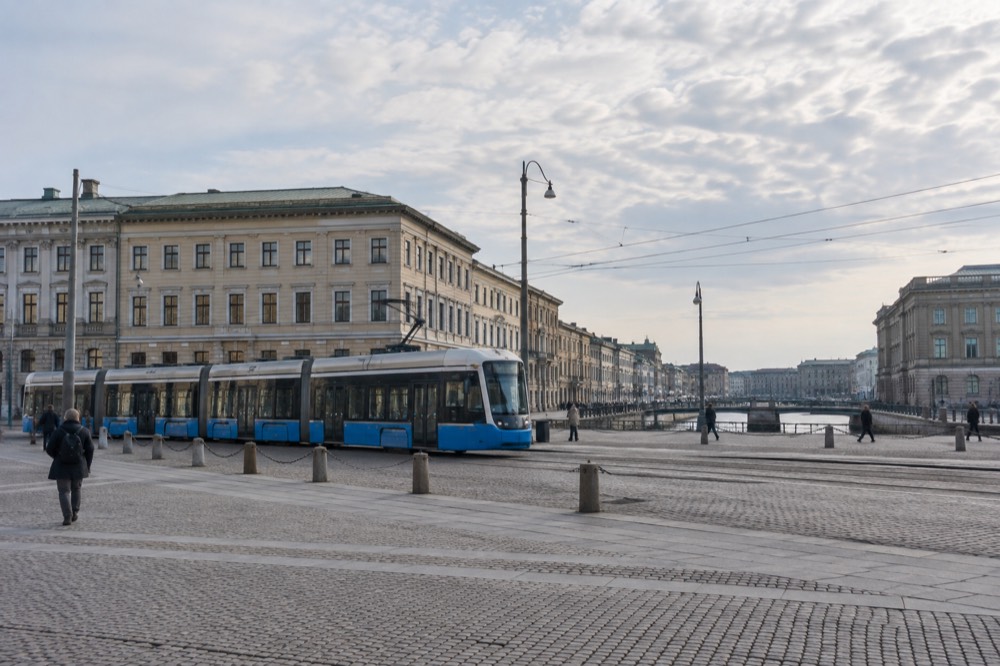
Gothenburg's old town was laid out inside a moat by Dutch engineers in the seventeenth century, and the city still reads from the water: the Göta älv runs through it, canals ring the original centre, and the southern archipelago is administratively part of the city. Göteborgs Spårvägar's own annual report describes 12 tram lines serving 134 stops across 188 km of single track, from Mölndal in the south to Angered in the north and Saltholmen in the west, which is the ferry terminal. The tram is the backbone, and it carried 126 million journeys in 2025, per Göteborgs Spårvägar's own figures.
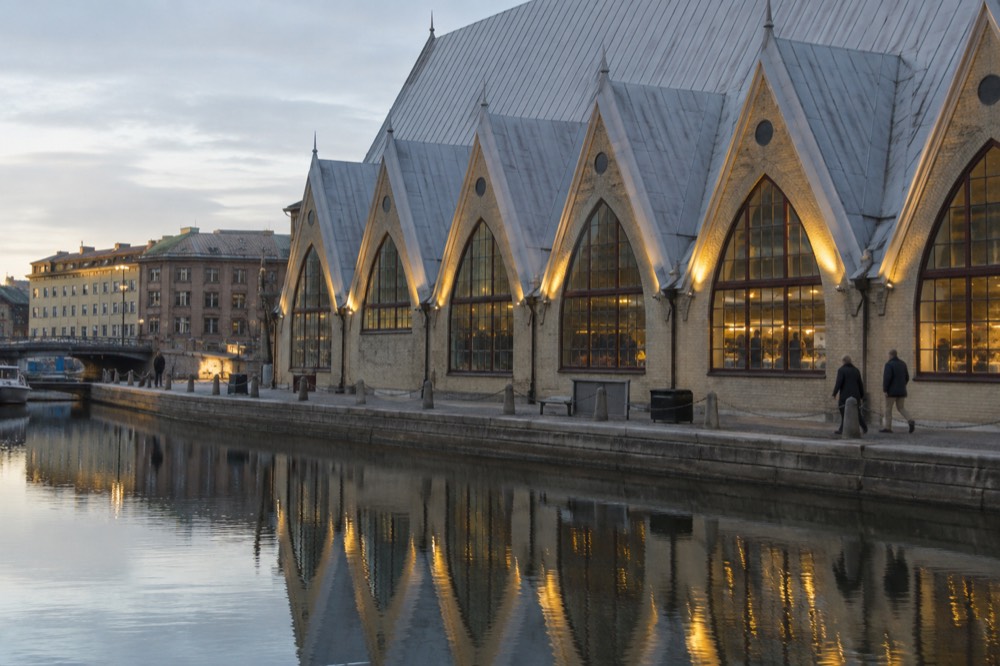
Oslo's centre is also on the water, and the rebuilt harbour front around the opera house is genuinely impressive, but the city climbs quickly into hills and spreads across a much larger footprint. The feel is more capital-in-progress: construction, national institutions, money. Gothenburg's feel is more workshop-by-the-sea: Haga's wooden houses, the second-hand quarter of Majorna, the fish-church food hall of Feskekôrka, which reopened in 2024 as a food hall with five restaurants rather than only fish counters, according to Higab, the municipal property owner.
Here is how the two cities stack up on the basics a planner actually checks:
| Basic | Gothenburg | Oslo |
|---|---|---|
| Status | Sweden's second city | Norway's capital |
| Population (city) | 613,274 (end of 2025, Göteborgs Stad) | Larger, and a larger metro spread |
| Core walkability | Compact, canals and grid, walkable end to end | Bigger footprint, hills, more transit needed |
| Backbone transit | 12 tram lines, 134 stops, 188 km single track | Metro, tram and ferry network |
| Character | Maritime, working harbour, wooden quarters | Capital, national institutions, fjord |
| Waterfront | Göta älv, canals, archipelago ferries | Opera house, Akerselva mouth, Oslofjord |
For the practical mechanics of getting around the Swedish city, getting around Gothenburg: trams, tickets and zones covers fares, zones and the ferry connection in detail.
The amphibious bus tour is a good shorthand test for which city suits you: it drives through Gothenburg's streets and then drives into the harbour for the water half of the route. The listing shows a 4.7 rating from 4,326 reviews over one hour, from $36 per person. If that mix of street and sea sounds like your kind of city, Gothenburg is your answer.
Which City Is Better for Water, Islands and Nature?
Oslo wins on fjord drama, because a proper fjord sits on its doorstep, but Gothenburg wins on access: its southern archipelago islands, including Styrsö, Brännö, Vrångö and Donsö, are areas of the city itself, cars are banned on them by municipal decision, and an ordinary Västtrafik Zone A ticket covers both the tram to Saltholmen and the ferry out. Nothing in Oslo matches that for simplicity or value.
This is the sharpest difference between the two cities and the one most travellers underestimate. In Oslo, the water is a fjord you cruise or sail into, and the islands in the Oslofjord are reachable by ferry but are not part of a single integrated city ticket in the same way. In Gothenburg, Västtrafik's own zone map shows the archipelago boats as part of the network, and the islands sit inside Zone A, the same zone as the city centre. A 24-hour ticket at 125 kr covers tram, ferry and every island in one purchase.
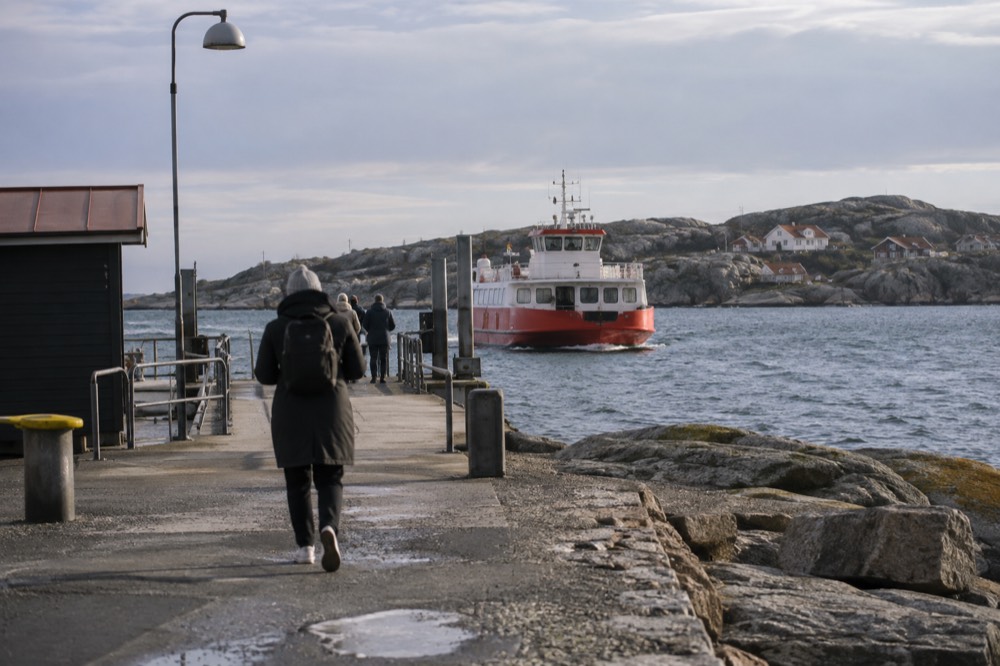
Göteborgs Stad's own study states the car ban plainly: the islands of the southern archipelago are protected from car traffic, with exceptions only for taxi, transport service and emergency vehicles. So the islands are quiet by law, not by luck. Our guide to the Gothenburg archipelago covers how the ferry system works, and which archipelago island you should visit helps you pick between them.
There is also a swimming angle most visitors get wrong. SMHI's oceanographic archive from the Vinga lighthouse station shows the sea temperature peaks in August at 18.6 C, not July, and September water, at 16.7 C, is warmer than June water at 16.2 C. So a September dip off Vrångö is warmer than a June one. Oslofjord water follows a similar northern pattern, but Gothenburg's Kattegat position and the easy ferry access make the swim far easier to actually take.
The month-by-month sea picture from SMHI's Vinga station archive is worth seeing in full, because it reshapes when you should plan an island day:
| Month | Mean sea temp off Gothenburg, C | What it means for swimming |
|---|---|---|
| January | 3.9 | Cold-water swimmers only |
| February | 2.7 | Coldest month of the year |
| March | 4.1 | Still winter water |
| April | 7.1 | Bracing |
| May | 11.6 | Short swims for the hardy |
| June | 16.2 | Swimmable, but not the warm window |
| July | 18.3 | Warm, and the air is warmer still |
| August | 18.6 | The peak, the warmest sea of the year |
| September | 16.7 | Warmer than June, the insider's month |
| October | 12.8 | The season closes |
| November | 9.3 | Cold |
| December | 5.5 | Winter again |
How Do You Get Between Gothenburg and Oslo?
There is no airport-style hassle between the two cities: the direct train between Gothenburg Centralstation and Oslo takes roughly four hours through Bohuslän's coast and inland forests, and coaches run the same corridor, often cheaper. Flying is possible but rarely worth it for this short hop, and the train route itself is one of the more scenic cross-border rides in Scandinavia.
The train is the standard answer and the one most regular travellers use. It runs from Göteborg Centralstation to Oslo S, crossing at Kornsjø, and the journey is comfortable enough that the corridor doubles as a scenic ride for its own sake. Booking in advance matters in Sweden: seat reservations and advance fares behave differently from walk-up tickets, and our guide to Gothenburg to Stockholm by train explains the Swedish booking mechanics, which apply on the Oslo route too.
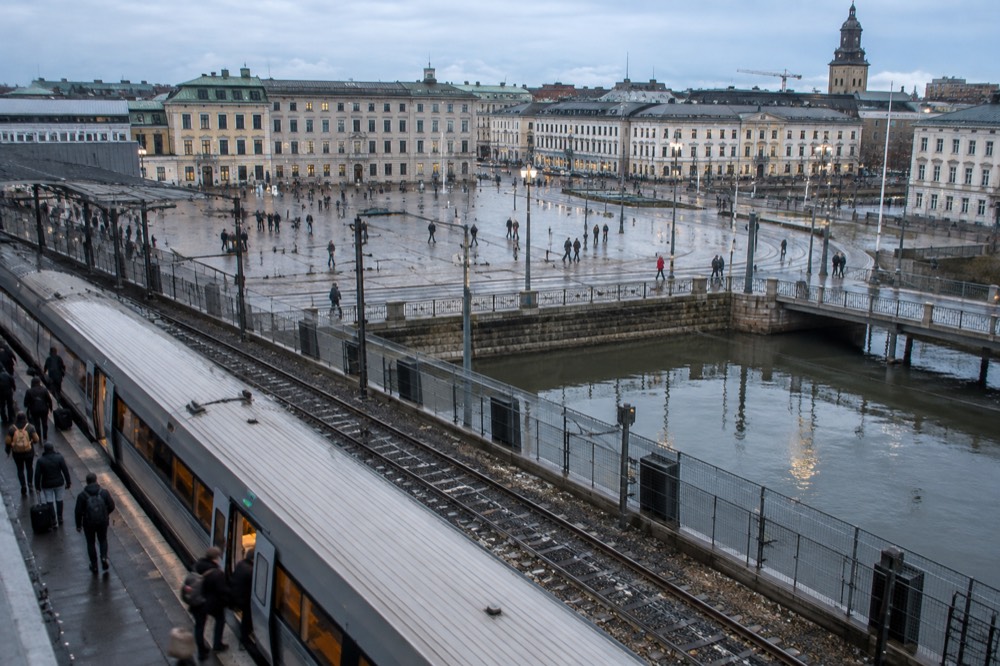
One planning note on the Swedish end: if your trip starts at the airport, there is no rail link to Göteborg Landvetter at all. Swedavia's own transport pages list only coach and bus, and the airport coach is branded Vy flygbussarna, running Landvetter to Korsvägen to Göteborg C in 20 minutes. Gothenburg Landvetter airport to the city centre covers the transfer options in full.
Which City Is Better for Food, Museums and Families?
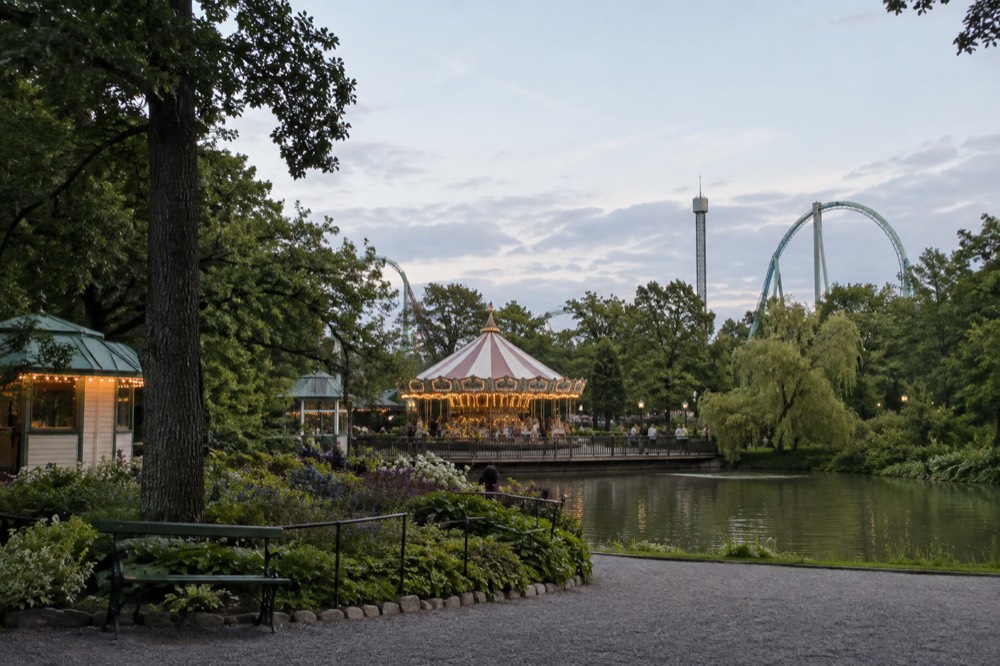
Gothenburg wins on seafood and casual eating, with a west-coast supply chain and a food-hall culture anchored by Feskekôrka, while Oslo wins on museum weight, since it holds national collections. For families, Gothenburg is the safer pick: Liseberg, Universeum and the free zoo in Slottsskogen sit inside one compact city, and the pricing is gentler on a family budget.
The food case for Gothenburg is the west coast itself. Shrimp sandwiches, oyster safaris and the fish-church food hall are the local staples, and the city has a Michelin-starred scene that punches above its size. Feskekôrka, the fish church, reopened in 2024 after renovation as a food hall with two fish counters and five restaurants, according to its own listing, which makes it a meal destination rather than just a market. Our where to eat in Gothenburg and Feskekôrka guides cover the ground.
The museum case for Oslo is simple: it is the capital, and the national collections live there. Gothenburg's museums are good rather than national, with one important caveat: Göteborgs konstmuseum, which holds around 70,000 works and draws roughly a quarter of a million visitors a year, closes in 2028 for a rebuild and reopens in 2032, per its own renovation page. If art is your reason to travel, either go before 2028 or factor the closure into the comparison. The Gothenburg museums guide lists what else stands.
The family case is lopsided. Liseberg, Scandinavia's biggest amusement park, runs summer, Halloween and Christmas seasons in 2026, with entry from 95 kr and rides sold separately, a split its own ticket page is explicit about. Universeum, the science centre, is open every day of the year from 10:00 to 18:00 with dynamically priced timed entry. Slottsskogen's zoo is free. Gothenburg with kids ties it together.
Here is the family scoreboard, with the Gothenburg figures sourced from each venue's own pages:
| Family draw | Gothenburg | The detail that matters |
|---|---|---|
| Liseberg | Summer 18 Apr to 20 Sep 2026, Halloween 2 Oct to 1 Nov, Christmas 14 Nov to 23 Dec | Entry from 95 kr buys zero rides; a combined entry and ride pass starts at 365 kr online |
| Universeum | Open every day of the year, 10:00 to 18:00 | Dynamically priced timed entry, no fixed adult price; on-site costs online plus 30 kr |
| Slottsskogen zoo | Free, in a large central park | The free option Oslo cannot match |
| Archipelago ferries | Included in a 125 kr Zone A day ticket | Car-free islands, sandy swims, tram to the boat |
| World of Volvo | Exhibition tickets from 120 SEK online | The old Volvo Museum at Arendal closed permanently in December 2023 |
Which City Should You Choose for Your Trip?
Pick Oslo for fjord scenery, national museums and a capital's scale, and pick Gothenburg for price, compactness, the archipelago, the tram network and the food. If your trip is short, one city is enough, and Gothenburg's smaller footprint means less time in transit. If your trip is a week or more, take both, because the four-hour train between them turns the choice into a route.
The decision usually comes down to what kind of traveller you are. If you measure trips by scenery you cannot see anywhere else, the fjord wins and Oslo is the base. If you measure trips by how easily the city lets you live in it, by trams that work, islands you can swim off, food halls you can afford, Gothenburg wins, and the 6 million guest nights it logged in 2025 suggest a lot of travellers have worked this out.
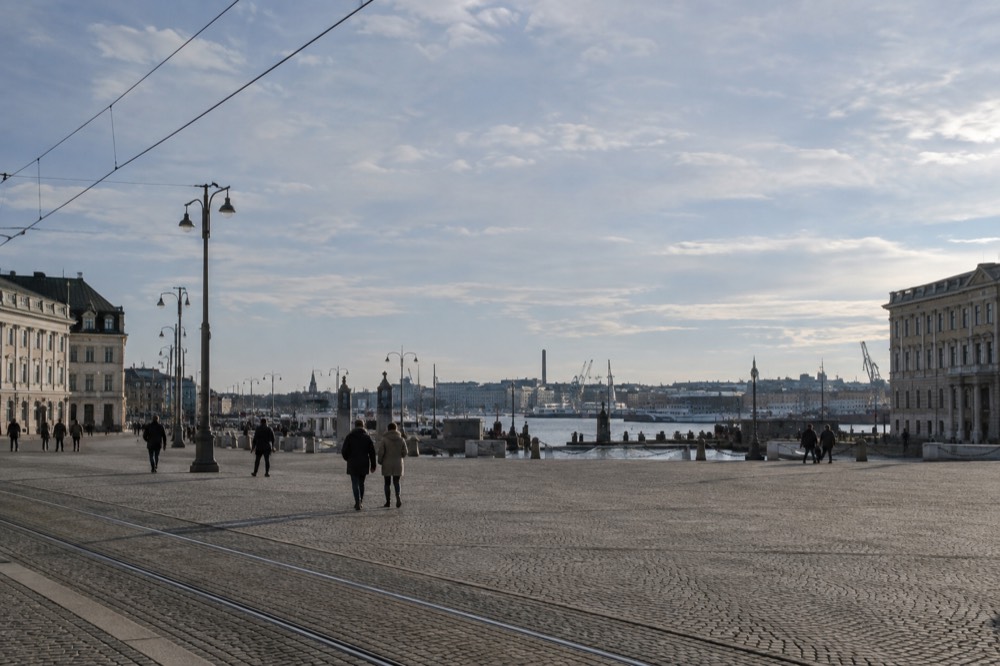
Timing matters too. Both cities share the Nordic daylight swing: Gothenburg gets 18 hours 6 minutes of daylight at the June solstice against 6 hours 32 minutes in December, per US Naval Observatory data, and Oslo's higher latitude makes the same swing more extreme. Christmas is a real draw in both, and Gothenburg's Liseberg Christmas market runs 14 to 23 November and into December in 2026, covered in our Gothenburg Christmas market guide. For season-by-season advice, the best time to visit Gothenburg is the deeper read, and it is honest about October, the wettest month.
The seasonal picture, built from SMHI's 1991-2020 normals for station Göteborg A, is the last piece of the decision:
| Season in Gothenburg | The numbers | Verdict against Oslo |
|---|---|---|
| Spring (Mar-May) | Driest stretch, April just 51.3 mm over 8.2 wet days | Best value window in either city, before peak season |
| Summer (Jun-Aug) | Air peaks 18.3 C in July, sea peaks 18.6 C in August | Both cities at their best; Oslo slightly cooler, Gothenburg cheaper |
| Autumn (Sep-Oct) | Sea still 16.7 C in September, but October is the wettest month at 102.9 mm | September is a Gothenburg secret; October is grey in both |
| Winter (Nov-Feb) | 6 h 32 m daylight at the solstice, sea at 2.7 C in February | Christmas markets in both; Oslo for snow, Gothenburg for Liseberg's market |
Whatever you decide, Gothenburg Travel Guide has the Swedish half of the route covered in detail, from where to stay to how many days you need.
Common Questions About Gothenburg or Oslo
Is Gothenburg cheaper than Oslo?
Yes, across the board. Norway is the more expensive country and Oslo is its capital, so hotels, restaurant meals, alcohol and transport all cost more there. Gothenburg's transit is a good benchmark: a 24-hour ticket covering trams and the archipelago ferries costs 125 kr.
Is Gothenburg or Oslo better for a short trip?
Gothenburg, for most travellers. Its centre is compact and walkable, the tram network makes everything reachable, and the archipelago is inside the same transit zone. Oslo rewards more time because its sights and districts are more spread out.
Can you visit both Gothenburg and Oslo on one trip?
Yes, easily. The direct train between Göteborg Centralstation and Oslo takes roughly four hours, and coaches run the same corridor, often cheaper. Many travellers fly into one city and out of the other.
Which city has better access to islands and swimming?
Gothenburg. Its southern archipelago islands, such as Styrsö, Brännö and Vrångö, are areas of the city, cars are banned on them, and an ordinary Västtrafik Zone A ticket covers the tram and ferry. The sea peaks at 18.6 C in August, and September water is warmer than June water.
Which city is better in winter?
Both are dark and damp, but Gothenburg's Liseberg Christmas market and its winter tram-and-island atmosphere give it a strong December case, while Oslo's cross-country skiing options in the surrounding hills suit active winter travellers. Gothenburg gets only 6 hours 32 minutes of daylight at the winter solstice, and Oslo slightly less.
Gothenburg or Oslo: which is better for families?
Gothenburg. Liseberg, Universeum and the free zoo in Slottsskogen sit inside one compact city, entry to Liseberg starts from 95 kr with rides sold separately, and the tram network makes the logistics simple for parents.